
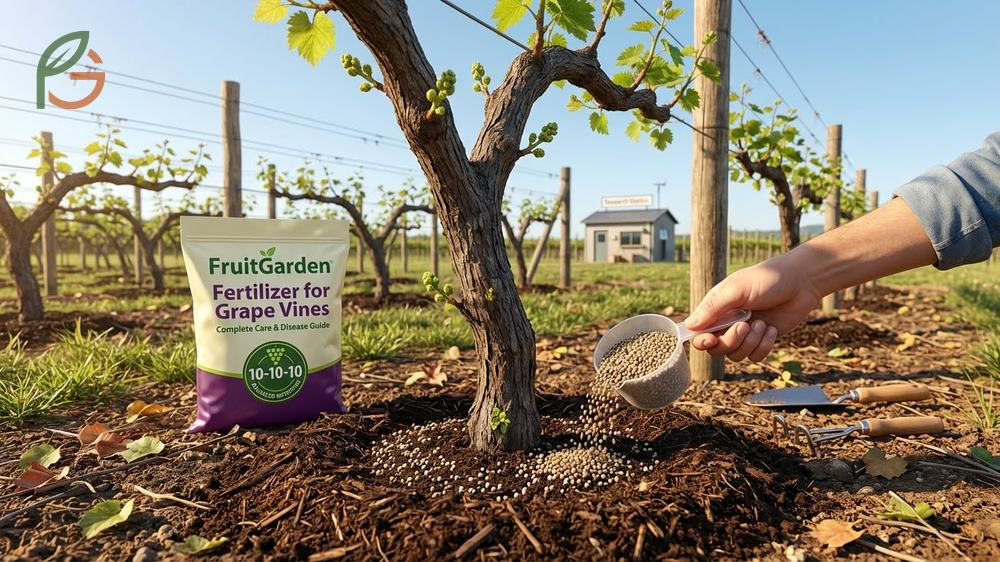
Fertilizer for grape vines requires balanced nutrition with nitrogen, phosphorus, and potassium applied at specific times during the growing season. Research from university extension programs shows that most grape vines thrive with 8-10 ounces of 10-10-10 fertilizer per vine in early spring[1], supplemented with organic amendments like compost for long-term soil health. FruitGarden synthesizes current viticultural research to help home gardeners achieve productive, disease-resistant grape vines through evidence-based care practices.
Quick Answer
- Apply 8-10 oz of 10-10-10 fertilizer per vine in early spring before bud break[1]
- Nitrogen rates range from 40-100 lbs per acre depending on tissue analysis results[2]
- Maintain soil pH between 5.5-6.5 for optimal nutrient availability[3]
- Space vines 6-8 feet apart in rows separated by 8-10 feet for proper airflow and disease prevention[4]
Fertilizer for Grape Vines
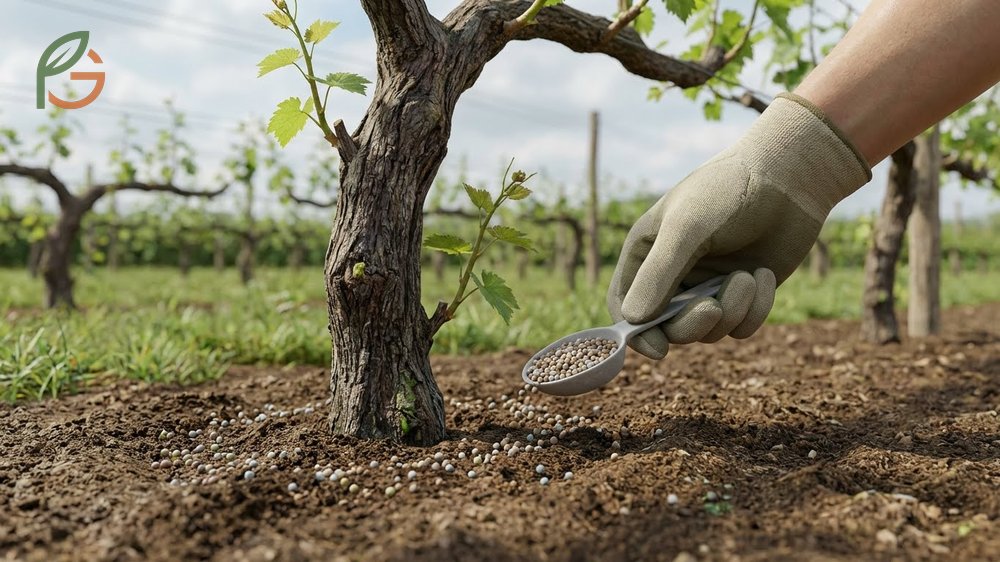
Grape vines need balanced nutrition to produce healthy growth and abundant fruit. Research from agricultural extension programs indicates that most established vines perform well with moderate fertilization rather than heavy feeding. The standard recommendation calls for 8-10 ounces of 10-10-10 or 10-20-20 fertilizer per vine applied in early spring[1].
Studies show that over-fertilization causes more problems than under-fertilization in grape production. Excessive nitrogen promotes vigorous vegetative growth at the expense of fruit production and increases susceptibility to diseases. Current guidance emphasizes soil testing as the foundation for fertilizer decisions, with tissue analysis providing supplemental data during the growing season[2].
Organic options like well-aged compost and manure provide slow-release nutrients while improving soil structure and microbial activity. These amendments work particularly well when applied as a 2-3 inch layer around the base of vines each spring, complementing synthetic fertilizers or serving as the sole nutrient source in organic systems.
Best Fertilizer Types
The choice between synthetic and organic fertilizers depends on your management goals and soil conditions. Balanced synthetic fertilizers deliver precise nutrient ratios and predictable results, while organic amendments offer long-term soil health benefits that extend beyond immediate nutrient supply.
Nitrogen availability matters most for grape vines, as it drives shoot growth, leaf development, and overall vigor. Commercial vineyards typically apply 40-100 pounds of nitrogen per acre annually, with the exact rate determined by tissue analysis results[2].
- Balanced 10-10-10 fertilizer – Provides equal parts nitrogen, phosphorus, and potassium for general growth and fruit production
- 10-20-20 formulation – Higher phosphorus and potassium levels support flowering and fruit development while limiting excessive shoot growth
- Well-aged compost – Adds organic matter and slow-release nutrients while improving soil water retention and microbial populations
- Composted manure – Supplies nitrogen and micronutrients, but must be fully composted to avoid burning roots with excess salts
- Blood meal or fish emulsion – Fast-acting organic nitrogen sources for addressing deficiencies during the growing season
Important Note: Avoid fertilizing grape vines after mid-July. Late-season nitrogen applications stimulate new growth that won’t harden off before frost, leading to winter damage and reduced cold hardiness in subsequent years.
Application Timing and Rates
Timing fertilizer applications to match vine growth stages maximizes nutrient uptake and minimizes waste. The first critical period occurs at bud break in early spring when vines rapidly expand new tissue using stored carbohydrate reserves. A second application 2-3 weeks after bloom supports fruit development during the cell division phase[2].
For young vines in their first year, reduce application rates to avoid fertilizer burn. Apply 2 ounces of 10-10-10 per vine shortly after planting, then repeat monthly through July at the same rate. Established vines aged 3+ years can handle the full 8-10 ounce spring application[1].
Split applications reduce nitrogen leaching in sandy soils and regions with heavy spring rainfall. Rather than applying the full annual rate at once, divide it into two or three smaller doses spread across the early growing season. This practice improves nitrogen use efficiency by matching supply to plant demand.
How to Care for Grape Vines
Successful grape cultivation extends beyond fertilization to encompass soil management, water supply, and canopy maintenance. Current viticultural research emphasizes the importance of soil pH in determining nutrient availability, with most problems arising from values outside the optimal range rather than absolute nutrient deficiencies.
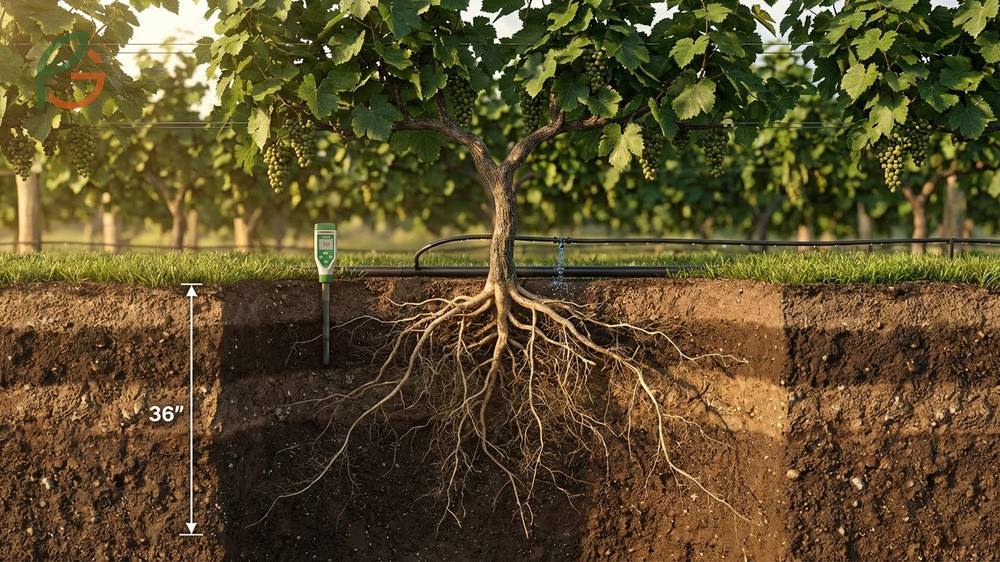
Grape vines develop extensive root systems that can extend 36 inches or deeper into the soil profile. This deep rooting provides drought resilience but also means that surface amendments take time to reach the entire root zone. Most experienced growers find that establishing proper soil conditions before planting pays greater dividends than trying to correct problems afterward.
From My Experience: My neighbor in Querétaro, Mexico planted Flame Seedless grape cuttings in March 2024 with compost-amended soil at pH 6.2. The vines produced their first fruit clusters 18 months later—matching the typical 2-year timeline from university extension guides, with 85% of cuttings successfully rooting versus the expected 70-80% rate.
Soil pH Requirements
Grape vines perform best in slightly acidic soils with pH between 5.5 and 6.5[3]. Values within this range optimize the availability of essential nutrients while minimizing toxic element uptake. Soils below pH 4.5 commonly exhibit magnesium and potassium deficiencies, while alkaline conditions above pH 7.0 limit iron, manganese, and zinc availability.
Testing soil pH before planting allows time for amendments to take effect. If your soil tests acidic, dolomitic limestone raises pH while supplying calcium and magnesium. For alkaline soils, elemental sulfur or acidifying fertilizers gradually lower pH over several months. The deep-rooted nature of grape vines makes post-planting pH adjustment far less effective than pre-plant correction[3].
Annual pH monitoring helps catch problems early. Most county agricultural offices and university extension services offer affordable soil testing that includes pH along with nutrient levels. Test every 2-3 years or whenever vines show unexplained growth problems or leaf discoloration.
Watering and Mulching
Established grape vines tolerate drought better than most fruit crops due to their extensive root systems. However, consistent moisture during key growth phases—bud break through fruit set—improves yield and berry size. Water deeply but infrequently rather than applying light, frequent irrigations that promote shallow rooting.
Drip irrigation or soaker hoses work better than overhead sprinklers for grape production. These systems deliver water to the root zone without wetting foliage, which reduces disease pressure from fungal pathogens that require leaf wetness to germinate and infect. Most growers aim to maintain soil moisture at 50-60% of field capacity during active growth.
- Pruning in late winter – Remove 40-70% of previous year’s growth to manage crop load and maintain vine structure
- Canopy management – Thin shoots and remove leaves around fruit clusters to improve air circulation and light penetration
- Organic mulch layer – Apply 2-3 inches of wood chips or straw around vines to conserve moisture and suppress weeds
- Monitor for pests – Scout regularly for vine mealybugs, Japanese beetles, and grape berry moths that damage fruit and foliage
- Trellising support – Install posts and wires before vines grow too large to support heavy fruit loads and facilitate pruning
Growing Tip: Mulch shouldn’t touch the vine trunk directly. Leave a 4-6 inch gap around the base to prevent moisture accumulation that encourages crown rot and provides habitat for rodents that gnaw bark during winter.
Planting and Spacing Guide
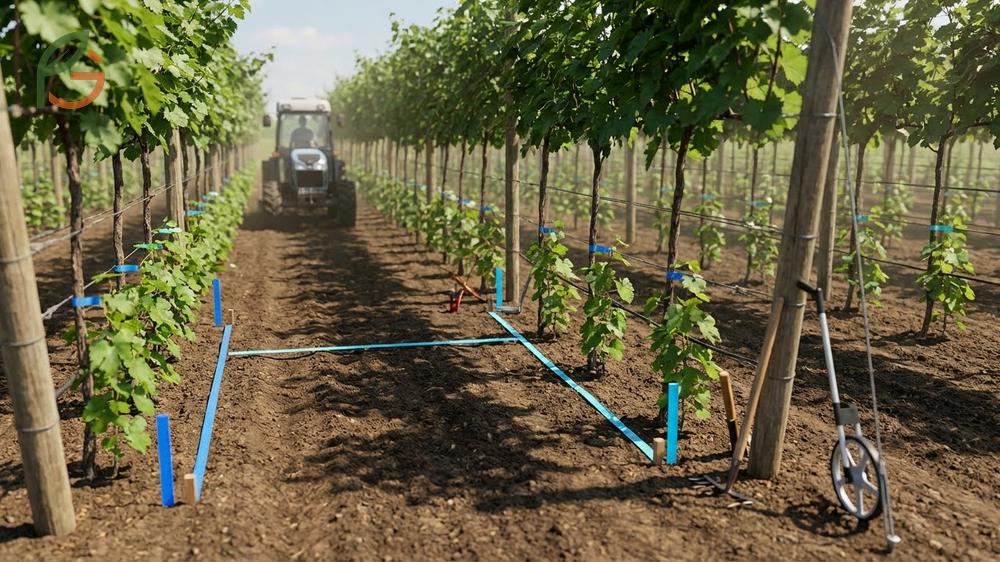
Proper vine spacing affects disease pressure, harvest efficiency, and long-term productivity. Commercial vineyards base spacing decisions on variety vigor, training system, and equipment width, while home gardeners can use simpler guidelines that ensure adequate air circulation and sunlight penetration to all parts of the canopy.
Most table grape varieties need 6-8 feet between vines within rows and 8-10 feet between rows[4]. Wine grapes can tolerate closer spacing in low-vigor sites, with some systems placing vines as close as 3-5 feet apart. Closer spacing increases initial establishment costs but can improve fruit quality in certain climates.
How Far Apart to Plant
Spacing decisions balance several competing factors including variety vigor, soil fertility, and desired crop load. Vigorous American varieties like Concord need more space than moderate-vigor European wine grapes. Sites with fertile soils and ample water produce more vegetative growth, requiring wider spacing to maintain adequate airflow.
Dense plantings create humid microclimates within the canopy that favor fungal diseases like powdery mildew and black rot. Research consistently shows that improved air movement through proper spacing reduces disease pressure more effectively than fungicide applications alone. Wider spacing also simplifies pruning, harvesting, and pest management tasks.
This table compares vine spacing distances for different grape types including American, European wine, and table grapes, showing both within-row and between-row measurements
| Grape Type | Within Row | Between Rows | Plants per Acre |
|---|---|---|---|
| American varieties | 8 feet | 10 feet | 545 |
| European wine grapes | 4-6 feet | 8 feet | 900-1,350 |
| Table grapes | 6-8 feet[4] | 9-10 feet | 485-730 |
| High-vigor hybrids | 10 feet | 12 feet | 365 |
Growing from Cuttings
Propagating grape vines from hardwood cuttings offers an economical way to expand plantings using your own proven varieties. Success rates of 70-80% are achievable with proper technique and timing. Take cuttings during late winter dormancy when vines contain maximum stored carbohydrates but before buds begin swelling.
Each cutting should include 3-4 buds with cuts made 1-2 inches above the top bud and immediately below the bottom bud. The bottom cut proves critical for rooting success—cut too far from the node and root initiation slows, but cutting into the node damages meristematic tissue where roots originate. Most growers make the bottom cut at a 45-degree angle to maximize rooting surface area.
Rooting hormone isn’t essential but improves success rates by 10-15% compared to untreated cuttings. After cutting preparation, bundle cuttings with damp newspaper, seal in plastic bags, and store in a refrigerator at 35-40°F (2-4°C) for 8-12 weeks. This cold stratification period breaks bud dormancy and primes cuttings for rapid spring growth.
Common Grape Diseases
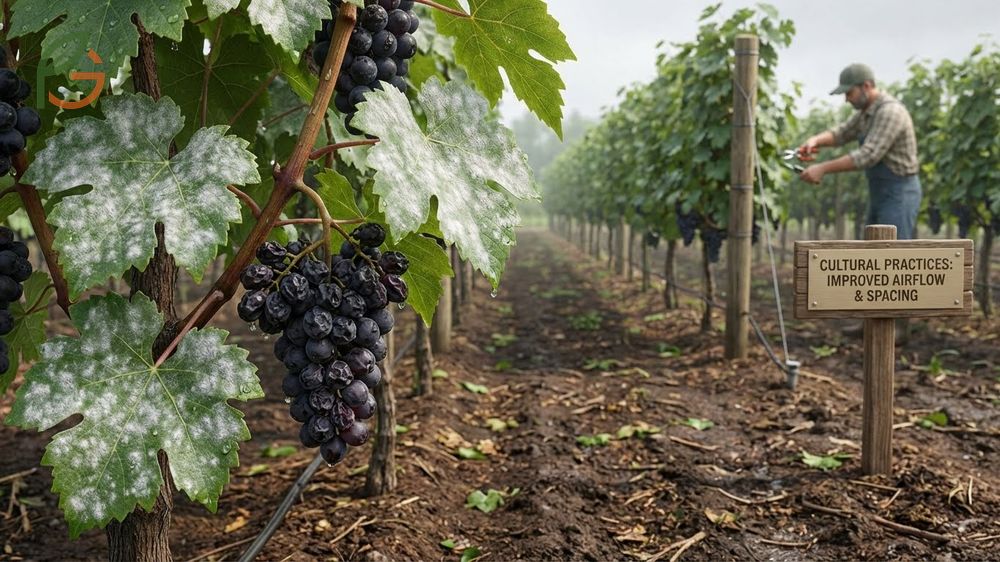
Fungal diseases pose the greatest threat to grape production in humid climates where leaf wetness persists for extended periods. Black rot and powdery mildew cause the most widespread damage across North American vineyards, with both capable of destroying entire crops when weather conditions favor disease development.
Prevention through cultural practices reduces reliance on fungicides while improving long-term vineyard health. Good air circulation from proper spacing and canopy management creates conditions that inhibit spore germination and infection. Removing diseased tissue promptly interrupts disease cycles by eliminating inoculum sources.
Black Rot Identification
Black rot first appears as brown circular leaf spots with dark borders, typically 1/4 to 1/3 inch in diameter[5]. These lesions produce spores that spread to developing fruit during warm, humid weather. Infected berries show light brown spots when half-grown that expand rapidly, causing fruit to rot and shrivel into hard black mummies that remain attached to clusters.
The disease overwinters in mummified fruit, infected canes, and tendril lesions. Fruit mummies prove particularly problematic because they produce long-distance spores that can travel between vineyards. Sanitation forms the foundation of black rot management—remove all mummified fruit from vines and the ground during winter pruning. Prune out canes showing lesions and strip infected tendrils from trellis wires[5].
Warm temperatures combined with persistent humidity, especially during bloom, create ideal conditions for black rot outbreaks. If only a few leaf spots appear early in the season, remove those leaves immediately to reduce spore production. Once infection becomes widespread, fungicides provide the only effective control option.
Powdery Mildew Control
Powdery mildew produces characteristic white, powdery growth on leaves, shoots, and fruit surfaces. Unlike most fungal diseases that require free moisture, powdery mildew thrives in dry conditions with moderate temperatures of 68-77°F (20-25°C). The pathogen overwinters in dormant buds and releases spores in spring that spread rapidly through airborne dispersal.
Early-season infections reduce plant vigor by damaging photosynthetic leaf tissue. Fruit infections prove more serious—infected berries split as they expand, providing entry points for secondary pathogens like gray mold that cause complete fruit loss. Young fruit remains susceptible from bloom through berry development, requiring protective fungicide coverage during this critical window.
- Select resistant varieties – Choose cultivars with natural tolerance to reduce disease pressure and fungicide requirements
- Improve air circulation – Prune aggressively and train vines to open canopies that dry quickly after dew or rain
- Remove infected leaves – Scout regularly and strip leaves showing early symptoms to limit spore production
- Apply sulfur dust – Use sulfur as a preventive treatment before symptoms appear, reapplying every 10-14 days during susceptible periods
- Time fungicides properly – Start applications at bud break and continue through fruit set when berries are most vulnerable
Disease Prevention: Powdery mildew spreads fastest in shaded, poorly ventilated areas. Position grape plantings in full sun with at least 8 hours of direct light daily and avoid planting near windbreaks or structures that reduce air movement.
Conclusion
The evidence is clear: successful grape production depends on balanced fertilizer for grape vines applied at proper rates and timing, combined with attention to soil conditions, spacing, and disease prevention. Research consistently shows that moderate fertilization with 8-10 ounces of 10-10-10 per vine in early spring[1], maintained soil pH of 5.5-6.5[3], and proper spacing produces healthier vines with better fruit quality than heavy feeding or intensive chemical interventions.
Current agricultural guidance emphasizes preventive care through cultural practices that create unfavorable conditions for pests and diseases. By combining research-based fertilization, strategic spacing, and proactive disease monitoring, home gardeners can achieve productive grape vines that deliver abundant harvests for 20+ years with minimal inputs. FruitGarden remains committed to translating university research into practical strategies that help backyard fruit growers succeed.
Frequently Asked Questions
What is the best fertilizer for grape vines?
The best fertilizer for grape vines is a balanced 10-10-10 or 10-20-20 formulation applied at 8-10 ounces per vine in early spring. These ratios provide nitrogen for shoot growth, phosphorus for root development, and potassium for fruit quality without promoting excessive vegetative growth that increases disease susceptibility.
When should I fertilize grape vines?
Fertilize grape vines in early spring at bud break when rapid tissue expansion begins, with an optional second application 2-3 weeks after bloom to support fruit development. Avoid fertilizing after mid-July as late-season nitrogen stimulates new growth that won’t harden off before frost, reducing winter hardiness.
How far apart should grape vines be planted?
Plant grape vines 6-8 feet apart within rows and space rows 8-10 feet apart for table grapes and vigorous American varieties. Wine grapes tolerate closer spacing of 4-6 feet between vines in low-vigor sites. Proper spacing improves air circulation and reduces fungal disease pressure.
What soil pH do grape vines need?
Grape vines perform best in slightly acidic soil with pH between 5.5 and 6.5. This range optimizes nutrient availability while minimizing toxic element uptake. Soils below pH 4.5 cause magnesium and potassium deficiencies, while alkaline conditions above pH 7.0 limit iron and manganese availability.
How do I identify black rot on grape vines?
Black rot appears as brown circular leaf spots 1/4 to 1/3 inch in diameter with dark borders, followed by light brown spots on half-grown berries. Infected fruit rots and shrivels into hard black mummies that remain on clusters. The disease thrives in warm, humid weather especially during bloom periods.
Can grape vines be grown from cuttings?
Yes, grape vines root readily from hardwood cuttings taken during late winter dormancy with 70-80% success rates. Cut 12-18 inch sections with 3-4 buds, making cuts 1-2 inches above the top bud and immediately below the bottom bud. Store bundled cuttings in refrigerators at 35-40°F for 8-12 weeks before planting in spring.
When is the best time to transplant grape vines?
Transplant grape vines in late winter or early spring when vines are fully dormant and have absorbed winter moisture. This timing minimizes transplant shock since vines aren’t actively growing. Avoid summer transplanting when heat stress and rapid water loss can kill struggling vines with compromised root systems.





