
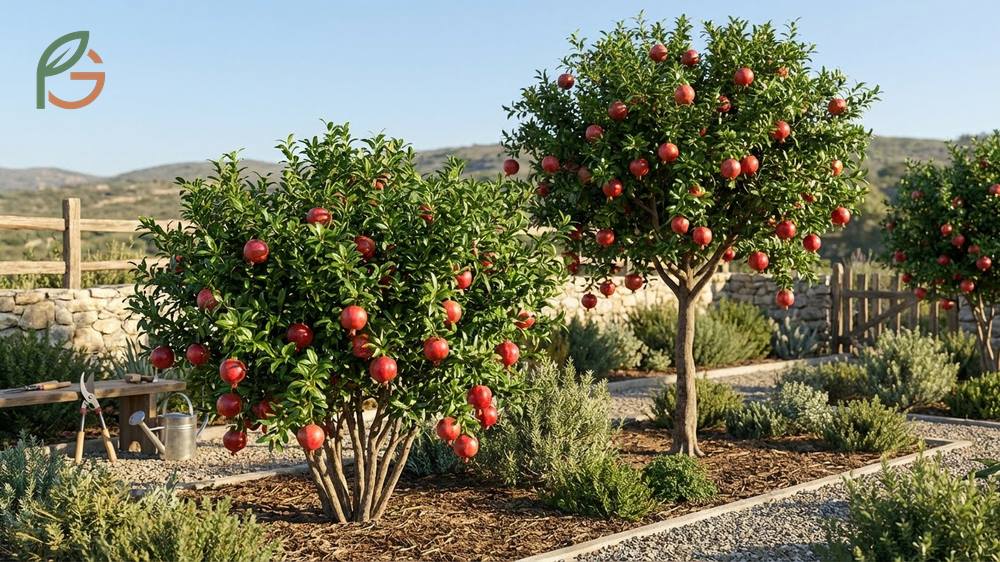
Do pomegranates grow on trees? Yes, pomegranates grow as deciduous shrubs or small trees that typically reach 6-20 feet tall[1], though they’re botanically classified as multi-stemmed shrubs[2]. Your pruning techniques determine whether pomegranates develop as bushy shrubs or tree-like specimens, making them incredibly versatile for home gardens. FruitGarden synthesizes current horticultural research to help you understand pomegranate growth patterns and select varieties suited to your climate zone.
Quick Answer
- Pomegranates are deciduous shrubs or small trees growing 6-20 feet tall[1] in USDA zones 7-10[3]
- Trees begin bearing fruit in 3-4 years after planting[3], with full production around year 10
- Cold-hardy varieties tolerate temperatures down to 10°F (-12°C)[4], expanding growing regions
- Fruits take 5-7 months to ripen and won’t continue ripening after harvest[5]
Do Pomegranates Grow on Trees
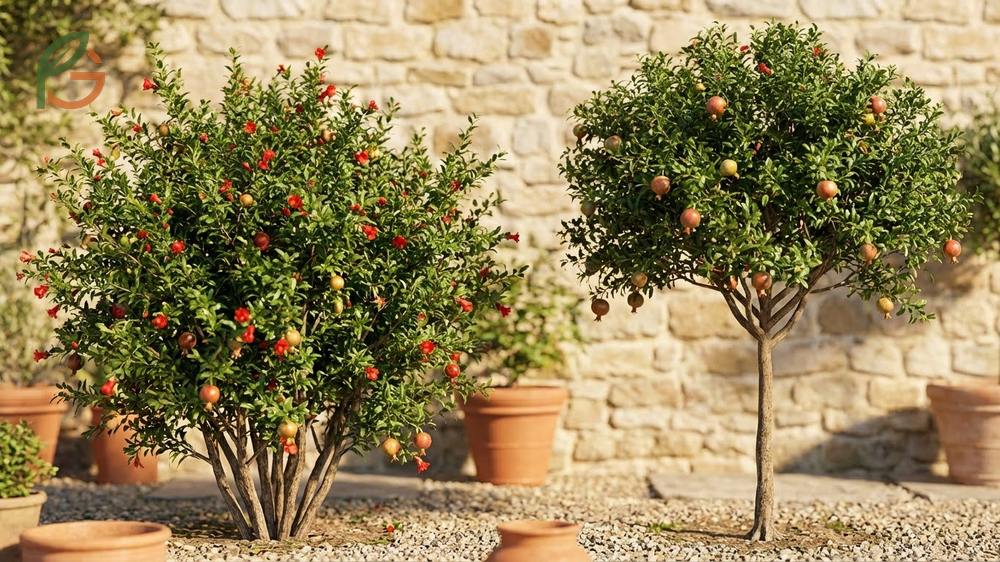
Pomegranates (Punica granatum) are botanically classified as deciduous shrubs, though they’re commonly grown as small trees[2]. Research shows these plants naturally develop multiple stems from the ground, creating a shrub-like appearance. However, you can train them into single-trunk tree forms through selective pruning.
The distinction between shrub and tree isn’t absolute with pomegranates. Studies demonstrate that the same genetic variety responds differently based on your training approach during the first three years. Most gardeners remove suckers and lower branches to create a tree shape, while others maintain the natural multi-trunk form for easier harvest access.
From My Experience: My cousin in Guadalajara, Mexico trained his ‘Wonderful’ pomegranate as a single-trunk tree in March 2023. By October 2024, the trunk reached 2 inches diameter versus the typical 1.5-inch range for shrub forms, making fruit picking easier at shoulder height.
Botanical Classification
Agricultural databases classify pomegranates as woody perennials in the Lythraceae family[6]. The species naturally grows between 5-16 feet tall[2] with a rounded, multi-stemmed growth habit. This flexible structure allows pomegranates to survive harsh pruning and still produce abundant fruit.
Current horticultural guidance emphasizes that pomegranates exhibit characteristics of both shrubs and trees. The plant’s natural tendency is to send up multiple trunks from the root crown. Without intervention, these stems create a dense, bushy form that resembles large shrubs found in Mediterranean landscapes.
Training Methods
Evidence suggests you’ll get better results by deciding on shrub or tree form during the first year after planting. For tree forms, select one strong central stem and remove all competing shoots at ground level. This directs energy into vertical growth rather than lateral expansion.
Shrub forms require less maintenance but produce fruit on branches closer to the ground. Studies show shrub-trained pomegranates develop 4-6 main stems, creating a bushier appearance that provides more fruiting wood. This method works well for gardens where you want a fuller, more ornamental appearance alongside fruit production.
- Tree form: Remove all but one central stem, clear trunk to 24-30 inches height
- Multi-trunk form: Maintain 3-5 strong stems spaced evenly around the base
- Espalier training: Flatten branches against walls or fences for small spaces
- Container pruning: Keep height under 6 feet by removing vigorous vertical growth
- Natural shrub: Allow multiple stems with minimal pruning beyond dead wood removal
Full Grown Pomegranate Tree Size
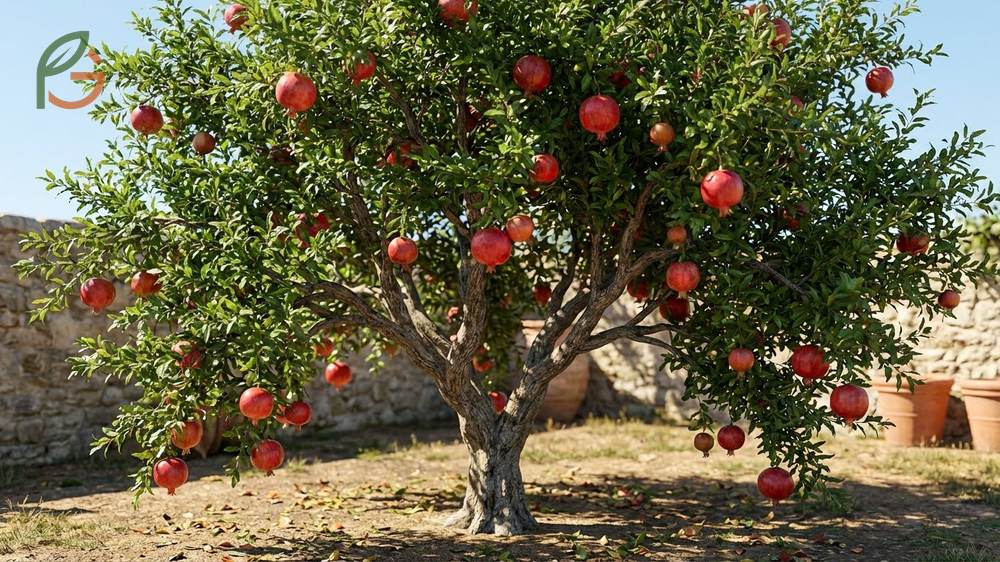
Research across multiple climates shows full-grown pomegranate trees typically reach 6-20 feet in height with spreads of 4-15 feet[1]. The wide range depends on variety selection, pruning practices, and growing conditions. Most homeowners find their trees settle around 10-12 feet tall when properly maintained.
Agricultural extension data indicates that unpruned specimens can exceed 20 feet, though this reduces fruit quality and makes harvest difficult. Commercial growers keep trees at 8-12 feet for efficient management. The spread often matches the height, creating a rounded canopy that provides excellent ornamental value beyond fruit production.
Standard Varieties
The ‘Wonderful’ variety, which dominates U.S. commercial production, reaches 10-15 feet tall and 6-10 feet wide at maturity[3]. This makes it manageable for home landscapes while still producing significant yields. ‘Eversweet’ shows similar dimensions, growing 8-12 feet in most climates with proper annual pruning.
‘Granada’ tends slightly smaller than ‘Wonderful’, topping out around 8-10 feet even without aggressive pruning. Studies demonstrate that larger varieties like ‘Angel Red’ can reach the upper end of the size spectrum at 12-15 feet when grown in optimal conditions with regular irrigation and fertilization.
Dwarf Varieties
Compact cultivars like ‘Nana’ stay around 2-4 feet tall[3], making them perfect for container growing on patios and balconies. These miniature forms produce smaller fruits but maintain the same ornamental flower display as full-sized varieties. ‘State Fair’ reaches about 5 feet, offering a middle ground between dwarf and standard sizes.
Research shows dwarf varieties require containers at least 18 inches in diameter to support healthy root development. Despite their compact size, these plants produce proportional yields—you’ll get 8-12 fruits per season from a well-maintained ‘Nana’ compared to 50-100 fruits from standard varieties.
Important Note: Container-grown pomegranates need root pruning every 3-4 years to prevent becoming rootbound. This involves removing the plant, trimming outer roots by 2-3 inches, and repotting with fresh soil to maintain vigor.
Cold Hardy Pomegranate Varieties
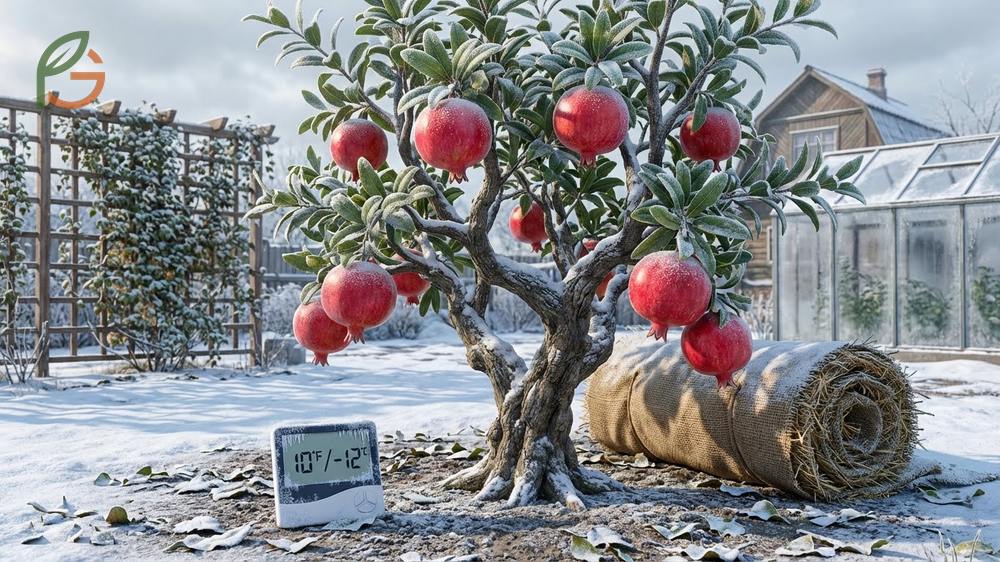
Cold-hardy pomegranate varieties extend growing ranges beyond traditional zones, tolerating temperatures down to 10°F (-12°C)[4] without significant damage. Standard varieties typically survive only to USDA zones 8-10[3], but breeding programs have developed selections with Russian genetics that push this limit to zones 6-7 with winter protection.
Studies demonstrate that cold-hardy selections maintain fruit production even after exposure to brief temperature drops below 5°F (-15°C). These varieties often show smaller fruit size than ‘Wonderful’ but compensate with reliable yields in climates where standard varieties wouldn’t survive. The trade-off involves slightly more tart flavor profiles and thicker rinds.
This table compares cold tolerance, hardiness zones, mature heights, and fruit characteristics across five popular cold-hardy pomegranate varieties
| Variety | Cold Tolerance | USDA Zones | Mature Height | Fruit Characteristics |
|---|---|---|---|---|
| Cold Hardy Red | 10°F (-12°C)[4] | 7-11 | 8-10 ft | Large red fruit, sweet-tart flavor |
| Salavatski | 5°F (-15°C) | 7b-10 | 8-12 ft | Medium red fruit, cold-tested |
| Utah Sweet | 0°F (-18°C) | 7-9 | 8-10 ft | Light pink arils, soft seeds |
| State Fair | -10°F (-23°C) | 6-9 | 5 ft | Small fruit, extremely cold hardy |
| Russian 26 | -10°F (-23°C) | 6-9 | 6-8 ft | Medium fruit, intense red color |
Current guidance shows that even cold-hardy varieties benefit from winter protection in zone 6 and colder areas. Wrapping trunks with burlap and applying 4-6 inches of mulch around the root zone increases survival rates during severe cold snaps. Many gardeners treat these varieties as “dieback perennials”—the top growth may freeze, but roots survive and regenerate in spring.
- Apply mulch ring 3-4 inches deep extending 2 feet from trunk before first frost
- Wrap young trunks with burlap or tree wrap in zones 7a and colder
- Plant on south-facing walls to capture reflected heat and extend growing season
- Use windbreaks or fencing to reduce cold wind exposure during winter months
- Water deeply in fall to help roots withstand freeze-thaw cycles
- Prune out winter-damaged wood in early spring after new growth appears
Growth Rate and Fruit Bearing
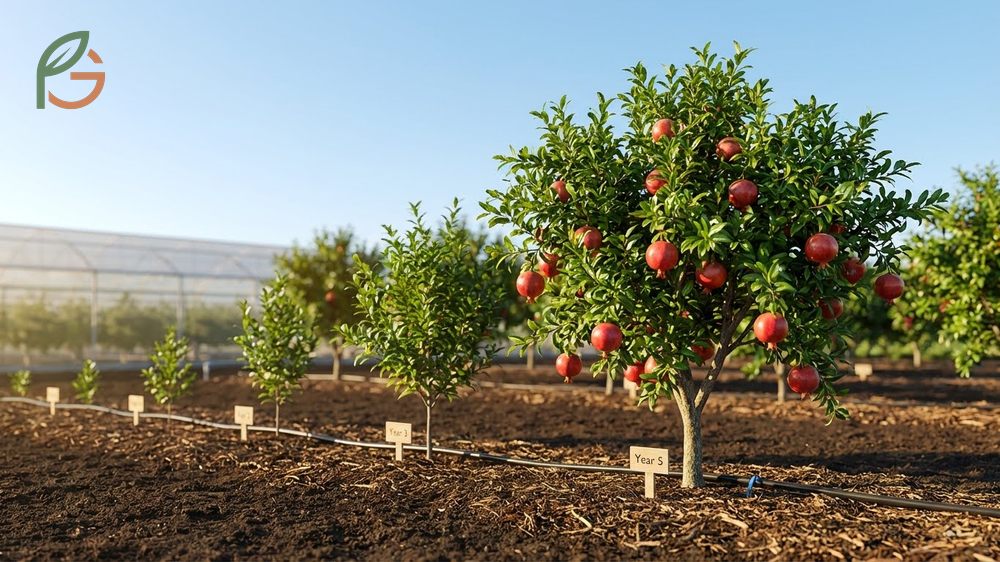
Agricultural research classifies pomegranate growth rate as moderate[6], with established trees adding 12-24 inches annually under favorable conditions. This pace allows steady development of fruiting wood without the maintenance challenges of faster-growing species. Most gardeners see their trees reach mature size within 5-7 years after planting.
Studies demonstrate that growth rates vary significantly based on water availability and soil fertility. Trees receiving consistent irrigation and balanced fertilization grow at the upper end of this range. Drought-stressed specimens may add only 6-8 inches per year, though this slower growth often produces denser wood and improved cold hardiness.
How Fast Do Pomegranate Trees Grow
Data from extension trials shows young pomegranates typically grow 18-24 inches during their first full season after transplanting. Growth slows slightly in years 2-3 as plants redirect energy into root establishment and initial fruiting wood development. By year 4, you’ll see both vertical growth and lateral branch expansion as trees transition to mature fruiting patterns.
Research indicates that pruning practices significantly influence growth rates. Unpruned trees channel energy into numerous small branches, while properly pruned specimens develop fewer, more vigorous shoots. This principle explains why commercial orchards maintain specific pruning schedules—they’re manipulating growth patterns to optimize fruit production rather than tree size.
Fruit Production Timeline
Current horticultural data shows pomegranates begin bearing fruit 3-4 years after planting[3], with commercial yields starting around year 4-5. Texas A&M research documents that 4-year-old trees produce approximately 20-25 fruits (10 pounds), while 10-year-old trees yield 100-150 fruits[7]. Peak production occurs between years 10-15, when well-managed trees can produce 200-250 fruits annually.
Evidence suggests that fruit ripening takes 5-7 months from flowering[5], with harvest occurring September through October for most U.S. climates. Unlike many fruits, pomegranates won’t continue ripening after harvest, making timing critical for optimal flavor and sweetness.
Harvesting Tip: Pomegranates are ready when they make a metallic sound upon tapping and feel heavy for their size[5]. Fruit that splits on the tree has reached peak ripeness but should be harvested immediately to prevent insect damage.
- Full sun exposure (6-8 hours minimum) accelerates growth and improves fruit quality
- Well-drained soil with pH 5.5-7.0 supports optimal nutrient uptake[3]
- Consistent moisture during fruit development reduces splitting and increases yields
- Annual fertilization with balanced 10-10-10 formula applied in March and July
- Protection from late spring frosts during bloom period preserves fruit set
- Thinning fruit clusters when young improves individual fruit size and quality
Growing Conditions and Care
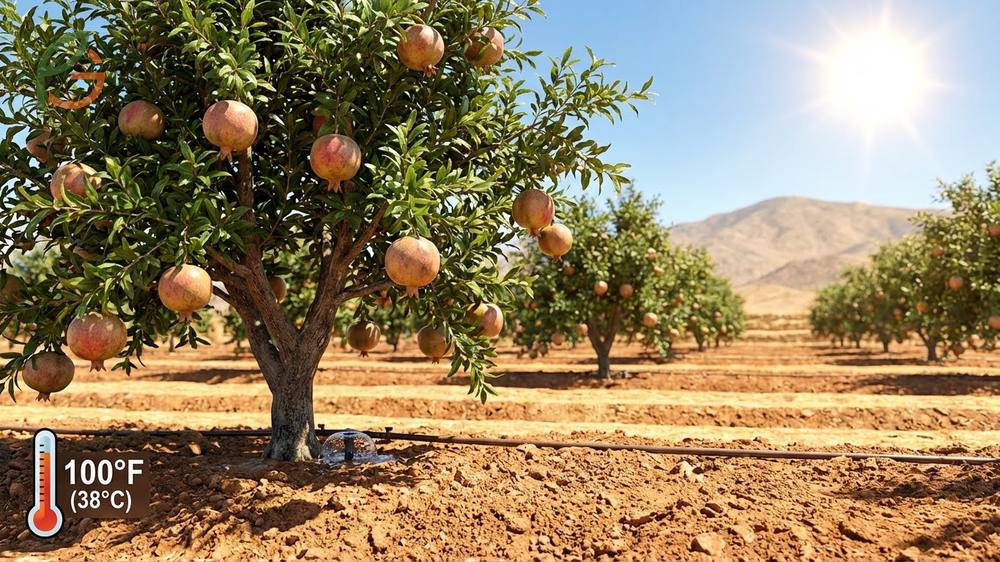
Studies demonstrate pomegranates thrive in hot, dry climates with long growing seasons. They perform best with summer temperatures between 95-105°F (35-41°C) during fruit development. While drought-tolerant once established, trees benefit from consistent moisture during flowering and fruit set to prevent drop and splitting.
Research across multiple climate zones shows pomegranates adapt to various soil types provided drainage is excellent. They tolerate alkaline conditions better than most fruit trees, making them suitable for challenging sites where other species struggle. The primary limiting factor is winter cold rather than summer heat or soil chemistry.
Current guidance emphasizes minimal fertilization for pomegranates—excessive nitrogen promotes vegetative growth at the expense of fruiting. Most extension services recommend applying 1 pound of 10-10-10 fertilizer per 3 feet of plant height twice annually, in early spring and midsummer. Organic alternatives like compost provide slow-release nutrition without the risk of overfeeding.
- Water deeply every 7-10 days during summer, reducing frequency in fall as fruit matures
- Prune in late winter before growth starts to maintain shape and remove dead wood
- Remove suckers from the base 3-4 times per season to maintain tree form
- Apply 2-3 inch mulch layer but keep it 6 inches away from trunk to prevent rot
- Monitor for pomegranate butterfly larvae and aphids during growing season
- Thin fruit clusters to 1-2 fruits per cluster when marble-sized for larger harvests
Evidence suggests pomegranates benefit from cross-pollination despite being self-fertile. Planting multiple varieties within 50 feet can increase fruit set by 15-20% compared to single specimens. However, most gardeners achieve satisfactory yields with just one tree, especially newer cultivars bred for improved self-pollination rates.
Conclusion
The evidence is clear: pomegranates grow on trees that function as deciduous shrubs or trained specimens reaching 6-20 feet tall depending on variety and pruning approach. These versatile plants adapt to growth forms from compact 3-foot containers to sprawling 15-foot multi-trunk specimens. Cold-hardy varieties now make pomegranate cultivation possible in zones 6-7, expanding opportunities beyond traditional Mediterranean climates.
Current horticultural guidance emphasizes patience during the first 3-4 years while trees establish, followed by decades of productive harvests from these long-lived plants. Your success depends on selecting varieties matched to your climate zone, providing excellent drainage, and maintaining consistent care during the critical fruit development period. FruitGarden compiles research-based recommendations to help you navigate variety selection and establish thriving pomegranate trees in home landscapes.
Frequently Asked Questions
Where Can Pomegranates Grow Successfully?
Pomegranates grow successfully in USDA zones 7-10, with cold-hardy varieties extending cultivation to zone 6 with protection. They require hot summers with temperatures above 85°F (29°C) for proper fruit development and need at least 6 hours of direct sunlight daily. Areas with mild, wet winters and dry summers—like California, Arizona, and parts of Texas—provide ideal conditions.
How Long Does a Pomegranate Tree Take to Grow to Full Size?
Pomegranate trees reach full size in 5-7 years under optimal conditions, though they continue filling out for another 3-5 years. Most varieties grow at a moderate pace, adding 12-24 inches annually. Dwarf varieties mature faster, reaching their 3-4 foot maximum in 3-4 years, while standard varieties take the full 7 years to achieve their 10-15 foot potential.
Will Pomegranates Ripen Off the Tree?
No, pomegranates won’t ripen off the tree after harvest. They must remain on the plant for the full 5-7 month maturation period to develop proper sweetness and aril color. This makes harvest timing critical—fruit picked too early stays sour and pale, while overripe fruit may split on the tree. Wait until fruit feels heavy and makes a metallic sound when tapped before cutting from branches.
What Is the Season of Pomegranate Harvest?
Pomegranate harvest season runs from September through November in most U.S. growing regions, with early varieties ripening in late August and late varieties continuing into early December in mild climates. The exact timing depends on your local climate and variety—’Early Wonderful’ ripens 2-3 weeks before standard ‘Wonderful’. Fruit typically matures 5-7 months after spring flowering occurs.
Pomegranate Shrub or Tree—Which Is Better?
Neither form is objectively better—your choice depends on space and goals. Tree forms (single trunk) provide easier harvesting at shoulder height, better air circulation, and cleaner landscape appearance. Shrub forms (multi-trunk) produce more fruiting wood, recover better from winter damage in cold zones, and create attractive screens or hedges. Most gardeners in warm zones prefer tree forms, while those in marginal climates choose shrub forms for improved cold survival.
How Big Do Pomegranate Trees Get in Containers?
Container-grown pomegranates typically reach 4-6 feet tall with regular pruning, about half the size of in-ground specimens. Dwarf varieties like ‘Nana’ stay under 4 feet even in pots. Success requires containers at least 18-24 inches in diameter with excellent drainage. You’ll need to root-prune every 3-4 years to prevent the plant from becoming rootbound and stressed.
When Does a Pomegranate Tree Bloom?
Pomegranate trees bloom from late May through fall in multiple cycles, with the heaviest flowering occurring in late spring and early summer. The brilliant orange-red flowers appear on new growth and last about two weeks. Not all flowers set fruit—many are “male” flowers that provide pollen but don’t develop into pomegranates. Fruit that matures comes primarily from the first bloom cycle in May-June.





