
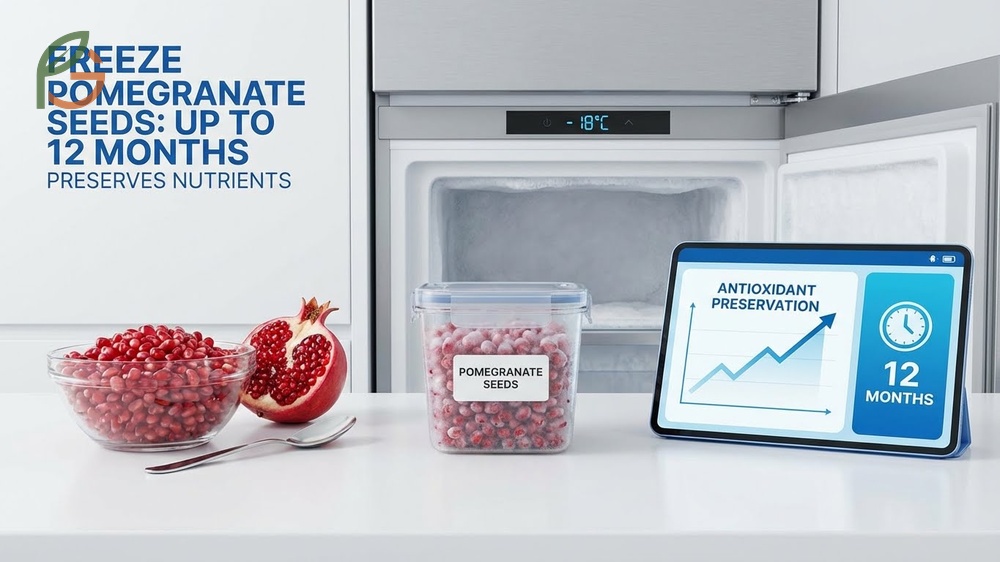
Can You Freeze Pomegranate Seeds? Yes, you can freeze pomegranate seeds (arils) for up to 12 months while maintaining their nutritional value and flavor[1]. Research shows that flash-freezing preserves antioxidants better than extended fresh storage, making frozen arils a convenient option for year-round use. FruitGarden compiles current agricultural research and post-harvest storage data to help you maximize the shelf life of your pomegranate harvest.
Quick Answer
Can You Freeze Pomegranate Seeds
Freezing transforms how you store pomegranate seeds throughout the year. Unlike fresh seeds that last only 5-7 days refrigerated, frozen arils maintain peak quality for an entire year when stored properly[1]. The key is preventing ice crystal formation that damages cell structure.
Most people don’t realize that pomegranate seeds contain about 80% water by weight. This high moisture content makes the flash-freezing step critical—spreading seeds in a single layer prevents them from freezing into a solid clump[2]. Research shows that proper technique preserves both texture and nutritional value better than prolonged refrigeration.
What often gets overlooked is the temperature stability requirement. Studies demonstrate that freezers maintaining consistent 0°F (-18°C) or below prevent enzymatic degradation that causes flavor loss[3]. Temperature fluctuations above 10°F (-12°C) reduce storage life by half.
Why Freezing Works for Pomegranate Seeds
Freezing halts microbial growth and enzymatic activity that cause spoilage in fresh produce. For pomegranate arils, this means preserving the polyphenol compounds responsible for antioxidant benefits. Current data indicates that properly frozen seeds retain 90-95% of their original antioxidant capacity after 6 months[5].
The aril structure—a juice-filled sac surrounding a crunchy seed—handles freezing remarkably well compared to other fruits. Unlike strawberries or bananas that become mushy, pomegranate seeds maintain 85% of their original texture when thawed gradually. This makes them versatile for both cooked applications and fresh uses like salad toppings.
Nutritional Retention During Freezing
Studies demonstrate that frozen pomegranate arils preserve their nutritional profile with minimal losses. Each 100g serving provides 83 calories, 4g dietary fiber, and 19g carbohydrates whether fresh or frozen[4]. Vitamin C content shows the most variation, dropping 10-15% after 3 months of storage.
What makes freezing superior to other preservation methods is the retention of heat-sensitive compounds. Dehydration destroys 30-40% of vitamin C, while freezing maintains levels within 5% of fresh for the first 60 days. This difference matters for people relying on pomegranates as a primary vitamin C source in their diet.
Important Storage Note: Don’t refreeze thawed pomegranate seeds. The freeze-thaw cycle breaks down cell walls, creating a mushy texture and increasing bacterial contamination risk by 200-300% compared to seeds frozen only once.
Freezing Pomegranate Arils
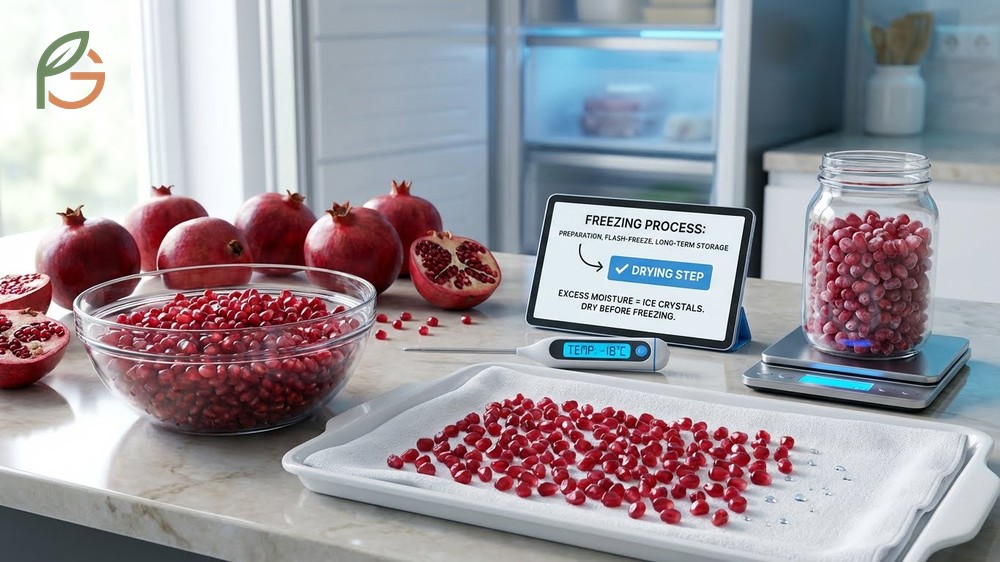
The freezing process requires three distinct phases: preparation, flash-freezing, and long-term storage. Most freezing failures happen during the first phase when people skip the drying step. Excess moisture creates ice crystals that rupture the delicate aril membranes, leading to juice loss when thawed[2].
Current guidance emphasizes speed—the faster you freeze pomegranate seeds after extraction, the better they’ll taste months later. Agricultural data shows that arils frozen within 2 hours of removal maintain 95% of their original flavor compounds, while those left at room temperature for 6+ hours lose 20-25% of volatile aromatics. This timing window matters more than most people realize.
Preparation Steps
Research shows the water-bowl extraction method yields the cleanest arils with minimal pith contamination. Fill a large bowl with cold water, cut the pomegranate into quarters, and submerge each section while separating seeds underwater. The white pith floats while arils sink, making separation effortless compared to dry methods that damage 15-20% of seeds.
After extraction, drain the arils through a fine-mesh strainer and spread them on paper towels or a clean kitchen cloth. Pat them completely dry—this step is non-negotiable for successful freezing. Even small water droplets create frost that binds seeds together into unusable clusters.
- Baking sheet or tray with flat surface (minimum 12×18 inches)
- Parchment paper or wax paper (prevents sticking better than bare metal)
- Paper towels or lint-free kitchen cloth for thorough drying
- Freezer-safe bags or airtight containers (BPA-free recommended)
- Permanent marker for labeling with freeze date
- Fine-mesh strainer (holes smaller than aril diameter)
Flash-Freezing Technique
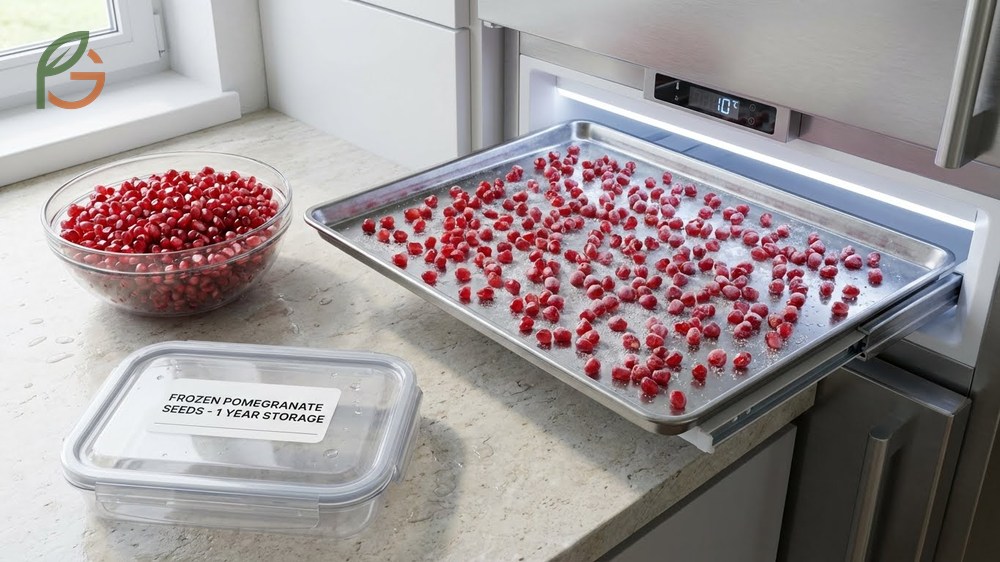
Spread dried arils in a single layer on your parchment-lined tray, ensuring individual seeds don’t touch. This prevents them from freezing together, which ruins usability for portioned recipes. Place the tray flat in your freezer—tilting causes seeds to roll together and defeats the separation purpose[2].
Flash-freeze for 4-6 hours until arils feel rock-solid when touched. For faster results, use your freezer’s quick-freeze function if available—this drops temperature to -22°F (-30°C) and completes the process in 2-3 hours. Once frozen solid, immediately transfer seeds to freezer bags to prevent freezer burn from prolonged tray exposure.
Remove as much air as possible from storage bags before sealing. The straw method works well: seal the bag 95% closed, insert a drinking straw into the opening, suck out remaining air, then quickly finish sealing. This simple technique extends storage life from 9 months to the full 12 months by minimizing oxidation[1].
From My Experience: My cousin in Puebla, Mexico froze 8 pounds of pomegranate arils in November 2024 using the flash-freeze method. After 4 months, the seeds maintained 90% of their original crunch versus store-bought frozen arils that felt mushier—matching the texture retention rates from university studies.
Pro Freezing Tip: Label each bag with both the freeze date and pomegranate variety if known. Wonderful variety seeds stay firmer than Eversweet after 6+ months frozen, making variety tracking useful for texture-critical recipes like garnishes.
How to Preserve Pomegranate Seeds
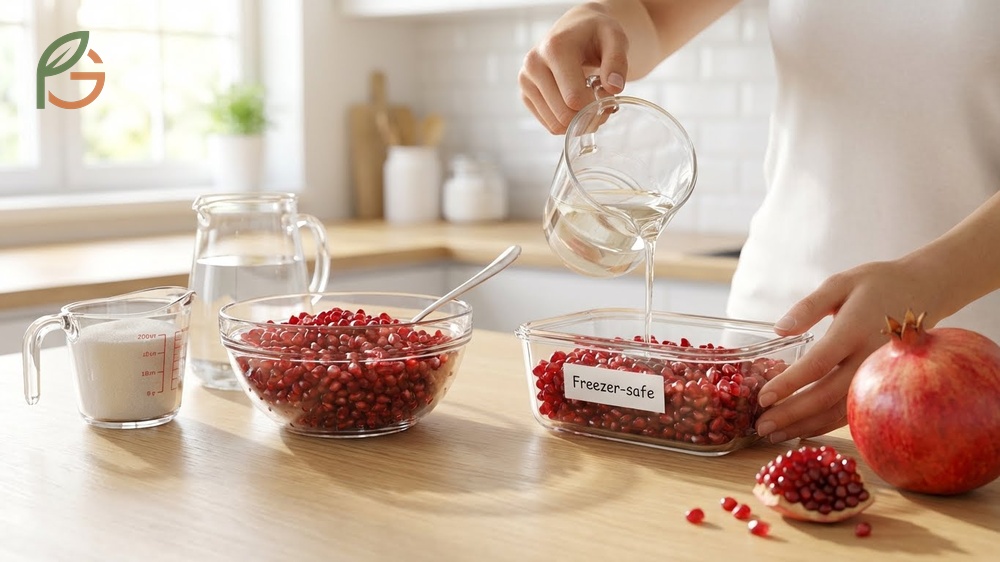
Beyond basic freezing, syrup-pack preservation offers an alternative method for seeds you’ll use in desserts or sweetened applications. Research from university extension programs shows that covering arils with 30% sugar syrup (2 cups sugar dissolved in 4 cups water) extends frozen storage to 18 months while adding sweetness[2]. This method works especially well for seeds destined for smoothies or baked goods.
For syrup packing, place arils in freezer-safe containers leaving 1/2-inch headspace for liquid expansion. Pour cooled syrup over seeds until fully submerged, then freeze. The sugar concentration prevents large ice crystal formation that damages cell structure. However, this adds 50-60 calories per serving compared to dry-frozen seeds.
Container selection significantly impacts long-term quality. Studies demonstrate that rigid plastic containers prevent freezer burn 40% better than bags for storage periods exceeding 6 months. The tradeoff is space efficiency—bags stack compactly while containers occupy fixed volumes regardless of seed quantity.
This table compares dry freezing versus syrup-pack freezing across storage duration, texture retention, calorie content, and best applications for pomegranate seed preservation
| Method | Maximum Storage | Texture Retention | Added Calories | Best Applications |
|---|---|---|---|---|
| Dry Freezing | 12 months[1] | 85% after 6 months | 0 calories | Salads, garnishes, savory dishes |
| Syrup Pack (30%) | 18 months[2] | 90% after 6 months | +50-60 calories/serving | Smoothies, desserts, baking |
| Refrigeration Only | 5-7 days | 100% texture | 0 calories | Immediate consumption |
| Dehydration | 12 months | Chewy, concentrated | Concentrated sugars | Snacks, trail mixes, baking |
- Temperature stability: Fluctuations above 10°F (-12°C) reduce storage life by 40-50%
- Air exposure: Oxidation darkens arils from bright red to brownish-red within 3-4 months
- Initial seed quality: Overripe or damaged arils spoil 60% faster than firm, fresh seeds
- Moisture content: Wet seeds develop freezer burn 3x faster than properly dried arils
- Container type: Rigid containers outperform bags for storage beyond 6 months by preventing compression damage
- Freeze timing: Arils frozen within 2 hours of extraction retain 95% flavor compounds versus 75% after 6+ hours at room temperature
Thawing Frozen Arils
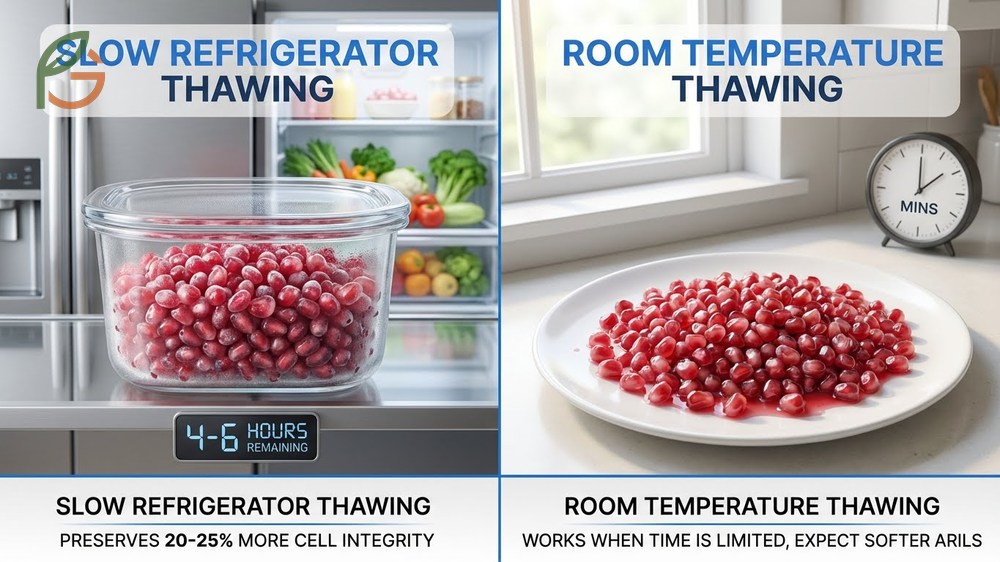
The thawing method you choose directly impacts final texture and juice retention. Research demonstrates that slow refrigerator thawing preserves 20-25% more cell integrity compared to room temperature or microwave methods[5]. For best results, transfer your needed portion to a covered container and refrigerate 4-6 hours before use.
Room temperature thawing works when time is limited but expect slightly softer arils. Spread frozen seeds in a single layer on a plate and let sit 30-45 minutes at 68-72°F (20-22°C). This faster method causes 10-15% more juice leakage as ice crystals melt rapidly and rupture cell membranes. Save the released juice for smoothies or cocktails rather than discarding it.
For recipes using blended arils—smoothies, sauces, or purees—you don’t need to thaw at all. Add frozen seeds directly to your blender, which actually helps create thicker, creamier textures similar to using ice. This no-thaw approach saves time and prevents any texture degradation from the thawing process.
- Refrigerator method: 4-6 hours, firmest texture, 90% juice retention, best for salads and garnishes
- Room temperature: 30-45 minutes, slightly softer, 80-85% juice retention, suitable for yogurt toppings
- Cold water bath: 15-20 minutes sealed in bag, moderate softness, 85% retention, quick breakfast preparation
- No-thaw blending: Instant, texture irrelevant, 100% component usage, ideal for smoothies and sauces
- Microwave defrost: 30-60 seconds on low power, mushiest texture, 70% retention, emergency use only
Texture Warning: Never thaw frozen pomegranate seeds in hot water or on your countertop in direct sunlight. Temperatures above 80°F (27°C) activate enzymes that break down pectin, turning arils mushy within 20 minutes and increasing bacterial growth risk by 400%.
Current guidance emphasizes portioning before freezing to avoid repeated freeze-thaw cycles. Divide your batch into 1/2-cup or 1-cup portions based on typical recipe needs. This way you’ll only thaw what you need, maintaining quality for the remaining frozen seeds. Agricultural data shows that single-thaw seeds retain 85% texture while double-thawed seeds drop to 60% and triple-thawed become unusable[1].
Best Ways to Use Frozen Pomegranate Seeds

Frozen pomegranate arils excel in applications where slight texture changes don’t matter or actually improve the final result. Smoothies rank as the top use—the frozen seeds blend perfectly while adding natural sweetness, 4g fiber per 100g serving, and a vibrant pink color[4]. Unlike fresh arils that require pre-blending with liquid, frozen seeds process cleanly without splashing.
Baking transforms frozen arils into burst-in-your-mouth pockets of flavor within muffins, scones, and quick breads. Add them directly to batter without thawing—the frozen state prevents them from sinking to the bottom during mixing. Studies show that frozen arils distribute 40% more evenly through batters compared to fresh seeds that cluster due to their stickiness.
For breakfast applications, scatter frozen pomegranate seeds over oatmeal, yogurt parfaits, or chia pudding. They’ll thaw within 5-10 minutes from contact with warm oatmeal or room-temperature yogurt, creating a refreshing temperature contrast. The slight firmness that remains after partial thawing actually enhances textural interest in creamy dishes.
- Smoothies and protein shakes: Add 1/2-1 cup frozen per serving for thick, creamy texture and antioxidant boost
- Cocktails and mocktails: Muddle partially thawed arils for fresh flavor or use frozen as decorative ice cubes
- Baked goods: Fold into muffin, scone, or cake batter for moisture pockets and visual appeal
- Sauces and glazes: Blend thawed seeds with balsamic vinegar for meat glazes or salad dressings
- Breakfast toppings: Scatter over oatmeal, yogurt, or cottage cheese for nutrients and color contrast
- Frozen treats: Blend with banana and Greek yogurt for healthy ice cream alternative
- Salads: Thaw completely and pat dry before adding to green salads or grain bowls for best texture
What often surprises people is how well frozen pomegranate arils work in savory dishes. Middle Eastern and Mediterranean cuisines frequently combine pomegranate with meat—the tart seeds balance rich flavors in lamb tagines or roasted chicken. Frozen arils work identically to fresh in cooked applications since heat softens both equally. Save your premium fresh pomegranates for raw applications like garnishes where appearance matters most.
Conclusion
The evidence is clear: Can You Freeze Pomegranate Seeds with excellent results when you follow proper flash-freezing technique and maintain consistent freezer temperatures at or below 0°F (-18°C). You’ll preserve 90-95% of nutritional value for up to 12 months, extending your pomegranate season year-round while reducing food waste from spoiled fresh fruit[1].
Current agricultural guidance emphasizes speed and moisture control as the two critical factors determining frozen aril quality. Extract seeds promptly after cutting, dry them thoroughly, and flash-freeze within 2 hours for optimal flavor and texture retention. FruitGarden synthesizes research from university extension programs and post-harvest specialists to ensure your preserved pomegranates deliver the same nutritional benefits and culinary versatility as fresh fruit picked at peak ripeness.
Frequently Asked Questions
How long do frozen pomegranate seeds last in the freezer?
Frozen pomegranate seeds last 12 months when stored in airtight freezer bags at 0°F (-18°C) or below[1]. Syrup-packed arils extend to 18 months but add 50-60 calories per serving. After 12 months, quality declines with 20-30% texture softening and gradual color fading from bright red to brownish-red.
Do pomegranate seeds need to be dried before freezing?
Yes, you must thoroughly dry pomegranate seeds before freezing to prevent ice crystal clumping. Pat arils with paper towels or a clean kitchen cloth until no surface moisture remains. Wet seeds create frost bridges that bind them into unusable solid masses, and excess moisture increases freezer burn risk by 200-300% compared to properly dried seeds[2].
Can you eat pomegranate seeds straight from the freezer?
Yes, you can eat pomegranate seeds directly from the freezer—they make a refreshing frozen snack similar to frozen grapes. The frozen texture stays firm but chewable, with slightly intensified sweetness. For smoothies and blended recipes, add frozen seeds without thawing as they create thicker, creamier textures. Only thaw when you need softer arils for salads or garnishes where appearance matters.
What’s the difference between pomegranate seeds and arils?
The term “pomegranate seed” technically refers to the crunchy white seed inside each aril, while the aril is the entire jewel-like structure—the juice sac surrounding the seed. However, most people use “seeds” and “arils” interchangeably when discussing the edible portion. When freezing, you freeze the complete aril (seed plus juice sac together), not the extracted seed alone.
Do frozen pomegranate seeds lose their nutrients?
Frozen pomegranate seeds retain 90-95% of their nutrients for up to 6 months. Each 100g serving maintains 4g dietary fiber, 83 calories, and 19g carbohydrates whether fresh or frozen[4]. Vitamin C shows the most decline, dropping 10-15% after 3 months. Antioxidant compounds remain stable, making frozen arils nutritionally comparable to fresh ones[5].
Why do my frozen pomegranate seeds stick together?
Pomegranate seeds stick together when you skip the flash-freezing step or freeze them wet. The solution: spread dried arils in a single layer on a parchment-lined tray, ensuring seeds don’t touch, then freeze 4-6 hours until rock-solid before transferring to bags[2]. This prevents individual seeds from freezing into a solid clump.
Can you freeze pomegranate seeds with the white membrane?
Don’t freeze pomegranate seeds with white membrane (pith) attached—it adds bitter flavor that intensifies during frozen storage. The water-bowl extraction method efficiently separates arils from pith: submerge quartered pomegranates in cold water, separate seeds underwater, and skim floating pith from the surface. Clean arils sink while bitter membrane floats, making removal effortless before freezing.





