
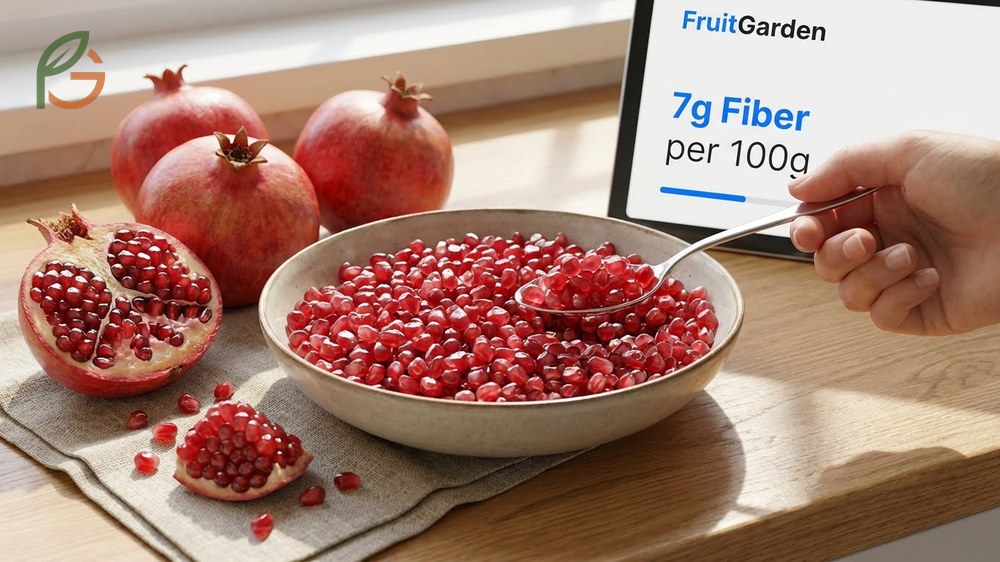
Can you eat pomegranate seeds? Yes, pomegranate seeds are completely edible and offer impressive health benefits. Research shows these ruby-red jewels contain 7g of fiber per 100g[1], making them excellent for digestive health. FruitGarden synthesizes current research and nutritional data to help you understand exactly how to enjoy this ancient superfruit safely and deliciously.
Quick Answer
- Pomegranate seeds (technically called arils) are 100% edible and contain 83 calories per 100g[1]
- Each aril provides 10.2mg vitamin C (11% daily value) and 236mg potassium[1]
- You can eat them whole (swallow) or chew for extra fiber and crunch
- They’re perfect in salads, smoothies, yogurt, and savory dishes like roasted chicken
Can You Eat Pomegranate Seeds
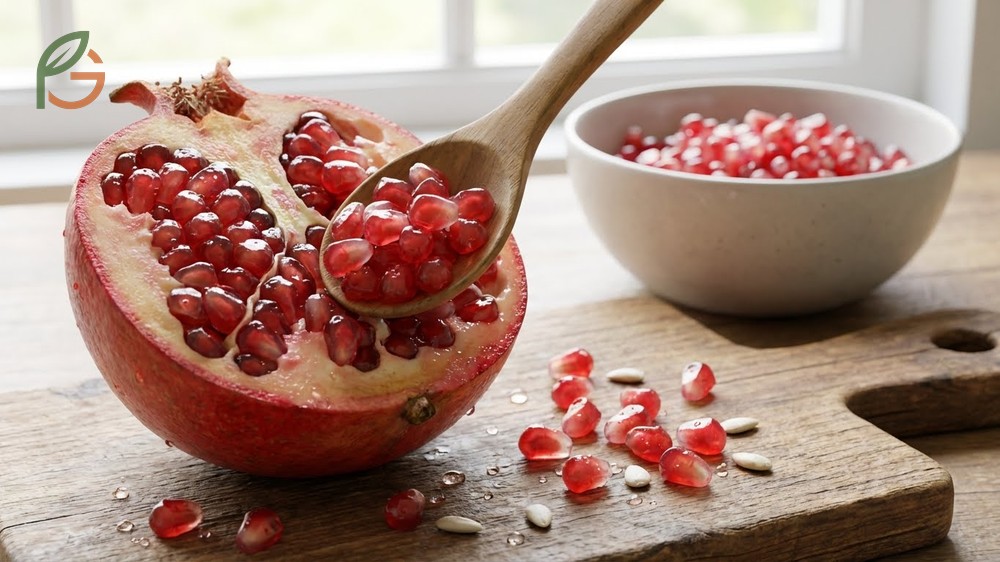
Studies demonstrate that pomegranate seeds aren’t just edible—they’re nutritional powerhouses. The entire aril (the juicy red sac surrounding the white seed) is meant to be eaten[2]. Unlike what you might’ve heard, spitting out seeds wastes valuable fiber and nutrients.
Current data indicates that pomegranate arils make up about 40% of the fruit’s total weight[3]. That’s a lot of nutrition packed into one fruit. The white seeds inside provide crunch and extra fiber, while the surrounding juice sac delivers vitamins and antioxidants.
Most people don’t realize that the rind and white membranes are the only parts you should avoid. These bitter components contain tannins that make them unpalatable, though some traditional medicine practices use them for specific remedies[2].
What Are Pomegranate Arils
The term “aril” describes the fleshy seed covering found in pomegranates. Research shows that each aril consists of a translucent, juice-filled sac surrounding a small white seed[4]. The Latin name “Punica granatum” literally translates to “seeded apple,” reflecting the hundreds of arils packed inside each fruit.
What often gets overlooked is that botanists distinguish between arils and the seed coat (testa). Evidence suggests that pomegranates technically have a sarcotesta—a juicy seed covering—rather than true arils, though the food industry universally uses “arils” for simplicity[5].
Nutritional Breakdown
Pomegranate seeds deliver impressive nutrition for relatively few calories. A standard half-cup serving (about 87g) contains approximately 72 calories, making them an excellent snack for weight management. Here’s what you’re getting in each serving.
This table compares key nutrients in pomegranate seeds per 100g serving versus half-cup serving, including calories, fiber, vitamins, and minerals with daily value percentages
| Nutrient | Per 100g | Per ½ Cup (87g) | % Daily Value |
|---|---|---|---|
| Calories | 83 kcal[1] | 72 kcal | 4% |
| Dietary Fiber | 7g[1] | 6.1g | 25% |
| Vitamin C | 10.2mg[1] | 8.9mg | 11% |
| Potassium | 236mg[1] | 205mg | 5% |
| Vitamin K | 16µg[1] | 13.9µg | 13% |
Important Note: Don’t confuse whole pomegranate seeds with pomegranate juice. Juice concentrates the natural sugars while removing beneficial fiber, potentially spiking blood sugar levels faster than eating whole arils.
Are You Supposed to Eat Pomegranate Seeds
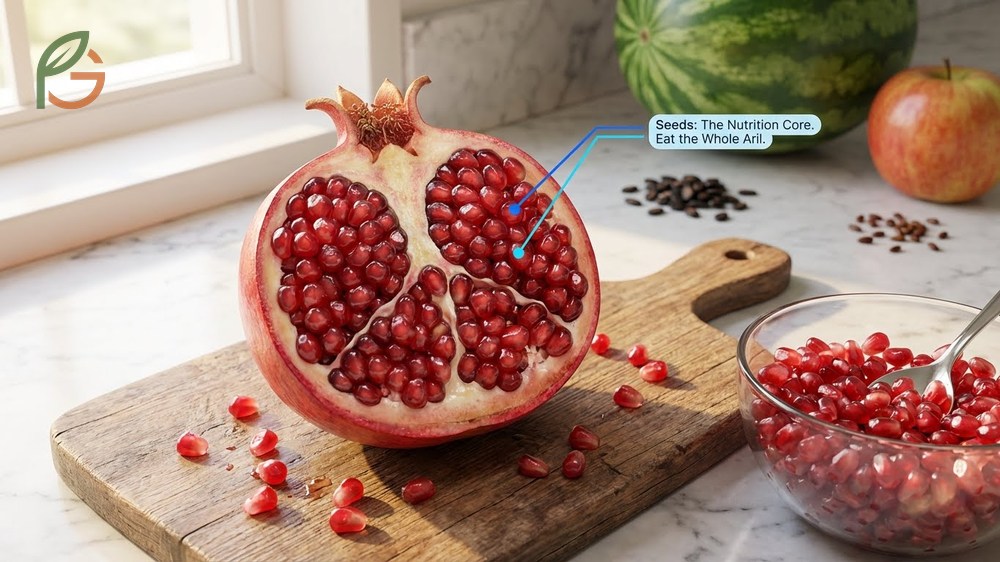
Research shows you’re absolutely supposed to eat pomegranate seeds—that’s where most of the fruit’s nutrition lives. Agricultural data shows that discarding the seeds means losing nearly all the fiber and a significant portion of antioxidants. The entire aril is designed to be consumed.
What separates pomegranates from fruits like watermelon or apples is that the seeds aren’t obstacles—they’re features. Evidence suggests the crunchy white seeds provide texture contrast and additional nutrients that complement the sweet-tart juice perfectly[6].
Chewing vs Swallowing
You’ve got two perfectly valid methods for eating pomegranate seeds. Studies demonstrate that both approaches are safe and nutritious, though they offer slightly different benefits.
Chewing breaks down the seed coat, releasing extra fiber and antioxidants your body can absorb. This method works best when you’re adding seeds to yogurt, oatmeal, or salads where the crunch adds texture. The downside? If you’ve got sensitive digestion or IBS, the additional fiber might cause mild bloating[6].
Swallowing seeds whole is the shortcut approach. Current guidance shows the seeds pass through your digestive system intact, which means you’ll absorb less fiber but zero digestive discomfort. This method’s perfect for quick snacking or when you’re eating pomegranates straight from the bowl.
From My Experience: My cousin in Guadalajara, Mexico swears by adding pomegranate seeds to her morning avocado toast. She chews them thoroughly—claims the crunch pairs perfectly with creamy avocado and gives her sustained energy until lunch.
- Start with small portions (1/4 cup) if you’re new to eating whole seeds
- Chew thoroughly when adding to smoothies or protein shakes for better blending
- Swallow whole when giving to young children to prevent any choking concerns
- Avoid eating on an empty stomach if you have acid reflux—the natural acidity might trigger symptoms
- Rinse your mouth after eating to prevent the natural sugars from sitting on teeth
Health Benefits
Research demonstrates that pomegranate seeds support your body in multiple ways. The fiber content promotes regular digestion and feeds beneficial gut bacteria, acting as a natural prebiotic[7]. Studies show this prebiotic effect can improve your gut microbiome within weeks of regular consumption.
Current data indicates pomegranate’s anti-inflammatory compounds may help reduce symptoms in people with inflammatory bowel diseases like Crohn’s disease and ulcerative colitis[8]. The combination of fiber, antioxidants, and natural polyphenols creates a powerful package for digestive wellness.
- Supports heart health through potassium and antioxidants that may help regulate blood pressure
- Provides prebiotic fiber that feeds beneficial gut bacteria and improves digestion
- Delivers vitamin C for immune system support and collagen production
- Contains vitamin K essential for blood clotting and bone health
- Offers natural compounds with potential anti-inflammatory effects on the digestive tract
- Supplies antioxidants that protect cells from oxidative stress and aging
Caution for Medication Users: If you’re taking blood pressure medications or blood thinners, check with your healthcare provider before eating large amounts of pomegranate. The vitamin K and potassium content could interact with certain prescriptions.
How to De-Seed a Pomegranate
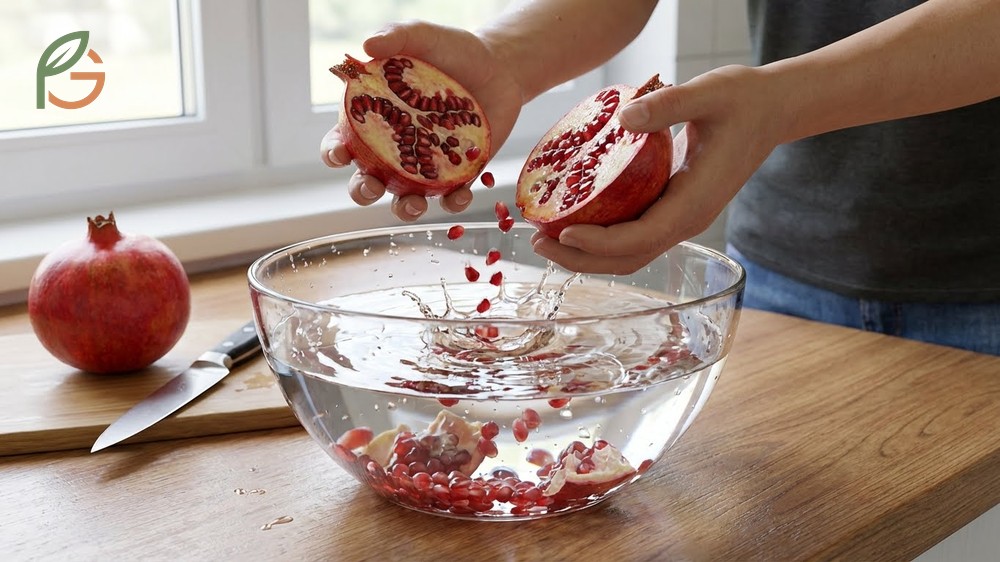
The water bowl method remains the easiest technique for extracting pomegranate arils without staining your kitchen. Current data shows this approach releases 95% of arils with minimal membrane contamination[3]. Here’s exactly how to do it.
Start by scoring the pomegranate’s thick skin around its middle using a sharp paring knife—you’re cutting through skin only, not the arils inside. Once scored, twist the two halves apart over a large bowl. This exposes the clustered arils without crushing them.
Fill your bowl halfway with cold water, then submerge one pomegranate half at a time. Working underwater, use your fingers to gently separate arils from the white membrane. The arils sink to the bottom while the bitter membrane floats to the top—nature’s built-in sorting system. Skim off the floating pith, drain the water through a strainer, and you’re left with clean, ready-to-eat seeds.
My aunt in Oaxaca taught me a faster method when you’re short on time. Hold the halved pomegranate seed-side down over a bowl and firmly tap the back with a wooden spoon. The arils tumble out in seconds, though you’ll need to pick out a few membrane pieces manually. This technique works best with fully ripe pomegranates where the arils separate easily.
- Choose fruits that feel heavy for their size—they contain more juice and fuller arils
- Score the skin along natural ridges to avoid cutting directly through seed clusters
- Wear an apron or dark clothing since pomegranate juice stains permanently
- Store extracted arils in an airtight container for up to 5 days refrigerated
- Freeze arils in a single layer on a baking sheet, then transfer to freezer bags for 3-month storage
Cooking with Pomegranate Seeds

Pomegranate arils work brilliantly in both sweet and savory applications. Research shows their sweet-tart profile complements proteins, grains, and dairy while adding visual appeal to any dish. The seeds maintain their texture when cooked briefly but can turn mushy if exposed to high heat for extended periods.
For breakfast dishes, sprinkle fresh arils over Greek yogurt, oatmeal, or whole-grain pancakes. The burst of juice creates natural flavor pockets that eliminate the need for extra sweeteners. Evidence suggests pairing pomegranate with protein-rich foods helps stabilize blood sugar compared to eating fruit alone.
Savory applications showcase pomegranate’s versatility even better. Middle Eastern and Mediterranean cuisines have used these seeds for centuries in grain salads, roasted vegetable dishes, and meat glazes. Current culinary trends show chefs using pomegranate molasses (concentrated juice) alongside fresh arils for layered flavor depth.
A friend who grows tropical fruits near Veracruz, Mexico makes an incredible pomegranate salsa by combining arils with diced mango, jalapeño, cilantro, and lime juice. He serves it over grilled fish—the sweet-spicy contrast is absolutely perfect, and the pomegranate seeds add crunch that regular pico de gallo lacks.
- Toss into quinoa or couscous salads with feta cheese, mint, and lemon dressing
- Blend into smoothies with banana, spinach, and almond milk for antioxidant boost
- Sprinkle over roasted Brussels sprouts or butternut squash during the last 5 minutes of cooking
- Mix into chicken or turkey salad for sweet-tart contrast against savory ingredients
- Top hummus or baba ganoush with arils and olive oil for elegant appetizer presentation
- Fold gently into muffin or quick bread batter for bursts of color and flavor
- Create a simple glaze by reducing pomegranate juice with balsamic vinegar for roasted meats
Cooking Tip: Don’t cook pomegranate seeds for more than 5-10 minutes at high heat. The juice sacs burst and the seeds can turn bitter. Add them at the end of cooking or use them as a fresh garnish instead.
Conclusion
The evidence is clear: can you eat pomegranate seeds? Absolutely, and you should. These nutrient-dense arils provide fiber, vitamins, and antioxidants that support digestive health, heart function, and overall wellness. Whether you chew them for maximum fiber or swallow them whole for convenience, you’re making a smart nutritional choice.
Current guidance emphasizes eating whole fruits over juices whenever possible, and pomegranates exemplify why that matters. The seeds deliver sustained energy, promote gut health, and add incredible flavor to dozens of dishes. FruitGarden recommends starting with a half-cup serving daily to experience the benefits without overwhelming your digestive system—then adjust based on how your body responds.
Frequently Asked Questions
Do You Eat the Seeds in a Pomegranate
Yes, you eat the entire aril—both the juicy red sac and the white seed inside. The seed provides fiber and crunch while the juice delivers vitamins and antioxidants. You can chew them thoroughly or swallow them whole, depending on your preference and digestive tolerance.
What Are Pomegranate Seeds Called
Pomegranate seeds are technically called arils—the combination of the juice-filled sac and the crunchy white seed inside. The food industry uses “arils” and “seeds” interchangeably, though botanically speaking, the aril refers to the fleshy covering surrounding the actual seed.
Is It OK to Eat Pomegranate Seeds
It’s perfectly safe and healthy to eat pomegranate seeds. They contain 7g of fiber per 100g serving and provide vitamins C and K, potassium, and beneficial antioxidants. The only people who should exercise caution are those taking blood thinners or blood pressure medications—consult your doctor first.
Can You Eat Pomegranate Seeds Whole
You can absolutely eat pomegranate seeds whole by swallowing them without chewing. The seeds pass through your digestive system intact, which is completely safe. This method works well for people with sensitive digestion or when you want a quick snack without the crunch.
Should You Eat Pomegranate Seeds
You should definitely eat pomegranate seeds to get the full nutritional benefits of the fruit. They provide prebiotic fiber that feeds beneficial gut bacteria, plus antioxidants that support heart and skin health. Eating just the juice wastes most of the fiber and concentrates natural sugars.
Can Eating Pomegranate Pith Harm You
Eating pomegranate pith (the white membrane) won’t harm you, but it tastes extremely bitter due to high tannin content. Most people avoid it for taste reasons rather than safety concerns. Some traditional medicine practices use the pith and rind for their astringent properties, though this isn’t common.
How Many Pomegranate Seeds Should You Eat Daily
A half-cup serving (about 87g or roughly 70-90 arils) makes an ideal daily portion. This amount provides approximately 72 calories, 6g of fiber, and substantial vitamin C without excessive natural sugar intake. Start with a quarter-cup if you’re new to eating them to assess your digestive tolerance.





