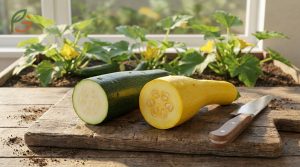
The difference between zucchini and cucumber comes down to taste, texture, and how you use them in the kitchen. Research shows cucumbers deliver a crisp, refreshing bite with 95% water content[1], while zucchini offers a mild, earthy flavor that transforms beautifully when cooked. What often gets overlooked is that these vegetables aren’t just different in taste—they belong to completely different plant families and require distinct growing conditions. FruitGarden synthesizes current agricultural data to help you identify, grow, and cook with both vegetables confidently.
Quick Answer
- Cucumbers contain 95% water[1], making them more hydrating than zucchini’s 93%
- Zucchini provides 6.4 times more vitamin C[2] and nearly double the protein of cucumbers
- Cucumbers taste crisp and refreshing raw, while zucchini develops a tender, mild flavor when cooked[3]
- Plant stems reveal the truth: zucchini stems have five distinct angles[4], while cucumber stems are rounded with tiny spines
Difference Between Zucchini and Cucumber
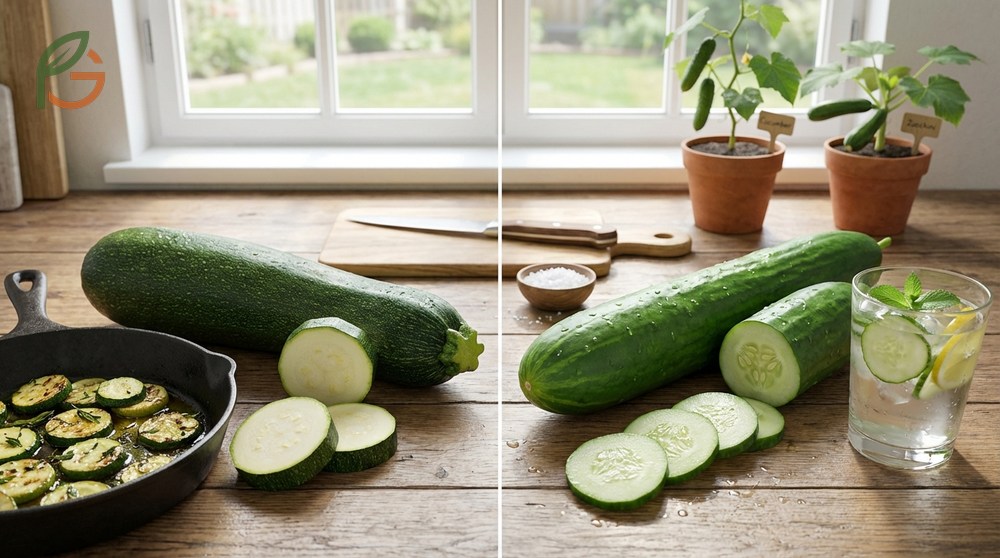
The primary distinction starts with their plant families. Cucumbers belong to Cucumis sativus, while zucchini falls under Cucurbita pepo—the summer squash family. This fundamental difference affects everything from growing conditions to culinary applications.
Most gardeners discover this the hard way when seedlings get mixed up. Cucumber plants spread horizontally across the ground, while zucchini grows more upright with bushier foliage[4]. You’ll notice cucumber vines can stretch 6-8 feet if left unchecked, whereas zucchini maintains a compact 3-4 foot diameter.
From My Experience: My cousin in Guadalajara, Mexico planted both vegetables in May 2024. The zucchini seedlings showed their distinctive five-angled stems within 12 days, while cucumber stems stayed rounded—this matched the 10-14 day identification window from university extension guides.
The texture tells another story immediately. Cucumbers feature smooth, sometimes waxy skin that’s cool to the touch. Zucchini skin feels slightly rough with visible ridges running lengthwise, and it’s noticeably warmer at room temperature.
Botanical Families
Understanding the family tree explains why these vegetables behave so differently. Cucumbers evolved as climbing vines native to South Asia, developing tendrils to grab onto supports. Zucchini descended from Central American squash varieties that grew as ground-level bushes.
This ancestry dictates their temperature preferences too. Cucumbers thrive in slightly cooler conditions, germinating best at 70-75°F (21-24°C). Zucchini demands warmer soil—ideally 75-85°F (24-29°C)—before seeds will sprout reliably.
Visual Appearance
The color difference becomes obvious once you know what to look for. Cucumbers display a dark, forest green exterior that can appear almost black in certain lighting. Zucchini shows a lighter, brighter green with distinctive white or yellow speckles scattered across the skin[4].
Shape provides another reliable clue. Cucumbers grow uniformly cylindrical from end to end, maintaining consistent diameter. Zucchini tends to taper slightly, with a wider blossom end that narrows toward the stem.
Important Identification Tip: If you’re still unsure after checking appearance, scratch the stem lightly with your fingernail. Cucumber stems feel rough with tiny spines, while zucchini stems are completely smooth and angular.
Zucchini vs Cucumber Taste
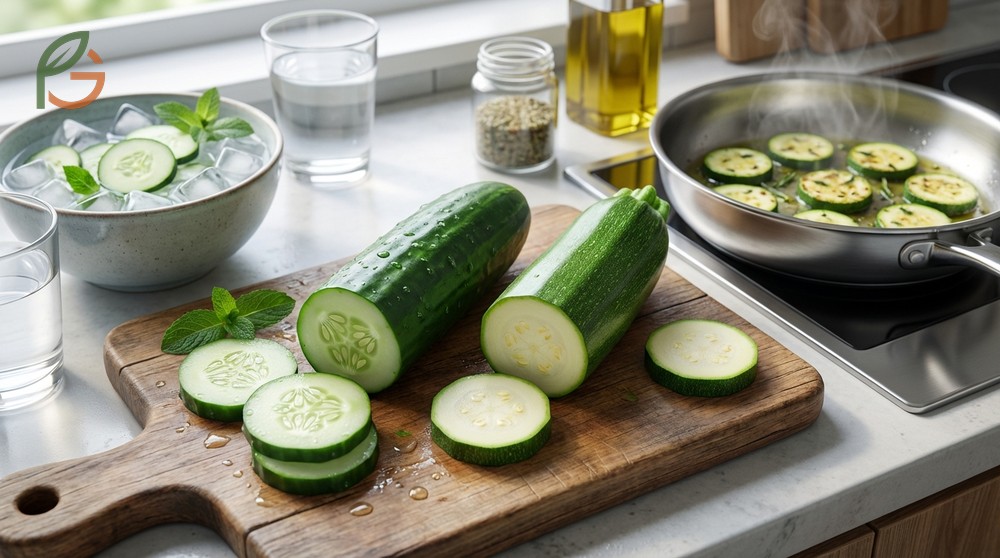
The flavor contrast hits you immediately when you bite into each vegetable raw. Current agricultural research confirms what home cooks have known for generations—these vegetables serve completely different purposes in the kitchen. Cucumbers deliver instant refreshment with their high water content, while zucchini acts as a mild flavor carrier that absorbs surrounding seasonings.
Temperature affects their taste profiles dramatically. Cucumbers lose their signature crunch when heated above 140°F (60°C), turning mushy and bitter. Zucchini reaches peak flavor between 350-400°F (177-204°C), developing a subtle caramelization that enhances its natural sweetness[3].
Cucumber Flavor Profile
Cucumbers taste like summer in vegetable form—crisp, clean, and cooling. The flesh contains cucurbitacin compounds that can produce slight bitterness, especially near the stem end. Removing the first inch eliminates most of this issue.
That distinctive “melon-like” quality comes from aldehydes in the cucumber’s cellular structure. These same compounds appear in cantaloupe and honeydew, explaining why cucumbers pair so well with mint and citrus in agua fresca recipes.
Zucchini Flavor Profile
Zucchini’s mild, slightly earthy taste makes it the chameleon of vegetables. When raw, it carries a subtle green flavor with hints of sweetness. Most people find it nearly tasteless compared to cucumber’s bold refreshment.
Cooking transforms zucchini completely. Sautéing brings out natural sugars that weren’t noticeable when raw. Grilling adds smoky depth, while baking into breads and muffins contributes moisture without competing with other flavors. When my aunt in Oaxaca makes calabacitas (Mexican sautéed zucchini), she always waits until the vegetable develops light brown edges—that’s when the flavor peaks.
- Cucumbers maintain consistent flavor whether refrigerated or at room temperature
- Zucchini tastes sweeter as it grows larger, but texture becomes spongier after 8 inches
- Cucumber seeds add pleasant crunch; zucchini seeds turn woody in oversized specimens
- Salt draws out excess moisture from cucumbers, concentrating flavor for salads
- Zucchini absorbs marinades and dressings within 15-20 minutes, unlike cucumbers which stay crisp
Nutritional Difference Zucchini Cucumber
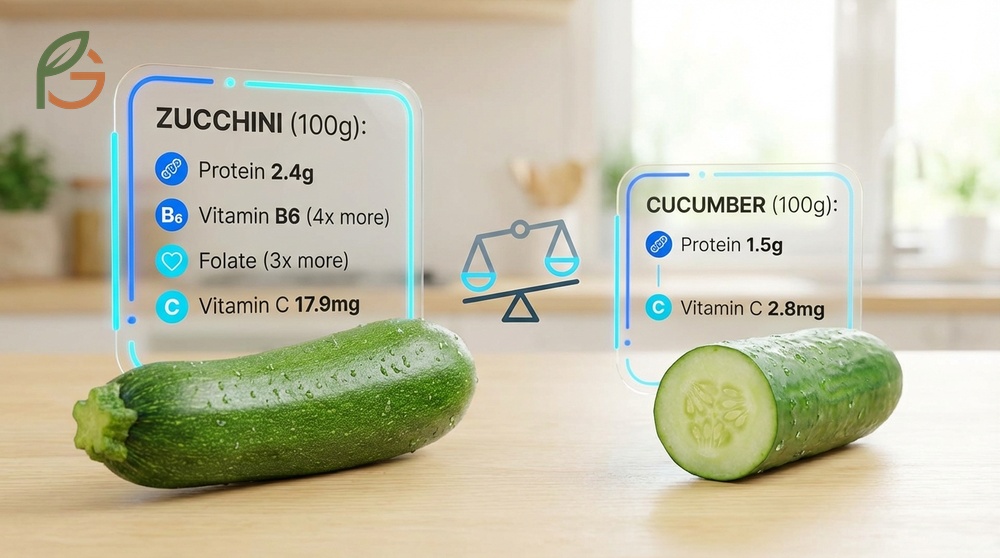
Zucchini wins the nutrition race by a significant margin. Studies show it contains nearly double the protein—2.4g versus 1.5g per 100-gram serving[2]. It also delivers four times more vitamin B6 and three times more folate than cucumbers.
The vitamin C difference is dramatic. Zucchini provides 17.9mg per 100g, covering nearly 20% of daily needs, while cucumbers offer just 2.8mg[1]. This makes zucchini particularly valuable during winter months when fresh citrus isn’t available.
Cucumbers claim victory in two areas: hydration and vitamin K. That 95% water content makes them ideal for hot summer days and post-workout recovery. They also provide 16.4mcg of vitamin K per 100g—nearly four times zucchini’s amount—supporting bone health and blood clotting[1].
This table compares calories, macronutrients, water content, and key vitamins between cucumber and zucchini per 100-gram serving
| Nutrient | Cucumber | Zucchini |
|---|---|---|
| Calories | 15 cal[1] | 17 cal[1] |
| Protein | 1.5g[2] | 2.4g[2] |
| Water Content | 95%[1] | 93% |
| Vitamin C | 2.8mg[1] | 17.9mg[1] |
| Vitamin K | 16.4mcg[1] | 4.3mcg |
| Dietary Fiber | 0.5g | 1.0g[2] |
Both vegetables fit perfectly into low-carb and keto diets. Cucumbers contain 3.6g net carbs per 100g, while zucchini has 2.1g—making zucchini the better choice for strict ketogenic eating plans. Neither vegetable will spike blood sugar levels significantly.
Cooking Impact on Nutrients: Zucchini retains 85-90% of its vitamin C when lightly sautéed for 3-4 minutes. Boiling reduces vitamin C by 50% within 7 minutes. Steam or grill for maximum nutrient retention.
Identifying Zucchini Plants
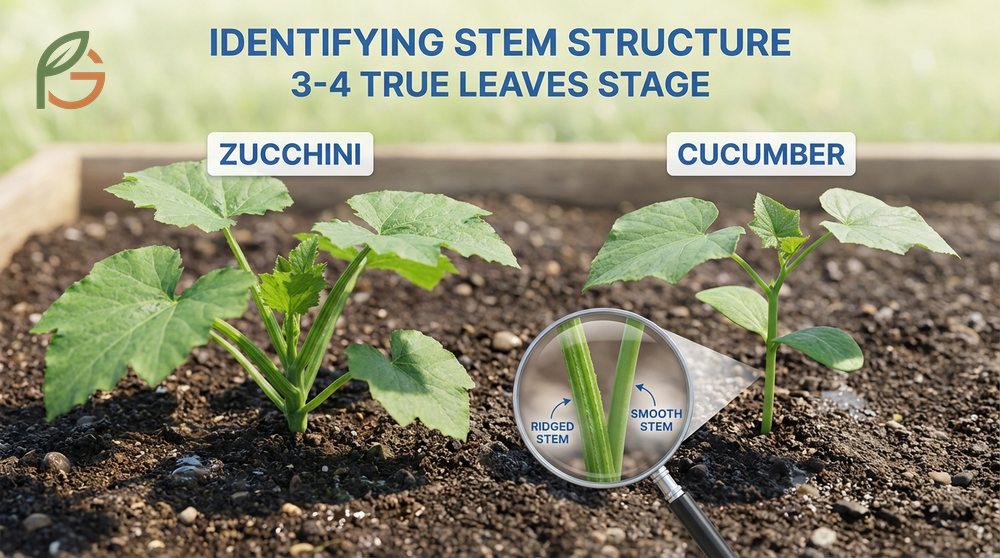
The stem structure reveals identity immediately once you know the pattern. Agricultural extension data shows stem characteristics remain consistent across all cucumber and zucchini varieties—this makes visual identification nearly 100% accurate after the first true leaves appear.
Timing matters for accurate identification. Wait until plants develop 3-4 true leaves (beyond the initial seed leaves). Before this stage, cucumbers and zucchini look remarkably similar, causing countless garden mix-ups.
Stem Characteristics
Zucchini stems display five distinct angles running vertically, creating a pentagon shape when viewed from above[4]. These ridges feel sharp under your fingers. The stem color appears almost black-green in mature plants, contrasting dramatically with lighter leaves.
Cucumber stems maintain a rounded cross-section throughout their length. Small spines or prickly hairs cover the surface—you’ll feel them immediately when handling the plant[4]. The stem color stays lighter green, never reaching the dark intensity of zucchini. As the plant matures, cucumbers develop a sprawling habit, sending runners across the ground or up trellises.
- Zucchini stems stay rigid and upright, supporting the plant’s bush structure
- Cucumber stems become flexible and vine-like within 2-3 weeks of germination
- Zucchini stems grow hollow in the center, making them surprisingly lightweight
- Cucumber stem spines increase in density as the plant ages, creating a fuzzy appearance
- Zucchini stem diameter reaches 1-1.5 inches at maturity; cucumber stems rarely exceed 0.5 inches
Leaf and Flower Differences
Leaf shape provides another reliable identifier. Zucchini leaves grow large and deeply lobed with 3-5 distinct sections. They feel slightly rough and often develop silvery patterns or spots on the surface. Cucumber leaves are smaller, more triangular, and have serrated edges with a smoother texture.
The flowers tell different stories too. Female zucchini flowers lack a visible fruit bulge behind the petals when first opening. Female cucumber flowers show a miniature cucumber clearly visible at the base—it looks like a tiny green bulb tucked right behind the blossom[4]. This difference becomes obvious within 24 hours of pollination.
Male flowers differ too. Cucumber male flowers grow on thin, delicate stems. Zucchini male flowers attach to thick, sturdy stems with a noticeable bulge at the base—this bulge isn’t a fruit, just part of the stem structure.
Cooking with Zucchini vs Cucumber
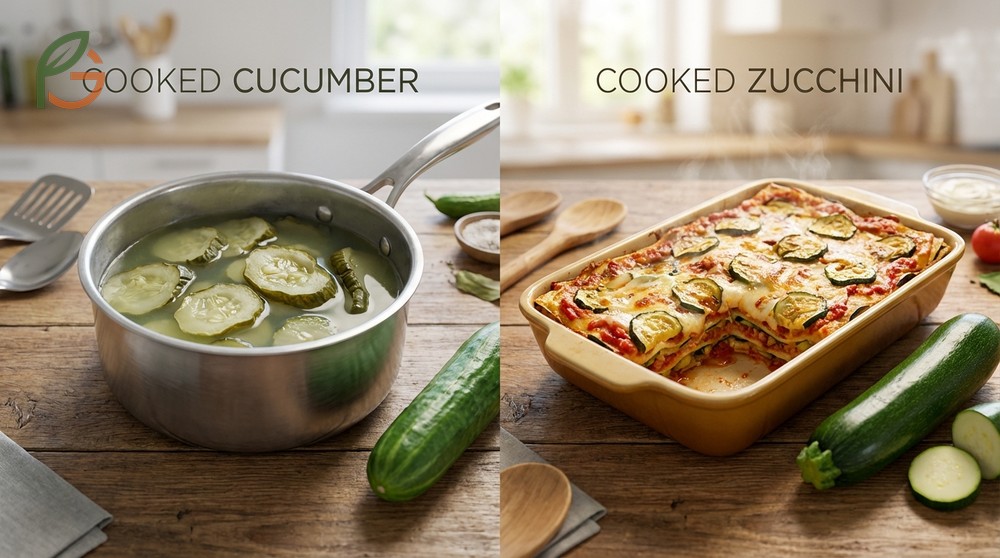
Heat transforms these vegetables in opposite directions. Cucumbers collapse into mushy, bitter disappointments when cooked, losing their signature crunch and fresh flavor. Zucchini, however, becomes more appealing with heat—developing tender texture and subtle sweetness that complements dozens of dishes[3].
This fundamental difference dictates their culinary roles completely. You’ll never see cucumber casserole on a menu, but zucchini lasagna has become a low-carb staple. Meanwhile, cucumber salads appear globally, while raw zucchini salads remain relatively uncommon outside specific regional cuisines.
Professional chefs follow simple rules: keep cucumbers raw or lightly pickled, and apply heat to zucchini. The exceptions are rare—some Asian cuisines stir-fry cucumbers briefly (under 60 seconds), and Italian carpaccio features paper-thin raw zucchini with lemon and olive oil.
- Cucumbers excel in: cold soups (gazpacho), pickles, salads, sushi rolls, and infused water
- Zucchini shines when: grilled, roasted, sautéed, spiralized into noodles, or baked into breads
- Salt cucumbers 15 minutes before serving to draw out excess water and concentrate flavor
- Don’t peel zucchini before cooking—the skin contains most of the fiber and nutrients
- Cucumbers can be frozen for smoothies but lose all crunch; zucchini freezes well after blanching for later use in cooked dishes
- Zucchini releases moisture when salted; pat dry before grilling to achieve proper caramelization
Size affects cooking results dramatically. Zucchini under 6 inches long stays tender with minimal seeds. Larger specimens develop woody centers that require seed removal. For cucumbers, the opposite applies—larger varieties (like English cucumbers) often taste milder and less bitter than small pickling types.
A friend who grows vegetables near Veracruz taught me to harvest zucchini at 4-5 inches for the best texture. He picks them daily during peak season, using the small ones for grilling whole and reserving any larger ones for shredding into zucchini bread.
Storage Tip: Keep cucumbers in the crisper drawer at 45-50°F (7-10°C) for up to one week. Zucchini lasts only 3-5 days refrigerated. Both vegetables suffer quality loss if stored below 40°F (4°C)—they develop soft spots and accelerated decay.
Conclusion
The evidence is clear: the difference between zucchini and cucumber extends far beyond appearance. Cucumbers provide unmatched hydration and refreshing crunch for raw applications, while zucchini delivers superior nutrition and versatility in cooked dishes. By checking stem structure, testing taste, and understanding their distinct growing patterns, you’ll never confuse these vegetables again.
Current agricultural guidance emphasizes growing both vegetables in home gardens—they complement each other perfectly throughout summer. Plant cucumbers on trellises to save space and improve air circulation, while giving zucchini 3-4 feet of ground space to spread. This combination ensures fresh vegetables for both salads and cooked meals from June through September in most US growing zones.
Frequently Asked Questions
What Is the Difference Between Cucumber and Courgette?
There’s no difference—courgette is simply the British and French term for zucchini. Both words refer to the same summer squash (Cucurbita pepo). In the US, Australia, and Canada, you’ll hear “zucchini,” while UK and European markets label it “courgette.” The vegetable remains identical regardless of name.
Can You Substitute Cucumber for Zucchini in Recipes?
Not in cooked dishes. Cucumbers turn mushy and bitter when heated, making them unsuitable for baking, grilling, or sautéing. You can substitute cucumber for raw zucchini in some salads, but expect a crunchier, more watery texture. The reverse substitution (zucchini for cucumber) works better since zucchini can be eaten raw, though it lacks cucumber’s refreshing quality.
What’s the Difference Between English Cucumber and Regular Cucumber?
English cucumbers (also called hothouse or seedless cucumbers) grow longer and thinner with fewer, smaller seeds and thinner skin. Regular cucumbers have thicker, sometimes waxed skin and more prominent seeds. English varieties taste milder and less bitter, plus they don’t require peeling. Both are the same species—just different cultivated varieties.
How Can You Tell Cucumber and Zucchini Plants Apart?
Check the stems first. Zucchini stems have five distinct angles forming a pentagon shape and feel completely smooth. Cucumber stems are rounded with tiny spines or prickly hairs. Zucchini stems appear dark green to black, while cucumber stems stay lighter green. This difference becomes obvious once plants develop 3-4 true leaves.
Which Is Healthier: Cucumber or Zucchini?
Zucchini wins for overall nutrition, providing 6.4 times more vitamin C, double the protein, and significantly more minerals than cucumber. However, cucumbers excel at hydration with 95% water content and deliver four times more vitamin K. Choose zucchini for nutrient density and cucumbers for hydration and bone health support.
Do Cucumbers and Zucchini Taste the Same?
No—they taste completely different. Cucumbers deliver a crisp, refreshing, cool flavor with high water content, perfect for eating raw. Zucchini has a mild, slightly earthy taste that’s less noticeable when raw but develops subtle sweetness when cooked. Most people describe cucumber as refreshing and zucchini as neutral or vegetal.
Can You Eat Zucchini Raw Like Cucumber?
Yes, zucchini is safe and nutritious when eaten raw. It won’t have cucumber’s juicy crunch—instead, expect a firmer texture with mild flavor. Raw zucchini works well spiralized into salads, sliced thin for crudité platters, or shaved into carpaccio with lemon and olive oil. The taste is subtle enough to pair with most raw vegetables and dressings.