
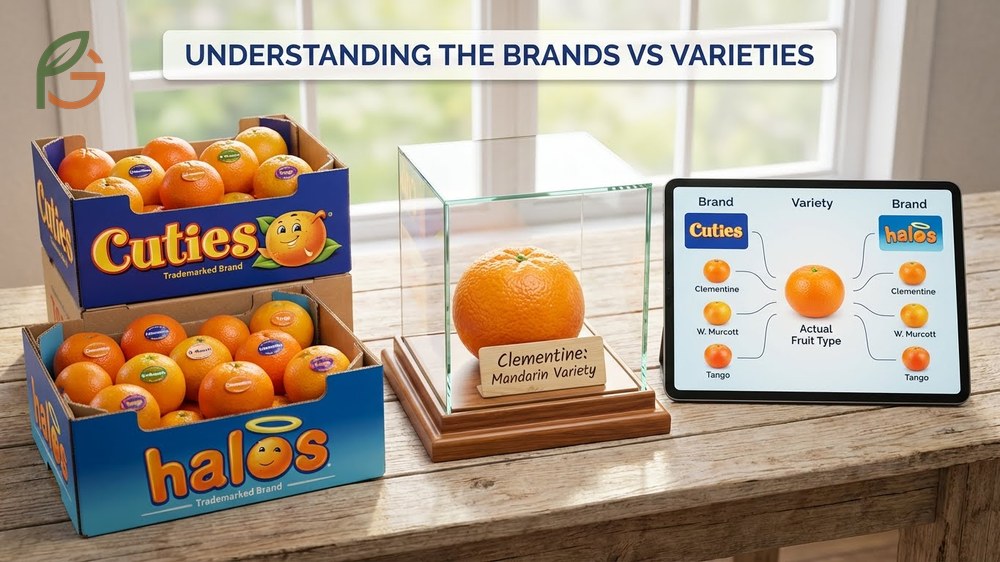
Cuties vs Clementines isn’t about comparing different fruits—it’s about understanding marketing brands. Research shows that Cuties is a trademarked brand name owned by Sun Pacific[1], while “Clementine” refers to an actual mandarin variety. Both Cuties and competitor brand Halos use multiple mandarin varieties throughout the season, including Clementines, W. Murcotts, and Tangos[2]. FruitGarden examines current agricultural data and industry practices to help growers and consumers understand citrus marketing.
Quick Answer
- Cuties and Halos are brand names, not fruit varieties—both are types of mandarin oranges
- Clementines are harvested November to mid-January, followed by W. Murcott and Tango varieties through April[3]
- Sun Pacific grows Cuties across 45,000 acres of California orchards[1]
- California mandarins yield 4-7 tons per acre depending on variety and growing conditions[4]
Cuties vs Clementines
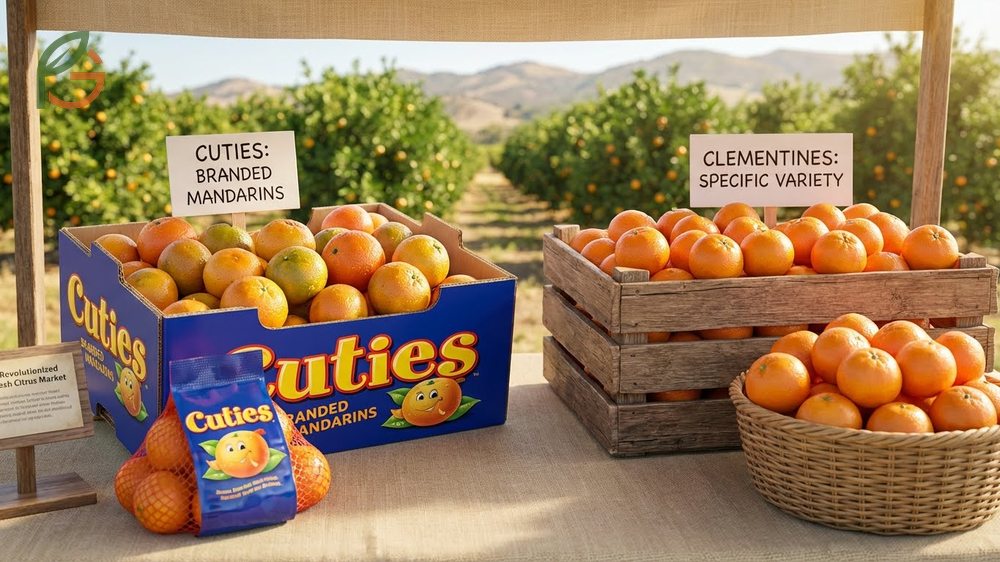
The comparison isn’t between two different fruits. Cuties represents a trademarked brand that packages various mandarin varieties under one name, while Clementines are one specific type of mandarin within the broader citrus family.
Current agricultural data shows that branded mandarins like Cuties revolutionized the fresh citrus market starting in the late 1990s. Sun Pacific began planting Spanish Mandarin trees south of Bakersfield, California in 1999[1], creating a year-round supply strategy that changed how Americans purchase small citrus.
Most people don’t realize the bag of “Cuties” they buy in November contains different fruit than what they’ll find in March. The brand switches between three main varieties—Clementines, W. Murcotts, and Tangos—to maintain consistent availability from late October through April[2].
What Cuties Actually Are
Cuties are mandarin oranges marketed under a specific brand identity. The name belongs exclusively to Sun Pacific, which grows them across 45,000 acres in California[1]. This makes them a marketing creation rather than a botanical classification.
The brand delivers 465 million pounds of fresh fruit yearly, positioning itself as the number one selling clementine brand in the country[1]. That commercial success stems from consistent quality standards and strategic variety rotation throughout the growing season.
Clementine Variety Explained
Clementines (*Citrus × clementina*) are a spontaneous hybrid between Willowleaf mandarin orange and sweet orange[5]. They originated in Algeria and were first imported to the United States from Spain during the early 1980s. These small citrus fruits are genuinely seedless, exceptionally sweet, and feature thin, easy-to-peel skin.
California Clementines ripen between mid-to-late October and early January[2]. They tend to be the smallest and roundest of the mandarin siblings, with shiny orange coloring that sometimes shows a slight reddish tint.
Important Note: When you see “Clementines” on a grocery store label without a brand name, you’re buying the actual Clementine variety. When you see “Cuties” or “Halos,” you’re buying whatever mandarin variety that brand is harvesting during that particular month.
Brand Name Differences
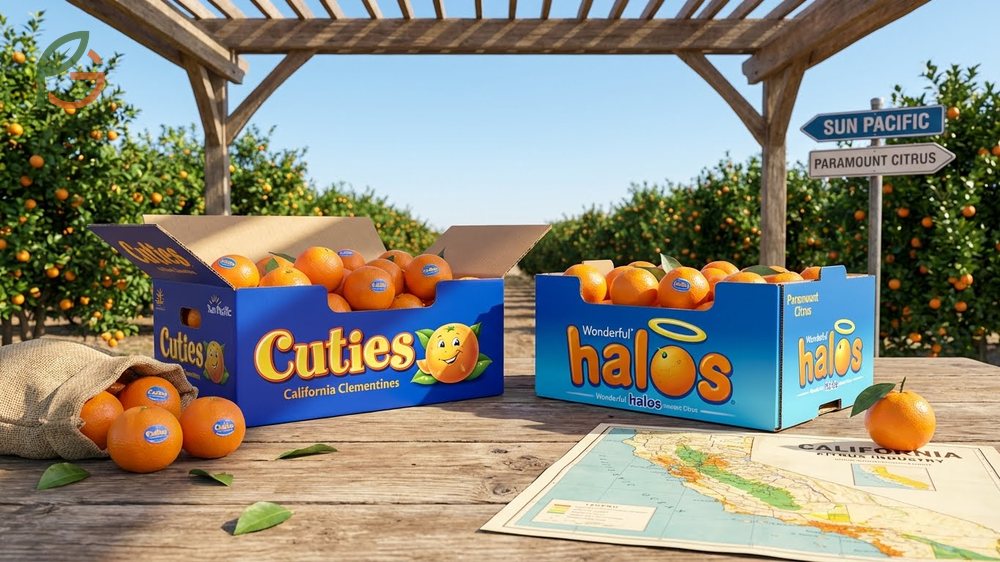
The names “Cuties” and “Halos” represent different companies competing for the same market segment. Sun Pacific owns the Cuties trademark, while Paramount Citrus (which also owns POM Wonderful) controls the Halos brand[3].
Evidence suggests these brands emerged from complex business relationships in California’s citrus industry. Paramount Citrus previously owned the Cuties name before Sun Pacific acquired it, leading to the creation of Halos as a competing brand.
Both companies follow identical seasonal strategies, rotating through the same three mandarin varieties. This creates virtually interchangeable products marketed under different names to different retail partners.
Cuties Brand History
Cuties launched as “the originals”—the first small citrus brand specifically designed to be sweet, seedless, and easy to peel[1]. The timing proved strategic as parents increasingly sought natural, healthy snack alternatives for children during the early 2000s.
The brand’s success stems from being the only mandarin product with widespread television advertising. Unlike the competitive orange juice market with multiple advertised brands, Cuties dominated mandarin marketing early and maintained that advantage.
- 1999: Sun Pacific plants first Clementine trees in California orchards
- Early 2000s: Cuties brand launches with child-focused marketing campaign
- 2002: “Li’l Zipper” mascot introduced to build brand recognition
- Mid-2000s: Expands to 45,000 acres of California cultivation
- Present day: Delivers 465 million pounds annually as the top-selling clementine brand[1]
Halos vs Cuties
The practical differences between Halos and Cuties are minimal. Both use Clementines from November to January, then switch to W. Murcott and Tango varieties from February through April or May[3].
Some taste tests reveal subtle differences. Halos may peel slightly harder with skin that adheres more firmly to the fruit segments. Cuties often taste marginally sweeter with less tartness, though these characteristics vary by individual fruit and seasonal factors rather than representing consistent brand differences.
What matters most to home growers and consumers is understanding that brand loyalty means nothing botanically. You’re choosing between two marketing organizations that source similar varieties from California’s mandarin-growing regions.
Mandarin Varieties Used
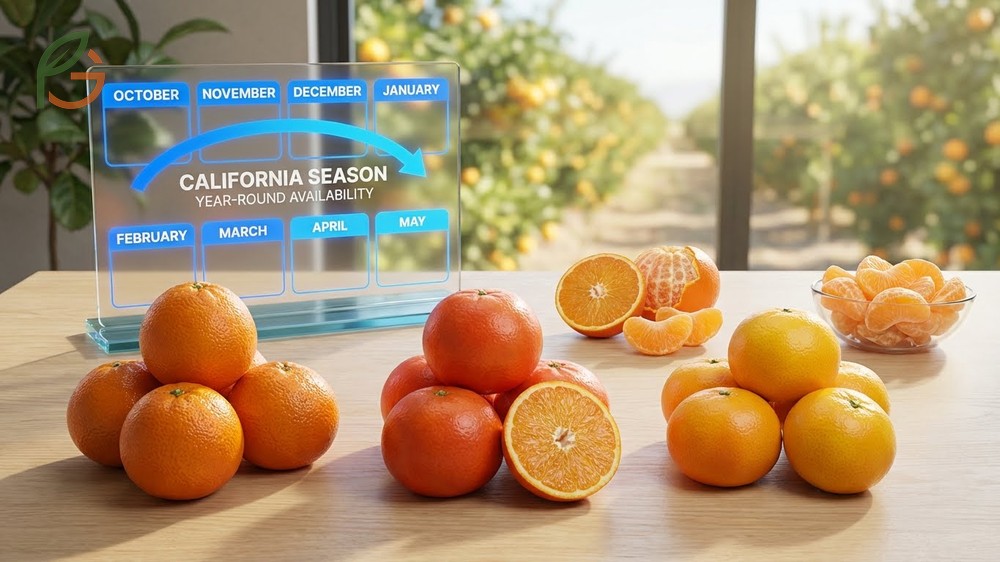
Studies demonstrate that both major brands rotate through three primary mandarin types to maintain year-round availability. This strategic approach covers the entire California mandarin season, which runs from late October through early May.
The mandarin family includes numerous cultivars available to growers. California production focuses on varieties that deliver seedless fruit, easy-peeling characteristics, and high sugar content that appeals to the American market.
This table shows which mandarin varieties each brand uses during specific months throughout the California harvest season
| Brand | Early Season (Nov-Jan) | Mid Season (Jan-Feb) | Late Season (Feb-May) |
|---|---|---|---|
| Cuties | Clementines | Clementines / W. Murcott transition | W. Murcott[3] |
| Halos | Clementines | W. Murcott / Tango | W. Murcott & Tango[3] |
Clementine Mandarins
Clementines represent the early-season variety that starts the branded mandarin supply chain. California growers harvest them from mid-to-late October through early January[2], with peak quality arriving around Thanksgiving.
This variety delivers the smallest fruit size within the mandarin category. They’re exceptionally sweet with smooth, shiny skin that peels effortlessly. True Clementines are completely seedless unless cross-pollination occurs with other citrus varieties in mixed orchards.
W. Murcott Variety
W. Murcott mandarins are a hybrid between mandarin and sweet orange, with King mandarin as one parent[5]. California growers harvest them from mid-January through April, filling the gap after Clementine season ends.
These mandarins grow slightly larger than Clementines with deeper orange coloring. The flavor profile includes more complexity—still sweet but with aromatic qualities and richer juice content. W. Murcott fruit develops seeds when grown near other citrus varieties that provide cross-pollination, which is why isolated growing conditions matter for commercial production.
Tango Mandarins
Tango is a proprietary seedless variety developed through gamma-irradiation mutation breeding of W. Murcott budwood by the University of California Citrus Breeding Program[5]. Research shows both varieties share identical characteristics of size, color, sweetness, and easy peeling, but Tango maintains very low seed content even in mixed orchards.
The key difference lies in pollen viability. Tango produces much lower viable pollen than its predecessor, making it genuinely seedless regardless of growing conditions[6]. This gives growers flexibility in orchard planning without sacrificing seedless fruit quality.
- Clementine: Early season, smallest size, extremely sweet, completely seedless
- W. Murcott: Mid-to-late season, larger fruit, rich aromatic flavor, requires isolation for seedless fruit
- Tango: Mid-to-late season, seedless in all conditions, developed from Murcott mutation
- Satsuma: Cold-hardy variety, bumpy exterior, exceptionally easy peeling, less common in major brands
- Pixie: Late-season specialty, small size, low acid, grown in limited California regions[4]
Growing Tip: Home orchard growers in California can plant the same varieties used by commercial brands. Clementines need 6-8 hours of daily sunlight and produce fruit within 2-3 years of planting. W. Murcott and Tango varieties require similar conditions but benefit from cross-pollination protection if you want truly seedless fruit.
Taste and Size Differences
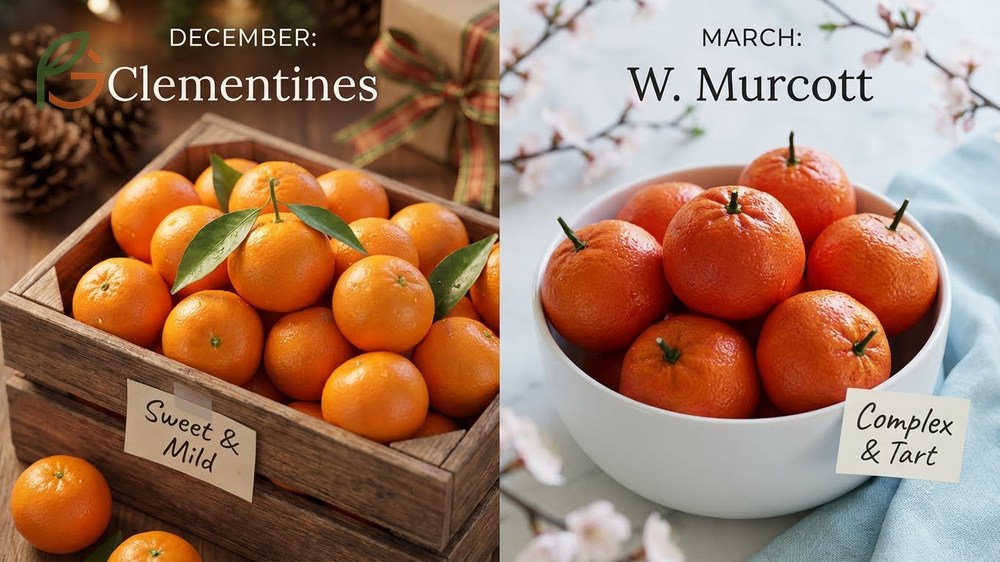
The taste variations consumers notice between branded mandarins relate more to variety rotation than to brand differences. Clementines harvested in December deliver pure sweetness with minimal acidity. W. Murcott mandarins picked in March taste more complex with deeper aromatic notes and slightly more tartness.
Size follows similar patterns. Early-season Clementines measure smaller—typically 1.5 to 2.5 inches in diameter. Mid-to-late season W. Murcott and Tango varieties grow larger, reaching 2.5 to 3 inches across with more juice content per fruit.
Agricultural data indicates that sizing varies with crop load and weather conditions. California’s 2025-2026 mandarin crop is running 25 percent lighter than the previous year, causing fruit to size up slightly larger[7]. Wet October weather affects picking schedules and fruit quality characteristics across all varieties.
The easiest way to predict what you’re getting is checking the harvest month rather than trusting brand names. November through mid-January means Clementines regardless of whether the bag says Cuties or Halos. February through April means W. Murcott or Tango varieties with their characteristic larger size and richer flavor.
- Clementine: Bright orange, smooth glossy skin, 1.5-2.5 inches, pure sweetness, minimal seeds
- W. Murcott: Deep orange-red, slightly rougher texture, 2.5-3 inches, aromatic sweetness with complexity
- Tango: Similar to Murcott in appearance, identical size range, guaranteed seedless, rich sweet-tart balance
- Texture difference: Clementines peel effortlessly with segments that separate cleanly; Murcott skin adheres more firmly
- Juice content: Later-season varieties contain noticeably more juice when you bite into segments
What often gets overlooked is that mandarin flavor depends heavily on harvest timing within each variety’s season. Early-picked fruit tastes less sweet with higher acidity. Fruit harvested at peak maturity delivers optimal sugar-to-acid balance. The degreening period after harvest—typically 5-7 days depending on initial color—also influences final flavor development.
Growing California Mandarins
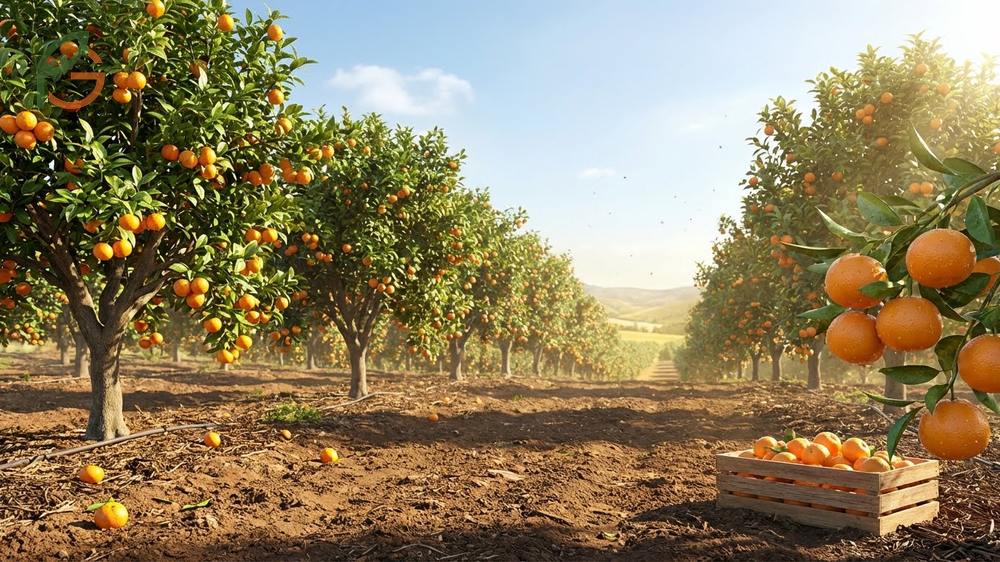
California mandarin cultivation requires specific conditions that make the state ideal for commercial production. Trees need full sun exposure with 6-8 hours of direct sunlight daily. Soil must drain well since mandarin roots are susceptible to rot in waterlogged conditions.
Commercial yields range from 4-7 tons per acre depending on variety, tree age, and management practices[4]. Mature Clementine orchards typically produce on the lower end of that range, while W. Murcott plantings can exceed 7 tons per acre under optimal conditions.
The California growing regions south of Bakersfield provide ideal climate conditions. Winter temperatures rarely drop below freezing, protecting developing fruit during the November-to-January Clementine harvest. Spring weather remains mild enough to support late-season Murcott and Tango production through April and May.
Home growers can successfully cultivate these same varieties in USDA zones 9-11. Trees tolerate brief temperature drops to 28-30°F (approximately -2 to -1°C) but suffer damage below that threshold. Clementines show the least cold tolerance, while Satsuma mandarins (not commonly used in major brands) handle temperatures down to 15°F (-9°C).
- Sunlight: Minimum 6-8 hours of direct sun daily for fruit development and sugar accumulation
- Soil pH: 6.0-7.5 range with excellent drainage to prevent root diseases
- Water: Deep watering once weekly during growing season, reduced in winter months
- Spacing: 12-15 feet between trees for standard varieties, 8-10 feet for semi-dwarf rootstocks
- Fertilization: Balanced citrus fertilizer applied monthly during active growth, reduced or stopped in winter
- Harvest timing: Taste-test fruit regularly rather than relying solely on color, as sweetness develops before full color
Current guidance emphasizes sustainable orchard management that balances productivity with environmental impact. Integrated pest management reduces chemical inputs while maintaining fruit quality. Efficient irrigation systems conserve water—increasingly critical in California’s agricultural regions facing periodic drought conditions.
Conclusion
The evidence is clear: Cuties vs Clementines represents a false comparison created by marketing rather than botanical reality. Cuties is a brand that packages multiple mandarin varieties seasonally, while Clementines are one specific variety used early in the harvest season. Understanding this distinction helps consumers make informed purchasing decisions and helps growers recognize the commercial opportunities in California’s mandarin industry.
Whether you’re growing mandarins for a home orchard or simply shopping for citrus, focus on variety characteristics and harvest timing rather than brand names. The same Clementine variety tastes identical whether packaged as Cuties, Halos, or sold as generic clementines. FruitGarden continues tracking agricultural research and industry developments to provide accurate, practical information for fruit growers and informed consumers.
Frequently Asked Questions
Are Cuties and Clementines the same thing?
No, they’re not the same thing. Cuties is a brand name that includes Clementines during November-January, but switches to W. Murcott and Tango varieties from February-April. Clementines are a specific mandarin variety—one of several types packaged under the Cuties brand depending on the season.
What’s the difference between Halos and Cuties?
The difference is purely branding and ownership. Halos are owned by Paramount Citrus while Cuties belong to Sun Pacific. Both brands use identical mandarin varieties on the same seasonal schedule—Clementines early, then W. Murcott and Tango later. Taste and quality differences are minimal and relate more to individual fruit variation than consistent brand characteristics.
Why do Cuties taste different at different times of year?
Cuties taste different because the brand rotates between three distinct mandarin varieties throughout the harvest season. Clementines (November-January) deliver pure sweetness and small size. W. Murcott mandarins (February-April) taste more complex with aromatic notes and increased juice content. These are genuinely different fruits packaged under the same brand name.
Can I grow Cuties in my backyard?
You can’t grow “Cuties” specifically since that’s a trademarked brand name, but you can grow the same varieties they use. Plant Clementine mandarin trees for early-season fruit or W. Murcott for mid-to-late season harvests. Both varieties require USDA zones 9-11, full sun (6-8 hours daily), and well-draining soil. Trees typically produce fruit within 2-3 years of planting.
Are Clementines actually seedless?
True Clementines are genuinely seedless when grown in isolation from other citrus varieties. However, if Clementine trees are planted near other citrus that provides cross-pollination, seeds can develop in the fruit. Commercial operations maintain isolated orchards specifically to guarantee seedless Clementines. W. Murcott requires similar isolation, while Tango remains seedless even in mixed plantings due to its low pollen viability.
Which brand is better quality—Cuties or Halos?
Neither brand offers consistently superior quality since both source from California’s mandarin-growing regions using identical varieties and similar production standards. Quality depends more on harvest timing, handling, and storage conditions than brand choice. Some consumers report slight taste preferences, but these vary by season and individual fruit rather than representing reliable brand differences.
When is the best time to buy Clementines?
The best time to buy true Clementines is from Thanksgiving through mid-January when California growers harvest this specific variety at peak ripeness. During this window, any branded mandarins (Cuties or Halos) will be authentic Clementines. After mid-January, brands switch to W. Murcott and Tango varieties, which taste different despite similar appearance and marketing.





