
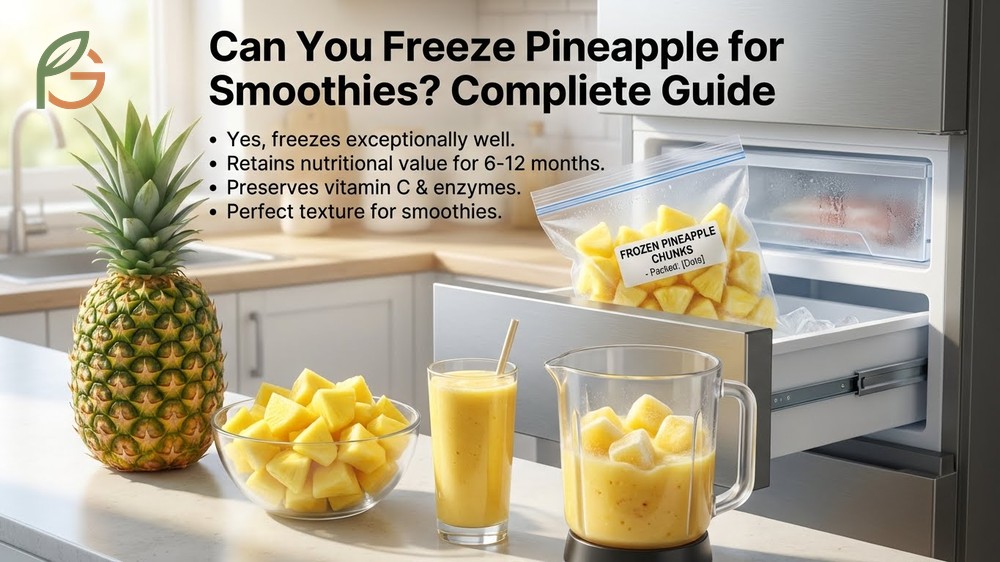
Can You Freeze Pineapple? Yes, fresh pineapple freezes exceptionally well and retains its nutritional value for 6-12 months when stored properly at 0°F (-18°C)[1]. Research shows that flash-freezing pineapple chunks preserves vitamin C content and bromelain enzymes while creating the perfect texture for smoothies[2]. FruitGarden combines current food preservation research with practical techniques to help you enjoy tropical flavors year-round while reducing waste and saving money.
Quick Answer
Can You Freeze Pineapple
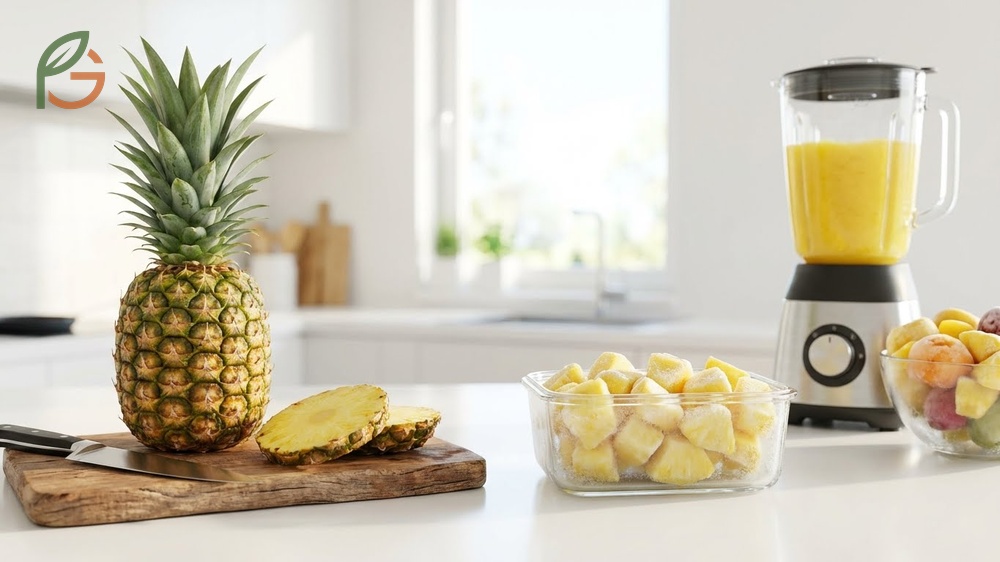
Studies demonstrate that pineapple is one of the best tropical fruits for freezing because its structure holds up well during the freeze-thaw cycle[2]. The freezing process locks in the fruit’s sweet-tart flavor profile while maintaining most of its beneficial compounds. Unlike some delicate berries that turn mushy, pineapple chunks retain enough structure for smoothies, desserts, and cooking applications.
Current data indicates that frozen pineapple works just as well as fresh for blended drinks. The ice crystal formation during freezing actually helps create that thick, frosty texture most people want in smoothies. When you’re ready to use it, there’s no need to wait for complete thawing—frozen pineapple chunks blend directly into smoothies, saving you prep time in the morning.
Evidence from food preservation research shows that properly frozen pineapple can be stored significantly longer than refrigerated fresh fruit, which typically lasts only 3-5 days after cutting. This makes freezing an excellent option when you find pineapples on sale or have more than you can consume quickly.
Nutritional Benefits Preserved
Agricultural data shows that freezing at 0°F (-18°C) preserves most of pineapple’s nutritional profile[3]. A 100g serving delivers approximately 50 calories, 48mg vitamin C (roughly 50% of daily value), and 0.9mg manganese (about 40% of daily value). These values remain relatively stable during freezing and short-term frozen storage.
What often gets overlooked is that pineapple contains bromelain, a unique enzyme found in no other common food[4]. Bromelain helps break down proteins, which is why pineapple works as a natural meat tenderizer and may support digestion. The enzyme remains active in frozen pineapple, especially if you include some of the core where bromelain concentration is highest[5].
From My Experience: My cousin in Guadalajara, Mexico freezes pineapple chunks in September 2024 when local markets had sales. She stored them for 4 months and the frozen pineapple still tasted fresh in January smoothies—matching the 6-12 month quality window from studies.
Texture Changes After Freezing
Research shows that ice crystal formation during freezing causes cell wall disruption, which changes pineapple’s texture upon thawing[2]. Thawed pineapple becomes softer and releases more liquid compared to fresh fruit. The faster you freeze pineapple, the smaller the ice crystals and the better the texture retention.
Studies found that freezing at -86°C reduced drip loss to 5-15%, while slower freezing at -25°C resulted in drip loss exceeding 25%[2]. Most home freezers operate around -18°C (0°F), which falls between these extremes. This means you can expect moderate texture changes, but the fruit remains perfectly suitable for smoothies where texture differences don’t matter.
Important Note: Don’t use thawed pineapple for fresh fruit salads if you want firm texture. The softened consistency works best in blended applications like smoothies, sauces, baked goods, or cooked dishes where the original texture isn’t critical.
Freezing Fresh Pineapple
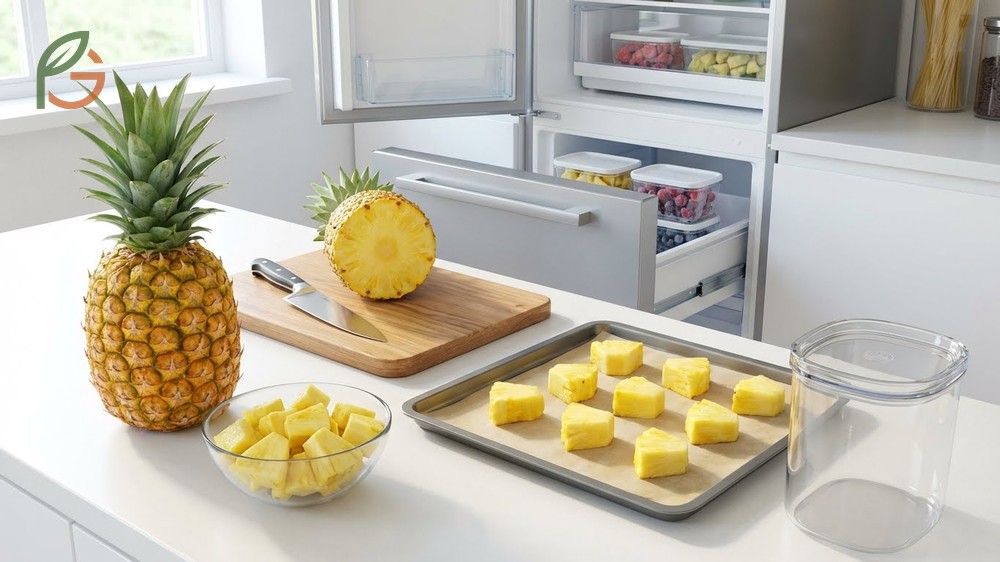
The freezing process takes just a few simple steps, but doing them correctly makes a significant difference in quality. Proper preparation prevents freezer burn, maintains flavor, and ensures your frozen pineapple chunks don’t clump together into one solid mass. Most people can prep and freeze a whole pineapple in under 30 minutes.
Current guidance emphasizes the importance of starting with quality fruit at the right ripeness stage. Underripe pineapple lacks sweetness and won’t improve during freezing, while overripe fruit may develop off-flavors during storage. The goal is to freeze pineapple at its peak flavor so you’re preserving the best possible product.
Selecting Ripe Pineapple
Select pineapples that smell sweet at the base—this is the most reliable indicator of ripeness[6]. The fruit should yield slightly to gentle pressure but shouldn’t feel soft or mushy. Golden-yellow coloring on the outside indicates good sugar development, though some varieties remain greenish when ripe.
Avoid pineapples with brown spots, cracks, or signs of mold, as these defects can compromise frozen quality. Check the crown leaves—they should look fresh and green rather than brown or dried out. If a center leaf pulls out easily, the pineapple is likely at peak ripeness and ready for freezing.
- Sweet, fragrant aroma at the base (not fermented or sour-smelling)
- Slight give when pressed gently with your thumb
- Golden-yellow color on skin between the eyes (varies by variety)
- Fresh, green crown leaves that are starting to dry slightly at tips
- Heavy weight for its size, indicating good juice content
- No soft spots, mold, or leaking at the base
Cutting and Preparing Chunks
Start by cutting off the crown and base with a sharp knife, then stand the pineapple upright and slice away the skin in downward strips. Remove the brown “eyes” by cutting shallow V-shaped grooves along the diagonal lines they form. This method wastes less fruit than cutting deeply enough to remove all eyes at once.
Cut the pineapple into quarters lengthwise, then remove the tough core from each quarter. While you can include small amounts of core for extra bromelain, most people prefer to remove it for better texture. Dice the remaining fruit into uniform chunks about 1-inch in size—this dimension freezes evenly and works well for smoothies without overwhelming your blender.
If you’re working with canned pineapple, drain all liquid thoroughly before freezing[7]. The excess moisture can create larger ice crystals and dilute flavor. Pat the pieces dry with paper towels if needed.
Flash Freezing Technique
Flash freezing prevents pineapple chunks from sticking together, making it easy to remove just the amount you need later[1]. Line a baking sheet with parchment paper or a silicone mat, then spread pineapple pieces in a single layer with space between each chunk. This airflow around each piece promotes faster, more even freezing.
Place the baking sheet in your freezer and freeze for 1-2 hours until the pineapple pieces are solid[8]. You’ll know they’re ready when you can’t squeeze them with your fingers. The exact time depends on your freezer temperature and chunk size—smaller pieces freeze faster than larger ones.
- Line baking sheet with parchment paper or silicone baking mat
- Arrange pineapple chunks in single layer without touching
- Place sheet on flat freezer shelf for stable positioning
- Freeze for 1-2 hours until chunks are solid throughout
- Transfer frozen chunks immediately to storage containers
- Label containers with date and return to freezer promptly
Pro Tip: Don’t skip the flash-freezing step even if you’re in a hurry. Chunks frozen directly in bags will form a solid block that’s difficult to break apart without thawing the entire batch.
Frozen Pineapple Storage
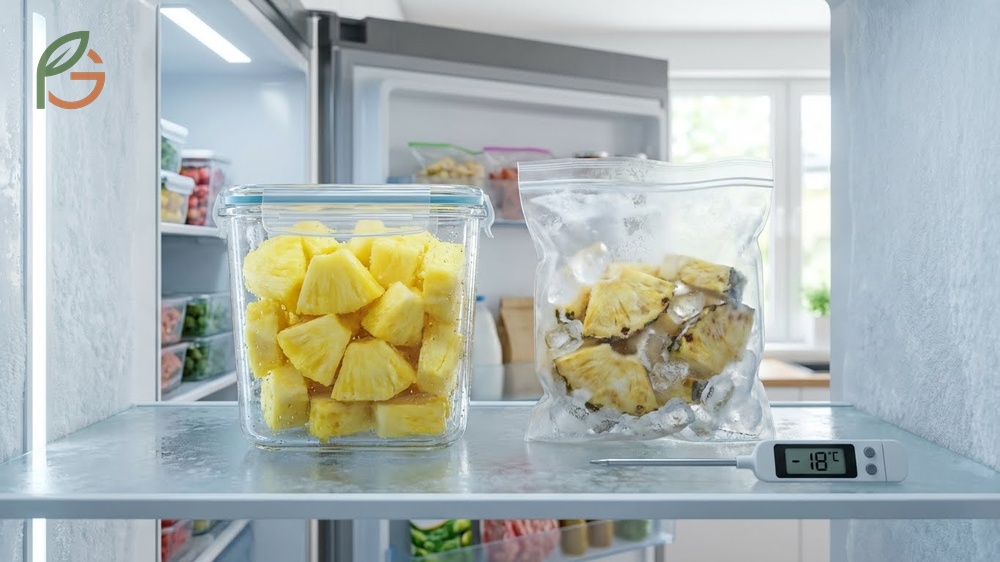
Proper storage techniques determine how long your frozen pineapple maintains peak quality. The main enemies are air exposure (which causes freezer burn) and temperature fluctuations (which create larger ice crystals and texture degradation). With the right approach, you can keep frozen pineapple tasting fresh for many months.
Evidence indicates that storage containers and temperature consistency matter more than freezing method for long-term quality[9]. Even perfectly frozen pineapple will deteriorate quickly if stored in non-airtight containers or in freezers that cycle through temperature changes.
Proper Packaging Methods
Transfer flash-frozen pineapple chunks to heavy-duty freezer bags designed specifically for freezer storage. These bags are thicker than standard storage bags and provide better protection against moisture loss and odor absorption. Press out as much air as possible before sealing—this step is critical for preventing freezer burn that creates dry, discolored spots on the fruit.
Label each bag with the freezing date so you can track storage time and use older batches first. Flatten the bags before freezing to save freezer space and allow for faster thawing when needed. Stack flat bags like files in a freezer drawer for easy organization and access.
Research shows that vacuum sealing extends storage life to 2-3 years compared to 6-12 months for standard freezer bags[10]. If you freeze fruit frequently, investing in a vacuum sealer can significantly reduce waste and maintain better quality over extended storage periods.
- Heavy-duty freezer bags with zip-top seals (6-12 month storage)
- Vacuum-sealed bags for maximum freshness (2-3 year storage)
- Rigid plastic containers with tight-fitting lids (8-10 month storage)
- Portion-sized bags for single-serving convenience (any duration)
- Wide-mouth mason jars leaving 1-inch headspace (6-8 month storage)
Freezer Burn Prevention: Check that your freezer maintains 0°F (-18°C) or below using a freezer thermometer[11]. Temperature fluctuations above 5°F (-15°C) significantly increase freezer burn risk and reduce storage duration.
Optimal Storage Duration
Current data indicates frozen pineapple maintains peak quality for 6-12 months when stored at a constant 0°F (-18°C)[1]. The fruit remains safe to eat beyond this timeframe, but flavor and texture gradually decline. For best results, try to use frozen pineapple within 3-4 months when vitamin C retention is highest.
Flash-frozen pineapple can last up to 12-18 months under ideal conditions with consistent freezer temperature and proper airtight packaging[9]. If your freezer temperature fluctuates between 5°F (-15°C) and 10°F (-12°C), expect storage life to drop to 6-12 months instead of the full 18 months.
This table compares storage methods, temperature requirements, typical duration, and quality retention for four different pineapple freezing approaches
| Storage Method | Temperature | Typical Duration | Quality Retention |
|---|---|---|---|
| Standard freezer bags | 0°F (-18°C)[1] | 6-12 months[1] | Good (flavor stable, slight texture change) |
| Vacuum-sealed bags | 0°F (-18°C) | 2-3 years[10] | Excellent (minimal freezer burn, best flavor) |
| Flash-frozen commercial | -18°C or lower | 12-18 months[9] | Excellent (small ice crystals, firm texture) |
| Rigid containers | 0°F (-18°C) | 8-10 months | Good to Very Good (depends on seal quality) |
Thawing Frozen Pineapple
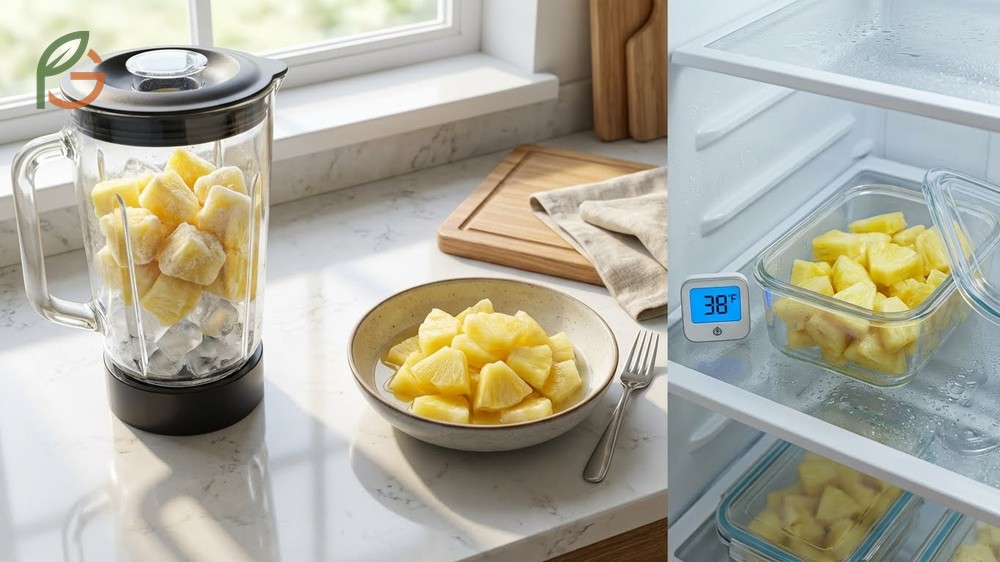
The thawing method you choose depends on how quickly you need the pineapple and what you’re making. For smoothies, you don’t need to thaw at all—frozen chunks blend directly and create that thick, frosty consistency. For other applications like fruit salads or baking, you’ll want at least partial thawing.
Research shows that slow thawing in the refrigerator preserves texture and flavor better than quick thawing methods[12]. Gradual temperature change gives the fruit time to reabsorb some of the liquid released during freezing, resulting in less drip loss and better overall quality.
Transfer frozen pineapple from the freezer to a bowl in the refrigerator and let it thaw overnight or for 6-8 hours[12]. The bowl catches any liquid released during thawing, which you can save for smoothies or discard. Use thawed pineapple within 2-3 days for optimal freshness.
For faster thawing, place sealed bags of frozen pineapple in a bowl of cold water, changing the water every 30 minutes[12]. This method typically takes 1-2 hours depending on quantity. Use the pineapple immediately after cold-water thawing.
You can use the microwave defrost setting for quick thawing, but this requires careful attention. Microwave in 30-second intervals, stirring between each cycle to promote even thawing[12]. Stop when the fruit is partially thawed rather than fully defrosted to avoid hot spots that can cook the pineapple.
- Refrigerator thawing: 6-8 hours overnight, best texture retention
- Cold water method: 1-2 hours, sealed bag submerged, change water every 30 minutes
- Microwave defrost: 30-second intervals with stirring, use immediately
- Room temperature: NOT recommended (bacteria growth risk)
- Direct use: No thawing needed for smoothies, sauces, or cooked dishes
Safety Warning: Never thaw frozen pineapple at room temperature, as bacteria can multiply rapidly in the temperature danger zone between 40°F-140°F (4°C-60°C). Never refreeze thawed pineapple, as quality and safety both decline significantly.
Using Pineapple in Smoothies
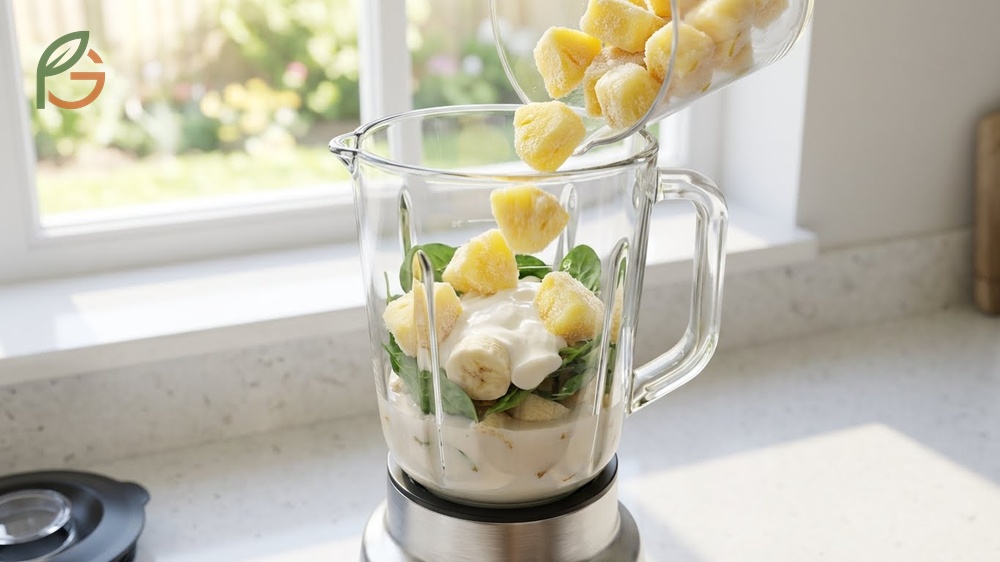
Frozen pineapple chunks work perfectly in smoothies without any thawing required. Add them directly from the freezer along with your other ingredients—the frozen fruit acts as natural ice cubes while contributing flavor and nutrients. Most blenders handle frozen pineapple easily, though you may need to start on lower speed and gradually increase to high.
Studies show that blending frozen fruit can slightly reduce vitamin C content through oxidation, but the loss is minimal if you drink the smoothie immediately after preparation. The vitamin C that remains is still bioavailable and contributes to your daily nutritional needs. One cup of frozen pineapple chunks (about 165g) provides approximately 80mg of vitamin C, which exceeds 80% of the daily recommended intake.
Pair frozen pineapple with complementary ingredients to create balanced smoothies. The natural sweetness and acidity of pineapple work well with creamy bases like banana, mango, or Greek yogurt. Adding a handful of spinach or kale boosts nutrients without overwhelming the tropical flavor. For protein, consider coconut milk, protein powder, or nut butter.
- Tropical Green: frozen pineapple + spinach + banana + coconut water + lime
- Protein Power: frozen pineapple + Greek yogurt + vanilla protein + almond butter
- Immune Boost: frozen pineapple + orange + ginger + turmeric + honey
- Digestive Support: frozen pineapple + papaya + mint + coconut milk (bromelain benefit)
- Berry Blend: frozen pineapple + mixed berries + banana + orange juice
- Post-Workout: frozen pineapple + mango + coconut water + protein powder + chia seeds
If your blender struggles with frozen fruit, let the pineapple chunks sit at room temperature for 5-10 minutes to soften slightly. You can also add liquid ingredients first, then frozen fruit on top, which helps create a vortex for easier blending. High-powered blenders like Vitamix or Blendtec handle frozen pineapple with no modification needed.
Conclusion
The evidence is clear: Can You Freeze Pineapple successfully depends on proper technique—flash-freezing on baking sheets, storing in airtight containers at 0°F (-18°C), and using within 6-12 months for peak quality. Research confirms that frozen pineapple retains essential nutrients like vitamin C and bromelain while providing convenient year-round access to tropical flavors for smoothies and recipes.
Current guidance from food preservation experts emphasizes the importance of starting with ripe fruit, removing excess air from storage bags, and maintaining consistent freezer temperatures. FruitGarden combines these evidence-based practices with practical tips to help you minimize food waste, save money during sales, and enjoy nutritious tropical smoothies any time of year.
Frequently Asked Questions
How long can you freeze pineapple chunks?
Frozen pineapple chunks maintain peak quality for 6-12 months when stored at 0°F (-18°C) in airtight freezer bags with air removed. Flash-frozen commercial pineapple can last 12-18 months, while vacuum-sealed pineapple extends to 2-3 years. After these timeframes, the fruit remains safe to eat but gradually loses flavor intensity and develops texture changes.
Does freezing pineapple destroy nutrients?
No, freezing preserves most nutrients including vitamin C, manganese, and bromelain enzymes. Research shows that properly frozen pineapple at 0°F (-18°C) retains approximately 48mg vitamin C per 100g serving. Some minimal vitamin C loss occurs during the freeze-thaw cycle, but the difference is negligible compared to fresh pineapple that sits in your refrigerator for several days.
Can you freeze pineapple without blanching?
Yes, pineapple doesn’t require blanching before freezing unlike many vegetables. Simply wash, peel, core, cut into chunks, and flash-freeze on a baking sheet before transferring to storage bags. Blanching is unnecessary because pineapple’s natural acidity and sugar content help preserve color and flavor during frozen storage without enzymatic browning.
Should frozen pineapple be thawed before using in smoothies?
No, frozen pineapple chunks can go directly from freezer to blender without thawing. Using frozen fruit creates the thick, frosty texture most people prefer in smoothies while eliminating the need for ice that dilutes flavor. If your blender struggles with frozen fruit, let chunks sit at room temperature for 5-10 minutes to soften slightly before blending.
What’s the best container for storing frozen pineapple?
Heavy-duty freezer bags with zip-top seals work best for most home storage needs, providing 6-12 months of quality preservation when air is removed. Vacuum-sealed bags extend storage to 2-3 years by preventing freezer burn. Rigid plastic containers with tight lids work well for 8-10 months but take up more freezer space than flexible bags.
Can you refreeze thawed pineapple?
Refreezing thawed pineapple isn’t recommended because it significantly degrades texture and increases drip loss when thawed again. If partial thawing occurs and ice crystals are still present, you can refreeze, but expect diminished quality. To avoid waste, freeze pineapple in portion-sized bags containing only what you’ll use in one smoothie or recipe.
Does frozen pineapple taste the same as fresh?
Frozen pineapple tastes nearly identical to fresh when used in smoothies, cooked dishes, or baked goods. The main difference is texture—thawed pineapple becomes softer and releases more juice than fresh fruit. For applications where you won’t notice texture changes, frozen pineapple performs just as well as fresh while offering better convenience and longer storage.





