

Can dogs eat persimmons? Yes, dogs can eat persimmons, but only the seedless flesh in moderation. Research shows persimmon seeds and skin create phytobezoars—hard fibrous masses that cause life-threatening intestinal blockages when mixed with stomach acid.[1] FruitGarden synthesizes veterinary guidance and nutritional data to help pet owners make informed decisions about sharing fruits with their dogs.
Quick Answer
- Dogs can eat persimmon flesh safely, but seeds and skin must be removed completely[2]
- Persimmon seeds cause intestinal blockages called phytobezoars that require emergency veterinary care[1]
- One medium persimmon contains 118 calories[3] and 31.2g carbohydrates[3]—feed only as occasional treats
- Watch for blockage symptoms: vomiting, abdominal pain, loss of appetite, and lethargy within 12-48 hours[4]
Can Dogs Eat Persimmons
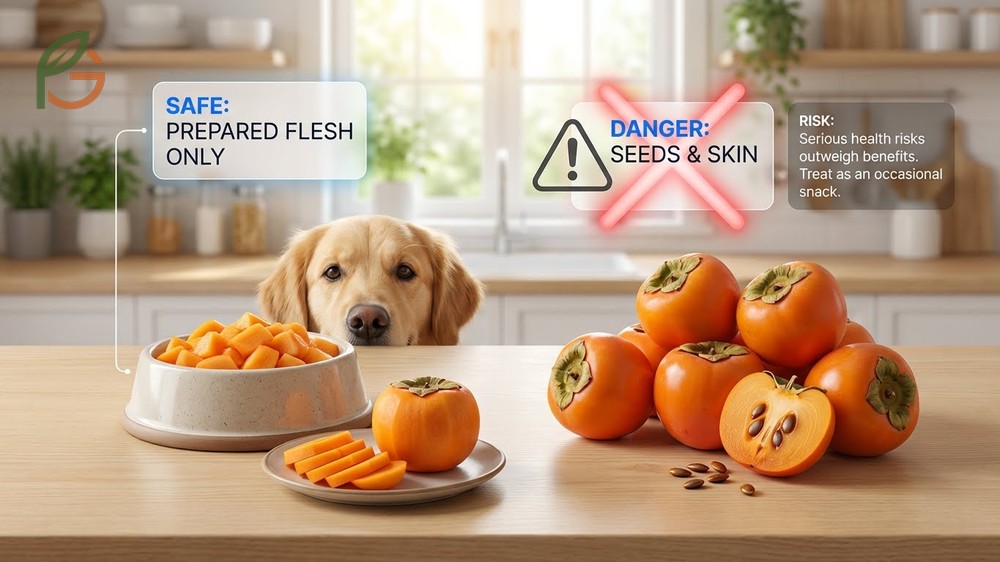
Dogs can eat persimmons, but only the flesh after removing all seeds and skin. Studies demonstrate that the fruit itself isn’t toxic to dogs and provides beneficial nutrients when prepared correctly.[2] The danger comes entirely from improper preparation—leaving seeds or skin on the fruit creates serious health risks that far outweigh any nutritional benefits.
Most veterinarians recommend treating persimmons as an occasional snack rather than a regular food item. The high sugar content in persimmons can contribute to weight gain and digestive upset if fed too frequently. Current veterinary guidance suggests limiting fruit treats to no more than 10% of your dog’s daily caloric intake to maintain balanced nutrition.
What often gets overlooked is that not all dogs tolerate new fruits equally well. Some dogs with sensitive stomachs may experience diarrhea or vomiting even from properly prepared persimmon flesh. You’ll want to introduce this fruit gradually—start with just one or two small pieces and monitor your dog’s response over 24 hours before offering more.
Important Note: If your dog has diabetes or weight management concerns, consult your veterinarian before introducing persimmons. The high natural sugar content may not be appropriate for all dogs.
Are Persimmons Safe for Dogs

Persimmons are safe for dogs when you remove all seeds and skin before feeding. The flesh contains beneficial vitamins and minerals that support canine health without causing toxicity. Evidence from veterinary sources confirms the fruit pulp poses no toxic threat to dogs.[2]
Research shows moderation is key because persimmons deliver concentrated natural sugars. Too much fruit can lead to gastrointestinal upset including loose stools and stomach discomfort. Most veterinarians recommend offering persimmon as a once-or-twice weekly treat rather than a daily supplement.
Nutritional Benefits
One medium persimmon provides 118 calories, 6g fiber[3], and 2740 IU vitamin A[3]. The vitamin A supports eye health and immune function, while vitamin C acts as an antioxidant. Persimmons also contain 12.6mg vitamin C[3] and 270mg potassium[3] per serving.
The fiber content aids digestion, though too much can cause diarrhea in dogs who aren’t accustomed to high-fiber fruits. These nutrients make persimmons a nutritious occasional treat when portion sizes stay small—typically one to three bite-sized pieces depending on your dog’s size.
- Vitamin A promotes healthy vision and skin coat quality
- Vitamin C strengthens immune system response and acts as antioxidant
- Dietary fiber supports digestive health and regular bowel movements
- Potassium helps maintain proper muscle and nerve function
- Low fat content makes it suitable for weight management when portioned correctly
Proper Preparation
Always wash persimmons thoroughly before preparing them for your dog. Peel away all skin using a knife or vegetable peeler—the tough outer layer is difficult for dogs to digest and increases blockage risk. Cut the flesh into small, bite-sized pieces appropriate for your dog’s size to prevent choking.
Remove every single seed before offering the fruit. Unlike some fruits where one or two seeds pose minimal risk, even a few persimmon seeds can trigger phytobezoar formation in your dog’s stomach. You can’t be too careful when it comes to seed removal with this particular fruit.
- Rinse the persimmon under cool running water to remove surface contaminants
- Use a sharp knife to peel away all skin completely
- Cut the fruit in half and examine for all seeds—remove them entirely
- Dice the flesh into quarter-inch cubes for small dogs or half-inch pieces for larger breeds
- Start with just one or two pieces the first time you offer persimmon
- Store unused portions in the refrigerator and use within 2-3 days
Persimmon Seeds Toxic to Dogs
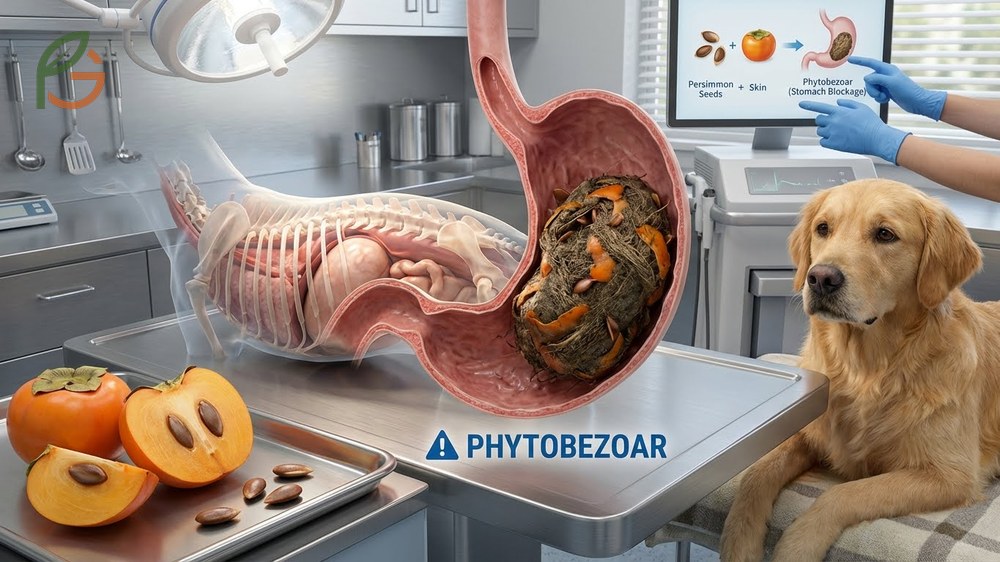
Persimmon seeds aren’t technically toxic, but they’re extremely dangerous because of how they react with stomach acid. When dogs swallow persimmon seeds and skin together, these parts create phytobezoars—hard, fibrous masses that form in the digestive tract.[1] These masses can’t break down naturally and often require surgical removal.
Research demonstrates that persimmon seeds contain astringent compounds that bind with other materials in the stomach. This chemical reaction produces a hard blob that grows as it collects more digestive material. Unlike other fruit seeds that might pass through harmlessly, persimmon seeds actively create blockages.
Phytobezoar Formation
Phytobezoars form when seeds and skin mix with stomach acid and digestive enzymes. The reaction creates a dense mass of indigestible plant material that hardens over time. Current veterinary data shows these blockages don’t dissolve on their own and typically lodge in the small intestine where they obstruct normal digestion.[1]
Most dogs develop symptoms within 12 to 48 hours after eating whole persimmons with seeds. The blockage prevents food from moving through the digestive tract normally. Without prompt veterinary intervention, these obstructions can cause tissue death in the intestines and become life-threatening.
Persimmon Skin Risks
The skin of persimmons contains high levels of tannins and fiber that dogs can’t digest efficiently. When consumed, the tough outer peel combines with seeds to accelerate phytobezoar formation. Even without seeds present, persimmon skin alone can cause gastrointestinal irritation and discomfort in many dogs.
Studies show the skin is particularly problematic for small breed dogs whose digestive tracts can’t handle large amounts of indigestible plant material. What might cause mild upset in a large dog could create a serious blockage in a Chihuahua or Yorkshire Terrier.
Critical Warning: If your dog ate a whole persimmon with seeds and skin intact, contact your veterinarian immediately. Don’t wait for symptoms to appear—early intervention prevents life-threatening complications.
Symptoms of Blockage in Dogs
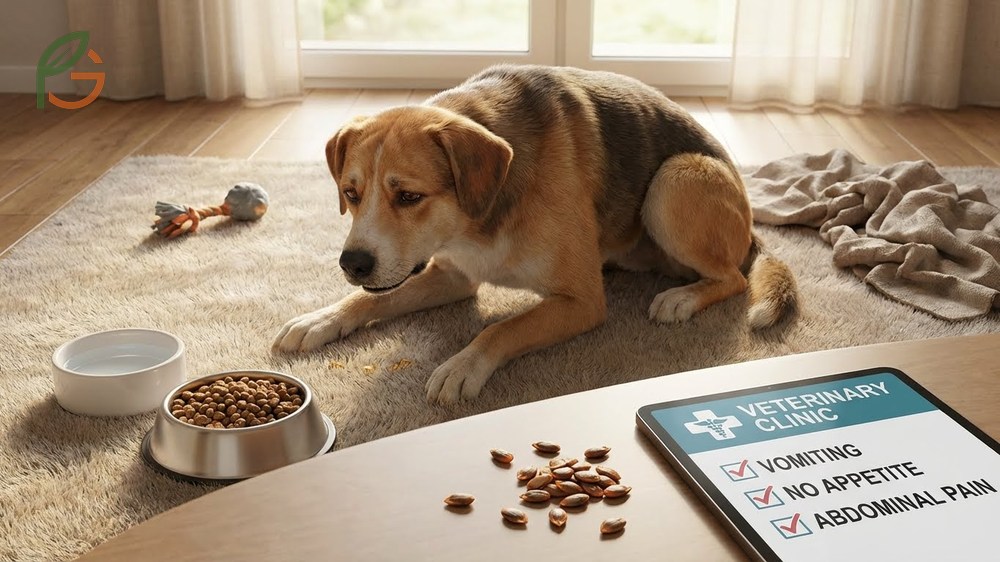
Intestinal blockages from persimmon seeds produce distinct warning signs that require immediate veterinary attention. Research from veterinary emergency clinics identifies vomiting as the most common first symptom, typically beginning within 12-24 hours of ingestion.[4] Dogs may vomit repeatedly and show no interest in food or water.
Abdominal pain manifests through behavioral changes—your dog may whine when you touch their belly or adopt a hunched posture. Current veterinary guidance emphasizes that blockage symptoms can initially appear mild but rapidly progress to life-threatening conditions. Dogs with complete obstructions deteriorate quickly, often within 24-48 hours.
Dehydration develops rapidly when dogs can’t keep water down due to repeated vomiting. You’ll notice dry gums, sunken eyes, and loss of skin elasticity. Lethargy and weakness intensify as the blockage prevents nutrient absorption and toxins build up in the bloodstream.
- Repeated vomiting, especially of undigested food several hours after eating[4]
- Complete loss of appetite lasting more than 12 hours[4]
- Painful, bloated abdomen that’s sensitive to touch[4]
- Straining to defecate with little to no stool production[4]
- Extreme lethargy, weakness, or unresponsiveness[4]
- Aggressive or unusual behavior when you touch their stomach area
- Diarrhea in early stages, followed by complete inability to pass stool
Emergency Action: Don’t take a wait-and-see approach if your dog shows multiple blockage symptoms. Emergency surgery may be necessary to remove the obstruction and prevent intestinal tissue death.
Safe Fruit Treats for Dogs

Many fruits provide nutritional benefits for dogs without the risks associated with persimmons. Studies from the American Kennel Club confirm that apples, blueberries, and watermelon rank among the safest fruit options for canine companions.[5] These alternatives offer vitamins and fiber without dangerous seeds or skin complications.
Blueberries work particularly well as training treats because they’re small, easy to eat, and packed with antioxidants. Unlike persimmons, you don’t need to remove anything—just rinse and serve. Watermelon provides excellent hydration on hot days, though you’ll want to remove all seeds and rind first.
Apples deliver similar fiber and vitamin C benefits as persimmons but with lower risk when prepared correctly. Remove the core and seeds completely since apple seeds contain small amounts of cyanide. Cut apples into bite-sized wedges and watch your dog’s enjoyment without the worry.
- Blueberries—rich in antioxidants, perfect bite-sized treats that need no preparation[5]
- Apples—provide vitamin C and fiber when cored, seeded, and sliced into wedges[5]
- Watermelon—hydrating summer treat after removing all seeds and green rind[5]
- Bananas—excellent source of potassium but feed sparingly due to high sugar content[5]
- Strawberries—contain vitamin C and teeth-whitening enzymes when served fresh and hulled[5]
- Cantaloupe—low-calorie option rich in vitamins A and C after removing rind and seeds
- Pears—similar to apples in nutritional value, remove core and seeds before serving
This table compares five safe fruits for dogs across preparation requirements, key nutritional benefits, and recommended serving sizes based on dog weight
| Fruit | Preparation Required | Key Benefits | Recommended Amount |
|---|---|---|---|
| Persimmons | Remove all seeds and skin; cut into small pieces | Vitamin A, vitamin C, fiber | 1-3 small pieces weekly |
| Blueberries | Rinse only—no preparation needed | Antioxidants, vitamin K, vitamin C | 5-10 berries per serving |
| Apples | Remove core and seeds; slice into wedges | Vitamin C, fiber, teeth cleaning | 2-3 slices 2-3 times weekly |
| Watermelon | Remove all seeds and rind; cube the pink flesh | Hydration, vitamins A and C | 3-5 small cubes occasionally |
| Strawberries | Remove green tops; slice for small dogs | Vitamin C, fiber, teeth whitening | 1-2 whole berries per serving |
Serving Tip: Never let fruit treats exceed 10% of your dog’s daily caloric intake. A 30-pound dog should receive no more than 50-75 calories from treats per day to maintain healthy weight.
Conclusion
The evidence is clear: dogs can eat persimmons safely when you remove all seeds and skin before serving. Current veterinary guidance emphasizes preparation over prohibition—the fruit flesh itself provides nutritional benefits without toxicity concerns, but persimmon seeds create life-threatening intestinal blockages that require emergency surgery.
Always start with tiny portions when introducing persimmons to your dog’s diet and watch for any digestive upset. FruitGarden encourages pet owners to consult their veterinarians about appropriate treat options based on their individual dog’s health status, weight, and dietary needs.
Medical Disclaimer
Important Medical Disclaimer: This content is for informational and educational purposes only. It is not intended as a substitute for professional veterinary advice, diagnosis, or treatment. Always consult a qualified veterinarian before making any changes to your dog’s diet, especially if your pet has diabetes, digestive issues, or other medical conditions. If your dog shows symptoms of intestinal blockage after eating persimmons, seek emergency veterinary care immediately.
Frequently Asked Questions
Can dogs have persimmons with the skin on?
No, dogs should never eat persimmons with skin on. The tough outer peel combines with seeds to create phytobezoars—hard masses that cause intestinal blockages requiring surgical removal. Always peel persimmons completely before offering them to your dog.
What happens if my dog ate a persimmon seed?
Contact your veterinarian immediately if your dog swallowed persimmon seeds. These seeds react with stomach acid to form hard blockages in the digestive tract. Monitor your dog closely for vomiting, abdominal pain, loss of appetite, and lethargy—symptoms typically appear within 12-48 hours.
Are persimmons good for dogs?
Persimmons offer nutritional benefits including vitamin A, vitamin C, and fiber when prepared safely. However, they’re not necessary for canine health and shouldn’t replace balanced dog food. Treat persimmons as an occasional snack rather than a dietary staple—limit fruit treats to 10% of daily calories.
Can cats eat persimmons?
Cats can technically eat small amounts of persimmon flesh without seeds or skin, but they gain little benefit since they’re obligate carnivores. Most cats show no interest in fruit. If your cat does eat persimmon, watch for digestive upset and contact your vet if symptoms develop.
How much persimmon can I give my dog?
Offer 1-2 small pieces for dogs under 20 pounds, 2-3 pieces for medium dogs (20-50 pounds), and 3-4 pieces for large dogs over 50 pounds. Serve persimmons as a once-or-twice weekly treat, not daily. The high sugar content can cause weight gain and digestive issues with frequent feeding.
Are persimmon leaves toxic to dogs?
Persimmon leaves aren’t highly toxic but they’re not recommended for dogs. The leaves contain tannins that can cause mild gastrointestinal irritation. If your dog chewed persimmon leaves and shows vomiting or diarrhea, contact your veterinarian for guidance.
What are the best fruit treats for dogs instead of persimmons?
Blueberries, apples (seedless), and watermelon (seedless) provide safer alternatives to persimmons. These fruits require less preparation and pose lower blockage risks. Blueberries need no prep at all, while apples and watermelon only require removing cores, seeds, and rinds.





