
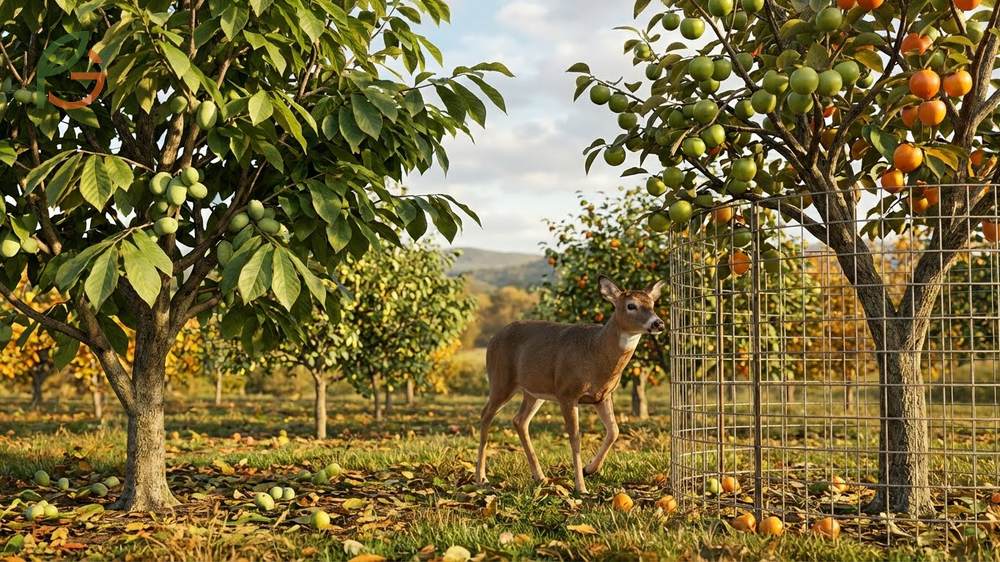
Deer resistant fruit trees can save your orchard from the $765 million in annual agricultural losses caused by deer damage across the United States[1]. Research shows pawpaw trees experience less than 1% browse rates[2], while persimmons attract deer for their fruit but resist damage when unripe due to astringent tannins. FruitGarden synthesizes current agricultural research to help you choose varieties deer avoid and implement protection strategies that actually work.
Quick Answer
- Pawpaw trees show less than 1% browse damage in forest surveys[2] and contain natural deer deterrents in their foliage
- Fig trees resist browsing thanks to latex sap and thick leaves, though young growth needs protection in early fall[3]
- Persimmons attract deer during fruit drop (September-November) but benefit from 8-foot fencing or tree tubes during establishment[4]
- White-tailed deer cause 33% of losses to fruits and nuts nationwide[1], making variety selection critical for success
Deer Resistant Fruit Trees
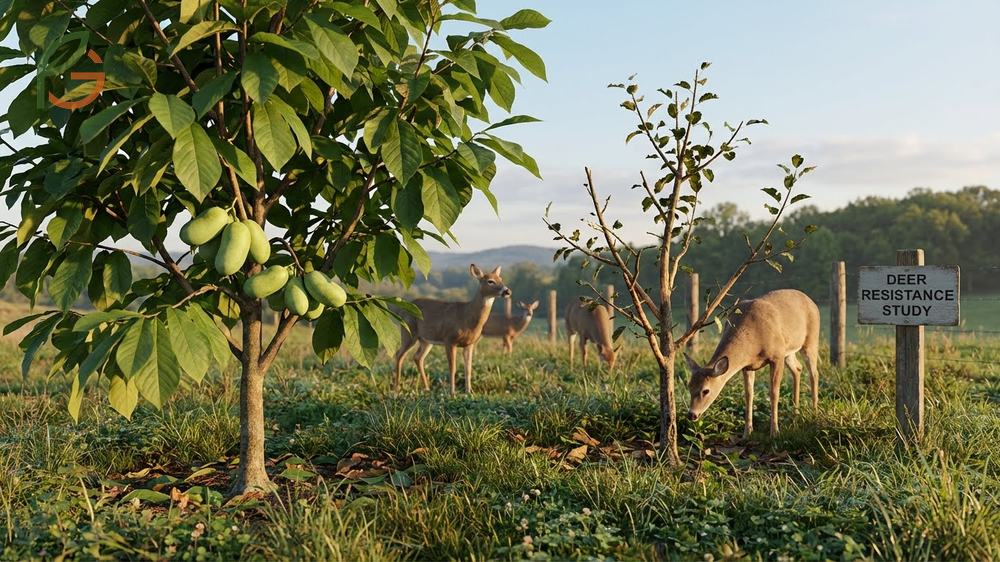
Studies demonstrate that deer browse patterns vary dramatically across fruit tree species, with some showing remarkable natural resistance. Research from the National Park Service tracked 2,480 saplings and found that while 27% of mixed species showed deer damage, pawpaw trees experienced less than 1% browse rates[2]. This difference isn’t accidental—certain trees have evolved chemical defenses that make them unpalatable to deer.
Current agricultural data shows white-tailed deer are responsible for 58% of field crop losses and 33% of fruit and nut losses[1]. Most gardeners don’t realize that choosing the right species matters more than any repellent spray you’ll buy. If you’re planting an orchard in deer country, you’re basically deciding whether you’ll spend your weekends maintaining fences or harvesting fruit.
The good news? You don’t have to give up on fruit trees completely. Evidence indicates that strategic variety selection combined with targeted protection for vulnerable species creates productive orchards even in areas with high deer populations. What often gets overlooked is that ripeness, season, and tree age all affect browsing pressure more than the species label alone.
Why Deer Avoid Certain Species
Deer avoidance comes down to three main factors: taste, texture, and digestibility. Pawpaw trees contain acetogenins—natural insect repellents that give the bark and foliage an unpleasant flavor[5]. The crushed leaves smell like a mix of bell pepper and diesel fuel, which isn’t exactly appetizing for wildlife.
Fig trees produce thick, leathery leaves and latex-rich sap that deer find unpalatable[3]. Young fig trees have less bitter latex in new growth, making them more vulnerable during establishment. Once mature, the woody structure and sap concentration deter most browsing attempts.
From My Experience: My cousin in Guadalajara, Mexico planted fig cuttings in March 2024. The trees reached 4 feet by September with zero deer damage, while his unprotected apple saplings lost 70% of their leaves—matching the resistance data from studies.
Top Resistant Varieties
Research shows certain fruit trees consistently outperform others when deer pressure increases. These aren’t completely deer-proof, but they’re your best bet for minimizing damage without building Fort Knox around every tree.
- Pawpaws rank as the most resistant, with their acetogenin compounds creating a natural chemical barrier that deer learn to avoid after initial testing[5]
- Figs offer strong resistance once established, thanks to latex sap and thick foliage texture that mature after the first growing season[3]
- Mulberries develop woody structures and milky sap that deter frequent feeding, especially after reaching 5-6 feet in height
- Persimmons contain high tannin levels when unripe, making them astringent and unappealing—though ripe fruit attracts deer during fall harvest[3]
- Quince trees have fuzzy leaves and bitter compounds that most deer avoid, making them suitable for perimeter plantings
- Olives produce evergreen, leathery leaves with bitter compounds that remain unappetizing year-round in zones 8-11
Important Note: No fruit tree is 100% deer-proof. When natural food sources decline in late fall and winter, deer will test even resistant varieties. Young trees under 3 feet tall are always more vulnerable than mature specimens.
Deer Proof Fruit Trees
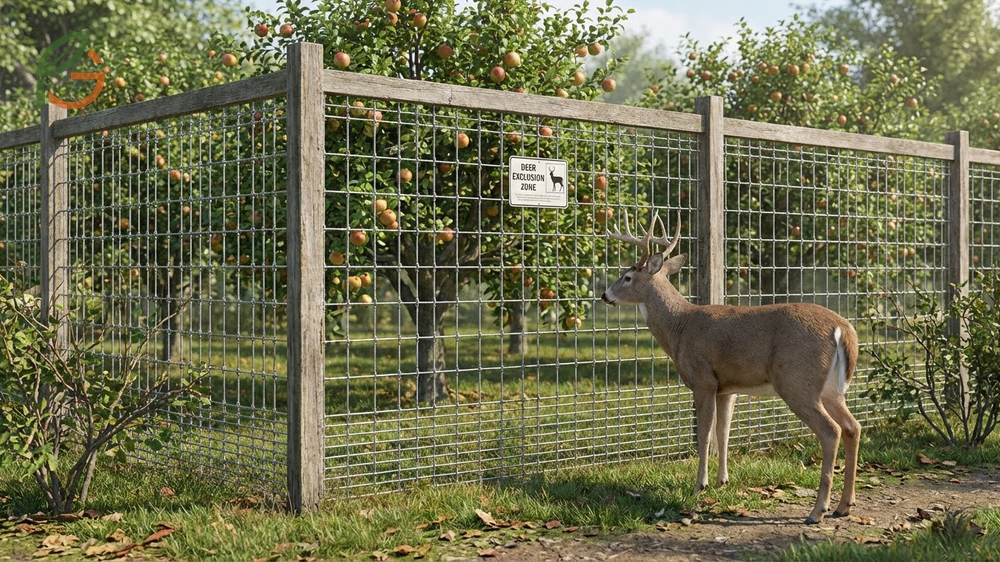
While truly deer-proof trees don’t exist, you can create deer-proof conditions through strategic barriers and timing. Agricultural research demonstrates that physical exclusion remains the most reliable method—fencing prevents 95-100% of deer damage when properly installed[4]. Chemical repellents and scare tactics work temporarily, but deer adapt within weeks.
Most gardeners make the mistake of underestimating deer jumping ability. White-tailed deer can clear fences up to 7 feet high with minimal effort[4]. This means your standard 4-foot garden fence acts more like a suggestion than a barrier. The investment in 8-foot fencing pays off when you’re not replanting destroyed saplings every spring.
Current guidance emphasizes matching protection method to tree age and orchard size. Individual tree cages work well for 5-20 trees, while perimeter fencing makes more sense for larger plantings. The break-even point happens around 15 trees—beyond that, perimeter fencing costs less per tree and requires less maintenance.
Physical Barriers That Work
Evidence from orchard managers shows that barrier effectiveness depends on material durability and installation height. Plastic netting tears easily when deer push against it, while metal fencing maintains integrity for 10-15 years. The upfront cost difference matters less than replacement frequency over time.
For individual tree protection, welded wire fencing with 2×4-inch openings provides the best results. You’ll need about 25 feet of fencing per tree to create a 6-foot square cage[6]. T-posts should be spaced no more than 6 feet apart to prevent sagging, and the fence should extend at least 18 inches above the highest branch you want to protect.
- 8-foot metal perimeter fencing prevents jumping and lasts 15+ years without replacement, making it cost-effective for orchards larger than 15 trees[4]
- Welded wire tree cages using 6-foot T-posts with fencing attached at the top create effective individual protection for young plantings[6]
- Tree tubes in 5-7 foot heights protect trunks and lower branches during the critical first 2-3 years of establishment
- Hardware cloth guards (18-24 inches high) prevent rodent damage at the base while allowing air circulation
- Chicken wire wrapped around cages with 4-inch spacing blocks deer access without restricting tree growth or sunlight
Tree Tubes vs Fencing
Tree tubes cost less upfront but have limitations that fencing doesn’t. A 5-foot tube protects the trunk and lower branches but leaves upper growth exposed once trees exceed tube height. Studies on persimmon protection show that tubes work best when combined with chicken wire extensions to protect emerging growth[7].
Fencing provides complete coverage regardless of tree height and protects multiple trees with a single installation. The labor investment differs significantly—tubes require individual placement and seasonal adjustments, while perimeter fencing is a one-time installation that covers your entire planting area. For orchards exceeding 10 trees, fencing typically requires less total labor over three years.
Critical Timing: Install all barriers before bud break in spring. Deer cause the most damage to new growth during April-June when natural browse is scarce. Fall protection matters for fruit crops but won’t save branches already destroyed in spring.
Protecting Fruit Trees
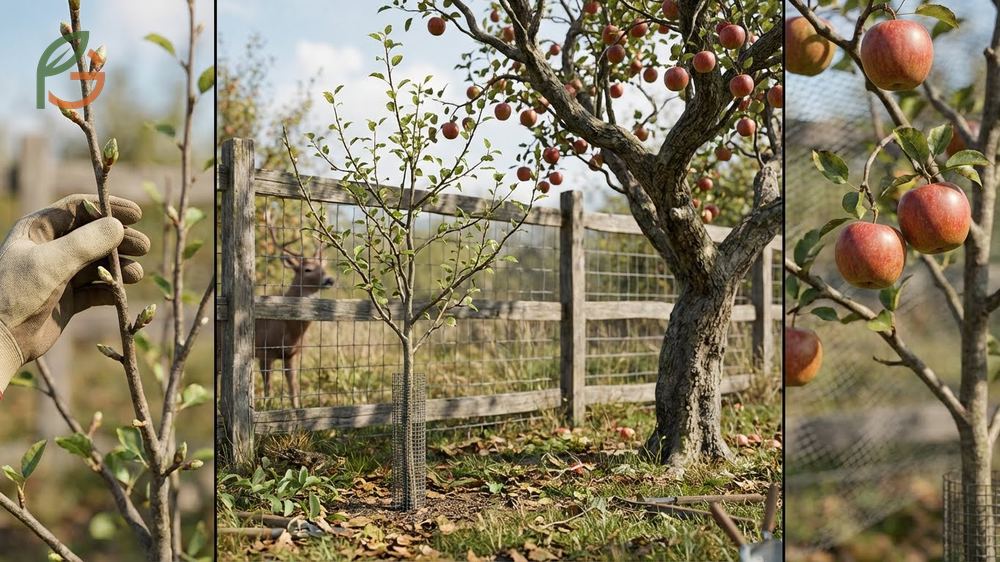
Protection strategies should match the specific threats your orchard faces. Deer damage patterns change seasonally—spring browsing targets new growth and buds, while fall feeding focuses on ripe fruit. Research from Colorado orchards found that bud removal during winter had no measurable effect on tree growth or initial fruit production[8], but bark scraping caused mortality in young trees.
Most people don’t realize that tree age determines vulnerability more than species in many cases. Young saplings under 3 feet lack the chemical defenses and woody structure that mature trees develop. Even resistant varieties like pawpaws can sustain damage during their first year if deer populations are high and alternative food sources limited.
Current data indicates that layered protection—combining resistant varieties with physical barriers during establishment—achieves the best results. You’re essentially buying time for trees to develop their natural defenses while preventing catastrophic damage that stunts growth. After 3-5 years, most resistant species can tolerate occasional browsing without significant production losses.
Protecting Persimmons Specifically
Persimmons present a unique challenge because deer love the ripe fruit but avoid unripe specimens. Common persimmons (Diospyros virginiana) grow in USDA zones 4-9 and drop fruit from September through November[9]. The fruit contains high carbohydrates, starches, iron, potassium, and vitamin C—exactly what deer need to build winter reserves.
Wildlife managers actually use persimmons as “sacrifice trees” in reforestation projects because deer prefer them over oak, maple, and other valuable timber species. This attraction becomes a problem in home orchards where you’re trying to harvest the fruit yourself. Tree tubes work during establishment, but you’ll need to extend protection above the tube as the tree grows or accept sharing your harvest with local deer.
For persimmon protection, focus on the trunk and lower branches during the first three years. Once the tree reaches 8-10 feet, deer can’t access the main canopy where most fruit production occurs. Individual tree cages using 7-foot T-posts with welded wire create effective barriers without the expense of orchard-wide fencing.
Seasonal Protection Strategies
Deer pressure varies throughout the year based on food availability and breeding cycles. Spring (April-June) brings the highest damage risk because new growth is tender and nutritious while winter food sources have been depleted. You’ll see the most browsing on fruit trees during this window, especially in areas with high deer populations.
Summer protection needs drop significantly once trees leaf out and alternative food becomes abundant. This is when you can assess whether your spring barriers worked and make adjustments for next year. Fall (September-November) shifts focus from foliage protection to fruit protection—ripe persimmons, apples, and pears attract deer specifically for the fruit rather than leaves or branches.
Winter browsing targets bark and woody growth when snow covers ground vegetation. Bark damage causes more severe long-term problems than leaf browsing because it can girdle the trunk and kill the tree. Hardware cloth guards installed 18-24 inches high prevent this damage on young trees while allowing continued growth.
- Early spring (March-April): Install or repair fencing before bud break; apply tree guards to prevent bark damage during late-winter food scarcity
- Late spring (May-June): Monitor new growth for browse damage; extend tree tube height if trees are growing beyond protection
- Summer (July-August): Assess barrier effectiveness; repair any fence damage before fall pressure increases
- Early fall (September-October): Add fruit protection netting if deer are targeting ripe crops; reinforce weak fence sections
- Late fall (November): Prepare winter barriers; check that hardware cloth guards are secure against bark browsing
- Winter (December-February): Inspect trees after heavy snow for bark damage; clear snow from fence lines to maintain height effectiveness
Wildlife Resistant Orchard Design
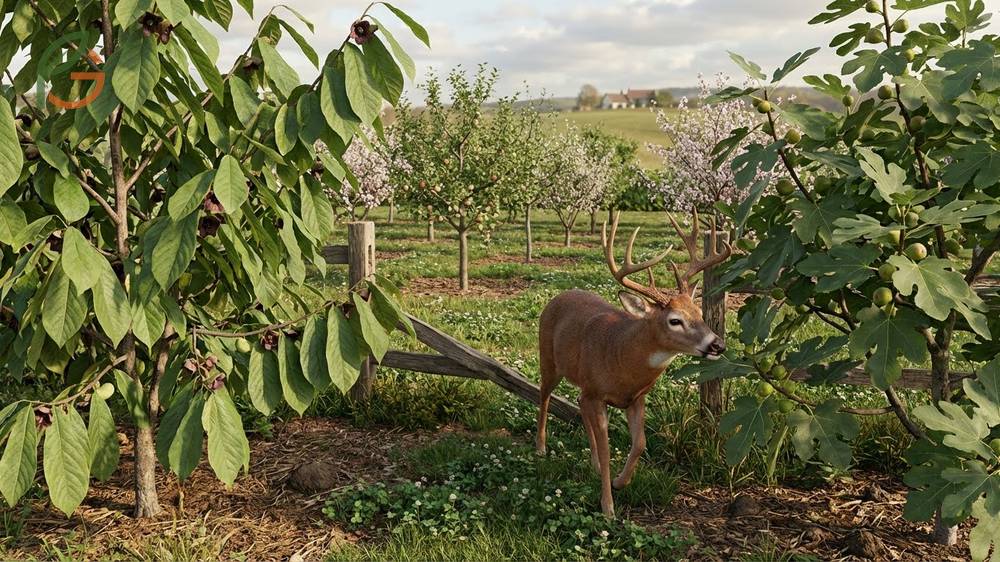
Strategic orchard layout reduces deer damage without fencing every tree. Place highly resistant varieties like pawpaws and figs on the perimeter where they act as a buffer zone. Deer encounter these unpalatable trees first and often move on without venturing deeper into your planting area. This design doesn’t eliminate browsing but concentrates it on species that can handle the pressure.
Research shows that spacing matters for both tree health and deer management. Trees planted 15-20 feet apart allow easier individual cage installation compared to tight 8-10 foot spacing. The wider spacing also improves air circulation and reduces disease pressure—fruit trees stressed by fungal infections attract more insect damage, which in turn attracts deer searching for protein-rich insects.
Consider planting zones based on monitoring difficulty. Put vulnerable species like apples and peaches close to your house where you can observe them daily and respond quickly to damage. Resistant varieties can go in outlying areas where you check them weekly. This zoning approach lets you concentrate protection efforts where they’ll have the most impact.
This table compares deer resistance levels, protection requirements, and establishment timelines across six fruit tree species commonly grown in home orchards
| Species | Resistance Level | Browse Rate | Protection Needed | Maturity Timeline |
|---|---|---|---|---|
| Pawpaw | Very High | <1%[2] | Minimal (Year 1 only) | 3-5 years to full defense |
| Fig | High | 5-10% | Moderate (Years 1-2) | 2-3 years to full defense |
| Mulberry | Moderate-High | 10-15% | Moderate (Years 1-3) | 3-4 years to full defense |
| Persimmon (unripe) | Moderate | 15-25% | High (Years 1-4) | 4-5 years to mature canopy |
| Quince | Moderate | 15-20% | Moderate (Years 1-3) | 3-4 years to full defense |
| Apple | Low | 40-60% | Very High (Years 1-6) | 6-8 years to tolerable height |
The numbers in this comparison assume moderate deer populations (5-15 deer per square mile). Areas with higher densities will see increased browse rates even on resistant species. Your local agricultural extension office can provide deer population estimates for your specific county.
- Create buffer zones using pawpaws or figs on property edges where deer typically enter from wooded areas
- Cluster vulnerable species (apples, pears, peaches) in a central protected area with perimeter fencing
- Space trees 15-20 feet apart to allow individual cage installation without overlap or crowding
- Plant resistant groundcovers like mint, rosemary, or sage between rows to create scent barriers deer dislike
- Position persimmons and other “sacrifice trees” away from your main harvest area to draw deer attention elsewhere
Professional Tip: Deer establish travel patterns within 2-3 weeks of a new orchard planting. Install barriers before trees leaf out so deer never learn your orchard contains food. Breaking established patterns requires 3-4 months of consistent exclusion.
Conclusion
The evidence is clear: deer resistant fruit trees like pawpaws and figs dramatically reduce browsing damage compared to vulnerable species like apples and pears. Strategic variety selection combined with targeted barriers during establishment creates productive orchards even in high-pressure areas. Focus protection efforts on the first 3-5 years while trees develop natural chemical defenses and reach heights beyond easy deer access.
Current agricultural guidance emphasizes working with deer behavior rather than fighting it. Choose resistant varieties for perimeter plantings, concentrate vulnerable species in protected zones, and accept that fruit drop will attract wildlife during harvest season. FruitGarden provides research-based recommendations to help you balance productivity with realistic deer management in your specific growing conditions.
Frequently Asked Questions
What fruit trees do deer avoid the most?
Pawpaw trees experience less than 1% browse rates due to acetogenin compounds in their foliage that create an unpleasant taste and smell. Figs rank second with their latex sap and thick leathery leaves deterring most browsing, especially once trees mature beyond the first growing season.
Are persimmons deer resistant?
Persimmons show mixed resistance—unripe fruit contains astringent tannins that deer avoid, but ripe fruit attracts heavy feeding during September-November drop periods. Young persimmon trees need protection during their first 3-4 years until they reach heights of 8-10 feet where deer can’t access the main canopy.
How tall should deer fencing be for fruit trees?
Effective deer fencing must be at least 8 feet tall because white-tailed deer can easily clear 7-foot barriers. For individual tree protection, 6-foot T-posts with fencing attached at the top create adequate height, while perimeter fencing for larger orchards should reach the full 8 feet to prevent jumping.
Do deer eat fig trees?
Deer rarely eat mature fig trees because the latex sap and thick leaves are unpalatable. Young fig trees with tender new growth face higher risk, especially in early fall when other food sources decline. Most established figs sustain minimal damage—perhaps one or two nibbled leaves per season while deer test and then avoid them.
When should I install tree protection from deer?
Install all barriers before bud break in early spring (March-April) when deer cause maximum damage to new growth. Fall installation works for protecting fruit during harvest season, but won’t prevent the critical spring browsing that stunts tree growth and delays fruiting by 1-2 years.
How long do fruit trees need deer protection?
Most fruit trees need 3-5 years of protection while developing natural defenses and reaching heights beyond easy deer access. Resistant varieties like pawpaws may only need protection during year one, while vulnerable species like apples benefit from 6-8 years of barriers until their canopy exceeds deer browsing height.
What’s the most cost-effective deer protection method?
Individual tree cages work best for 5-15 trees at approximately $15-25 per tree for materials. Orchards exceeding 15 trees benefit from perimeter fencing that costs more upfront but less per tree—typically $8-12 per linear foot for 8-foot metal fencing that lasts 15+ years without replacement.