
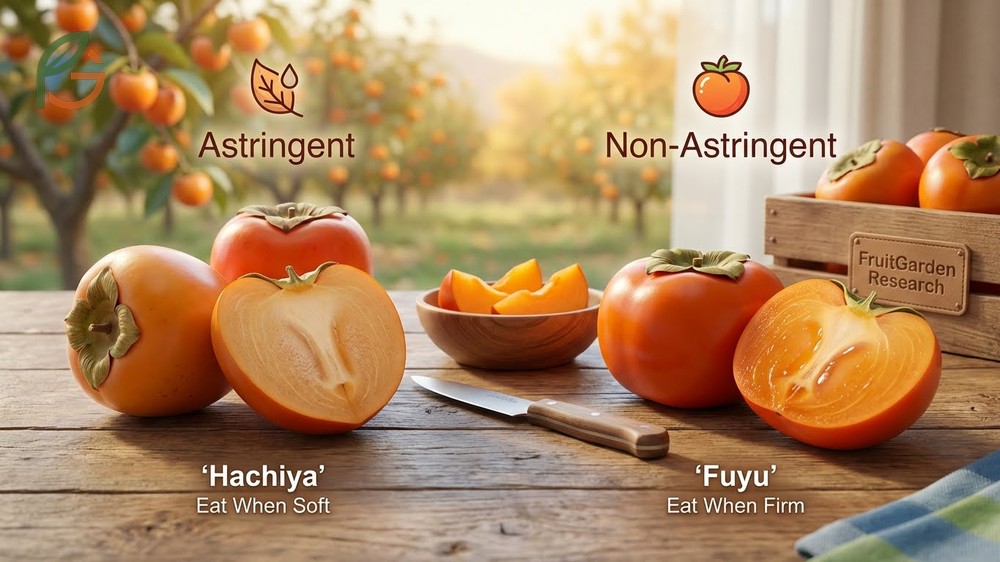
Astringent vs non-astringent persimmons differ fundamentally in their tannin behavior and eating readiness. Non-astringent varieties naturally lose their tannins during ripening and can be eaten while firm, whereas astringent types maintain high tannin levels until they’re fully soft. FruitGarden synthesizes current horticultural research to help you choose the right persimmon variety for your orchard or table.
Quick Answer
- Non-astringent persimmons contain 2.5-20% of the tannin content[1] found in astringent varieties
- Astringent types must reach jelly-like softness before eating to avoid mouth-puckering effects[2]
- Non-astringent varieties can be eaten firm and crisp, similar to apples
- Harvest timing differs: September through late November for both types, but ripening needs vary dramatically
Astringent Vs Non-Astringent Persimmons
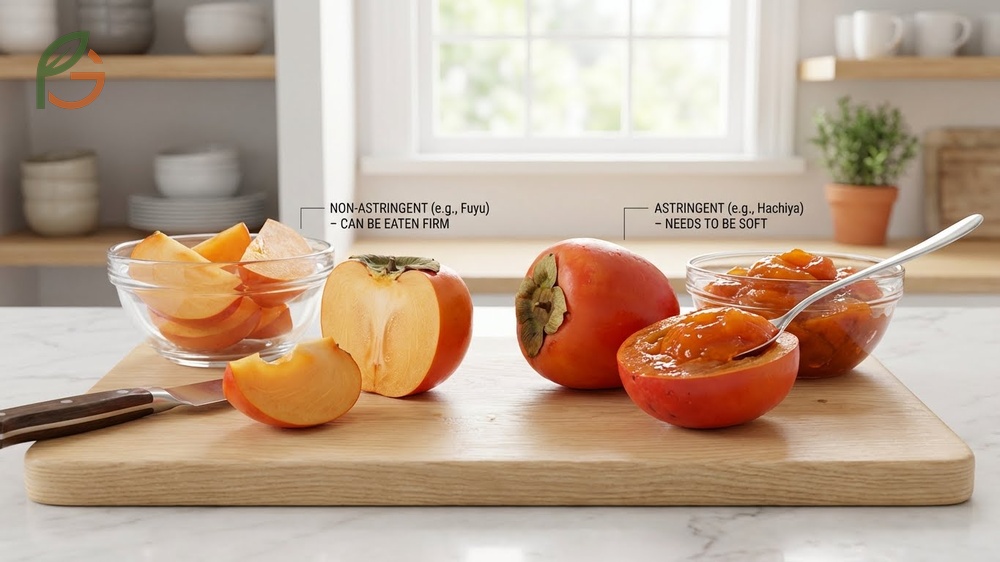
The fundamental distinction between these persimmon types lies in when tannins become insoluble. Non-astringent persimmons naturally convert their tannins to an insoluble form during fruit development on the tree[4]. This allows you to bite into them while they’re still firm without experiencing the dry, mouth-puckering sensation.
Astringent varieties take a different approach. They maintain high levels of soluble tannins even when commercially ripe and fully colored[4]. These tannins only become insoluble after the fruit softens completely, making patience essential for enjoyable eating.
Research shows this isn’t just about taste preference. The tannin concentration in astringent persimmons can cause digestive issues if you eat them unripe, including stomach discomfort and constipation. Most growers find that understanding this difference prevents disappointing first experiences with persimmons.
Visual Identification
You can spot the difference between astringent and non-astringent persimmons by their shapes before you even taste them. Astringent varieties like Hachiya have an elongated, acorn-like shape that comes to a point at the bottom. Non-astringent types like Fuyu are squat and round with flat bottoms, resembling orange tomatoes.
Color provides additional clues but can be misleading. Both types turn orange when mature, though astringent varieties often develop a deeper red-orange hue. The key difference appears when you press the fruit—non-astringent varieties stay firm at peak eating quality, while astringent ones need to feel almost like water balloons.
From My Experience: My cousin in Guadalajara, Mexico planted a Fuyu persimmon tree in March 2023. The first harvest in November 2024 yielded 18 fruits that were firm and sweet right off the tree, matching the non-astringent characteristics described in horticultural studies.
Texture Differences
Texture separates these persimmon types dramatically at eating time. Non-astringent varieties maintain an apple-like crunch that many American consumers prefer for fresh eating. You can slice them into salads or eat them out of hand without waiting for softening.
Astringent persimmons transform into a completely different texture experience. When properly ripened, they develop a custard-like, jelly-soft consistency that’s ideal for baking. This texture makes them perfect for persimmon puddings and breads but impractical for slicing when firm.
Tannin Content Persimmons
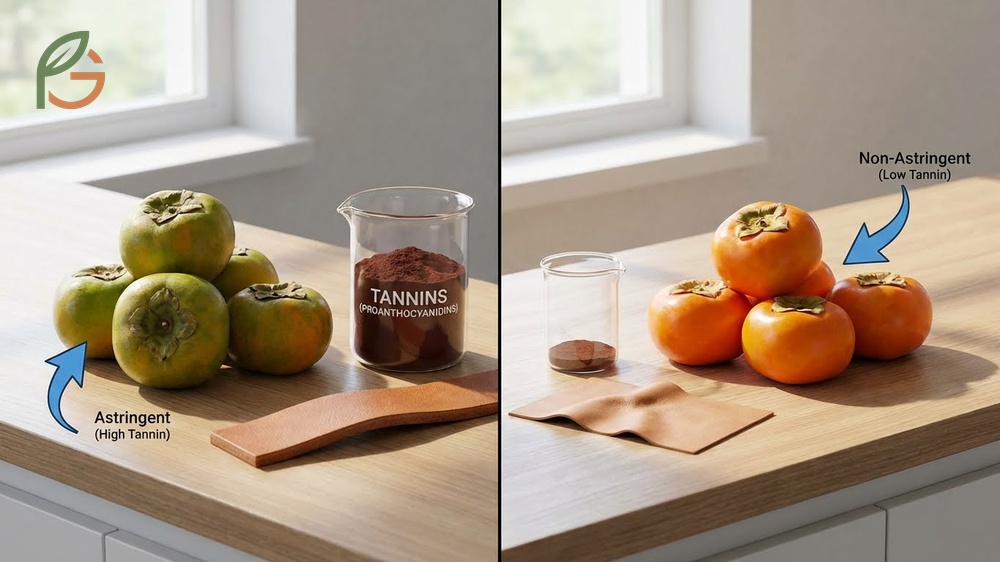
Tannin concentration creates the astringency problem in unripe persimmons. Studies demonstrate that non-astringent varieties contain only 2.5-20% of the tannin levels found in astringent types[1]. This massive difference explains why one type can be eaten firm while the other can’t.
These tannins belong to a class of compounds called proanthocyanidins. They’re the same compounds used historically in leather tanning, which gives you an idea of their protein-binding power. In persimmons, they accumulate in cell vacuoles within the fruit’s flesh.
The amount isn’t static throughout the fruit’s life. During drying treatments, astringent samples reach tannin levels similar to non-astringent fruit within 20 days[5]. This natural reduction process occurs through tannin polymerization and precipitation.
How Tannins Cause Astringency
Astringency isn’t a taste—it’s a physical sensation caused by tannin-protein interactions. When you bite into an unripe astringent persimmon, the tannins bind to proteins in your saliva and precipitate them[1]. This creates the characteristic dry, puckering feeling that makes your mouth feel like sandpaper.
The sensation can be severe enough to numb your tongue and constrict your throat[2]. It’s not just unpleasant—eating large quantities of high-tannin persimmons can lead to phytobezoar formation. These are solid masses that form in the stomach when tannins combine with stomach acid and fiber.
Important Warning: Never eat unripe astringent persimmons on an empty stomach or in large quantities. The tannin-stomach acid interaction can create digestive blockages requiring medical intervention.
Tannin Reduction Process
Tannin reduction happens through natural ripening or artificial treatments. At room temperature, astringent persimmons slowly convert their soluble tannins to insoluble forms over several days to a week[2]. The tannins polymerize and precipitate out, which removes the astringency without eliminating the antioxidant benefits.
Commercial growers often speed this process using carbon dioxide treatment or alcohol vapor. These methods trigger the production of acetaldehyde in the fruit, which binds with tannins and makes them insoluble. This allows astringent varieties to be sold at the firm stage, though many connoisseurs still prefer natural ripening for flavor development.
Persimmon Astringency Guide
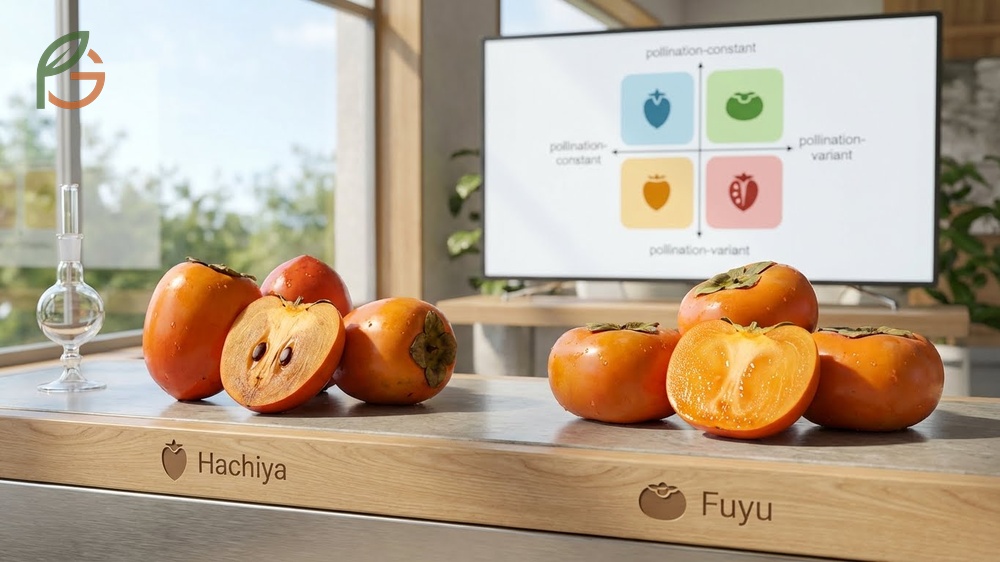
Choosing the right persimmon variety depends on your intended use and patience level. Commercial growers in the United States focus primarily on two types—Hachiya for the astringent category and Fuyu for non-astringent. However, specialty nurseries offer dozens of cultivars within each category.
Classification goes beyond just “astringent” and “non-astringent.” Research identifies four categories: pollination-constant astringent (PCA), pollination-variant astringent (PVA), pollination-constant non-astringent (PCNA), and pollination-variant non-astringent (PVNA). The PCNA types represent what most people call “non-astringent” persimmons.
This table compares key characteristics of astringent and non-astringent persimmon varieties including shape, ripeness at harvest, eating texture, and best uses
| Characteristic | Astringent (Hachiya) | Non-Astringent (Fuyu) |
|---|---|---|
| Shape | Acorn-shaped, pointed bottom | Squat, flat bottom (tomato-like) |
| Ripeness at Harvest | Hard and colored, needs softening | Firm and colored, ready to eat |
| Eating Texture | Jelly-soft, custard-like | Crisp, apple-like |
| Tannin Content | High until fully soft[4] | 2.5-20% of astringent levels[1] |
| Best Uses | Baking, puddings, purees | Fresh eating, salads, slicing |
Astringent Varieties
Hachiya dominates the astringent persimmon market in North America. This Japanese variety produces large, heart-shaped fruits that develop intense sweetness when fully ripe. The flesh becomes almost translucent and jelly-like, with flavor notes of honey and brown sugar.
Other astringent varieties worth considering include Saijo, Tanenashi, and Eureka. Saijo is prized by connoisseurs for its exceptional sweetness and smooth texture. Tanenashi means “seedless” in Japanese, making it convenient for eating and processing.
- Require complete softening before consumption to avoid severe astringency
- Develop deeper, more complex flavors than non-astringent types
- Best harvested when fully colored but still firm, then ripened off-tree
- Can be artificially de-astringed using CO₂ or alcohol vapor treatments
- Store well when dried, creating a sweet confection popular in Asian cuisines
- Higher yield potential per tree compared to many non-astringent cultivars
Non-Astringent Varieties
Fuyu remains the most commercially important non-astringent variety worldwide. It produces medium-sized, tomato-shaped fruits with firm flesh that stays crisp even when fully ripe. You can eat them like apples—no peeling required, though many people remove the calyx.
Specialty varieties include Ichi Ki Kei Jiro, Maekawa Jiro, and Hana Fuyu. These cultivars offer variations in ripening time, cold hardiness, and subtle flavor differences. However, research suggests non-astringent varieties taste more similar to each other than astringent varieties do, so hardiness and ripening date become the primary selection criteria.
- Can be eaten immediately after harvest when fully colored
- Maintain crisp texture throughout ripening, similar to Asian pears
- Generally develop less intense flavor complexity than astringent types
- Better suited for fresh market sales due to longer shelf life when firm
- Easier for home gardeners who want immediate gratification at harvest
- Average yield of 15-20 pounds per tree at 10 years of age[3]
Which Persimmon Type
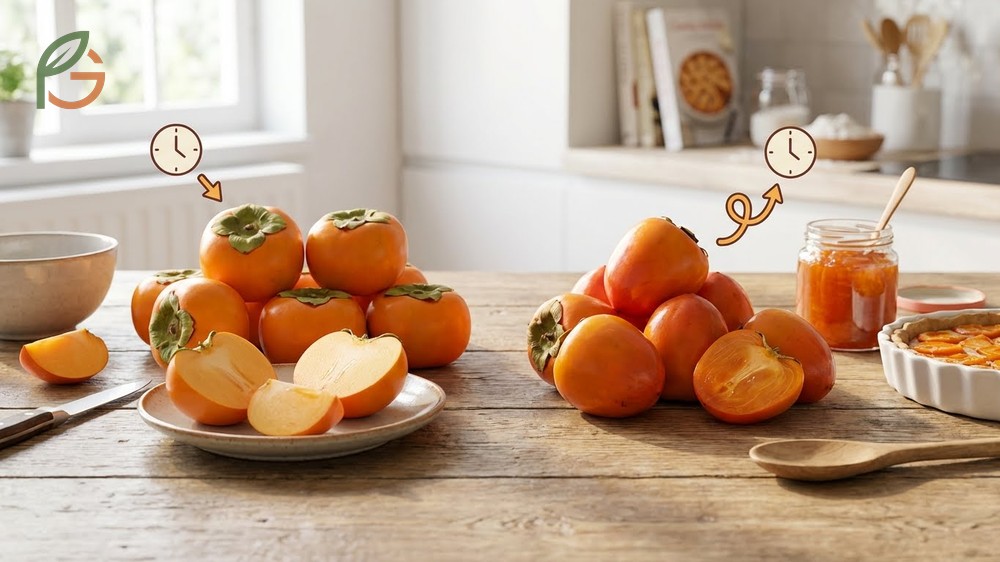
Your choice between astringent and non-astringent persimmons should match your patience level and intended uses. If you want immediate eating gratification and prefer crisp fruit textures, non-astringent varieties like Fuyu deliver the best experience. They’re also more forgiving for inexperienced persimmon eaters who might bite into unripe fruit.
Astringent varieties reward patience with superior flavor depth and versatility in cooking. Bakers and preservers often prefer Hachiya and similar cultivars because the soft, custard-like texture incorporates seamlessly into batters and purees. The flavor complexity surpasses non-astringent types when properly ripened.
Climate considerations matter significantly. Non-astringent varieties generally require warmer growing conditions and longer seasons to develop their characteristic sweetness. Astringent types often show better cold tolerance and can produce quality fruit in shorter growing seasons, making them more suitable for northern gardens.
Selection Tip: If you’re planting your first persimmon tree, start with a non-astringent variety. The immediate eating quality and lower risk of astringency disappointment make them more beginner-friendly than astringent types.
Market considerations differ too. Fresh market growers favor non-astringent varieties because consumers can eat them immediately without ripening knowledge. Astringent varieties require consumer education about proper ripening, which limits their commercial appeal despite their superior processing qualities.
Ripening Requirements Different
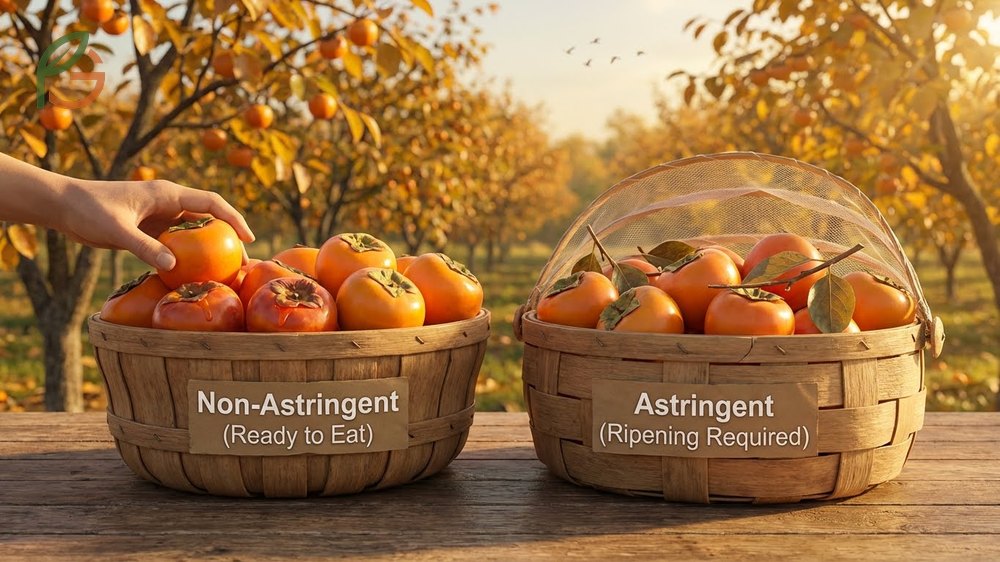
Harvest timing overlaps for both persimmon types, running from September through late November depending on your climate[3]. However, what happens after harvest differs dramatically. Non-astringent varieties are ready to eat immediately when they reach full color, whether you harvest them firm or let them soften on the tree.
Astringent varieties require strategic harvesting. You’ll want to pick them when fully colored but still hard to prevent bird and wildlife damage. They’ll continue ripening off the tree over several days to a week when stored at room temperature. The fruit is ready when it feels almost like a water balloon—any firmness means residual astringency remains.
Cold storage affects these types differently. Non-astringent persimmons can be refrigerated while firm to extend shelf life without quality loss. Astringent varieties shouldn’t be refrigerated until after they’ve fully softened, as cold temperatures can slow the tannin conversion process and lock in astringency.
- Non-astringent: Firm flesh with deep orange color indicates eating readiness
- Astringent: Skin becomes almost translucent and fruit feels gel-like when squeezed
- Both types: Calyx (leaf-like cap) should separate easily from ripe fruit
- Color change from yellow-orange to deep red-orange signals maturity approach
- First frost can trigger final ripening in astringent varieties still on trees
Artificial ripening methods exist for astringent persimmons when you need faster results. Placing them in a sealed container with apples or bananas exposes them to ethylene gas, which speeds softening. Commercial operations use alcohol vapor or carbon dioxide treatments to remove astringency while maintaining firmness—a process that takes 12-24 hours under controlled conditions.
Conclusion
The evidence is clear: astringent vs non-astringent persimmons represent fundamentally different fruit types that require distinct handling and consumption approaches. Non-astringent varieties offer immediate eating satisfaction with their crisp texture and manageable tannin levels, while astringent types deliver superior flavor complexity for those willing to wait for proper softening.
Current horticultural guidance emphasizes matching variety selection to your specific needs—whether that’s fresh eating convenience, processing potential, or climate adaptation. FruitGarden provides research-backed information to help you make informed decisions about which persimmon type suits your orchard or kitchen best.
Frequently Asked Questions
Can you eat astringent persimmons before they’re soft?
No, eating astringent persimmons before they’re completely soft causes severe mouth puckering and potential digestive issues. The high tannin content binds to saliva proteins and can form stomach blockages if consumed in quantity. Wait until the fruit feels like a water balloon before eating.
Do non-astringent persimmons have any tannins?
Yes, non-astringent persimmons contain tannins, but only 2.5-20% of the levels found in astringent varieties. These lower tannin concentrations don’t cause the mouth-puckering sensation because the tannins convert to insoluble forms during ripening on the tree, making them undetectable when you eat the fruit.
How long does it take for astringent persimmons to ripen?
Astringent persimmons typically need several days to a week at room temperature to fully soften after harvest. The exact timing depends on how mature they were at picking and your room temperature. You can speed this process by storing them with ethylene-producing fruits like apples or bananas in a sealed container.
Which persimmon type is better for baking?
Astringent varieties like Hachiya work better for baking because their soft, custard-like texture when ripe blends smoothly into batters and purees. The deeper flavor complexity also translates better into baked goods. Non-astringent types can be used but require extra processing to break down their firmer texture.
Can you tell persimmon types apart by color?
Color isn’t a reliable indicator—both types turn orange when mature. Shape provides better identification: astringent varieties like Hachiya have elongated, acorn-like shapes with pointed bottoms, while non-astringent types like Fuyu are squat and round with flat bottoms resembling tomatoes.
Do non-astringent persimmons need to soften?
No, non-astringent persimmons can be eaten while still firm and crisp. They’re ready to eat as soon as they reach full orange color at harvest. Many people prefer them firm because they maintain an apple-like crunch. They’ll continue to soften if left at room temperature, but softening isn’t required for pleasant eating.
What happens if you refrigerate astringent persimmons too early?
Refrigerating astringent persimmons before they’ve fully softened slows or stops the tannin conversion process that removes astringency. This can lock in the unpleasant, mouth-puckering sensation. Always let astringent varieties soften completely at room temperature first, then refrigerate only if needed for short-term storage.





