
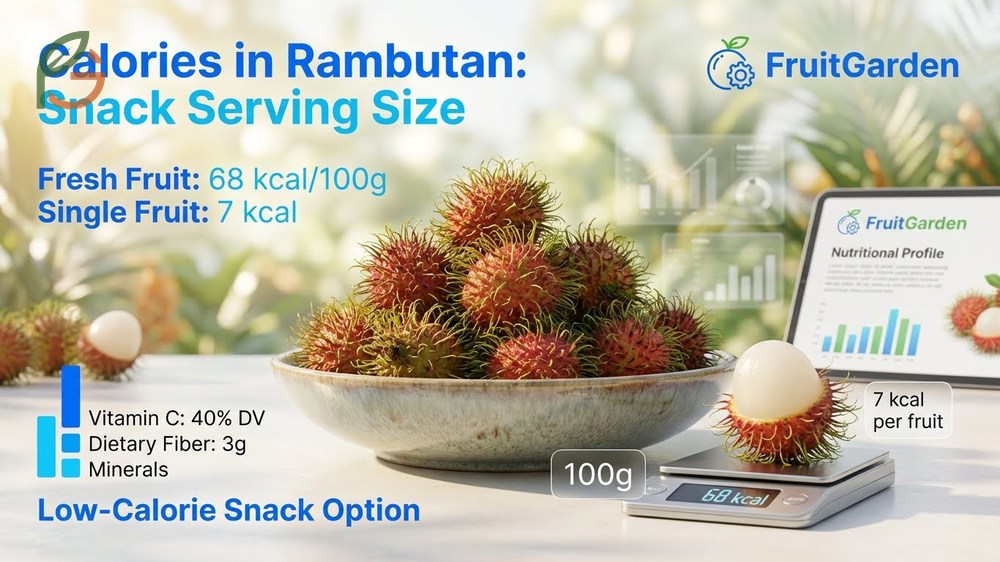
Calories In Rambutan vary by serving size, with fresh fruit containing 68 calories per 100g and a single rambutan providing just 7 calories[1]. Research shows this tropical fruit delivers essential nutrients like vitamin C (40% DV), dietary fiber (3g), and minerals while remaining a low-calorie snack option. FruitGarden synthesizes current agricultural research to help US gardeners and fruit enthusiasts understand the nutritional profiles of exotic fruits they grow or consume.
Quick Answer
Calories in Rambutan
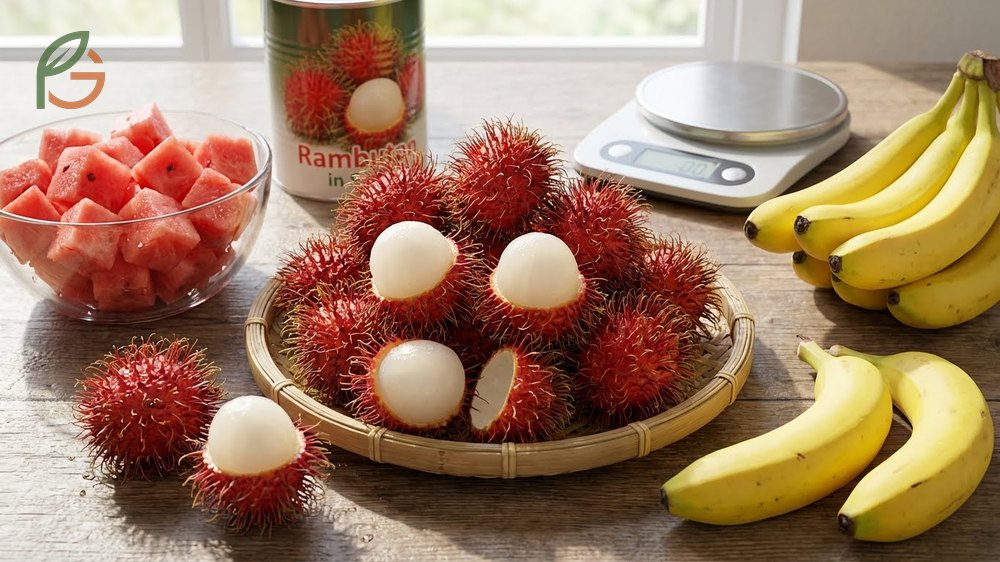
Fresh rambutan contains 68 calories per 100 grams, making it a moderately low-calorie tropical fruit[1]. Studies demonstrate that this calorie count positions rambutan between watermelon (30 calories per 100g) and bananas (89 calories per 100g). The fruit’s translucent flesh provides energy primarily through natural sugars and carbohydrates.
Current data indicates that processing methods significantly affect calorie content. Canned rambutan in syrup contains 82 calories per 100g—about 20% more than fresh fruit[2]. This increase comes from added sugars in the syrup pack.
Agricultural data shows the fruit’s calorie distribution comes mostly from carbohydrates (94%), with minimal contributions from protein (5%) and fat (1%). Most people find that 3-4 fresh rambutans satisfy snack cravings without excessive calorie intake. The fiber content helps create satiety despite the relatively modest calorie load.
Fresh vs. Canned Rambutan
Fresh rambutan’s 68 calories per 100g contrasts sharply with canned varieties at 82 calories for the same serving size[1][2]. The difference stems from syrup processing that adds refined sugars. Fresh fruit retains higher vitamin C levels (40% DV) compared to canned versions that may lose nutrients during heat processing.
Evidence suggests fresh rambutan offers better nutritional value for calorie-conscious consumers. A cup of fresh rambutan (190g) provides 125 calories, while the same volume of canned fruit in syrup delivers 175 calories[4]. Choose fresh fruit when possible to maximize nutrients per calorie.
Calorie Density
Rambutan’s calorie density of 0.68 calories per gram classifies it as a low to moderate energy-dense food. This matters because lower calorie density foods help you feel full on fewer calories. The fruit’s 80% water content by weight contributes significantly to this favorable density profile.
What often gets overlooked is that texture affects satiety perception. Rambutan’s translucent, juicy flesh requires more chewing than dried fruits, which slows eating pace and improves fullness signals. This natural portion control mechanism makes overconsumption less likely than with calorie-dense processed snacks.
Important Note: Rambutan seeds aren’t edible and don’t contribute to calorie counts. Only the translucent flesh surrounding the seed provides nutritional value. Always remove the seed before eating or processing the fruit.
Rambutan Nutrition Facts
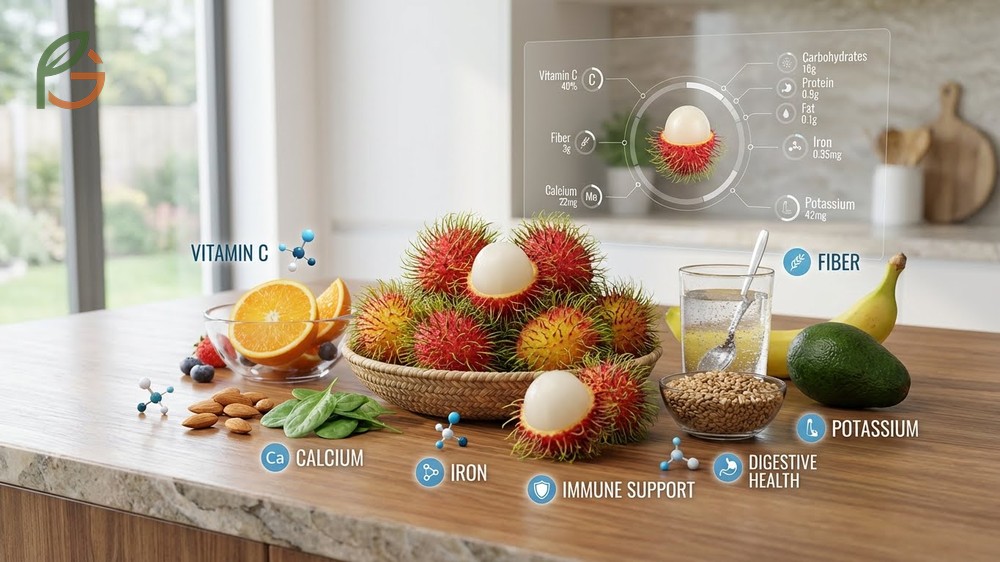
Research shows rambutan delivers a comprehensive nutrient profile beyond just calories. A 100g serving provides 16g carbohydrates, 0.9g protein, and 0.1g fat[1]. The fruit’s vitamin C content reaches 40% of daily value, supporting immune function and iron absorption. Mineral content includes calcium (22mg), iron (0.35mg), and potassium (42mg) per serving.
Current guidance emphasizes rambutan’s dietary fiber content at 3g per 100g. This fiber supports digestive health and helps moderate blood sugar response. The fruit also provides copper, an essential mineral for bone and brain cell maintenance.
Agricultural studies demonstrate that rambutan’s antioxidant compounds extend beyond vitamin C. The fruit contains phenolic compounds in both flesh and peel[5]. These bioactive substances contribute to the fruit’s potential health benefits without adding calories.
Macronutrients
This table compares macronutrient distribution in fresh versus canned rambutan per 100 gram serving, showing calories, carbohydrates, protein, fat, and fiber content
| Nutrient | Fresh Rambutan (100g) | Canned in Syrup (100g) | % Daily Value |
|---|---|---|---|
| Calories | 68 kcal[1] | 82 kcal[2] | 3-4% |
| Carbohydrates | 16 g[1] | 20.9 g | 5-7% |
| Protein | 0.9 g[1] | 0.65 g | 1-2% |
| Fat | 0.1 g[1] | 0.21 g | <1% |
| Dietary Fiber | 3 g[1] | 0.9 g | 11-3% |
The macronutrient profile shows rambutan as predominantly a carbohydrate source. Fresh fruit retains significantly more fiber than canned varieties—3g versus 0.9g per 100g. This difference matters for digestive health and blood sugar management.
Vitamins and Minerals
Rambutan stands out for its exceptional vitamin C content at 40% daily value per 100g serving[1]. This water-soluble vitamin acts as a powerful antioxidant and supports collagen production. The fruit also provides copper, manganese, and B vitamins in smaller amounts.
Evidence indicates that mineral content, while not high in any single nutrient, contributes to overall dietary variety. Potassium (42mg) supports heart function, while calcium (22mg) and iron (0.35mg) add to daily mineral intake. Most people need to combine rambutan with other foods to meet complete mineral requirements.
- Vitamin C: 40% Daily Value (immune support and antioxidant protection)
- Calcium: 22mg (bone health and muscle function)
- Iron: 0.35mg (oxygen transport and energy production)
- Magnesium: 7mg (nerve and muscle function)
- Phosphorus: 9mg (bone health and energy metabolism)
- Potassium: 42mg (heart health and blood pressure regulation)
- Copper: Significant amounts (brain and bone development)
One Rambutan Calories
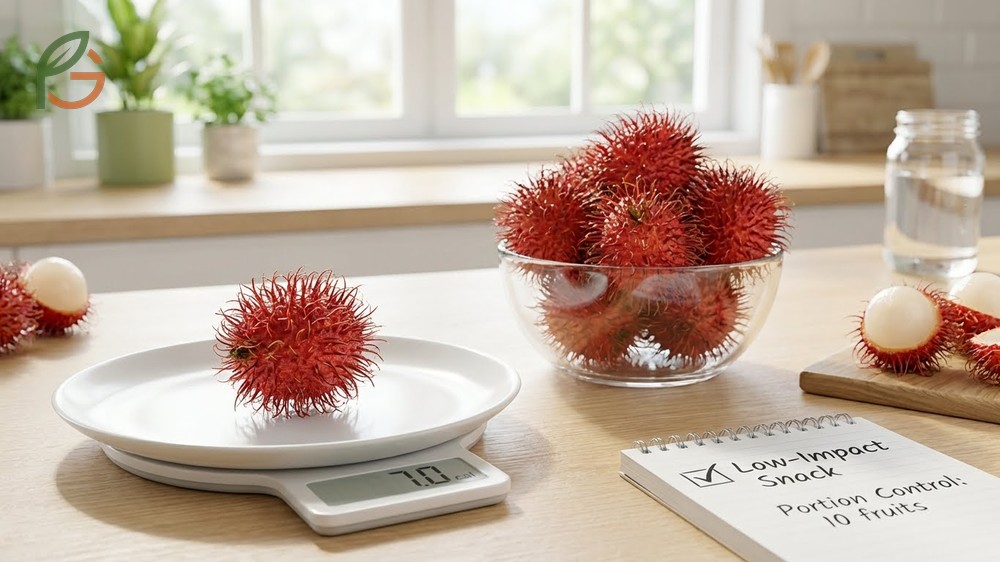
A single medium rambutan fruit contains approximately 7 to 9 calories[2]. This minimal calorie load makes individual fruits an ideal low-impact snack choice. Current data indicates that fruit size variations account for the 2-calorie range, with larger specimens reaching the upper limit.
Research shows that one fruit provides about 0.1g fat, 2g carbohydrates, and less than 1g each of protein and fiber. The reason this matters for snacking is portion control—eating 10 rambutans adds only 70-90 calories to your daily intake. Unlike processed snacks that pack 150+ calories per serving, rambutans let you eat more volume for fewer calories.
Agricultural measurements reveal that the edible portion constitutes roughly 49% of whole fruit weight[6]. This means 1 pound of whole rambutans yields about 0.49 pounds of peeled, pitted fruit. When calculating calories, you’re eating less than half the fruit’s total weight after removing the spiky peel and inedible seed.
- Calories: 7-9 kcal per medium fruit
- Carbohydrates: Approximately 2g per fruit
- Fiber: Less than 1g per fruit
- Protein: Less than 0.1g per fruit
- Fat: Negligible amounts (trace)
- Vitamin C: 3-4% Daily Value per fruit
Snacking Tip: Pre-peel 10-15 rambutans and store them in an airtight container for quick access. This removes the barrier of peeling during snack time while keeping calorie counts under 100-135 calories for the entire portion.
Rambutan Serving Size
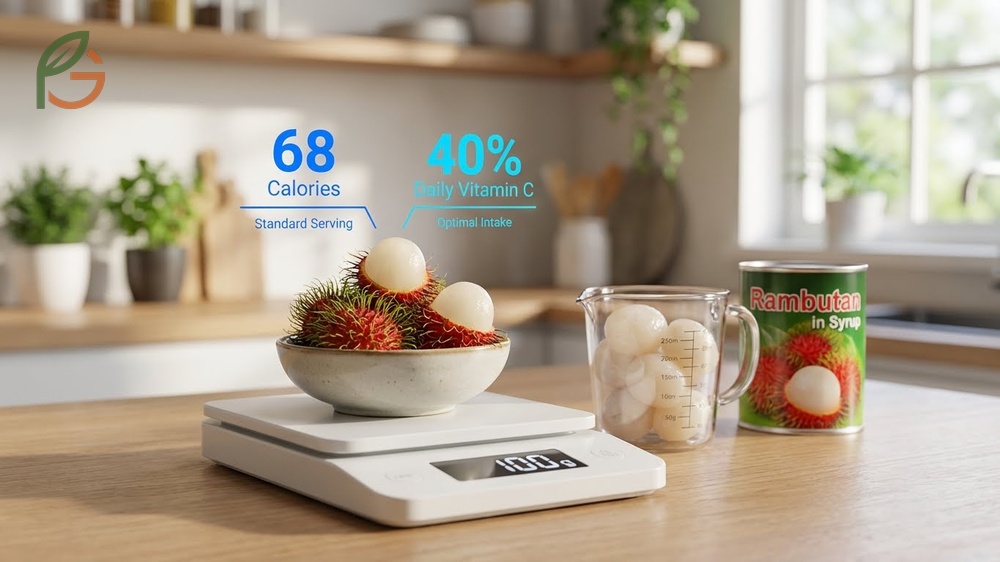
A standard rambutan serving size is 100 grams, which equals roughly 3 to 4 fruits depending on size[7]. This portion delivers 68 calories and meets 40% of daily vitamin C needs. Studies demonstrate that this serving size provides optimal nutrient intake without excessive sugar consumption.
Current guidance shows different serving measurements for various preparations. Fresh rambutan by cup (190g) contains 125 calories, while the same cup measurement of canned fruit in syrup reaches 175 calories[4]. Most people find that 1/4 cup of pitted fruit per person works well in recipes or fruit salads.
The USDA Food Buying Guide establishes 1 pound of whole rambutans yields 0.49 pounds of edible fruit after peeling and pitting[6]. For meal planning, calculate that 25 people need approximately 1 pound of whole rambutans for 1/4 cup servings each. This yield ratio helps gardeners and consumers estimate quantities needed.
Evidence indicates that serving sizes should adjust based on dietary goals. For weight management, stick to 3-4 fruits (68 calories) as a snack. For athletic performance or higher calorie needs, 6-8 fruits (136 calories) provides more energy while remaining nutritious.
| Serving Type | Weight | Approximate Fruits | Calories |
|---|---|---|---|
| Standard Serving | 100g | 3-4 fruits | 68 kcal[1] |
| 1 Cup Fresh | 190g | 7-8 fruits | 125 kcal[4] |
| 1 Cup Canned | 214g | 9-10 fruits equivalent | 175 kcal |
| Single Fruit | 9g edible | 1 fruit | 7-9 kcal[2] |
Low Calorie Fruit
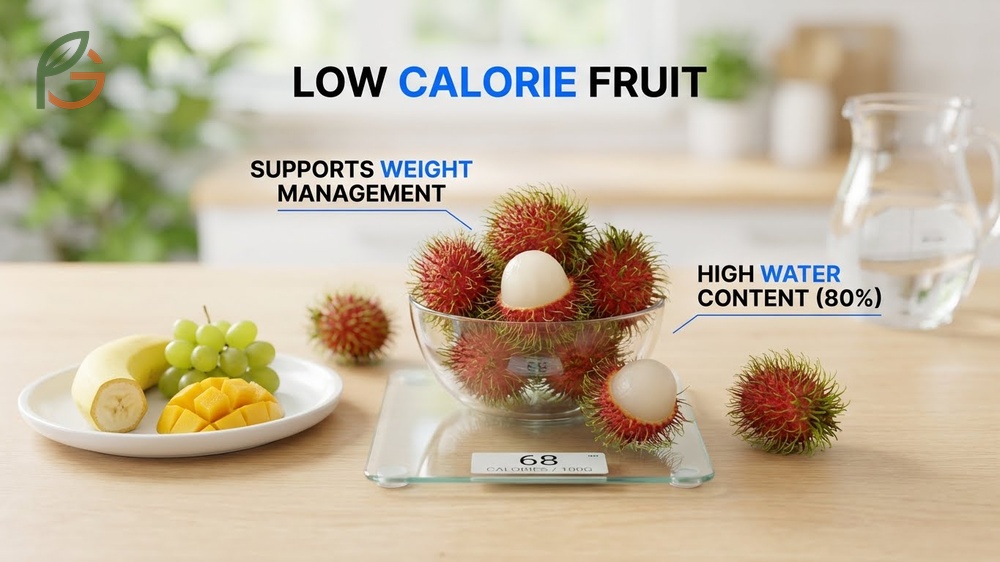
Rambutan qualifies as a low-calorie fruit with 68 calories per 100g, positioning it below bananas (89 cal), grapes (69 cal), and mangoes (60 cal)[1]. Research shows its fiber-to-calorie ratio of 3g fiber per 68 calories supports weight management better than many tropical fruits. The combination of low energy density and high water content (80%) makes it filling despite modest calories.
Studies demonstrate that rambutan helps prevent weight gain when substituted for calorie-dense snacks. With 1.3-2g fiber per 100g, the fruit creates satiety that reduces overeating[8]. Its soluble fiber forms a gel-like substance in intestines, slowing digestion and keeping you full longer—critical for calorie control.
The glycemic index of 59 places rambutan in the moderate category, lower than watermelon (72) but higher than apples (36)[3]. This means blood sugar rises moderately after eating rambutans. For comparison, berries and citrus fruits generally offer lower glycemic responses, while tropical fruits like pineapple rank higher.
- Energy density of only 0.68 calories per gram versus 5+ for chips and cookies
- High water content (80%) adds volume without calories
- Fiber content (3g per 100g) promotes fullness and digestive health
- Natural sugars provide energy without the crash from refined sugars
- Vitamin C content (40% DV) supports metabolism and immune function
- Portability makes it convenient for on-the-go snacking
- Sweet taste satisfies cravings better than artificially sweetened options
What sets rambutan apart is its unique texture and flavor profile that makes portion control easier. Unlike dried fruits that concentrate calories (240+ per 100g), fresh rambutans can’t be mindlessly consumed in large quantities. The peeling process naturally paces consumption.
Weight Management Strategy: Replace afternoon processed snacks (150-250 calories) with 5-6 rambutans (35-54 calories). This creates a 100-200 calorie daily deficit that adds up to 0.5-1 pound weight loss per month without feeling deprived.
Conclusion
The evidence is clear: Calories In Rambutan remain low at 68 per 100g while delivering substantial vitamin C, fiber, and minerals that support overall health. Current agricultural research demonstrates this tropical fruit offers an excellent calorie-to-nutrient ratio, making it valuable for both home gardeners and health-conscious consumers. Whether you’re growing rambutans in subtropical zones or purchasing them fresh, understanding their calorie content helps optimize dietary choices.
FruitGarden continues synthesizing nutrition research and cultivation data to help US fruit enthusiasts make informed decisions about the exotic fruits they grow and consume. As rambutan availability expands beyond specialty markets, its role as a nutritious low-calorie snack becomes increasingly relevant for American dietary patterns.
Medical Disclaimer
Important Medical Disclaimer: This content is for informational and educational purposes only. It is not intended as a substitute for professional medical advice, diagnosis, or treatment. Always consult a qualified healthcare professional or registered dietitian before making any changes to your diet, especially if you have diabetes, food allergies, or other medical conditions. Individual nutritional needs vary based on age, activity level, and health status.
Frequently Asked Questions
How many calories are in 10 rambutans?
Ten medium rambutans contain approximately 70 to 90 calories total, with each fruit providing 7-9 calories. This makes them an excellent low-calorie snack option that won’t derail weight management goals, especially when compared to processed snacks that typically contain 150+ calories per serving.
Is rambutan good for weight loss?
Yes, rambutan supports weight loss with only 68 calories per 100g and 3g fiber that promotes fullness. Research shows the fiber-to-calorie ratio helps reduce overeating by creating satiety, while the high water content (80%) adds volume without extra calories. Substituting processed snacks with rambutans can create meaningful calorie deficits.
What’s the difference between fresh and canned rambutan calories?
Fresh rambutan contains 68 calories per 100g while canned rambutan in syrup has 82 calories for the same serving size—about 20% more. The added sugars in syrup processing account for this difference. Fresh fruit also retains more vitamin C and fiber, making it the superior choice nutritionally.
How does rambutan’s glycemic index affect calorie metabolism?
Rambutan’s glycemic index of 59 falls in the moderate category, meaning it causes a gradual blood sugar rise rather than a spike. While the GI doesn’t change calorie content, it affects how your body processes those calories—moderate GI foods provide steadier energy and may reduce subsequent hunger compared to high-GI options.
What serving size of rambutan equals 100 calories?
Approximately 147 grams or 5-6 medium rambutans equal 100 calories. This portion provides nearly 60% of your daily vitamin C needs and about 4.4g dietary fiber. For practical snacking, this represents a satisfying portion that delivers nutrients without excessive calories.
Does rambutan have more or fewer calories than lychee?
Rambutan has slightly more calories than lychee—68 versus 66 calories per 100g. Both qualify as low-calorie tropical fruits with similar nutritional profiles. Lychee contains marginally more fiber and has a lower glycemic index (48 vs 59), but the calorie difference is negligible for practical dietary purposes.
Can I eat rambutan every day without gaining weight?
Yes, moderate daily rambutan consumption (3-6 fruits or 100-150g) fits easily into most calorie budgets at 68-102 calories. The fruit’s fiber and water content support satiety, potentially reducing overall calorie intake. However, like all foods, rambutans should be part of a balanced diet rather than consumed in excessive amounts.





