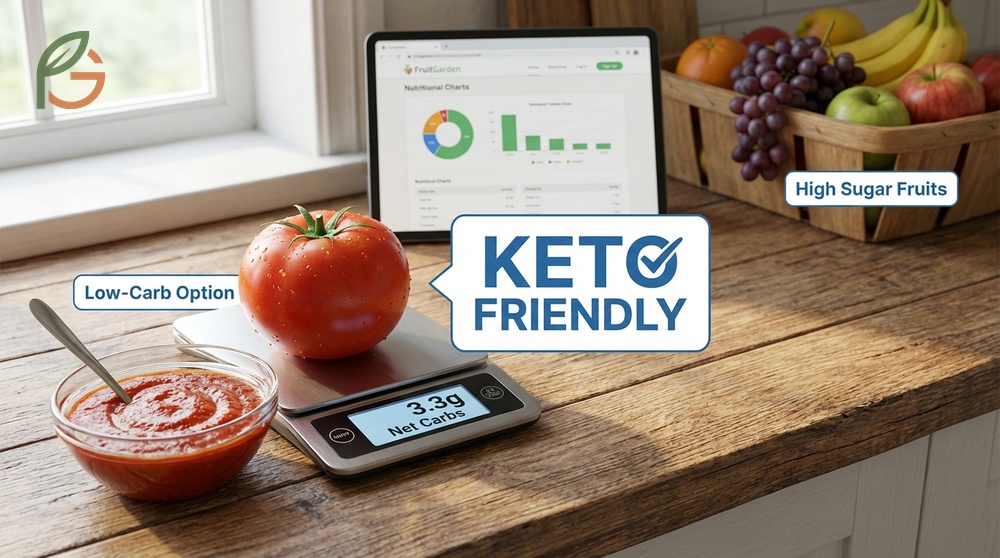
Are tomatoes keto friendly? Yes, when eaten in moderation. Research shows a medium tomato contains approximately 3.3g net carbs[1], fitting comfortably within the 20-50g daily carb limit for most ketogenic diets[2]. Unlike most fruits that disrupt ketosis with high sugar content, tomatoes occupy a unique position as a low-carb option that won’t derail your fat-burning goals. FruitGarden synthesizes current nutritional research and USDA data to help you make informed decisions about including tomatoes in your keto meal planning.
Quick Answer
- A medium raw tomato (123g) contains 3.3g net carbs[1] and fits most keto plans
- Roma tomatoes are the lowest-carb variety at 2.84g net carbs per 100g[3]
- Commercial tomato sauce contains 9-12g net carbs per 1/2 cup[4] due to added sugars
- You can enjoy 2-3 medium tomatoes daily while maintaining ketosis (under 20g total carbs)
Are Tomatoes Keto Friendly

Studies demonstrate that tomatoes fit well within ketogenic diet parameters. A medium-sized tomato (about 123g) contains approximately 4.8g total carbohydrates and 1.5g fiber[5], resulting in 3.3g net carbs per serving. Current nutritional guidance emphasizes tracking net carbs rather than total carbs for ketosis maintenance.
The standard ketogenic diet limits carbohydrate intake to 20-50g net carbs daily[2]. At 3.3g net carbs per tomato, you’d need to consume 6-15 medium tomatoes to exceed these limits—far beyond typical serving sizes. This makes tomatoes one of the safer fruit choices for keto followers.
Unlike high-carb fruits like bananas (24g net carbs) or apples (21g net carbs), tomatoes won’t spike your blood sugar or kick you out of ketosis. Evidence suggests their low glycemic index of 15[6] provides steady energy without the insulin response that disrupts fat-burning metabolic states.
Understanding Net Carbs in Tomatoes
Net carbs represent the carbohydrates your body actually digests and converts to glucose. You calculate this by subtracting fiber from total carbohydrates since fiber passes through your digestive system without affecting blood sugar levels.
Research from USDA FoodData Central shows 100g of raw tomato contains 3.9g total carbs and 1.2g fiber[6], yielding 2.7g net carbs. Most nutrition tracking apps calculate this automatically, but understanding the math helps you make accurate dietary decisions.
Important Note: Always read labels on canned or processed tomato products. Manufacturers often add sugars, starches, and thickeners that dramatically increase carb counts beyond what’s natural in fresh tomatoes.
How Tomatoes Compare to Keto Limits
For strict keto adherents limiting intake to 20g net carbs daily, three medium tomatoes (approximately 9.9g net carbs) consume roughly half your allowance. This leaves adequate room for other low-carb vegetables, proteins with trace carbs, and incidental carbs from seasonings.
If you’re following a more moderate keto approach allowing 35-50g net carbs[7], tomatoes become even more flexible. You can incorporate them into multiple meals—sliced for breakfast omelets, diced in lunch salads, and cooked into dinner sauces—without exceeding your targets.
Tomato Carb Content
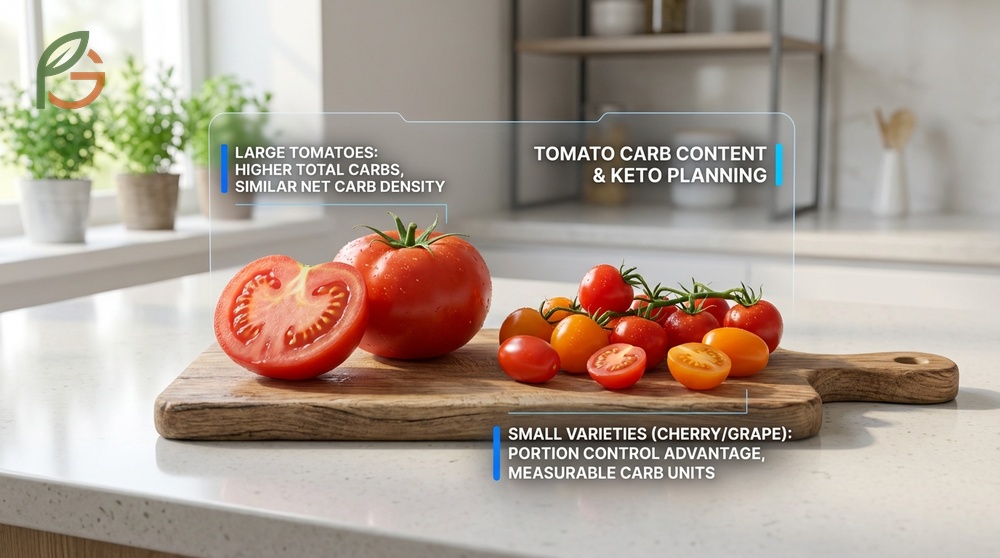
Different tomato varieties contain varying carbohydrate levels due to differences in size, water content, and natural sugar concentration. Understanding these variations helps you optimize your keto meal planning.
Agricultural data shows that larger tomatoes generally contain more total carbs but maintain similar net carb densities per 100g. Smaller varieties like cherry and grape tomatoes offer portion control advantages since each piece represents a measurable carb unit.
Carbs by Tomato Type
This table compares total carbohydrates, fiber content, and net carbs across six common tomato varieties from lowest to highest carb density
| Tomato Type | Serving Size | Total Carbs | Fiber | Net Carbs |
|---|---|---|---|---|
| Roma (Plum) | 100g | 3.84g[3] | 1.0g | 2.84g |
| Medium Red | 123g (1 whole) | 4.8g[1] | 1.5g | 3.3g |
| Cherry | 149g (1 cup) | 5.8g[8] | 1.8g | 4.0g |
| Grape | 100g | 5.51g[3] | 2.1g | 3.41g |
| Beefsteak | 100g | 4.82g[3] | 1.5g | 3.32g |
| Sun-Dried | 100g | 55.76g[3] | 12.3g | 43.46g |
Roma tomatoes emerge as the best keto choice with the lowest net carb density. Their meatier texture and lower water content make them ideal for cooking applications where you want concentrated tomato flavor without excessive carbs.
Warning: Avoid sun-dried tomatoes on strict keto. The dehydration process concentrates natural sugars to 43.46g net carbs per 100g—nearly 15 times higher than fresh varieties and enough to exceed your entire daily carb allowance in a small handful.
Raw vs Processed Tomatoes
Processing methods dramatically alter tomato carbohydrate content. Raw tomatoes start with 3-4g net carbs per serving, but cooking, concentrating, and adding ingredients changes this significantly.
Commercial tomato sauce averages 9-12g net carbs per half-cup serving[4] due to added sugars, onion powder, and starch thickeners. Homemade versions using crushed tomatoes, garlic, and herbs contain just 3-4g net carbs for the same portion—a 66% reduction that makes the difference between staying in ketosis or not.
Tomato paste contains about 4.7g net carbs per 2 tablespoons[9]. The concentration process removes water while retaining all the natural sugars, creating a carb-dense product. For keto cooking, dilute 1 tablespoon paste with half a cup of water to create a lower-carb base sauce that won’t compromise your macros.
- Crushed tomatoes: 4g net carbs per 125g serving (best choice for keto sauces)
- Diced canned tomatoes: 4-5g net carbs per half cup (watch for added sugars)
- Tomato puree: 9-13g net carbs per half cup (highly concentrated)
- Traditional pasta sauce: 9-12g net carbs per half cup (added sugars and starches)
- Tomato paste: 4.7g net carbs per 2 tablespoons (most concentrated)
Net Carbs Tomatoes
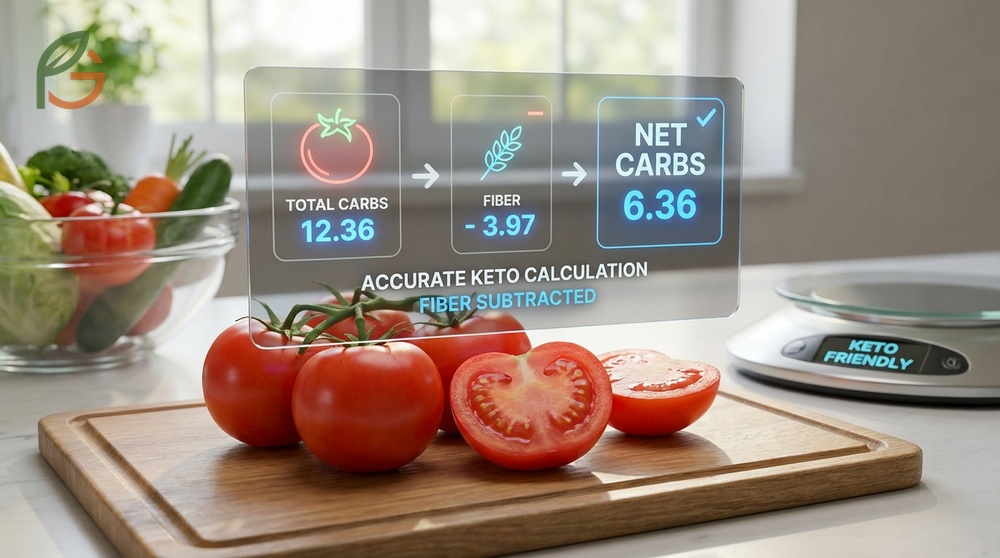
Accurate net carb calculation determines whether specific foods fit your keto targets. The formula subtracts indigestible fibers from total carbohydrates since these components pass through your system without raising blood glucose or insulin levels.
Most people focus on total carbs when tracking their diet, but this creates unnecessary restrictions. Fiber provides digestive benefits without metabolic consequences that disrupt ketosis, making net carb tracking the scientifically supported approach for ketogenic eating.
Calculating Net Carbs Properly
Current dietary guidance recommends this calculation: Net Carbs = Total Carbohydrates – Dietary Fiber – Half of Sugar Alcohols (if present)[7]. Fresh tomatoes don’t contain sugar alcohols, so you simply subtract fiber from total carbs.
For example, a medium tomato with 4.8g total carbs and 1.5g fiber yields 3.3g net carbs. This represents the actual carbohydrate load your body processes, making it the relevant metric for ketosis maintenance.
Food labels sometimes list fiber separately, but older labels may only show total carbohydrates. When fiber isn’t specified, use USDA FoodData Central or nutrition tracking apps like Cronometer or MyFitnessPal that provide complete macronutrient breakdowns with fiber values.
- Check nutrition labels or USDA database for total carbohydrates per serving
- Identify the dietary fiber content listed separately on the label
- Subtract fiber grams from total carb grams to get net carbs
- Multiply net carbs by number of servings you actually consume
- Log the final net carb amount in your daily keto tracker
Pro Tip: Don’t rely on package serving sizes when calculating net carbs. Measure your actual portion with a food scale to ensure accuracy—underestimating portions by even 20% can add 10-15g hidden carbs daily, potentially disrupting ketosis.
Keto Vegetable Options
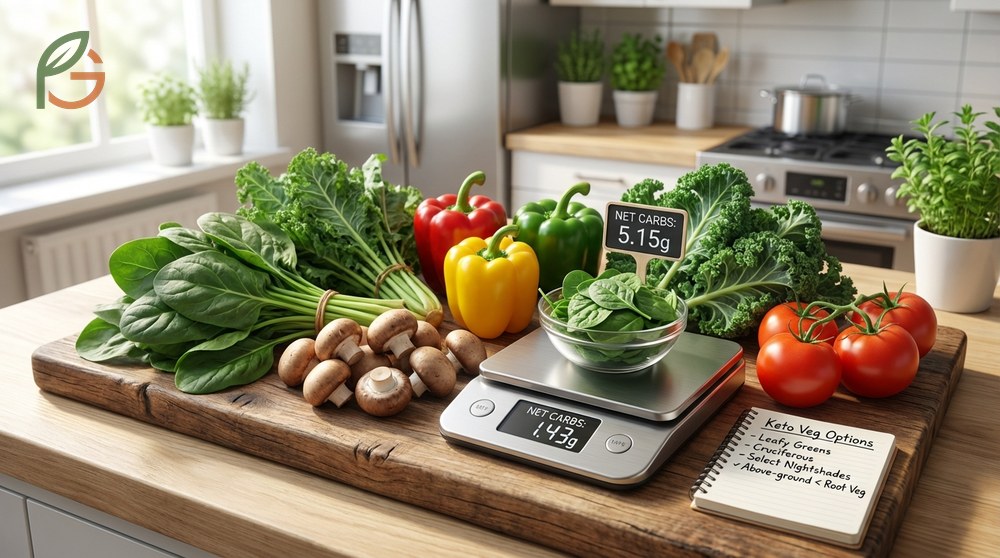
While tomatoes qualify as keto-friendly, dozens of lower-carb vegetables provide even greater flexibility for your meal planning. Research shows that non-starchy vegetables form the foundation of successful ketogenic diets by providing essential micronutrients, fiber, and volume without excessive carbohydrates.
The lowest-carb vegetables contain 1-3g net carbs per cup, allowing you to eat generous portions while maintaining deep ketosis. Leafy greens, cruciferous vegetables, and above-ground vegetables generally contain fewer carbs than root vegetables or legumes.
Comparing tomatoes (3.3g net carbs per medium tomato) to other common keto vegetables shows where they fit in your carb hierarchy. Spinach delivers just 1.43g net carbs per cup, while zucchini provides 2.11g net carbs[10]. This means you can eat larger portions of these alternatives if you’re trying to minimize carb intake.
- Watercress: 0.79g net carbs per cup (lowest of all vegetables)
- Spinach: 1.43g net carbs per cup (excellent for salads and smoothies)
- Romaine lettuce: 1.19g net carbs per cup (perfect for wraps)
- Collard greens: 1.4g net carbs per cup (Southern cooking staple)
- Asparagus: 1.6g net carbs per cup (great grilled or roasted)
- Radishes: 1.8g net carbs per cup (crunchy snack alternative)
- Swiss chard: 2.1g net carbs per cup (nutrient-dense leafy green)
- Zucchini: 2.11g net carbs per cup (versatile for noodles and sautés)
- Cabbage: 3.07g net carbs per cup (budget-friendly option)
- Tomatoes: 3.3g net carbs per medium (123g) serving
Vegetables to consume in smaller portions due to higher carb content include carrots (6.78g net carbs per cup), onions (8.71g net carbs per cup), and winter squash (7.09g net carbs per cup)[10]. These aren’t forbidden on keto, but they require careful portion control to avoid exceeding your daily carb limits.
Strategy Tip: Build your meals around 2-3 cups of leafy greens or cruciferous vegetables (1-3g net carbs total), then add smaller portions of medium-carb vegetables like tomatoes. This approach maximizes volume and nutrients while keeping carbs under 20g daily.
Tomato Serving Keto
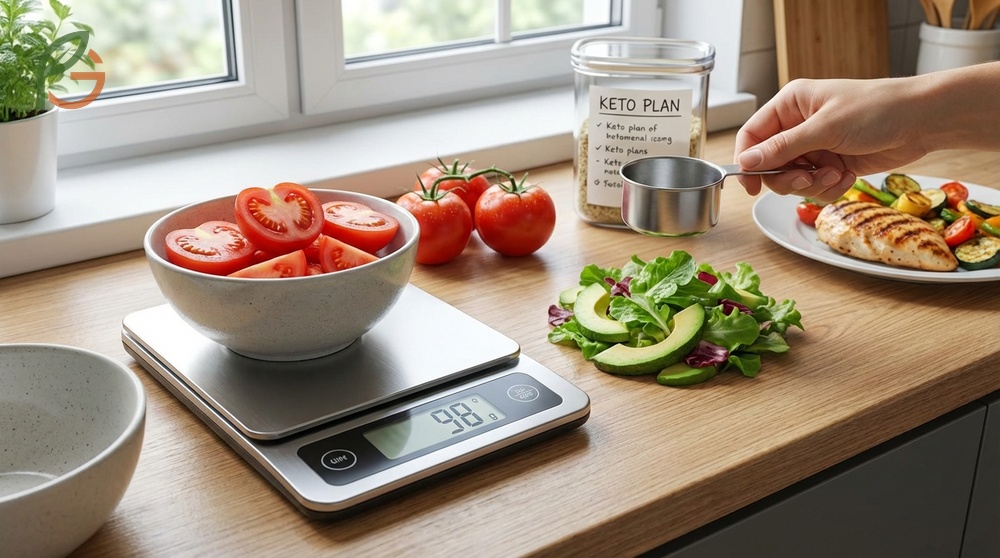
Strategic portioning determines whether tomatoes support or sabotage your ketosis. Current nutritional guidance emphasizes measuring actual servings rather than eyeballing portions, since estimation errors typically undercount intake by 30-50%.
For strict keto adherents limiting intake to 20g net carbs daily, 2-3 medium tomatoes (6.6-9.9g net carbs) represent one-third to one-half of your allowance. This leaves 10-13g for other vegetables, trace carbs in proteins, and incidental carbs from cooking oils, seasonings, and beverages.
Timing your tomato consumption around physical activity may enhance ketone utilization. Evidence suggests consuming your highest-carb vegetables within 2 hours before or after exercise helps your muscles absorb glucose more efficiently, minimizing the metabolic impact on ketosis maintenance.
Here’s how to incorporate tomatoes throughout your day while staying under 20g net carbs. For breakfast (6-9 AM), add half a medium tomato (1.65g net carbs) to a three-egg omelet with cheese and spinach for sustained morning energy. At lunch (12-2 PM), include 5-6 cherry tomatoes (2.5-3g net carbs) in a large salad with grilled chicken, avocado, and olive oil dressing. For dinner (6-8 PM), use half a cup of crushed tomatoes (4g net carbs) to create a keto-friendly marinara sauce for zucchini noodles with grass-fed beef meatballs.
If you’re following a more moderate 35-50g net carb approach, you can increase tomato portions by 50-100%. This flexibility allows for larger salads, heartier sauces, and tomato-based soups without compromising ketosis. Many people find this sustainable long-term compared to ultra-strict 20g protocols.
- Weigh tomatoes on a digital food scale before eating to track exact net carbs
- Choose Roma tomatoes for lowest carb density (2.84g net carbs per 100g)
- Make homemade tomato sauce instead of buying commercial varieties with added sugars
- Pair tomatoes with high-fat foods like olive oil, cheese, or avocado to slow digestion
- Time tomato consumption around workouts to enhance glucose utilization
- Limit tomato servings to breakfast and lunch, saving dinner carbs for vegetables only
- Avoid sun-dried tomatoes entirely—their 43.46g net carbs per 100g make them incompatible with keto
Common Mistake: Many keto beginners don’t account for sauce carbs when eating dishes like chicken parmesan or meatballs. A typical restaurant serving uses 1-1.5 cups of sauce (18-24g net carbs)—more than an entire day’s carb allowance. Always ask for sauce on the side or request no-sugar-added marinara.
Conclusion
The evidence is clear: tomatoes are keto friendly when consumed in measured portions that fit your daily carb targets. With 3.3g net carbs per medium tomato and a low glycemic index of 15, they won’t disrupt ketosis when you account for them in your meal planning. Choose Roma varieties for lowest carb density, make homemade sauces instead of commercial versions, and measure portions accurately to optimize your results.
Current nutritional guidance emphasizes whole-food approaches to ketogenic eating rather than relying solely on processed low-carb products. Tomatoes provide lycopene, vitamin C, potassium, and fiber that support overall health while fitting your macros. FruitGarden recommends starting with 1-2 medium tomatoes daily, tracking your ketone levels for 3-5 days, then adjusting portions based on your individual metabolic response and carb tolerance.
Medical Disclaimer
Important Medical Disclaimer: This content is for informational and educational purposes only. It’s not intended as a substitute for professional medical advice, diagnosis, or treatment. Always consult a qualified healthcare professional or registered dietitian before making any changes to your diet, especially if you have diabetes, kidney disease, metabolic disorders, or other medical conditions. The ketogenic diet may not be appropriate for everyone, and individual carbohydrate tolerance varies significantly based on activity level, metabolic health, and genetic factors.
Frequently Asked Questions
Can I eat tomatoes every day on keto?
Yes, you can eat tomatoes daily on keto as long as you stay within your carb limits. Research shows 2-3 medium tomatoes (6.6-9.9g net carbs) fit comfortably in most keto plans that allow 20-50g net carbs per day. Track your portions accurately and adjust based on how your body maintains ketosis—some people tolerate higher carb vegetables better than others.
Which tomato variety has the lowest carbs for keto?
Roma (plum) tomatoes contain the lowest net carbs at approximately 2.84g per 100g, making them the best choice for strict keto dieters. Their meatier texture and lower water content provide concentrated tomato flavor without excess carbohydrates. Beefsteak tomatoes are the second-best option at 3.32g net carbs per 100g, while you should avoid sun-dried tomatoes completely due to their concentrated 43.46g net carbs per 100g.
Is tomato sauce keto friendly?
Homemade tomato sauce is keto friendly at 3-4g net carbs per half cup, but commercial varieties often aren’t. Store-bought pasta sauces typically contain 9-12g net carbs per half cup due to added sugars, onion powder, and starch thickeners. Always check nutrition labels for hidden carbs, or make your own using crushed tomatoes, garlic, olive oil, and Italian herbs for a truly keto-compatible sauce.
How many cherry tomatoes can I eat on keto?
You can eat approximately 10-15 cherry tomatoes on strict keto (under 20g carbs daily). One cup of cherry tomatoes (about 149g or 20-22 pieces) contains roughly 5.8g total carbs and 1.8g fiber, yielding about 4g net carbs. This represents 20% of a strict 20g daily limit or 8-10% of a moderate 50g allowance, leaving room for other vegetables, proteins, and incidental carbs throughout your day.
Do cooked tomatoes have more carbs than raw?
Cooked tomatoes don’t gain carbs during cooking, but concentration changes the carb density per serving. When you cook down one cup of raw chopped tomatoes (7g total carbs), the water evaporates, leaving the same carbs in a smaller volume. This means a half cup of cooked tomatoes contains the same carbs as a full cup raw—the carbohydrates concentrate but don’t multiply. Cooking does increase lycopene bioavailability, providing enhanced antioxidant benefits without additional carb cost.
Can tomato paste kick you out of ketosis?
Tomato paste can disrupt ketosis if you use too much—it contains 4.7g net carbs per 2 tablespoons due to extreme concentration. Since most recipes call for 3-6 tablespoons (7-14g net carbs), this can quickly consume half your daily carb allowance. For keto cooking, dilute 1 tablespoon paste with half a cup water to create a sauce base, or substitute with crushed tomatoes that provide similar flavor at just 4g net carbs per 125g serving.
What’s better for keto—fresh tomatoes or canned?
Fresh tomatoes and plain canned tomatoes contain nearly identical carb counts—both offer 3-4g net carbs per serving. The difference comes from added ingredients: many canned varieties include sugar, corn syrup, or citric acid that increase carbs to 5-8g per half cup. Choose canned tomatoes labeled “no salt added” or “no sugar added” and always check the nutrition label. Fresh tomatoes give you complete control over what goes into your meals, making them the safer default choice for strict keto adherence.