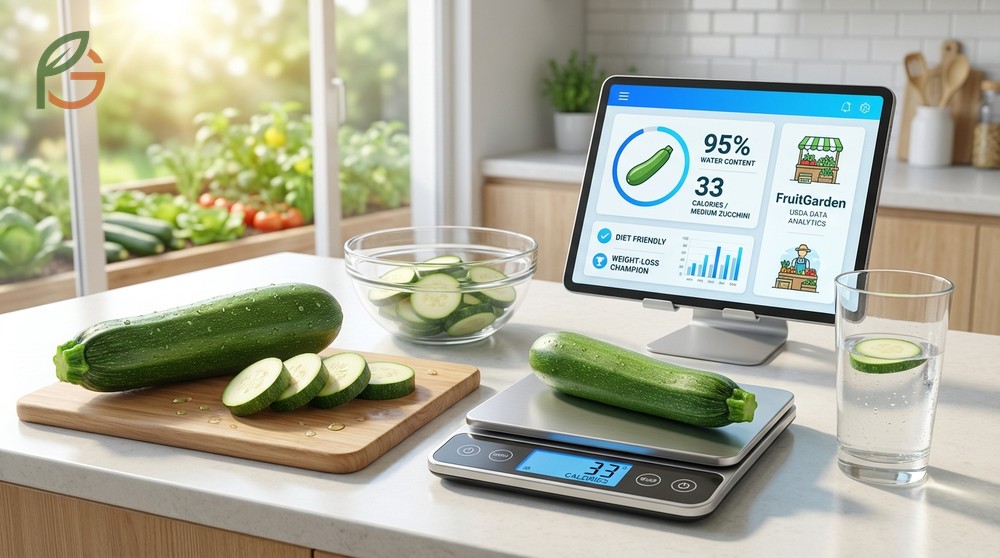
Calories in Zucchini are exceptionally low, making this summer squash a weight-loss champion. Research shows one medium zucchini contains just 33 calories while delivering 95% water content and essential nutrients that keep you full longer. FruitGarden synthesizes current USDA nutritional data and agricultural research to help you understand how this versatile vegetable fits into your healthy eating plan.
Quick Answer
Calories in Zucchini
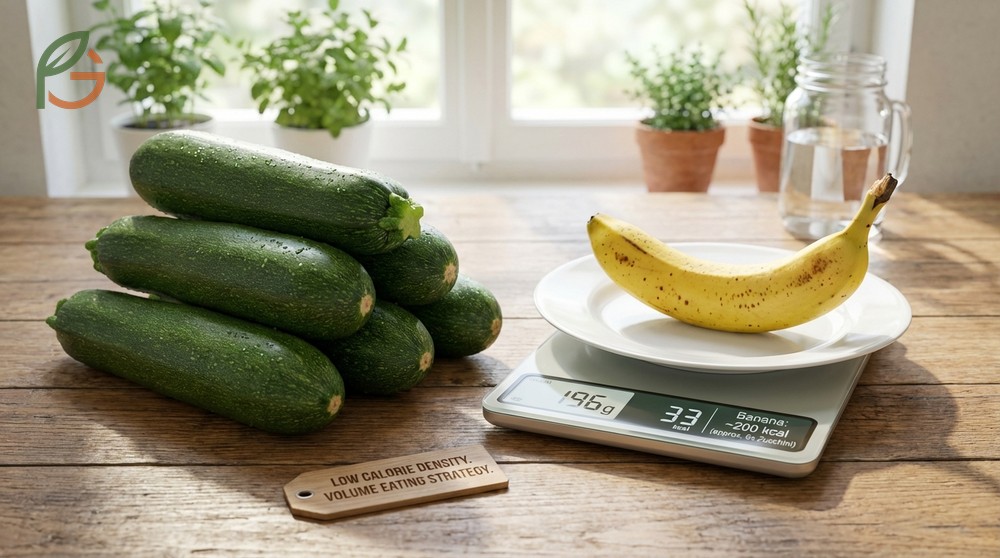
Zucchini ranks among the lowest-calorie vegetables you can eat. One medium zucchini weighing 196g provides just 33 calories[1], which means you’d need to eat six medium zucchinis to equal the calories in one medium banana. This makes zucchini perfect for volume eating strategies where you can fill your plate without expanding your waistline.
The calorie density is remarkably low at 17 calories per 100g[2]. Studies demonstrate that foods with low energy density help people feel satisfied while consuming fewer calories overall. You can eat a substantial portion without significantly impacting your daily calorie budget.
Most people don’t realize that timing matters less than quantity with zucchini. You can enjoy it for breakfast, lunch, or dinner without worrying about calorie overload since even a large 323g zucchini contains only 55 calories[3].
Raw vs Cooked Calories
Raw zucchini maintains its full nutritional profile and lowest calorie count. Cooking methods don’t significantly alter the calorie content unless you’re adding oils or butter. Steaming or grilling zucchini keeps calories minimal while enhancing flavor.
When you sauté zucchini in oil, you’re adding about 120 calories per tablespoon of oil used. The zucchini itself remains low-calorie, but preparation methods matter. Spiralized raw zucchini noodles offer the same 17 calories per 100g as whole raw zucchini.
Size Matters: Calorie Breakdown
Zucchini sizes vary considerably, affecting total calorie intake. A small zucchini (118g) contains about 20 calories, while a medium one (196g) has 33 calories[1]. Large zucchinis (323g) deliver 55 calories[3].
Even the largest zucchini won’t derail your diet. This flexibility allows you to use what’s available from your garden or grocery store without precise measurements.
Important Note: Zucchini’s calorie content can increase dramatically when prepared as zucchini bread or fried. A slice of zucchini bread contains 150-200 calories due to added flour, sugar, and oil.
Zucchini Calorie Count
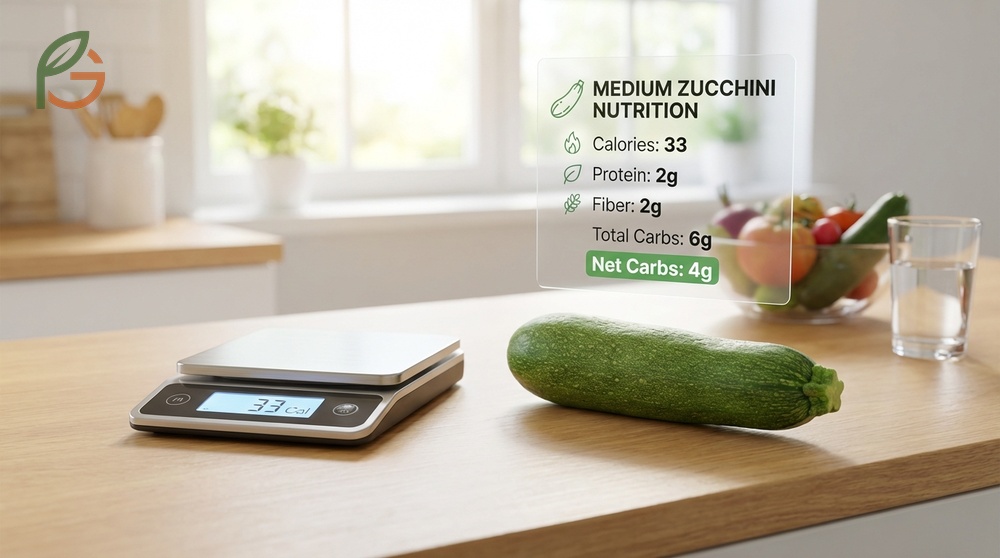
Understanding zucchini’s complete nutritional profile reveals why it’s so diet-friendly. Beyond the low calorie count, this summer squash delivers impressive nutrients relative to its energy content. One medium zucchini provides 2g of protein and 2g of dietary fiber[1] alongside those 33 calories.
The total carbohydrate content sits at 6g per medium zucchini, with 2g coming from fiber. This leaves you with just 4g of net carbs[3], making zucchini fully compatible with low-carb and ketogenic eating plans. Fat content remains minimal at 1g per serving.
Current data indicates that zucchini’s calorie distribution breaks down to 62% from carbohydrates, 24% from protein, and 14% from fat[3]. This macronutrient balance supports muscle maintenance during weight loss while keeping calories rock-bottom.
This table compares calories, carbohydrates, fiber, and net carbs across different zucchini serving sizes from one cup sliced to one large zucchini
| Serving Size | Weight (g) | Calories | Total Carbs (g) | Fiber (g) | Net Carbs (g) |
|---|---|---|---|---|---|
| 1 cup, sliced | 113 | 19[3] | 3.5 | 1.2 | 2.3 |
| 1 cup, chopped | 124 | 21[3] | 4 | 1.2 | 2.8 |
| 1 small | 118 | 20[3] | 4 | 1.2 | 2.8 |
| 1 medium | 196 | 33[1] | 6 | 2 | 4 |
| 1 large | 323 | 55[3] | 10 | 3.2 | 6.8 |
Macronutrient Distribution
Zucchini’s macronutrient profile supports various dietary approaches. The 2g of protein per medium zucchini[1] contributes to your daily intake without adding substantial calories. While not protein-rich, it’s respectable for a vegetable.
The minimal fat content (1g per serving) means nearly all calories come from carbohydrates. However, half those carbs consist of fiber that your body doesn’t digest for energy, further reducing the effective calorie load.
Micronutrients and Vitamins
One medium zucchini delivers 512mg of potassium (11% daily value), 35mg of vitamin C (39% daily value), and 0.3mg of vitamin B6 (25% daily value)[3]. You’re getting significant nutrition for minimal calories.
Research shows that nutrient density matters more than calorie counting alone. Zucchini provides vitamins, minerals, and antioxidants that support overall health while keeping your calorie budget tight.
- Potassium: 512mg supports heart health and blood pressure regulation
- Vitamin C: 35mg boosts immune function and collagen production
- Vitamin B6: 0.3mg aids protein metabolism and brain function
- Manganese: 0.3mg supports bone health and metabolism
- Folate: 47mcg essential for cell growth and DNA synthesis
Low Calorie Vegetable
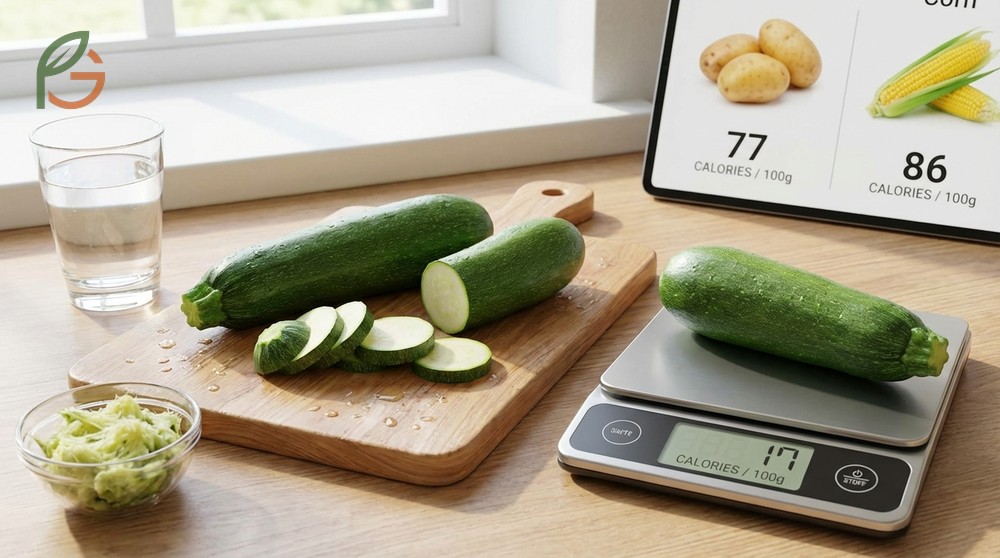
Zucchini’s status as a low-calorie vegetable stems from its unique composition. Evidence suggests that vegetables with high water content and fiber create satiety without calorie density. Unlike starchy vegetables like potatoes (77 calories per 100g) or corn (86 calories per 100g), zucchini’s 17 calories per 100g[2] places it among the lightest options.
The glycemic index of 15[4] means zucchini won’t cause blood sugar spikes that trigger hunger and cravings. Foods with low glycemic indices help maintain stable energy levels throughout the day. This makes zucchini particularly valuable for people managing diabetes or insulin resistance.
Current guidance emphasizes that low-calorie vegetables support weight loss by allowing larger portion sizes. You can fill half your plate with zucchini and still consume fewer calories than a small serving of pasta or rice. This volume eating strategy helps people feel psychologically satisfied while maintaining a calorie deficit.
Water Content Advantage
Zucchini contains approximately 95% water[5], contributing to its impressively low calorie density. This high water content increases food volume without adding energy, making you feel full faster. Research demonstrates that water-rich foods naturally reduce total calorie intake at meals.
The hydration benefit extends beyond satiety. When you eat zucchini, you’re simultaneously consuming water that supports digestion, nutrient absorption, and overall bodily functions. This dual benefit makes zucchini more effective than drinking water alongside lower-hydration foods.
Fiber Fills You Up
The 2g of fiber in one medium zucchini[1] represents 7% of your daily fiber needs. While not fiber-rich compared to beans or whole grains, it’s significant considering the minimal calorie cost. You’re getting fiber without the calorie density of fiber-heavy grains.
Fiber slows digestion, stabilizes blood sugar, and promotes feelings of fullness that last hours after eating. Studies show that increasing fiber intake helps people naturally reduce calorie consumption without conscious restriction. Zucchini provides this benefit without requiring you to eat heavy, calorie-dense whole grain products.
Diet Tip: Replace half your pasta with spiralized zucchini noodles to cut 175 calories per cup while maintaining portion size. You’ll feel just as full but consume significantly fewer calories.
- Grill thick zucchini slices as a burger bun replacement (save 140 calories per bun)
- Spiralize into noodles for pasta dishes (save 175 calories per cup vs regular pasta)
- Hollow out and stuff with lean protein for a complete meal under 250 calories
- Blend raw zucchini into smoothies for thickness without added calories
- Slice and bake into chips as a crunchy snack (30 calories per cup vs 150 for potato chips)
Zucchini Energy Value
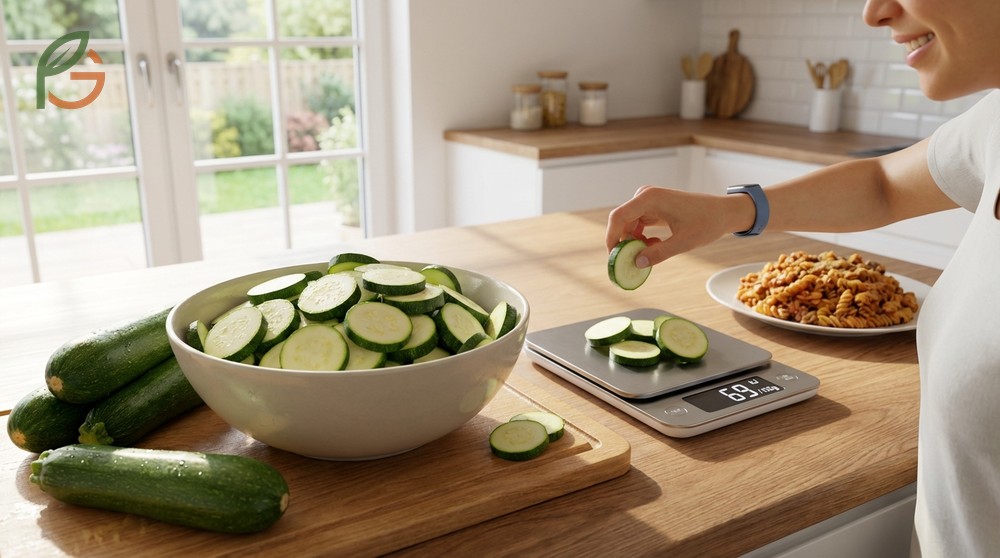
The energy value of zucchini translates to approximately 69 kilojoules per 100g, significantly lower than most vegetables. This minimal energy density allows for unrestricted portions during weight loss phases. Unlike energy-dense foods that require careful portion control, you can eat zucchini freely without derailing dietary goals.
For people tracking calories, zucchini offers psychological relief. When hunger strikes between meals, a cup of sliced zucchini provides crunch and volume for just 19 calories[3]. You can satisfy snack cravings without guilt or mathematical gymnastics.
The energy-to-nutrient ratio makes zucchini exceptionally efficient. You’re getting vitamins, minerals, antioxidants, and fiber while barely impacting your energy balance. This efficiency explains why nutritionists consistently recommend zucchini for weight management programs.
Athletic individuals and active people benefit from zucchini’s low energy value differently. While it won’t fuel intense workouts, it provides micronutrients and hydration that support recovery without adding unwanted calories during cutting phases. The potassium content (512mg per medium zucchini)[3] helps maintain electrolyte balance during training.
- Pre-workout snack: Raw zucchini sticks provide hydration and crunch without stomach heaviness
- Post-workout recovery: Grilled zucchini alongside protein delivers nutrients without excess calories
- Meal prep base: Spiralized zucchini stores well and creates low-calorie lunch foundations
- Volume addition: Mix diced zucchini into ground meat dishes to stretch portions without adding calories
- Smoothie thickener: Frozen zucchini cubes add body to protein shakes without affecting flavor or adding sugar
Conclusion
The evidence is clear: Calories in Zucchini remain remarkably low at just 33 per medium squash[1], making this summer vegetable an exceptional choice for weight management, blood sugar control, and nutrient-dense eating. With 95% water content[5], a glycemic index of 15[4], and only 4g net carbs per serving[3], zucchini fits virtually every dietary approach from keto to plant-based eating.
Current agricultural and nutritional guidance emphasizes incorporating diverse, low-calorie vegetables like zucchini into daily eating patterns. FruitGarden provides evidence-based resources to help you grow, harvest, and enjoy nutrient-dense produce that supports your health goals without complicated calorie counting or restrictive eating.
Medical Disclaimer
Important Medical Disclaimer: This content is for informational and educational purposes only. It isn’t intended as a substitute for professional medical advice, diagnosis, or treatment. Always consult a qualified healthcare professional or registered dietitian before making significant changes to your diet, especially if you have diabetes, food allergies, digestive disorders, or other medical conditions. Individual nutritional needs vary based on age, activity level, health status, and medications.
Frequently Asked Questions
How many calories in one zucchini?
One medium zucchini (196g) contains 33 calories, while a large zucchini (323g) has 55 calories. Small zucchinis (118g) provide about 20 calories. The calorie content scales directly with size since zucchini maintains consistent density across all sizes.
Is zucchini good for weight loss?
Yes, zucchini excels for weight loss due to its extremely low calorie density (17 calories per 100g), high water content (95%), and fiber content that promotes satiety. You can eat large portions without consuming many calories, making it ideal for volume eating strategies that help you feel full while maintaining a calorie deficit.
What’s the serving size for zucchini?
A standard serving size is one medium zucchini (196g) or one cup of sliced zucchini (113g). However, because zucchini is so low in calories, you don’t need to restrict portions strictly. Most people can eat 2-3 cups without significantly impacting their daily calorie goals.
Does cooking zucchini change the calorie count?
Cooking methods like steaming, grilling, or roasting don’t significantly alter zucchini’s calorie content. However, adding oils, butter, or sauces increases calories substantially. One tablespoon of oil adds 120 calories, which can triple the total calorie content of a zucchini dish.
Can you eat zucchini on a keto diet?
Absolutely. Zucchini contains only 4g net carbs per medium zucchini, making it fully compatible with ketogenic diets that typically limit carbs to 20-50g daily. The high water and fiber content means most of the carbohydrate doesn’t impact blood sugar or ketosis.
How does zucchini compare to other low-calorie vegetables?
Zucchini ranks among the lowest-calorie vegetables available. It contains fewer calories than cucumbers (16 cal/100g), celery (14 cal/100g), and lettuce (15 cal/100g), but more than these options. However, zucchini provides superior versatility and can be cooked into various dishes while maintaining its low-calorie profile.
What nutrients do you get from zucchini besides low calories?
One medium zucchini delivers 39% of your daily vitamin C, 25% of vitamin B6, 11% of potassium, and 7% of daily fiber needs. You’re also getting manganese, folate, vitamin A, and antioxidants like lutein and zeaxanthin, all for just 33 calories.