
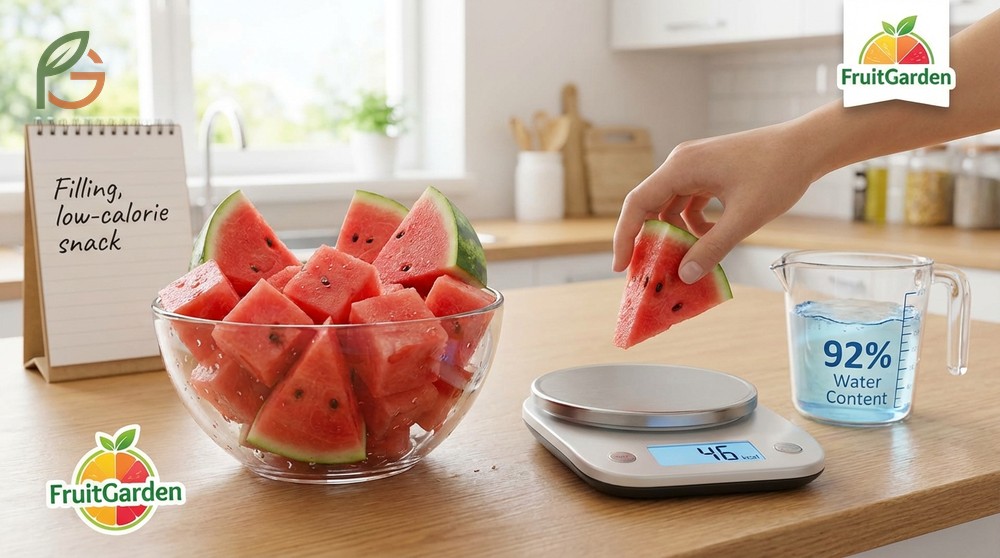
Is watermelon good for weight loss? Yes, when eaten in moderate portions. Research shows watermelon delivers only 46 calories per cup with 92% water content[2], making it a filling, low-calorie snack that supports calorie deficit goals. Studies demonstrate that daily watermelon consumption can reduce hunger and body weight when it replaces higher-calorie snacks[3]. FruitGarden synthesizes current nutrition research to help you make informed choices about fruits and healthy eating.
Quick Answer
- Watermelon contains just 46 calories per cup (152g)[1] and is 92% water[2]
- It has a low glycemic load of 4[1] per half-cup serving, meaning minimal blood sugar impact
- Increased hydration from watermelon can boost metabolism by 30% for 30-40 minutes[4] after consumption
- Best eaten during morning or afternoon when your body’s metabolism is most active
Is Watermelon Good for Weight Loss
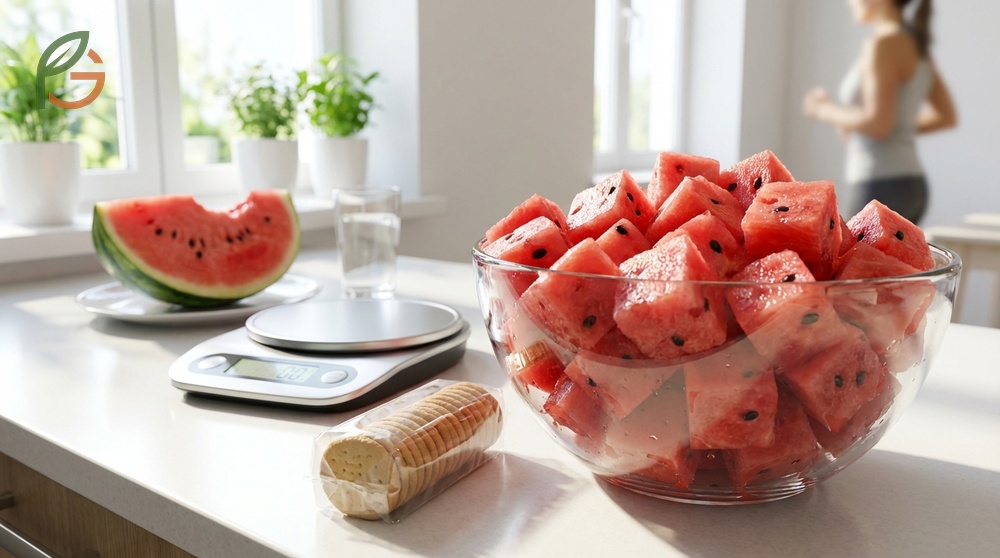
Watermelon ranks among the best fruits for weight loss because it’s incredibly low in calorie density. One cup of diced watermelon provides 46 calories, 0.9g protein, 11.5g carbohydrates, and 0.2g fat[1]. This nutrient profile allows you to eat satisfying portions without consuming many calories.
Studies show that replacing higher-calorie snacks with watermelon can support weight loss goals. Research comparing 92-calorie portions of watermelon versus low-fat cookies found that daily watermelon consumption reduced hunger and body weight over four weeks[3]. The high water content helps you feel full longer without adding calories to your diet.
What’s often overlooked is how watermelon’s natural sugars affect blood sugar differently than processed sweets. While watermelon has a glycemic index of 72-76 (considered high), its glycemic load is only 4 per half-cup serving, which is classified as low. This means it won’t spike your blood sugar significantly when you eat reasonable portions.
Calorie Content and Nutrient Density
A whole medium watermelon (15 inches long by 7.5 inches in diameter) contains approximately 1,360 calories total[2]. This translates to just 86 calories per wedge (about 1/16 of the whole fruit). You can eat multiple servings throughout the day without exceeding your calorie budget.
Beyond low calories, watermelon packs essential nutrients. One cup delivers 21% of your daily vitamin C needs and 17% of your vitamin A requirements[3]. It’s also an excellent source of lycopene, the antioxidant that gives watermelon its red color and may support heart health.
Important Note: While watermelon is low in calories, it’s also low in protein (0.9g per cup) and fiber (0.6g per cup)[1]. For best results, pair it with protein sources like Greek yogurt or nuts to increase satiety and stabilize blood sugar.
Satiety and Hunger Control
Watermelon’s 92% water content[2] plays a crucial role in appetite control. High-water foods increase stomach volume without adding significant calories, triggering fullness signals to your brain. This effect can help you eat less at subsequent meals.
Current nutrition guidance emphasizes eating chilled watermelon cubes 15-20 minutes before main meals. This timing allows the water to stretch your stomach and reduce overall calorie intake during the meal. Research on pre-meal water consumption shows it can increase weight loss by reducing energy intake at each meal[4].
- Eat 1-2 cups of chilled watermelon 15 minutes before breakfast or lunch to reduce meal size
- Swap 200-calorie processed snacks for 150g of watermelon (about 45 calories) to save 155 calories
- Freeze watermelon cubes for a slower-eating snack that extends satisfaction time
- Blend watermelon into smoothies with protein powder for balanced nutrition
- Keep pre-cut watermelon containers visible in your fridge to encourage healthy snacking
Benefits of Eating Watermelon at Night
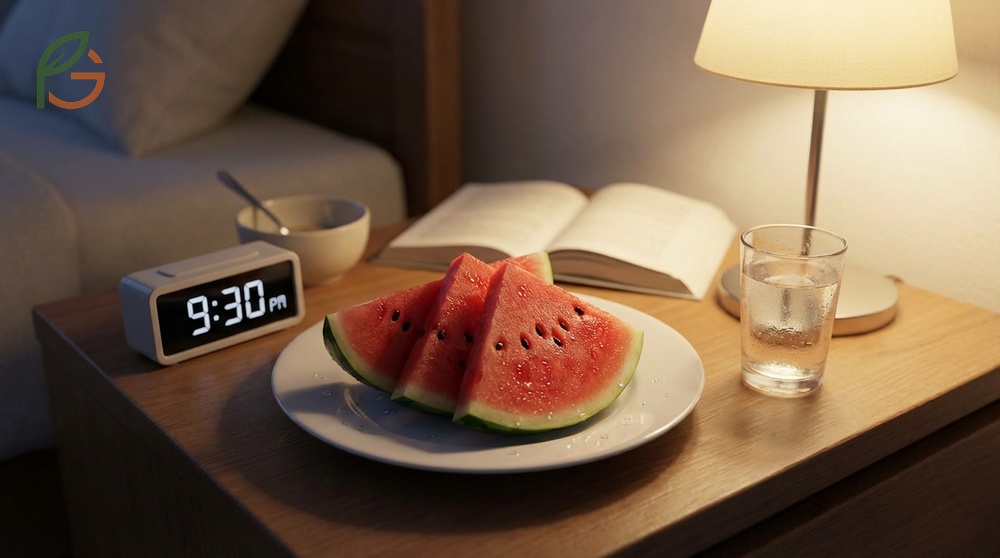
Eating watermelon at night can support weight loss, but timing and portion size matter significantly. At just 30 calories per 100 grams[2], it satisfies sweet cravings without derailing your calorie deficit. The natural sugars provide a healthier alternative to ice cream, cookies, or other late-night desserts.
However, your body handles food differently in the evening compared to daytime. As you prepare for rest, metabolic processes—including digestion—slow down. This means watermelon’s high water and sugar content may linger in your system longer, potentially causing bloating or mild discomfort for some people.
Evidence suggests your body is better equipped to process watermelon during morning or afternoon hours when metabolism is most active. Eating it during the day allows sugars to be used for energy rather than stored, and faster digestion prevents the sleep disruptions that can occur from nighttime hydration or digestive activity.
Timing Considerations for Night Eating
If you choose to eat watermelon at night, aim to finish it at least 2-3 hours before bedtime. This window gives your body time to process the fruit’s natural sugars and allows excess water to pass through your system before you lie down. Late-night hydration can trigger multiple bathroom trips that interrupt sleep quality.
Morning consumption (6-9 AM) works best when you pair watermelon with protein-rich breakfast foods like Greek yogurt or eggs. This combination kickstarts metabolism and provides sustained energy for 4-5 hours. Afternoon snacking (2-4 PM) also aligns well with your body’s active digestive phase.
Sleep Quality Tip: If you’re prone to acid reflux or frequent urination at night, avoid watermelon within 3 hours of bedtime. The fruit’s natural acids and high water content can trigger these issues when you’re lying flat.
Portion Control Strategies
For nighttime snacking, limit yourself to 1 cup (152g) of diced watermelon, which provides 46 calories[1] and 11.5g carbohydrates[1]. This portion size satisfies sweet cravings without overloading your system with sugar or water before bed.
Pre-cutting watermelon into single-serve containers helps prevent overeating straight from a large bowl. Studies on portion control show that people consume 25-30% less when food is pre-portioned versus eaten from larger containers. Store these containers at eye level in your refrigerator for easy access.
- Use 1-cup measuring containers to pre-portion watermelon immediately after cutting
- Pair small watermelon portions (1/2 cup) with 10-12 almonds for added protein and fat
- Set a kitchen timer for 10 minutes and eat slowly to allow satiety signals to reach your brain
- Choose watermelon balls over cubes—they take longer to eat and increase satisfaction
- Track nighttime watermelon servings in a food journal to identify patterns and adjust portions
Hydration for Weight Loss
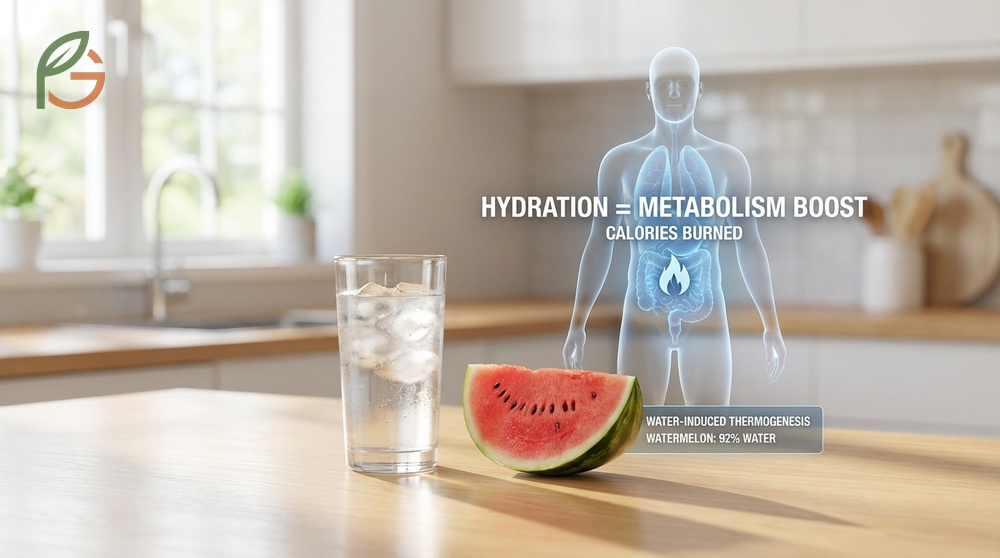
Increased hydration directly influences weight loss through multiple biological mechanisms. Research shows that consuming 500ml (17 ounces) of water increases metabolic rate by 30% for 30-40 minutes[4] through a process called water-induced thermogenesis. Your body burns additional calories simply heating the water to body temperature and processing it.
Watermelon contributes to this hydration effect while adding minimal calories. Since watermelon is 91-92% water[2], eating 2 cups provides about 280ml of hydration—roughly equivalent to a standard glass of water, plus vitamins, minerals, and antioxidants that plain water lacks.
Human studies demonstrate that increased water intake correlates with decreased body weight in obese, overweight, and normal-weight individuals across all age groups[4]. The effect appears stronger when water-rich foods like watermelon replace calorie-dense snacks in your daily routine.
Water-Induced Metabolism Boost
The metabolic boost from hydration occurs because your body expends energy during water absorption and temperature regulation. Drinking cold water amplifies this effect since your body must work harder to warm it to core temperature (approximately 98.6°F or 37°C).
Watermelon eaten cold from the refrigerator provides the same thermogenic benefit. The energy expenditure from processing cold watermelon contributes to your daily calorie burn, though the effect is modest—roughly 25-30 calories burned per 500ml of cold water or water-rich food consumed.
Appetite Suppression Effects
Proper hydration reduces false hunger signals that often lead to overeating. Research indicates that mild dehydration is frequently misinterpreted as hunger by the brain. When you’re slightly dehydrated, your body sends signals that can feel identical to hunger pangs.
Eating watermelon before meals addresses this issue. Studies show that adding 500ml of water before meals reduces energy intake[4] and increases weight loss in controlled trials. The water content in watermelon produces similar appetite suppression while delivering beneficial nutrients.
- Start your day with 1-2 cups of watermelon and 8oz of plain water to jumpstart hydration
- Replace sugary beverages with fresh watermelon juice (blend and strain for smooth texture)
- Eat watermelon 30 minutes before exercise to improve hydration status during workouts
- Track daily water intake from both beverages and water-rich fruits like watermelon
- Combine watermelon with high-fiber foods (chia seeds, oats) to extend fullness beyond 2-3 hours
What Is the Watermelon Diet
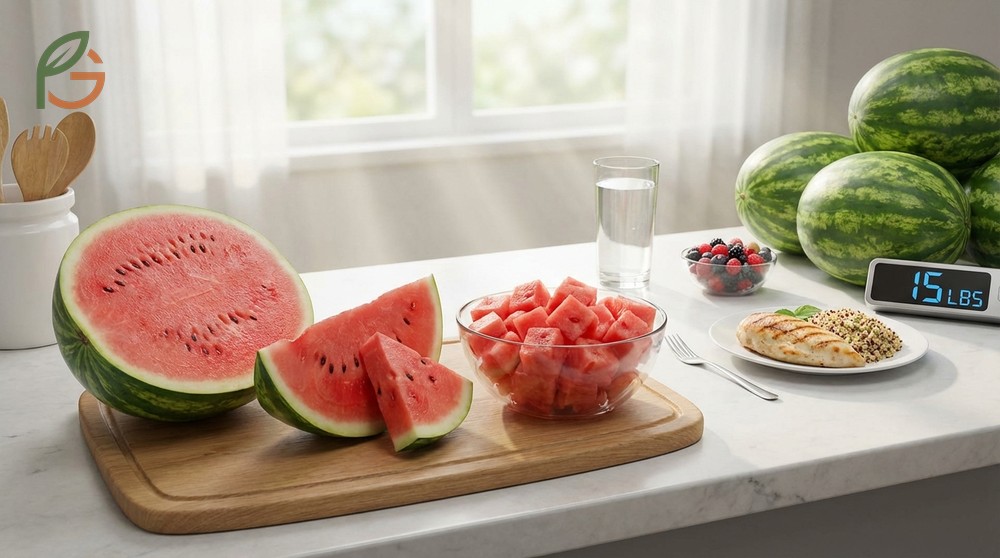
The watermelon diet is a short-term eating pattern that focuses heavily on watermelon consumption, typically lasting 3-5 days. During the initial “cleanse” phase (usually 3 days), followers eat only watermelon—consuming approximately 2-4 pounds of watermelon per 20 pounds of body weight daily[3]. This translates to 10-20 pounds of watermelon per day for a 150-pound person.
After the cleanse phase, some versions allow adding other foods like lean proteins, whole grains, and vegetables while maintaining watermelon as a primary food source. However, nutrition experts caution that this approach isn’t sustainable for long-term weight loss. Most weight lost during the watermelon-only phase is water weight, which returns quickly when normal eating resumes.
Current dietary guidance emphasizes incorporating watermelon into a balanced eating pattern rather than relying on it exclusively. Watermelon lacks adequate protein (only 0.9g per cup[1]), essential fats, and several vitamins and minerals your body needs daily. Extended watermelon-only diets can lead to nutrient deficiencies, muscle loss, and metabolic slowdown.
This table compares calories, protein, fiber, and weight loss sustainability across three eating approaches: watermelon-only cleanse, balanced diet with watermelon, and standard American diet
| Approach | Daily Calories | Protein (g) | Sustainability | Weight Loss Type |
|---|---|---|---|---|
| Watermelon-Only Cleanse (3 days) | 600-800[3] | 12-15g | Very Low (3 days max) | Primarily water weight |
| Balanced Diet with Watermelon (2 cups daily) | 1,400-1,800 | 80-100g | High (long-term) | Fat loss with muscle preservation |
| Standard Diet (no watermelon focus) | 1,800-2,200 | 60-80g | Moderate | Variable results |
Safety Warning: Don’t follow watermelon-only diets for more than 3 days without medical supervision. Extreme calorie restriction can slow your metabolism, cause muscle loss, and lead to nutrient deficiencies. Always consult a healthcare provider before starting restrictive diets.
- Use watermelon as a pre-meal appetizer rather than your entire meal
- Add watermelon to protein-rich breakfast bowls with Greek yogurt and granola
- Create balanced snacks by pairing 1 cup watermelon with 1oz cheese or 2 tablespoons nut butter
- Blend watermelon into smoothies with spinach, protein powder, and flaxseed
- Replace sugary desserts with watermelon sorbet (blend frozen watermelon until smooth)
Conclusion
The evidence is clear: watermelon works for weight loss when you follow three key principles. First, use it to replace higher-calorie snacks and desserts rather than eating it in addition to your normal diet. Second, eat it during morning or afternoon hours when your metabolism is most active. Third, pair it with protein sources to create balanced snacks that sustain energy and control hunger.
Current nutrition guidance emphasizes sustainable habits over extreme diets. FruitGarden recommends adding 1-2 cups of watermelon daily to your existing healthy eating pattern rather than following watermelon-only cleanses. This approach delivers hydration benefits, essential nutrients, and calorie savings without risking nutrient deficiencies or metabolic slowdown.
Medical Disclaimer
Important Medical Disclaimer: This content is for informational and educational purposes only. It’s not intended as a substitute for professional medical advice, diagnosis, or treatment. Always consult a qualified healthcare professional or registered dietitian before making significant changes to your diet, starting any weight loss program, or if you have existing medical conditions such as diabetes, kidney disease, or digestive disorders. Individual nutritional needs vary, and what works for one person may not be appropriate for another.
Frequently Asked Questions
How Much Watermelon Should I Eat Per Day for Weight Loss?
Aim for 1-2 cups (152-304g) of diced watermelon daily as part of a balanced diet. This provides 46-92 calories[1] and helps with hydration without excessive sugar intake. Eating more than 4-5 cups daily may provide too many carbohydrates and could interfere with ketosis if you’re following a low-carb diet.
Can I Eat Watermelon Every Day and Still Lose Weight?
Yes, daily watermelon consumption supports weight loss when it replaces higher-calorie foods. Research shows that eating 92-calorie portions of watermelon daily reduced hunger and body weight over four weeks[3] compared to eating cookies with the same calorie count. The key is using watermelon as a replacement, not an addition, to your regular diet.
Does Watermelon Have Too Much Sugar for Weight Loss?
No, watermelon’s sugar content doesn’t prevent weight loss when eaten in appropriate portions. While one cup contains 9.4g of natural sugars[1], the glycemic load is only 4 per half-cup serving[1], which won’t spike blood sugar significantly. The high water content dilutes the sugar concentration compared to dried fruits or fruit juices.
What’s the Best Time to Eat Watermelon for Weight Loss?
Morning (6-9 AM) and afternoon (2-4 PM) are optimal times for watermelon consumption. Your metabolism is most active during these hours, allowing your body to efficiently process the fruit’s natural sugars for energy. Eating watermelon 15-20 minutes before breakfast or lunch can reduce meal size by increasing fullness through stomach volume expansion.
Is Watermelon Better Than Other Fruits for Weight Loss?
Watermelon ranks among the best fruits for weight loss due to its exceptionally low calorie density. At 46 calories per cup[1], it provides fewer calories than apples (95 per cup), bananas (105 per cup), or grapes (104 per cup). However, watermelon is lower in fiber and protein than some other fruits, so variety remains important for complete nutrition.
Can Eating Watermelon at Night Cause Weight Gain?
No, eating moderate portions of watermelon at night won’t cause weight gain. The fruit’s low calorie content (46 per cup)[1] makes weight gain unlikely unless you’re exceeding your total daily calorie needs. However, nighttime consumption may cause bloating or sleep disruptions in some people due to high water content and natural sugars, so timing it 2-3 hours before bed is recommended.
Does Watermelon Speed Up Metabolism?
Yes, watermelon’s high water content can temporarily boost metabolism. Studies show that consuming 500ml of water increases metabolic rate by 30% for 30-40 minutes[4] through water-induced thermogenesis. Since watermelon is 92% water[2], eating 2 cups provides similar hydration and metabolic benefits while also delivering vitamins and antioxidants.





