
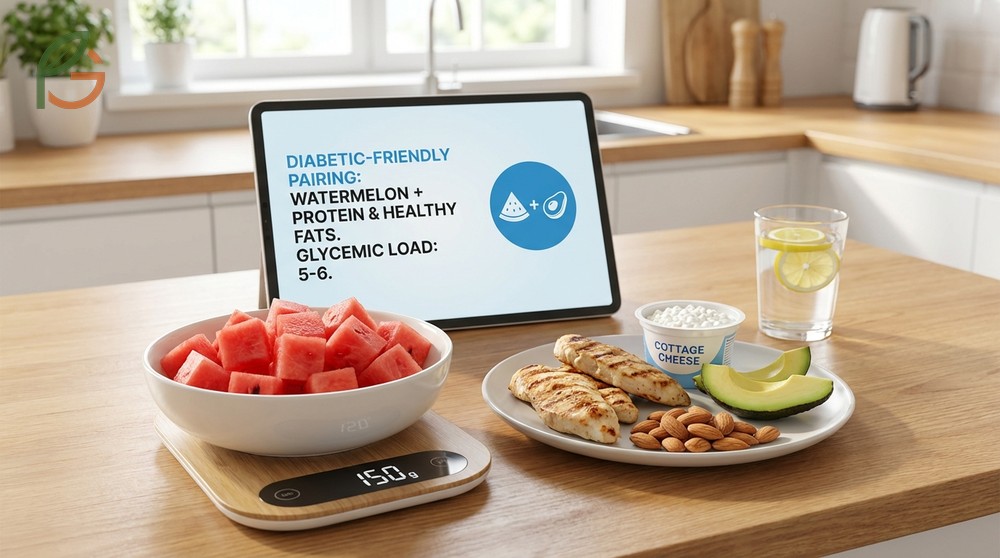
Is watermelon good for diabetics? Yes, when eaten in moderation. Research shows that watermelon has a high glycemic index of 72-76[1] but a low glycemic load of just 5-6 per serving[2], which minimizes blood sugar impact when portioned correctly. What often gets overlooked is that pairing watermelon with protein or healthy fats slows sugar absorption and prevents spikes. FruitGarden synthesizes current nutritional research and USDA data to help you make informed choices about growing and eating fruit safely.
Quick Answer
- Watermelon contains 11.5g carbs and 9.4g sugars[3] per cup but only 46 calories
- High GI (72-76) but low GL (5-6) means moderate servings won’t spike blood sugar dramatically[1][2]
- Stick to 1 cup (100-150g) portions to control carb intake effectively
- Pair with nuts, seeds, or Greek yogurt to slow glucose absorption and maintain stable levels
Is Watermelon Good for Diabetics
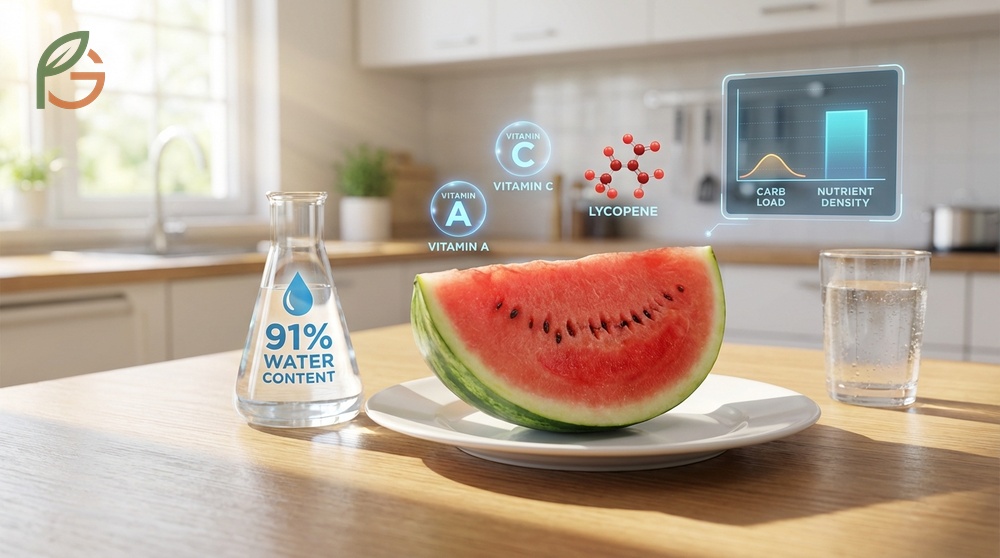
Watermelon can absolutely fit into a diabetes-friendly diet when you’re mindful of portions. Studies demonstrate that despite containing natural sugars, watermelon’s 91% water content[3] dilutes its carbohydrate concentration significantly. This means you’ll get hydration, vitamins A and C, and lycopene without overwhelming your system with glucose.
The key difference between watermelon and other high-sugar foods lies in its nutrient density versus carb load. Research shows that one cup of diced watermelon delivers only 11.5g total carbohydrates[3] with 0.6g fiber, making it comparable to eating a small apple. Most people don’t realize that timing matters more than the fruit itself—eating watermelon after a protein-rich meal slows absorption dramatically.
Current data indicates that people with diabetes who monitor portion sizes and pair watermelon with protein sources experience minimal blood sugar fluctuations. The combination of low calorie density and high water content makes watermelon more forgiving than dried fruits or fruit juices, which concentrate sugars without the protective fiber and water. If you’re managing prediabetes or Type 2 diabetes, watermelon won’t sabotage your efforts when consumed strategically.
Important Note: Always test your blood sugar 1-2 hours after eating watermelon to understand your individual response. Glucose reactions vary based on insulin sensitivity, activity level, and what else you’ve eaten that day.
What Is the Glycemic Index of Watermelon
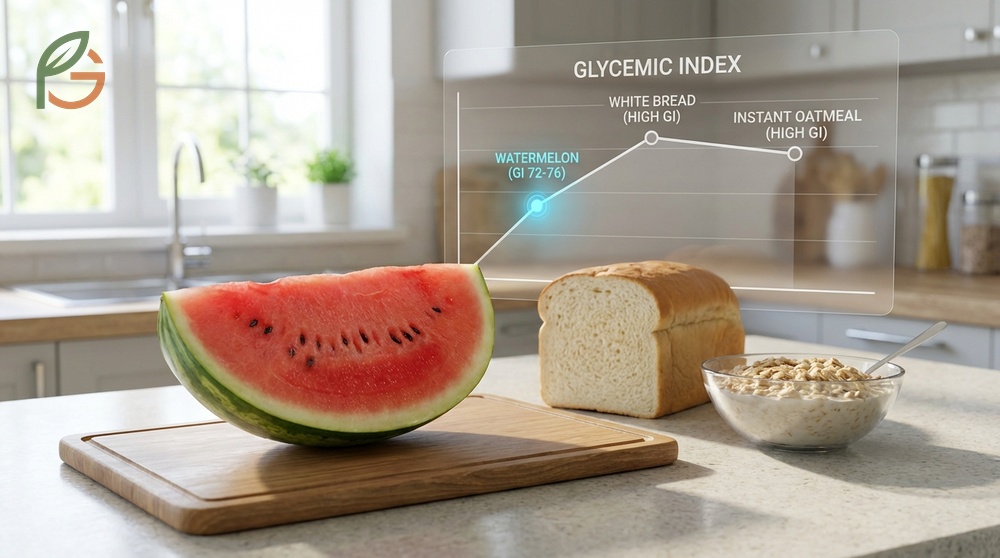
Watermelon’s glycemic index sits at 72-76[1], placing it in the high GI category alongside white bread and instant oatmeal. This number tells you how quickly watermelon raises blood glucose compared to pure glucose, which has a GI of 100. At first glance, this seems problematic for diabetics who need to avoid rapid blood sugar spikes.
However, GI doesn’t tell the complete story. The glycemic index measures the quality of carbohydrates but ignores the quantity you actually eat. This is where watermelon surprises most people—you’d need to consume a massive amount to trigger the blood sugar response that the GI number suggests.
Glycemic Load vs Glycemic Index
Glycemic load provides the missing piece of the puzzle by accounting for serving size. Evidence suggests that watermelon’s GL of 5-6 per standard serving[2] falls well below the threshold of concern. Foods with a GL under 10 are considered low-impact, meaning they won’t cause significant blood sugar elevation even if their GI is high.
The calculation works like this: GL = (GI × grams of carbs per serving) ÷ 100. For one cup of watermelon with 11.5g carbs[3] and a GI of 72, you get approximately 8.3—safely in the low range. This explains why diabetics can eat watermelon without the dramatic spikes you’d expect from other high-GI foods that contain more concentrated carbohydrates.
Why Watermelon Is Safe Despite High GI
The safety factor comes down to water content and portion control working together. When you eat a cup of watermelon, you’re consuming mostly water with a small carb payload spread throughout. This dilution effect means glucose enters your bloodstream more gradually than concentrated sugar sources, even though the GI number suggests otherwise.
Research shows that foods with high water content like watermelon trigger earlier satiety signals, preventing overconsumption naturally. You’re far more likely to eat three cookies (high GI and high GL) than three cups of watermelon in one sitting, which provides built-in protection against excessive carb intake.
Portion Control for Diabetics

Portion control transforms watermelon from a potential problem into a safe summer treat. Current guidance emphasizes keeping servings between 100-150g or roughly one cup of diced watermelon[4] per sitting. This amount provides refreshment and nutrients without overwhelming your insulin response, regardless of whether you take medication or manage diabetes through diet alone.
The mistake most people make is treating watermelon like a vegetable because it’s low-calorie. They’ll eat multiple cups without thinking, which can push total carbs above 30-40g—equivalent to eating two slices of bread. If you’re like most Americans managing blood sugar, pre-cutting watermelon into measured portions helps prevent mindless overeating at picnics and barbecues.
Recommended Serving Sizes
Different watermelon preparations deliver varying carb loads, which matters when you’re counting macros. One cup of diced watermelon contains 11.5g carbs[3], while a medium wedge (about 286g) jumps to 21.6g carbs[3]—nearly double. Watermelon balls, often served in fruit salads, make portion tracking easier since you can count pieces instead of estimating volume.
For optimal blood sugar management, spread watermelon intake throughout the day rather than consuming large amounts at once. Research shows that eating watermelon as part of a balanced meal—for example, alongside grilled chicken and vegetables—produces more stable glucose levels than eating it alone as a snack. The surrounding protein and fiber slow digestion and prevent the rapid glucose surge that concerns diabetics.
- Measure one cup of diced watermelon (about the size of a baseball) and place it in a separate bowl before eating
- Choose watermelon balls over wedges—they’re pre-portioned and easier to count accurately
- Avoid eating watermelon directly from the fridge or cutting board where you can’t track how much you’ve consumed
- Limit watermelon to one serving per meal or snack session, waiting at least 3-4 hours before having more
- Pair your watermelon portion with 15-20g of protein from nuts, cheese, or Greek yogurt to balance the carbs
Avoiding Watermelon Juice
Watermelon juice concentrates sugars while removing the protective water-to-pulp ratio that makes whole watermelon safe. Current data indicates that one cup of watermelon juice can contain 18-22g carbs without any fiber to slow absorption[2], making it more problematic than whole fruit. The juicing process also eliminates the natural satiety signals that prevent overconsumption of fresh watermelon.
Commercial watermelon drinks often add sweeteners, pushing carb counts even higher—sometimes reaching 30-35g per serving. If you’re craving watermelon flavor in beverage form, blend fresh watermelon with ice and water to maintain the fiber content, or infuse water with a few watermelon cubes for subtle flavor without the concentrated sugar hit.
Pairing Fruit with Protein
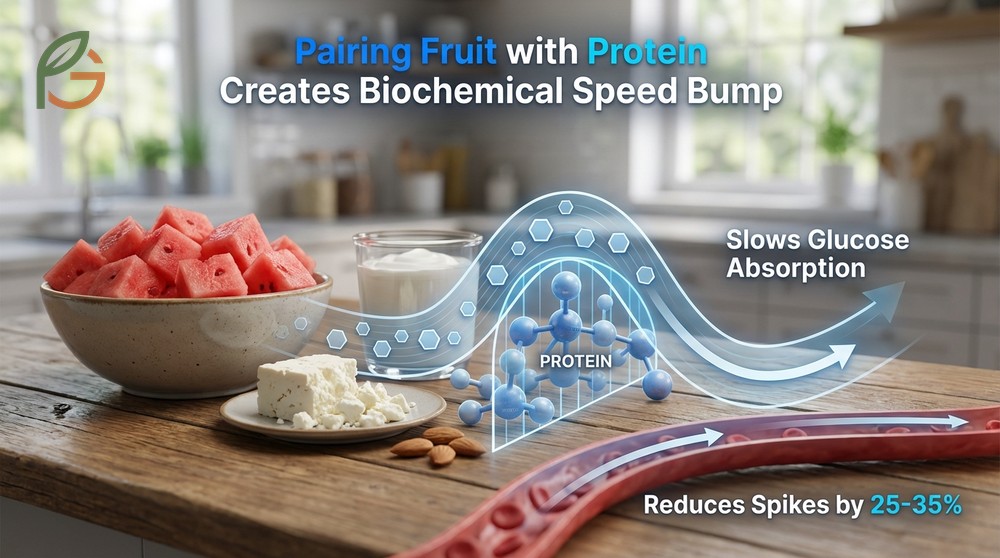
Pairing watermelon with protein sources creates a biochemical speed bump that slows glucose absorption significantly. Studies demonstrate that combining carbohydrates with protein or healthy fats can reduce post-meal blood sugar spikes by 25-35% compared to eating carbs alone[2]. This happens because protein triggers different digestive hormones that slow stomach emptying and moderate insulin release.
The protein doesn’t need to be complicated or time-consuming. Research shows that as little as 15-20g protein paired with one cup of watermelon makes a measurable difference in glycemic response. This means a handful of almonds (6g protein), two tablespoons of peanut butter (8g protein), or a half-cup of Greek yogurt (12-15g protein) provides adequate buffering against blood sugar spikes.
The timing of your pairing matters less than consistency. Whether you eat the protein before, during, or immediately after watermelon, you’ll achieve similar benefits. Most people find it easier to eat them together—like watermelon cubes with cubed cheese, or watermelon slices with a side of nuts—rather than trying to time separate courses perfectly.
- Greek yogurt parfait with watermelon chunks and a sprinkle of chia seeds (provides protein and omega-3s)
- Watermelon-feta salad with mint and a drizzle of olive oil (combines protein, fat, and fresh herbs)
- Watermelon slices with 1-2 tablespoons of almond butter or sunflower seed butter
- Watermelon cubes alongside a small portion of cottage cheese (high protein, low glycemic impact)
- Watermelon and prosciutto wraps (classic combination that balances sweet fruit with salty protein)
- Watermelon smoothie blended with protein powder, ice, and a handful of spinach
Pro Tip: If you’re eating watermelon at breakfast, pair it with eggs or turkey sausage. The complete protein and healthy fats will keep your blood sugar stable for 4-5 hours, preventing mid-morning crashes that lead to carb cravings.
Blood Sugar Spike Symptoms
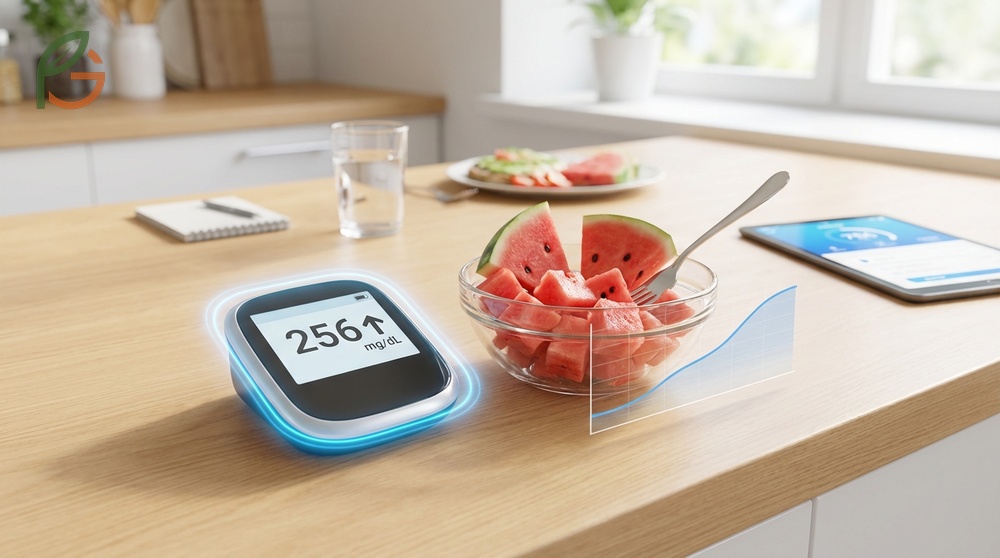
Recognizing blood sugar spikes helps you adjust portion sizes and pairings in real-time. Evidence suggests that symptoms typically appear when blood glucose rises above 250 mg/dL[5], though some people notice changes at lower thresholds depending on their baseline sensitivity. Early detection prevents prolonged hyperglycemia that damages blood vessels and nerves over time.
The challenge with watermelon-related spikes is that they often develop gradually rather than suddenly, making them harder to connect to what you ate. If you’ve consumed more than the recommended one-cup serving or skipped the protein pairing, you might notice symptoms 1-2 hours later without realizing watermelon was the trigger. Keeping a food-and-symptom journal for two weeks reveals patterns that aren’t obvious day-to-day.
- Increased thirst that isn’t satisfied by drinking normal amounts of water
- Frequent urination, especially if you’re visiting the bathroom every 30-60 minutes
- Unexplained fatigue or feeling sluggish within 1-2 hours of eating, even if you slept well
- Blurred vision or difficulty focusing on screens, text, or objects at varying distances
- Persistent headache that develops gradually and doesn’t respond well to typical remedies
- Dry mouth or unusual metallic taste that wasn’t present before eating
If you experience these symptoms consistently after eating watermelon, even in controlled portions, your individual glucose response may be more sensitive than average. This doesn’t mean you must eliminate watermelon entirely—it means you need to reduce portions further (try half a cup), improve pairings, or save watermelon for after protein-heavy meals when your system is already processing slower-digesting nutrients.
Best Fruits for Diabetes
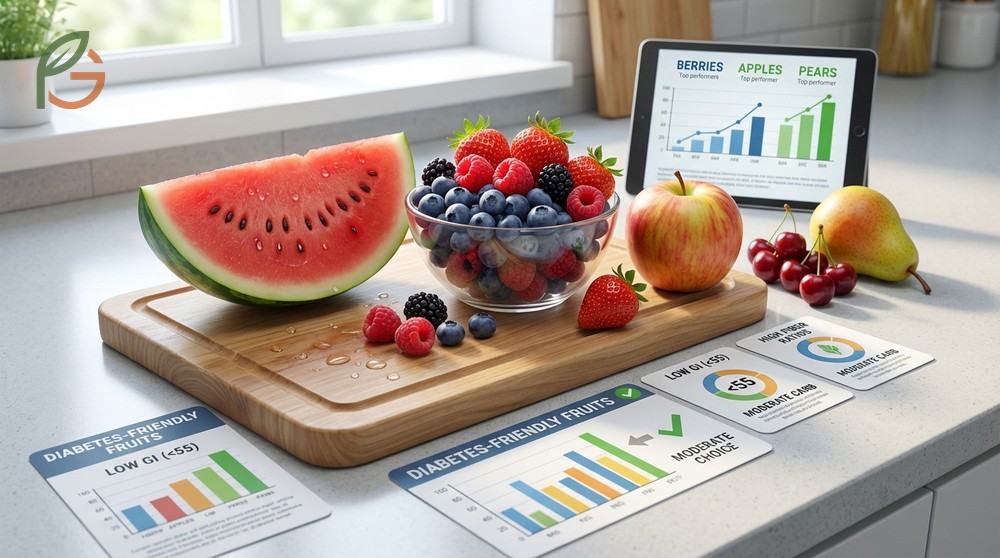
Comparing watermelon to other fruits helps you build a diabetes-friendly rotation that prevents boredom and nutrient gaps. Research shows that the best fruits for blood sugar management combine low GI values (under 55), moderate carb content, and high fiber ratios that slow glucose absorption[6]. Watermelon doesn’t top this list, but it’s far from the worst option when you understand where it ranks.
The fruits that consistently perform best for diabetics include berries, stone fruits, and apples—all delivering fiber, vitamins, and antioxidants with minimal blood sugar impact. Most people don’t realize that eating a wider variety of lower-GI fruits prevents taste fatigue that leads to abandoning healthy eating plans entirely. If watermelon is your favorite summer fruit, you can keep it in rotation while emphasizing better options during other seasons.
This table compares glycemic index values, carbohydrate content per serving, and fiber content across six common fruits to help diabetics make informed choices
| Fruit | Glycemic Index | Carbs per Serving | Fiber | Diabetic-Friendly Rating |
|---|---|---|---|---|
| Watermelon (1 cup) | 72-76[1] | 11.5g[3] | 0.6g | Moderate (with portion control) |
| Strawberries (1 cup) | 40[6] | 11.4g[6] | 2.7g | Excellent |
| Apple (1 medium) | 38[6] | 25g | 4.4g | Excellent |
| Peaches (1 medium) | 42[6] | 14g | 2.3g | Excellent |
| Grapefruit (½ fruit) | 25[6] | 10.7g[6] | 1.6g | Excellent |
| Cherries (1 cup) | 22[6] | 25g | 3.2g | Excellent |
The evidence is clear: watermelon sits in the middle tier for diabetics—not ideal, but manageable with proper portions and pairings. If you’re looking to optimize your fruit choices, prioritize berries and stone fruits during spring and summer, then switch to apples and pears in fall and winter. This seasonal rotation aligns with what FruitGarden readers often grow in home gardens, making it both practical and cost-effective.
Conclusion
The evidence supports a clear verdict: is watermelon good for diabetics? Yes, when you respect portion limits, pair it with protein, and monitor your individual response. Watermelon’s high glycemic index doesn’t disqualify it from your diet—the low glycemic load and high water content make it safer than many alternatives when consumed strategically.
Current guidance emphasizes that no single food determines diabetes outcomes. It’s the overall pattern of choices, portion awareness, and meal composition that matters most. FruitGarden synthesizes nutritional research to help you grow and enjoy fruits confidently, knowing exactly how to balance taste preferences with blood sugar management for long-term health.
Medical Disclaimer
Important Medical Disclaimer: This content is for informational and educational purposes only. It is not intended as a substitute for professional medical advice, diagnosis, or treatment. Always consult a qualified healthcare professional before making any changes to your diet, medication, or health routine, especially if you have diabetes or other medical conditions. Blood sugar responses vary significantly between individuals based on insulin sensitivity, activity level, medications, and overall health status. Monitor your glucose levels regularly and work with your doctor or certified diabetes educator to develop a personalized nutrition plan.
Frequently Asked Questions
Is watermelon good for diabetes management long-term?
Yes, watermelon can be part of a long-term diabetes management plan when consumed in controlled portions. Research shows that its low glycemic load and high water content make it safer than many processed snacks with similar carb counts. The key is consistency—stick to one-cup servings, pair with protein, and monitor your blood sugar response over several weeks to ensure it fits your individual tolerance.
Can diabetics eat watermelon every day?
Diabetics can eat watermelon daily if it fits within their total carbohydrate budget and doesn’t displace more nutrient-dense fruits like berries or apples. Evidence suggests rotating fruits throughout the week provides better nutritional variety and prevents overconsumption of any single food. If you choose daily watermelon, limit it to half-cup to one-cup portions and ensure you’re meeting fiber goals through vegetables and whole grains.
Is watermelon better than other melons for diabetics?
Watermelon’s glycemic profile is similar to other melons, making no single variety dramatically better for diabetics. Cantaloupe has a slightly lower GI of 65 and provides more vitamin A, while honeydew sits around 62 with comparable carb content. The practical difference is minimal—choose based on taste preference and availability rather than trying to optimize between melons, since portion control matters more than variety.
What’s the best time of day for diabetics to eat watermelon?
The best time for diabetics to eat watermelon is during or immediately after a balanced meal containing protein and healthy fats. Research shows that morning consumption after a protein-rich breakfast provides better blood sugar stability than eating watermelon as an afternoon snack on an empty stomach. Avoid eating watermelon late at night when insulin sensitivity decreases and physical activity is minimal, reducing your body’s ability to process the glucose efficiently.
Does frozen watermelon affect blood sugar differently?
Frozen watermelon has essentially the same glycemic impact as fresh watermelon since freezing doesn’t alter carbohydrate structure or fiber content. The advantage of frozen watermelon is portion control—pre-frozen cubes are easier to measure accurately and eat more slowly, which naturally paces glucose absorption. Just avoid commercially frozen watermelon products with added sugars or syrups that dramatically increase carb content.
Can watermelon help with diabetes-related dehydration?
Yes, watermelon’s 91% water content makes it effective for combating dehydration common in diabetics with elevated blood sugar levels. Current data indicates that chronic hyperglycemia causes increased urination and fluid loss, making hydrating foods valuable. However, watermelon shouldn’t replace plain water as your primary hydration source—use it as a supplemental strategy that provides electrolytes and fluids while contributing to daily fruit intake.
Is watermelon good for prediabetes prevention?
Watermelon can support prediabetes management when substituted for higher-calorie, higher-glycemic snacks like cookies, chips, or ice cream. Studies demonstrate that people with prediabetes who replace processed snacks with whole fruits experience better long-term blood sugar control and weight management. The combination of low calorie density, high water content, and essential nutrients makes watermelon a strategic choice for preventing progression from prediabetes to Type 2 diabetes.





