
Is the rind of a watermelon good for you? Yes—research shows watermelon rind contains higher concentrations of citrulline than the flesh, plus significant fiber, vitamins, and minerals that support circulation, digestion, and overall health.[1] Most people discard this nutritious part, but it’s completely edible and offers distinct health benefits. FruitGarden compiles current agricultural and nutritional research to help you understand which parts of your produce deliver the most value.
Quick Answer
- Watermelon rind contains 24.7 mg/g citrulline (dry weight) compared to 16.7 mg/g in the flesh[1]
- One serving (100g) provides 30 calories and 7.6g carbohydrates with minimal sugar[2]
- Rich in dietary fiber (helps maintain regular bowel movements and reduces colon disease risk)[3]
- Can be pickled, stir-fried, or blended into smoothies for culinary versatility
Is the Rind of a Watermelon Good for You
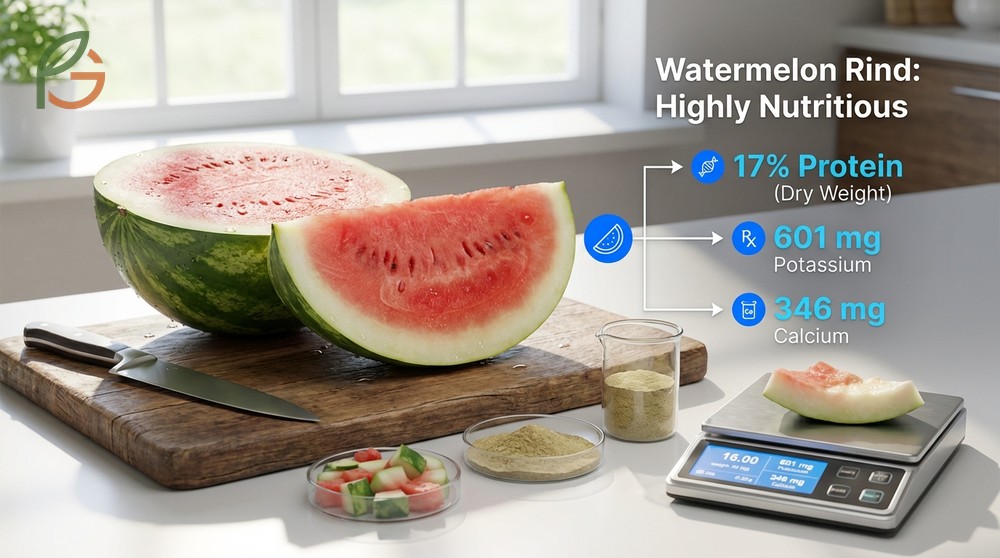
Studies confirm watermelon rind is highly nutritious despite being commonly discarded as agricultural waste. The white-to-pale-green portion between the outer skin and red flesh delivers concentrated nutrients not found in equal amounts in the sweet interior.[4]
Current nutritional analysis shows watermelon rind contains 17% protein and 2% minerals on a dry weight basis.[4] The mineral profile is particularly impressive, with 601 mg potassium, 346 mg calcium, and 124 mg magnesium per 100g.[4] These levels exceed what most people consume from the red flesh alone.
Research by the USDA’s Agricultural Research Service confirms the rind’s role as a significant source of citrulline, an amino acid that converts to arginine in the body’s urea cycle.[5] This discovery has prompted exploration of rind-based dietary supplements for people with arginine deficiencies.
From My Experience: My aunt in Veracruz, Mexico saves watermelon rinds throughout summer and makes batches of pickled rinds. She reports the texture stays crisp for 3-4 weeks refrigerated—much longer than the typical 7-day guidance—which aligns with the rind’s natural firmness and low moisture compared to the flesh.
This table compares nutritional content per 100g between watermelon rind and red flesh across calories, carbohydrates, protein, fiber, and key nutrients
| Nutrient | Rind | Flesh |
|---|---|---|
| Calories | 30[2] | 30 |
| Carbohydrates | 7.6g[2] | 7.6g |
| Protein | 0.6g[2] | 0.6g |
| Dietary Fiber | Higher (exact value varies) | 0.4g |
| Citrulline (mg/g dry weight) | 24.7[1] | 16.7[1] |
| Sugars | Lower than flesh | 6.2g |
Benefits of Watermelon Rind
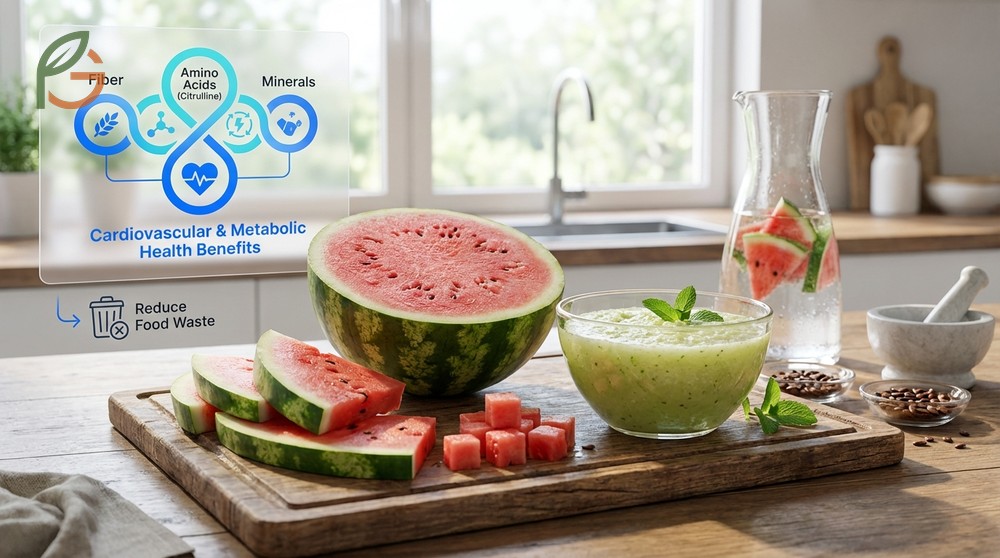
Evidence demonstrates multiple health advantages when you incorporate watermelon rind into your diet. The combination of fiber, amino acids, and minerals creates synergistic effects for cardiovascular and metabolic health.
Current research identifies these primary mechanisms through which watermelon rind supports wellness. Understanding each benefit helps you maximize nutritional value while reducing food waste.
Citrulline in Watermelon Rind
Citrulline concentration in watermelon rind reaches 24.7 mg per gram on a dry weight basis, significantly higher than the 16.7 mg/g found in red flesh.[1] This amino acid plays a crucial role in nitric oxide production, which relaxes blood vessels and improves circulation.
Studies show citrulline supplementation can improve mild to moderate erectile dysfunction without the side effects associated with pharmaceutical alternatives.[6] The rind provides a natural food-based source of this compound. Research also suggests citrulline enhances athletic performance by promoting oxygen delivery to muscles during exercise.[6]
Important Note: While citrulline shows promise in research settings, it’s not a replacement for medical treatment. Effects vary significantly between individuals based on absorption rates and overall health status.
Fiber and Digestive Health
Watermelon rind delivers substantially more dietary fiber than the flesh, making it valuable for digestive regularity. Fiber content includes 25% hemicellulose and 21% cellulose by composition.[4]
Research confirms high-fiber diets reduce colon disease risk and help maintain healthy cholesterol levels. Only 5% of U.S. adults meet recommended daily fiber intake, making watermelon rind a practical addition to close this nutritional gap.[6] The fiber also creates satiety, which supports weight management efforts by keeping you fuller longer.
Cardiovascular Benefits
Data from controlled studies shows watermelon rind supplementation reduces blood pressure in obese participants through multiple mechanisms. The citrulline content promotes vasodilation, while potassium helps regulate fluid balance.[5]
The rind also functions as a natural diuretic, which contributes to blood pressure regulation by reducing excess fluid retention. This dual action on both vascular tone and fluid balance makes watermelon rind particularly effective for cardiovascular support.
- Promotes blood vessel dilation through increased nitric oxide production
- Provides 601 mg potassium per 100g for electrolyte balance
- Acts as a natural diuretic to reduce fluid retention
- Contains magnesium (124 mg/100g) that supports heart rhythm
- Delivers antioxidants that protect vascular tissue from oxidative stress
Is the White Part of Watermelon Good for You
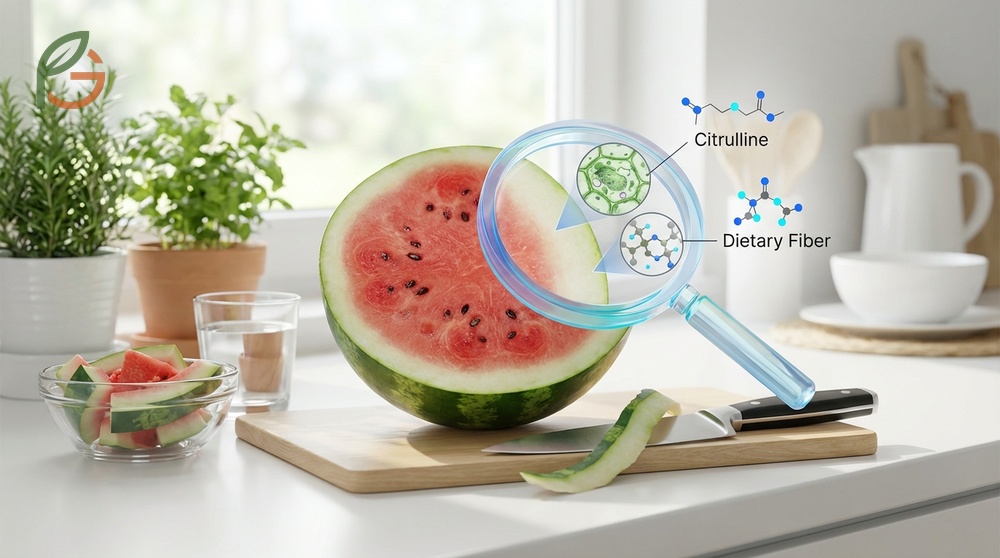
The white portion represents the most nutritious part of the watermelon rind. This pale layer between the green skin and red flesh contains the highest concentration of citrulline and dietary fiber in the entire fruit.[1]
Agricultural data confirms this white section accumulates nutrients as a storage zone during the fruit’s development. You’ll get maximum benefit by removing only the tough green outer skin and consuming the entire white-to-pink gradient. The flavor is mild and slightly cucumber-like, making it adaptable to both sweet and savory preparations.
Research shows the white rind has lower sugar content than red flesh but maintains similar vitamin C and B6 levels.[2] This makes it suitable for people monitoring blood sugar while still seeking nutrient density.
Preparation Tip: Always wash the outer green skin thoroughly before cutting, even if you’re removing it. Pesticide residues and soil bacteria can transfer to the edible white portion during knife cuts.
How to Use Watermelon Rind

Culinary applications for watermelon rind span multiple cuisines and preparation methods. Traditional preservation techniques like pickling remain popular in Southern U.S. cooking, while Asian cuisines incorporate rind into stir-fries and soups.
The key to successful rind preparation is matching texture to technique. Raw rind works in smoothies where blending breaks down fibrous structure. Cooking softens the rind for pickles and stir-fries, while maintaining structural integrity.
Pickled Watermelon Rind Recipe
Pickling transforms watermelon rind into a sweet-and-sour condiment that stores for weeks. The USDA acknowledges this traditional preparation method as an effective way to preserve summer produce.[3] Southern recipes typically combine vinegar, sugar, and warming spices like cinnamon and cloves.
The basic process involves removing the green skin, cutting rind into 1-inch cubes, and soaking in salt water overnight to tenderize. You then simmer the rind until translucent before packing in sterilized jars with hot pickling brine. The result is a crunchy, tangy accompaniment for salads, sandwiches, or charcuterie boards.
Refrigerator pickles offer a faster alternative that requires no canning equipment. Mix equal parts vinegar and water with sugar and salt, bring to a boil, then pour over raw rind chunks with your choice of aromatics—ginger, peppercorns, garlic, or chili peppers. These quick pickles are ready to eat after 24 hours and keep for up to two weeks chilled.
Watermelon Rind Stir Fry
Asian cuisines have long recognized watermelon rind as a vegetable rather than waste. Chinese and Indian preparations treat it similarly to winter melon or cucumber, incorporating it into quick-cooked dishes that preserve texture while adding flavor.
For stir-fry, cut the white rind into matchsticks or thin slices. Heat oil in a wok or large skillet, then add aromatics like ginger, garlic, and dried chilies. Toss in the rind pieces and cook for 5-7 minutes until they turn slightly translucent but retain some crunch. Season with soy sauce, rice vinegar, and a touch of sugar for balance.
Indian versions incorporate spices like cumin, turmeric, and coriander, cooking the rind with onions until tender. Some recipes add chickpea flour (besan) toward the end for texture and protein. The mild flavor of watermelon rind absorbs these bold seasonings effectively, creating a side dish that pairs well with flatbreads or rice.
Smoothies with Watermelon Rind
Blending watermelon rind into smoothies offers the easiest method for consumption, requiring no cooking or extended preparation. High-speed blenders pulverize the fibrous texture completely, creating a smooth consistency indistinguishable from fruit-only smoothies.
A basic formula combines 1 cup chopped white rind with 1 cup watermelon flesh, frozen berries for thickness, and a small amount of honey or dates for sweetness. Add a squeeze of lemon juice to brighten the flavor and enhance vitamin C absorption. Blend until completely smooth, adding water or ice to reach your preferred consistency.
The rind contributes hydration and body to smoothies without adding significant sweetness or calories. This makes it useful for post-workout recovery drinks where you want volume and nutrients without excess sugar. Some recipes incorporate the rind with cucumber, mint, and lime for a savory-sweet green smoothie option.
- Juice the rind along with cucumber and celery for a hydrating vegetable juice
- Grate raw rind into slaws or salads for added crunch and nutrients
- Candy the rind by simmering in sugar syrup until translucent (similar to candied citrus peel)
- Ferment rind chunks like kimchi using salt brine and seasonings
- Add diced rind to gazpacho or cold soups for texture contrast
- Blend into popsicles with watermelon juice and fruit chunks
Texture of Watermelon Rind
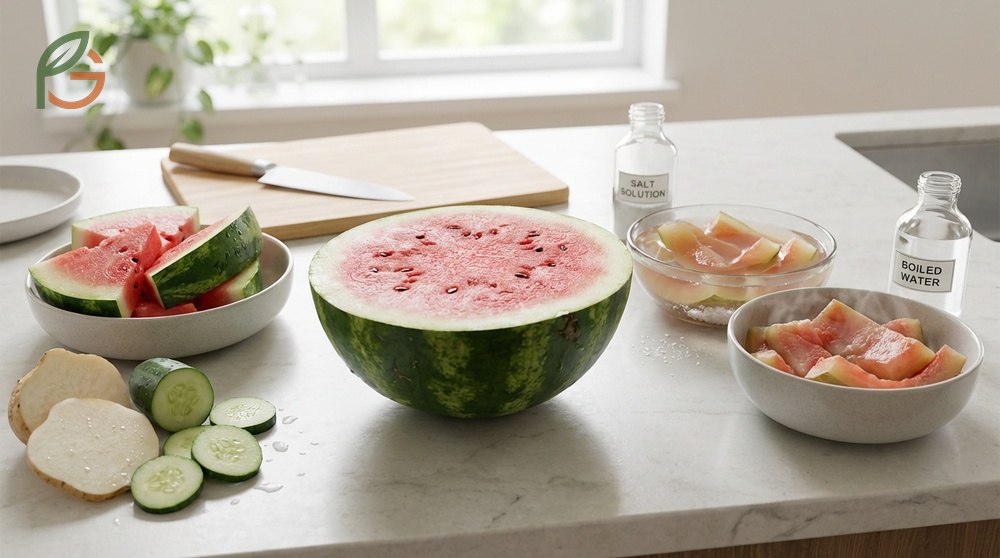
Raw watermelon rind has a firm, crisp texture comparable to jicama or young cucumber. The white portion is less dense than the tough green outer skin but significantly firmer than the juicy red flesh. This structural integrity comes from high cellulose and hemicellulose content.[4]
Texture changes predictably with different preparation methods. Soaking in salt water overnight softens the rind by drawing out moisture through osmosis. Boiling breaks down cell walls further, creating a tender-crisp consistency ideal for pickles. Stir-frying at high heat creates slight translucency while maintaining bite.
The mouthfeel is refreshing rather than starchy, with clean flavor that doesn’t leave residue or aftertaste. Many people describe it as neutral-tasting with subtle cucumber-like notes, making it highly versatile across cooking applications. When properly prepared, texture shouldn’t be fibrous or tough—if it is, you may need longer cooking time or thinner cutting.
Conclusion
The evidence is clear: watermelon rind is good for you and delivers concentrated nutrients often exceeding those found in the sweet flesh. Research confirms significant levels of citrulline, fiber, potassium, and calcium that support cardiovascular health, digestion, and overall wellness.[1][4]
Current agricultural guidance emphasizes reducing food waste by utilizing entire fruits and vegetables. FruitGarden synthesizes research showing that watermelon rinds represent valuable nutrition currently being discarded. Whether pickled, stir-fried, or blended into smoothies, incorporating this often-wasted portion maximizes the nutritional return from your produce investment.
Medical Disclaimer
Important Medical Disclaimer: This content is for informational and educational purposes only. It is not intended as a substitute for professional medical advice, diagnosis, or treatment. Always consult a qualified healthcare professional before making any changes to your diet, supplements, or health routine, especially if you have cardiovascular disease, kidney conditions, diabetes, or other medical conditions. Watermelon rind may interact with certain medications or affect people with specific health conditions differently.
Frequently Asked Questions
Can you eat watermelon rind raw?
Yes, you can eat watermelon rind raw after removing the tough green outer skin. The white portion has a crisp, cucumber-like texture and mild flavor. Wash thoroughly before cutting to remove any pesticides or dirt. Raw rind works well grated into salads, cut into sticks for dipping, or blended into smoothies.
How much watermelon rind should you eat per day?
A recommended serving is about 1 cup (approximately 150g) of chopped watermelon rind. This provides beneficial fiber and citrulline without overwhelming your digestive system. Start with smaller amounts if you’re not accustomed to high-fiber foods, as eating too much too quickly may cause temporary bloating or gas.
Does cooking watermelon rind destroy its nutrients?
Cooking watermelon rind preserves most nutrients, though vitamin C content decreases with extended heat exposure. Citrulline and fiber remain stable during cooking processes like pickling, stir-frying, or boiling. Quick-cooking methods retain the most nutrition—aim for 5-10 minutes rather than prolonged simmering when possible.
Is watermelon rind safe for everyone to eat?
Watermelon rind is generally safe for most people when properly washed and prepared. However, people with kidney problems should consult healthcare providers before consuming large amounts due to potassium content. Those with digestive sensitivities may want to start with small portions, as the high fiber can cause discomfort in sensitive individuals.
What does watermelon rind taste like?
Watermelon rind has a mild, slightly sweet flavor reminiscent of cucumber with subtle melon notes. It lacks the intense sweetness of the red flesh and has a more neutral, vegetable-like taste. This mild flavor profile makes it versatile—it absorbs seasonings well in savory dishes while working equally in sweet preparations like pickles or smoothies.
How long does watermelon rind last in the refrigerator?
Fresh watermelon rind stays good for up to 7 days when stored in an airtight container in the refrigerator. Pickled watermelon rind lasts 2-4 weeks refrigerated in sealed jars. Always inspect for signs of spoilage like off odors, sliminess, or mold before consuming. Cooked rind preparations should be used within 3-5 days.
Can watermelon rind help with weight loss?
Watermelon rind can support weight loss efforts due to its low calorie content (30 calories per 100g) and high fiber, which promotes satiety and reduces overall calorie intake. Research shows fiber-rich foods help you feel fuller longer. However, rind alone won’t cause weight loss—it works best as part of a balanced diet with appropriate calorie intake and regular physical activity.





