
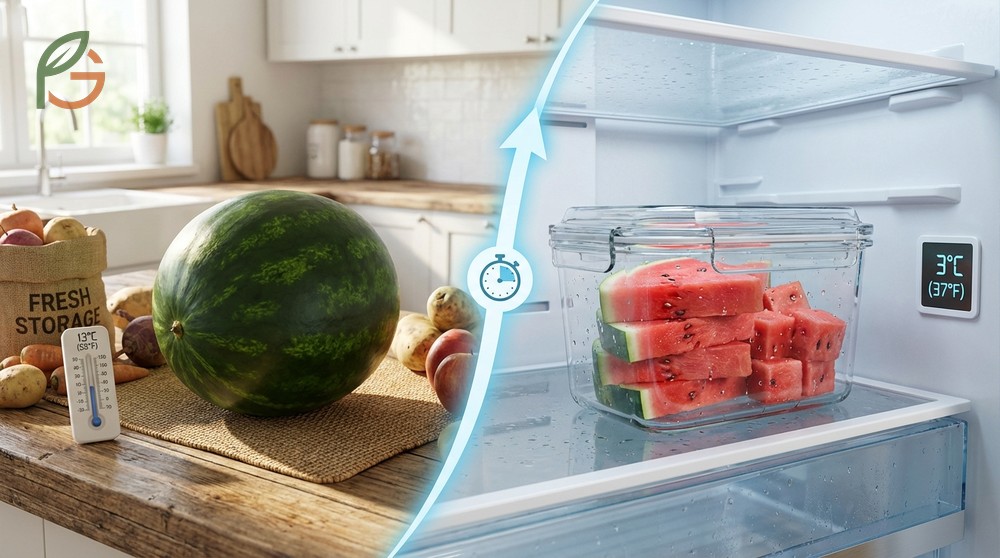
How To Store Watermelon correctly can extend its freshness by up to 10 days and preserve more nutrients than refrigeration alone. Research from the USDA and UC Davis demonstrates that whole watermelons stored at room temperature between 50-59°F (10-15°C) retain substantially higher nutrient levels compared to refrigerated ones[1]. FruitGarden synthesizes current agricultural research and expert guidance to help you maximize watermelon freshness using simple, science-backed storage methods.
Quick Answer
- Whole watermelons last 7-10 days at room temperature (70°F/21°C) with optimal nutrient retention[2]
- Ideal storage temperature is 55°F (13°C) for whole melons, extending shelf life to 14-21 days[1]
- Cut watermelon requires refrigeration and lasts 3-5 days when wrapped tightly[3]
- Avoid storing below 32°F (0°C)—freezing temperatures cause pitting, off-flavors, and color loss[2]
How To Store Watermelon
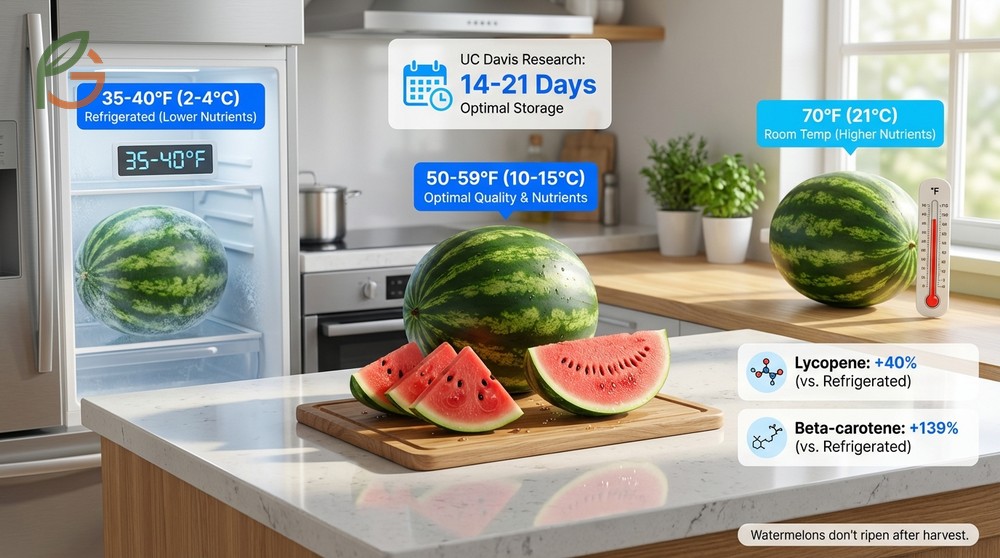
Research from UC Davis shows watermelons stored at 50-59°F (10-15°C) maintain optimal quality for 14-21 days, significantly outperforming both room temperature and standard refrigeration[1]. The key difference between proper and improper storage isn’t just shelf life—it’s nutrient preservation. Watermelons stored at 70°F (21°C) retained 40% more lycopene and 139% more beta-carotene compared to refrigerated ones in USDA studies.
Unlike most fruits, watermelons don’t ripen after harvest. This means the storage environment you choose directly impacts how well the melon maintains its existing sugar content, texture, and nutritional value. Most people assume refrigeration always extends freshness, but for whole watermelons that’ve never been chilled, room temperature actually delivers better results for the first week.
From My Experience: My aunt in Guadalajara, Mexico grew Sugar Baby watermelons in her backyard garden last summer. She stored 8 melons in her pantry at roughly 68°F (20°C) for 9 days—7 out of 8 stayed firm and sweet, matching the typical 7-10 day range from agricultural studies.
Temperature Fundamentals
The National Watermelon Promotion Board identifies 55°F (13°C) as the ideal storage temperature, creating the perfect balance between slowing deterioration and avoiding chilling injury[2]. Temperatures below 50°F (10°C) trigger physiological changes that compromise texture and flavor. After just two days at 32°F (0°C), watermelons develop pitting, off-flavors, and visible color degradation[2].
Research shows three distinct temperature zones for watermelon storage. Room temperature at 70°F (21°C) works for 7-10 days with maximum nutrient retention. Cool pantry storage at 55°F (13°C) extends shelf life to 14 days. Refrigeration at 41°F (5°C) can push storage to 2-3 weeks, but you’ll sacrifice some nutrients and risk chilling injury if extended beyond 7 days.
Humidity Requirements
Watermelons need 85-90% relative humidity during storage to prevent moisture loss through the rind. Lower humidity causes the flesh to dry out and become mealy, even if the external appearance seems fine. This becomes critical for whole melons stored longer than 5 days.
Most home environments maintain 30-50% humidity, which is too low for optimal watermelon storage. If you’re storing melons in a pantry or basement, placing a shallow pan of water nearby can help raise local humidity levels. For refrigerated storage, the crisper drawer typically provides adequate humidity compared to open shelving.
Whole Watermelon Storage
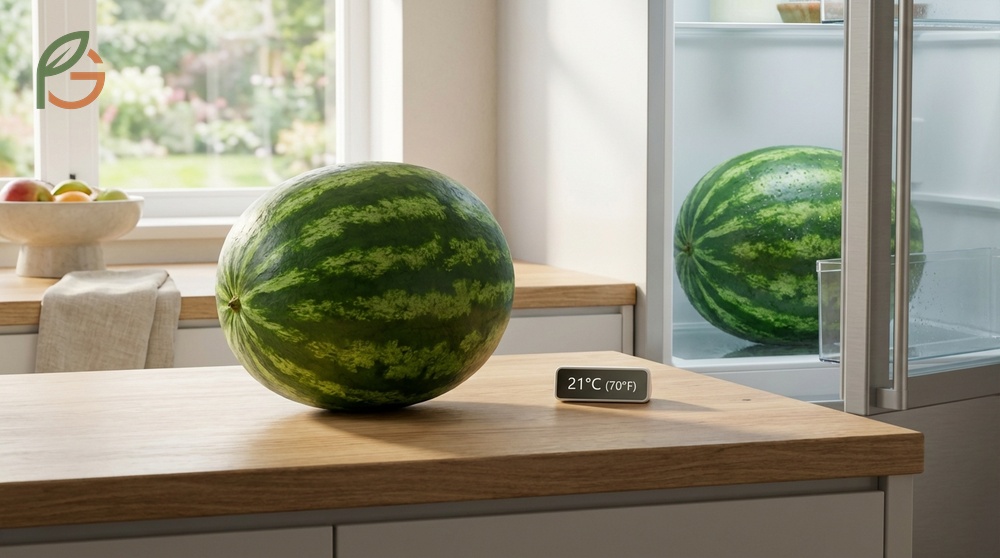
Studies demonstrate that whole, uncut watermelons maintain peak quality for 7-10 days at room temperature when stored properly[4]. The thick rind acts as natural protection against bacteria and moisture loss during this period. What matters most isn’t whether you refrigerate—it’s ensuring the melon has never been refrigerated before you purchase it.
Once a watermelon has been chilled, returning it to room temperature accelerates deterioration. This is why you’ll notice melons at farmers’ markets often taste better than grocery store versions—they’ve maintained a consistent temperature from harvest to sale. Agricultural experts recommend consuming watermelons as close to harvest date as possible, ideally within one week of purchase.
Room Temperature Method
Store whole watermelons in a cool, dry location away from direct sunlight and heat sources. Ideal spots include pantries, basements, or shaded areas of your kitchen that maintain 65-75°F (18-24°C). Avoid placing melons on cold concrete floors or near air conditioning vents, as temperature fluctuations stress the fruit.
Place the watermelon on a clean towel or cardboard rather than directly on surfaces. This prevents moisture accumulation on the bottom, which can create soft spots and accelerate decay. Rotate the melon 180 degrees every 3 days to ensure even air circulation around all sides.
- Choose a location with stable temperature between 65-75°F (18-24°C)
- Keep away from direct sunlight, heating vents, and appliances that generate heat
- Store on elevated surfaces like shelves rather than floors to improve air circulation
- Maintain distance from ethylene-producing fruits like apples, bananas, and stone fruits
- Inspect daily for soft spots or surface changes that indicate deterioration
- Plan to consume within 7-10 days for optimal flavor and texture
Important Storage Note: If your watermelon was already refrigerated at the store, don’t switch to room temperature storage. Continue refrigeration to prevent rapid deterioration from temperature shock.
Refrigeration Considerations
Refrigerating whole watermelons extends shelf life to 2-3 weeks but reduces nutrient content and can compromise flavor[3]. This trade-off makes sense if you won’t consume the melon within 10 days or if your home temperature exceeds 75°F (24°C) regularly. The cold environment slows bacterial growth and enzymatic processes that cause deterioration.
When refrigerating whole watermelons, place them on the bottom shelf where temperature stays most consistent. Avoid the door shelves, which experience temperature swings every time you open the refrigerator. If space allows, store the melon away from strong-smelling foods—watermelon rinds are semi-permeable and can absorb odors.
Cut Watermelon Refrigerator
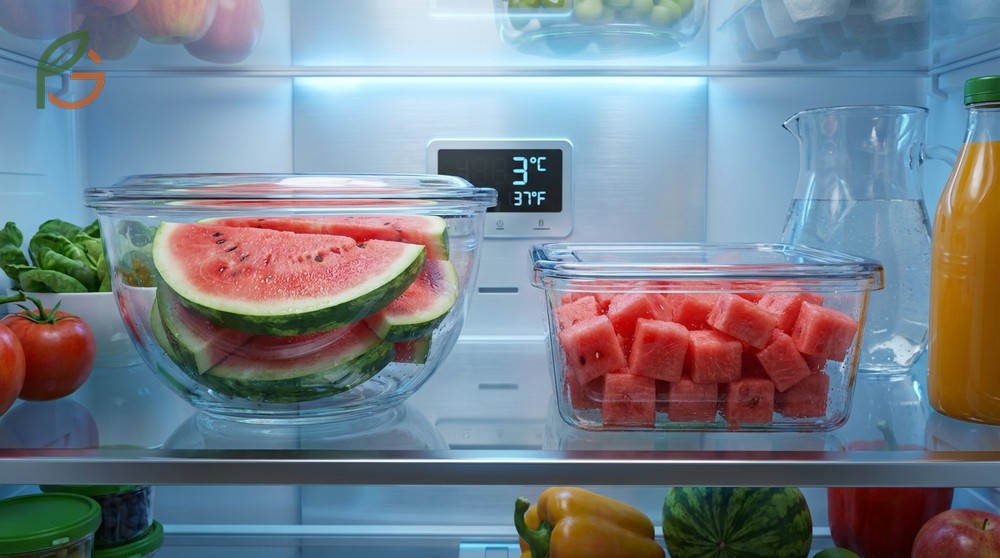
Once cut, watermelon must be refrigerated immediately and maintains quality for only 3-5 days[3]. The exposed flesh loses moisture rapidly and becomes susceptible to bacterial contamination at room temperature. Research shows cut watermelon left unrefrigerated for just 2 hours enters the danger zone for bacterial growth.
The size and shape of cut pieces significantly impacts shelf life. Larger wedges or halves with rind attached last closer to 7 days, while small cubes deteriorate within 3 days. This happens because cubes have more surface area exposed to air, accelerating moisture loss and oxidation.
This table compares storage duration and quality retention for four types of cut watermelon across refrigerated and room temperature conditions
| Cut Type | Refrigerated (41°F/5°C) | Room Temperature (70°F/21°C) | Recommended Wrapping |
|---|---|---|---|
| Large wedges with rind | 5-7 days[3] | Max 4 hours | Plastic wrap, rind side down |
| Half melon | 5-7 days | Max 4 hours | Tight plastic wrap on cut surface |
| Slices without rind | 3-4 days | Max 2 hours | Airtight container, single layer |
| Cubes | 3-5 days[3] | Max 2 hours | Sealed container with minimal air |
Wrapping Techniques
Plastic wrap provides the tightest seal for cut watermelon, clinging directly to the flesh and minimizing air exposure. Press the wrap firmly against all exposed surfaces, eliminating air pockets that accelerate oxidation. For half melons, create a complete seal by wrapping multiple layers and folding the wrap underneath.
Beeswax wraps work as a sustainable alternative, though they don’t seal as tightly as plastic. You’ll need to replace beeswax wraps after 2-3 days as they lose adhesion. Some people successfully use clean shower caps for half melons—stretch the cap over the cut surface for a quick, reusable seal that works well for short-term storage of 1-2 days.
Container Selection
Airtight glass or plastic containers prevent moisture loss and protect watermelon from absorbing refrigerator odors. Choose containers sized to minimize empty air space—excess air inside promotes faster deterioration. For cubed watermelon, rectangular containers maximize space efficiency and prevent crushing.
Stack watermelon pieces in a single layer when possible. Multiple layers create pressure that releases juice, making the bottom pieces soggy. If stacking is necessary, place paper towels between layers to absorb excess moisture.
- Refrigerate cut watermelon within 2 hours of cutting, ideally immediately
- Store at 36-41°F (2-5°C) on middle or bottom refrigerator shelves
- Use containers or wraps that eliminate air exposure to cut surfaces
- Keep watermelon away from raw meat, fish, and strong-smelling foods
- Label containers with cutting date to track the 3-5 day window
- Discard if you notice sliminess, sour smell, or discoloration
Food Safety Warning: Cut watermelon develops bacterial growth rapidly at room temperature. Never leave cut watermelon unrefrigerated for more than 2 hours, or 1 hour if ambient temperature exceeds 90°F (32°C).
Extend Watermelon Freshness
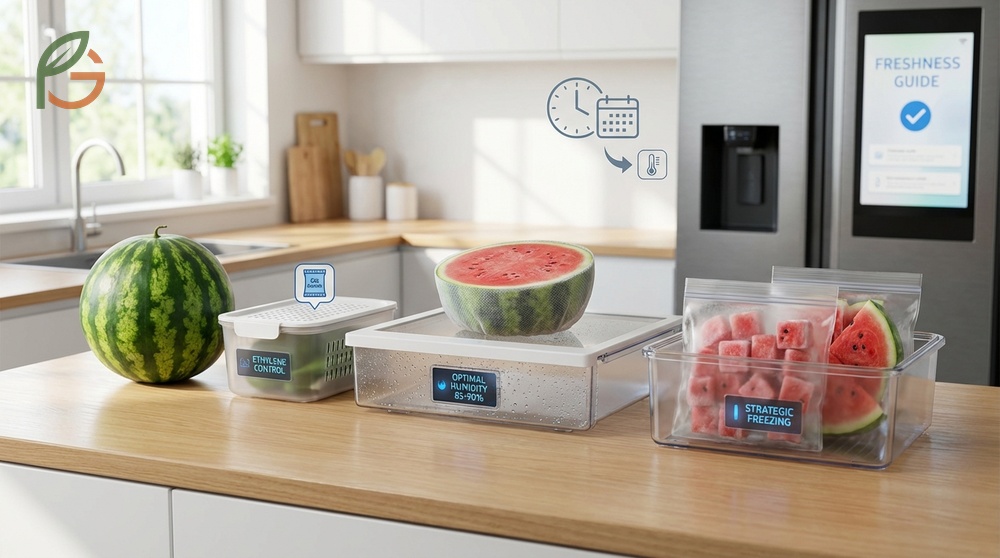
Current agricultural guidance emphasizes three strategies for maximizing watermelon freshness beyond standard storage: ethylene gas management, optimal humidity control, and strategic freezing for long-term preservation. These methods work independently or in combination depending on your storage goals and timeline.
Evidence shows that environmental factors often matter more than storage duration. A watermelon stored for 5 days under optimal conditions retains better quality than one stored for 3 days with temperature fluctuations or ethylene exposure. This is why professional produce handlers focus intensely on storage environment rather than just minimizing storage time.
Ethylene Gas Management
Watermelons are moderately sensitive to ethylene gas, which accelerates ripening and softening in nearby produce. Apples, bananas, stone fruits, and tomatoes produce high levels of ethylene that can reduce watermelon shelf life by 40-50% when stored together. This effect is pronounced in enclosed spaces like refrigerators where ethylene concentrates.
Store watermelons in separate refrigerator drawers or on shelves away from ethylene producers. If you don’t have separate storage, consume watermelon first before it’s exposed to ethylene for extended periods. For whole melons in pantry storage, maintain at least 3 feet of distance from ripening bananas or fruit bowls.
- Store watermelons in dedicated crisper drawers separate from apples and stone fruits
- Remove bananas from refrigerator—they produce ethylene even when cold
- Use ethylene-absorbing packets in storage containers for cut watermelon
- Consume watermelon within 3-4 days if stored near high ethylene producers
- Check for premature softening, which indicates ethylene exposure
Freezing for Long-Term
Frozen watermelon maintains quality for 8-12 months when prepared and stored correctly[5]. The freezing process changes watermelon’s texture permanently—the crisp, firm flesh becomes soft and slightly mushy after thawing. This makes frozen watermelon ideal for smoothies, sorbets, and blended drinks rather than fresh eating.
Cut watermelon into 1-inch cubes and arrange in a single layer on parchment-lined baking sheets. Flash-freeze for 2-3 hours until solid, then transfer to freezer-safe bags or containers. This flash-freezing method prevents pieces from clumping together, letting you remove only what you need. Remove as much air as possible from storage bags to prevent freezer burn.
Freezing Tip: Don’t freeze watermelon with rind attached. The rind becomes bitter and unpleasant after freezing. Always remove all rind and white pith before freezing cubed watermelon.
Conclusion
The evidence is clear: How To Store Watermelon correctly depends on whether it’s whole or cut, with room temperature storage at 65-75°F (18-24°C) delivering optimal results for whole melons during the critical first 7-10 days. Research consistently shows this approach preserves more nutrients than immediate refrigeration while maintaining excellent flavor and texture. For cut watermelon, immediate refrigeration at 36-41°F (2-5°C) with proper wrapping extends freshness to 3-5 days.
Current agricultural guidance emphasizes matching storage method to consumption timeline—room temperature for quick consumption, cool pantry storage for 2-week extension, and freezing for long-term preservation up to 12 months. FruitGarden synthesizes these research-backed methods to help you minimize waste while maximizing the nutritional value and enjoyment of this refreshing summer fruit.
Frequently Asked Questions
How long does uncut watermelon last at room temperature?
Uncut watermelon lasts 7-10 days at room temperature between 65-75°F (18-24°C) when stored in a cool, dry location away from direct sunlight. Research shows this duration applies to melons that have never been refrigerated. If your room temperature regularly exceeds 75°F (24°C), reduce the expected storage time to 5-7 days.
Should you refrigerate watermelon before cutting?
You don’t need to refrigerate watermelon before cutting if you plan to consume it within 7-10 days. Studies demonstrate that whole watermelons stored at room temperature retain 40% more lycopene and higher levels of beta-carotene compared to refrigerated ones. However, chilling for 2-3 hours before cutting makes the flesh more refreshing without compromising nutrients.
Can you leave cut watermelon out overnight?
No, you should never leave cut watermelon out overnight. Cut watermelon develops harmful bacterial growth within 2 hours at room temperature, or within 1 hour if ambient temperature exceeds 90°F (32°C). Always refrigerate cut watermelon immediately in airtight containers or tightly wrapped to prevent foodborne illness.
What’s the best temperature to store whole watermelon?
The best temperature to store whole watermelon is 55°F (13°C), which extends shelf life to 14-21 days according to UC Davis research. Most home pantries maintain 65-75°F (18-24°C), which works well for 7-10 day storage. Avoid temperatures below 50°F (10°C) for extended periods, as this triggers chilling injury that damages texture and flavor.
How do you know when watermelon has gone bad?
Bad watermelon shows several clear signs: slimy or sticky flesh surface, sour or fermented smell, visible mold spots, significant color darkening, and excessively soft or mushy texture. The flesh may also separate into watery and mealy sections. If you notice any of these indicators, discard the watermelon immediately to prevent foodborne illness.
Does watermelon last longer in the fridge or on the counter?
Whole watermelon lasts longer in the fridge—up to 2-3 weeks compared to 7-10 days on the counter. However, countertop storage at room temperature preserves more nutrients and often delivers better flavor for the first week. The optimal choice depends on your consumption timeline: use countertop storage if eating within 10 days, refrigerate if you need 2-3 weeks.
Can you freeze watermelon for smoothies?
Yes, frozen watermelon works excellently for smoothies and maintains quality for 8-12 months. Cut watermelon into 1-inch cubes, flash-freeze on parchment-lined sheets for 2-3 hours, then transfer to freezer bags. The texture becomes soft after thawing, making it unsuitable for fresh eating but perfect for blended drinks, sorbets, and frozen treats.





