
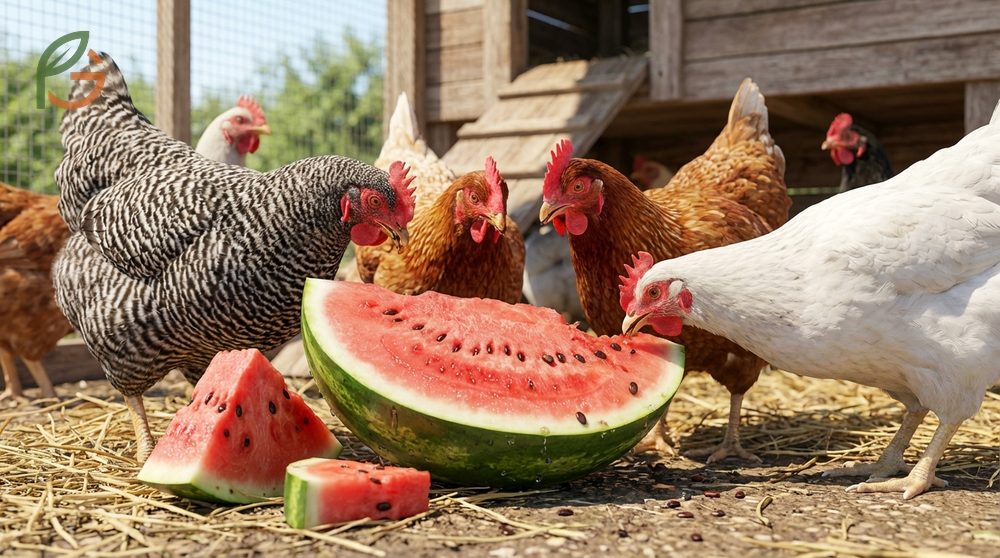
Can chickens eat watermelon? Yes, chickens can safely eat watermelon—including the flesh, seeds, and rinds. This refreshing summer fruit provides essential hydration, vitamins, and minerals that support flock health during hot weather. FruitGarden combines current poultry research with practical gardening insights to help you make informed feeding decisions for your backyard flock.
Quick Answer
Can Chickens Eat Watermelon
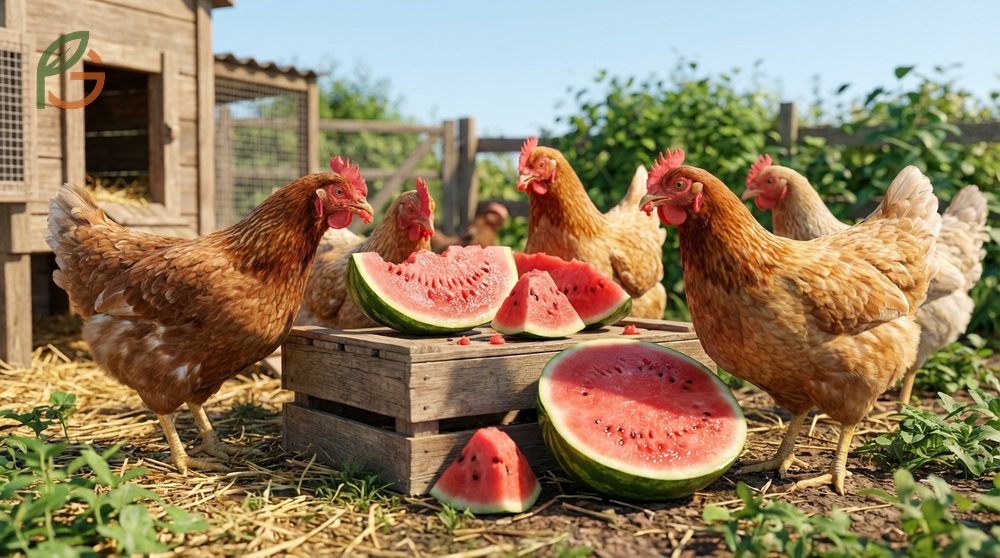
Chickens can safely eat all parts of watermelon without any toxic effects. The fruit’s high water content makes it an ideal summer treat that helps prevent dehydration during hot weather. Research shows that watermelon consists of 91% water[3] and contains only 30 calories per 100 grams, making it a low-calorie nutritional boost.
Most chickens instinctively peck at watermelon when you offer it. They’ll typically go for the juicy red flesh first, then move to the seeds. The natural sugars provide a quick energy boost, while vitamins A and C support immune function and overall health.
Studies on poultry heat stress demonstrate that cooling strategies significantly improve bird welfare during temperature extremes[4]. Watermelon fits perfectly into this approach by combining hydration with essential nutrients. Unlike processed treats, it delivers real nutritional value your flock can use.
Why Chickens Love Watermelon
The sweet taste and juicy texture make watermelon irresistible to most chickens. They’re naturally drawn to bright colors, and the deep red flesh signals ripe, nutrient-dense food. Birds also enjoy the pecking challenge that watermelon provides.
You’ll notice chickens working together to break down larger pieces. This social feeding behavior creates flock bonding opportunities. The variety in texture—from soft flesh to crunchy seeds—keeps them engaged longer than standard feed.
From My Experience: My cousin in Guadalajara, Mexico keeps 12 laying hens and freezes watermelon chunks every June. Her birds peck through the frozen treats in under 20 minutes even on 35°C (95°F) days, showing the same hydration preference studies document.
Hydration Benefits
Heat stress reduces egg production and compromises immune function in poultry. Watermelon addresses both issues by delivering water through food, which chickens find more appealing than drinking from hot waterers. The CDC confirms that daily fluid intake includes water consumed from foods[1].
During summer months (June through August in most US regions), chickens need 2-3 times more water than in cooler weather. Watermelon helps meet this increased demand naturally. You’ll see healthier feathers, consistent egg production, and more active foraging behavior when your flock stays properly hydrated.
- Bright, alert eyes signal good hydration status
- Firm, glossy feathers indicate adequate water intake
- Active pecking and foraging behavior shows energy levels
- Regular egg production (4-6 eggs per week per hen) confirms health
- Minimal panting during moderate heat means effective cooling
Can Chickens Eat Watermelon Rind
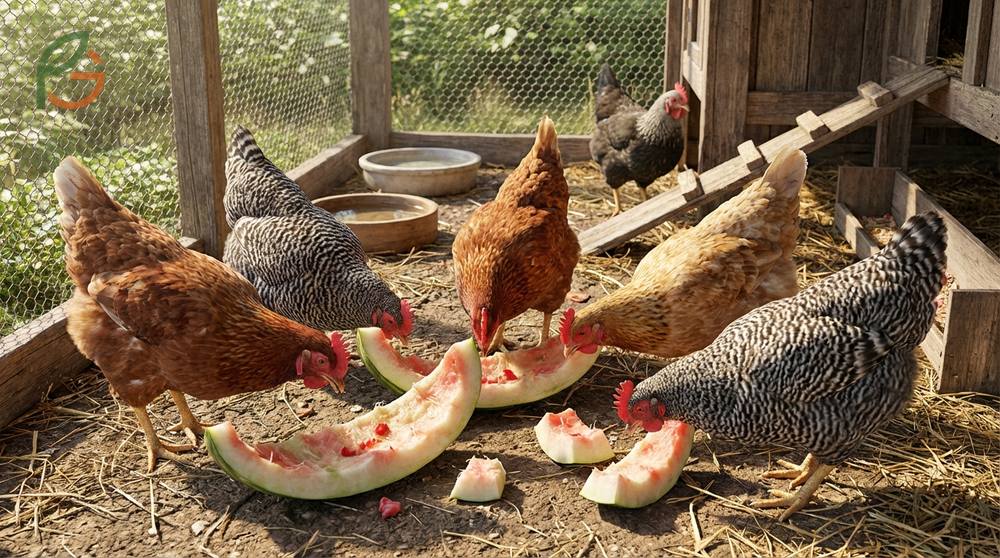
Chickens can eat watermelon rind, though not all birds find it as appealing as the flesh. The white and pale green parts contain fiber, amino acids, and citrulline—compounds that support circulation and muscle function. Instead of composting rinds, you can offer them as a longer-lasting treat that keeps chickens occupied.
The tougher texture means chickens take more time pecking through rinds. This extended engagement reduces boredom and aggressive behaviors in confined flocks. You’re essentially providing entertainment along with nutrition.
Nutritional Value of Rinds
Watermelon rinds actually pack more nutrients per gram than the flesh in certain categories. The white part contains concentrated citrulline, an amino acid that converts to arginine in the body. This supports protein metabolism and cardiovascular function in chickens.
Rinds also provide additional fiber that aids digestion. While the sugar content is lower than in the flesh, the mineral content remains comparable. You’re not wasting nutrition when you feed rinds—you’re just offering a different nutrient profile.
Preparing Rinds for Chickens
Cut rinds into 2-3 inch strips to make them easier for chickens to grip and peck. Smaller pieces work better for bantam breeds or younger birds. You can leave the green outer skin on—it’s safe and contains chlorophyll and additional fiber.
Chilling rinds in the refrigerator before serving makes them more appealing during hot weather. Some chicken keepers report better acceptance when they score the white part with a knife to create easier starting points for pecking. Don’t force it—if your flock ignores rinds, stick to flesh and seeds.
Important Note: Always remove uneaten watermelon (flesh or rind) after 2-3 hours to prevent bacterial growth. Spoiled fruit can cause digestive upset and attract pests to your coop area.
Can Chickens Eat Watermelon Seeds
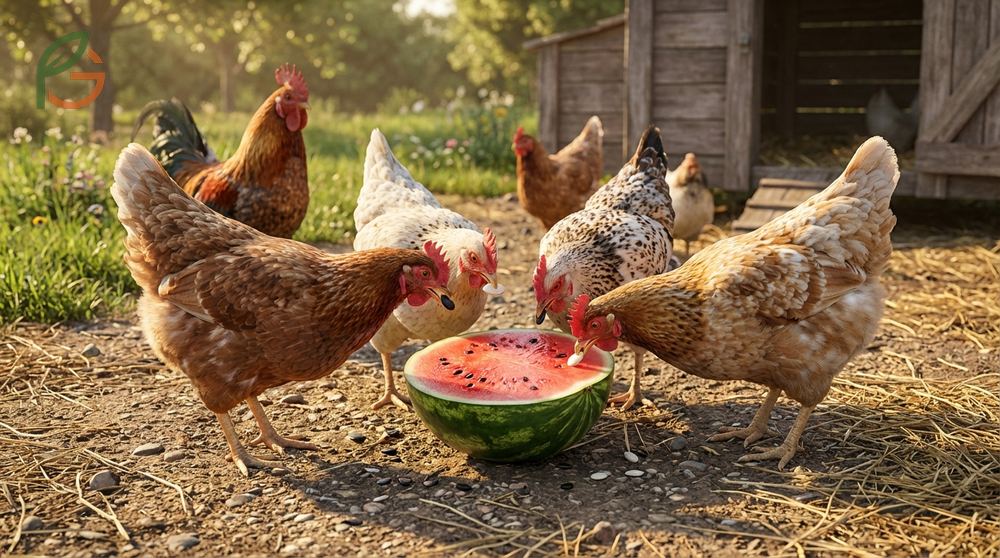
Chickens can safely eat watermelon seeds—both the black seeds from seeded varieties and the soft white seeds from seedless types. Many chickens actually prefer seeds over flesh, pecking them out first before touching the fruit. The seeds contain protein, healthy fats, and minerals that complement a chicken’s regular diet.
Black watermelon seeds provide concentrated nutrition in a small package. They’re rich in magnesium, iron, and zinc—minerals that support egg production and feather health. The hard shell poses no digestive problems since chickens have strong gizzards designed to grind tough materials.
You might’ve heard claims that watermelon seeds act as natural dewormers. There’s no scientific evidence supporting this[5]. Seeds are nutritious treats, not medical treatments. Proper coop hygiene and regular health checks remain the best parasite prevention methods.
- High protein content supports feather growth and muscle development
- Magnesium aids calcium absorption for stronger eggshells
- Iron prevents anemia and supports oxygen transport
- Zinc boosts immune function and wound healing
- Natural entertainment value keeps birds occupied
Feeding Tip: If you’re concerned about seeds, seedless watermelon varieties work perfectly. The soft white seed coats are even easier for chickens to digest than traditional black seeds.
Nutritional Value of Watermelon for Poultry
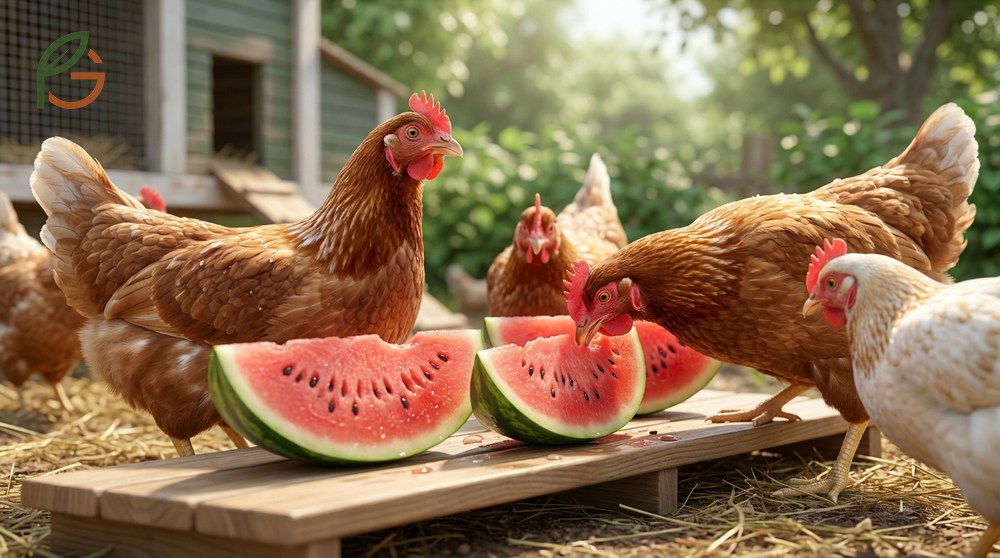
Watermelon delivers a concentrated vitamin and mineral boost despite its low calorie count. One cup (154g) provides 865 IU of vitamin A[2], which equals roughly 17% of an adult chicken’s daily needs. This vitamin supports vision, immune response, and reproductive health—all critical for laying hens.
The vitamin C content (12mg per cup)[2] helps chickens manage stress during extreme weather. While chickens synthesize their own vitamin C, supplemental amounts from fresh foods support immune function during challenging periods. Potassium (170mg per cup)[2] maintains proper muscle function and nerve signaling.
The carbohydrate content (7.6g per 100g)[3] provides quick energy without excessive calories. This makes watermelon suitable for active foraging chickens who burn energy throughout the day. The natural sugars won’t cause weight gain when fed in appropriate amounts.
This table compares key nutrients in watermelon per 100 grams with typical poultry benefits for vision, immunity, and muscle function
| Nutrient | Amount per 100g | Primary Benefit | Best for |
|---|---|---|---|
| Water | 91%[3] | Hydration | Summer heat management |
| Calories | 30 kcal[3] | Low-calorie treat | Weight management |
| Vitamin A | 569 IU per 100g | Vision, immunity | Laying hens, growing chicks |
| Vitamin C | 8.1mg per 100g | Stress response | Hot weather resilience |
| Potassium | 112mg per 100g | Muscle function | Active foragers |
- Lycopene acts as antioxidant protecting cells from heat damage
- Beta-carotene supports eye health and color vision
- B vitamins aid energy metabolism and egg production
- Zero fat and cholesterol make it heart-healthy
- Natural electrolytes help maintain fluid balance
How to Serve Watermelon to Chickens
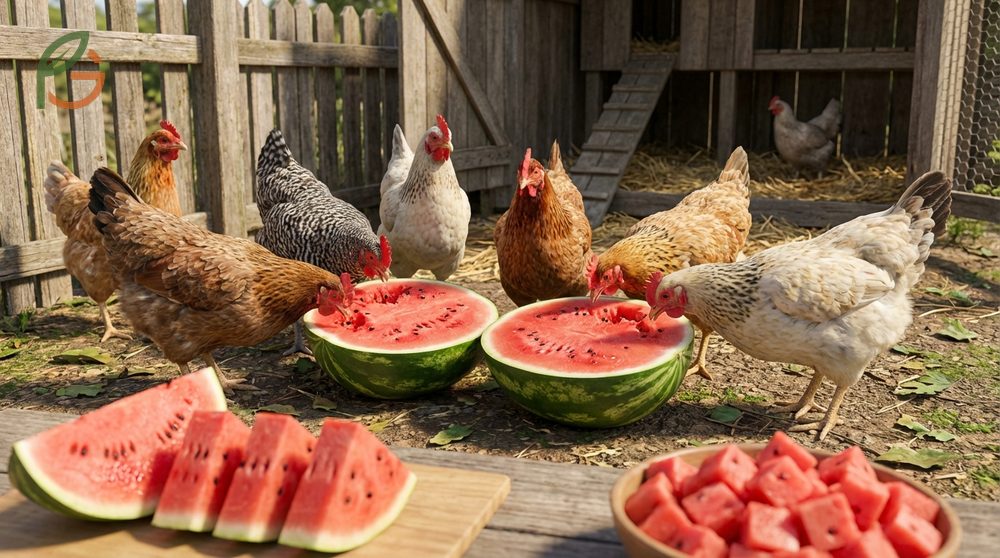
The simplest method is cutting a watermelon in half and placing both halves directly in your chicken run. Your flock will gather around and naturally peck out the flesh and seeds. This “watermelon bowl” approach creates minimal prep work while maximizing entertainment value[6].
For smaller flocks (4-6 birds), slice watermelon into 2-inch wedges instead. This prevents dominant birds from monopolizing an entire half. You can also cube the flesh for easier distribution across multiple feeding stations in larger runs.
Chilling watermelon in the refrigerator for 2-3 hours before serving creates a more refreshing treat during peak heat (typically 2-6 PM in most US locations). Frozen watermelon cubes work even better on extremely hot days above 32°C (90°F). Birds peck at frozen chunks for 15-20 minutes, getting continuous cooling benefits.
Hanging watermelon slices from a string encourages natural foraging behaviors. Thread a rope through thick rind sections and suspend it at beak height. This keeps the fruit off the ground, reducing waste and contamination. It also provides physical activity as chickens jump and stretch to reach the treat.
Some chicken keepers hollow out watermelon rinds and fill them with other treats like mealworms or scratch grains. This creates a “puzzle feeder” that keeps birds engaged longer. For baby chicks (under 8 weeks), mash small amounts of watermelon flesh into a soft consistency to make it easier for tiny beaks to consume.
Safety Reminder: Never leave watermelon in the coop overnight. Remove all uneaten portions after 2-3 hours to prevent mold growth and pest attraction. Spoiled fruit can cause crop impaction or digestive issues.
Summer Treats for Chickens
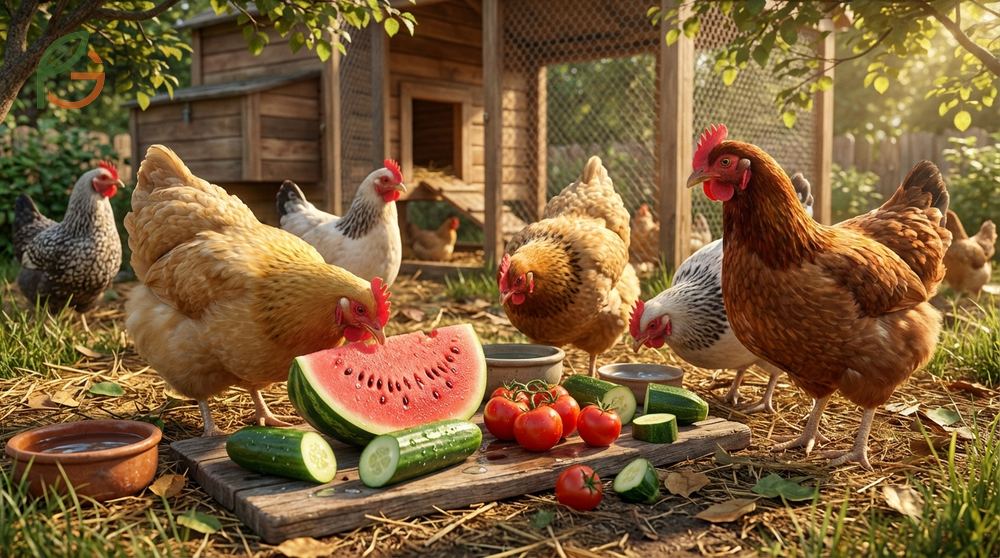
Watermelon ranks as one of the top cooling treats for chickens, but it’s not your only option. Research on poultry heat stress shows that combining multiple cooling strategies produces better results than relying on a single method[4]. You can rotate different high-water fruits and vegetables to keep your flock interested while maximizing nutritional benefits.
Cucumbers, tomatoes, and zucchini all contain 90%+ water content similar to watermelon. These alternatives provide variety when watermelon isn’t in season or becomes expensive. Frozen berries—strawberries, blueberries, and blackberries—offer concentrated antioxidants in small packages that chickens enjoy pecking.
Leafy greens like lettuce, kale, and Swiss chard deliver moisture along with minerals. You can hang whole lettuce heads in the run for interactive feeding, similar to suspended watermelon. Avoid iceberg lettuce since it lacks nutritional value compared to romaine or butter lettuce varieties.
- Frozen corn kernels provide crunch and energy
- Chilled yogurt (plain, unsweetened) supports digestive health
- Cantaloupe and honeydew offer similar benefits to watermelon
- Pumpkin and squash flesh cool birds while aiding digestion
- Ice blocks with herbs frozen inside create long-lasting enrichment
- Cold cooked oatmeal mixed with berries delivers filling nutrition
Timing matters as much as food choice. Serve cooling treats during the hottest part of the day (2-5 PM) when chickens need them most. Morning treats should focus on energy and protein to fuel active foraging. Evening treats can be lighter since chickens naturally eat less before roosting.
The 90/10 rule applies to all treats: 90% of your flock’s diet should come from quality layer feed, with treats making up just 10%. Watermelon and other fruits shouldn’t replace balanced nutrition from commercial feeds formulated specifically for chickens. Think of summer treats as supplements that support your flock’s primary diet, not as meal replacements.
Conclusion
The evidence is clear: chickens can eat watermelon safely and benefit from its hydration, vitamins, and minerals. Every part of the fruit—flesh, seeds, and rinds—provides nutritional value without toxic risks. The 92% water content makes watermelon particularly valuable during summer heat stress when chickens struggle to stay cool.
Current guidance emphasizes variety in poultry treats rather than relying on single foods. Rotate watermelon with other high-water fruits and vegetables to maximize nutrition while keeping your flock engaged. Remember the 10% treat rule and remove uneaten portions promptly to maintain coop health. FruitGarden continues tracking poultry nutrition research to bring you practical, science-based feeding strategies that support thriving backyard flocks.
Frequently Asked Questions
How much watermelon can I feed my chickens?
Feed watermelon as 10% or less of your flock’s total daily diet. For a typical backyard flock of 6 hens, one small watermelon split over 2-3 days works well. Remove uneaten portions after 2-3 hours to prevent spoilage and maintain coop hygiene.
Can baby chicks eat watermelon?
Yes, chicks over 3 weeks old can eat small amounts of mashed watermelon flesh. Avoid giving whole chunks to chicks under 8 weeks since they might struggle with large pieces. Always provide chick grit to help their developing gizzards process treats properly.
Is watermelon good for chickens in winter?
Watermelon’s cooling properties make it less ideal for winter feeding when chickens need warming foods. Save watermelon for hot weather (temperatures above 27°C/80°F) and offer warm treats like cooked oatmeal or scratch grains during cold months instead.
Do chickens eat watermelon leaves and vines?
Chickens can peck at watermelon leaves and vines safely, though most don’t find them as appealing as the fruit. The leaves contain some nutrients but are tougher to digest. If you grow watermelons, you can offer pruned vines as occasional free-range foraging options.
Can watermelon cause diarrhea in chickens?
Excessive watermelon can cause watery droppings due to the high water content, but this isn’t true diarrhea. Limit servings to small amounts (10% of diet) and you won’t see digestive issues. If watery droppings persist after stopping watermelon, consult a veterinarian.
Should I remove watermelon seeds before feeding chickens?
No need to remove seeds—chickens can digest them easily and often prefer eating seeds first. The black seeds contain protein, healthy fats, and minerals that benefit egg production. Both seeded and seedless watermelon varieties work equally well.
Can chickens eat moldy or overripe watermelon?
Never feed moldy watermelon to chickens. Mold produces toxins that can cause serious digestive and respiratory problems. Slightly overripe watermelon is fine if it’s not fermented or showing mold, but always prioritize fresh fruit for safety.





