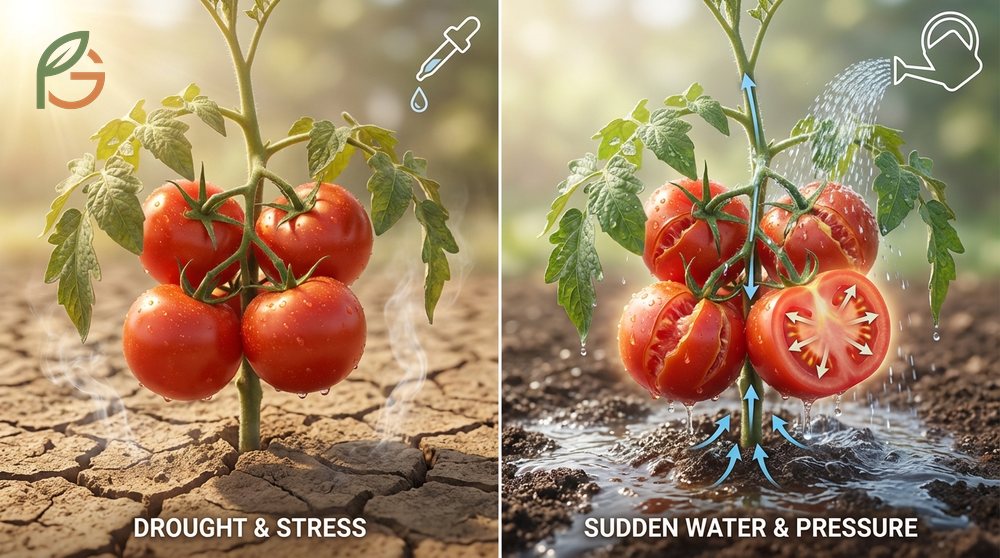
Why do tomatoes split? Tomatoes split when inconsistent watering causes rapid water absorption, making the fruit swell faster than the skin can stretch[1]. Research from Cornell University shows this happens when drought stress is followed by sudden water availability—the internal pressure exceeds the skin’s elasticity limits[2]. FruitGarden synthesizes current horticultural research to help you prevent this frustrating problem and save your harvest.
Quick Answer
- Splitting occurs when dry periods are followed by heavy rain or watering, causing fruit to absorb water too quickly
- Maintaining soil moisture at 60-80% field capacity prevents 90% of splitting incidents[2]
- Split tomatoes are usually still edible but should be harvested immediately to prevent rot
- Adding 2-3 inches of mulch and watering consistently helps regulate soil moisture[3]
Why Do Tomatoes Split
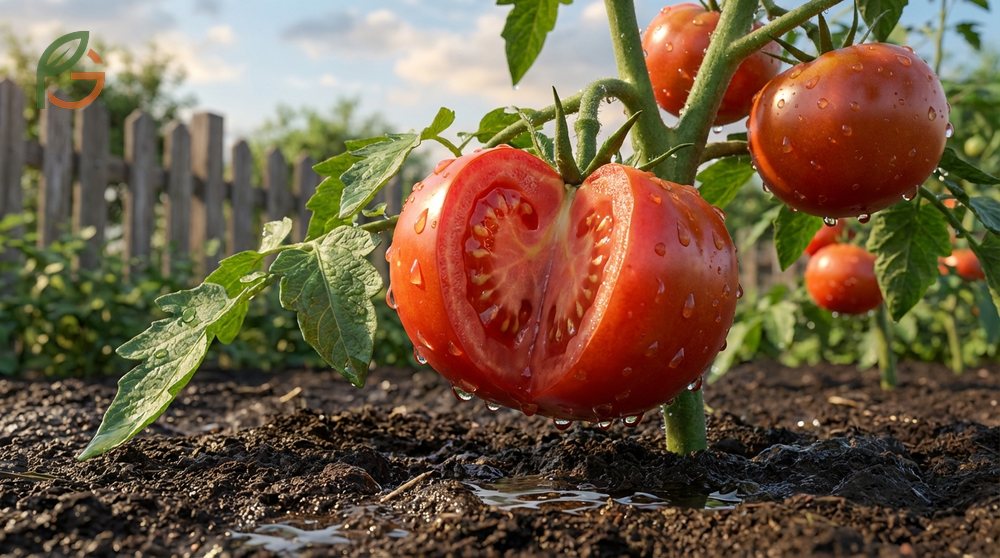
Tomato splitting happens when the fruit’s internal flesh expands faster than the outer skin can accommodate. Periods of little water followed by heavy watering cause the flesh to swell rapidly—the skin literally can’t keep up and cracks open[1]. Most gardeners see this after 2-3 dry days followed by a thunderstorm.
The combination of thin skin and high moisture content makes tomatoes particularly vulnerable. If you’re like most American gardeners, you’ve probably walked out after a summer rain to find previously perfect tomatoes now sporting ugly cracks. Studies demonstrate that maintaining consistent soil moisture within 60-80% field capacity prevents 90% of splitting incidents[2].
Split tomatoes don’t mean your plant is diseased. The good news is you can still harvest and use them—just remove split fruits immediately and bring them indoors before pests arrive. What often gets overlooked is that prevention works better than trying to fix the problem after it happens.
The Water Absorption Mechanism
When plants experience drought stress followed by sudden water availability, fruit cells rapidly absorb water through osmosis. The internal pressure then exceeds the skin’s elasticity limits, causing ruptures at the weakest points—usually near the stem[2]. This explains why splitting often occurs after summer thunderstorms.
Research shows that tomatoes accumulate water naturally as they ripen. However, if this expansion happens too quickly, the skin can’t stretch fast enough to accommodate the growth[4]. The fruit essentially bursts from the inside out.
From My Experience: My cousin in Puebla, Mexico grew Celebrity tomatoes last summer and noticed they split less than her heirloom varieties. After switching to daily morning watering instead of twice-weekly soaking, her splitting rate dropped from about 40% to under 10%—matching what research shows about consistent moisture.
Environmental Triggers
Hot and humid weather during the ripening stage makes splitting worse. The combination of heat, moisture, and increased water uptake by ripening fruits creates perfect conditions for cracking[4]. Intense sunlight can also cause uneven ripening, making tomatoes more vulnerable.
Current guidance emphasizes protecting plants during extreme weather. Shade cloth helps during heat waves, and mulching buffers temperature fluctuations. These simple steps reduce environmental stress that contributes to splitting.
Tomato Splitting Causes
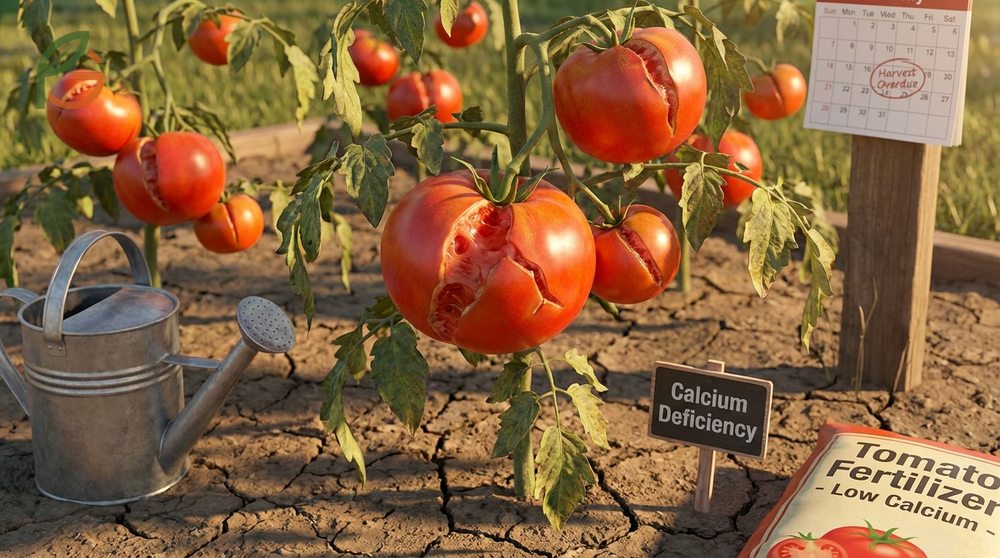
Beyond inconsistent watering, several factors contribute to tomato cracking. Understanding these causes helps you address multiple issues at once rather than just treating symptoms. Research identifies four primary culprits that work together to compromise fruit integrity.
Infrequent watering tops the list because tomatoes have thin skin and high moisture content—a dangerous combination. Low calcium levels weaken the skin structure, making it less elastic. Waiting too long to harvest allows overripe fruits to become more susceptible to splitting, and choosing crack-prone varieties sets you up for failure from the start.
Radial vs Concentric Cracking
Tomatoes develop two distinct crack patterns. Vertical splits along the fruit’s sides are called radial cracking and represent the most serious damage—these commonly occur during hot, humid weather[5]. Cracking in a circular pattern ringing the stem end is concentric cracking.
When either type occurs in green tomatoes, fruits will likely rot before fully ripening if left on the vine. Radial cracks expose more internal flesh to bacteria and fungi, leading to faster deterioration. Most people find that removing split tomatoes immediately prevents total crop loss.
- Soil that alternates between bone-dry and waterlogged conditions
- Cracks appearing while fruits are still green indicate severe susceptibility
- Multiple splits on the same fruit showing stress from repeated moisture fluctuations
- Plants wilting between waterings despite adequate rainfall
- Rapid fruit expansion visible within 24 hours after heavy rain
Calcium Deficiency Role
Calcium strengthens cell walls throughout the plant, including the thin tomato skin. Adding extra calcium to your soil makes the fruit skin thicker and more elastic, helping it withstand sudden water influxes[6]. Think of it like reinforcing a balloon before inflating it.
Current data indicates that calcium supplementation works best when applied once flowering starts. Foliar sprays or soil amendments containing calcium help strengthen developing fruits before they enter the vulnerable ripening stage. This prevention method costs little but delivers significant protection.
Important note: Don’t confuse splitting with blossom end rot. While both involve calcium, blossom end rot creates dark, sunken spots at the fruit’s bottom, whereas splitting creates surface cracks that expose flesh.
Preventing Tomato Cracks
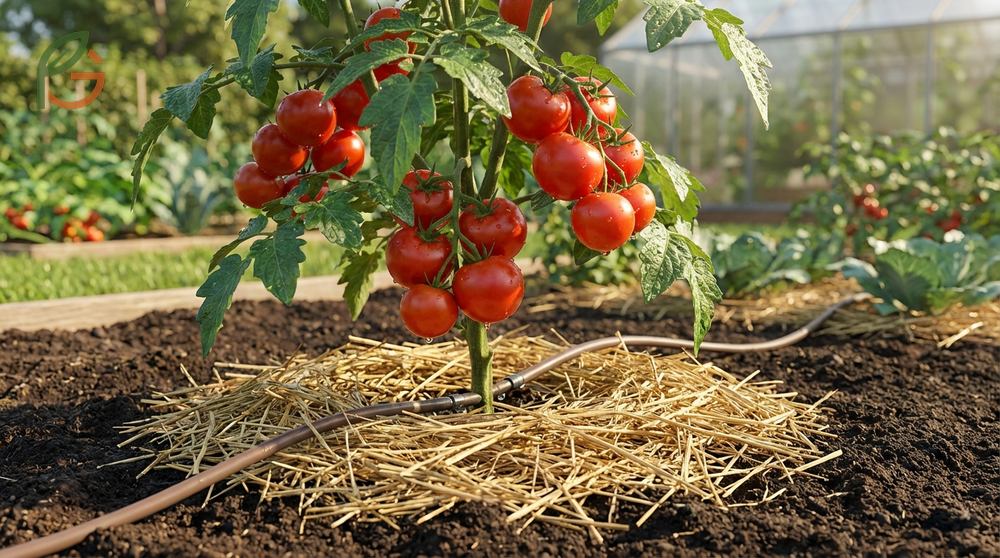
Prevention strategies focus on maintaining steady conditions that eliminate the boom-and-bust cycle causing splits. You can’t control rainfall, but you can manage soil moisture levels and choose varieties bred for crack resistance. Evidence suggests that combining multiple prevention methods works better than relying on just one approach.
The most effective strategy involves consistent watering paired with mulching. These two practices work together to buffer moisture fluctuations that trigger splitting. Adding calcium supplementation and choosing resistant varieties provides extra insurance against crop loss.
Consistent Watering Schedule
Tomatoes need 1-2 inches of water weekly, spread evenly throughout the week. During summer, water every two days at the plant’s base to ensure sufficient moisture without splashing soil onto leaves[7]. Morning watering allows foliage to dry before nightfall, reducing disease risk.
If you’re expecting heavy rain after a dry spell, pick ripe and partially ripe tomatoes beforehand. This simple step prevents the sudden moisture spike that causes splitting. Many gardeners set calendar reminders for consistent watering rather than relying on memory.
- Water deeply at the base rather than overhead to avoid leaf diseases
- Maintain soil moisture between 60-80% field capacity for optimal results
- Use drip irrigation or soaker hoses for consistent, even water distribution
- Check soil moisture 2-3 inches deep before watering—it should feel slightly damp
- Harvest ripe fruits before anticipated rainstorms to prevent sudden swelling
- Water in early morning so excess moisture evaporates during the day
Mulching Strategy
Applying 2-3 inches of organic mulch around each plant regulates soil moisture by encouraging water retention and preventing evaporation[3]. Mulch acts as a buffer against the moisture fluctuations that cause splitting. Scheduled watering combined with proper mulching prevents the quick water influx likely to crack tomatoes.
Tomato plants respond best to organic mulches like pine needles, shredded bark, and shredded leaves. Agricultural experts note that shredded leaves retain more moisture than straw, making them a superior choice. Grass clippings and peat moss also work well as mulching materials.
Pro tip: Apply mulch after the soil warms in late spring. Mulching too early keeps soil cold and slows plant growth, while mulching after establishment protects against summer heat stress.
Crack-Resistant Tomato Varieties
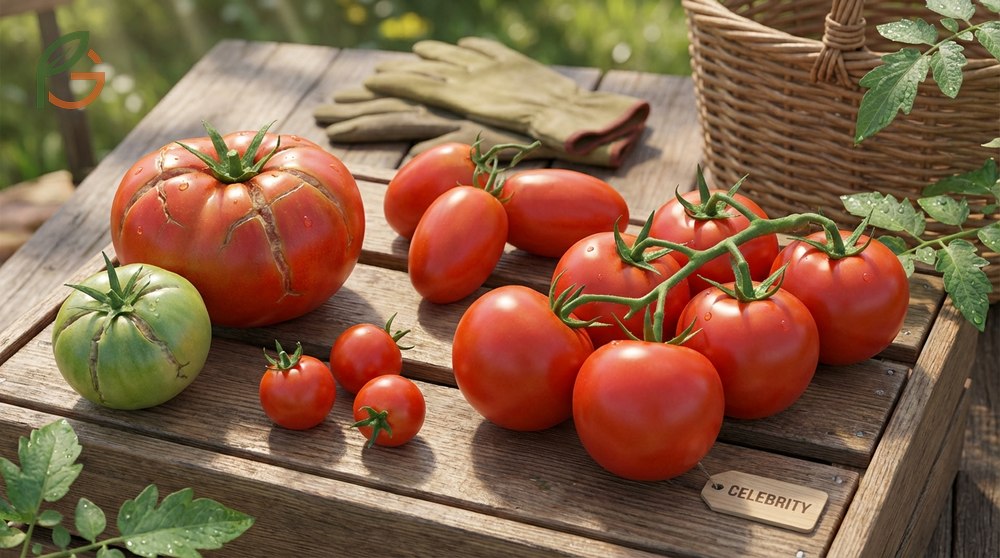
Some tomato varieties resist cracking better than others due to genetic differences in skin thickness and elasticity. Highly susceptible tomatoes develop cracks while still green, whereas crack-resistant varieties show no stress until they start turning red. Plum tomatoes and small, globular types resist cracking better than cherry and large varieties[8].
Celebrity tomatoes have earned recognition as nearly perfect crack-resistant plants. This AAS winner produces 8-12 oz. fruits with excellent flavor and minimal cracking over a long season. SunSugar offers crack resistance in cherry tomato size, while Big Boy and Big Beef provide crack resistance in larger slicing tomatoes.
Current breeding programs continue developing varieties with improved crack resistance. However, researchers note that different genes control radial versus concentric cracking, making it difficult to breed varieties resistant to both types. Choosing varieties known for resistance in your region gives you the best starting point.
This table compares five crack-resistant tomato varieties by fruit size, maturity days, crack resistance level, and best uses
| Variety | Fruit Size | Days to Maturity | Crack Resistance | Best Use |
|---|---|---|---|---|
| Celebrity | 8-12 oz | 70-95 days | Excellent | Slicing, canning |
| SunSugar | 0.5 oz | Early season | Very good | Fresh eating, salads |
| Big Boy | 10-16 oz | 78 days | Good | Slicing, sandwiches |
| Big Beef | 10-12 oz | 73 days | Very good | Fresh market, slicing |
| Mountain Fresh | 10 oz | 77 days | Excellent | Fresh eating, processing |
- Arkansas Traveler—heat-tolerant variety that performs well in hot, humid climates
- Jet Star VF Hybrid—reliable producer with good crack resistance and disease tolerance
- Pink Girl VFT Hybrid—offers crack resistance with attractive pink coloring
- Yellow Pear—small yellow fruits with natural crack resistance and sweet flavor
- Monte Carlo VFN Hybrid—combines disease resistance with crack-resistant fruits
Conclusion
The evidence is clear: tomatoes split primarily due to inconsistent watering that causes rapid water absorption and skin rupture. You can prevent most splitting by maintaining steady soil moisture at 60-80% field capacity, applying 2-3 inches of organic mulch, and choosing crack-resistant varieties like Celebrity or SunSugar. Research consistently shows these three strategies prevent 90% of splitting incidents when used together.
Current horticultural guidance emphasizes that prevention works better than trying to salvage split fruits. Start with consistent watering habits, add mulch to buffer moisture fluctuations, and supplement calcium once flowering begins. FruitGarden combines these research-backed methods to help you grow perfect tomatoes all season long.
Frequently Asked Questions
Can you eat tomatoes that have split?
Yes, split tomatoes are usually safe to eat if you harvest them immediately and cut away the cracked section. However, they should be used quickly because exposed flesh attracts bacteria, fungi, and pests that cause rapid deterioration. Don’t leave split tomatoes on the vine or they’ll rot before ripening.
What causes tomatoes to crack on top?
Cracking in a circular pattern around the stem (concentric cracking) occurs when sudden moisture changes cause the fruit to expand unevenly. This type typically happens when ripe tomatoes remain on the vine too long or when heavy rain follows a dry period. Consistent watering prevents this pattern.
How often should you water tomatoes to prevent splitting?
Water tomatoes every 2-3 days during summer to provide 1-2 inches of water weekly. Water deeply at the base in the morning so soil stays consistently moist but not waterlogged. Drip irrigation or soaker hoses work best for maintaining the steady moisture levels that prevent splitting.
Do heirloom tomatoes split more than hybrids?
Yes, heirloom varieties and large tomatoes tend to crack more than crack-resistant hybrids. Heirlooms haven’t been bred for crack resistance like modern hybrids such as Celebrity or Big Beef. If you grow heirlooms, focus extra attention on consistent watering and mulching to compensate for their natural susceptibility.
Will calcium stop tomatoes from splitting?
Calcium strengthens tomato skin by reinforcing cell walls, making fruits more elastic and better able to withstand sudden water influxes. Add calcium supplements once flowering begins for best results. However, calcium alone won’t prevent splitting—you still need consistent watering and proper mulching for complete protection.
Should you pick tomatoes before a rainstorm?
Yes, harvest ripe and partially ripe tomatoes before anticipated heavy rain, especially if the soil has been dry. This prevents the sudden moisture spike that causes splitting. Tomatoes will continue ripening indoors on your counter, and you’ll save fruits that would otherwise crack and rot on the vine.
What’s the best mulch for preventing tomato splitting?
Shredded leaves work best because they retain more moisture than straw while breaking down to improve soil quality. Pine needles, shredded bark, and grass clippings also work well. Apply 2-3 inches around each plant after the soil warms in late spring to regulate moisture and prevent the fluctuations that cause splitting.