Growing Tomatoes in Pots is a practical solution for gardeners with limited space, allowing you to produce delicious homegrown tomatoes on patios, balconies, or anywhere with 6-8 hours of sunlight. Research shows that container tomatoes can be just as productive as garden-grown plants when given the right pot size, soil mix, and consistent care[1]. FruitGarden synthesizes current horticultural research and practical gardening experience to help you succeed with container tomato growing.
Quick Answer
- Use containers that are at least 5 gallons for determinate varieties and 15-20 gallons for indeterminate types[2]
- Choose high-quality potting mix with good drainage and a balanced NPK ratio like 5-10-10 or 8-16-16[3]
- Water daily during hot weather and fruiting stages—tomatoes need consistent moisture to prevent blossom end rot[4]
- Select dwarf varieties like Tiny Tim or Husky Cherry Red for smaller spaces—they thrive in 2-5 gallon containers[5]
Growing Tomatoes in Pots
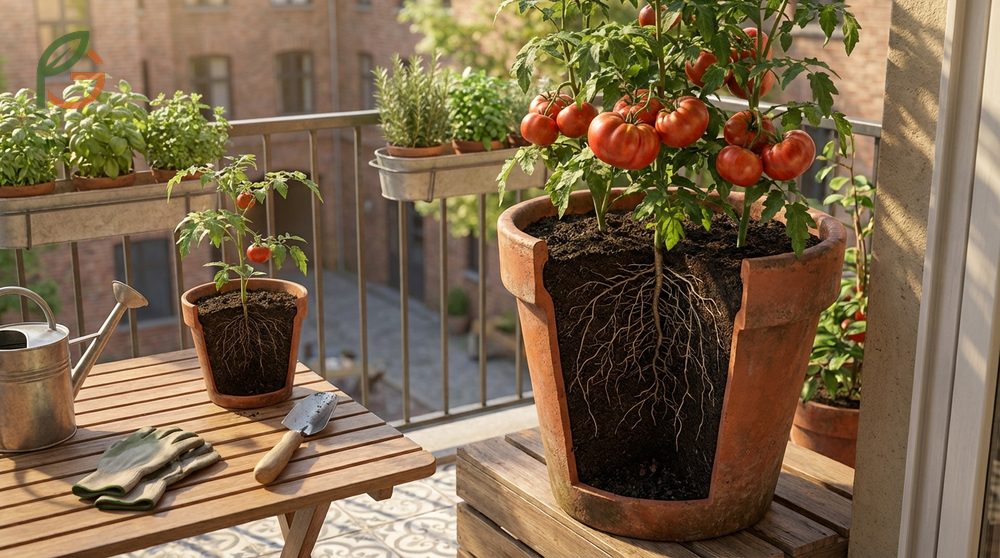
Container gardening transforms limited spaces into productive tomato-growing areas. Whether you’re working with a small balcony, patio, or courtyard, potted tomatoes can yield impressive harvests when you match the right variety to your container size and provide consistent care[1].
Studies demonstrate that container-grown tomatoes need deeper root zones than many gardeners expect. The roots extend vertically rather than horizontally, making depth more critical than width[6]. Most varieties require at least 12 inches of soil depth, with indeterminate types performing best in containers 18-24 inches deep.
Current data indicates that tomatoes adapt well to container life when gardeners address three key factors: adequate root space, consistent moisture levels, and proper nutrient availability. Plants that receive these essentials produce fruit quality comparable to garden-grown specimens.
Why Grow Tomatoes in Containers
Container growing offers distinct advantages over traditional in-ground planting. You’ll gain better control over soil quality, drainage, and nutrient levels since you’re starting with fresh potting mix rather than working with existing garden soil.
Mobility becomes a major benefit when weather threatens your plants. You can move containers to protected areas during storms or reposition them to follow the sun throughout the growing season.
- Extended growing seasons in cold climates by moving plants indoors during early frost warnings
- Elimination of soil-borne diseases and pests common in traditional garden beds
- Ability to grow tomatoes on concrete surfaces like driveways, patios, and rooftop gardens
- Easier access for elderly or mobility-impaired gardeners using raised container platforms
- Flexibility to grow varieties unsuited to your native soil pH or composition
- Space efficiency for urban gardeners with no yard access
Determinate vs Indeterminate Varieties
Determinate tomatoes grow to a predetermined height (typically 3-4 feet), set fruit over a concentrated period, and don’t require extensive pruning. These compact varieties work well in smaller 5-10 gallon containers and suit gardeners who want a single harvest for canning or preserving[1].
Indeterminate varieties continue growing and producing fruit throughout the season until frost kills them. They need larger containers of 15-20+ gallons, sturdy caging or staking, and regular pruning to manage their vigorous growth[6]. These vining types provide continuous harvests but require more maintenance and vertical space.
Important Note: Don’t assume smaller containers will limit an indeterminate tomato’s growth. The plant will still try to vine extensively, but the restricted root system will stress the plant and reduce fruit production significantly.
Best Containers for Growing Tomatoes
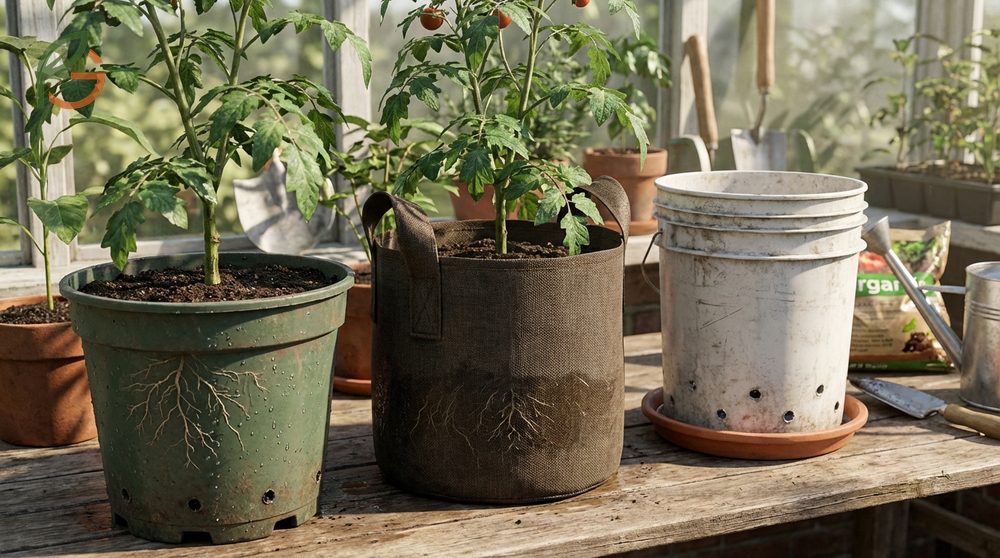
Research shows that container material affects soil temperature, moisture retention, and overall plant health. Plastic pots hold moisture longer but can overheat roots in hot climates, while fabric grow bags provide superior drainage and air pruning but dry out faster[7].
Every container type needs drainage holes to prevent waterlogged soil that causes root rot. If you’re repurposing buckets or plastic tubs, drill 5-8 holes (3/4 inch diameter) in the bottom plus several more on the sides about an inch from the base[8].
Container Size Requirements
Agricultural data shows that undersized containers create stressed plants with reduced yields. Cherry tomatoes need minimum 2-gallon pots, standard varieties require 4-5 gallons, and full-size slicers perform best in 15-20 gallon containers[2].
The relationship between container volume and harvest weight is direct. Plants in 5-gallon buckets typically produce 10-15 pounds of fruit per season, while those in 20-gallon pots can yield 25-40 pounds under optimal conditions.
This table compares container sizes, suitable tomato types, and expected yields for different pot volumes
| Container Size | Best Tomato Type | Expected Yield | Examples |
|---|---|---|---|
| 2-3 gallons | Micro-dwarf, cherry | 3-8 lbs[5] | Tiny Tim, Red Robin |
| 5 gallons | Determinate, patio types | 10-15 lbs[8] | Bush Goliath, Patio |
| 10-15 gallons | Standard determinate/small indeterminate | 15-25 lbs[6] | Celebrity, Early Girl |
| 20+ gallons | Full-size indeterminate | 25-40 lbs[9] | Beefsteak, Cherokee Purple |
Grow Bags for Tomatoes
Fabric grow bags have become popular alternatives to rigid containers due to their air-pruning properties. When roots reach the breathable fabric walls, they stop growing rather than circling, which prevents root-bound plants and creates healthier root systems[7].
The porous material allows excess heat to escape, keeping soil temperatures 10-15°F cooler than black plastic pots on hot days. This temperature regulation matters because tomato roots slow growth when soil exceeds 85°F (29°C).
- Superior drainage prevents overwatering issues common with plastic pots
- Lightweight construction (bags weigh 1-2 ounces empty) makes moving plants effortless
- Collapsible design allows compact storage during off-season months
- Built-in handles facilitate repositioning without stressing plant stems
- Lower cost compared to ceramic or thick plastic containers of equal volume
- Multi-season durability when cleaned and stored properly between growing cycles
5 Gallon Bucket Tomatoes
Standard 5-gallon buckets offer an economical entry point for container tomato growing. These ubiquitous containers provide 14+ inches of depth and 11+ inches of diameter—adequate space for determinate varieties and compact indeterminate types[8].
Proper preparation makes all the difference in bucket success. After drilling drainage holes, add 1-2 inches of gravel or mulch to the bottom before filling with potting mix—this layer prevents soil from plugging the holes while maintaining airflow.
From My Experience: My cousin in Monterrey, Mexico grew Better Bush tomatoes in 5-gallon buckets painted white to reflect heat. His plants produced 12-14 pounds per bucket versus the typical 10-pound yield, showing how simple modifications like paint color can improve results in hot climates.
Always use food-grade buckets free from chemical residues. Restaurant supply stores often give away clean buckets that previously held pickles, frosting, or other food products—just wash thoroughly before planting.
Best Soil for Potted Tomato Plants
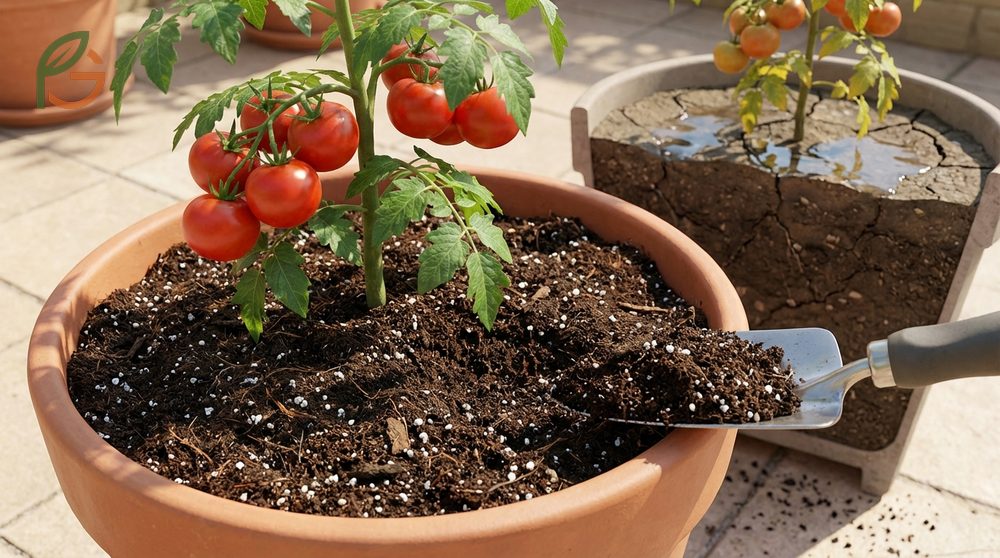
High-quality potting mix makes the single biggest difference in container tomato success. Research shows that potting soil specifically formulated for containers outperforms garden soil or compost alone because it’s engineered for proper drainage, aeration, and water retention[8].
Never use straight garden soil in containers—it compacts severely when watered, restricting oxygen flow to roots and creating anaerobic conditions that promote disease. Quality potting mixes contain peat moss or coco coir for moisture retention, perlite or vermiculite for drainage, and compost for nutrients.
Evidence suggests that tomatoes thrive in slightly acidic soil with pH between 6.2 and 6.8. Most commercial potting mixes fall within this range, but you can test and adjust with lime (to raise pH) or sulfur (to lower pH) if needed[10].
- Peat moss or coconut coir (40-50%) provides water retention without becoming waterlogged
- Perlite or vermiculite (20-30%) creates air pockets and prevents compaction over time
- Aged compost (20-30%) delivers slow-release nutrients and beneficial microorganisms
- Worm castings (5-10%) add trace minerals and natural growth hormones
- Mycorrhizal fungi inoculant improves nutrient uptake efficiency by 30-40%
Soil Replacement Tip: Replace 30-50% of your potting mix each season by removing the top third and mixing in fresh material. This refreshes nutrients while maintaining beneficial microbes established in the lower layers.
Consider amending your base potting mix with slow-release organic fertilizer before planting. Products like Espoma Tomato-tone or composted manure provide nutrients over 2-3 months, reducing your need for frequent liquid feeding during early growth stages.
Watering Potted Tomatoes
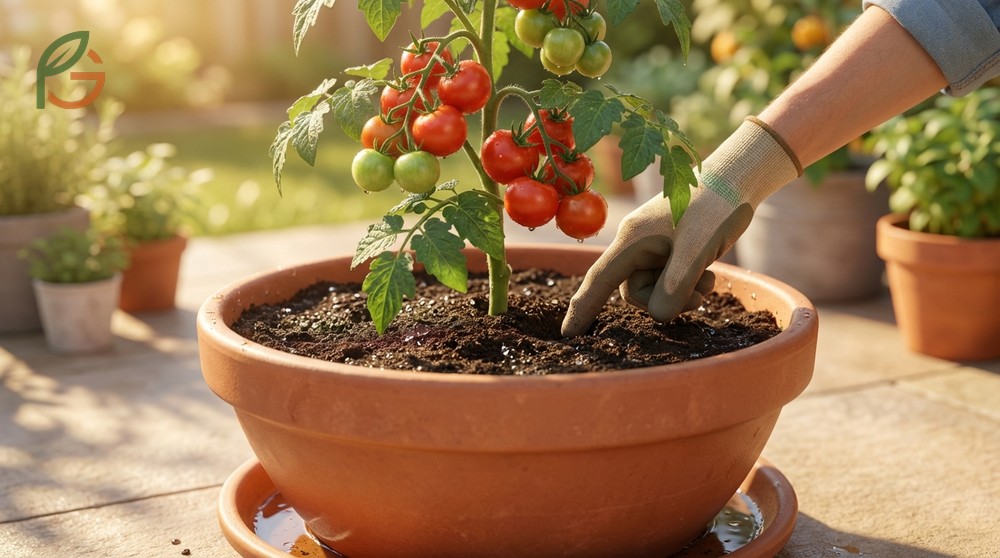
Container tomatoes need more frequent watering than garden plants because limited soil volume dries faster. Current guidance shows that most potted tomatoes require watering once daily during warm weather, increasing to twice daily when temperatures exceed 85°F (29°C) or during peak fruiting[4].
The finger test provides a reliable moisture check. Insert your finger 2 inches into the soil—if it feels dry at that depth, water thoroughly until liquid drains from the bottom holes. Surface dryness alone doesn’t indicate the entire root zone needs water.
Consistency matters more than volume. Erratic watering—alternating between bone-dry and waterlogged soil—causes blossom end rot, fruit cracking, and flavor dilution. Aim for evenly moist soil that feels like a wrung-out sponge.
- Water in early morning (6-9 AM) so foliage dries before evening to prevent fungal diseases
- Apply water directly to soil surface rather than overhead to avoid leaf diseases
- Use drip irrigation or soaker hoses on timers for consistent automation
- Increase frequency during flowering and fruit set when plants need 50% more water
- Reduce watering slightly before harvest to concentrate sugars and intensify flavor
- Check soil moisture daily during heatwaves when containers can dry completely in 8-12 hours
Drainage for Tomato Pots
Proper drainage prevents the most common cause of container tomato death—root rot from waterlogged soil. All pots except fabric grow bags need multiple drainage holes at least 1/2 inch in diameter[2].
Evidence indicates that side drainage holes positioned 1-2 inches from the bottom provide backup if bottom holes become clogged with roots or soil. This dual drainage system prevents standing water even when primary holes are compromised.
Avoid placing saucers directly under outdoor containers unless you empty them within an hour after watering. Standing water in saucers creates anaerobic soil conditions and attracts mosquitoes. If you need saucers for aesthetic reasons or indoor growing, use pot feet or pebble trays to elevate containers above any collected water.
Best Fertilizer for Potted Tomato Plants
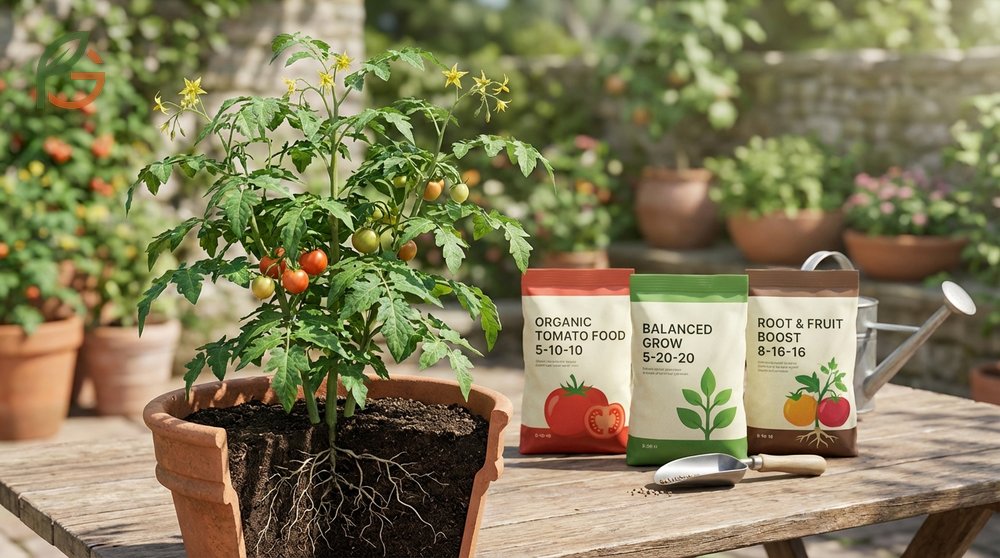
Tomatoes are heavy feeders that quickly deplete nutrients in the limited soil volume of containers. Research across agricultural programs shows that balanced NPK ratios like 5-10-10, 5-20-20, or 8-16-16 work best because they provide adequate nitrogen for foliage while emphasizing phosphorus for root development and fruit production[3].
Avoid high-nitrogen fertilizers once plants begin flowering. Excessive nitrogen drives vegetative growth at the expense of fruit set, resulting in lush foliage but few tomatoes. Switch to formulations with lower nitrogen (the first number in NPK ratios) after the first flower clusters appear.
Feed container tomatoes every 7-14 days during active growth using either granular slow-release products or liquid fertilizers. Liquid options like fish emulsion or compost tea provide immediate nutrient availability, while granular forms release gradually over 6-12 weeks[10].
- Worm castings provide complete nutrition with NPK around 1-0-0 plus beneficial microbes
- Fish emulsion (5-1-1) delivers fast-acting nitrogen for rapid growth spurts
- Kelp meal adds trace minerals and natural growth hormones that improve stress tolerance
- Bone meal (3-15-0) boosts phosphorus for strong root development during transplanting
- Composted chicken manure offers balanced nutrition with NPK approximately 3-2-2
- Epsom salt (1 tablespoon per gallon monthly) prevents magnesium deficiency and yellowing leaves
Fertilizer Warning: Don’t fertilize drought-stressed plants. Water thoroughly first, wait 2-3 hours, then apply fertilizer to moist soil. Feeding dry plants concentrates salts around roots and causes burn damage.
Dwarf Tomato Varieties for Pots
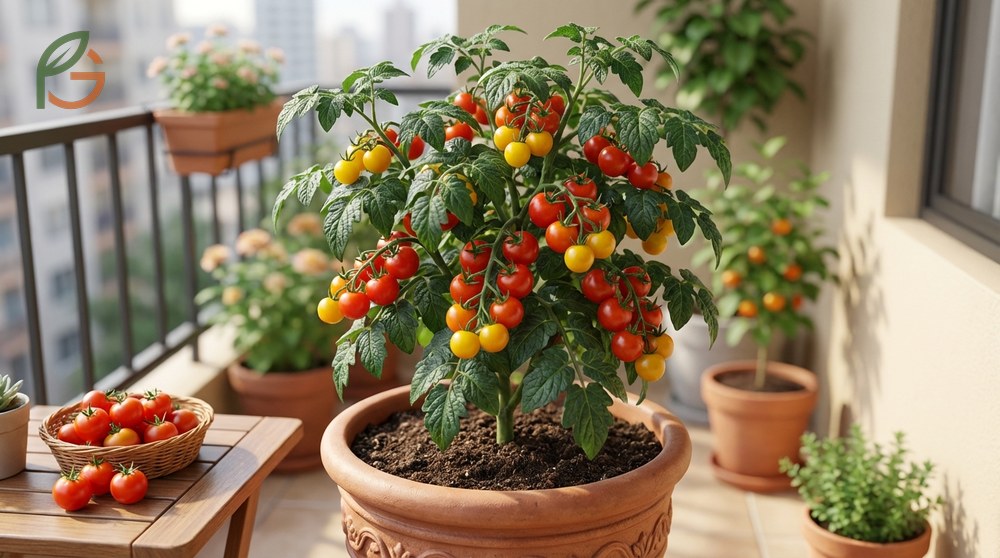
Dwarf and micro-dwarf tomato varieties have been specifically bred for compact growth habits that suit container culture. These plants reach mature heights of 1-3 feet compared to 6-8 feet for standard indeterminate types, making them perfect for balconies, window boxes, and small patios[5].
Studies demonstrate that dwarf varieties don’t sacrifice flavor or productivity for their small stature. Many micro-dwarfs produce 2-3 pounds of fruit in containers as small as 1-2 gallons, achieving impressive yields relative to their compact root systems.
From My Experience: A friend in Oaxaca, Mexico grows Tiny Tim tomatoes in old plastic food containers on her apartment balcony. Her plants reached 10 inches tall and produced continuously for 4 months—she harvested over 3 pounds from each tiny container, matching the variety’s advertised yield.
| Variety Name | Height | Minimum Pot Size | Fruit Type |
|---|---|---|---|
| Tiny Tim | 10-12 inches | 1-2 gallons | Cherry, red |
| Red Robin | 12-18 inches | 2-3 gallons | Cherry, red |
| Patio Yellow | 18-24 inches | 3-5 gallons | Cherry, yellow |
| Husky Cherry Red | 24-30 inches | 10-15 gallons | Cherry, red |
The Dwarf Tomato Project breeds have emerged as favorites among container gardeners. These varieties stay around 3 feet tall but produce full-size slicing and beefsteak tomatoes rather than just cherries, offering the best of both worlds for space-limited growers.
Conclusion
The evidence is clear: Growing Tomatoes in Pots succeeds when you match container size to variety type, use quality potting mix, and maintain consistent watering schedules. Don’t let limited space prevent you from enjoying homegrown tomatoes—even a single 5-gallon bucket on a sunny balcony can produce 10-15 pounds of fruit per season.
Current horticultural guidance emphasizes that container tomatoes need attentive care but reward that effort with harvests comparable to garden-grown plants. FruitGarden synthesizes research-based growing methods with practical experience to help gardeners at all skill levels achieve container tomato success.
Frequently Asked Questions
Can Tomatoes Grow in Pots Successfully?
Yes, tomatoes grow successfully in pots when given adequate container size (minimum 5 gallons for determinate varieties, 15-20 gallons for indeterminate), quality potting mix, and consistent care. Research shows container tomatoes can match or exceed garden yields when root space and watering needs are met properly.
How Often Should I Water Tomatoes in Containers?
Water container tomatoes once daily during warm weather and twice daily when temperatures exceed 85°F or during peak fruiting. Check soil moisture by inserting your finger 2 inches deep—if it feels dry at that depth, water thoroughly until liquid drains from bottom holes. Consistency prevents blossom end rot and fruit cracking.
What’s the Best Container Size for Growing Tomatoes?
Cherry tomatoes need minimum 2-3 gallon containers, determinate varieties require 5-10 gallons, and indeterminate types perform best in 15-20+ gallon pots. Larger containers produce higher yields because they provide more root space, hold moisture longer, and buffer temperature fluctuations better than smaller pots.
Do Fabric Grow Bags Work Better Than Plastic Pots?
Fabric grow bags offer superior air pruning that prevents root circling, better temperature regulation, and excellent drainage compared to plastic pots. However, they dry out faster and require more frequent watering. Choose fabric bags if you can water daily, or use plastic pots if you need longer moisture retention between waterings.
What Fertilizer NPK Ratio Is Best for Potted Tomatoes?
Use balanced ratios like 5-10-10, 5-20-20, or 8-16-16 that emphasize phosphorus (middle number) for root development and fruit production. Avoid high-nitrogen fertilizers after flowering begins because excess nitrogen promotes foliage growth at the expense of tomato production. Feed every 7-14 days during active growth.
Can I Grow Full-Size Tomatoes in 5-Gallon Buckets?
You can grow determinate and compact varieties successfully in 5-gallon buckets, yielding 10-15 pounds per plant. However, full-size indeterminate tomatoes need 15-20+ gallon containers to reach their production potential. Choose varieties specifically bred for containers like Better Bush or Patio if using 5-gallon buckets.
Which Dwarf Tomato Varieties Work Best in Small Pots?
Tiny Tim and Red Robin are excellent micro-dwarf varieties that produce well in 1-3 gallon containers, reaching only 10-18 inches tall. For slightly larger spaces, try Husky Cherry Red in 10-15 gallon pots—it grows 24-30 inches tall with true dwarf characteristics and excellent fruit production for its compact size.