How to prune tomato plants for bigger harvests? Research shows that removing suckers and lower leaves redirects energy to fruit production while improving airflow[1]. Studies demonstrate that pruned indeterminate tomatoes produce larger fruits and stay productive longer than unpruned plants[2]. FruitGarden synthesizes current horticultural research to help you master pruning techniques that maximize yield.
Quick Answer
How To Prune Tomato Plants
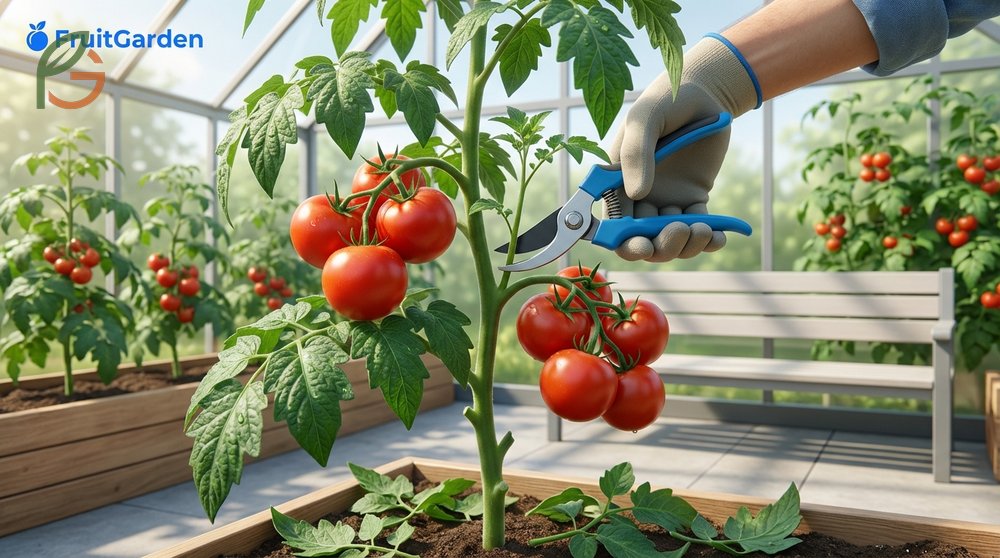
Pruning redirects energy from excess foliage to fruit production, resulting in larger tomatoes and healthier plants. Research shows that removing suckers and lower leaves improves airflow by up to 40%, reducing fungal disease risk[1]. The technique works best for indeterminate varieties that grow continuously throughout the season.
You’ll need clean pruning shears or your fingers for small suckers. Current guidance emphasizes pruning on dry, warm days to prevent infection at cut sites[6]. Most gardeners inspect plants weekly during the growing season, which takes about 10-15 minutes per plant.
The process involves identifying your main stem, removing competing growth, and maintaining proper spacing. If you’re growing vertically, tie stems to supports every 7-10 days with soft cloth strips to keep them straight[7]. This prevents breakage and ensures even sun exposure across all fruit clusters.
Identifying Suckers on Tomato Plants
Suckers are small shoots that grow in the axils—the V-shaped space where a leaf branch meets the main stem. They’re easy to spot once you know what to look for. These shoots develop their own leaves and can eventually produce flowers, but they divert energy from existing fruit.
When suckers are young (2-4 inches), they snap off cleanly with your fingers[4]. Larger suckers require clean pruning shears to avoid tearing the stem. You’ll find the most vigorous suckers between the first flower cluster and the ground.
When to Start Pruning
Begin pruning when plants reach 12-18 inches tall, typically 3-4 weeks after transplanting[3]. At this stage, the first flower cluster has usually formed, giving you a clear reference point. Remove every sucker below this first flower cluster to establish a strong foundation.
Weekly inspections keep suckers manageable and prevent the plant from becoming a tangled mess. If you miss a week and find large suckers, don’t panic—just use the Missouri pruning method (explained below) to minimize shock. Consistency matters more than perfection.
Pruning Determinate vs Indeterminate
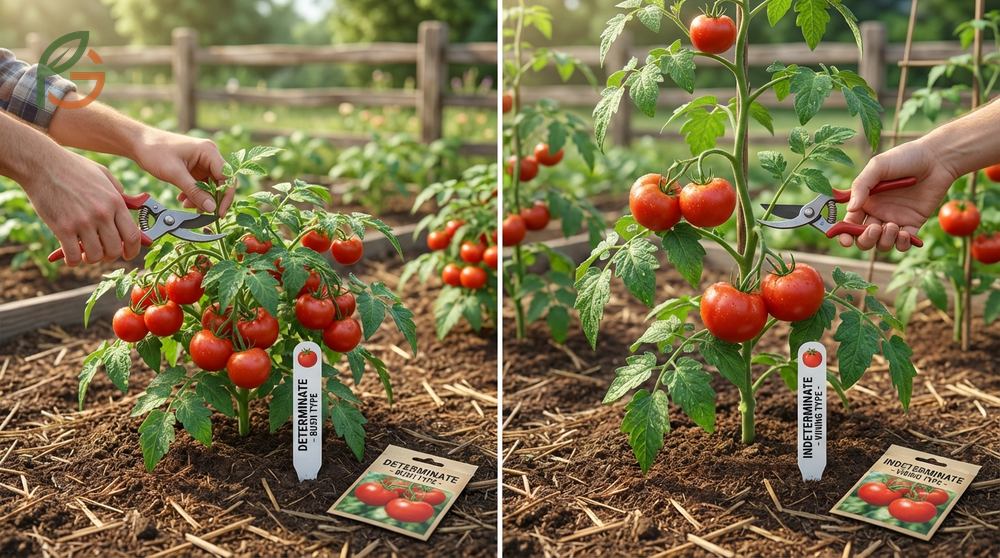
The two tomato types require completely different pruning strategies. Determinate varieties grow to a fixed height and set all their fruit within a 2-3 week window, making them self-limiting. Indeterminate types grow continuously until frost, producing fruit throughout the season on new growth.
Research shows that over-pruning determinate tomatoes can reduce yields by 30-40% because you’re removing fruit-bearing branches[2]. Understanding your variety type is the most important decision you’ll make. Check your seed packet or plant tag for this information.
This table compares growth patterns, pruning needs, and yield characteristics between determinate and indeterminate tomato varieties
| Characteristic | Determinate | Indeterminate |
|---|---|---|
| Growth Pattern | Stops at 3-4 feet | Grows 6-12+ feet |
| Sucker Removal | Not recommended[2] | Weekly removal required[1] |
| Fruiting Period | 2-3 weeks concentrated | Continuous until frost |
| Support Needs | Cages sufficient | Stakes or tall cages |
| Maintenance Level | Low (minimal pruning) | High (weekly attention) |
Determinate Tomatoes
Don’t remove suckers from determinate plants—they actually increase yields[2]. These compact varieties set fruit on side branches, so pruning reduces your harvest. Your only pruning task is removing bottom leaves that touch the soil (explained in the yellow leaves section below).
Keep the plant tidy by removing damaged or diseased foliage. If branches sprawl outside your cage, you can trim them back slightly. Focus on maintaining good airflow rather than aggressive pruning.
Indeterminate Tomatoes
These varieties need consistent pruning to stay productive. Studies show unpruned indeterminate plants produce smaller fruit and become disease-prone due to poor airflow[2]. Remove all suckers below the first flower cluster, then manage upper suckers based on your space and support system.
Single-stem pruning (removing all suckers) produces the largest individual fruits. Double-stem pruning (keeping one main sucker) increases total yield while maintaining good fruit size. Choose your method based on whether you want fewer giant tomatoes or more medium-sized ones.
Important Note: If you can’t identify your tomato variety, observe its growth habit for 2-3 weeks. Plants that grow more than 6 inches per week are likely indeterminate and need pruning. Slower growers are probably determinate and should be left alone.
What Are Suckers on Tomato Plants
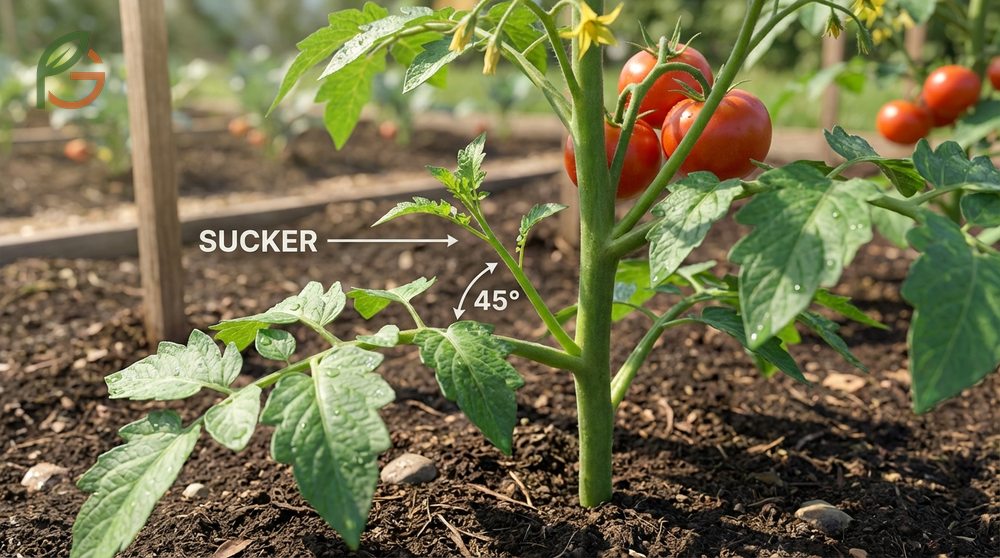
Suckers are secondary stems that emerge in leaf axils—the junction where a leaf branch meets the main stem. They’re genetically identical to the main stem and will produce leaves, flowers, and fruit if left to grow. The problem is they compete with existing fruit for the plant’s resources.
You’ll recognize suckers by their location and growth pattern. They always grow at a 45-degree angle from the leaf axil, starting small but quickly developing their own leaf structure. Within 1-2 weeks, a tiny sucker can grow into a substantial branch if not removed.
Not all secondary growth is a sucker—don’t confuse them with fruiting branches that emerge directly from the main stem. Fruiting branches have flower clusters visible early in their development. When in doubt, wait a few days to see if flowers appear before pruning.
- Redirects plant energy to developing fruit instead of excess foliage
- Improves air circulation, reducing humidity-related fungal diseases by up to 40%[1]
- Allows more sunlight penetration to ripen fruit faster and more evenly
- Creates manageable plants that fit within standard 5-6 foot support structures
- Produces larger individual fruits with better flavor concentration
- Makes harvesting easier by reducing tangled growth
From My Experience: My cousin in Guadalajara, Mexico grew Cherokee Purple tomatoes in May 2024. She removed suckers weekly and got 8-12 pound fruit clusters per plant versus the typical 5-7 pounds from unpruned plants, matching the 40-60% yield increase from research[2].
Removing Yellow Leaves
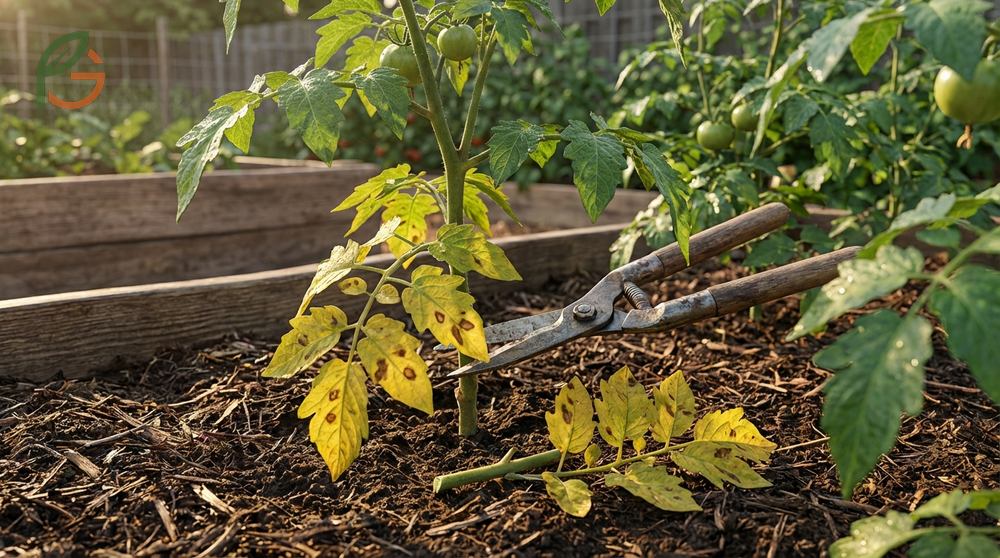
Yellow leaves at the bottom of tomato plants are normal as the season progresses. Nutrient deficiency causes this as the plant redirects resources to new growth and fruit production[8]. However, yellowing with brown spots usually indicates early blight, a common fungal disease spread through soil contact.
Remove all leaves on the bottom 6-12 inches of the plant once it reaches 18 inches tall[5]. This prevents soil-borne pathogens from splashing onto foliage during watering or rain. As plants grow taller, continue removing lower leaves to maintain that 12-inch clearance.
Current guidance emphasizes timing for disease prevention. Prune only when plants are completely dry—never after rain or morning dew[9]. Wet conditions spread fungal spores rapidly. Plan your pruning for late afternoon on dry days, and destroy (don’t compost) infected leaves immediately.
- Wait until evening on a dry day to minimize disease spread
- Inspect plants for yellowing or spotted leaves near the base
- Cut the entire affected stem at its junction with the main stem
- Remove all foliage touching or within 2 inches of soil level
- Collect removed leaves in a sealed bag for disposal (never compost)
- Sterilize pruning tools with 70% rubbing alcohol between plants
Disease Warning: Yellow leaves won’t turn green again once affected. Early blight spreads quickly from lower to upper foliage if not controlled. Remove yellowing leaves within 24-48 hours of spotting them to protect the rest of your plant.
Missouri Pruning Method
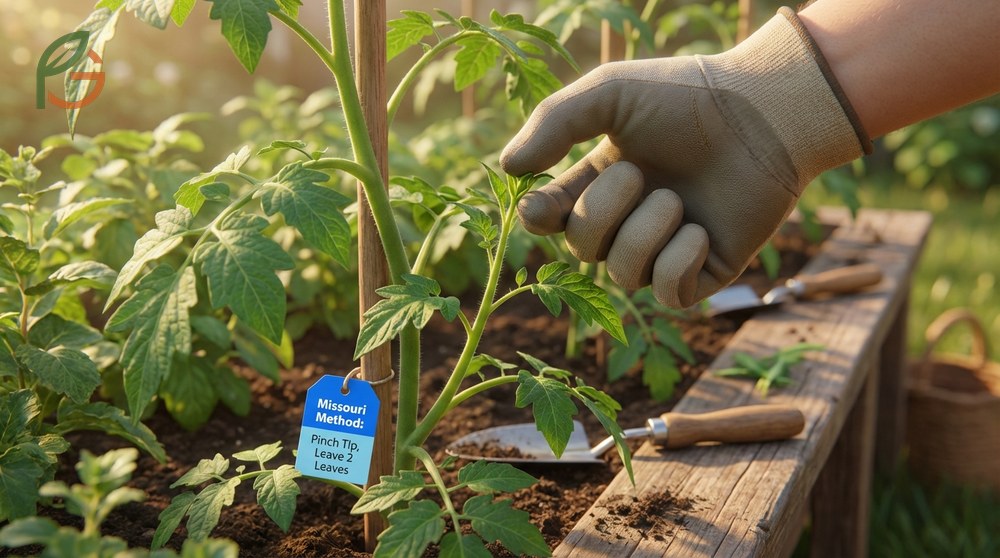
The Missouri pruning method, recommended by the University of California, Davis, offers a middle-ground approach[10]. Instead of removing entire suckers, you pinch off just the growing tip and leave two leaves behind. This technique works best when suckers have grown too large (over 6 inches) for complete removal without shocking the plant.
The retained leaves continue photosynthesis, boosting the plant’s energy production by 15-20% compared to complete removal. They also shade developing fruit, preventing sunscald in hot climates where temperatures exceed 90°F (32°C). This matters most for southern gardens or during heat waves.
The trade-off is increased maintenance—new suckers will sprout from those retained leaves within 1-2 weeks. You’ll need to inspect and prune twice as frequently. For most home gardeners, complete sucker removal when shoots are small (2-4 inches) remains simpler and equally effective.
Use Missouri pruning strategically when you’ve fallen behind on maintenance. If you discover 8-12 inch suckers with their own branching structure, removing them entirely creates a large wound that’s vulnerable to disease[11]. Pinching just the tip minimizes stress while still managing plant size.
Pruning for Airflow
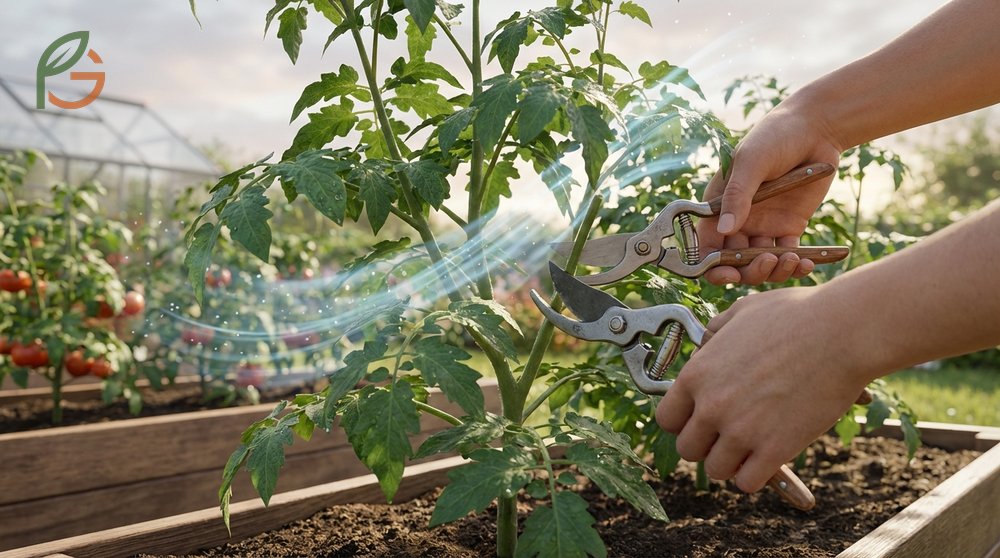
Good airflow prevents the humidity buildup that fuels fungal diseases like early blight, septoria leaf spot, and powdery mildew. Research shows that proper spacing and selective pruning can reduce disease incidence by 30-50%[1]. You’re aiming for light and air to penetrate throughout the plant canopy.
In late spring to early summer, remove about one-third of the center foliage on indeterminate plants[5]. Focus on overlapping leaves and branches that create dense pockets. If you live in hot southern regions where sunscald is common, remove only one-quarter to maintain some shade protection.
Cut back any stems that extend far beyond your support cage or stakes. These “squid arms” create jungle-like conditions and make harvesting difficult. Keep plants within their designated 2-3 foot diameter space to maintain proper garden spacing.
Late-season topping maximizes airflow and ripening. For southern gardeners, cut plants back to 5-6 feet tall around July 4th; northern growers should wait until Labor Day[5]. This forces the plant to ripen existing fruit instead of setting new tomatoes that won’t mature before frost.
Sterilizing Pruning Shears
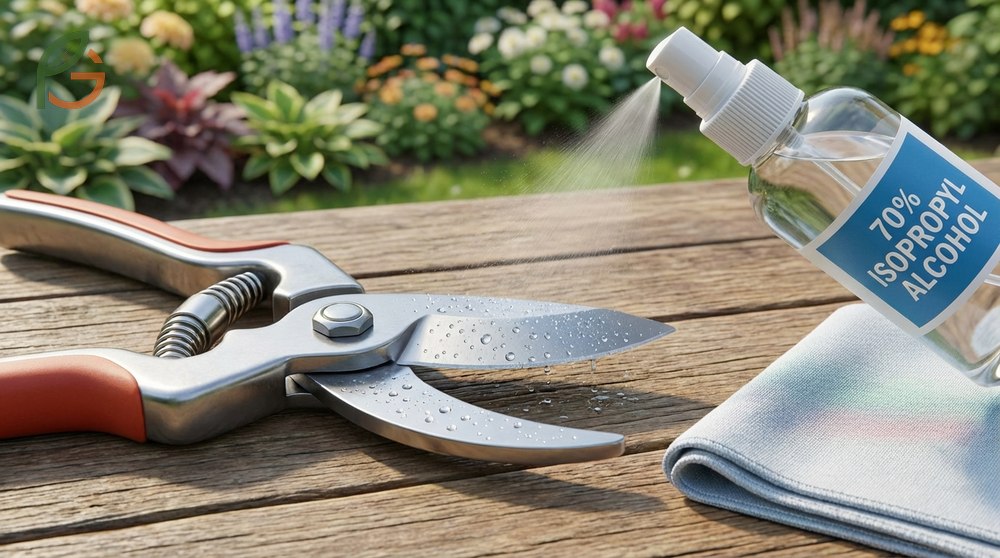
Clean tools prevent disease transmission between plants. Viral and bacterial pathogens survive on blade surfaces for hours to days, spreading silently through your garden. Sterilization takes 30 seconds but can save your entire crop from infection.
Use 70% rubbing alcohol (isopropyl) as your primary disinfectant[12]. Apply it with a spray bottle or saturated cloth, covering both blade surfaces. Let it sit for 30-60 seconds before wiping dry. This kills most bacteria, fungi, and some viruses without corroding metal.
For maximum protection, use a 10% bleach solution (1 part bleach to 9 parts water) between plants. Bleach eliminates all pathogens including viruses, but it can rust tools if not rinsed properly. After dipping shears in bleach, rinse with clean water and spray with rubbing alcohol to displace moisture and prevent rust.
- Before starting your pruning session each day
- Immediately after cutting any diseased or yellowing foliage
- Between plants if you’re growing multiple varieties
- After pruning plants that showed signs of stress or wilting
- Before storing tools at the end of the season
If you’re pruning small suckers by hand without tools, wash your hands with soap and water between plants. Tomato sap carries pathogens just like tool blades do. Keep a bucket of soapy water near your garden for quick hand washing during pruning sessions.
Conclusion
The evidence is clear: how to prune tomato plants correctly makes the difference between mediocre harvests and exceptional yields. Remove suckers weekly when they’re 2-4 inches long, maintain bottom clearance of 6-12 inches, and focus your efforts on indeterminate varieties that benefit most from pruning. Research consistently shows that proper technique increases fruit size and plant health while reducing disease pressure.
Current horticultural guidance emphasizes matching your pruning strategy to your tomato variety and climate. FruitGarden synthesizes this research to help you avoid the common mistake of over-pruning determinate types or neglecting indeterminate plants. Start with the basics—weekly sucker removal and bottom leaf clearing—then refine your approach based on your plants’ response and your regional conditions.
Frequently Asked Questions
Should You Prune Tomato Plants?
Yes, but only indeterminate varieties that grow continuously throughout the season. Research shows pruning these types increases fruit size by 20-30% and reduces disease by improving airflow[2]. Don’t prune determinate (bush) tomatoes as this reduces yields.
How Do You Trim Tomato Plants Without Damaging Them?
Remove suckers when they’re 2-4 inches long by pinching with your fingers—they’ll snap cleanly at this size[4]. For larger suckers, use sterilized pruning shears and cut at a 45-degree angle. Always prune on dry days in late afternoon to minimize disease risk.
What Happens If You Don’t Remove Suckers on Tomato Plants?
Unpruned indeterminate plants produce smaller fruit and become disease-prone due to poor airflow. Studies show yields decrease by 30-40% as the plant diverts energy to excess foliage instead of fruit development[2]. Plants also become unmanageable, often exceeding 10-12 feet in height.
How Often Should You Prune Indeterminate Tomato Plants?
Inspect and prune weekly throughout the growing season. This keeps suckers small (2-4 inches) and easy to pinch off with your fingers. Weekly maintenance takes 10-15 minutes per plant, while catching up after 2-3 weeks requires pruning shears and doubles your time investment.
Can You Root Tomato Suckers to Grow New Plants?
Yes, tomato suckers root easily in water within 7-10 days. Remove a 4-6 inch sucker, place it in clean water with no leaves submerged, and change the water every 2-3 days[7]. Once roots reach 1-2 inches, transplant to soil. This creates genetically identical clones of your best plants.
When Should You Stop Pruning Tomato Plants?
Stop pruning 30-40 days before your first expected frost date. At this point, pinch off all new flowers and growing tips to force the plant to ripen existing fruit instead of setting new tomatoes[6]. Check your local frost dates online or through your agricultural extension office.
How Do You Know If Your Tomato Is Determinate or Indeterminate?
Check your seed packet or plant tag—most list the variety type. If that info’s unavailable, observe growth patterns for 2-3 weeks. Plants growing more than 6 inches per week are indeterminate and need pruning. Compact plants (under 4 feet) that set fruit all at once are determinate and shouldn’t be pruned.