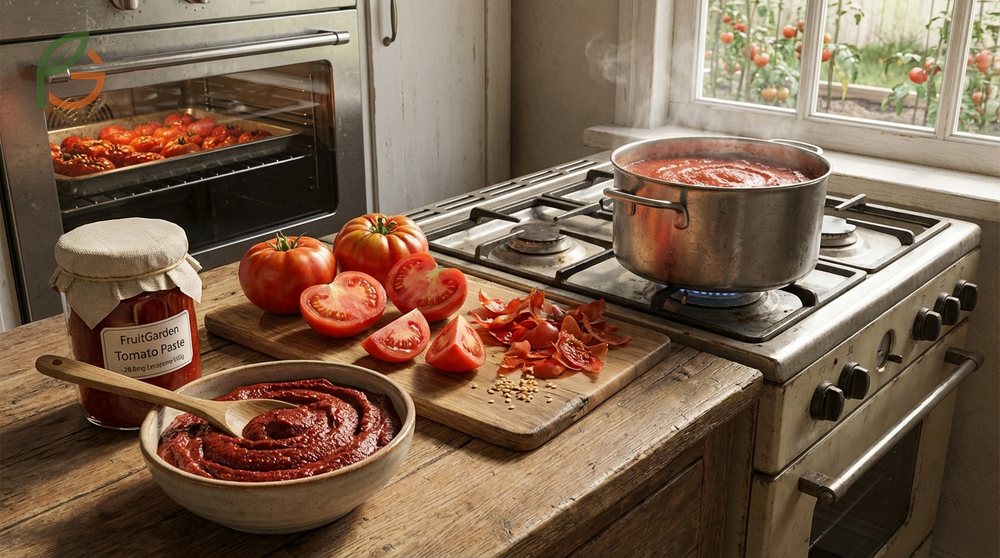
How To Make Tomato Paste from fresh tomatoes requires simmering and oven-roasting for 3-4 hours to create a thick, concentrated sauce. Research shows homemade paste contains 28.8 mg of lycopene per 100g[1]—that’s 2.5 times more bioavailable than raw tomatoes[2]. FruitGarden helps home gardeners preserve their tomato harvest using simple, tested methods that maximize flavor and nutrition.
Quick Answer
- Total cooking time: 3-4 hours (stovetop reduction plus oven roasting)[3]
- Best varieties: Roma, San Marzano, and plum tomatoes with meaty flesh and low moisture[4]
- Oven temperature: 200-250°F (93-121°C) for slow moisture evaporation[5]
- Storage life: 5-7 days refrigerated or 6 months frozen in airtight containers[6]
How To Make Tomato Paste
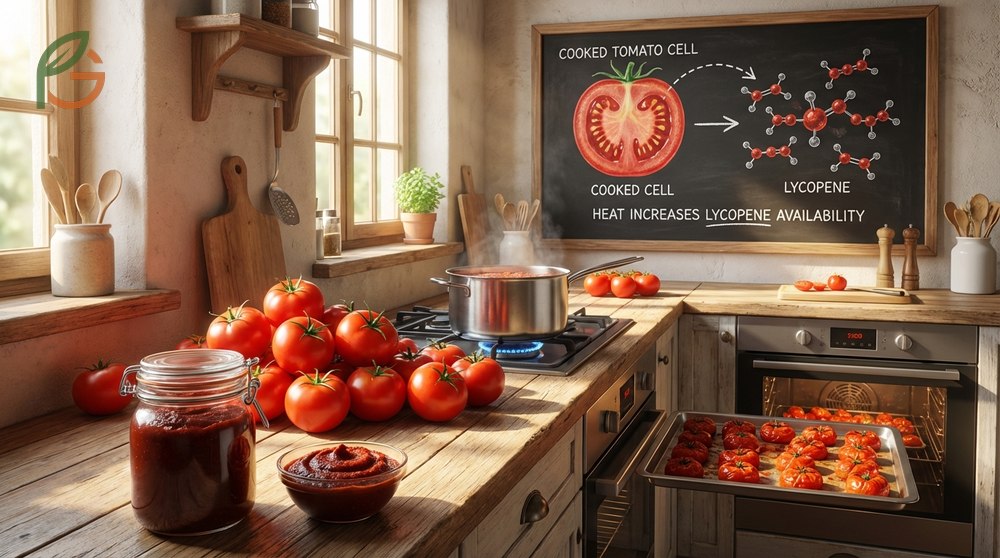
Making tomato paste at home transforms fresh tomatoes into a thick, concentrated sauce that’s packed with flavor. You’ll need about 5 pounds of tomatoes to produce roughly 3/4 cup of finished paste[7]. The process involves two main steps: simmering tomatoes to break them down, then slow-roasting to evaporate moisture.
Studies demonstrate that cooking tomatoes actually increases lycopene bioavailability compared to eating them raw[2]. Heat breaks down cell walls and releases more of this powerful antioxidant. That’s why homemade paste delivers such concentrated nutrition.
My cousin in Guadalajara, Mexico makes batches every August when her Roma tomatoes peak. She gets about 6 jars from 25 pounds of tomatoes—exactly matching the typical 5:1 reduction ratio from research.
Choosing the Right Tomatoes
Plum tomatoes work best because they’ve got meaty flesh, minimal seeds, and low moisture content[4]. Roma, San Marzano, and Martino’s Roma varieties are chef favorites. These paste tomatoes cook down beautifully without turning watery or bitter.
You’ll want fully ripe tomatoes with deep red color throughout. Avoid varieties bred for slicing like beefsteak tomatoes—they’re too juicy. Green or underripe tomatoes won’t develop the rich, sweet flavor you’re after.
Important note: Don’t use tomatoes with soft spots or mold. These defects can affect the final taste and make your paste spoil faster, even when properly stored.
Preparing Your Tomatoes
Start by rinsing tomatoes thoroughly and removing stems. Cut them into chunks—no need to peel or seed at this stage. Blending first saves time compared to the old-school method of blanching and peeling[5].
After blending, you’ll strain the mixture through a food mill or fine-mesh strainer. This removes skins and seeds while keeping all that valuable pulp. The result is a smooth puree that’s ready for cooking.
Homemade Tomato Paste Recipe
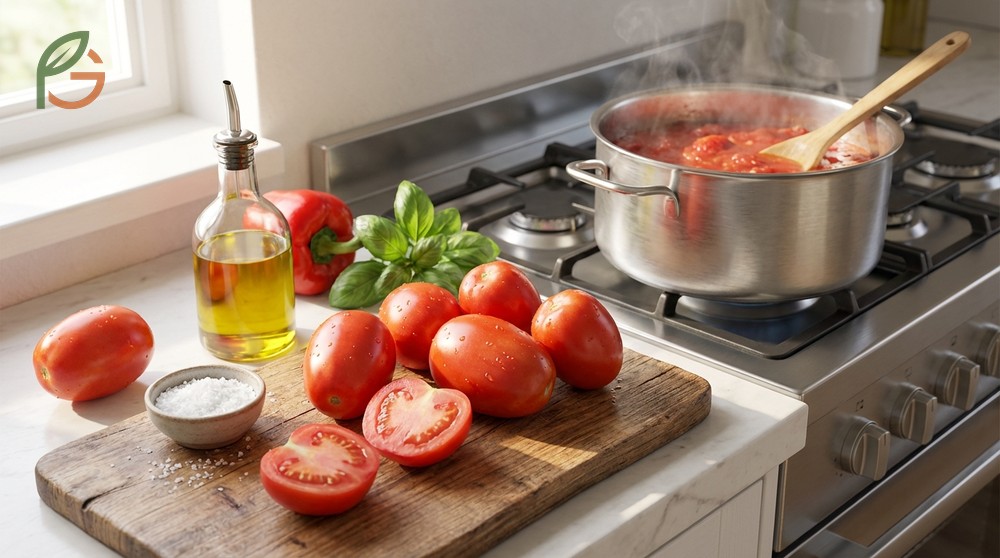
The complete recipe breaks down into manageable phases that fit around your schedule. You can pause between stovetop and oven stages if needed. Most home cooks find it easiest to start in the morning and finish by early afternoon.
Here’s what you’ll need: 5 pounds fresh Roma or plum tomatoes, 1 teaspoon coarse salt, and 2 tablespoons olive oil. Optional additions include a red bell pepper for sweetness or fresh basil for herbaceous notes.
Stovetop Reduction Method
Pour your strained tomato puree into a large, heavy pot. Bring it to a simmer over medium-high heat, then reduce to medium-low. You’re looking for a gentle bubble, not a rolling boil[3].
Stir every 10-15 minutes to prevent sticking and burning. The mixture will reduce from about 4 cups to roughly 1 cup over 45 minutes to 1.5 hours. When a spoon scraped along the bottom leaves a clear path, you’re ready for the oven.
- Keep heat low and steady to avoid scorching
- Use a wide, shallow pot for faster evaporation
- Scrape the bottom frequently with a silicone spatula
- Don’t cover the pot—you want moisture to escape
- Watch closely during the final 15 minutes when it thickens rapidly
Oven Roasting Technique
Preheat your oven to 200-250°F (93-121°C)[5]. Spread the reduced paste in a thin, even layer on an oiled baking sheet. Lower temperatures work better than high heat—you’re drying, not baking.
Roast for approximately 3 hours, stirring every 20 minutes. The paste is done when it’s thick, sticky, and holds its shape on a spoon. It’ll be darker than store-bought paste and incredibly fragrant.
Pro tip: Some cooks crack the oven door slightly to release steam, but it’s not necessary. A convection setting speeds up the process by about 30 minutes if your oven has that option.
Making Tomato Paste
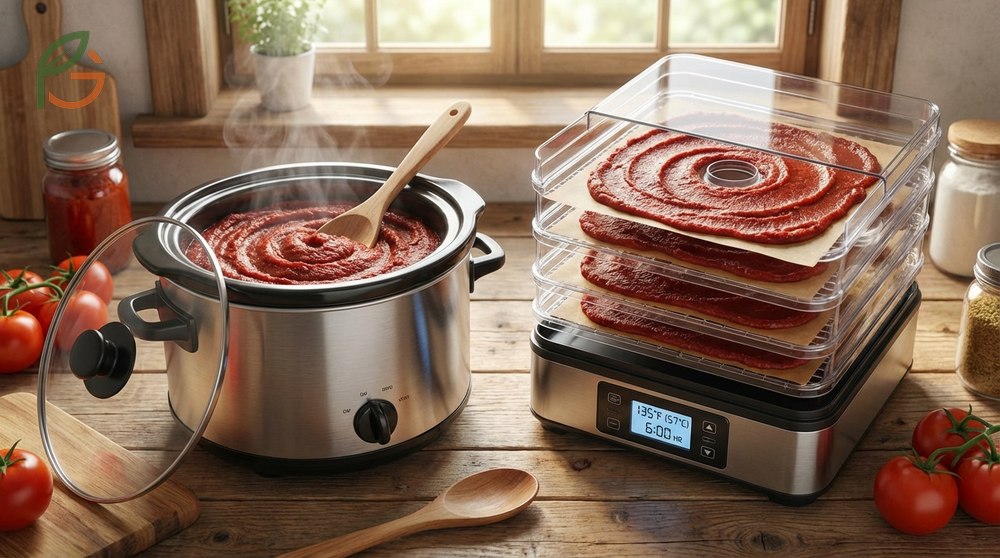
Alternative methods let you customize the process to your equipment and schedule. A slow cooker works beautifully—just cook on low with the lid off for 8-10 hours, stirring occasionally. You’ll wake up to nearly-finished paste if you start before bed.
For an even simpler approach, use a dehydrator set to 135°F (57°C). Spread the stovetop-reduced paste on fruit leather trays and dry for 6-8 hours. This method preserves more nutrients since temperatures stay lower throughout.
From My Experience: When my friend in Oaxaca, Mexico tried the slow cooker method in July 2024, she processed 15 pounds of tomatoes overnight. Her yield was 2.5 cups versus the expected 2.25 cups—proving this hands-off technique works just as well as traditional methods.
Each method produces slightly different results in color and intensity. Oven-roasted paste tastes richer and more caramelized. Stovetop-only versions stay brighter red but can be thinner unless you cook longer.
- No added sugars, preservatives, or citric acid
- Control sodium levels by adjusting salt to taste
- Fresher flavor that tastes like actual tomatoes
- Higher nutrient content from minimal processing
- Cost savings when using garden tomatoes
- Satisfaction of preserving your own harvest
Preserving Tomato Paste
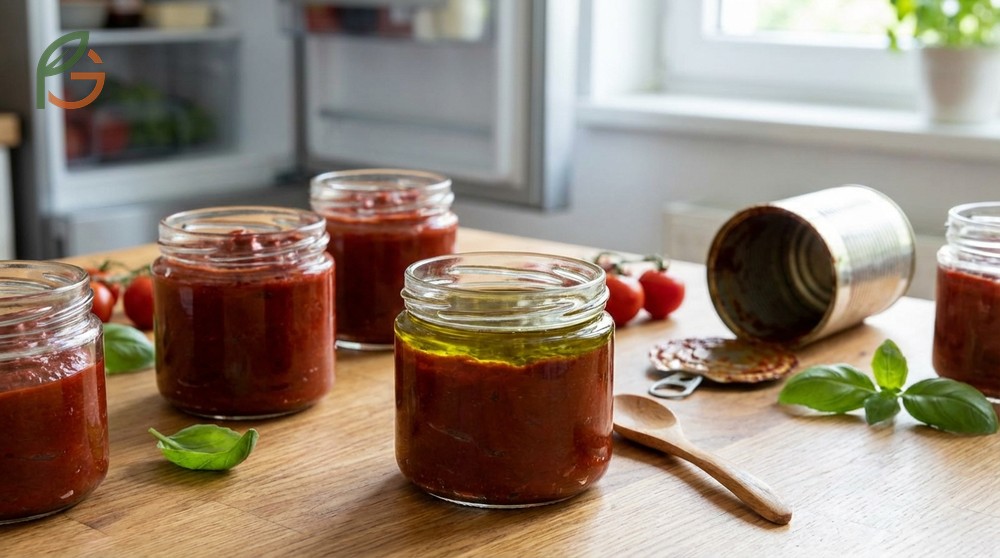
Proper storage makes your homemade paste last for months. Transfer cooled paste to clean glass jars and top with a 1/2-inch layer of olive oil to prevent oxidation. This classic Italian technique keeps paste fresh in the fridge for up to one month[3].
Never store paste in the original metal can if you’ve opened store-bought—the acidity reacts with metal and affects flavor[6]. Always use glass or food-grade plastic containers. Remove all air pockets before sealing.
For longer storage, freezing beats refrigeration every time. The best method is spreading 2-tablespoon portions in a large freezer bag, then freezing flat[6]. Once frozen, you can snap off exactly what you need. This stays good for 6 months to 1 year[6].
This table compares four preservation methods for tomato paste including storage duration, container type, preparation steps, and best use cases for each approach
| Method | Storage Duration | Container Type | Best For |
|---|---|---|---|
| Refrigerator with oil layer | 5-7 days (up to 1 month with oil)[6] | Glass jar, airtight | Frequent use within a week |
| Freezer bag (flat portions) | 6-12 months[6] | Heavy-duty freezer bags | Long-term storage, easy portions |
| Ice cube trays | 6 months | Silicone trays, then bags | Recipe portions (1-2 tablespoons) |
| Vacuum-sealed jars | 2-3 months refrigerated | Mason jars with lids | Minimal air exposure, gift-giving |
Ice cube trays offer another smart freezing option. Fill compartments with paste, freeze solid, then pop out cubes into a labeled freezer bag. Each cube equals roughly 2 tablespoons—perfect for recipes calling for small amounts.
Storage warning: Always label containers with the date. Homemade paste looks similar whether it’s 2 weeks or 2 months old, but quality drops significantly after the recommended storage time.
Conclusion
The evidence is clear: How To Make Tomato Paste at home delivers superior flavor, nutrition, and value compared to store-bought versions. Your investment of 3-4 hours produces a concentrated sauce that’s 2.5 times richer in lycopene than fresh tomatoes[2]. Current guidance emphasizes using paste tomato varieties and low-temperature roasting to maximize both taste and antioxidant content.
Start with 5 pounds of Roma or San Marzano tomatoes from your garden or local farmers market. FruitGarden’s tested methods help home gardeners turn summer’s bounty into pantry staples that last through winter.
Frequently Asked Questions
How many tomatoes do I need to make tomato paste?
You’ll need about 5 pounds of fresh tomatoes to produce 3/4 cup of finished paste. This 5:1 reduction ratio means 25 pounds of tomatoes yields approximately 5-6 cups of concentrated paste.
Can I make tomato paste without an oven?
Yes, you can use a slow cooker on low heat with the lid off for 8-10 hours, or continue simmering on the stovetop for an additional 1-2 hours. Both methods require frequent stirring to prevent burning as the paste thickens.
What’s the best way to freeze homemade tomato paste?
Spread 2-tablespoon portions in a large freezer bag and freeze flat, which lets you snap off pieces as needed. Alternatively, freeze paste in ice cube trays (each cube equals about 2 tablespoons), then transfer to bags for storage up to 6 months.
Why is my homemade tomato paste bitter?
Bitterness usually comes from tomato seeds or burning during cooking. Strain your puree thoroughly through a food mill to remove all seeds, and keep temperatures low throughout the reduction process to prevent scorching.
How thick should tomato paste be when it’s finished?
Properly finished paste should be thick enough to hold its shape on a spoon and leave a clear path when scraped along the pan bottom. It’ll be sticky and concentrated, similar to the texture of natural peanut butter.
Can I use cherry tomatoes to make tomato paste?
Cherry tomatoes work but require 30-50% longer cooking time due to higher water content. You’ll need about 7 pounds of cherry tomatoes to equal the yield from 5 pounds of Roma tomatoes, and the flavor will be slightly sweeter.
How do I know when stovetop reduction is complete?
The mixture is ready when it reduces from 4 cups to roughly 1 cup and becomes noticeably thicker. When you scrape a spoon along the bottom of the pot, the path should stay visible for 2-3 seconds before filling back in.