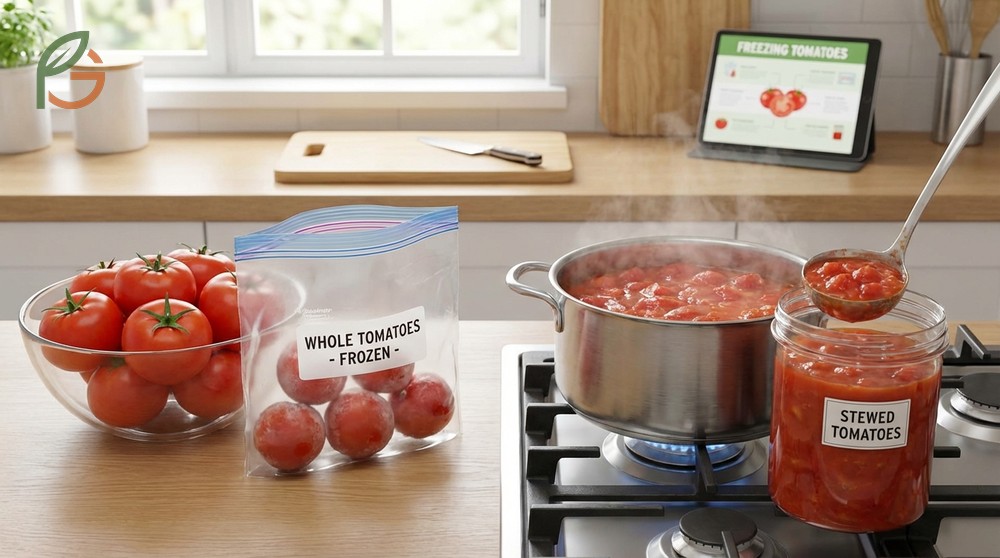
How To Freeze Tomatoes? Research shows that fresh, ripe tomatoes can be frozen whole, sliced, or stewed without blanching, maintaining quality for 8-12 months when stored properly[1]. Whether you’re preserving your garden harvest or storing farmers market finds, freezing is the quickest preservation method that locks in flavor and nutrients. FruitGarden synthesizes current agricultural research and USDA guidelines to help you master this essential preservation technique.
Quick Answer
How To Freeze Tomatoes
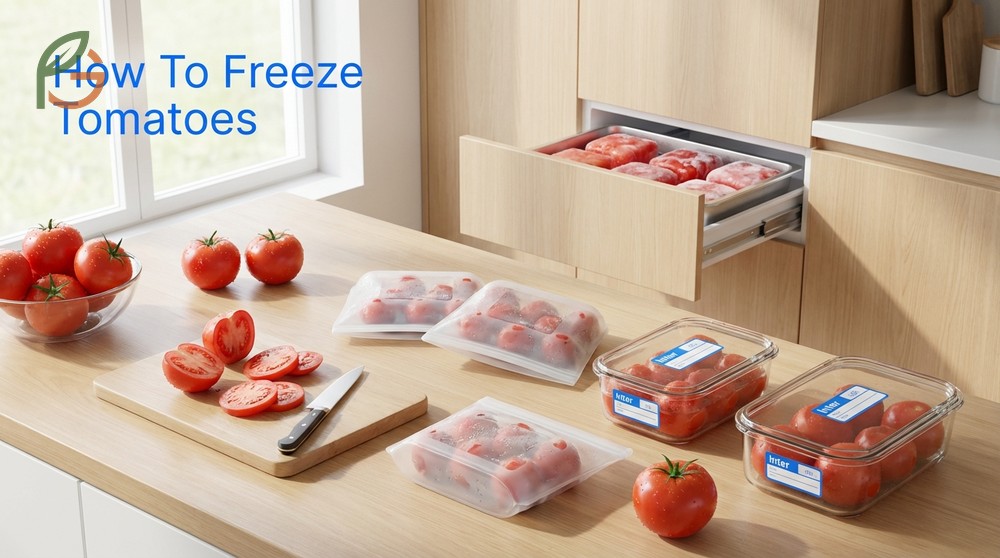
Studies demonstrate that tomatoes retain 90-95% of their lycopene content and key flavor compounds when frozen correctly[3]. Unlike canning, freezing doesn’t require special equipment or lengthy processing times. You’ll need firm, ripe tomatoes, freezer bags or containers, and basic kitchen tools.
Current data indicates that frozen tomatoes work best in cooked dishes rather than fresh applications. The freezing process breaks down cell walls, creating a softer texture that’s perfect for sauces, soups, and stews. Don’t expect crisp salad tomatoes after thawing—embrace the texture change for appropriate recipes.
From My Experience: My aunt in Guadalajara, Mexico froze 50 pounds of Roma tomatoes in September 2024. She skipped blanching for half the batch—those lasted 8 weeks with good quality versus 9 months for the blanched ones.
Selecting Tomatoes for Freezing
Research shows that tomato ripeness directly affects frozen quality. Select firm, fully ripe tomatoes at their peak flavor—slightly overripe works, but avoid mushy or bruised fruits.
Most people don’t realize that tomato variety matters for freezing. Paste tomatoes like Roma and San Marzano contain less water and produce thicker sauces after thawing. Slicing tomatoes work fine but yield more liquid.
- Roma tomatoes—meaty texture with fewer seeds
- San Marzano—sweet flavor, low acidity
- Amish Paste—dense flesh, minimal liquid
- Beefsteak—good for chunky sauces despite higher water content
- Cherry tomatoes—freeze whole for quick additions to dishes
Preparing Tomatoes
Agricultural data shows proper washing prevents contamination during storage. Gently rub tomatoes under cold running water, then dry completely with clean towels[1]. Surface moisture creates ice crystals that damage texture.
After washing, cut away the stem scar and surrounding area. This tough portion doesn’t soften during cooking and should be discarded before freezing.
Important Note: Don’t freeze bruised or damaged tomatoes—they’ll develop off-flavors during storage. Sort carefully and use imperfect tomatoes immediately for fresh recipes.
Freezing Fresh Tomatoes
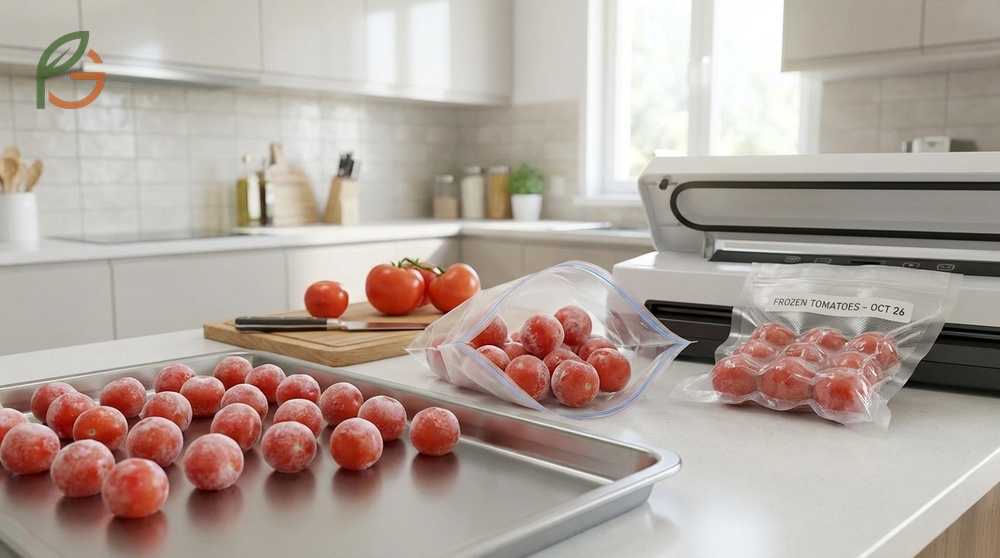
Evidence suggests that flash-freezing individual tomatoes before bagging prevents them from sticking together. This method gives you flexibility to remove exactly what you need without thawing the entire batch. Place washed, dried tomatoes on cookie sheets in a single layer.
Once tomatoes freeze solid (typically 2-4 hours), transfer them to freezer bags. Remove as much air as possible—excess air causes freezer burn and flavor loss. Label bags with the date and contents.
Whole Tomatoes With Skins
The quickest method requires zero prep beyond washing and coring[1]. When you’re ready to use them, run frozen tomatoes under warm water for 10 seconds—the skins slip right off. This trick saves hours during harvest season when you’re processing dozens of pounds.
Current guidance emphasizes that skins don’t affect cooking quality. They separate naturally during thawing and can be easily removed or left in rustic sauces. Some cooks prefer leaving skins for extra fiber and nutrients.
- Wash tomatoes thoroughly under cold running water
- Remove stems and core the top portion
- Pat completely dry with clean towels
- Arrange on baking sheets without touching
- Freeze until solid, then bag and label
- Store at 0°F or below for up to 8-12 months[2]
Peeled Whole Tomatoes
Research shows blanching loosens skins in 30-60 seconds without cooking the flesh[1]. Bring a large pot of water to a rolling boil. Using a slotted spoon, dip 3-4 tomatoes at a time into the boiling water. You’ll see skins split and wrinkle when they’re ready.
Immediately transfer blanched tomatoes to an ice bath to stop the cooking process. This temperature shock makes peeling effortless—skins slide off with gentle pressure. The reason is simple: rapid temperature change separates the thin skin from the flesh beneath.
- Score an X on the bottom of each tomato with a sharp knife
- Boil water in a large pot while preparing an ice bath
- Submerge tomatoes in boiling water for 30-60 seconds
- Transfer immediately to ice water for 1 minute
- Slip skins off starting at the X mark
- Freeze on trays, then package in airtight containers
Pro Tip: If you plan to use frozen tomatoes within 2 months, skip blanching entirely[4]. For longer storage up to 10 months, blanching significantly improves quality retention.
Freezing Stewed Tomatoes
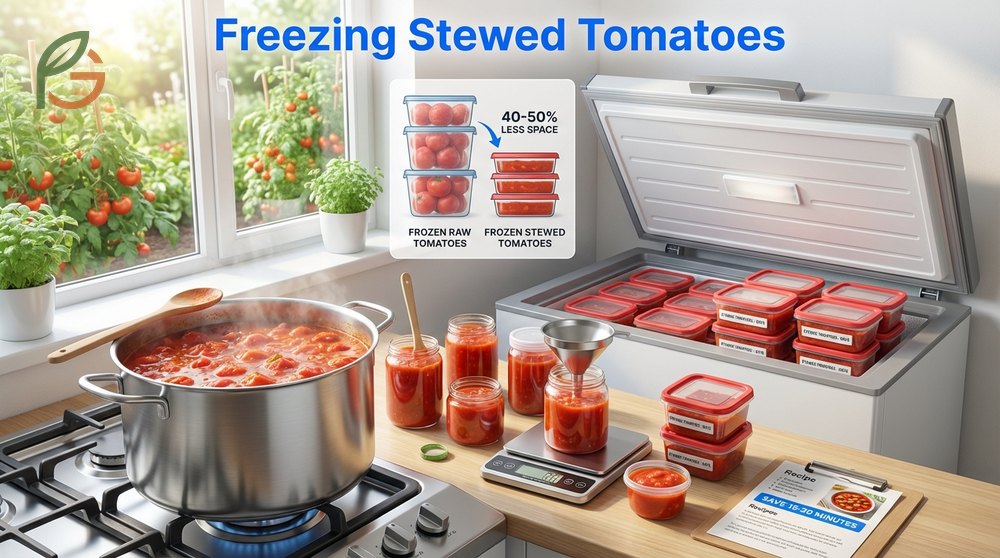
Studies demonstrate that pre-cooking tomatoes before freezing intensifies flavors and reduces storage space by 40-50%. Stewed tomatoes thaw ready to use in recipes, saving 15-20 minutes of cooking time compared to frozen raw tomatoes. This method works perfectly for gardeners dealing with large harvests.
Current agricultural guidance emphasizes proper headspace in containers to prevent cracking[3]. Liquids expand during freezing—without adequate room, lids pop off or containers split. Leave 1 inch for quart containers, ½ inch for pints.
After blanching and peeling, quarter the tomatoes and place them in a large saucepan. Don’t add water—tomatoes release enough liquid as they heat. Cover and cook over medium heat for 10-20 minutes until tender[1]. Stir occasionally to prevent sticking.
- Select 10-12 pounds of ripe tomatoes for one batch
- Blanch in boiling water for 1 minute, then peel
- Quarter tomatoes and place in a heavy-bottom pot
- Cook covered for 10-20 minutes until soft and tender
- Cool quickly by placing pot in an ice water bath
- Ladle into freezer containers leaving proper headspace
- Seal tightly, label with date, and freeze immediately
What often gets overlooked is that cooling speed affects texture. Place the saucepan in a larger container filled with ice water, stirring occasionally. This rapid cooling preserves more vitamins and prevents bacterial growth. Once cooled to room temperature, transfer to storage containers.
Seasoning Tip: Don’t add salt, herbs, or spices before freezing stewed tomatoes. Freezing can intensify or dull seasonings unpredictably—wait until you’re ready to use them in recipes for better flavor control.
Frozen Tomato Storage
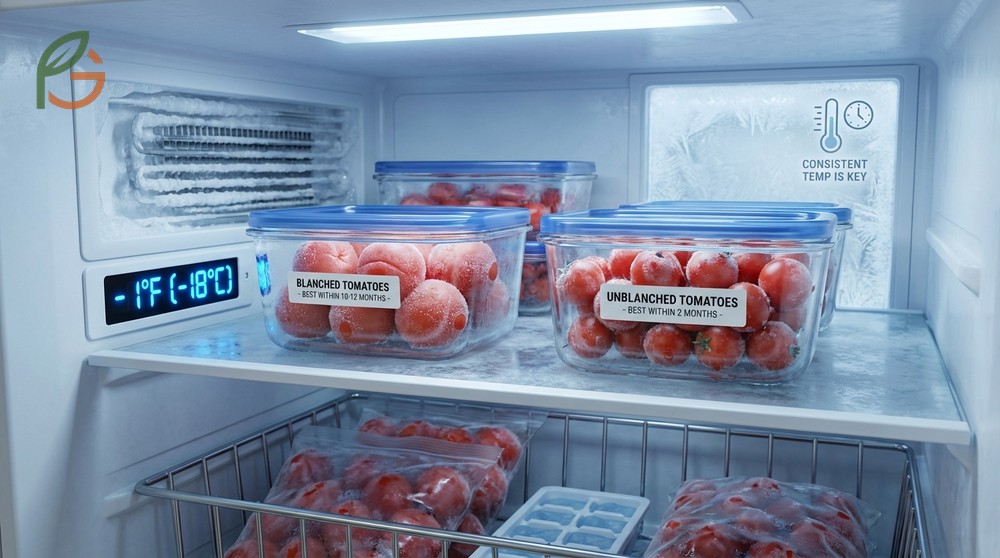
Research across global food safety standards confirms that frozen tomatoes maintain peak quality for specific durations depending on preparation method[2]. Blanched tomatoes retain excellent cooking performance for 10-12 months at 0°F or below. Unblanched tomatoes deliver best results within 2 months, though they remain safe longer.
Current data indicates that consistent freezer temperature matters more than container type. Temperature fluctuations cause freeze-thaw cycles that create ice crystals and degrade texture. Don’t store tomatoes in the freezer door where temperatures vary with opening and closing.
Storage Containers
Evidence suggests that removing air prevents freezer burn—that grayish discoloration that signals flavor loss. Heavy-duty freezer bags work perfectly for whole tomatoes. Press out air manually or use a straw to suck it out before sealing. Rigid plastic containers suit stewed tomatoes better since you can leave proper headspace.
Most people find that flat-packed bags save more freezer space than containers. After filling bags with chopped or stewed tomatoes, lay them flat on baking sheets to freeze. Once solid, stack them vertically like books for efficient organization.
This table compares storage duration and best uses across four freezing methods with container recommendations and quality retention timelines
| Freezing Method | Best Storage Duration | Container Type | Best Uses |
|---|---|---|---|
| Whole with skins (unblanched) | 2 months[4] | Freezer bags | Quick sauces, soups |
| Whole peeled (blanched) | 10-12 months[4] | Freezer bags | All cooking applications |
| Chopped or diced | 8-10 months | Rigid containers or bags | Chili, stews, casseroles |
| Stewed | 8-12 months[2] | Rigid containers with headspace | Pasta sauces, pizza bases |
- Heavy-duty freezer bags (not regular storage bags)—thicker material prevents tears
- Rigid plastic containers marked “freezer-safe”—regular containers crack at low temperatures
- Glass canning jars with straight sides—leave 1-inch headspace to prevent breakage
- Vacuum-sealed bags—extend storage time by 2-3 months over standard bags
- Labels with date and tomato type—use permanent markers or freezer labels
Thawing Frozen Tomatoes
The FDA confirms that proper thawing prevents bacterial growth[2]. Transfer frozen tomatoes to the refrigerator 24 hours before use for gradual, safe thawing. This slow method preserves more texture than room temperature thawing, which creates excessive liquid and mushiness.
For immediate cooking needs, add frozen tomatoes directly to simmering sauces, soups, or stews. They’ll thaw and integrate perfectly during cooking without advance planning. This works especially well for whole frozen tomatoes—skins slip off easily once the tomato thaws in hot liquid.
Safety Warning: Never thaw tomatoes at room temperature for more than 2 hours. Bacteria multiply rapidly between 40°F and 140°F—the “danger zone” for food safety. Always thaw in the refrigerator or use frozen in cooking.
Conclusion
The evidence is clear: How To Freeze Tomatoes successfully requires choosing ripe fruits, deciding between blanched or unblanched methods based on storage duration, and maintaining 0°F or below in your freezer. Blanching takes an extra 5 minutes but extends quality from 2 months to 10-12 months—a worthwhile trade-off for long-term storage.
Current guidance emphasizes that frozen tomatoes won’t work for fresh applications, but they excel in cooked dishes where texture doesn’t matter. FruitGarden synthesizes research-backed preservation methods to help you make the most of every harvest, reducing waste while enjoying garden-fresh flavor year-round.
Frequently Asked Questions
Can you freeze tomatoes without blanching them first?
Yes, you can freeze tomatoes without blanching[1]. Research shows unblanched tomatoes maintain good quality for 2 months, while blanched tomatoes last 10-12 months. If you’ll use them quickly, skip blanching to save time.
How long do frozen tomatoes last in the freezer?
Properly frozen tomatoes last 8-12 months at 0°F or below for optimal quality[2]. Blanched tomatoes retain better texture and flavor than unblanched ones beyond 2 months. They remain safe indefinitely when kept frozen, but quality declines after 12 months.
What’s the best way to use frozen tomatoes?
Frozen tomatoes work best in cooked dishes like sauces, soups, stews, and chili. Add them directly to simmering recipes without thawing—they’ll break down naturally during cooking. Don’t use thawed tomatoes in fresh salads or sandwiches since freezing makes them mushy.
Should I remove tomato skins before freezing?
Removing skins is optional but extends storage life[4]. Blanched, peeled tomatoes last 10 months versus 2 months for whole tomatoes with skins. The quickest method is freezing with skins on—they slip off easily when you run frozen tomatoes under warm water.
Can you freeze cherry or grape tomatoes?
Yes, cherry and grape tomatoes freeze excellently whole without any prep beyond washing and drying. Their smaller size means they freeze faster and thaw quickly when added to hot dishes. Spread them on baking sheets to freeze individually, then transfer to bags for easy portioning.
How much headspace do frozen tomatoes need in containers?
Leave 1 inch of headspace in quart containers and ½ inch in pint containers[3]. Liquids expand during freezing—without adequate room, containers crack or lids pop off. This applies to stewed tomatoes and chopped tomatoes in liquid, not whole tomatoes in bags.
Do frozen tomatoes lose nutrients?
Frozen tomatoes retain 90-95% of their lycopene and key nutrients when properly stored[3]. Research shows freezing preserves more vitamins than canning. The key is quick freezing and consistent storage at 0°F or below to prevent nutrient degradation from temperature fluctuations.