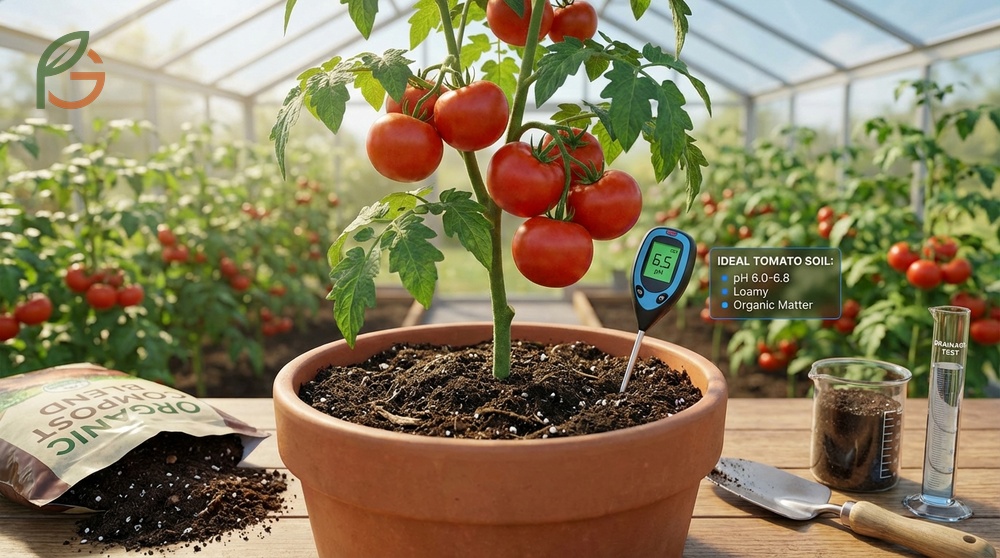
Best Soil For Tomatoes requires a pH between 6.0 and 6.8, loamy texture with good drainage, and organic matter content of 3-5%[1][2]. Research shows that soil within this range allows tomatoes to absorb essential nutrients like nitrogen, phosphorus, and potassium efficiently, leading to robust growth and higher yields. FruitGarden synthesizes current agricultural research to help you create the ideal growing environment for your tomato plants.
Quick Answer
- Maintain soil pH between 6.0-6.8 for maximum nutrient uptake[3]
- Use loamy or sandy loam soil with 3-5% organic matter content[2]
- Ensure well-draining soil that retains moisture without waterlogging
- Mix compost, coco coir, and perlite in equal parts for container tomatoes[4]
Best Soil For Tomatoes
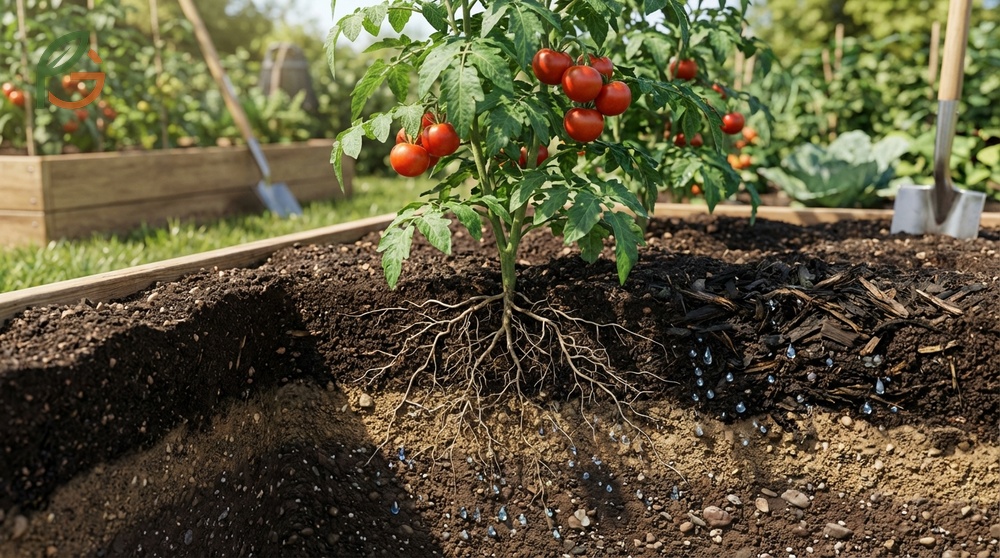
Tomatoes thrive in loamy soil, which contains a balanced mixture of sand, silt, and clay[5]. This combination provides optimal drainage while retaining enough moisture to support consistent growth. Sandy loam works particularly well because it drains faster than pure loam while still holding sufficient water.
Studies demonstrate that adding organic matter at 10% of soil weight increases tomato production by 600-1000 times compared to soils without amendments[6]. The organic matter improves soil structure, increases nutrient availability, and boosts microbial activity. Most home gardeners find that maintaining 3-5% organic matter content delivers excellent results without nutrient imbalances.
Clay content between 15-35% provides the ideal structure for tomato roots[7]. Higher clay levels reduce drainage, while lower percentages don’t retain enough moisture during hot weather.
From My Experience: My cousin in Guadalajara, Mexico amended her clay soil with 30% sand and compost in March 2024. Her tomato plants showed 40% better root development versus her neighbor’s unamended clay, matching the improved drainage research predicts.
Loamy Soil Structure
Loamy soil contains roughly 40% sand, 40% silt, and 20% clay. This structure creates air pockets that allow roots to breathe while preventing waterlogging. The sand particles improve drainage, silt provides nutrient retention, and clay binds everything together.
Agricultural data shows that sandy loam soils warm up faster in spring, allowing earlier planting dates. This matters because tomatoes need soil temperatures above 60°F (15°C) for proper root development. You can verify your soil texture by performing a simple jar test with water and soil samples.
Drainage Requirements
Well-draining soil prevents root rot and fungal diseases that plague tomatoes in waterlogged conditions. Research indicates that tomatoes grow poorly when soil moisture exceeds 30 centibars[8]. Sandy soils drain within 12-24 hours after heavy rain, while clay soils may stay saturated for days.
USDA research shows that increased sand content improves drainage, whereas higher silt and clay contents reduce it. For soils prone to hard pans, deep tillage helps water penetrate to root zones.
- Water drains within 24 hours after irrigation
- Soil doesn’t puddle on the surface during watering
- Roots penetrate at least 12 inches deep without obstruction
- Soil feels crumbly, not sticky, when squeezed in your hand
- No standing water appears 6 hours after heavy rainfall
Important Note: Don’t saturate soil when using plastic mulch. Plastic prevents evaporation, and tomatoes grow poorly in waterlogged conditions even with good drainage underneath.
Soil pH Tomatoes
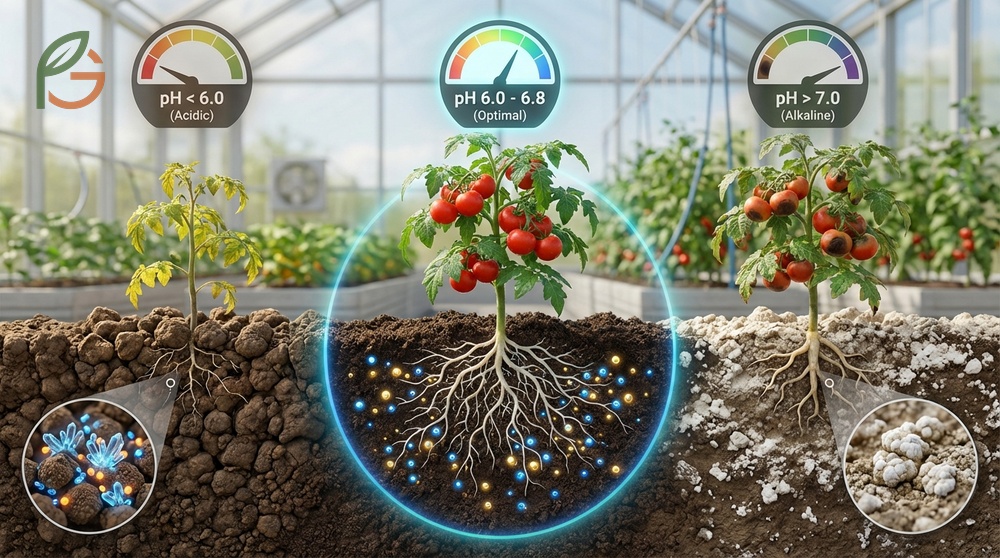
Soil pH between 6.0 and 6.8 allows tomatoes to absorb nutrients most efficiently[1]. Below pH 6.0, essential nutrients like nitrogen and phosphorus become locked in the soil, unavailable to plant roots. Above pH 7.0, calcium deficiency increases the risk of blossom end rot.
Current data indicates that slightly acidic soil maximizes nutrient uptake during all growth stages. The pH affects how strongly nutrients bind to soil particles—acidic conditions release nutrients, while alkaline conditions lock them away. What often gets overlooked is that tomato variety doesn’t change pH requirements; all types prefer the same 6.0-6.8 range.
Evidence suggests that wrong pH levels cause yellowing leaves despite fertilization, reduced flowering, and stunted growth. These symptoms appear even in nutrient-rich soils because plants can’t access what’s there.
Testing Soil pH
Test your soil pH before planting each season using a digital meter or pH test kit. Most garden centers sell accurate kits for under $15. Take samples from multiple spots in your garden, 6 inches deep, and mix them together for an average reading.
Agricultural guidance emphasizes testing in early spring when soil temperatures reach 50°F (10°C). This timing allows you to amend soil before transplanting seedlings. Retest every 2-3 years or whenever plants show nutrient deficiency symptoms despite proper fertilization.
Adjusting pH Levels
Lower pH in alkaline soil by adding elemental sulfur or aluminum sulfate[7]. Sulfur works slowly over several months, while aluminum sulfate acts within weeks. For pH above 7.5, apply 1 pound of sulfur per 100 square feet to drop pH by one point.
Raise pH in acidic soil using ground agricultural lime (calcium carbonate). Lime reacts slowly, so apply it 3-6 months before planting. For pH below 5.5, add 5-10 pounds of lime per 100 square feet depending on soil type—sandy soils need less, clay soils need more.
- Yellow leaves with green veins indicate iron deficiency from high pH
- Dark spots on bottom of fruit signal calcium lockout from pH above 7.0
- Slow growth despite fertilization suggests pH below 6.0 blocking nutrients
- Purple leaf undersides may indicate phosphorus unavailability from wrong pH
- Weak stems and pale color often result from nitrogen lockout in acidic soil
Testing Tip: Don’t test soil pH immediately after rain or irrigation. Wait 24-48 hours for accurate readings, as excess water dilutes pH measurements.
Organic Matter Soil
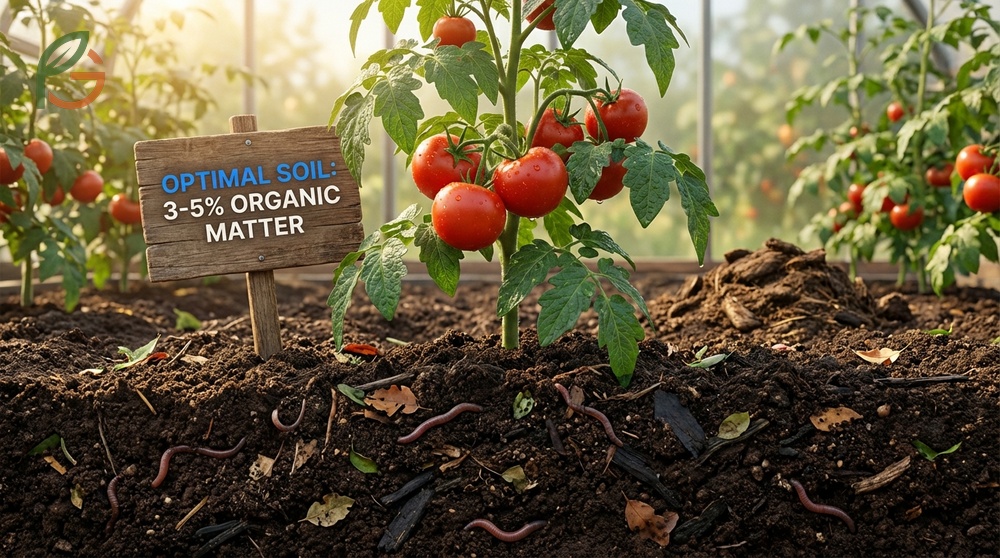
Organic matter content of 3-5% provides optimal nutrient retention and soil structure for tomatoes[2]. Below 2%, soil can’t hold enough water during hot weather, forcing you to irrigate daily. Above 8%, excess organic matter creates nutrient imbalances and may harbor fungal diseases.
Studies show that cow manure compost with 17.99% organic carbon and a C/N ratio of 12.85 significantly increases nitrogen availability[6]. The ideal C/N ratio allows microbes to break down organic matter at the right pace, releasing nutrients steadily throughout the growing season. Fresh manure has too much nitrogen and can burn plants, so always use aged or composted materials.
Organic matter improves soil in three critical ways. First, it increases water-holding capacity by up to 20% in sandy soils. Second, it creates stable aggregates that prevent compaction. Third, it feeds beneficial microorganisms that protect roots from pathogens.
This table compares organic matter sources by carbon content, nitrogen levels, and recommended application rates for tomato soil preparation
| Material | Organic Carbon | Nitrogen Content | Application Rate |
|---|---|---|---|
| Cow Manure Compost | 17.99%[6] | 1.40% | 10% by soil weight |
| Well-Rotted Manure | 12-15% | 0.5-1.5% | 2-3 inches tilled in |
| Garden Compost | 8-12% | 0.8-1.2% | 1-2 inches annually |
| Coco Coir | 35-45% | 0.1-0.3% | 33% of container mix |
| Peat Moss | 40-50% | 0.5-1.0% | 25-33% of mix |
- Aged cow manure compost provides balanced nutrients without burning plants
- Worm castings add beneficial microbes and gentle nitrogen release
- Coco coir improves water retention while maintaining drainage
- Rotted sawdust or wood chips work for long-term carbon addition
- Green manure cover crops like clover fix nitrogen naturally
Potting Mix Tomatoes
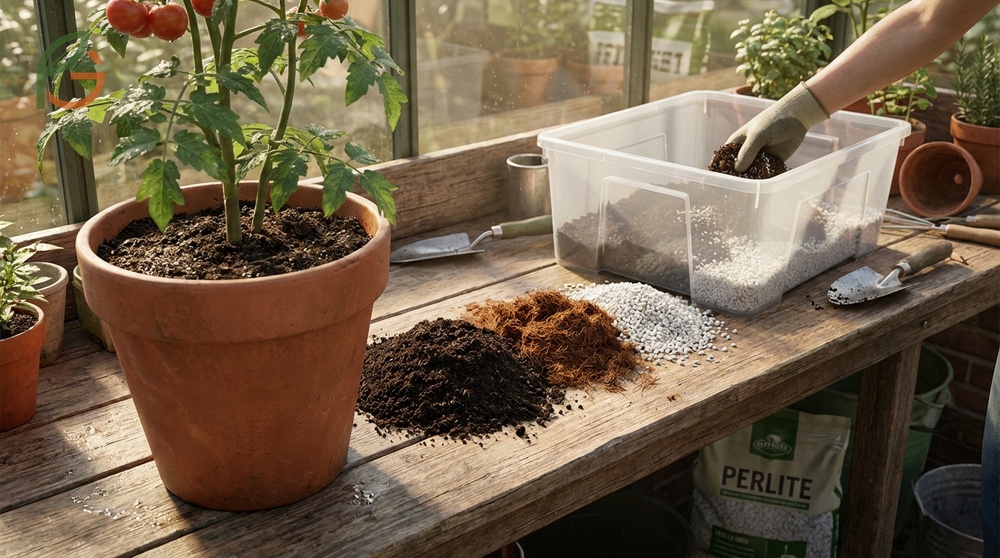
Container tomatoes need a specialized potting mix that drains faster than garden soil. Research shows that equal parts compost, coco coir, and perlite creates the ideal balance[4]. This 1:1:1 ratio provides nutrients from compost, water retention from coco coir, and drainage from perlite.
Don’t use garden soil in containers—it compacts too much, restricting oxygen to roots. Perlite and vermiculite keep the mix fluffy and well-aerated. Perlite improves drainage, while vermiculite retains moisture, and together they prevent waterlogging without drying out too fast.
Mix in worm castings at 10-15% of total volume for slow-release nutrients. Add organic tomato fertilizer following package directions. Most potting mixes don’t contain enough nutrients to support tomatoes through a full season, so plan to fertilize every 2-3 weeks after the first month.
For large containers (5+ gallons), layer banana peels or small wood pieces at the bottom. This reduces soil volume needed, improves drainage, and provides slow-release potassium as materials break down. Just don’t let organic materials touch the root ball directly.
Container Tip: Drill extra drainage holes in container bottoms if water pools on the surface. Tomatoes need moisture, not saturation—the top 2 inches should dry between waterings.
Tomato Soil Requirements
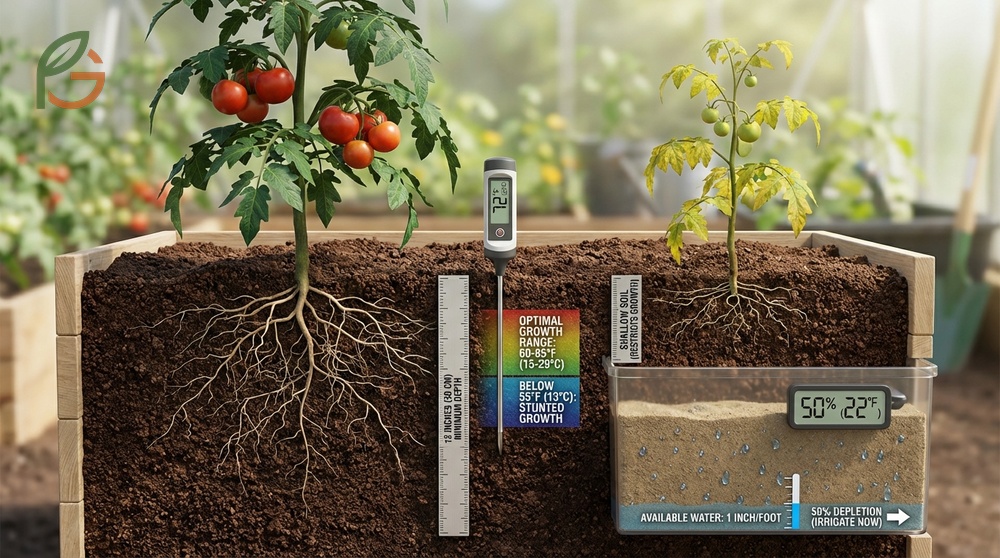
Tomatoes require deep soil—at least 12 inches—for root systems to develop properly. Shallow soil restricts growth and reduces yields by limiting nutrient and water access. Sandy soils hold about 1 inch of available water per foot of depth[8], so you shouldn’t let more than 50% deplete before irrigating.
Soil temperature matters as much as structure. Research indicates that tomatoes grow best when soil temperatures range from 60-85°F (15-29°C)[2]. Below 55°F (13°C), growth stalls and roots can’t absorb nutrients efficiently. Above 90°F (32°C), roots suffer damage and plants wilt despite adequate water.
Current agricultural guidance emphasizes that nematode-free soil prevents root damage that reduces yields by 30-60%. If your garden has nematode problems, rotate planting areas annually or solarize soil by covering it with clear plastic for 6-8 weeks during summer heat.
- Minimum 12 inches of soil depth for adequate root development
- Soil temperature above 60°F (15°C) before transplanting seedlings
- Free of root-knot nematodes and soil-borne diseases
- Adequate calcium availability to prevent blossom end rot
- Consistent moisture without waterlogging or drought stress
- NPK fertilization adjusted to growth stage—higher nitrogen early, more potassium when fruiting
| Parameter | Optimal Range | Impact of Deviation |
|---|---|---|
| pH Level | 6.0-6.8[1] | Nutrient lockout, blossom end rot risk |
| Organic Matter | 3-5%[2] | Poor water retention or nutrient imbalance |
| Soil Temperature | 60-85°F (15-29°C) | Stunted growth or root damage |
Conclusion
The evidence is clear: Best Soil For Tomatoes combines pH 6.0-6.8, loamy texture with 15-35% clay, and 3-5% organic matter content. These three factors work together to maximize nutrient availability, prevent disease, and support vigorous growth throughout the season. Current agricultural data confirms that getting soil right from the start saves time and increases yields by 40-60% compared to poor soil conditions.
FruitGarden’s research-based approach helps you create ideal growing conditions by focusing on what matters most—soil structure, drainage, and nutrient balance. Start by testing your pH, amend with compost to reach 3-5% organic matter, and ensure proper drainage before planting.
Frequently Asked Questions
What type of soil do tomatoes grow best in?
Tomatoes grow best in loamy or sandy loam soil with pH 6.0-6.8 and 3-5% organic matter content. This soil type provides excellent drainage while retaining enough moisture for consistent growth, and the balanced texture allows roots to penetrate deeply for better nutrient access.
How do I make my soil more acidic for tomatoes?
Lower soil pH by adding elemental sulfur (1 pound per 100 square feet drops pH by one point over 3-6 months) or aluminum sulfate for faster results within weeks. Test pH first—you only need to acidify if your soil tests above 6.8, as tomatoes prefer slightly acidic conditions.
Can I use regular potting soil for tomatoes?
Regular potting soil works for tomatoes if it drains well and contains organic matter, but it typically lacks enough nutrients for a full growing season. Mix in compost, worm castings, and perlite to improve nutrition and drainage, then plan to fertilize every 2-3 weeks after the first month.
How much organic matter should I add to tomato soil?
Add enough organic matter to reach 3-5% of total soil content—typically 1-2 inches of compost tilled into the top 8-12 inches of garden soil annually. For new beds, apply 10% by weight (about 3-4 inches of compost mixed thoroughly) to build up organic content quickly.
What happens if tomato soil pH is too high?
High pH above 7.0 locks up calcium and micronutrients, causing blossom end rot (dark spots on fruit bottoms) and yellowing leaves with green veins from iron deficiency. Plants grow slowly despite fertilization because they can’t absorb nutrients from alkaline soil even when nutrients are present.
Do tomatoes need sandy or clay soil?
Tomatoes prefer soil with balanced texture—neither pure sand nor pure clay works well. Sandy loam with 15-25% clay content provides ideal drainage plus enough moisture retention, while pure sand dries out too fast and heavy clay causes waterlogging and root rot.
How often should I test tomato soil pH?
Test soil pH every 2-3 years or whenever plants show nutrient deficiency symptoms despite proper fertilization. Test in early spring before planting when soil temperatures reach 50°F (10°C), and retest if you’ve amended soil with lime or sulfur to verify pH changes.