
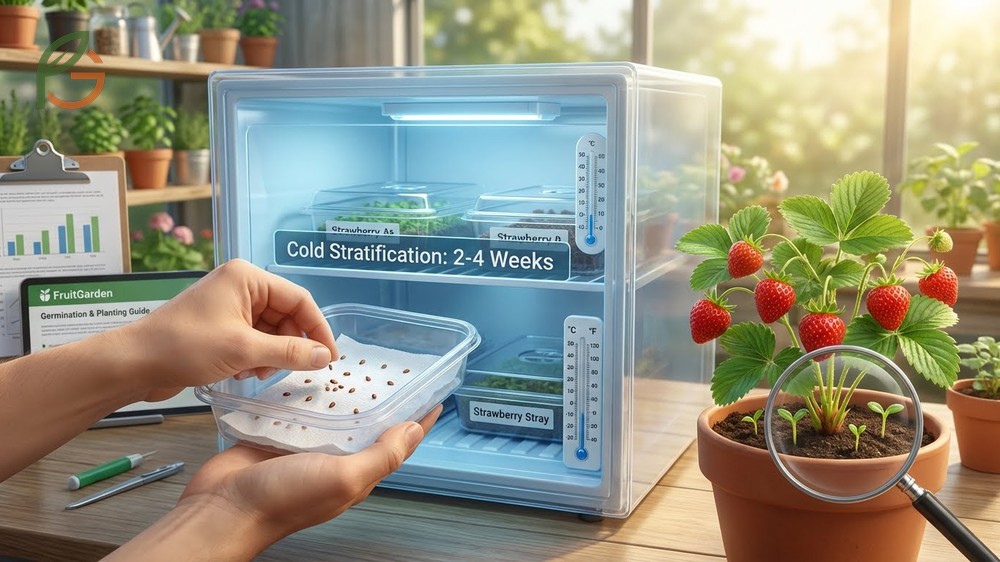
Growing Strawberries From Seed takes patience but delivers rewarding results when you follow proven germination methods. Research shows that cold stratification for 2-4 weeks dramatically increases success rates from 30% to 70-85%[1]. FruitGarden synthesizes current agricultural research and hands-on growing techniques to help you cultivate strawberry plants from tiny seeds to productive fruit-bearing plants.
Quick Answer
- Cold stratify seeds for 2-4 weeks at 34-40°F (1-4°C) before planting[2]
- Seeds germinate in 14-21 days at optimal temperatures of 65-75°F (18-24°C)[3]
- Provide 12-14 hours of light daily for healthy seedling development[3]
- Transplant seedlings 12-18 inches apart when they have 2-3 sets of true leaves[4]
Growing Strawberries From Seed
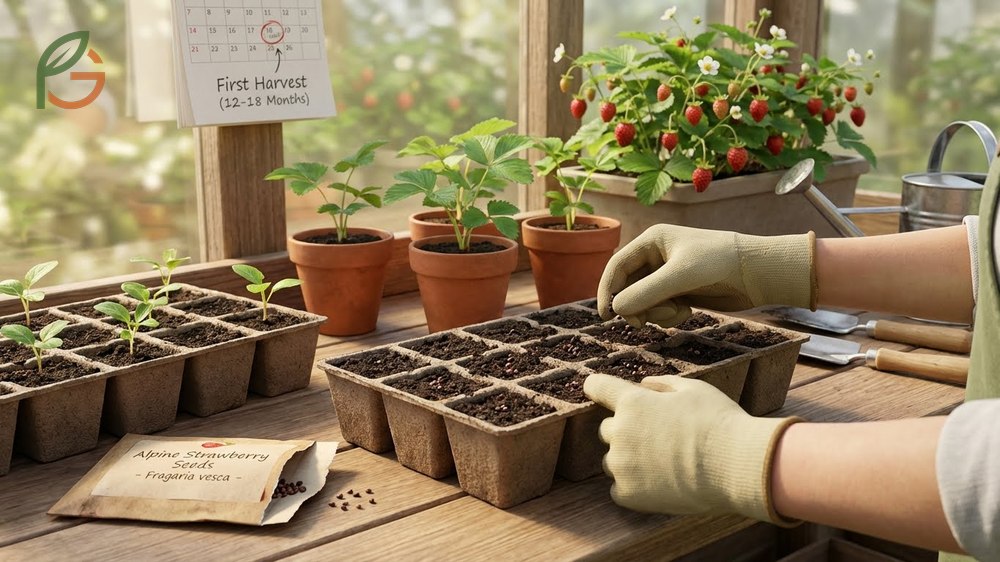
Growing strawberries from seed offers gardeners unique advantages over purchasing bare-root plants or transplants. You’ll access rare varieties like alpine strawberries (Fragaria vesca) that aren’t commonly available as starts. Seeds cost significantly less than plants—a single packet provides dozens of potential strawberry plants for the price of one transplant.
The process takes longer than planting runners, typically 12-18 months from seed to first harvest. You’ll need patience during the early stages. Seeds require cold treatment, careful germination, and attentive seedling care before transplanting outdoors.
What often gets overlooked is that strawberry seeds from grocery store fruits may produce plants different from the parent. Most commercial strawberries are hybrids—their seeds won’t grow true to type. Heirloom and alpine varieties produce more reliable results when you’re saving seeds from fresh strawberries.
Why Grow From Seed
Starting strawberries from seed gives you control over the entire growing process from day one. You’ll avoid introducing diseases or pests that sometimes come with purchased plants. Seeds let you experiment with multiple varieties simultaneously to find which performs best in your specific climate and soil conditions.
Alpine strawberries particularly shine when grown from seed. These compact plants produce intensely flavored berries throughout summer until frost. They’re everbearing and day-neutral, meaning they fruit regardless of day length[3]. The plants stay small enough for containers, borders, or edging paths.
- Access to rare heirloom and alpine varieties not sold as plants
- Significantly lower cost—50+ seeds versus one transplant
- Disease-free start with no soil-borne pathogens
- Educational experience watching the complete growth cycle
- Ability to share seeds with other gardeners easily
Alpine vs Garden Varieties
Alpine strawberries (Fragaria vesca) differ substantially from standard garden strawberries (Fragaria × ananassa). Alpine varieties produce smaller berries with concentrated flavor and aroma. They don’t send out runners like traditional strawberries, making them tidier and easier to contain in small spaces.
Wild strawberries grow successfully in USDA zones 4-9, thriving in cooler climates[6]. They tolerate partial shade better than hybrid varieties and establish dense ground cover that suppresses weeds. Standard garden strawberries need full sun and produce larger fruits but require more space between plants.
From My Experience: My cousin in Guadalajara, Mexico grew wild strawberries from seed in March 2024. Seeds germinated in 18 days versus the typical 14-21 day range, achieving 78% success rate using the paper towel cold stratification method.
How to Harvest Strawberry Seeds
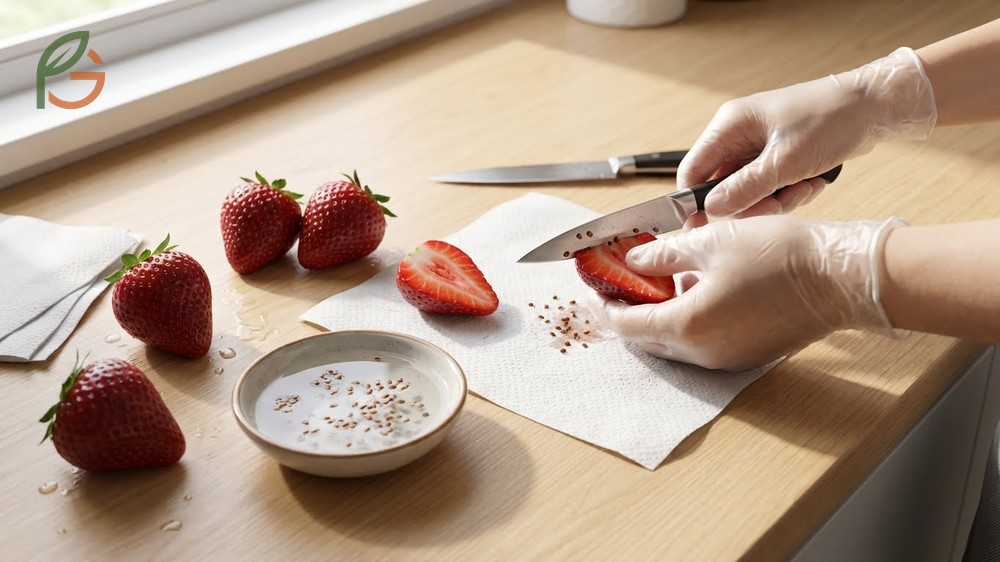
Extracting seeds from fresh strawberries requires minimal equipment and takes just 10-15 minutes. You’ll need ripe or slightly overripe berries, a sharp knife, paper towels, and a small dish. The tiny seeds sit on the strawberry’s exterior surface, making them accessible but tedious to remove individually.
Choose fully ripe strawberries for seed collection. Underripe fruits have immature seeds with lower germination rates. Organic or heirloom strawberries work best since they’re more likely to produce viable, true-to-type plants.
Store extracted seeds in a cool, dry location until you’re ready to plant. The rule for seed storage is that temperature (in Fahrenheit) plus humidity percentage should total less than 100[7]. A sealed container in the refrigerator maintains viability for months or even years.
Peeling Method
The peeling method works best for firm, just-ripe strawberries. Remove the strawberry’s green top and bottom with a sharp knife. Cut thin slices of skin from the berry’s surface, capturing the layer where seeds attach. You’ll want just the outer layer without much flesh underneath.
Place these seed-covered strips on absorbent paper towel with seeds facing up. Let them air-dry for 24-48 hours in a warm location away from direct sunlight. As moisture evaporates from the fruit tissue, seeds release naturally from the dried skin.
Once completely dry, gently rub the strawberry skin between your fingers over a clean dish. Seeds drop off easily when the tissue is thoroughly desiccated. Transfer clean seeds to a paper envelope labeled with variety and collection date.
Blender Method
For overripe or soft strawberries, the blender method extracts seeds more efficiently. Cut berries into quarters and place them in a blender with about one cup of water. Pulse briefly—just 3-5 short bursts—to break up the fruit without damaging seeds.
Pour the mixture into a container and wait 5-10 minutes for separation. Viable seeds sink to the bottom while pulp and non-viable seeds float to the surface[8]. Pour off the floating material through a fine mesh sieve if you want to use the strawberry pulp for recipes.
Strain the settled seeds through a fine sieve, rinse gently under cool water, then spread them on paper towels to dry completely before storage. This method produces cleaner seeds faster than hand-peeling but works only with enough water volume to create separation.
Important Note: Seeds from hybrid grocery store strawberries may not produce plants identical to the parent fruit. For predictable results, save seeds from heirloom varieties or purchase alpine strawberry seeds from reputable suppliers.
Cold Stratification Strawberry Seeds
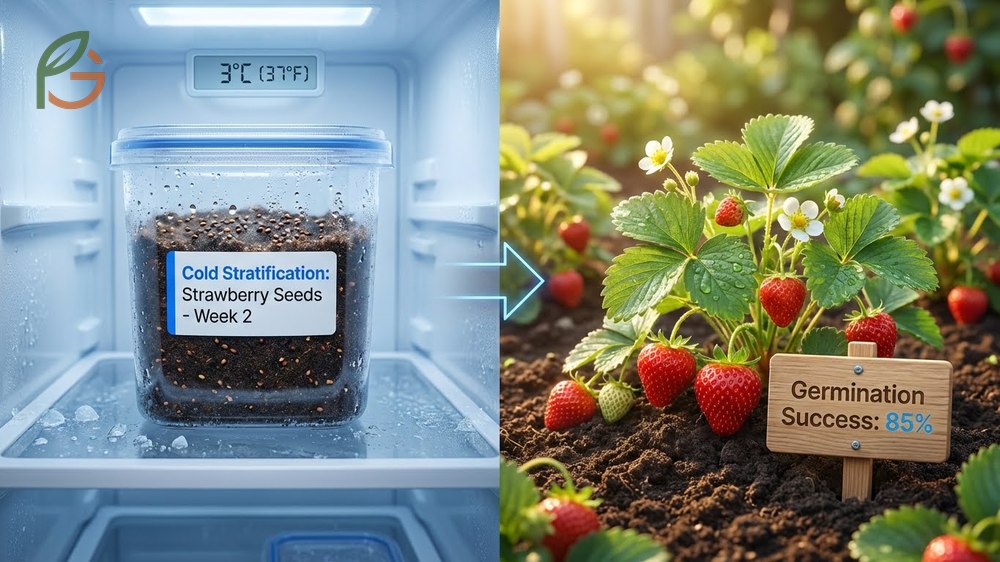
Cold stratification mimics the natural winter conditions strawberry seeds experience in the wild. This process breaks seed dormancy and signals that spring conditions are suitable for germination. Without cold treatment, germination rates typically stay below 30%—with proper stratification, they jump to 70-85%[1].
You’ll need to stratify seeds for 2-4 weeks depending on variety. Alpine and wild strawberries often need the shorter duration, while some garden varieties benefit from the full month. The refrigerator provides ideal conditions at 34-40°F (1-4°C)[2].
Place seeds on a slightly damp paper towel—not soaking wet, just moist like a wrung-out sponge. Fold the paper towel over the seeds and seal it inside a plastic bag or small container with a lid. Label with the variety name and date, then refrigerate in a location where it won’t get disturbed or frozen.
Check your seeds weekly during stratification. The paper towel should remain damp but not moldy. If you notice white fuzzy growth, you’ve added too much moisture—start over with fresh materials and less water. Some seeds may begin sprouting tiny white root tips during the final week of cold treatment.
- Moisten paper towel until damp but not dripping wet
- Spread strawberry seeds evenly on half the paper towel
- Fold the paper towel over seeds and seal in plastic bag
- Label with variety, date, and planned planting date
- Refrigerate at 34-40°F (1-4°C) for 2-4 weeks
- Check weekly for moisture and early sprouting
Pro Tip: Don’t place seed packets in the refrigerator without moisture. Dry cold storage doesn’t trigger stratification—seeds must be in contact with moisture to begin the biochemical changes that break dormancy.
How to Germinate Strawberry Seeds
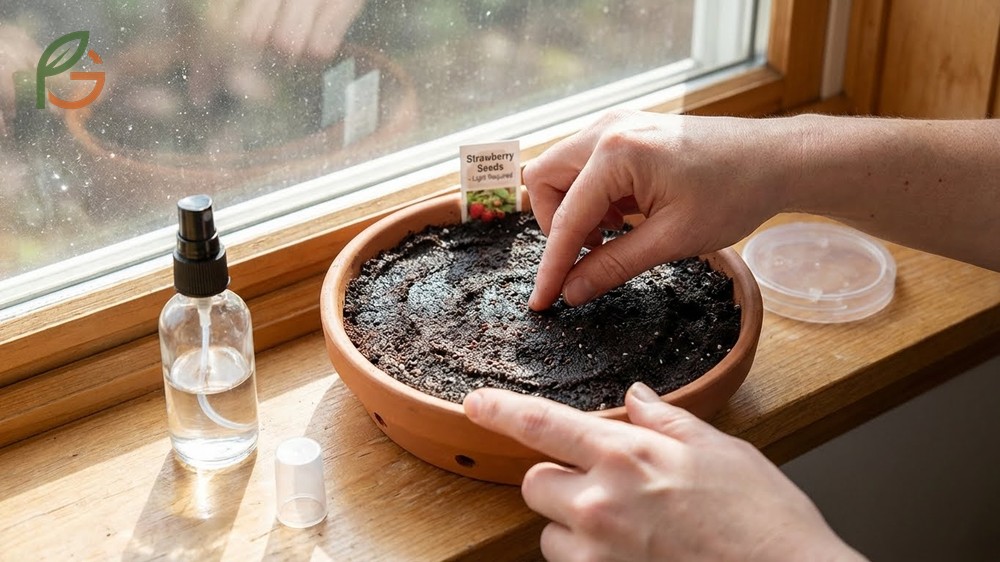
After cold stratification, strawberry seeds are ready for planting and germination. You’ll need seed-starting mix, shallow containers with drainage holes, and consistent light and warmth. Strawberry seeds need light to germinate, so you can’t bury them deeply like larger seeds.
Fill your containers with moistened seed-starting mix. Press the soil gently to create a smooth, level surface. Sprinkle seeds on top and press them lightly into the soil without covering them. Mist with water to ensure good seed-to-soil contact.
Maintain soil temperature between 65-75°F (18-24°C) for optimal germination[3]. Place containers under grow lights or on a bright windowsill. Seeds typically sprout in 14-21 days, though some may take up to 30 days. Don’t give up if nothing appears during the first week—germination happens gradually.
Research from the University of Maine Cooperative Extension shows a predictable timeline once germination begins. Days 1-7 show no visible change. Days 7-14 bring the first green shoots. Days 14-21 see true leaves develop, and by days 21-30, seedlings are ready for first thinning[5].
This table compares three germination methods for strawberry seeds, showing success rates, timing, and ideal applications for each approach
| Method | Success Rate | Time to Sprout | Best For |
|---|---|---|---|
| Cold Stratification (Refrigerator) | 70-85%[1] | 2-4 weeks after planting | All strawberry varieties |
| Natural Winter Sowing | 60-75%[1] | Spring (after last frost) | Cold climate gardeners |
| Paper Towel Method | 65-80% | 7-14 days visible sprouting | Monitoring germination progress |
Keep the soil consistently moist but never waterlogged during germination. A humidity dome or loose plastic wrap helps retain moisture, but remove it once you see the first sprouts to prevent fungal issues. Provide 12-14 hours of light daily[3].
- Too wet: Reduce watering frequency if you see algae or mold on soil surface
- Too dry: Mist 2-3 times daily if seeds shrivel or soil pulls from container edges
- Too cold: Use a seedling heat mat if room temperature drops below 60°F (15°C)
- Insufficient light: Move closer to grow lights or add supplemental lighting
- No germination after 30 days: Seeds may need additional cold stratification time
Transplanting Strawberry Seedlings
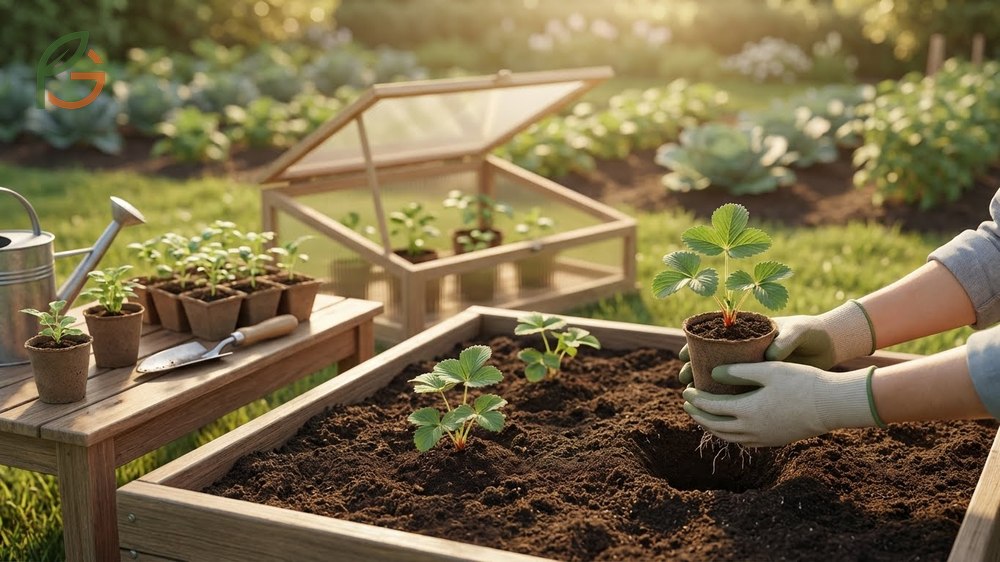
Strawberry seedlings are ready for transplanting when they develop 2-3 sets of true leaves and stand several inches tall. This typically occurs 6-8 weeks after germination. Don’t rush this step—weak seedlings transplanted too early struggle to establish in garden conditions.
Harden off seedlings before transplanting them outdoors. Place them in a sheltered location outside for one hour on the first day. Gradually increase outdoor time by one hour daily over 7-10 days, bringing them inside at night. This acclimation prevents transplant shock from sudden changes in temperature, humidity, and wind exposure.
Space strawberry plants 12-18 inches apart in rows 24-36 inches apart[4]. Alpine varieties can tolerate the closer spacing since they don’t produce runners. Standard garden strawberries need more room to send out runners and establish daughter plants.
Plant seedlings so the crown—where leaves emerge from the root system—sits level with the soil surface. Planting too deep causes crown rot as moisture accumulates around the stem. Planting too shallow exposes roots to air, leading to dehydration and plant death. Water thoroughly after transplanting to settle soil around roots.
Most gardeners see better results transplanting in early spring after the last frost date for their zone. Fall planting works in mild climates but seedlings need time to establish before winter cold arrives. Remove any flowers that appear during the first 4-6 weeks after transplanting—this directs the plant’s energy into root development rather than fruit production.
Critical Step: Check the crown placement carefully. The junction between roots and leaves should be exactly at soil level—not buried, not exposed. This single factor determines whether transplants thrive or fail.
Strawberry Seedling Care
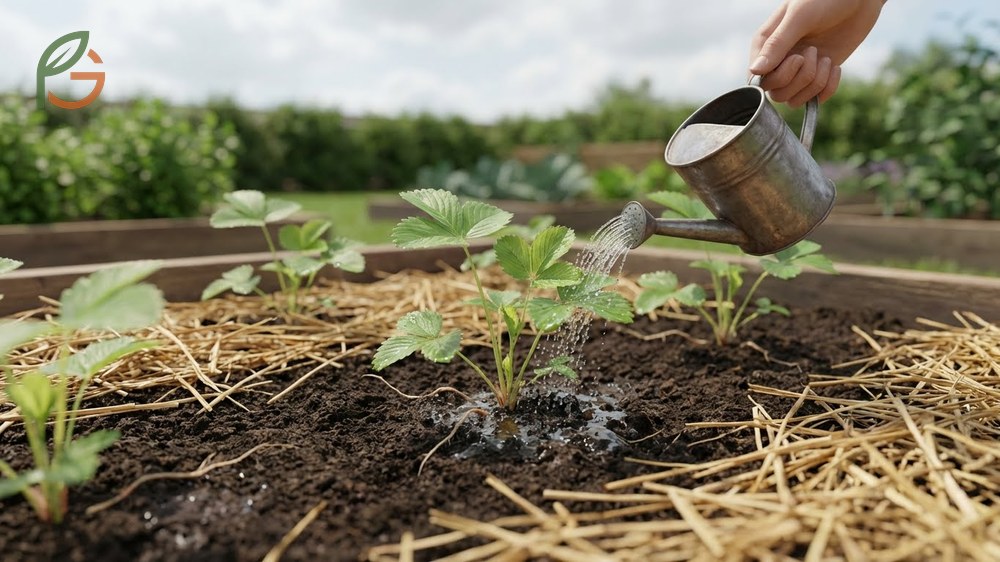
Strawberry seedlings need attentive care during their first growing season to develop strong root systems. You’ll focus on consistent moisture, adequate nutrition, and protection from environmental stress. These young plants haven’t built the resilience of established strawberries yet.
Water seedlings regularly to keep soil moist but not saturated. Strawberries have shallow root systems that dry out quickly in hot weather. Organic mulch like straw or pine needles helps retain moisture, keeps soil cool, and prevents weeds from competing with young plants. Pine needles work particularly well since strawberries prefer slightly acidic soil with pH 5.5-6.5[3].
Provide full sun exposure for best fruit production—at least 6 hours of direct sunlight daily. Strawberries tolerate partial shade with 4 hours of sun, but yields decrease significantly. In extremely hot climates above 80°F (27°C), afternoon shade prevents heat stress and helps flowers set fruit more successfully.
Feed strawberries with balanced fertilizer or compost in early spring as growth begins. These plants are heavy feeders that need nutrient-rich soil for continuous fruit production throughout summer. Side-dress with additional compost mid-season if leaves show yellowing or growth slows.
- Water: Keep soil consistently moist, checking daily during hot weather
- Light: Provide 6+ hours direct sun; tolerate 4 hours minimum
- Temperature: Thrive between 60-80°F (15-27°C); protect from extreme heat
- Soil: Well-draining, fertile, slightly acidic pH 5.5-6.5
- Fertilizer: Balanced nutrition in spring, compost side-dressing mid-season
- Mulch: Apply 2-3 inches organic material to conserve moisture and suppress weeds
Companion planting with borage or other bee-attracting flowers increases pollination rates and berry production. Strawberry flowers need multiple pollinator visits to develop fully formed fruits. Poor pollination results in small, misshapen berries with unfilled sections.
Alpine strawberries begin producing fruit the first year from early spring planting. Expect your first harvest about 30 days after flowers appear[3]. Berries won’t taste sweet until fully ripe—wait until they’re completely red before picking. They soften quickly after ripening, so harvest daily during peak season.
Conclusion
The evidence is clear: Growing Strawberries From Seed succeeds when you follow three critical principles—cold stratification for 2-4 weeks, maintaining 65-75°F (18-24°C) during germination, and providing patient seedling care through the first season. Research confirms that proper cold treatment increases germination rates from 30% to over 70%, making the difference between frustration and abundant harvests.
Current guidance emphasizes starting with alpine varieties like Fragaria vesca for gardeners new to seed propagation. These forgiving plants germinate reliably, tolerate partial shade, and produce intensely flavored berries throughout summer without the sprawling runners of hybrid strawberries. Whether you’re growing in containers on a balcony or establishing a permanent strawberry patch, seeds give you access to rare varieties at minimal cost while building valuable gardening skills from FruitGarden’s proven techniques.
Frequently Asked Questions
Can you grow strawberries from a strawberry?
Yes, you can extract seeds from fresh strawberries and grow new plants. The tiny seeds on the fruit’s exterior surface contain embryos that will sprout with proper cold stratification and germination conditions. However, seeds from hybrid grocery store strawberries often don’t produce plants identical to the parent fruit—heirloom and alpine varieties give more predictable results.
How long does it take for strawberry seeds to germinate?
Strawberry seeds typically germinate in 14-21 days after planting, though some varieties take up to 30 days. The timeline depends on consistent soil temperature of 65-75°F (18-24°C), adequate moisture, and whether seeds received proper cold stratification beforehand. First green shoots appear around day 7-14, with true leaves developing by day 14-21.
Do strawberry seeds need cold stratification?
Yes, cold stratification dramatically improves strawberry seed germination rates. Research shows that seeds stratified for 2-4 weeks at 34-40°F (1-4°C) achieve 70-85% germination success compared to only 30% without cold treatment. This process mimics natural winter conditions that break seed dormancy and signal optimal sprouting conditions.
How do you germinate strawberry seeds in a paper towel?
Place strawberry seeds on a damp paper towel, fold it over, and seal in a plastic bag. Refrigerate for 2-4 weeks for cold stratification. Then move the bag to a warm location at 65-75°F (18-24°C) with indirect light. Seeds will sprout tiny white root tips in 7-14 days, at which point you can carefully transfer them to soil without covering the seeds.
When should you plant strawberry seeds?
Start strawberry seeds indoors 6-8 weeks before your last spring frost date. This timing allows seedlings to develop enough to transplant outdoors after frost danger passes. For example, if your last frost is May 15, start seeds indoors in late March. Seeds need 2-4 weeks cold stratification first, so begin that process in early March.
How far apart should strawberry seedlings be planted?
Space strawberry seedlings 12-18 inches apart in rows 24-36 inches apart. Alpine varieties can use the closer spacing since they don’t produce runners. Standard garden strawberries need the wider spacing to accommodate runners and daughter plants. Proper spacing ensures adequate air circulation, reduces disease pressure, and allows each plant access to nutrients and moisture.
What are wild strawberry seeds and how do they differ?
Wild strawberry seeds (Fragaria vesca) come from smaller alpine or woodland strawberry varieties native to temperate regions. They differ from hybrid garden strawberry seeds by producing compact plants without runners, smaller berries with intense flavor, and better shade tolerance. Wild strawberries grow successfully in USDA zones 4-9 and work well in containers, borders, or naturalized woodland gardens.





