
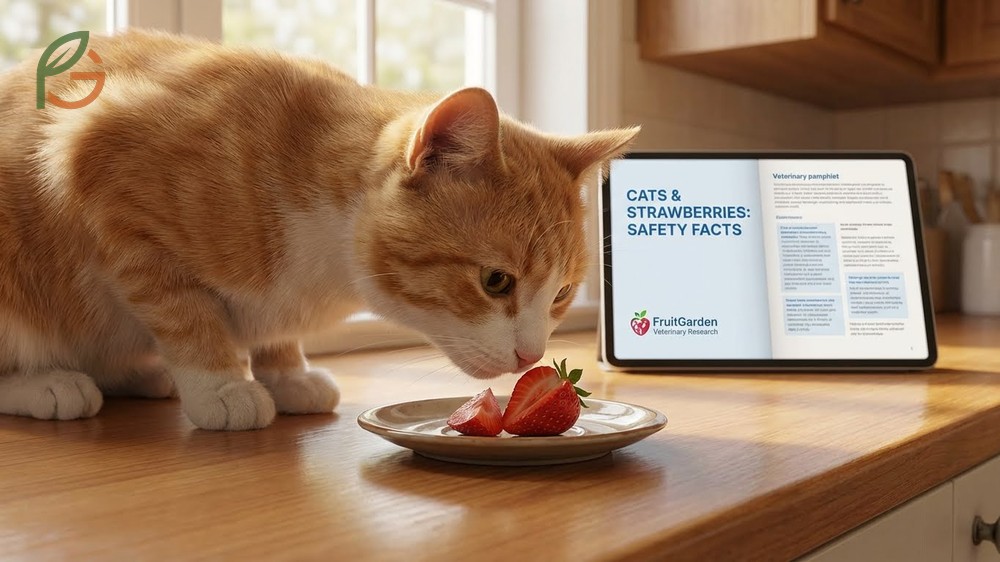
Can cats eat strawberries? Yes, cats can safely eat strawberries in small amounts. Research from the ASPCA confirms strawberries are non-toxic to cats, making them an acceptable occasional treat when served properly[1]. While strawberries won’t harm your cat, veterinary guidance emphasizes portion control since cats are obligate carnivores with digestive systems optimized for meat, not fruit sugars. FruitGarden synthesizes current veterinary research and ASPCA data to help pet owners make informed decisions about fruit-based treats for their feline companions.
Quick Answer
Can Cats Eat Strawberries

Strawberries are classified as non-toxic to cats by the ASPCA’s Animal Poison Control Center, meaning they won’t cause poisoning in felines[1]. Veterinary research confirms cats can consume small strawberry portions without immediate health risks. However, cats lack taste receptors for sweetness, so they don’t experience the same flavor appeal humans do.
Studies demonstrate that obligate carnivores like cats derive minimal nutritional benefit from fruit. Their digestive systems evolved to process animal proteins rather than plant-based carbohydrates and sugars. Most cats show little interest in strawberries naturally, though some may be attracted to the moist texture.
Current veterinary guidance emphasizes strawberries should only serve as occasional enrichment treats, never as meal replacements or regular dietary components. The 10% treat rule applies—less than one-tenth of daily caloric intake should come from non-essential foods[4].
Nutritional Profile
One cup of halved strawberries contains 49 calories, 7.4g sugar, 3g fiber, and 89.4mg vitamin C[3]. A medium strawberry weighing approximately 12 grams accounts for roughly 4 calories. Strawberries rank among the lower-sugar fruits at 4.9g per 100g, compared to bananas at 12g or figs at 16g.
Despite containing vitamin C and antioxidants, cats synthesize their own vitamin C internally and don’t require dietary sources. The fiber content offers minimal value since feline digestive tracts are short and designed for rapid protein digestion. Potassium and other minerals exist in quantities too small to meaningfully impact cat health.
Why Cats Don’t Need Fruit
Cats are obligate carnivores with physiological requirements vastly different from omnivorous humans or dogs. Their digestive enzymes specialize in breaking down animal proteins and fats. Plant matter moves slowly through their systems, potentially causing gastrointestinal upset.
Research shows cats lack the taste receptor gene Tas1r2, making them unable to detect sweet flavors[5]. Any interest in strawberries stems from texture, moisture content, or curiosity—not taste preference. Complete and balanced commercial cat foods already provide all necessary nutrients.
- Cats synthesize vitamin C internally and don’t require dietary supplementation
- Feline digestive systems lack enzymes to efficiently process plant carbohydrates
- Sugar content provides no nutritional advantage and may contribute to obesity
- Commercial cat foods are formulated to meet 100% of nutritional requirements
- Fruit fiber doesn’t benefit the short feline digestive tract like it does in omnivores
Important Note: Diabetic cats should never receive strawberries or any fruit treats. Even small amounts of natural fruit sugar can spike blood glucose levels and interfere with diabetes management protocols.
Are Strawberries Toxic to Cats
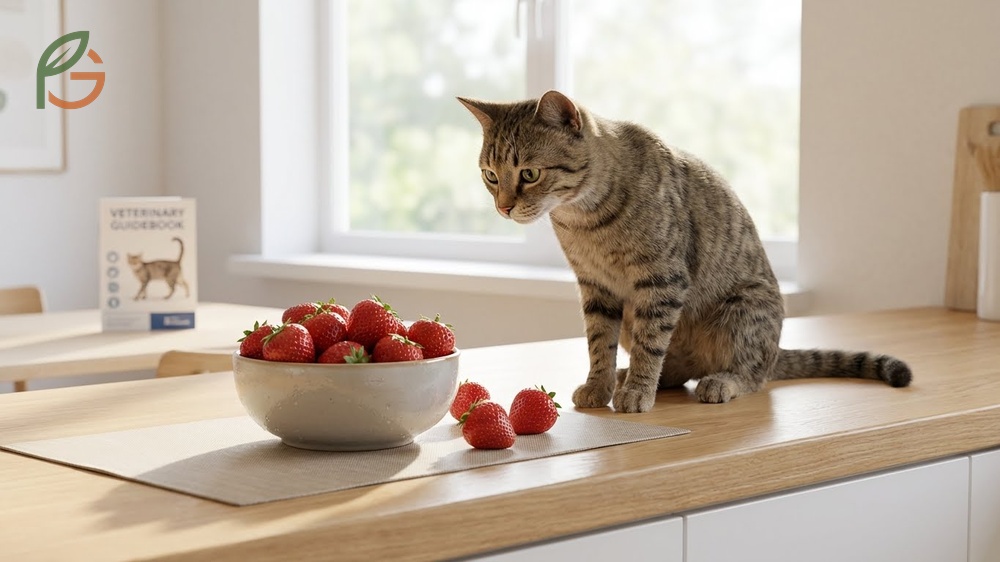
Strawberry flesh itself contains no compounds toxic to feline physiology. The ASPCA lists strawberries alongside other non-toxic fruits like blueberries and bananas[1]. Unlike grapes, raisins, or citrus fruits that can cause kidney damage or digestive distress, strawberries pose no inherent poisoning risk.
However, “non-toxic” doesn’t mean “recommended” or “beneficial.” Overconsumption leads to predictable problems. Veterinary case reports document cats experiencing vomiting and diarrhea after eating excessive strawberry amounts. The high water and fiber content overwhelms digestive systems adapted for dense protein meals.
Current veterinary consensus treats strawberries as safe in moderation but unnecessary for feline nutrition. Pet owners should focus on species-appropriate nutrition rather than sharing human treats frequently.
Strawberry Leaves and Stems
Strawberry leaves and stems are not toxic but present mechanical hazards. Veterinary guidance recommends removing all greenery before offering strawberries to cats[5]. The tough, fibrous plant material resists digestion and may cause gastrointestinal obstructions.
Studies on feline foreign body obstructions show plant stems rank among common culprits requiring surgical intervention. Cats who consume strawberry leaves may display symptoms like vomiting, lethargy, straining to defecate, and decreased appetite. Always wash strawberries thoroughly and trim away all stems and leaves.
Digestive Concerns
Large strawberry portions can trigger digestive upset even in healthy cats. Symptoms include vomiting, diarrhea, and abdominal discomfort. Research indicates cats’ short digestive tracts struggle with high-fiber plant materials, leading to faster transit times and looser stools.
Overweight cats face additional risks since excess sugar contributes to weight gain and metabolic issues. Senior cats with sensitive digestion should avoid strawberries entirely. If your cat shows any adverse reaction, discontinue strawberry treats immediately and consult your veterinarian.
- Vomiting within 2-6 hours of consumption
- Diarrhea or unusually soft stools
- Decreased appetite or refusal of regular meals
- Lethargy or reduced activity levels
- Abdominal tenderness or visible discomfort when touched
- Straining during defecation or constipation
Warning: Strawberry plants in gardens may be treated with pesticides or fertilizers toxic to cats. Only offer washed, store-bought strawberries. Never allow cats to eat strawberries directly from garden plants.
How Many Strawberries for Cats
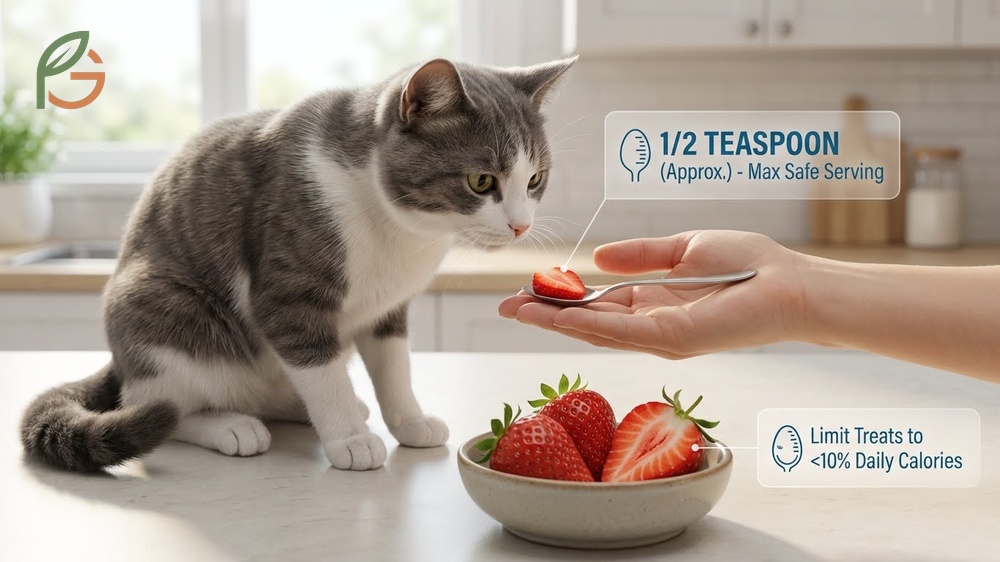
Veterinary nutritionists recommend one thumbnail-sized slice (approximately 1/2 teaspoon) as the maximum safe serving for adult cats[2]. This portion should be offered no more than once or twice weekly. For a typical 10-pound cat requiring 240-270 daily calories, treats should total less than 24 calories—equivalent to roughly six medium strawberries theoretically, though that amount would contain excessive sugar and fiber.
Current guidelines emphasize the 10% treat rule across all cat treats, not just strawberries[4]. One or two small strawberry pieces per week fits comfortably within this recommendation. Cut strawberries into bite-sized chunks to prevent choking hazards, especially for smaller cats.
Kittens under six months should avoid strawberries entirely unless your veterinarian approves. Their developing digestive systems are extremely sensitive to non-formula foods. Senior and overweight cats benefit from avoiding fruit treats due to sugar content and limited nutritional value.
This table compares recommended strawberry serving sizes and frequencies across different cat life stages and health conditions
| Cat Type | Serving Size | Frequency | Notes |
|---|---|---|---|
| Kitten (under 6 months) | Tiny taste (pea-size) | Rarely / vet approval only | Sensitive digestive system |
| Healthy adult | 1/2 teaspoon[2] | 1-2 times per week | Cut into small pieces |
| Senior / overweight | Avoid or consult vet | Not recommended | Sugar content problematic |
| Diabetic | Do not feed | Never | Can spike blood sugar |
| First-time introduction | Single small piece | One-time test | Monitor for 24 hours |
Always account for strawberry calories when calculating daily treat allowances. If you’ve already given other treats that day, skip the strawberry. Consistency prevents accidental overfeeding and maintains optimal nutrition from complete cat food formulations.
Fruit Cats Can Eat

Beyond strawberries, several fruits are classified as non-toxic for cats when served in small portions. The ASPCA confirms apples, bananas, blueberries, cantaloupe, and watermelon are safe occasional treats[6]. However, all fruit should follow the same 10% treat rule and careful preparation protocols.
Blueberries rank among the safest fruit options due to their small size and lower sugar content. Bananas contain more sugar but provide potassium. Watermelon offers high water content for hydration but must be seedless—watermelon seeds pose choking risks.
Remove all seeds, pits, stems, and leaves before offering any fruit. Apple seeds contain trace amounts of cyanide compounds toxic to cats. Peach and plum pits present similar hazards plus choking and obstruction risks.
- Blueberries – high in antioxidants, small size reduces choking risk
- Bananas – potassium-rich but higher in sugar, limit to small slices
- Watermelon – hydrating and low-calorie, must be seedless
- Cantaloupe – vitamin-rich but very sweet, tiny cubes only
- Apples – remove core and seeds completely, high fiber content
- Pineapple – small fresh pieces only, high in digestive enzymes
Toxic Fruits to Avoid: Never feed cats grapes, raisins, citrus fruits (oranges, lemons, limes), cherries, or avocados. These contain compounds that cause kidney failure, digestive toxicity, or poisoning in felines.
Symptoms of Strawberry Allergy in Cats
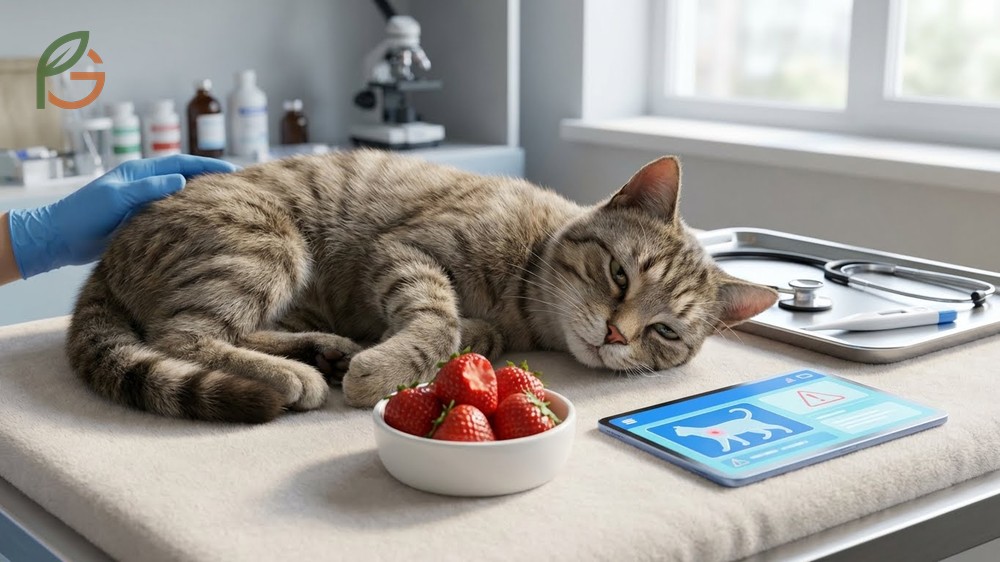
Strawberry allergies in cats are rare but documented in veterinary literature. Allergic reactions differ from simple digestive upset and require immediate veterinary attention. Symptoms typically manifest within minutes to hours after consumption.
Research on feline food allergies shows plant-based proteins trigger reactions less frequently than animal proteins. However, individual cats may develop sensitivities to any food component. First-time strawberry introductions should involve only a tiny piece with 24-hour monitoring.
Severe allergic reactions constitute veterinary emergencies. If your cat displays facial swelling, difficulty breathing, or collapse after eating strawberries, seek immediate emergency care. Mild reactions like itching may resolve independently but warrant veterinary consultation.
- Facial swelling, particularly around eyes, muzzle, or ears
- Skin irritation – redness, hives, or excessive scratching
- Respiratory distress – coughing, wheezing, or labored breathing
- Gastrointestinal inflammation – persistent vomiting or bloody diarrhea
- Runny nose, sneezing, or watery eyes
- Lethargy or unusual behavioral changes
- Excessive grooming or licking at specific body areas
Document any adverse reactions and report them to your veterinarian. Some cats tolerate strawberries initially but develop sensitivities over time with repeated exposure. When in doubt, discontinue strawberry treats and stick to species-appropriate commercial cat treats.
Cat Treats Homemade

Homemade cat treats incorporating strawberries offer controlled portions and ingredient transparency. Berry cat popsicles combine strawberries with plain Greek yogurt for a refreshing summer enrichment option. These frozen treats require just strawberries, blueberries, and unsweetened, xylitol-free yogurt.
To create strawberry yogurt popsicles, blend two chopped strawberries with eight tablespoons plain Greek yogurt. Pour the mixture into silicone molds and freeze for six hours or overnight. Serve one-half to one popsicle maximum, accounting for calories in daily treat allowances.
Strawberry yogurt for cats must be plain, unsweetened, and completely free of xylitol—a sugar substitute extremely toxic to pets. Many flavored yogurts contain excessive sugar, artificial sweeteners, or additives harmful to feline health. Always verify ingredient labels before using yogurt in cat recipes.
Simple Strawberry Treat Recipe
This basic recipe creates four cat-safe strawberry popsicles with minimal ingredients. You’ll need two fresh strawberries, eight tablespoons plain Greek yogurt, and four-to-eight blueberries. Silicone popsicle molds or ice cube trays work perfectly for portioning.
Wash and de-stem strawberries thoroughly before chopping into small pieces. Blend strawberries with four tablespoons yogurt until smooth, then pour into two molds. Blend remaining yogurt with halved blueberries for the other two molds. Freeze completely before serving.
- Wash two strawberries and remove all stems and leaves
- Chop strawberries into small bite-sized chunks
- Blend strawberries with four tablespoons plain Greek yogurt until smooth
- Pour blended mixture into two silicone popsicle molds or ice cube sections
- Repeat process with blueberries and remaining yogurt for variety
- Freeze for minimum six hours or overnight until completely solid
- Serve one-half to one popsicle, supervising to prevent choking
Yogurt Warning: Many cats are lactose-intolerant and cannot digest dairy products properly. If your cat has never eaten yogurt before, test tolerance with a tiny amount first. Skip yogurt entirely if your cat shows any digestive upset.
Conclusion
The evidence is clear: can cats eat strawberries safely? Yes, but only in carefully controlled portions with realistic expectations about nutritional value. Strawberries are non-toxic and won’t poison your cat, but they offer minimal health benefits for obligate carnivores designed to eat meat. One thumbnail-sized piece once or twice weekly satisfies curiosity without compromising feline nutrition.
Current veterinary guidance emphasizes species-appropriate nutrition over human food sharing. Focus on high-quality complete cat foods that meet all nutritional requirements, reserving strawberries as rare enrichment treats rather than regular dietary components. FruitGarden recommends consulting your veterinarian before introducing any new foods, especially for cats with diabetes, obesity, or digestive sensitivities.
Medical Disclaimer
Important Medical Disclaimer: This content is for informational and educational purposes only. It is not intended as a substitute for professional veterinary advice, diagnosis, or treatment. Always consult a qualified veterinarian before making any changes to your cat’s diet, especially if your cat has diabetes, obesity, allergies, or other medical conditions. Individual cats may react differently to foods, and what is safe for one cat may not be appropriate for another.
Frequently Asked Questions
Can cats have strawberries every day?
No, cats should not eat strawberries daily. Veterinary guidelines recommend limiting strawberry treats to once or twice weekly maximum. Daily fruit consumption introduces excessive sugar and fiber that cats don’t need, potentially causing digestive upset and weight gain over time.
Are strawberries bad for cats with diabetes?
Yes, strawberries are not recommended for diabetic cats. Even though strawberries contain relatively low sugar compared to other fruits, any fruit sugar can spike blood glucose levels and interfere with diabetes management. Diabetic cats should avoid all fruit treats unless specifically approved by a veterinarian.
Can kittens eat strawberries?
Kittens under six months old should not eat strawberries unless your veterinarian approves. Kitten digestive systems are extremely sensitive and designed for mother’s milk or kitten formula. If introducing strawberries to older kittens, offer only a pea-sized taste and monitor closely for 24 hours.
Are strawberry plants poisonous to cats?
Strawberry plants themselves are not toxic, but the leaves and stems present digestive hazards. The tough fibrous plant material is difficult to digest and may cause gastrointestinal obstruction. Additionally, garden strawberry plants may be treated with pesticides or fertilizers that are toxic to cats.
How do I prepare strawberries safely for my cat?
Wash strawberries thoroughly under running water to remove pesticides and dirt. Remove all stems and leaves completely. Cut the strawberry into small, bite-sized pieces no larger than a pea to prevent choking. Offer only one or two small pieces and supervise your cat while eating.
Can strawberry yogurt harm cats?
Commercial strawberry yogurt can harm cats due to high sugar content, artificial sweeteners like xylitol, and added flavorings. Many cats are also lactose-intolerant and cannot digest dairy properly. If offering yogurt, use only plain, unsweetened, xylitol-free Greek yogurt in tiny amounts.
What should I do if my cat ate too many strawberries?
Monitor your cat closely for signs of digestive upset including vomiting, diarrhea, lethargy, or decreased appetite. Ensure fresh water is available to prevent dehydration. If symptoms persist beyond 24 hours, worsen, or if you notice severe reactions like difficulty breathing, contact your veterinarian immediately.





