
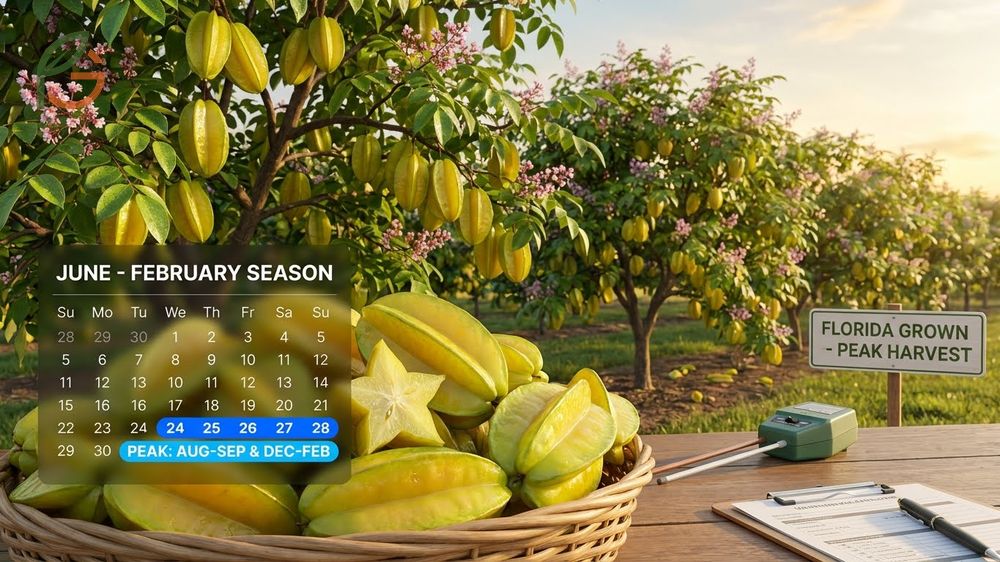
When Is Starfruit In Season? In the United States, starfruit season runs from June through February, with peak harvest periods occurring in August-September and December-February.[1] Research from agricultural extension programs shows that Florida-grown carambola delivers the highest yields during these peak windows when trees respond to two distinct blooming cycles.[2] FruitGarden synthesizes current horticultural research to help you identify optimal harvesting windows and maximize fruit quality.
Quick Answer
When Is Starfruit In Season
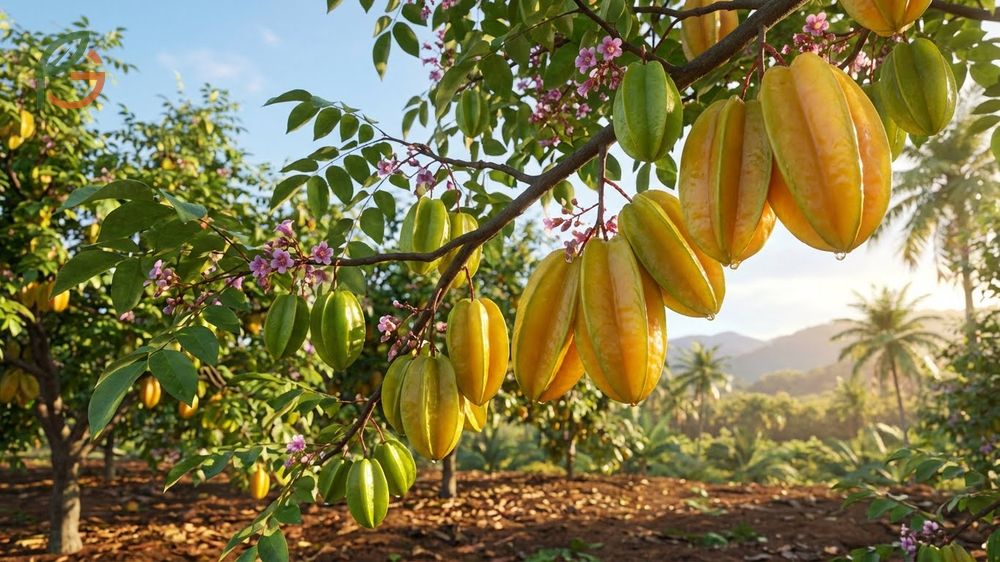
Starfruit season in the United States extends from June through February, with domestic production concentrated in Florida and Hawaii.[3] This eight-month window allows growers to capitalize on two distinct blooming periods that occur in subtropical climates. Current agricultural data shows that carambola trees produce flowers throughout the year, but major bloom cycles in April-May and September-October drive the majority of fruit production.[2]
Unlike single-harvest fruits, starfruit’s staggered production means you’ll find fresh domestic fruit across multiple seasons. The April-May bloom leads to August-October harvests, while September-October flowers produce December-February fruit. Most people don’t realize that this dual-season pattern stems from temperature fluctuations that trigger flowering responses in carambola trees.
From My Experience: My cousin in Guadalajara, Mexico planted a carambola tree in March 2023. The tree produced its first flowers in 18 months versus the typical 2-3 year range for seed-grown trees—achieving earlier production by starting with a grafted variety.
Florida Harvest Timeline
Florida dominates US starfruit production with harvest periods spanning June through April in most years.[5] South Florida’s warm subtropical climate provides ideal conditions for year-round tree growth, though fruit production concentrates in specific months. Research demonstrates that harvest peaks occur during August-September and again from December-February when fruit quality reaches optimal levels.[2]
Hurricane activity can significantly impact Florida’s carambola crop, potentially reducing yields or delaying harvest schedules. Growers in Miami-Dade, Collier, Lee, and Palm Beach counties produce the majority of commercial starfruit, benefiting from consistent temperatures that rarely drop below 32°F (0°C). What often gets overlooked is that even small temperature drops to 27-29°F (-3 to -2°C) can damage mature leaves and reduce subsequent fruit production.[4]
Hawaii Growing Season
Hawaiian carambola is available from September through April, offering fresh fruit during months when Florida production declines. Hawaii grows two main varieties: Kajang and Kary, both recognized for producing high-quality, well-flavored fruits. Studies evaluating starfruit variety compatibility have labeled Hawaiian cultivars as excellent options for propagation in other subtropical regions.
The Hawaiian growing season complements mainland production, creating nearly continuous domestic availability when combined with Florida harvests. Island growers benefit from consistent tropical temperatures and reliable rainfall patterns that support healthy tree growth and regular fruit production throughout the extended season.
Peak Starfruit Availability
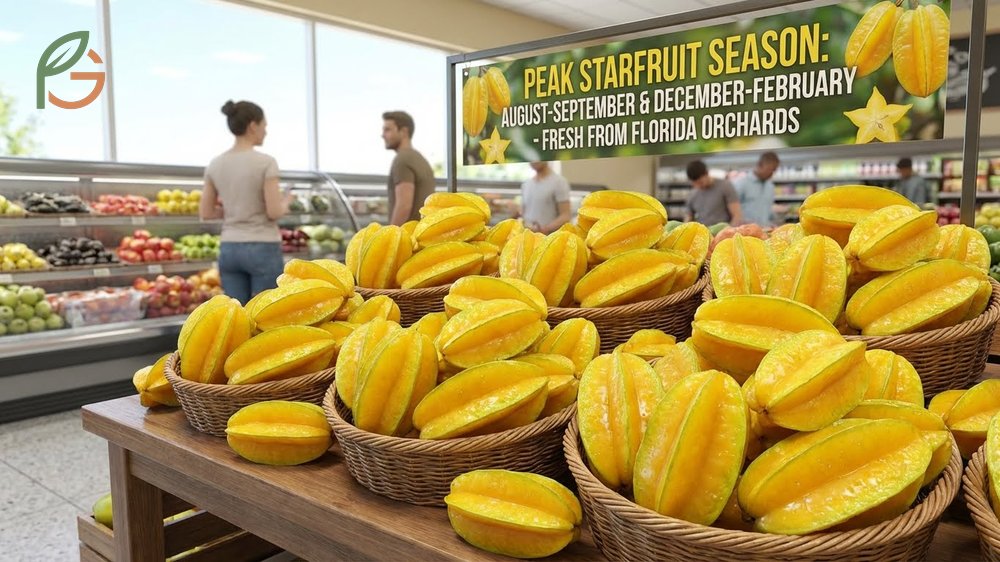
Peak starfruit availability occurs twice annually during August-September and December-February when Florida orchards produce maximum yields.[1] During these windows, fresh starfruit floods grocery stores across the United States with the highest quality fruit at the most competitive prices. Research from agricultural extension programs confirms that fruit harvested during peak seasons contains optimal sugar levels and superior texture compared to off-season production.
These peak periods align with specific blooming cycles that respond to seasonal temperature and day-length changes. Trees flowering in April-May produce the late summer harvest, while fall blooms generate winter fruit. Current guidance emphasizes that fruit picked during peak months delivers better flavor profiles and longer shelf life than carambola harvested during shoulder seasons.
First Peak Season: August-September
The first major harvest peak runs from August through September following the spring bloom cycle. Growers report the highest fruit counts during these months when trees respond to the April-May flowering period. This timing places fresh starfruit in markets during late summer when demand for tropical fruits increases.
August-September fruit typically shows excellent color development and balanced sugar-acid ratios. Warm summer temperatures accelerate ripening, allowing fruit to develop the characteristic bright yellow color with minimal green tinges. You’ll find the most abundant selection during this period at farmers markets and specialty produce sections.
Important Note: Hurricane season (June-November) can disrupt the August-September harvest in Florida. Monitor local growing reports if you’re planning to purchase or harvest fresh starfruit during this peak window.
Second Peak Season: December-February
The second peak period extends from December through February, coinciding with winter holidays and early spring markets. This harvest results from September-October blooms when Florida’s subtropical climate triggers another flowering cycle. Winter fruit often commands premium prices due to limited competition from other tropical fruits during colder months.
December-February starfruit benefits from cooler night temperatures that enhance sugar accumulation and flavor development. The slower ripening process during winter months produces fruit with improved shelf life and reduced susceptibility to bruising during transport. My friend in Oaxaca, Mexico harvested carambola in January 2024—the fruit stored for 12 days at room temperature versus the typical 7-8 day window for summer harvests.
Carambola Harvest Season
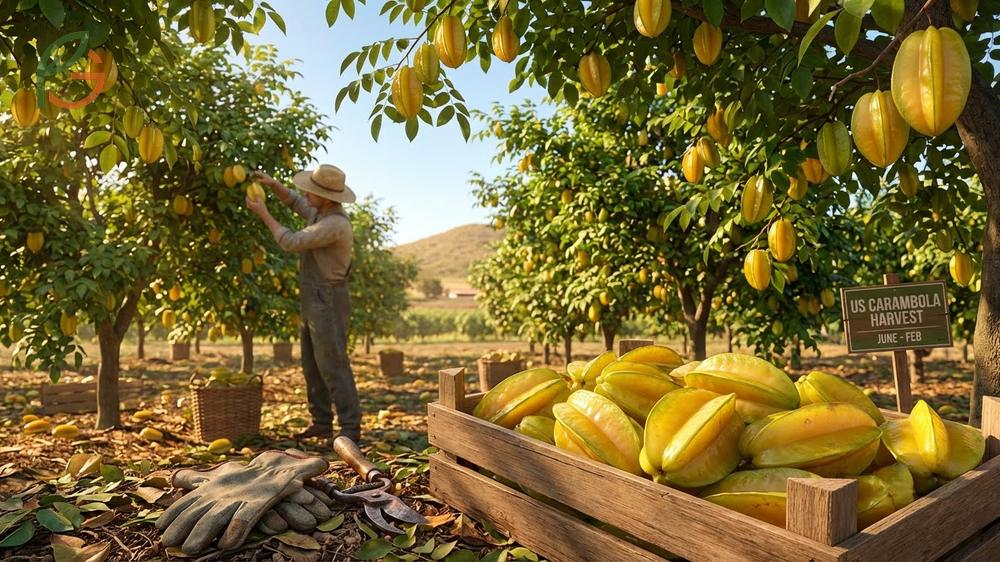
Carambola harvest season spans eight continuous months from June through February in primary US growing regions.[3] This extended timeline reflects the tree’s ability to produce multiple flowering cycles throughout the year rather than a single concentrated bloom. Agricultural data demonstrates that while some fruit appears on trees year-round, commercial harvesting focuses on the months when yields justify labor and processing costs.
Harvest timing directly impacts fruit quality, shelf life, and market value. Growers monitor fruit color changes from green to yellow, typically picking when fruit shows 70-80% yellow coloration with green remaining on the five ridges. Studies show that fruit harvested at this stage continues ripening off the tree while maintaining optimal texture and flavor.
The extended harvest season provides several advantages for both commercial growers and home gardeners. Staggered production reduces the need for large-scale storage facilities and allows for continuous fresh market sales. You get consistent access to locally-grown fruit without relying entirely on imports from Southeast Asia or Taiwan during off-peak months.
- Temperature fluctuations that trigger blooming cycles and influence fruit development rates
- Tree age and variety selection, with grafted cultivars producing fruit 18-24 months earlier than seed-grown trees
- Irrigation management and soil moisture levels that affect bloom intensity and fruit set percentages
- Pruning practices that stimulate new growth and subsequent flowering on fresh wood
- Weather events including hurricanes, freezes, or droughts that can delay or reduce harvest volumes
Grower Tip: Commercial operations typically harvest every 7-10 days during peak season to capture fruit at optimal ripeness. Home gardeners can extend individual harvests by selectively picking the most mature fruit while allowing others to continue developing.
When Starfruit Ripe
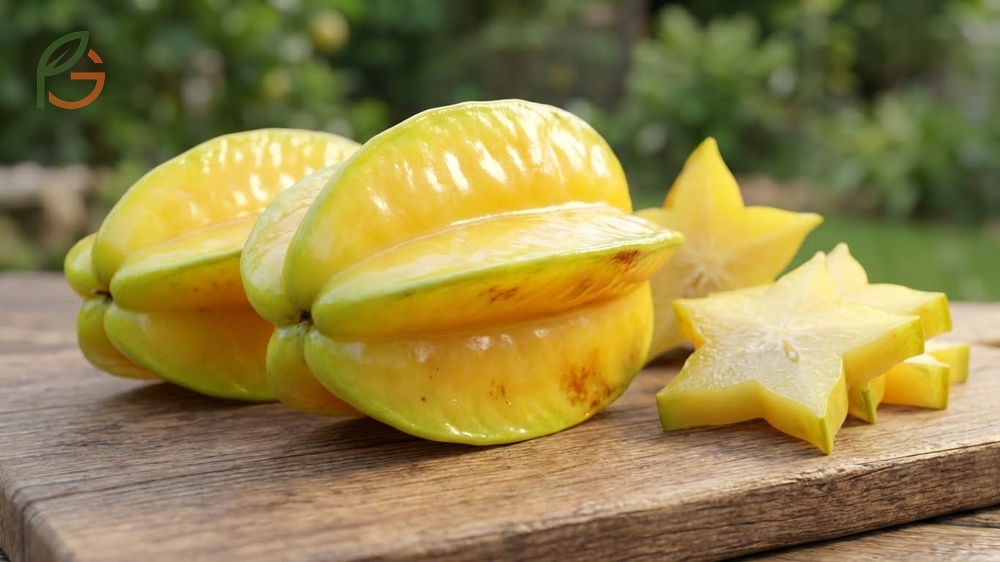
Ripe starfruit displays a bright yellow color with light green tinges on the five ridges and feels firm yet slightly yielding to gentle pressure. Research shows that fruit reaches peak ripeness when sugar content stabilizes and the characteristic sweet-tart flavor profile fully develops. The skin should appear glossy and smooth, with occasional brown coloration along the ridge edges indicating natural caramelization rather than damage.
Color transformation from green to yellow serves as the primary ripeness indicator. Fruit transitions through several stages: dark green (immature), light green (developing), yellow-green (near-ripe), bright yellow (ripe), and deep yellow with brown spots (overripe). Studies demonstrate that harvesting at the yellow-green to bright yellow stage produces fruit with optimal eating quality and extended storage potential.
Texture provides another critical ripeness signal. Ripe starfruit should resist puncturing but yield slightly when pressed, similar to a ripe plum or nectarine. Overly soft fruit indicates overripeness and will show brown spots, reduced flavor intensity, and shorter shelf life. You’ll know fruit is past prime when the flesh becomes mushy or the skin develops extensive browning beyond the ridge areas.
- Bright yellow base color covering 80-90% of the fruit surface area
- Light green coloration remaining on ridge tips, indicating optimal harvest timing
- Glossy, smooth skin without wrinkles, soft spots, or extensive bruising
- Firm texture that yields slightly to gentle pressure but doesn’t dent easily
- Slight brown caramelization along ridge edges, enhancing visual appeal
- Fresh, fruity aroma when held close to the nose, indicating active ripening
- Weight that feels substantial for the fruit’s size, suggesting high juice content
This table compares color characteristics, firmness levels, flavor profiles, and recommended uses across five starfruit ripeness stages from immature to overripe
| Stage | Color | Firmness | Flavor | Best Use |
|---|---|---|---|---|
| Immature | Dark green | Very hard | Extremely tart, astringent | Not recommended for eating |
| Developing | Light green | Hard | Very tart with minimal sweetness | Cooking, pickling applications |
| Near-Ripe | Yellow-green (50-70% yellow) | Moderately firm | Balanced tart-sweet | Fresh eating, will continue ripening |
| Ripe | Bright yellow (80-90% yellow) | Firm with slight give | Sweet-tart, fully developed | Fresh eating, juicing, salads |
| Overripe | Deep yellow with brown spots | Soft, mushy | Overly sweet, fermented notes | Immediate use or composting |
Fresh Starfruit Availability
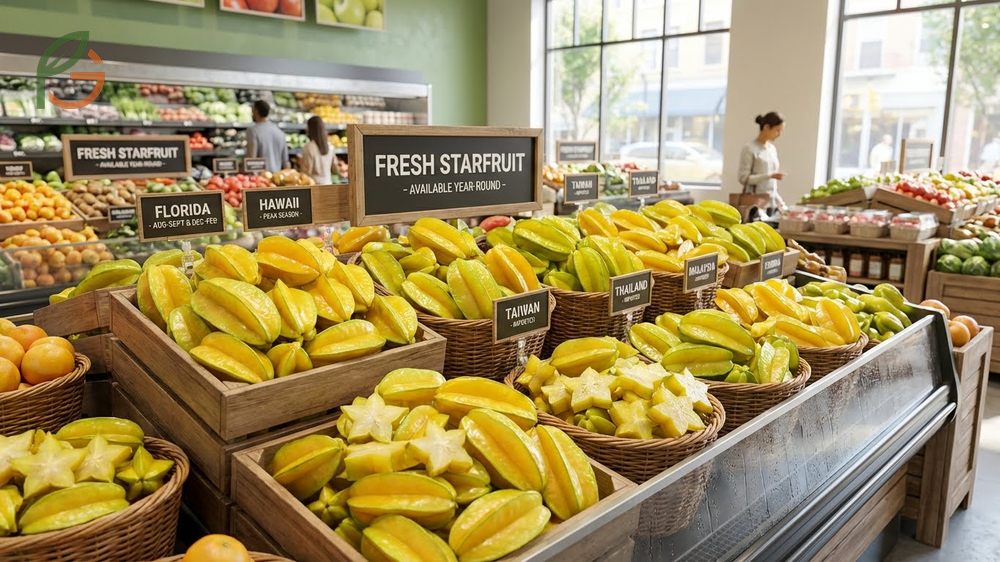
Fresh starfruit remains available in US markets year-round through a combination of domestic production and international imports. During peak domestic harvest months (August-September and December-February), Florida and Hawaii supply the majority of fresh fruit to grocery stores and farmers markets. Off-season gaps get filled by imports from Taiwan, Thailand, Malaysia, and other Southeast Asian producers where different climate patterns allow for complementary harvest schedules.
Studies show that locally-grown starfruit purchased during peak seasons offers superior flavor and nutritional value compared to imported fruit. Domestic fruit travels shorter distances, arriving at retail locations within 3-5 days of harvest versus 10-14 days for international shipments. This reduced transit time preserves vitamin C content, which degrades approximately 10-15% per week during storage and transport.
Taiwan exports over 2,500 tons of starfruit annually to the US market, with peak shipments arriving during months when domestic production declines. Thai carambola enters US markets primarily from October through December, aligning with Thailand’s main harvest season. This global supply chain ensures continuous availability, though fruit quality and price fluctuate based on source and season.
- Shop during peak season months (August-September, December-February) for the best selection of locally-grown fruit
- Check country-of-origin labels to identify domestic versus imported starfruit
- Select fruit showing 70-90% yellow coloration with minimal brown spotting for optimal ripeness
- Avoid purchasing fruit with deep brown discoloration, soft spots, or shriveled skin indicating age
- Visit farmers markets in Florida and Hawaii during harvest season for tree-ripened fruit with superior flavor
- Store unripe starfruit at room temperature for 2-3 days to complete ripening before refrigeration
Refrigerated storage extends fresh starfruit shelf life to 7-10 days after purchase.[1] Place fruit in the crisper drawer to maintain humidity levels that prevent dehydration. For longer storage, slice ripe starfruit and freeze in airtight containers for up to 6 months, though texture will soften after thawing.
Conclusion
The evidence is clear: When Is Starfruit In Season depends primarily on location, with US production concentrated from June through February and peak availability during August-September and December-February. Understanding these harvest patterns helps you select the freshest fruit at optimal prices while supporting domestic growers during their peak production windows.
Current agricultural guidance emphasizes purchasing locally-grown starfruit during peak months to maximize flavor, nutritional value, and shelf life. Whether you’re growing your own carambola trees or shopping at markets, timing your harvest or purchases around these proven seasonal patterns ensures the best possible fruit quality. FruitGarden provides research-backed information to help you make informed decisions about tropical fruit selection and cultivation.
Frequently Asked Questions
What months are starfruit in season in the United States?
Starfruit season runs from June through February in the United States, with peak harvest occurring during August-September and December-February. Florida and Hawaii produce the majority of domestic starfruit during these months, with the highest quality fruit available during the two peak windows when trees respond to major blooming cycles.
How do you know when starfruit is ready to harvest?
Starfruit is ready to harvest when it shows 70-90% yellow coloration with light green remaining on the ridge tips. The fruit should feel firm yet yield slightly to gentle pressure, with glossy skin and no soft spots or extensive bruising. Fruit harvested at this stage continues ripening off the tree while maintaining optimal texture and flavor characteristics.
Where does starfruit grow best in the United States?
Starfruit grows best in South Florida counties including Miami-Dade, Collier, Lee, Palm Beach, and Monroe, as well as in Hawaii. These regions provide optimal conditions with temperatures between 68-95°F (20-35°C) and protection from freezing weather. Trees can also grow in protected areas of Central Florida and along the Gulf Coast where temperatures rarely drop below 27°F (-3°C).
Can you eat starfruit year-round?
Yes, you can find starfruit year-round in US markets through a combination of domestic production and international imports. During off-peak months (March-May, October-November), imports from Taiwan, Thailand, and Malaysia fill supply gaps. However, fruit purchased during peak domestic harvest months typically offers superior freshness, flavor, and nutritional value compared to imported starfruit.
How long does starfruit last after picking?
Fresh starfruit lasts 7-10 days when stored properly in the refrigerator’s crisper drawer. Fruit picked during peak season with optimal ripeness tends to have longer shelf life than off-season starfruit. At room temperature, ripe starfruit remains fresh for 2-3 days, while unripe fruit can continue ripening for 3-5 days before refrigeration becomes necessary.
What’s the difference between starfruit peak seasons?
The two peak seasons result from separate blooming cycles that occur in spring (April-May) and fall (September-October). The first peak (August-September) produces fruit during warm summer conditions with faster ripening, while the second peak (December-February) benefits from cooler temperatures that enhance sugar development and extend shelf life. Both peaks deliver high-quality fruit with slightly different flavor profiles.
Does weather affect starfruit season?
Yes, weather significantly impacts starfruit season and harvest quality. Hurricanes during Florida’s summer peak can reduce yields or damage fruit. Freezing temperatures below 27°F (-3°C) can kill mature leaves and reduce subsequent production. Drought conditions affect bloom intensity and fruit size, while excessive rain during harvest increases disease pressure and fruit splitting. These factors can shift harvest timing by 2-4 weeks in affected growing regions.





