
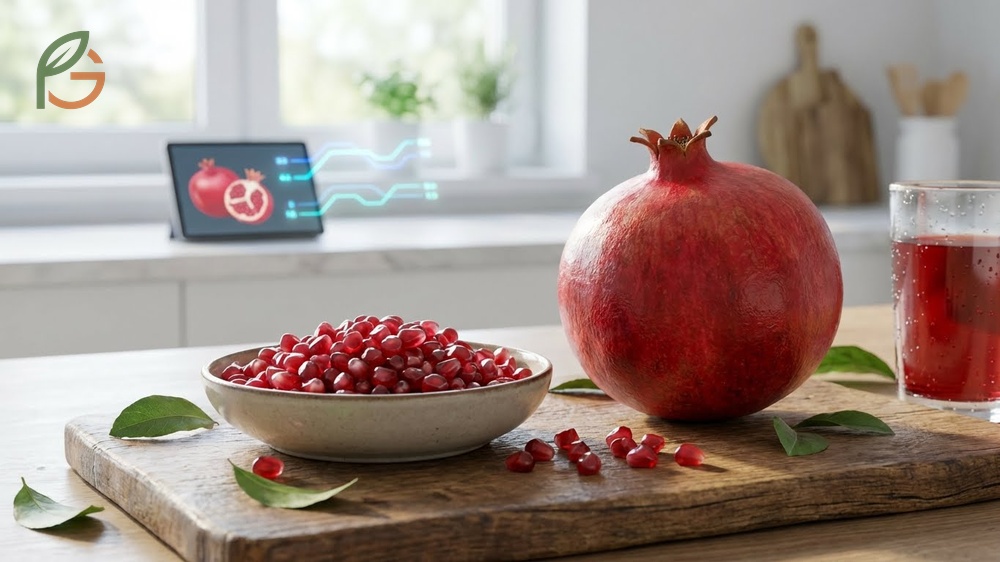
How many calories in a pomegranate? One whole pomegranate contains 234 calories[1], with the edible seeds providing impressive nutrition that includes 11.3g of fiber and 32% of your daily vitamin C[1]. Research shows pomegranates pack more antioxidants than most fruits while maintaining moderate calorie density. FruitGarden synthesizes current nutritional research to help you understand what you’re actually getting when you eat this ruby-red fruit.
Quick Answer
- One whole pomegranate (282g): 234 calories[1]
- Per 100g serving: 83 calories with 19g carbs and 4g fiber[2]
- Net carbs: 14.7g per 100g (not keto-friendly due to higher carb content)[3]
- Weight loss benefit: Studies show pomegranate consumption reduces body weight by 1.97 kg on average[4]
How Many Calories in a Pomegranate
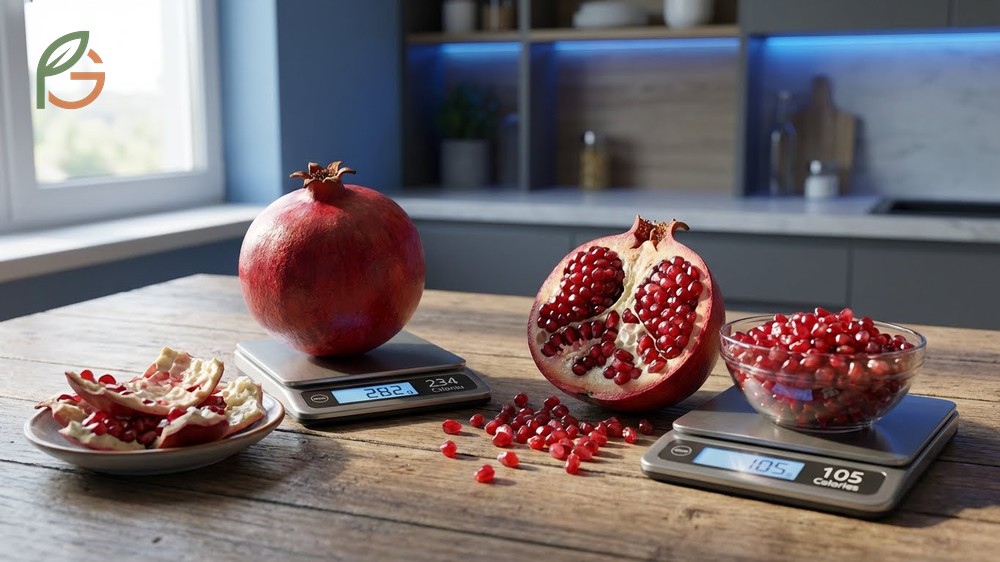
Current data indicates that calorie content varies significantly based on what you’re measuring. A whole pomegranate fruit weighs approximately 282g and provides 234 calories[1]. However, you don’t eat the entire fruit—the inedible peel and membrane account for roughly 50-60% of the total weight.
When you extract just the edible arils (seeds), you’re left with about 105 calories per typical serving[5]. This makes pomegranate a moderate-calorie fruit that won’t derail your daily calorie goals. Most people find the calorie investment worth it because of the nutrient density—you get substantial vitamins, minerals, and antioxidants per calorie consumed.
The standardized nutrition label uses 100g as a reference point, which contains 83 calories[2]. This puts pomegranate in the middle range compared to other popular fruits—it’s got more calories than strawberries (32 per 100g) but fewer than bananas (89 per 100g).
Whole Fruit vs Arils Only
Understanding the difference between whole fruit and arils matters for accurate calorie tracking. The whole fruit includes the thick leathery peel and bitter white membrane, neither of which you eat. When nutrition labels reference “one pomegranate,” they typically mean the entire 282g fruit at 234 calories[1].
Research shows the edible portion (arils) represents 40-50% of total fruit weight. If you scoop out the seeds from one average pomegranate, you’ll get roughly 150-170g of arils containing approximately 105-140 calories[5]. This distinction explains why you might see different calorie counts across various sources—they’re measuring different parts of the fruit.
Serving Size Breakdown
Standard serving sizes help you compare pomegranate to other fruits accurately. The USDA defines a typical serving as one-half cup of arils, which weighs about 87g and delivers roughly 72 calories[2]. Most Americans eat closer to one cup (174g) in a single sitting, which doubles that to around 144 calories.
Agricultural data shows considerable size variation in pomegranates. Small fruits (200g total weight) might have only 80-90 calories of edible seeds, while large specimens (400g) can contain 180-200 calories worth of arils. The reason is simple: larger fruits don’t just have thicker peels—they also pack more seed-filled chambers inside.
Important note: Store-bought pomegranate arils in plastic containers typically contain 4-6 oz (113-170g) per package, providing 93-140 calories. Check the nutrition label since processing and packaging can affect final weight and calorie content slightly.
Nutritional Value of Pomegranate Seeds
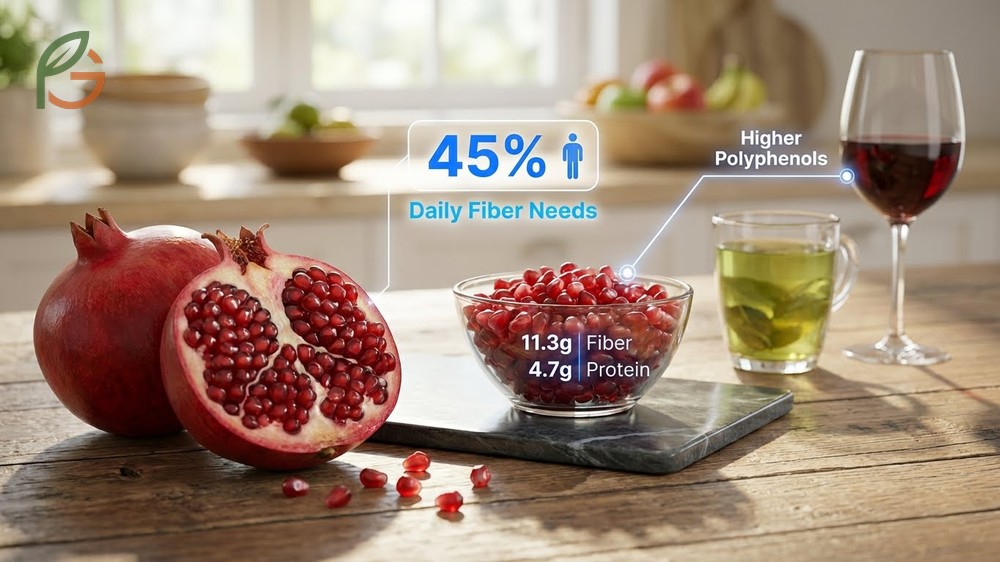
Evidence suggests pomegranate seeds deliver exceptional nutrition relative to their calorie cost. One whole pomegranate provides 4.7g of protein and 11.3g of fiber[1]—that’s 45% of your daily fiber needs in one fruit. The fiber-to-calorie ratio outperforms most common fruits, making pomegranate particularly filling despite moderate energy density.
Studies demonstrate that the polyphenol content in pomegranates exceeds that of green tea and red wine by volume. Per 100g, you’re getting 10mg of vitamin C (11% DV), 16µg of vitamin K (14% DV), and 236mg of potassium (7% DV)[2]. The fat content remains minimal at just 1.2g per 100g, with virtually no saturated fat or cholesterol.
What often gets overlooked is the antioxidant density. Research shows pomegranate’s ORAC (Oxygen Radical Absorbance Capacity) value ranges from 2,860 to 3,307 per 100g, placing it among the top 20% of all tested fruits. This antioxidant activity comes primarily from punicalagins and anthocyanins concentrated in the arils and juice.
Vitamins and Minerals
Current nutritional analysis reveals pomegranates as particularly rich in specific micronutrients. Vitamin C content reaches 32% of the daily value per whole fruit[1], supporting immune function and collagen synthesis. Folate contributes 38µg per 100g (10% DV), making it valuable for pregnant women and those focused on cardiovascular health.
The mineral profile emphasizes potassium (236mg per 100g) over sodium (just 3mg per 100g)[2], creating a 78:1 ratio that benefits blood pressure regulation. Copper content (0.16mg per 100g) provides 18% of your daily needs, supporting iron absorption and red blood cell formation. Manganese, zinc, and iron appear in smaller but still meaningful amounts.
- Vitamin C: 10mg (11% DV) – supports immune system and acts as antioxidant
- Vitamin K: 16µg (14% DV) – essential for blood clotting and bone health
- Folate: 38µg (10% DV) – crucial for cell division and DNA synthesis
- Potassium: 236mg (7% DV) – regulates fluid balance and muscle contractions
- Copper: 0.16mg (18% DV) – aids iron metabolism and connective tissue formation
Fiber and Protein Content
Agricultural research demonstrates that pomegranate’s fiber content exceeds most stone fruits and citrus varieties. At 4g per 100g (16% DV), the fiber density matches apples and surpasses oranges by 2.3x[2]. This fiber combines both soluble and insoluble types, with the edible seeds providing mechanical bulk that slows digestion and promotes satiety.
Protein content reaches 1.67g per 100g, which translates to about 4.7g per whole fruit[1]. While this won’t meet your protein goals alone, it’s higher than most berries and melons. The fiber-to-sugar ratio (1g fiber for every 3.4g sugar) creates a more gradual blood glucose response than lower-fiber fruits like grapes or watermelon.
Pomegranate Carb Count
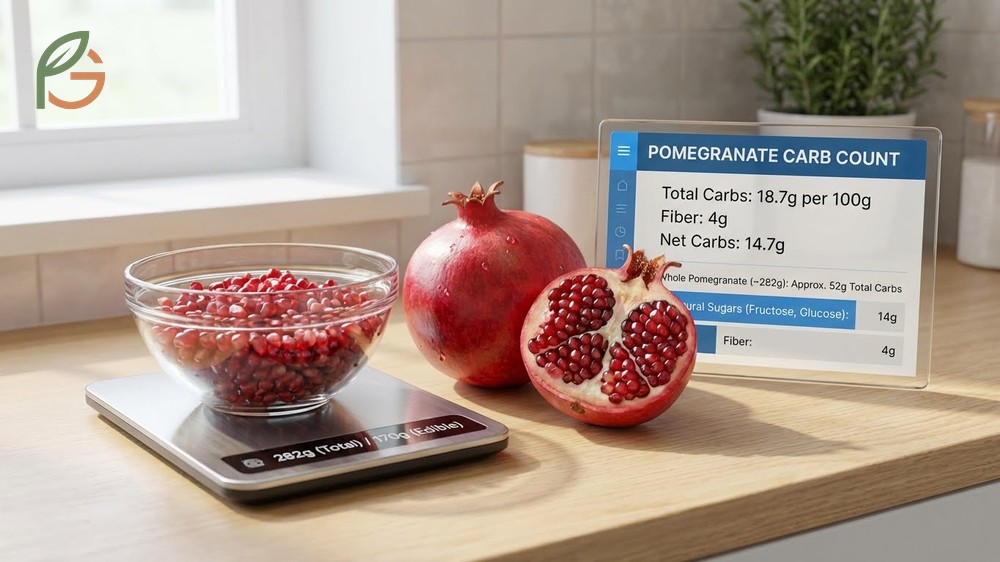
Carbohydrate analysis reveals pomegranates contain 18.7g total carbs per 100g, with 4g coming from fiber[2]. This creates a net carb count of 14.7g per 100g after subtracting fiber. For one whole pomegranate (282g total, about 170g edible arils), you’re consuming approximately 52g total carbohydrates[1].
The carbohydrate composition skews heavily toward natural sugars rather than starch. Research shows 14g of the 18.7g carbs per 100g comes from fructose, glucose, and other simple sugars. However, the substantial fiber content (4g per 100g) buffers the glycemic impact compared to lower-fiber fruits. Most people find pomegranate raises blood sugar more gradually than dried fruit or fruit juice.
Studies demonstrate that one cup of pomegranate arils (174g) delivers roughly 32g of carbohydrates. For context, that’s equivalent to two slices of bread or one medium banana. The carb density sits in the moderate range—higher than berries (7-15g per cup) but lower than tropical fruits like mango (28g per cup for the fruit alone) or dried dates (110g per cup).
This table compares total carbohydrates, fiber content, and net carbs across different serving sizes of pomegranate
| Serving Size | Total Carbs | Dietary Fiber | Net Carbs |
|---|---|---|---|
| Per 100g | 18.7g[2] | 4.0g[2] | 14.7g[3] |
| 1/2 cup arils (87g) | 16.3g | 3.5g | 12.8g |
| 1 cup arils (174g) | 32.5g | 7.0g | 25.5g |
| Whole fruit (282g) | 52g[1] | 11.3g[1] | 40.7g |
For carb counters: If you’re tracking macros strictly, weigh your pomegranate arils for accuracy. Pre-packaged arils eliminate guesswork, but whole fruits vary considerably—small specimens might have 35-40g total carbs while large ones can exceed 60g.
Pomegranate Sugar Content
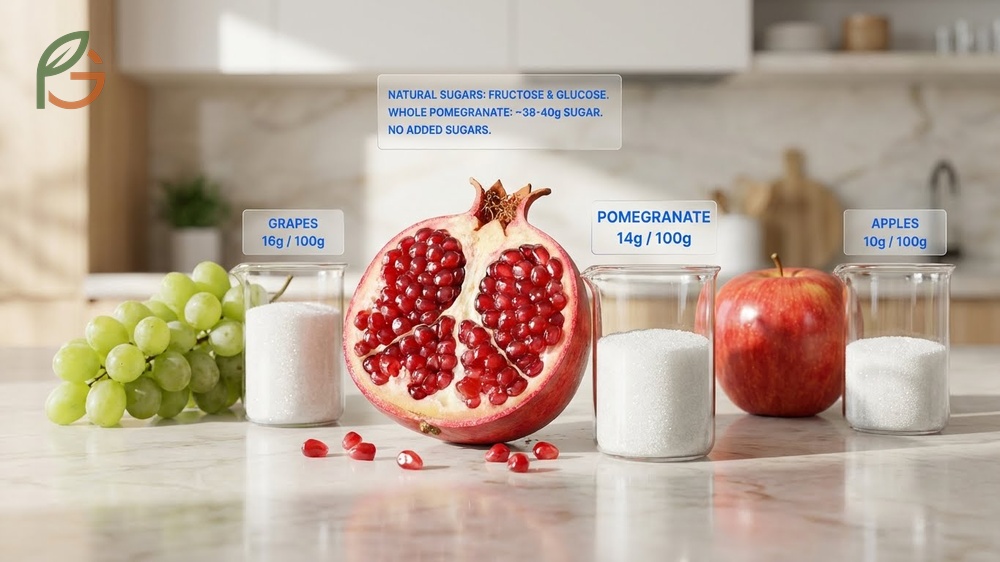
Sugar analysis shows pomegranates contain approximately 14g of natural sugars per 100g of edible fruit[2]. This places them on the higher end of the fruit sugar spectrum—comparable to grapes (16g per 100g) and sweeter than apples (10g per 100g). The sugar content comes entirely from naturally occurring fructose and glucose, with no added sugars in whole fruit.
Current data indicates one whole pomegranate delivers roughly 38-40g of sugar across its edible arils. For perspective, that’s equivalent to the sugar in two medium bananas or one 12-ounce can of regular soda. The difference lies in how your body processes it: the 11.3g of fiber in a whole pomegranate[1] slows sugar absorption, preventing the rapid blood glucose spike you’d get from soda.
Research demonstrates that the fiber-to-sugar ratio matters more than absolute sugar content for metabolic health. Pomegranate’s 1:3.4 ratio (1g fiber for every 3.4g sugar) outperforms many popular fruits. Watermelon has a 1:9 ratio, while mangoes sit around 1:7. This higher fiber proportion explains why pomegranates don’t trigger the same blood sugar rollercoaster as lower-fiber sweet fruits.
- Pomegranate: 14g sugar per 100g with 4g fiber (1:3.5 ratio)
- Grapes: 16g sugar per 100g with 0.9g fiber (1:18 ratio)
- Apples: 10g sugar per 100g with 2.4g fiber (1:4.2 ratio)
- Strawberries: 5g sugar per 100g with 2g fiber (1:2.5 ratio)
- Bananas: 12g sugar per 100g with 2.6g fiber (1:4.6 ratio)
Weight Loss Fruits

Studies demonstrate that pomegranate consumption leads to measurable weight reduction. A meta-analysis of 28 randomized controlled trials found that participants who consumed pomegranate products lost an average of 1.97 kg (4.3 lbs) more than control groups[4]. The same research showed BMI decreased by 0.48 points on average with regular pomegranate intake.
The weight loss mechanism involves multiple factors beyond just calorie content. Evidence suggests pomegranate polyphenols enhance fat oxidation and reduce inflammation markers associated with obesity. The high fiber content (11.3g per fruit) promotes satiety, helping you feel full longer after eating. Most people find that half a pomegranate makes a satisfying snack that curbs appetite for 2-3 hours.
Comparative analysis positions pomegranate favorably among weight-loss-friendly fruits. At 83 calories per 100g[2], it delivers more volume and nutrients than calorie-dense dried fruits (240-280 calories per 100g) while providing more substance than high-water fruits like watermelon. The balance of fiber, natural sugars, and polyphenols creates what researchers call “metabolic efficiency”—you get nutritional value without excessive calorie load.
- Strawberries: 32 calories per 100g – lowest calorie option with high vitamin C
- Grapefruit: 32 calories per 100g – shown to improve insulin sensitivity
- Cantaloupe: 34 calories per 100g – high water content for hydration
- Blackberries: 43 calories per 100g – excellent fiber with low glycemic impact
- Pomegranate: 83 calories per 100g – moderate calories with research-backed weight loss benefits
- Apples: 52 calories per 100g – portable and fiber-rich for sustained energy
Weight loss tip: Research shows eating whole pomegranate arils produces better satiety than drinking pomegranate juice. The mechanical chewing and intact fiber structure trigger fullness signals more effectively, helping you consume fewer total calories throughout the day.
Keto Friendly Fruits
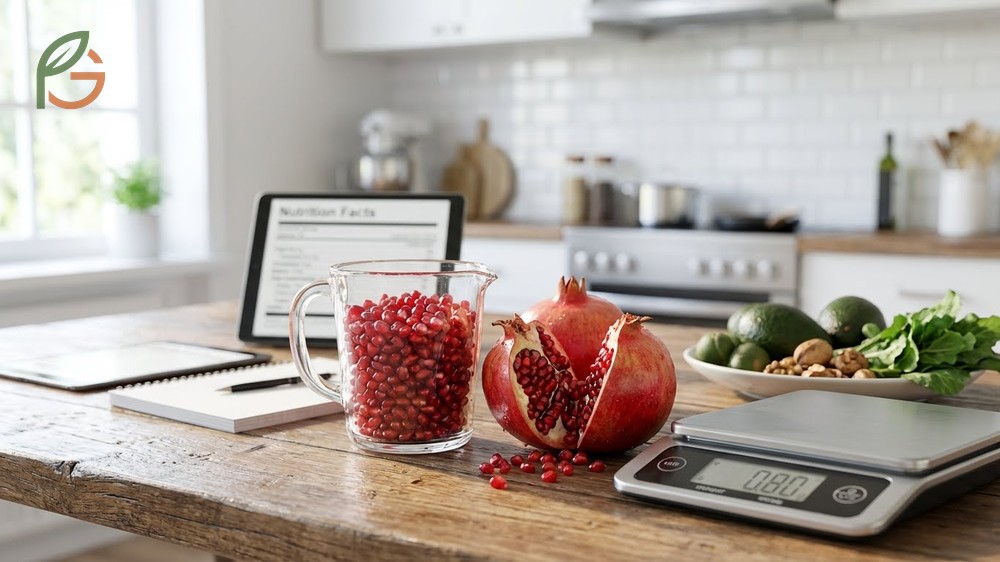
Nutritional analysis reveals pomegranates aren’t keto-friendly due to their carbohydrate density. With 14.7g net carbs per 100g[3], a single cup of arils (174g) delivers approximately 25.5g net carbs—exceeding the entire daily carb allowance (20-25g) for strict ketogenic diets. Even a quarter-cup serving consumes nearly 6.4g of your carb budget, leaving little room for vegetables or other nutrient sources.
The ketogenic diet requires maintaining net carbs below 20-50g daily to sustain ketosis. Current guidance emphasizes that most stone fruits and seed-based fruits like pomegranates push carb counts too high. Research shows that just 100g of pomegranate arils uses 29-74% of the maximum daily keto carb allowance, making it impractical for anyone following this eating pattern.
For keto dieters wanting fruit, evidence suggests focusing on lower-carb alternatives. Berries provide the best options: raspberries deliver 5.4g net carbs per 100g, blackberries offer 4.9g, and strawberries contain 5.7g. Avocados (1.8g net carbs per 100g) and olives (3.1g) technically qualify as fruits while fitting keto macros perfectly. Coconut meat adds variety at 6.2g net carbs per 100g.
This table compares net carbs, fiber, and keto compatibility across different fruits per 100g serving
| Fruit | Net Carbs (per 100g) | Total Fiber | Keto Compatible |
|---|---|---|---|
| Avocado | 1.8g | 6.7g | ✓ Yes |
| Raspberries | 5.4g | 6.5g | ✓ Moderate portions |
| Blackberries | 4.9g | 5.3g | ✓ Moderate portions |
| Strawberries | 5.7g | 2.0g | ✓ Moderate portions |
| Pomegranate | 14.7g[3] | 4.0g | ✗ Too high for keto |
Conclusion
The evidence is clear: pomegranates contain 234 calories per whole fruit with exceptional nutritional density that includes 11.3g fiber, 32% daily vitamin C, and research-proven weight loss benefits. At 83 calories per 100g, they occupy the moderate-calorie range—higher than berries but nutrient-rich enough to justify the calorie investment for most eating patterns. The 14.7g net carbs per 100g make them unsuitable for ketogenic diets, but perfect for balanced nutrition plans focused on whole foods.
Current guidance emphasizes eating whole pomegranate arils rather than drinking juice to maximize fiber intake and satiety benefits. FruitGarden recommends incorporating pomegranates into your fruit rotation 2-3 times weekly during peak season (September through January) when flavor and nutrient content reach their highest levels. Track serving sizes if you’re counting macros, but don’t fear the natural sugars—the fiber content and polyphenol profile create metabolic advantages that processed sweets can’t match.
Medical Disclaimer
Important Medical Disclaimer: This content is for informational and educational purposes only. It’s not intended as a substitute for professional medical advice, diagnosis, or treatment. Always consult a qualified healthcare professional or registered dietitian before making significant changes to your diet, especially if you have diabetes, are pregnant, take medications that interact with grapefruit (some apply to pomegranate), or have any medical conditions. Individual nutritional needs vary based on age, activity level, health status, and other factors.
Frequently Asked Questions
How many calories are in a cup of pomegranate seeds?
One cup of pomegranate arils (174g) contains approximately 144 calories. This serving provides about 7g of fiber and 32.5g of carbohydrates, making it a filling snack option that delivers substantial nutrition per calorie.
Are pomegranates good for weight loss?
Research demonstrates pomegranates support weight loss when included in a balanced diet. A meta-analysis of 28 studies found participants consuming pomegranate products lost an average of 1.97 kg more than control groups, with BMI reductions of 0.48 points. The high fiber content and polyphenols contribute to increased satiety and improved metabolism.
How many carbs are in one whole pomegranate?
One whole pomegranate contains approximately 52g of total carbohydrates, including 11.3g of dietary fiber. This creates a net carb count of about 40.7g per fruit. The substantial fiber content helps moderate blood sugar impact compared to lower-fiber fruits with similar sugar levels.
Can diabetics eat pomegranate?
Diabetics can include pomegranate in moderation as part of a balanced meal plan, but should monitor portion sizes due to the 14g of natural sugar per 100g. The fiber content helps slow sugar absorption, and research shows pomegranate polyphenols may improve insulin sensitivity. However, it’s essential to count the carbs toward your daily total and consult your healthcare provider about appropriate serving sizes for your specific condition.
Is pomegranate high in sugar compared to other fruits?
Pomegranate contains moderate to high sugar content at 14g per 100g, placing it above apples (10g) but below grapes (16g). What matters more is the fiber-to-sugar ratio: pomegranate’s 1:3.4 ratio outperforms many popular fruits, meaning the 4g of fiber per 100g helps buffer the metabolic impact of the natural sugars.
What’s the best serving size for pomegranate?
A standard serving size is one-half cup of arils (87g), which provides 72 calories and 3.5g of fiber. Most people find this amount satisfying as a snack or salad topping. If you’re tracking macros, one whole pomegranate typically yields 1.5-2 cups of arils, so you can extract multiple servings from a single fruit.
Does pomegranate juice have the same calories as whole fruit?
Pomegranate juice typically contains 130-160 calories per 8-ounce serving, which is similar to whole fruit on a volume basis. However, juice removes most of the fiber (0.5g versus 4g per 100g in whole fruit), concentrates the sugars, and lacks the mechanical chewing that promotes satiety. For weight management and blood sugar control, whole pomegranate arils provide better nutritional value than juice.





