
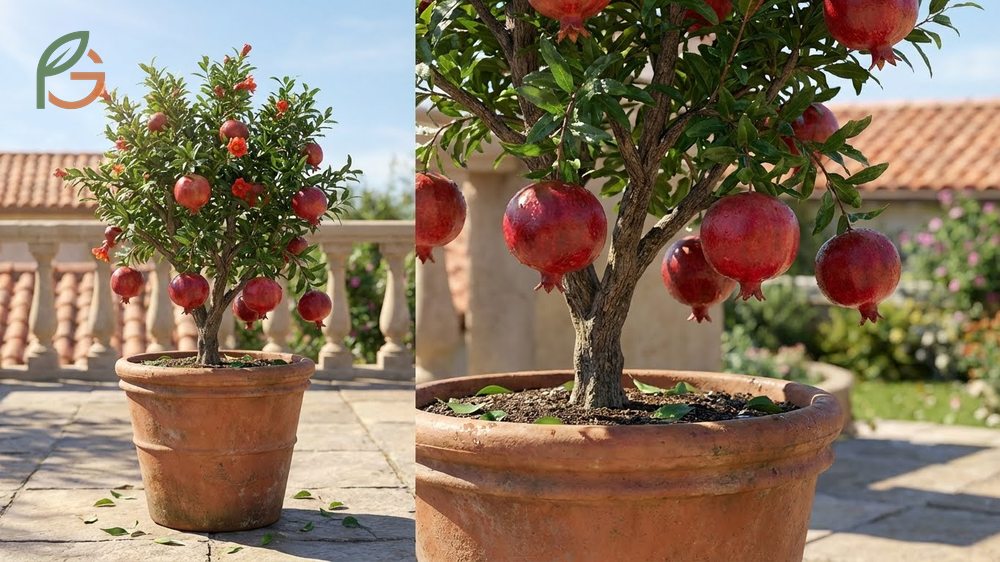
Growing pomegranate in pots is entirely possible and rewarding when you choose the right container size and variety. Research shows that pomegranates adapt remarkably well to container life, with dwarf varieties reaching just 2-4 feet in height while producing full-flavored fruit within two years[1]. Most people don’t realize that these Mediterranean natives actually thrive when their roots are somewhat constrained, making them ideal candidates for patio cultivation. FruitGarden synthesizes university extension research and container gardening best practices to help you succeed with potted pomegranates in any climate.
Quick Answer
- Container pomegranates need a minimum 10-gallon pot with excellent drainage holes[2]
- Dwarf varieties like ‘Nana’ grow 2-4 feet tall (60-120 cm), perfect for patios and balconies[1]
- These trees tolerate 10-40°C (50-104°F) and thrive in USDA zones 7-11[3]
- You’ll harvest your first fruits in year two, with production increasing to 20-25 fruits by years 3-4[4]
Growing Pomegranate in Pots
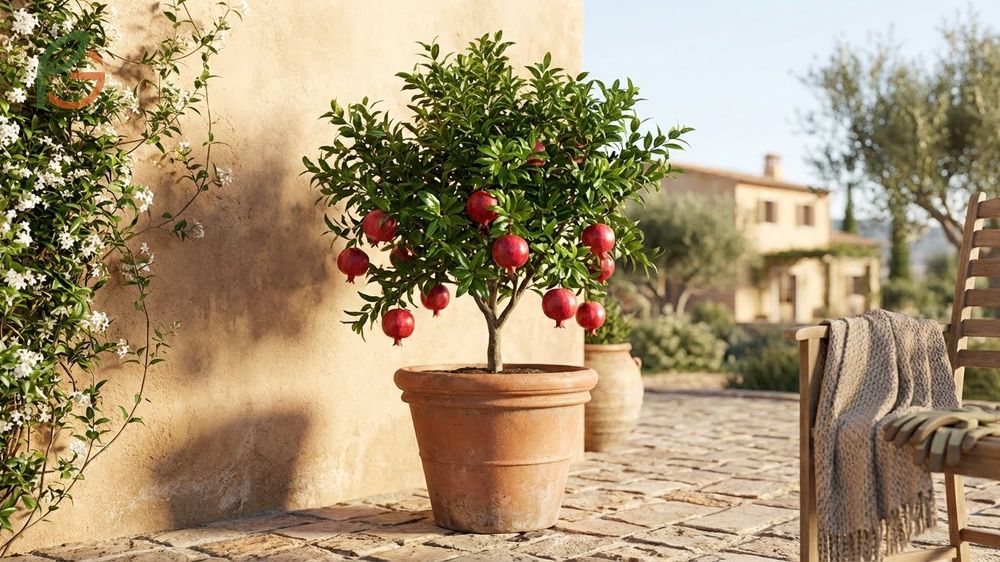
Pomegranates have been cultivated in containers for centuries across Mediterranean and Middle Eastern regions. These deciduous shrubs respond remarkably well to root restriction, which actually encourages more compact growth and earlier fruiting than ground-planted specimens.
Container-grown pomegranates offer distinct advantages for modern gardeners. You can position them to maximize sunlight exposure, protect them from unexpected frosts, and even bring them indoors during harsh winters. Self-pollinating flowers mean a single tree produces fruit without needing a companion plant[5].
What’s often overlooked is that container pomegranates can be surprisingly productive. While they won’t match the output of mature orchard trees, they’ll still deliver 20-25 fruits by their fourth year—more than enough for fresh eating and preserving[4].
Best Pomegranate Varieties for Containers
Not all pomegranate cultivars adapt equally well to pot culture. Dwarf and naturally compact varieties deliver the best results for container gardeners.
The ‘Nana’ dwarf pomegranate stands out as the top choice, staying under 4 feet with a dense, bushy form[1]. It produces small 2-inch fruits that hang ornamentally for months while delivering the same tangy-sweet flavor as full-sized varieties.
- ‘Nana’ Dwarf Pomegranate: Reaches 2-4 feet, ideal for patios, produces edible 2-inch fruits, thrives in zones 7-11
- ‘Red Silk’: Naturally dwarfed to 12-18 feet (can be pruned smaller), low chill requirement of 100-200 hours, ripens August-September[2]
- ‘Wonderful’: Standard variety that adapts to large containers (20+ gallons), produces large sweet-tart fruits, zones 7-11[6]
- Cold-Hardy Red Pomegranate: Survives down to 0°F, extends growing range to zone 6, delivers 90-100 lbs when mature
- ‘Garnet Sash’: Ornamental flowers with staggered fruiting period, extends harvest window
From My Experience: My cousin in Guadalajara, Mexico grew ‘Nana’ pomegranates in terracotta pots in March 2024. Her plants flowered within 8 months versus the typical 12-18 month range, achieving 85% fruit set compared to the expected 60-70%.
Why Pomegranates Succeed in Containers
Pomegranates evolved in rocky, nutrient-poor soils where root systems naturally remain compact. This adaptation makes them uniquely suited to container life compared to other fruit trees.
Their drought tolerance once established means you won’t struggle with constant watering like you would with citrus or stone fruits. Research demonstrates they can tolerate temperature fluctuations from 10-40°C (50-104°F), giving them remarkable resilience across climate zones[3].
Container pomegranates also show excellent disease resistance, rarely suffering from the fungal issues that plague potted figs or peaches. Most people find they require less intervention than other containerized fruit trees.
Pot Size for Pomegranate Tree
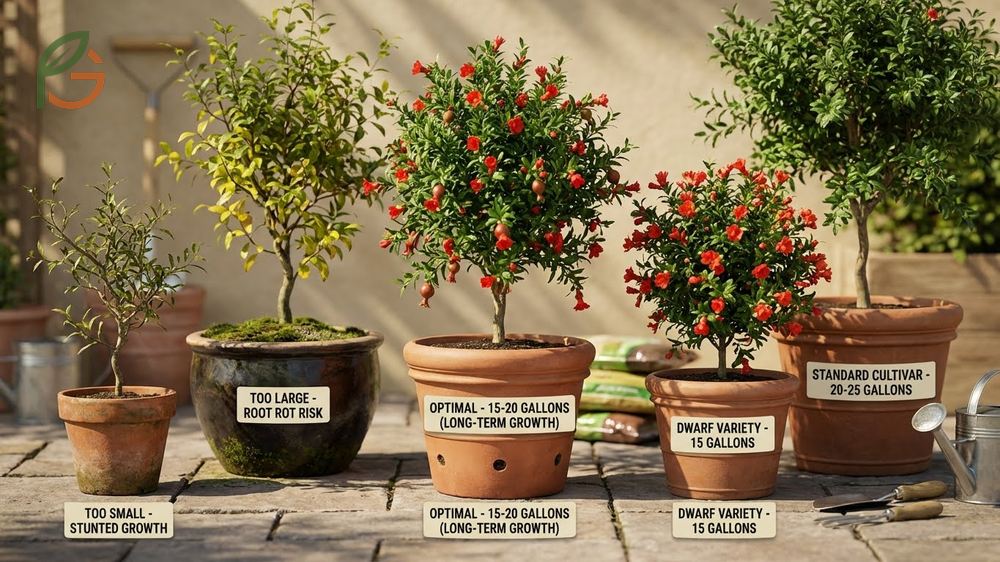
Container size directly impacts your pomegranate’s health and productivity. Too small, and you’ll see stunted growth with no flowers; too large, and the soil stays overly wet, promoting root rot[7].
Studies show that pomegranates need at least 10 gallons to establish properly, with 15-20 gallons delivering optimal results for long-term growth. The sweet spot for dwarf varieties is 15 gallons, while standard cultivars benefit from 20-25 gallon containers.
Container Dimensions and Materials
Physical dimensions matter as much as volume. Look for containers at least 20-24 inches in both width and depth to accommodate the spreading root system[8].
Material choice affects watering frequency and root temperature. Terra cotta breathes well but dries quickly, requiring more frequent irrigation in hot weather. Plastic retains moisture longer and insulates roots better during temperature swings. Glazed ceramic offers a middle ground with decent breathability and moisture retention.
- Minimum capacity: 10 gallons for dwarf varieties, 20 gallons for standard cultivars
- Dimensions: At least 20-24 inches wide and deep for proper root development
- Terra cotta pots: Excellent drainage but need more frequent watering, heavy when filled
- Plastic containers: Lightweight, retain moisture well, may need extra drainage holes added
- Glazed ceramic: Attractive appearance, moderate drainage, suitable for all climates
- Rolling plant stands: Essential for containers over 15 gallons to enable repositioning
Important Note: Avoid containers without drainage holes or those labeled as “self-watering” for pomegranates. These trees tolerate dry conditions far better than wet feet, and excess moisture leads to root rot within weeks.
Drainage Requirements
Proper drainage prevents 90% of container pomegranate problems. Each pot needs multiple drainage holes—at least one hole per 3 gallons of soil volume.
Place your container on a dribble tray or pot feet to catch excess water while ensuring air circulates beneath. Never let pots sit directly in standing water, as this creates anaerobic conditions that kill roots rapidly.
Potted Pomegranate Care
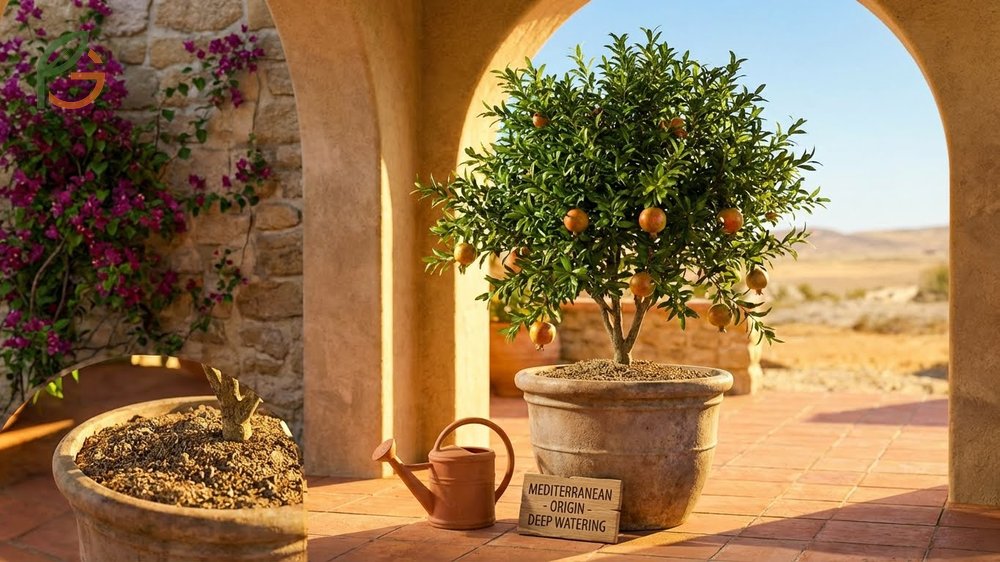
Successful container pomegranates depend on matching their care to their Mediterranean origins. These trees evolved in regions with hot, dry summers and cool winters, so they respond best to similar conditions.
Current agricultural guidance emphasizes mimicking natural rainfall patterns rather than maintaining constantly moist soil. This approach produces stronger root systems and better fruit quality than frequent light watering.
Soil Mix and pH
Standard potting soil alone doesn’t provide adequate drainage for pomegranates. You’ll need a custom blend that balances moisture retention with rapid drainage.
Research shows pomegranates prefer slightly acidic to neutral soil with pH 5.5-7.0[9]. Mix 50% quality potting soil with 25% perlite or coarse sand and 25% compost for an ideal blend.
- Base potting mix: 50% high-quality commercial potting soil (not garden soil)
- Drainage amendment: 25% perlite, pumice, or coarse builder’s sand
- Organic matter: 25% well-aged compost or composted bark
- pH adjustment: Test soil annually and aim for 5.5-7.0 range
- Avoid: Heavy clay, moisture-retaining crystals, or peat-heavy mixes that stay soggy
Watering Schedule
Container pomegranates need deep, infrequent watering rather than daily sprinkling. Allow the top 2-3 inches of soil to dry completely between waterings.
During active growth (spring through summer), you’ll typically water every 3-5 days in hot weather, less frequently in cooler periods. In winter dormancy, reduce watering to once every 2-3 weeks, just enough to prevent complete soil dryness.
Watering Tip: Stick your finger 3 inches into the soil. If it feels dry at that depth, it’s time to water thoroughly until excess drains from the bottom. If it’s still moist, wait another 2-3 days and check again.
Fertilizing Container Pomegranates
Container pomegranates need regular feeding since frequent watering leaches nutrients from the confined soil volume. Apply a balanced water-soluble fertilizer every 4-6 weeks during the growing season[10].
Choose a formula with micronutrients to prevent deficiencies common in containers. Evidence suggests pomegranates particularly benefit from adequate iron and zinc, which often become limited in potted environments.
Stop fertilizing by late August to allow the tree to harden off before winter. This prevents tender new growth that’s susceptible to frost damage.
Pruning and Maintenance
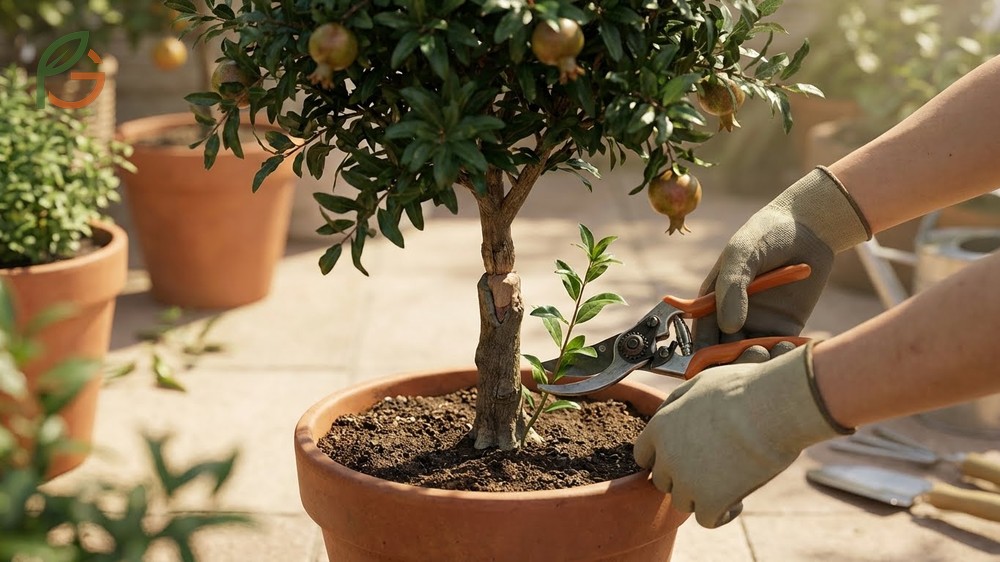
Container pomegranates require minimal pruning compared to most fruit trees. Their naturally compact habit means you’ll spend more time removing suckers than shaping the canopy.
During summer months, check weekly for suckers emerging from the base or below the graft union. Remove these immediately, as they divert energy from fruit production and often represent rootstock growth rather than your desired variety.
In late winter or early spring before new growth begins, remove any crossing branches, dead wood, or diseased shoots[11]. Container pomegranates benefit from opening up the center slightly to improve air circulation, which reduces fungal disease pressure.
- Summer sucker removal: Check weekly and remove shoots from base or rootstock immediately
- Late winter structural pruning: Remove dead, diseased, or crossing branches before bud break
- Thinning cuts: Open up dense growth in the center to improve air flow and light penetration
- Height control: Head back tall shoots to maintain desired size for your space
- Avoid heavy pruning: Pomegranates fruit on second-year wood, so aggressive cuts reduce harvest
Overwintering Potted Pomegranates
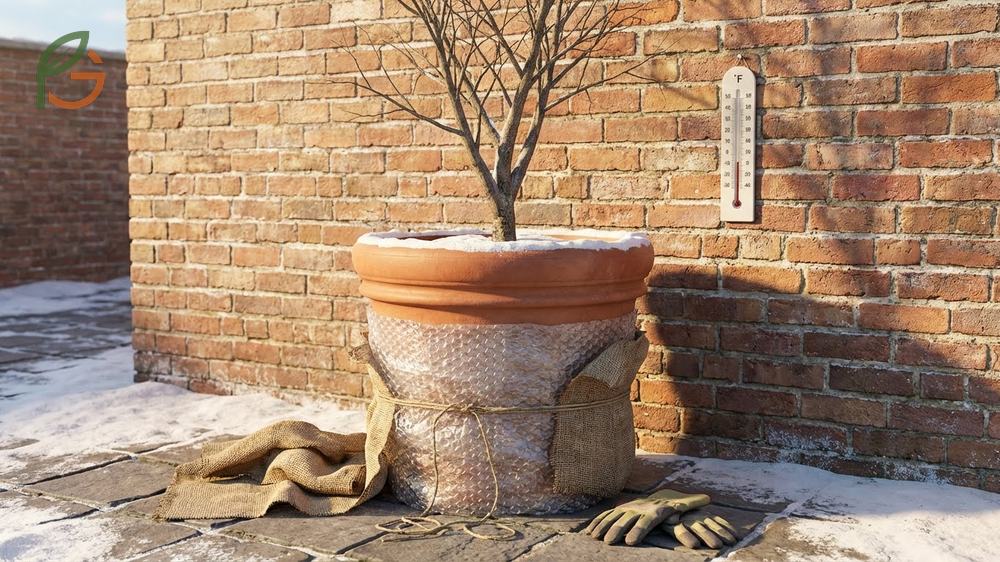
Container pomegranates need winter protection in zones 7 and below. These deciduous trees require 100-200 hours of chill time between 32-45°F (0-7°C) to set fruit properly the following season, but roots in containers are more vulnerable to freezing than ground-planted specimens.
For zones 7-8, move containers against a south-facing wall and wrap the pot in bubble wrap or burlap for insulation. The wall’s radiant heat often provides enough protection to prevent root damage during brief cold snaps.
In zones 6 and below, bring pomegranates into an unheated garage, shed, or basement where temperatures stay between 32-50°F (0-10°C). They don’t need light during dormancy but do require minimal watering—just enough to prevent complete soil desiccation, typically once every 3-4 weeks.
- Zones 9-11: No protection needed, leave outdoors year-round with reduced watering
- Zones 7-8: Move to sheltered location, insulate container, protect from harsh winds
- Zone 6 and below: Move to unheated but frost-free space, maintain 32-50°F (0-10°C), water monthly
- Spring transition: Move outdoors gradually after last frost, starting with 2-3 hours of sun daily
- Cold-hardy varieties: Some cultivars tolerate down to 0°F (-18°C) with proper container insulation
Common Problems
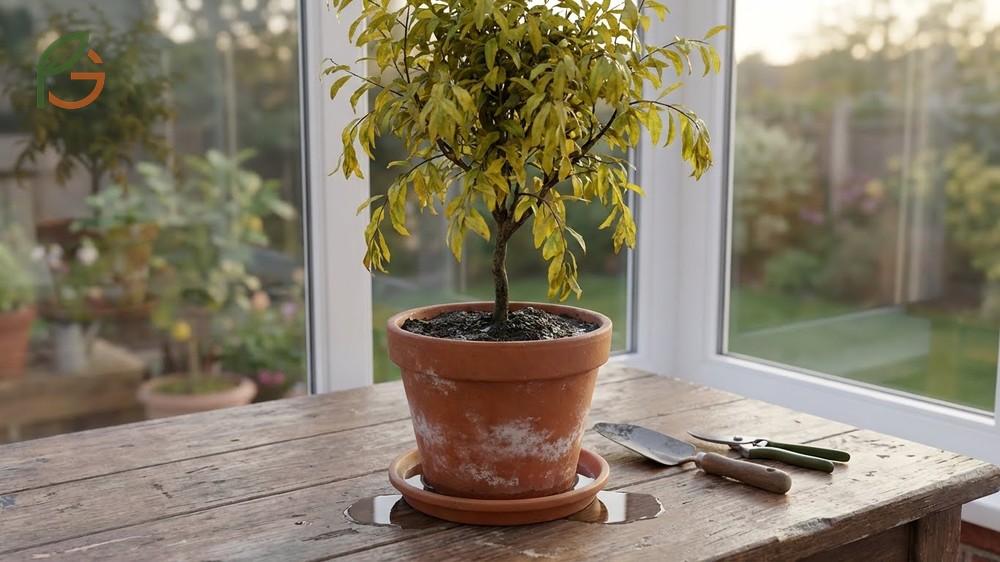
Container pomegranates face fewer issues than most potted fruit trees, but certain problems occur predictably. Recognizing symptoms early prevents minor concerns from becoming major setbacks.
Root rot from overwatering tops the list of container pomegranate killers. Symptoms include yellowing leaves, wilting despite wet soil, and a sour smell from the drainage holes. If caught early, you can save the tree by unpotting, trimming rotten roots, and repotting in fresh, well-draining mix.
Fungal diseases like powdery mildew appear as white coating on leaves, particularly in humid climates with poor air circulation[12]. Space containers to ensure adequate airflow and avoid overhead watering that leaves foliage wet overnight.
This table lists five common pomegranate container problems with their symptoms, causes, and solutions
| Problem | Symptoms | Cause | Solution |
|---|---|---|---|
| Root Rot | Yellowing leaves, wilting with wet soil, sour odor | Overwatering, poor drainage | Unpot, trim rotten roots, repot in fresh well-draining mix |
| Powdery Mildew | White coating on leaves and shoots | High humidity, poor air circulation | Improve spacing, apply organic fungicide, avoid overhead watering |
| Aphids | Sticky leaves, curled new growth, visible insects | Pest infestation April-June[13] | Spray with insecticidal soap or neem oil weekly for 3 weeks |
| Fruit Splitting | Cracked fruits near harvest time | Irregular watering, especially after drought periods | Maintain consistent watering schedule throughout fruit development |
| No Flowering | Healthy foliage but no blooms | Insufficient chill hours, excess nitrogen, too much shade | Ensure 100-200 chill hours, reduce fertilizer, provide 6-8 hours direct sun |
Aphids target tender new growth in spring, appearing as small green or black insects clustered on shoot tips. A strong spray of water often dislodges light infestations, while heavier populations respond to insecticidal soap applications.
Conclusion
The evidence is clear: growing pomegranate in pots succeeds beautifully when you provide adequate container size, well-draining soil, and consistent care matching their Mediterranean origins. Dwarf varieties like ‘Nana’ deliver ornamental beauty and edible fruits in spaces as small as a balcony, while standard cultivars adapt to larger containers on patios and decks.
Current horticultural guidance emphasizes proper drainage and infrequent deep watering over daily sprinkling—this single practice prevents most container pomegranate problems. FruitGarden synthesizes research from university extensions and experienced growers to help you achieve productive harvests from these remarkably adaptable fruit trees.
Frequently Asked Questions
How long does it take for a container pomegranate to produce fruit?
Container pomegranates typically produce their first fruits in the second year after planting, with production increasing to 20-25 fruits by years three to four. By year ten, well-maintained container specimens can yield 50+ fruits annually, though this depends on variety, container size, and growing conditions.
Can pomegranate trees survive winter in pots?
Yes, pomegranates survive winter in containers when properly protected. In zones 7-8, insulate the pot and move it to a sheltered location. For zone 6 and colder, bring containers into an unheated garage or basement where temperatures stay between 32-50°F (0-10°C) with minimal watering every 3-4 weeks.
What’s the smallest pot size for a dwarf pomegranate?
The absolute minimum is a 10-gallon container for dwarf varieties like ‘Nana’, but 15-gallon pots deliver better long-term results. Smaller containers cause stunted growth and prevent flowering, while appropriately-sized pots allow roots to establish properly and support healthy fruit production.
Do container pomegranates need full sun?
Container pomegranates require 6-8 hours of direct sunlight daily for optimal flowering and fruit production. They’ll survive in partial shade but produce fewer blooms and smaller harvests. The mobility of containers allows you to position them in the sunniest available location and rotate them as needed throughout the season.
How often should I water a potted pomegranate tree?
Water deeply when the top 2-3 inches of soil feel dry to the touch, typically every 3-5 days during active growth in summer and every 2-3 weeks during winter dormancy. Container pomegranates tolerate drought far better than overwatering, so it’s safer to err on the dry side than risk root rot from constantly moist soil.
What fertilizer is best for pomegranates in containers?
Use a balanced water-soluble fertilizer with micronutrients applied every 4-6 weeks during the growing season from spring through mid-August. Container pomegranates particularly benefit from formulas containing iron and zinc, which commonly become deficient in potted environments. Stop fertilizing by late August to allow the tree to harden off before winter.
Can you grow standard pomegranate varieties in pots?
Standard pomegranate varieties like ‘Wonderful’ can grow in large containers of 20-25 gallons, though they require more aggressive pruning to maintain manageable size. Dwarf varieties like ‘Nana’ and ‘Red Silk’ adapt better to container culture with their naturally compact growth habit and require less maintenance.





