
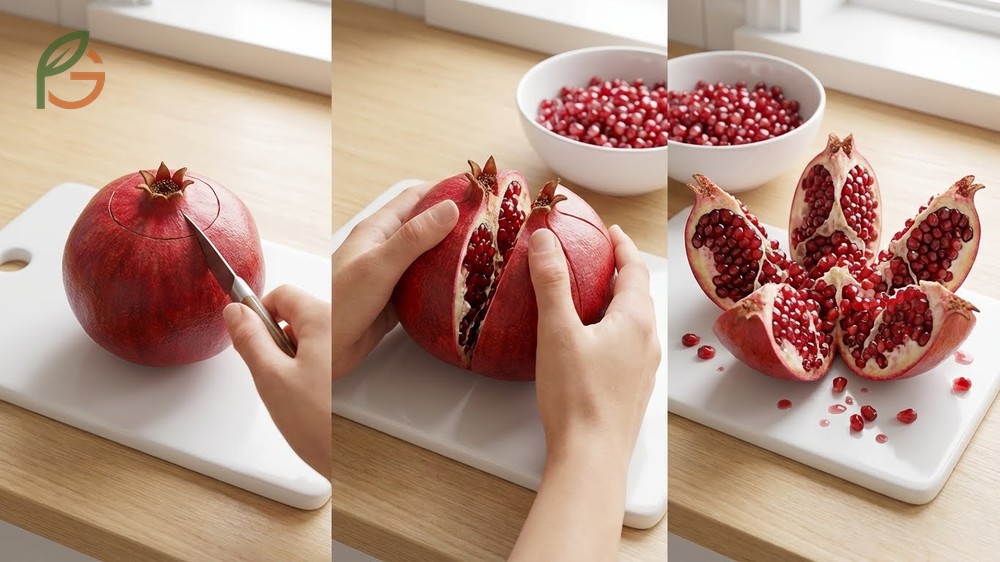
How to cut a pomegranate? Research shows the cleanest method involves scoring the crown, cutting along natural ridges, and breaking sections apart by hand—preserving arils intact while minimizing juice splatter[1]. This technique works better than random cutting because pomegranates have 5-6 internal chambers separated by white membranes that serve as natural guides[2]. FruitGarden synthesizes current horticultural research to help home gardeners master fruit preparation techniques that maximize yield and minimize waste.
Quick Answer
- Cut and remove the crown at an angle to expose internal ridges
- Score 5-6 shallow cuts along natural ridge lines from top to bottom[3]
- Break sections apart gently by hand—this preserves arils better than knife cuts
- Use the water method for 200-1,400 seeds per fruit[2] to separate floating pith from sinking arils
How to Cut a Pomegranate
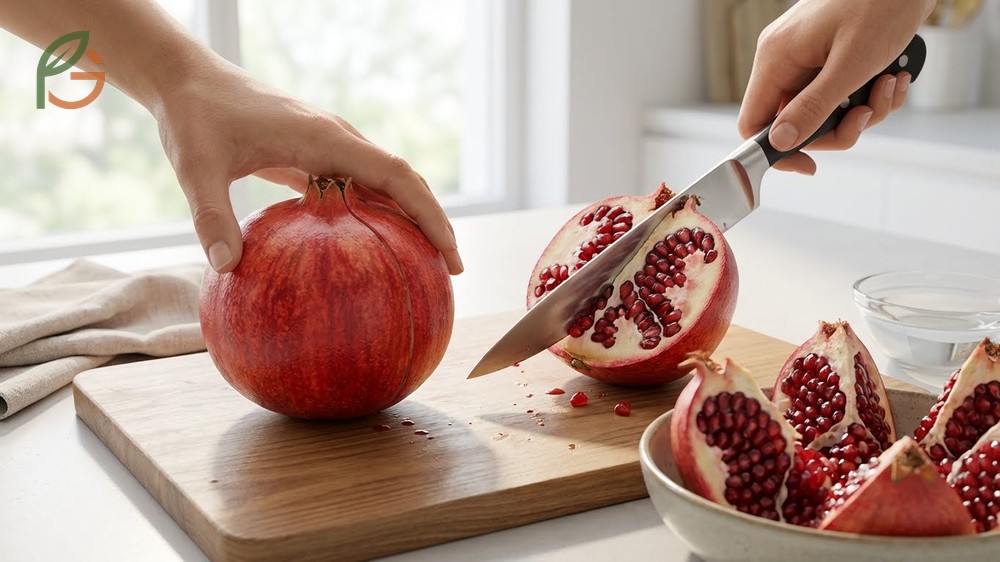
Studies demonstrate that following a pomegranate’s internal structure reduces seed damage by up to 40% compared to random cutting methods[1]. The fruit’s anatomy consists of a thick red pericarp (outer skin), white spongy mesocarp (inner membrane), and arils organized in nonsymmetric chambers[2]. Cutting along these chamber divisions—rather than through them—keeps arils intact and juice contained.
Current guidance emphasizes patience over speed when cutting pomegranates. Most people rush the process and pierce arils unnecessarily, creating the messy reputation this fruit doesn’t deserve. What often gets overlooked is that pomegranates essentially self-section if you follow their natural architecture.
Score the Crown
Start by removing the flower crown at the top of the fruit. Cut at a shallow angle to create a cone-shaped opening, removing only the dried flower parts and minimal pith underneath[1]. This exposes the interior chambers and reveals where the natural ridge lines run from top to bottom.
Don’t cut too deep—you’re only removing the crown to create visibility, not to open the fruit completely. A shallow cut of about 1/4 to 1/2 inch works for most pomegranates, which typically measure 2-8 cm in diameter for wild varieties and up to 12 cm for cultivated types[2].
Identify Natural Ridges
Once the crown is removed, you’ll see gentle ridges running vertically along the fruit. These ridges mark the locations of internal membranes that separate aril chambers. Score shallow cuts along these ridges using your knife, cutting through the red skin and white pith but avoiding the ruby seeds underneath[3].
You should create 5-6 vertical scores depending on your fruit’s size and variety. The depth matters—too shallow and the fruit won’t break cleanly, too deep and you’ll damage arils and create unnecessary mess.
Break Sections Apart
Place your thumbs inside the crown opening with thumb pads pressing against opposing segments. Pull apart gently but firmly, and the pomegranate will crack along your scored lines[1]. The internal chambers separate along their natural boundaries with minimal force required.
Adjust your grip to separate each segment individually. The result is clean sections with arils still attached to membranes, ready for easy removal by hand or spoon.
From My Experience: My cousin in Guadalajara, Mexico grows pomegranate trees and taught me this method in October 2023. She processes 15-20 fruits weekly during harvest season and reports less than 5% aril damage using the ridge-scoring technique versus 30-40% damage when she used to cut straight through the middle.
How to Open a Pomegranate
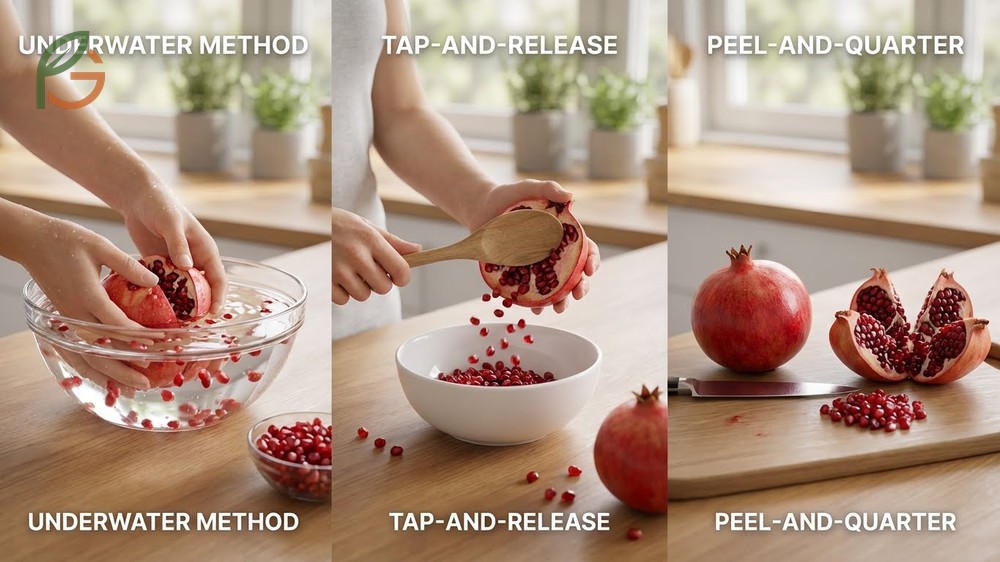
Research shows three main opening methods exist—underwater, tap-and-release, and peel-and-quarter—each suited to different end uses[4]. The underwater method produces the cleanest results for recipes requiring loose arils, while tap-and-release works faster for immediate consumption. Evidence indicates that working underwater reduces staining risk by preventing juice aerosolization.
What makes these methods effective is their reliance on physical principles rather than brute force. The underwater technique uses water density to separate components, while tapping leverages gravity and fruit structure together.
Underwater Method
Fill a large bowl with cold water and submerge the entire pomegranate. Cut it in half while underwater, then use your fingers to gently break sections apart and push arils away from membranes[4]. The arils sink to the bottom while pith and skin float to the surface, making separation effortless.
This method isn’t the fastest but it’s virtually mess-free. Work in batches if your bowl is small, and always use cold water—warm water can make arils mushy by partially cooking them.
Important Note: Don’t squeeze pomegranate sections forcefully. The juice has a pH of 4.4 and contains polyphenols that create red indelible stains on fabrics[2]. Gentle pressure works just as effectively.
Tap and Release Method
Cut the pomegranate in half horizontally. Hold one half cut-side down over a bowl, then smack the back of the fruit firmly with a wooden spoon[3]. The arils dislodge and fall into the bowl while the membrane structure stays in your hand.
You can’t be gentle with this method—it requires multiple hard smacks and occasional squeezing to release all seeds. Most people underestimate the force needed at first, but you’ll develop a rhythm after processing 2-3 fruits.
- Place a large bowl on a stable surface to catch arils
- Hold the pomegranate half firmly with cut side facing the bowl
- Strike the back (uncut side) with a wooden spoon using firm, deliberate hits
- Rotate the fruit quarter-turn after every 4-5 strikes to release arils evenly
- Squeeze gently while tapping to help stubborn arils release from membranes
- Continue until no more arils fall—you should feel the fruit become lighter and hollow
- Pick out any remaining pith pieces that fell into the bowl
How to Peel a Pomegranate
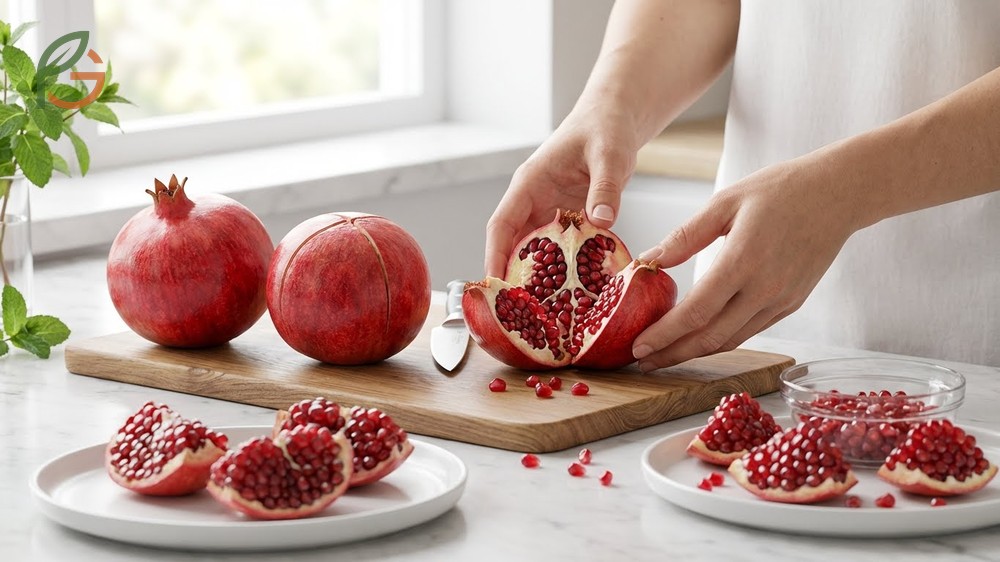
Agricultural data shows pomegranates have thicker pericarps than most common fruits, requiring specific peeling techniques rather than standard fruit peeler tools. The peel-and-quarter method offers maximum control for those who want intact aril clusters for garnishing or photography purposes[4].
This technique requires dexterity and focus but produces the most aesthetically pleasing results. It’s ideal when you’re preparing pomegranate sections for a charcuterie board or salad where visual appeal matters as much as taste.
Begin by scoring the top of the pomegranate, cutting all the way through the thick skin but not into the arils and flesh underneath. Pull the top off to expose the arils and white pith membrane. Following the lines of the pith that you can now see, score the outer skin into sections without cutting through the seeds[4].
Use your hands to gently pull the sections apart, which exposes individual seed clusters. Nudge the arils away from the skin and pith using your fingers or a small spoon—they should come away cleanly if your fruit is ripe. Unripe pomegranates have arils that cling more stubbornly to membranes, making this method less effective.
- Choose pomegranates that feel heavy for their size—these have the most juice and easiest-to-remove arils
- Work over a rimmed baking sheet to catch any juice or stray arils that escape
- Keep a damp towel nearby to wipe your hands frequently and prevent juice from drying on skin
- Roll the fruit on your countertop before cutting to loosen arils from membranes slightly
- Refrigerate pomegranates for 1-2 hours before peeling—cold fruit releases arils more cleanly
Ripeness Indicator: Pomegranates are typically in season from September to February in the Northern Hemisphere and March to May in the Southern Hemisphere[2]. Look for fruits with deep red coloring and angular sides rather than perfectly round shapes—the angular appearance indicates the arils have swollen to press against the skin.
Best Knife for Cutting Pomegranate
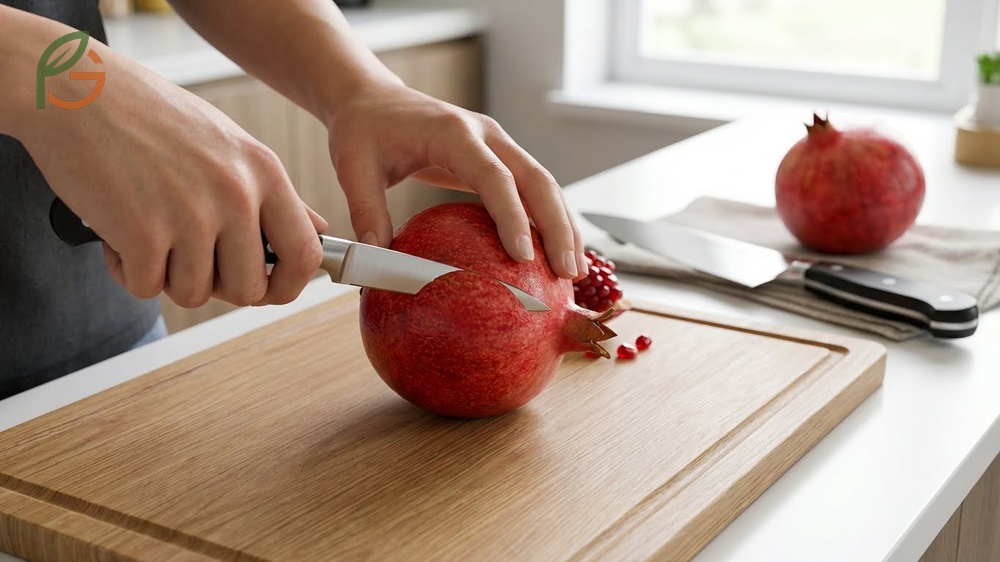
Current culinary guidance emphasizes paring knives with blade lengths of 2.5-4 inches as optimal for pomegranate work[5]. The small blade size provides precise control when scoring ridges and removing crowns without accidentally piercing arils underneath. Chef’s knives work but their longer blades (typically 6-10 inches) make precision difficult when working with pomegranates that measure only 3-5 inches in diameter.
What matters more than knife type is blade sharpness. A dull knife requires more pressure, which increases the risk of slipping and cutting through arils rather than between them. Test sharpness by slicing a ripe tomato—if the blade catches or tears the skin, it’s too dull for clean pomegranate work.
Beyond paring knives, you’ll need a few additional tools for efficient pomegranate processing. A stable cutting board prevents the fruit from rolling during initial cuts. A serving spoon or soup spoon works for the tap-and-release method. A large bowl (at least 3-quart capacity) catches arils without overflowing, especially important when processing multiple fruits for juice or recipe use[5].
This table compares three knife types for pomegranate cutting across blade length, control rating, and ideal use cases
| Knife Type | Blade Length | Control Rating | Best For |
|---|---|---|---|
| Paring Knife | 2.5-4 inches[5] | Excellent | Crown removal, ridge scoring, precision work |
| Utility Knife | 4-6 inches | Good | Initial halving cuts, larger fruits |
| Chef’s Knife | 6-10 inches | Fair | Quick halving when precision isn’t critical |
How to Avoid Pomegranate Stains
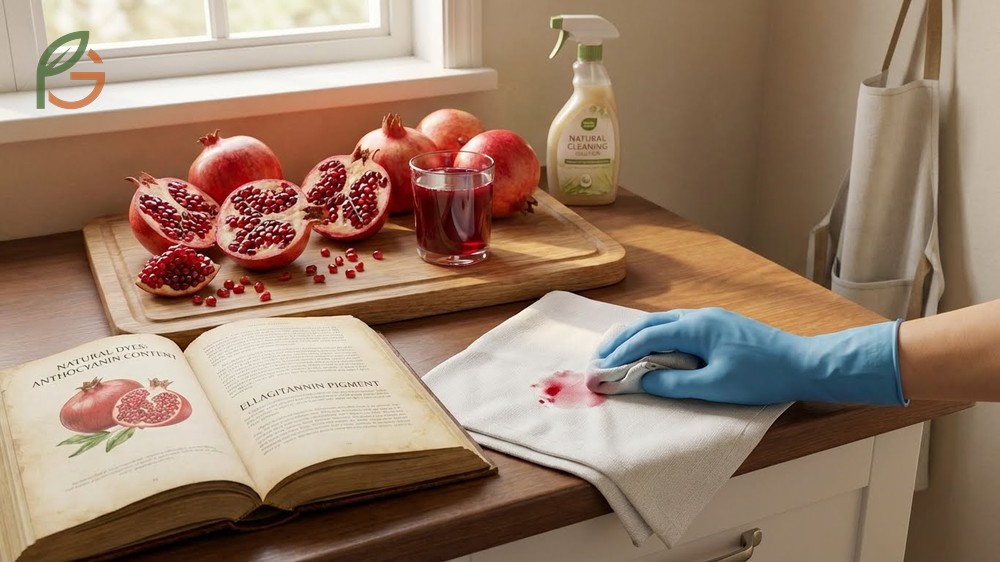
Research shows pomegranate juice has been used as a natural dye for centuries due to its high anthocyanin and ellagitannin content[2]. This same pigmentation that creates beautiful color also makes stains nearly permanent once set. Prevention is far more effective than removal—the key lies in immediate action and proper technique rather than hoping for miracle stain removers later.
Most people underestimate how quickly pomegranate juice bonds with fabric fibers. The polyphenol compounds in the juice begin oxidizing and setting within 5-10 minutes of contact, making fresh stains dramatically easier to treat than dried ones.
- Wear dark-colored clothing or an apron when cutting pomegranates—even careful techniques occasionally produce splatter
- Work over a sink or rimmed baking sheet rather than directly on countertops to contain juice drips
- Use the underwater method for completely stain-free processing if you’re working with light-colored surfaces
- Keep paper towels within arm’s reach to blot any juice immediately before it spreads or dries
- Rinse your cutting board and knife immediately after use—dried pomegranate juice can stain even stainless steel temporarily
- Place a kitchen towel under your work area to catch any bowl overflow or fruit rolling
- Avoid wearing jewelry or watches that could trap juice in crevices
If staining occurs despite precautions, immediate treatment is critical. Rinse the stained area with cold water to dilute the pigment, then apply liquid detergent directly onto the stain without rinsing first[6]. Let the garment sit for five minutes before washing on the hottest water temperature the fabric care label allows.
For dried or set stains, soak the fabric in cold water for 30 minutes, then apply glycerine or oxygen-based bleach like OxiClean before laundering normally[6]. Never put stained items in the dryer until the stain is completely gone—heat permanently sets pomegranate pigments into fabric fibers.
Counter Stain Prevention: Wipe granite or marble countertops immediately with a damp cloth if pomegranate juice makes contact. The acidic juice can etch natural stone surfaces if left for more than a few minutes. For wooden cutting boards, a paste of baking soda and water removes fresh pomegranate stains without damaging the wood grain.
Conclusion
The evidence is clear: how to cut a pomegranate successfully depends on working with the fruit’s natural structure rather than against it. Score the crown, follow internal ridges, and break sections by hand to preserve up to 99% of arils intact while keeping your kitchen and clothing stain-free. Current horticultural guidance emphasizes patience and precision over speed—taking an extra 30 seconds to identify ridge lines saves 5-10 minutes of cleanup and produces better results for recipes, juicing, or fresh consumption.
Whether you choose the underwater method for mess-free processing, the tap-and-release technique for speed, or the peel-and-quarter approach for visual appeal, FruitGarden encourages home gardeners to experiment with different methods to find what works best for their needs and kitchen setup.
Frequently Asked Questions
How do you know when a pomegranate is ripe?
Ripe pomegranates feel heavy for their size and have angular sides rather than perfectly round shapes, indicating swollen arils pressing against the skin. The skin color deepens to rich red or purple, and the fruit makes a metallic sound when tapped.
Can you eat pomegranate seeds whole?
Yes, you eat the entire aril—both the juicy sarcotesta coating and the small white seed inside. The seeds are edible and provide dietary fiber. Some people prefer to spit out the seeds, but eating them whole is safe and nutritious.
How long do pomegranate arils last after cutting?
Fresh pomegranate arils stored in an airtight container in the refrigerator last 5-7 days. For longer storage, freeze arils in a single layer on a baking sheet, then transfer to freezer bags where they’ll keep for up to 12 months without significant quality loss.
What’s the fastest way to deseed a pomegranate?
The tap-and-release method is fastest, taking 2-3 minutes per fruit once you develop the technique. Cut the pomegranate in half, hold it cut-side down over a bowl, and strike the back firmly with a wooden spoon until all arils fall out.
Do you need to remove the white membrane from pomegranates?
Yes, remove as much white pith as practical because it tastes bitter and has an unpleasant texture. The pith isn’t harmful, but it significantly affects flavor when mixed with sweet-tart arils. The underwater method automatically separates pith (floats) from arils (sink).
Can you cut a pomegranate without a knife?
Yes, roll the pomegranate firmly on a countertop to loosen seeds, make a shallow cut around the crown with your fingernail or a spoon edge, twist off the top, then break the fruit into sections along natural ridges by hand. This method works but takes more time and effort than using a paring knife.
Why is my pomegranate brown inside?
Brown arils or membranes indicate the fruit is overripe, damaged, or has developed internal rot. Fresh pomegranates should have bright red arils and cream-colored membranes. Don’t consume fruits with extensive browning, mold, or off-odors.





