
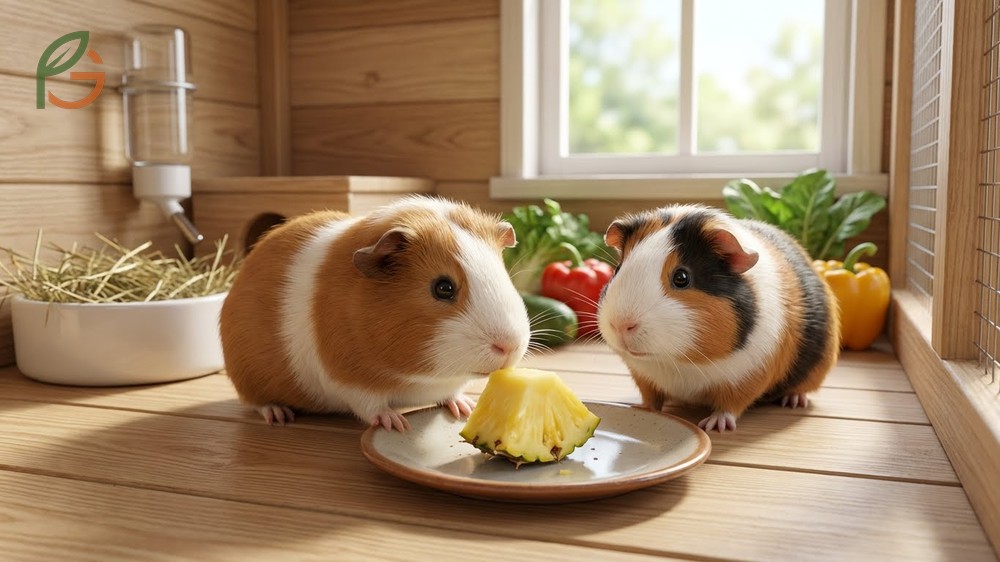
Can guinea pigs eat pineapple? Yes, guinea pigs can safely eat pineapple in moderation as an occasional treat. Research shows that pineapple delivers 47.8mg of vitamin C per 100g[1], which strengthens their immune system and prevents scurvy, but it also contains 9.9g of sugar per 100g[2], requiring careful portion control. What often gets overlooked is that timing and preparation matter more than quantity when introducing this tropical fruit. FruitGarden synthesizes current veterinary guidance and nutritional research to help pet owners make informed decisions about their guinea pigs’ diet.
Quick Answer
- Feed only 1 square inch cube of fresh pineapple per serving[3]
- Limit to once monthly due to high sugar content[3]
- Remove skin, core, and leaves—these parts are unsafe and can cause injury or digestive blockage
- Fresh pineapple only—canned varieties contain added sugars and preservatives that harm guinea pigs
Can Guinea Pigs Eat Pineapple
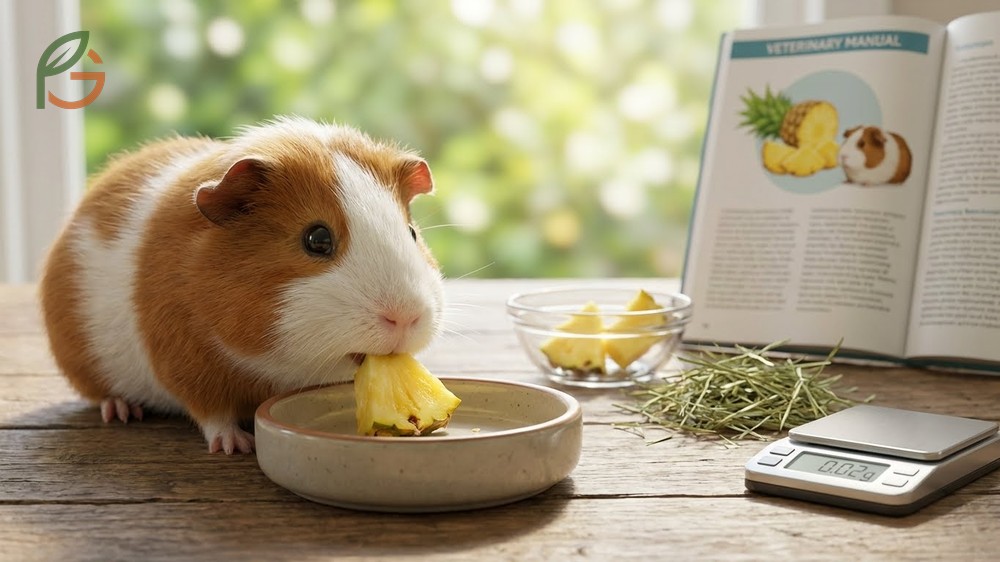
Guinea pigs can safely eat fresh pineapple in small, controlled portions. Current veterinary data confirms that pineapple contains beneficial nutrients like 47.8mg of vitamin C and 1.4g of fiber per 100g[1], which support immune function and digestive health. However, the same 100g serving contains 9.9g of sugar[2], making portion control essential.
Studies demonstrate that guinea pigs evolved to consume fibrous grasses and hay, not sugar-rich fruits. Their digestive systems can’t efficiently process large amounts of sugar, leading to potential health complications. This biological limitation explains why veterinarians recommend pineapple as an occasional treat rather than a dietary staple.
The fruit’s low oxalate and calcium content works in its favor. Unlike spinach or Swiss chard, pineapple contains only 13mg of calcium per 100g[1], reducing the risk of bladder stones that commonly affect guinea pigs.
Vitamin C Benefits
Pineapple serves as an excellent vitamin C supplement for guinea pigs. These animals can’t synthesize their own vitamin C, requiring daily dietary sources to prevent scurvy. Research shows that adult guinea pigs need 20-25mg daily, while pregnant or growing guinea pigs require 30-40mg daily[4].
The vitamin C in pineapple protects cells against free radical damage, strengthening the immune system’s ability to fight infections. Evidence indicates that adequate vitamin C intake prevents scurvy symptoms like painful joints, difficulty eating, and weight loss.
Sugar Content Concerns
The primary concern with feeding pineapple stems from its sugar concentration. At 11.4g of sugar per 100g[5], pineapple ranks as a high-sugar fruit that can trigger digestive upset. Excessive sugar consumption causes abdominal pain, diarrhea, and dehydration in guinea pigs.
Long-term overconsumption leads to obesity and increases diabetes risk. Current veterinary guidance emphasizes that fruit should comprise less than 5% of a guinea pig’s total daily food intake to maintain healthy weight and metabolic function.
Important Note: Never feed canned, dried, or frozen pineapple to guinea pigs. These processed forms contain added sugars, preservatives, and reduced water content that can harm your pet’s health.
Pineapple Serving Size for Guinea Pigs
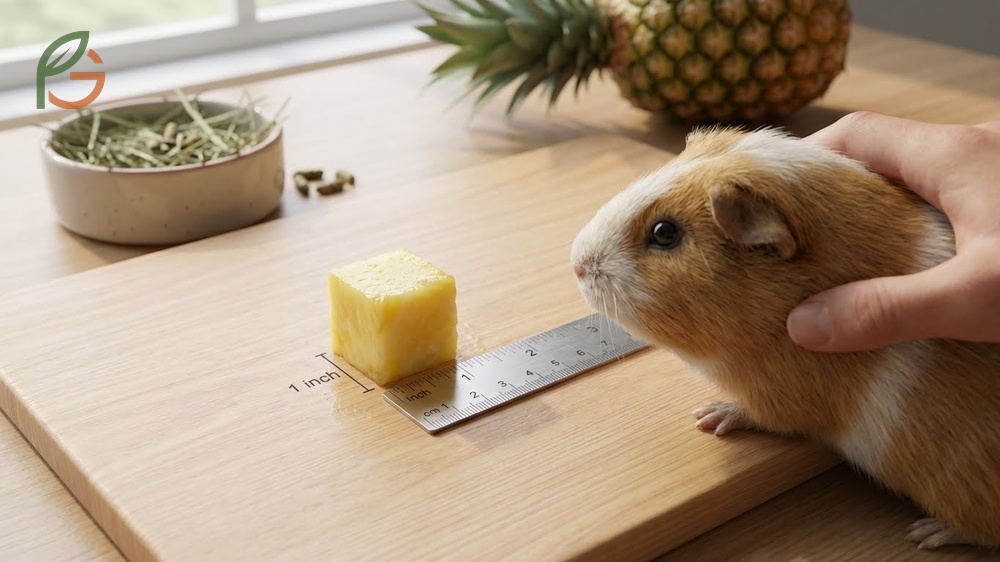
Proper portion control determines whether pineapple becomes a healthy treat or a health hazard. Veterinary research establishes specific serving sizes based on guinea pig physiology and nutritional needs. Most experts recommend limiting pineapple to prevent sugar overload while still providing vitamin C benefits.
The safe serving size for an adult guinea pig is one 1-inch cube of fresh pineapple flesh[3]. This portion delivers approximately 4.8mg of vitamin C while keeping sugar intake minimal. Baby guinea pigs aged 6-8 weeks can eat the same portion but should be monitored more closely for digestive reactions.
Portion Guidelines
Preparation matters as much as portion size. Always remove the tough outer skin, spiky crown, hard inner core, and any leaves before serving. The soft, yellow flesh is the only safe part for guinea pigs to consume.
Cut the pineapple into small, manageable pieces that prevent choking hazards. Wash the fruit thoroughly to remove pesticides or residues, even if you’re discarding the skin.
- Peel off the entire spiky outer skin and discard
- Remove the hard central core completely
- Cut the soft yellow flesh into 1-inch cubes
- Rinse pieces under clean water
- Serve at room temperature, not cold from refrigerator
- Remove any uneaten pieces within 2 hours to prevent spoilage
Feeding Frequency
Feed pineapple no more than once monthly[3] to maintain nutritional balance. This conservative schedule prevents sugar accumulation while allowing your guinea pig to enjoy the treat occasionally. Some guinea pig owners alternate between different low-sugar fruits weekly to provide variety.
Monitor your guinea pig’s reaction during the first feeding. Watch for changes in stool consistency, behavior, or appetite within 24 hours. If you notice diarrhea, lethargy, or reduced hay consumption, discontinue pineapple immediately and consult a veterinarian.
Warning: Guinea pigs require one cup of fresh fruits and vegetables daily to supplement their hay-based diet. Don’t let pineapple replace nutrient-dense vegetables like bell peppers, kale, or parsley.
Pineapple Parts Safety Guide
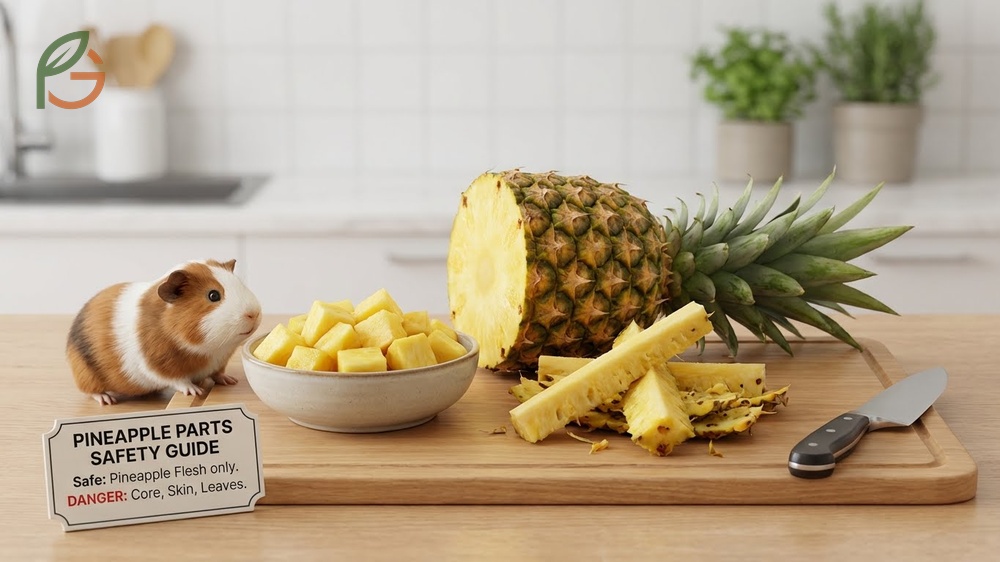
Not all parts of the pineapple are safe for guinea pigs. Understanding which components pose risks helps prevent injuries and digestive complications. The flesh is the only recommended part for consumption.
The pineapple core is hard, fibrous, and difficult to digest. It can damage teeth, cause choking, or create intestinal blockages. Always cut around the core and discard it completely before serving any pineapple to your guinea pig.
Pineapple leaves and the spiky crown are extremely dangerous. Their sharp edges can lacerate a guinea pig’s mouth, throat, or intestinal lining. The tough texture makes them impossible to chew properly, leading to choking risks. Never offer these parts as food or playthings.
This table compares safety status and risks across four pineapple components for guinea pig consumption
| Pineapple Part | Safe to Feed | Primary Risk | Recommendation |
|---|---|---|---|
| Flesh (soft yellow part) | Yes, in moderation | High sugar content | 1-inch cube monthly |
| Skin/Rind | No | Mouth/intestinal injury, digestive blockage | Remove completely |
| Core | No | Choking, tooth damage, constipation | Cut around and discard |
| Leaves/Crown | No | Lacerations, choking, indigestible | Never offer |
| Canned/Dried | No | Added sugars, preservatives, low nutrients | Fresh only |
- Skin contains sharp spikes that can puncture soft tissue
- Core’s density can break teeth or lodge in the throat
- Leaves have razor-like edges that cause bleeding
- Preserved forms lack fresh vitamin C guinea pigs need
- Processing methods add harmful sodium and artificial ingredients
Vitamin C for Guinea Pigs
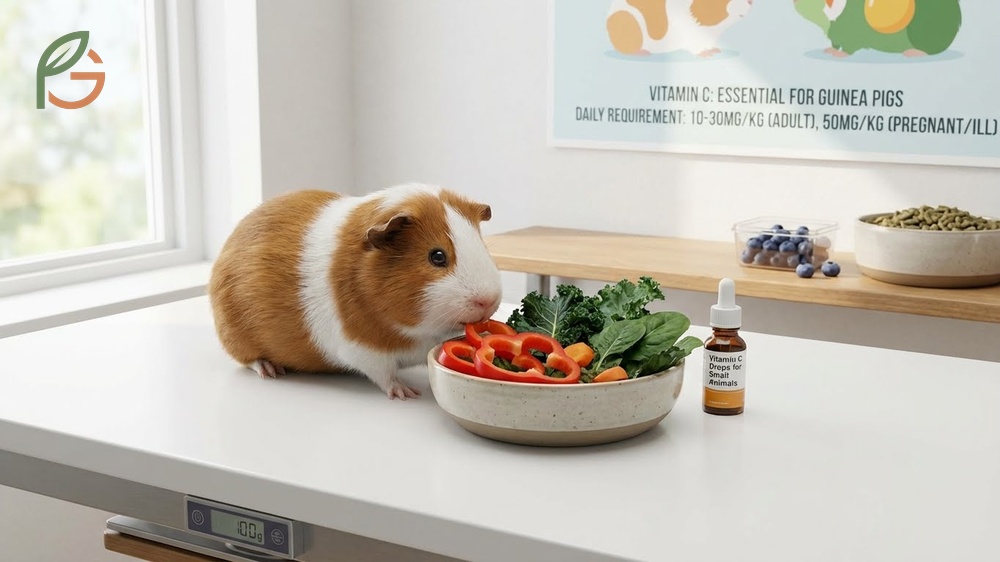
Guinea pigs share a unique characteristic with humans and primates—they can’t manufacture their own vitamin C. This biological limitation makes dietary vitamin C absolutely essential for survival. Without adequate intake, guinea pigs develop scurvy within 2-3 weeks.
Adult guinea pigs require 20-25mg of vitamin C daily, while pregnant, nursing, or young guinea pigs need 30-40mg daily[4]. Scurvy symptoms include rough coat, lethargy, swollen joints, bleeding gums, and reluctance to move or eat. Early intervention prevents permanent damage.
While pineapple provides vitamin C, it shouldn’t be the primary source. Fresh vegetables like red bell peppers, kale, and parsley deliver higher concentrations without excessive sugar. Diversifying vitamin C sources ensures your guinea pig gets balanced nutrition year-round.
- Red bell peppers: easiest way to provide daily vitamin C without sugar concerns
- Kale and mustard greens: nutrient-dense leafy options
- Parsley: can be fed fresh several times weekly
- Broccoli: both florets and stems are safe
- Strawberries: lower sugar alternative to pineapple for occasional treats
- Oranges: good vitamin C but limit to 1-2 times weekly due to acidity
Guinea Pig Safe Fruits
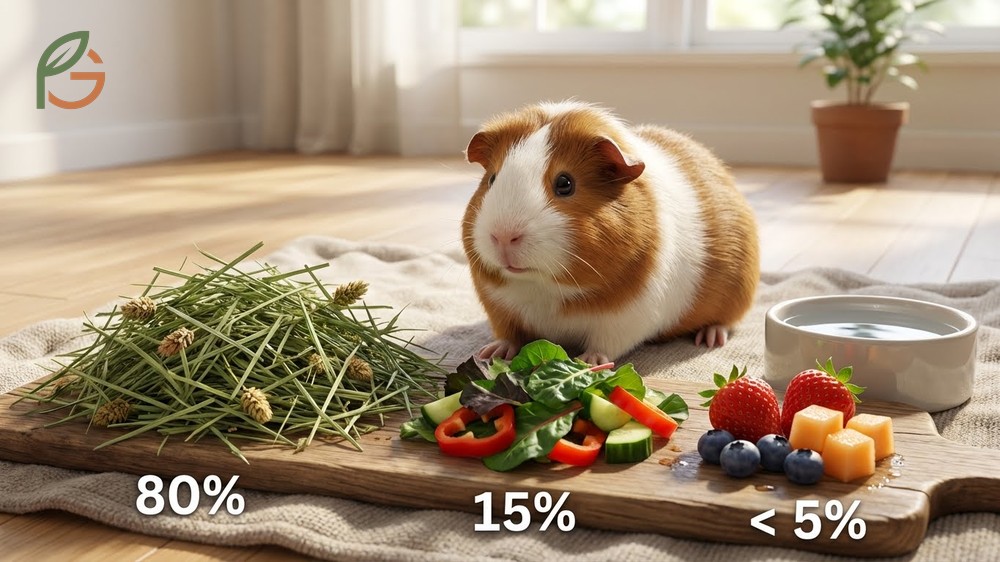
Fruit should comprise only a small portion of your guinea pig’s diet. Research indicates that hay should make up 80% of daily food intake, with vegetables contributing 15% and fruits limited to 5% or less. This ratio maintains digestive health and prevents obesity.
The safest fruits share common characteristics—moderate sugar levels, high water content, and good vitamin C concentrations. Strawberries, blueberries, and cantaloupe rank among the best options when fed in appropriate portions.
Some fruits are dangerous and should never be offered. Avoid avocados (toxic), rhubarb (poisonous), and citrus fruits in large quantities (too acidic). Apple seeds contain cyanide compounds and must be removed before feeding.
This table compares vitamin C content, serving sizes, and feeding frequency for seven common fruits safe for guinea pigs
| Fruit | Vitamin C (per 100g) | Serving Size | Frequency |
|---|---|---|---|
| Strawberries | 58.8mg[3] | 2 small berries | 1-2 times monthly |
| Blueberries | 9.7mg[3] | 1-2 berries | Once weekly |
| Cantaloupe | 36.7mg[3] | 1-inch cube | 1-2 times weekly |
| Watermelon | 8.1mg[3] | 2-3 cubes | 1-2 times weekly |
| Pineapple | 47.8mg[1] | 1-inch cube | Once monthly |
| Banana | 9.1mg[3] | 1-inch slice | Once weekly |
| Apple | 4.6mg | 1 thin slice (no seeds) | 2-3 times weekly |
Always introduce new fruits gradually. Offer a tiny piece first and wait 24 hours to observe reactions. Some guinea pigs have individual sensitivities that don’t match general guidelines.
- Wash all fruits thoroughly to remove pesticides
- Remove seeds, pits, and inedible skins
- Serve at room temperature for better digestion
- Mix fruit treats with vegetables to balance sugar intake
- Track which fruits your guinea pig prefers and tolerates best
Conclusion
The evidence is clear: can guinea pigs eat pineapple? Yes, but moderation and proper preparation are non-negotiable. Feed only 1-inch cubes of fresh flesh once monthly, always removing the skin, core, and leaves. This approach delivers vitamin C benefits without overwhelming your guinea pig’s digestive system with excess sugar.
Current veterinary guidance emphasizes that fruits like pineapple should complement—not replace—a hay-based diet rich in fresh vegetables. Monitor your guinea pig’s response to any new food, and prioritize variety to ensure balanced nutrition. FruitGarden recommends consulting an exotic pet veterinarian to create a personalized feeding plan that meets your guinea pig’s individual health needs.
Medical Disclaimer
Important Medical Disclaimer: This content is for informational and educational purposes only. It’s not intended as a substitute for professional veterinary advice, diagnosis, or treatment. Always consult a qualified exotic pet veterinarian before making any changes to your guinea pig’s diet, especially if your pet has pre-existing health conditions like diabetes, bladder stones, or digestive sensitivities. Individual guinea pigs may have unique nutritional needs that differ from general recommendations.
Frequently Asked Questions
How Much Pineapple Can I Give My Guinea Pig?
Feed your guinea pig one 1-inch cube of fresh pineapple flesh once monthly. This portion provides vitamin C benefits while limiting sugar exposure. Never exceed this amount, as excess sugar causes digestive upset and weight gain.
Can Guinea Pigs Eat Pineapple Core?
No, guinea pigs should never eat pineapple core. The core is too hard and fibrous, posing choking hazards and potential tooth damage. It can also cause intestinal blockages and constipation. Always cut around the core and discard it completely before serving pineapple.
Are Pineapple Leaves Safe for Guinea Pigs?
No, pineapple leaves are extremely dangerous for guinea pigs. The tough, fibrous texture is indigestible, and the sharp edges can lacerate the mouth, throat, and intestinal lining. Never offer pineapple leaves, crown, or top to your guinea pig under any circumstances.
Can Baby Guinea Pigs Eat Pineapple?
Baby guinea pigs aged 6-8 weeks and older can eat small pieces of pineapple in the same portions as adults—one 1-inch cube monthly. Monitor young guinea pigs more closely for digestive reactions, as their systems are more sensitive. Prioritize vitamin C-rich vegetables over fruit for daily feeding.
Is Canned Pineapple Safe for Guinea Pigs?
No, never feed canned pineapple to guinea pigs. Canned varieties contain added sugars, preservatives, and sodium that harm your pet’s health. They also have reduced vitamin C content compared to fresh fruit. Only fresh, raw pineapple is safe for guinea pigs.
What Happens If My Guinea Pig Eats Too Much Pineapple?
Excessive pineapple consumption causes diarrhea, abdominal pain, dehydration, and bloating due to high sugar content. Long-term overconsumption leads to obesity and increases diabetes risk. If your guinea pig shows signs of digestive upset after eating pineapple, remove all fruit from the diet and provide unlimited hay and water. Consult a veterinarian if symptoms persist beyond 24 hours.
What Are Better Vitamin C Sources Than Pineapple for Guinea Pigs?
Red bell peppers, kale, parsley, and broccoli provide higher vitamin C concentrations without excessive sugar. Red peppers are the best daily choice, offering vitamin C without the health risks associated with frequent fruit feeding. These vegetables can be fed more frequently than pineapple while maintaining nutritional balance.





