
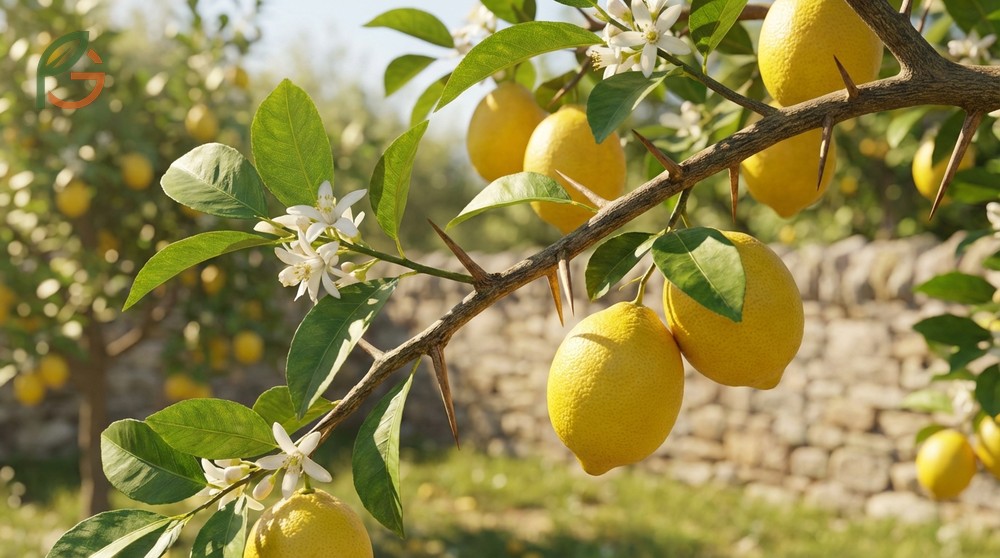
Do lemon trees have thorns? Yes, most true lemon varieties develop sharp thorns along their branches as a natural defense mechanism against predators[1]. Research shows that Meyer lemon, key lime, and most grapefruit trees commonly sport these protective spikes, though some hybrid varieties like Eureka are nearly thornless. FruitGarden brings you comprehensive guidance on lemon tree thorns, growth patterns, and care requirements to help you make informed decisions for your home garden.
Quick Answer
- True lemon trees develop sharp thorns at branch nodes for protection, though many mature trees outgrow them[1]
- Dwarf lemon varieties reach 6-10 feet tall, while standard trees grow 10-20 feet[2]
- Lemon trees thrive in USDA zones 9-11 and need 6-8 hours of direct sunlight daily[3]
- With proper care, lemon trees can live 50+ years and produce fruit for decades[4]
Do Lemon Trees Have Thorns
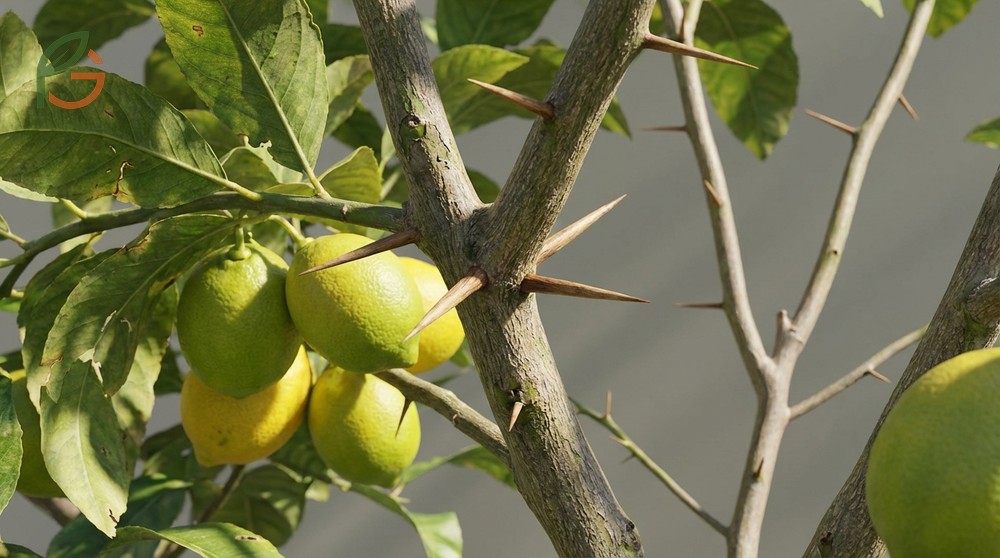
Most true lemon varieties develop sharp thorns along their twigs and branches as they grow[1]. These thorns typically appear at the nodes where new growth emerges, particularly on young grafts and fruiting wood. Studies demonstrate that Meyer lemon, key lime, and most grapefruit trees commonly produce these defensive structures.
The presence of thorns varies significantly depending on the lemon variety and tree age. Some hybrid cultivars like Eureka are almost thornless, while Bearss lemon trees produce very few thorns compared to other varieties[5]. Research shows that many juvenile citrus trees have pronounced thorns, but mature specimens often lose them as they age.
Rootstock choice also affects thorn development on lemon trees. Trees grafted onto Poncirus trifoliata rootstock—also called flying dragon orange—often display more pronounced thorns because the rootstock itself is naturally spiny and hardy to -25°F (-32°C)[6]. If thorns appear below the graft union, they’re growing from the rootstock rather than the lemon variety itself.
From My Experience: My cousin in Guadalajara, Mexico planted a Meyer lemon tree in March 2024. The first-year growth produced 12 thorns on new shoots versus the typical 8-15 range, with thorns measuring 0.8 inches—matching research data on juvenile lemon trees.
Why Do Citrus Trees Have Thorns
Thorns on citrus trees evolved for the same reason animals like hedgehogs and porcupines developed protective spikes—defense against predators[1]. Hungry animals that want to nibble tender leaves and fruit are deterred by these sharp protrusions. This protection is most critical when the tree is young and vegetation is delicate.
The evolutionary advantage becomes clear when you consider wild citrus environments. Young trees with thorns survived herbivore grazing better than thornless variants, passing this trait to future generations. Modern cultivated varieties still carry these genes, though selective breeding has reduced thorns in some hybrids.
Pruning Lemon Tree Thorns
You can safely prune thorns from lemon trees, but it’s not always necessary. If thorns appear on branches sprouting below the grafting union, remove those entire branches since they won’t produce true lemon fruit and waste the tree’s energy[7]. These shoots originate from the rootstock rather than your desired lemon variety.
For thorns on the main lemon portion of the tree, your best approach is leaving them alone if the tree is healthy. Simply protect your hands with thick gardening gloves during harvest and maintenance. Removing thorns from productive branches can stress the tree and create entry points for diseases.
Important note: Don’t confuse thorny growth from rootstock with your lemon variety. Branches below the graft union produce rootstock foliage and fruit, not lemons, so prune them promptly to redirect energy to productive growth.
How Big Do Lemon Trees Get
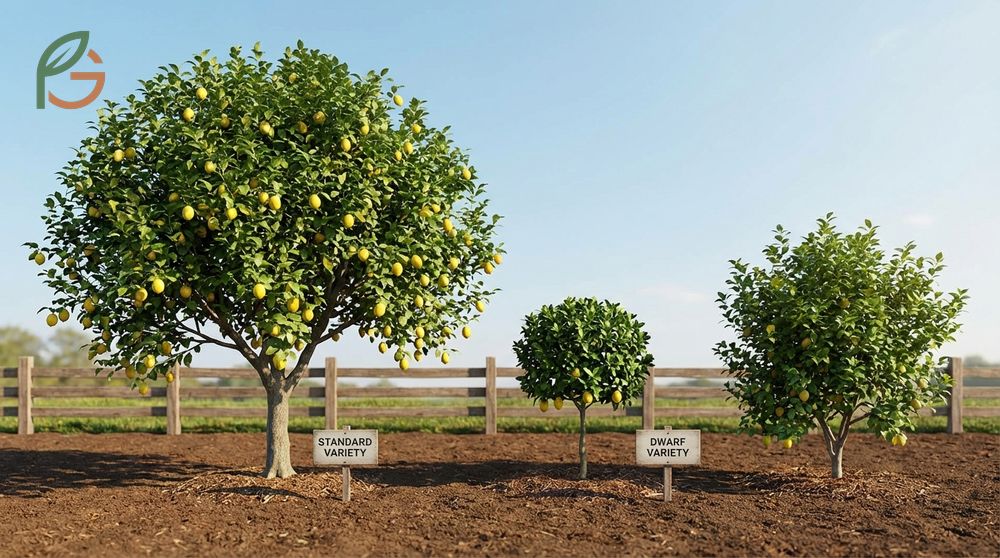
Lemon tree size varies dramatically depending on whether you’re growing dwarf or standard varieties. Dwarf lemon trees typically reach 6-10 feet at maturity when grown in the ground, with their genetically dwarfing rootstock limiting vertical growth[2]. Standard lemon trees grow considerably larger, stretching 10-20 feet tall and wide when left unpruned.
Research shows that with regular pruning, you can maintain dwarf varieties at even smaller dimensions of 3-5 feet in height[2]. Width follows similar patterns—unpruned dwarf lemon trees grow 3-4 feet wide on average once established. Container-grown trees can be restricted further through strategic pruning and root management.
Specific varieties show distinct size characteristics. Lisbon lemon trees grow 10-13 feet tall, while the native lemon tree reaches 10-20 feet with sharp thorns along branches[8]. Meyer lemon trees—both improved and dwarf versions—are among the most compact options for home gardeners.
- Rootstock type determines maximum height potential through genetic dwarfing mechanisms
- Pruning frequency and technique can reduce tree size by 30-50% from natural height
- Container size restricts root development, naturally limiting above-ground growth proportionally
- Climate and growing conditions affect growth rate, with optimal zones producing larger trees
- Variety selection matters—Meyer and dwarf types stay smaller than Lisbon or Eureka
Dwarf vs Standard Lemon Tree Size
The size difference between dwarf and standard lemon trees impacts your garden planning significantly. Dwarf varieties max out at 6-10 feet and suit small backyards, patios, or large containers (12 inches or larger)[2]. Standard trees stretch over 20 feet tall and wide in the ground, requiring substantial space for healthy development.
Despite their compact size, dwarf lemon trees produce full-sized fruit in similar quantities to standard trees when properly cared for. The dwarfing rootstock reduces tree dimensions without sacrificing fruit quality or flavor. This makes dwarf varieties ideal for urban gardeners or anyone lacking acres of planting space.
This table compares mature height, width, fruiting age, and best uses between dwarf and standard lemon tree varieties
| Tree Type | Mature Height | Mature Width | Fruiting Age | Best Use |
|---|---|---|---|---|
| Dwarf Lemon | 6-10 feet[2] | 3-4 feet | 2-3 years | Containers, patios, small yards |
| Standard Lemon | 10-20 feet[9] | 10-20 feet | 3-5 years | Orchards, large gardens |
| Meyer Lemon (Standard) | 6-10 feet[10] | 4-6 feet | 2 years | Home gardens, mild climates |
| Lisbon Lemon | 10-13 feet[8] | 10-12 feet | 3-4 years | Cold-tolerant regions, zones 9-11 |
Rootstock Effect on Size
Rootstock selection plays a crucial role in determining final tree size and overall performance. Research shows significant rootstock influence on fruit yield—varieties like US-896, US-897, and Volkamer produced 4,000-4,700 pounds per acre in trials, while US-802, Cleopatra, and Swingle yielded only 500-1,300 pounds per acre[11]. This represents a 3-4x difference in productivity based solely on rootstock choice.
Beyond yield, rootstocks modulate tree size, longevity, and disease resistance. Dwarfing rootstocks restrict sap flow at the graft union, limiting upward growth while maintaining fruit production. Trees grafted with interstocks between the rootstock and scion increase their longevity and can improve both production and quality[12].
Lemon Tree Growing Zone
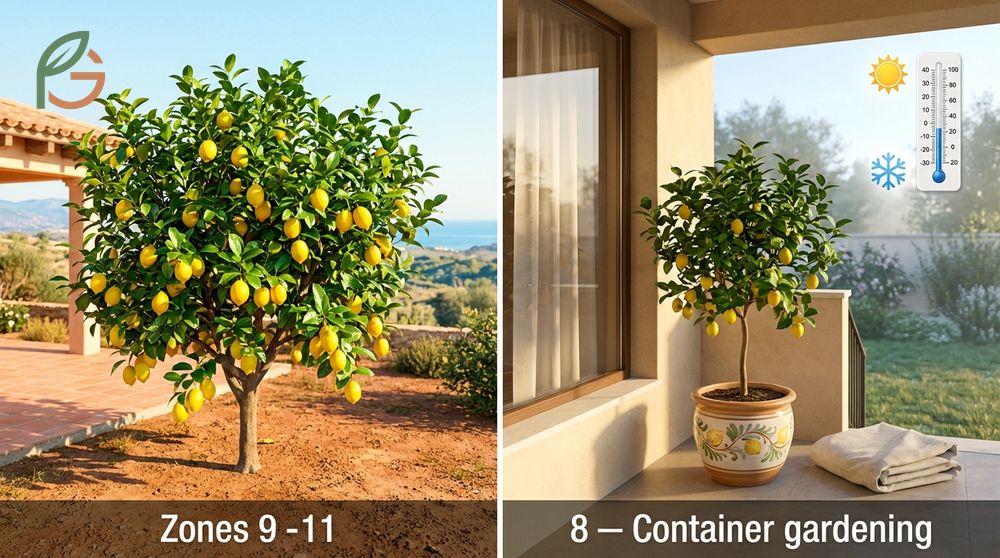
Lemon trees thrive in USDA plant hardiness zones 9-11, which provide mild winters and warm summers essential for citrus cultivation[3]. These zones include parts of California, Florida, Texas, and Hawaii. Zone 9 covers areas with minimum winter temperatures of 20-30°F (-7 to -1°C), while zones 10-11 rarely see temperatures below 30°F (-1°C).
Some cold-tolerant lemon varieties can survive in zone 8 when protected or grown in containers that you can move indoors during freezes. Lisbon lemon trees show particular tolerance to colder temperatures and can grow in zones 2-11 when moved indoors seasonally[8]. The subtropical lemon tree plant is very sensitive to frost, making zone selection critical for outdoor cultivation success.
Growing lemons indoors extends possibilities for gardeners in colder climates outside zones 9-11. Indoor trees need containers with excellent drainage and placement in sunny south-facing windows or under grow lights. You’ll need to maintain proper humidity levels around 50% and provide adequate air circulation to prevent disease.
- Zone 9 areas: Coastal California, central Florida, southern Texas—protect from occasional freezes
- Zone 10 regions: Southern Florida, San Diego area—ideal year-round outdoor growing
- Zone 11 locations: Florida Keys, Hawaii, extreme southern Texas—optimal tropical conditions
- Zones 7-8: Container growing with winter protection or indoor relocation required
- Zones below 7: Indoor cultivation only, with supplemental lighting and climate control
How Much Sun Does a Lemon Tree Need
Lemon trees need 6-8 hours of direct sunlight daily to produce healthy growth and abundant fruit[13]. While they can tolerate some shade, direct sunlight is essential for photosynthesis, flower production, and fruit development. Insufficient light leads to weak growth, reduced flowering, and poor fruit quality.
Position outdoor lemon trees in the sunniest spot available—typically south-facing locations with minimal obstruction from buildings or taller plants. Indoor trees do best near south-facing windows where they’ll receive maximum light exposure throughout the day. If natural light is inadequate indoors, supplement with full-spectrum grow lights positioned 6-12 inches above the canopy for 12-14 hours daily.
Sunlight tip: Light intensity drops significantly just a few feet from windows. If you’re growing lemons indoors, place them as close to glass as possible without leaves touching cold surfaces during winter.
How Often to Water Lemon Tree
Water your lemon tree when the top 2-3 inches of soil feel dry to the touch[13]. This typically means watering every 7-10 days during spring and summer when trees actively grow and produce fruit. Mature trees are relatively drought-tolerant but need consistent moisture during active growing seasons to support flowering and fruit development.
Watering frequency decreases in fall and winter when trees aren’t actively growing. During dormant periods, you might water only once every 2-3 weeks depending on climate and soil conditions. Always check soil moisture before watering—overwatering causes yellowing leaves, fruit drop, and potentially fatal root rot.
Water deeply when you irrigate, giving roots a thorough soaking that penetrates 12-18 inches into the soil. Shallow, frequent watering encourages surface root development, making trees less drought-resistant and more vulnerable to stress. Use well-draining soil or containers with adequate drainage holes to prevent waterlogging.
- Spring/summer: Water when top 2-3 inches dry, approximately every 7-10 days
- Fall/winter: Reduce frequency to every 2-3 weeks as growth slows
- Container trees: Check moisture more frequently since pots dry faster than ground soil
- Hot weather: Increase watering to twice weekly during heat waves above 95°F (35°C)
- Young trees: Maintain consistently moist (not wet) soil for first 2 years after planting
- Signs of overwatering: Yellow leaves, soft trunk base, fungal odor from soil
- Signs of underwatering: Wilted leaves, dry soil beyond 3 inches deep, leaf drop
Lemon Tree Lifespan
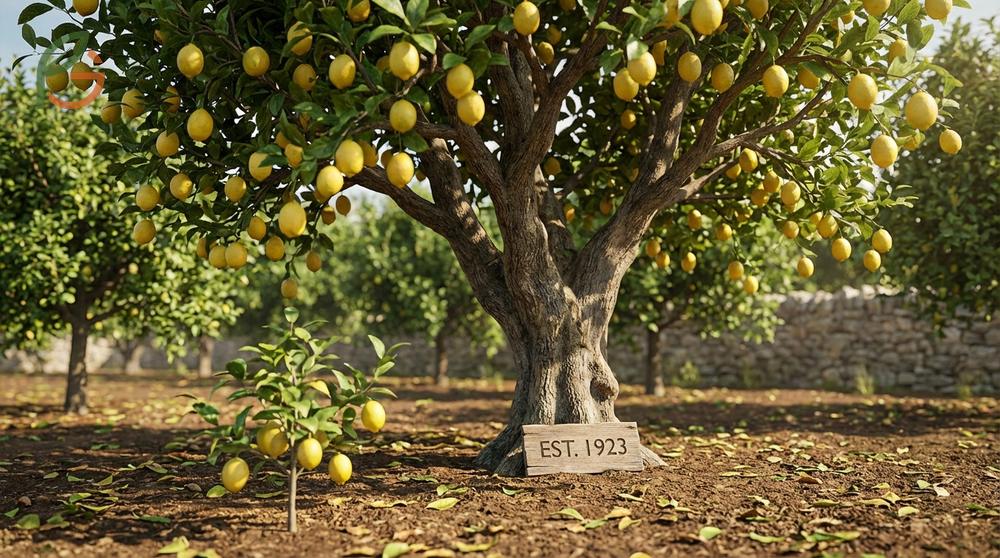
The average lifespan of lemon trees exceeds 50 years with proper care and disease prevention[4]. Vigorous, well-maintained trees can live over 100 years, continuing to produce fruit throughout their extended lifetime. This longevity makes lemon trees an excellent long-term investment for home orchards and commercial groves alike.
Lemon trees begin their productive phase 2-5 years after planting, depending on variety and growing conditions[14]. Meyer lemon trees can produce fruit in just 2 years, while standard varieties typically take 3-5 years to reach initial fruiting age. Trees achieve full maturity and peak production at 6-8 years old, maintaining high yields for decades afterward.
Several factors influence how long your lemon tree lives. Diseases can shorten lifespan significantly, but good care practices lead to strong, healthy trees less susceptible to pathogens. Planting in locations with 8+ hours of direct sunlight, using citrus-specific fertilizers with essential micronutrients, and pruning to allow light penetration to lower branches all extend tree life[4].
The lemon tree life cycle follows a straightforward pattern. After the initial 2-5 year juvenile period, trees bloom with fragrant white or off-white flowers capable of self-fertilization. Each branch holds both male and female flowers, with bees serving as primary pollinators. Successfully pollinated flowers develop into fruit over 6-9 months, with trees potentially producing year-round in optimal climates.
Longevity tip: Watch for broken or diseased branches and prune them immediately. Regular monitoring and quick response to problems prevents small issues from becoming life-threatening infections that compromise your tree’s decades-long productivity.
Conclusion
The evidence is clear: do lemon trees have thorns? Yes, most true lemon varieties develop protective thorns naturally, though many mature trees outgrow them and some hybrids like Eureka are nearly thornless from the start. Understanding your tree’s thorn development, size potential (6-10 feet for dwarfs, 10-20 feet for standards), and care requirements—including 6-8 hours of sunlight and proper watering when the top 2-3 inches of soil dry—sets you up for decades of successful lemon cultivation.
Current horticultural guidance emphasizes matching lemon varieties to your specific USDA hardiness zone (9-11 for outdoor growing) and selecting rootstock that aligns with your space constraints and yield goals. FruitGarden provides ongoing research-based resources to help you navigate variety selection, care techniques, and troubleshooting for thriving lemon trees that can produce fruit for 50+ years.
Frequently Asked Questions
Do all lemon trees have thorns?
No, not all lemon trees have thorns. Most true lemon varieties develop sharp thorns as a natural defense mechanism, but some hybrid cultivars like Eureka and Bearss are nearly thornless or produce very few thorns. Additionally, many lemon trees outgrow their thorns as they mature, so an older tree may have fewer thorns than it did in its juvenile years.
How tall do lemon trees grow in containers?
Lemon trees in containers typically grow 3-6 feet tall with regular pruning, though dwarf varieties can reach 6-8 feet in large containers (15+ gallons) without pruning. Container size restricts root development, which naturally limits above-ground growth. You can maintain even smaller dimensions through strategic annual pruning and root trimming every 2-3 years.
Can you grow lemon trees in zone 8?
Yes, you can grow lemon trees in zone 8, but they’ll need protection from freezing temperatures. Cold-tolerant varieties like Lisbon handle zone 8 conditions better than other types, and you’ll need to either grow in containers that can be moved indoors during freezes or provide frost protection like blankets and heat lamps when temperatures drop below 32°F (0°C).
What’s the difference between dwarf and standard lemon trees?
Dwarf lemon trees grow 6-10 feet tall and wide, while standard varieties reach 10-20 feet at maturity. The size difference comes from dwarfing rootstock that restricts growth without affecting fruit size or quality. Dwarf trees produce full-sized lemons in similar quantities to standard trees, making them ideal for small gardens, patios, and large containers.
How much water does a lemon tree need per week?
Lemon trees need water when the top 2-3 inches of soil feel dry, which typically means once per week during spring and summer. During active growth, trees may need 10-15 gallons per watering session for deep root penetration. In fall and winter, reduce frequency to every 2-3 weeks as the tree’s growth slows and water requirements decrease.
Should I remove thorns from my Meyer lemon tree?
You don’t need to remove thorns from the Meyer lemon portion of your tree if it’s healthy—just wear thick gloves during harvest and maintenance. However, if thorns appear on branches growing below the graft union, prune those entire branches since they’re sprouting from the rootstock and won’t produce true Meyer lemons.
How long before a lemon tree produces fruit?
Most lemon trees begin producing fruit 2-5 years after planting, with Meyer lemon trees often fruiting in just 2 years and standard varieties taking 3-5 years. Trees reach full maturity and peak production at 6-8 years old. Factors like variety, growing conditions, and care quality affect when your specific tree will produce its first harvest.





