
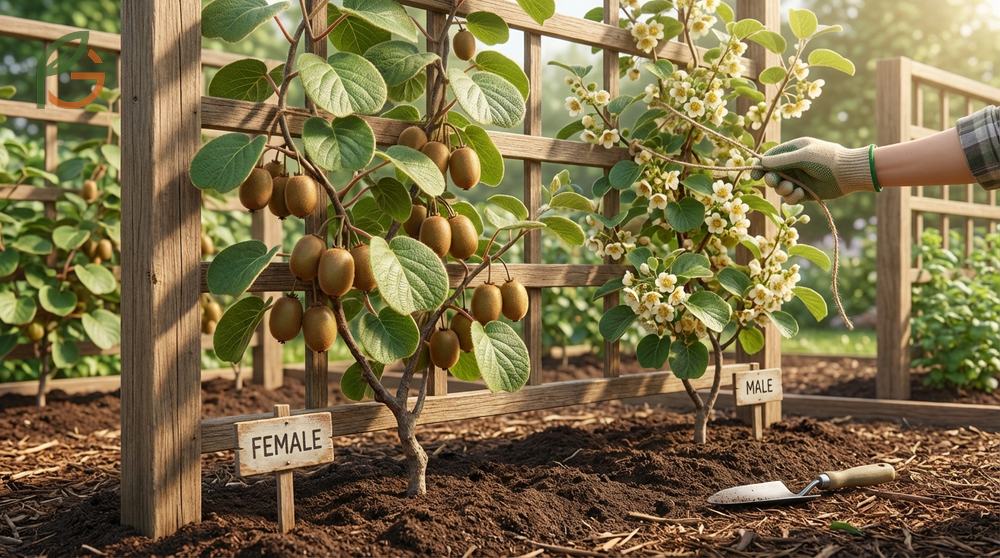
How to grow kiwi successfully requires understanding that these vigorous vines need both male and female plants for fruiting, with one male pollinating up to eight females[1]. Research shows kiwi vines thrive in well-drained, slightly acidic soil and can produce fruit for decades when properly trained on sturdy trellis systems. FruitGarden synthesizes current horticultural research and climate data to help you grow productive kiwi vines adapted to various US regions.
Quick Answer
- Plant one male vine for every 8-9 female vines within 50 feet for successful pollination[2]
- Space female vines 15 feet apart (hardy varieties can go 8 feet)[1]
- Use soil with pH 5.5-6.5 and ensure excellent drainage to prevent root rot[3]
- Install sturdy trellises with wires spaced 16-24 inches apart before planting[4]
How to Grow Kiwi
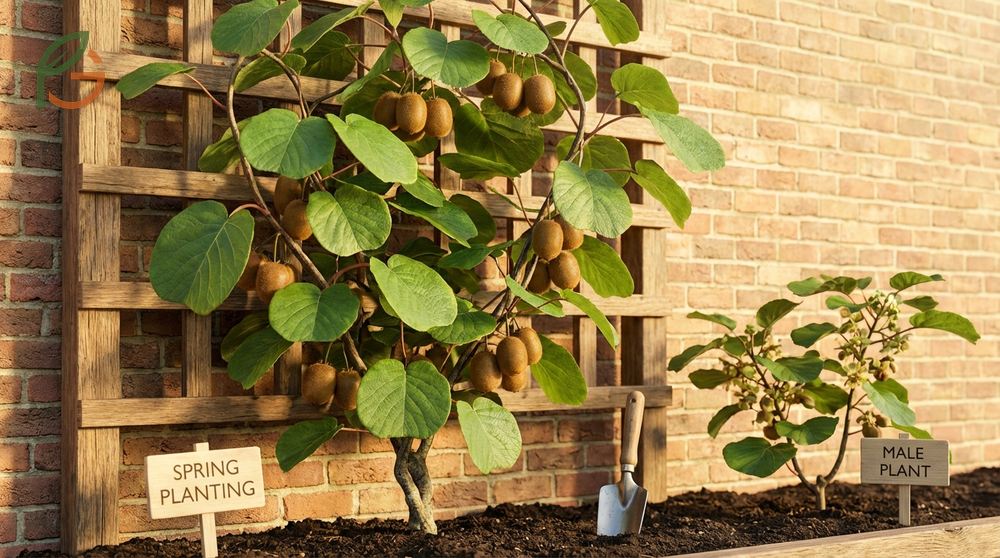
Kiwi vines are vigorous climbers that can grow 15-20 feet annually once established. They’re dioecious plants, meaning you’ll need separate male and female vines to get fruit. Most home gardeners don’t realize that timing your planting in spring gives vines the longest growing season to establish before winter.
Select a planting site with full sun exposure (at least 6-8 hours daily) and protection from strong winds. Kiwis prefer south or west-facing locations against walls or fences that provide warmth and shelter. The site should offer easy access for installing a robust trellis system capable of supporting mature vines that can weigh several hundred pounds.
From My Experience: My cousin in Guadalajara, Mexico planted ‘Issai’ hardy kiwi cuttings in March 2023. The vines established quickly in their climate and produced their first small harvest by year two—matching the accelerated timeline researchers note for self-fertile varieties in warm zones.
Understanding Kiwi Varieties
Three main types of kiwi suit different climates and tastes. Fuzzy kiwis (Actinidia deliciosa) like ‘Hayward’ produce the large, brown, fuzzy fruits you’ll find in grocery stores but need mild winters. Golden kiwis offer sweeter, smooth-skinned fruit and tolerate temperatures down to 10°F (-12°C)[5].
Hardy kiwis (Actinidia arguta) are the cold champions, surviving down to -25°F (-31°C)[6]. Varieties like ‘Anna’ (Ananasnaya) produce grape-sized, smooth-skinned fruits that you can pop in your mouth whole. They’re perfect for gardeners in the northern US and Canada who thought they couldn’t grow kiwis.
- Fuzzy Kiwi Females: ‘Hayward’ (commercial standard), ‘Bruno’, ‘Abbot’, ‘Monty’
- Fuzzy Kiwi Males: ‘Tomuri’, ‘Matua’, ‘Chico Male’[1]
- Hardy Kiwi Varieties: ‘Anna’ (Ananasnaya), ‘Issai’ (self-fertile), ‘Arctic Beauty’
- Golden Kiwi: ‘Golden Kiwi’ cultivars with smooth, bronze skin
- Special Note: ‘Issai’ is self-fertile but produces better with a pollinator present
Male vs Female Plant Identification
You can’t tell male from female kiwi vines until they bloom, typically in their second or third year. When flowers appear in late spring, look closely at the center. Male flowers are packed with prominent yellow stamens covered in pollen that sticks to your finger when touched.
Female flowers have those same stamens but also feature white, sticky stigmas projecting outward from the center[7]. These stigmas catch pollen from bees visiting male flowers. If you’re buying plants from a nursery, they’ll be labeled by sex—look for tags that clearly state “male” or “female.”
Important Note: Don’t plant only females hoping to save space. Without a male vine within 50 feet, you won’t get any fruit—the female flowers won’t be pollinated and will simply drop off.
How to Plant Kiwi
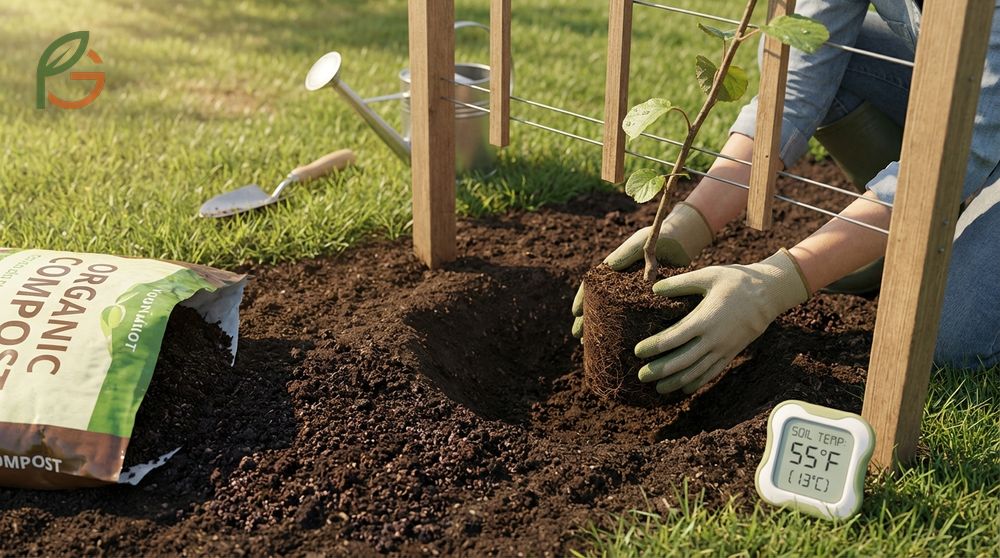
Plant kiwi vines in spring after the last frost date when soil temperatures reach at least 50°F (10°C). Dig holes twice as wide as the root ball but no deeper—planting too deep encourages crown rot. Mix compost or well-rotted manure into the native soil to improve texture and add organic matter.
Position each vine a few inches away from its support structure, angling the stem toward the trellis. Set plants at the same depth they grew in their containers, with the soil line matching the surrounding grade. Water thoroughly after planting to settle soil around roots and eliminate air pockets.
Spacing Requirements
Space female vines 15 feet apart in rows to allow mature plants adequate room[1]. Hardy kiwi varieties tolerate closer spacing at 8-10 feet since they’re less vigorous. Male vines don’t need dedicated space—you can plant one at the end of a row or even train it up the same post as a female if space is tight.
The key measurement is keeping males within 50 feet of females for effective pollination. Bees do the work of transferring pollen, but they won’t travel unlimited distances. One male can service eight to nine female vines if positioned centrally in your planting.
- Standard fuzzy kiwis: 15 feet between female vines in rows
- Hardy kiwis: 8-10 feet between vines due to smaller size
- Male placement: within 50 feet of all female vines
- Row spacing: 15-18 feet between rows for equipment access
- Ratio: One male for every 8-9 female vines[2]
Best Soil for Kiwi
Kiwis demand well-drained soil above all else—they’ll die from root rot in waterlogged conditions. Deep, fertile, sandy loam soils work best, providing good aeration while retaining adequate moisture. Soil pH should fall between 5.5 and 6.5 (slightly acidic to neutral)[3].
Test your soil pH before planting and amend as needed. If pH exceeds 7.0, incorporate sulfur to lower it. Avoid soils with calcium carbonate (lime) content above 10%—this causes iron deficiency and yellowing leaves. Heavy clay soils need extensive amendment with compost, or consider planting on raised mounds 6-10 inches high.
Drainage Test: Dig a hole 12 inches deep, fill it with water, and let it drain. Fill it again and time how long it takes to empty. If water remains after 8-10 hours, your drainage is inadequate—build raised beds instead.
Kiwi Trellis Design
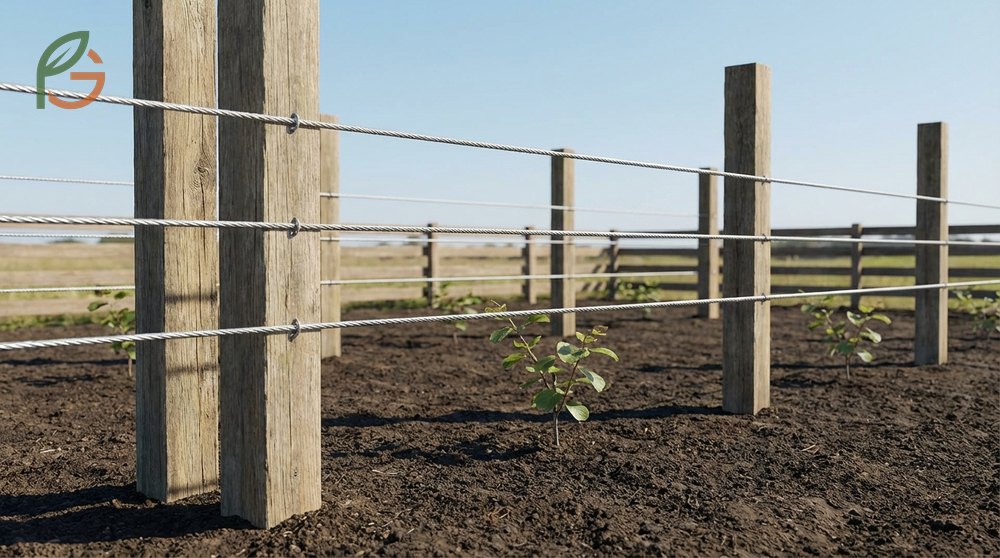
Install your trellis system before planting to avoid disturbing established roots. Kiwi vines require substantial support—mature plants can weigh several hundred pounds when loaded with fruit and foliage. Posts should be at least 6-8 feet tall (set 2-3 feet deep) made from 4×4 treated lumber or metal T-posts.
String heavy-gauge wire (12-14 gauge) horizontally between posts at 16-24 inch intervals[4]. Start the first wire about 30 inches above ground and add three to four more wires going up. Anchor end posts with guy wires or braces—the weight of loaded vines creates tremendous tension that can pull posts over.
Building Support Structures
The T-bar or pergola system works best for home gardens. Set sturdy posts 15-20 feet apart and run wires perpendicular to the row, creating a flat overhead canopy. This allows vines to spread naturally and makes fruit easier to harvest.
For wall or fence training, use horizontal wires spaced every 16-20 inches, similar to an espalier system. This works well against south-facing walls that provide extra warmth and winter protection. Make sure walls can handle the weight—brick and stone are ideal, but wood siding might not support mature vines.
- Posts: 4×4 treated lumber or 3-inch diameter metal, set 2-3 feet deep
- Wire: 12-14 gauge high-tensile steel, spaced 16-24 inches apart
- Height: 6-8 feet above ground for comfortable maintenance
- Post spacing: 15-20 feet apart along rows
- Anchoring: Guy wires or diagonal braces at end posts
- Turnbuckles: Install to tighten wires as they stretch over time
Training Young Vines
After planting, cut the main stem back to just above the first wire to encourage strong lateral growth. During the first growing season, select the strongest shoot and train it vertically up a bamboo stake to the top wire. Remove all other competing shoots to focus the plant’s energy.
Once the leader reaches the top wire, pinch out its tip. Select two strong side shoots near the top wire and train them horizontally in opposite directions[8]. These become your permanent cordons. When they reach 3-4 feet long, pinch the tips to encourage lateral branches that’ll produce fruit next year.
Pruning Kiwi Vines
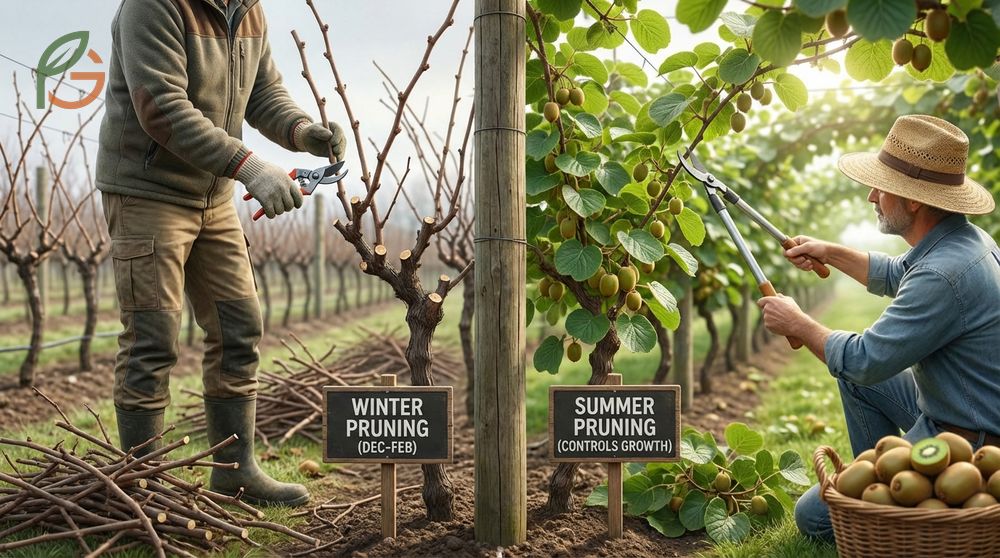
Prune kiwi vines twice yearly to maintain productivity and prevent tangled growth. Winter pruning (dormant season) shapes the framework and removes old wood. Summer pruning controls vigorous growth and directs energy toward fruit production. Without regular pruning, vines become an unmanageable jungle within three years.
During winter (December-February), remove dead or damaged wood first. Cut back fruiting laterals to 3-4 buds beyond the last fruit from the previous season. Remove any shoots growing toward the center of the plant or crossing other branches. The goal is maintaining an open structure with evenly spaced fruiting spurs every 10-12 inches along main cordons.
In summer (June-July), pinch back new shoots to 5-6 leaves beyond the last flower cluster. This stops excessive vegetative growth and channels energy into developing fruit. Remove any shoots that aren’t fruiting entirely—they’re just stealing resources. Pruning might seem aggressive, but kiwis grow vigorously and recover quickly.
- Winter pruning: Remove 70% of previous season’s growth, cutting laterals back to 3-4 buds
- Summer pruning: Pinch shoots to 5-6 leaves beyond last fruit cluster
- First year: Focus on building framework—no fruit production expected
- Second year: Continue training cordons, allow light fruiting if plant is vigorous
- Third year onward: Full production with annual pruning to maintain structure
- Male vines: Prune after flowering to control size but maintain pollen production
Pruning Tip: Don’t prune kiwis in early spring when sap is rising—vines will “bleed” profusely from cuts. Wait until mid-summer or winter dormancy when sap flow is minimal.
Watering, Fertilizer, and Care
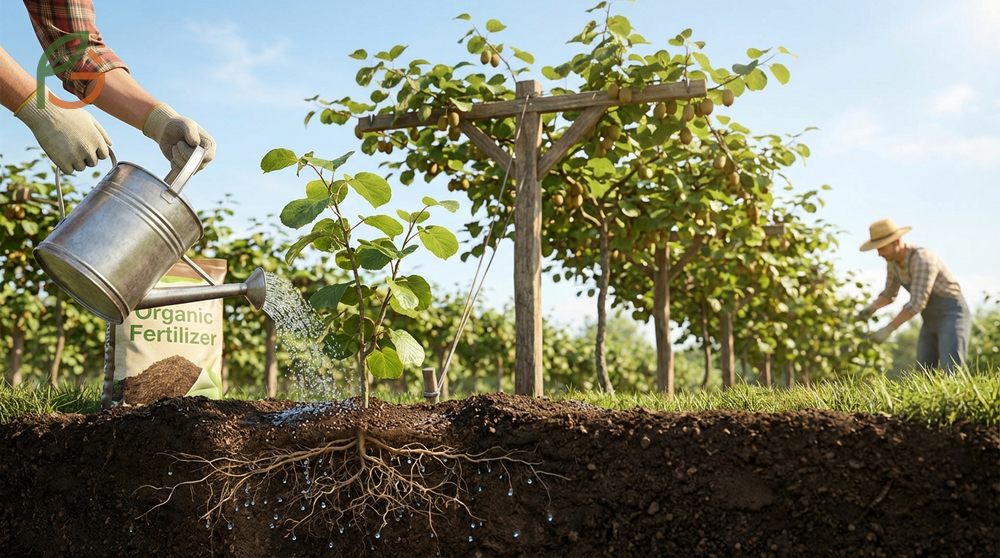
Consistent care determines whether your kiwi vines thrive or merely survive. These plants need regular attention to watering and fertilization, especially during their first three years of establishment. Once mature, they’re more forgiving but still benefit from proper maintenance.
Watering Kiwi Plants
Kiwis have shallow, fibrous root systems that dry out quickly in hot weather. Water deeply once or twice weekly during the growing season, providing 1-2 inches per week from combined rainfall and irrigation. The soil should stay consistently moist but never waterlogged—think of a wrung-out sponge.
Drip irrigation or soaker hoses work better than overhead sprinklers. They deliver water directly to roots while keeping foliage dry, reducing disease risk. Mulch around vines with 3-4 inches of wood chips or straw to conserve moisture and suppress weeds. Keep mulch 6 inches away from the trunk to prevent rot.
Fertilizer for Kiwi Plants
Feed kiwis in early spring as buds swell and again in mid-summer after fruit set. Use a balanced fertilizer like 10-10-10 or organic alternatives such as compost tea and fish emulsion. Young vines (years 1-3) need about 2 ounces of actual nitrogen per plant annually. Mature vines need 4-6 ounces.
Split applications work best—apply half in March and half in June. Avoid fertilizing after mid-July because late-season growth won’t harden off before winter and will be frost-damaged. Kiwis also benefit from annual applications of dolomitic lime to maintain proper pH and supply magnesium[9].
- Early spring (March): Apply half of annual nitrogen requirement as buds break
- Mid-summer (June): Apply remaining half after fruit sets
- Nitrogen needs: 2 oz actual N for young vines, 4-6 oz for mature plants
- Phosphorus and potassium: Include in balanced fertilizer for flowering and fruit quality
- Magnesium: Apply dolomitic lime annually to maintain pH 5.5-6.5
- Micronutrients: Watch for iron deficiency (yellowing leaves) in high-pH soils
Common Kiwi Plant Diseases
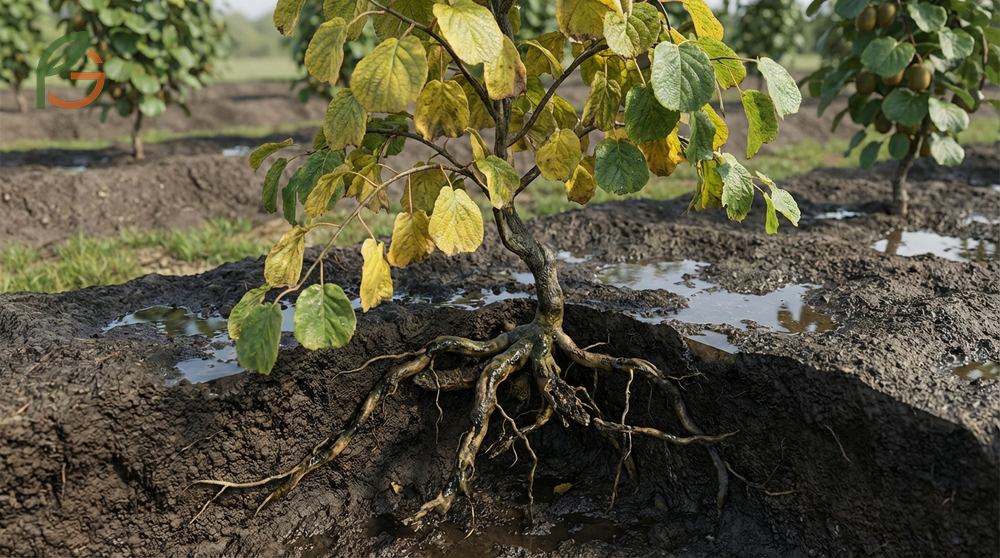
Kiwi vines resist most diseases when grown in proper conditions, but several problems can emerge. Root rot caused by Phytophthora is the most serious threat, thriving in poorly drained soils. Infected plants show yellowing leaves, wilting, and eventual death as roots decay and can’t absorb water or nutrients.
Prevention beats treatment for root rot—ensure excellent drainage before planting and avoid overwatering. Raised beds help in marginal soils. Once infection occurs, there’s no cure; remove affected plants and don’t replant kiwis in that spot. Fungicides containing mefenoxam can suppress Phytophthora if applied preventatively in high-risk areas.
Botrytis rot (gray mold) attacks ripening fruit during humid weather, covering them with fuzzy gray growth. Improve air circulation through proper pruning and spacing. Remove infected fruit immediately to prevent spores from spreading. Organic gardeners can use Bacillus subtilis sprays as a preventative during flowering.
- Phytophthora root rot: Ensure excellent drainage, avoid planting in heavy clay or wet areas
- Botrytis gray mold: Prune for air circulation, remove infected fruit promptly
- Crown gall: Avoid wounding stems, purchase certified disease-free plants
- Bacterial canker: Prune during dry weather, disinfect tools between cuts
- Iron chlorosis: Test soil pH and correct if above 7.0, apply chelated iron
Pest Note: Japanese beetles can defoliate kiwi vines rapidly. Handpick beetles in early morning when they’re sluggish, or use row covers during peak beetle season (June-July) if infestations are severe.
Growing Kiwi from Seed
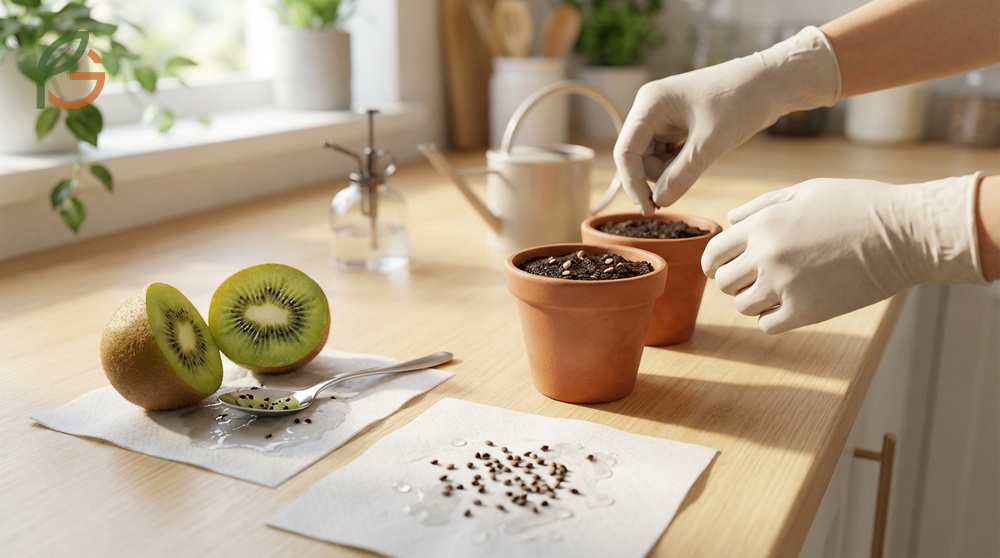
Growing kiwis from seed is possible but comes with caveats. Plants grown from seed won’t match the parent fruit due to genetic variation from sexual reproduction. You won’t know the sex until flowering (2-3 years), and fruit quality is unpredictable. Still, it’s a fun experiment for patient gardeners.
Extract seeds from ripe kiwi fruit, rinse away all flesh, and dry them on paper towels. In spring, place seeds on the surface of moist seedling compost in pots—don’t bury them since they need light to germinate[10]. Cover pots with plastic wrap to maintain humidity.
Keep pots at 68-77°F (20-25°C) on a sunny windowsill. Seeds germinate in 1-3 weeks. Once seedlings emerge, remove the plastic cover and grow them until they’re 6-8 inches tall before transplanting outdoors. Remember, seedling-grown kiwis take 5-7 years to fruit versus 3-4 years for grafted vines.
- Extract seeds from ripe fruit and rinse thoroughly to remove all flesh
- Dry seeds on paper towels for 2-3 days at room temperature
- Place seeds on moist seedling compost surface (don’t bury—they need light)
- Cover with plastic wrap and keep at 68-77°F (20-25°C)
- Germination occurs in 1-3 weeks under consistent moisture and warmth
- Grow seedlings for 3-4 months indoors before hardening off and planting outside
- Expect first flowering in 3-5 years to determine sex of plants
Conclusion
The evidence is clear: how to grow kiwi successfully comes down to understanding pollination requirements, providing sturdy support structures, and maintaining proper soil conditions. Plant one male for every eight females, space them adequately, and train vines on robust trellises with consistent pruning. With patience, you’ll harvest fresh kiwis from your own backyard for decades.
Current horticultural guidance emphasizes selecting varieties matched to your climate zone—hardy kiwis for cold regions, fuzzy or golden types for milder areas. Start with quality plants from reputable nurseries, invest time in proper trellis construction, and you’ll be rewarded with vigorous vines that produce abundant fruit. FruitGarden provides research-based growing information to help you succeed with kiwis and other fruit crops.
Frequently Asked Questions
How long does it take for kiwi plants to produce fruit?
Grafted kiwi vines typically produce their first fruit in 3-4 years after planting, while seedling-grown plants take 5-7 years. Hardy kiwi varieties like ‘Issai’ sometimes fruit in year two under ideal conditions. Full production doesn’t occur until vines reach 5-7 years old and develop mature framework structures.
Can you grow kiwi in containers?
Yes, but only hardy kiwi varieties work in containers due to their smaller size. Use a container at least 20-24 inches in diameter with excellent drainage. You’ll still need both male and female plants for fruiting. Container kiwis require more frequent watering and fertilization than ground-planted vines, and they won’t produce as heavily.
What’s the difference between hardy kiwi and regular kiwi?
Hardy kiwis (Actinidia arguta) produce smooth-skinned, grape-sized fruits that you eat whole and tolerate temperatures down to -25°F (-31°C). Regular fuzzy kiwis (Actinidia deliciosa) produce the large, brown, fuzzy supermarket fruits but only survive to about 10°F (-12°C). Hardy kiwis are sweeter but produce smaller individual fruits.
Do kiwi vines need full sun?
Yes, kiwi vines need at least 6-8 hours of direct sunlight daily for good fruit production. They’ll grow in partial shade but produce fewer, less sweet fruits. South or west-facing locations against walls work best since they provide maximum sun exposure and protection from cold winds.
How much space do kiwi plants need?
Space standard fuzzy kiwi vines 15 feet apart with rows 15-18 feet apart. Hardy kiwis can be planted closer at 8-10 feet apart due to their smaller size. Male vines don’t need dedicated space but must be within 50 feet of females for effective pollination. Plan for vigorous growth—mature vines easily cover 100-200 square feet.
When is the best time to plant kiwi vines?
Plant kiwi vines in early spring after the last frost date when soil temperatures reach 50°F (10°C) or warmer. Spring planting gives vines the entire growing season to establish roots before winter. Avoid fall planting in cold climates since new vines won’t have time to harden off before freezing temperatures arrive.
Why isn’t my kiwi plant flowering or fruiting?
Common causes include: the plant is too young (needs 3-4 years to mature), you have only female vines without a male pollinator nearby, insufficient sunlight (needs 6-8 hours), or late spring frosts killing flower buds. Excessive nitrogen fertilizer also promotes leafy growth at the expense of flowers. Check that you have both sexes planted within 50 feet of each other.





