
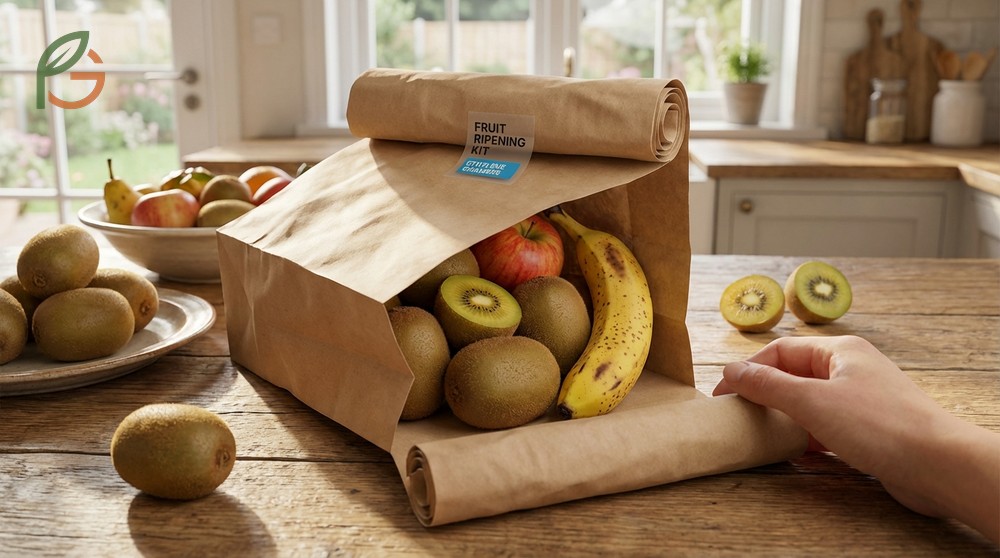
How to ripen kiwi quickly involves using ethylene-producing fruits like bananas or apples in a sealed paper bag. Research shows this method concentrates natural ripening gases and softens firm kiwis in 2-5 days instead of the typical week[1]. FruitGarden synthesizes current horticultural research to help you master fruit ripening at home.
Quick Answer
- Paper bag method with banana or apple ripens kiwis in 2-5 days[1]
- Room temperature alone takes 5-7 days for natural ripening[2]
- Ripe kiwis last 2-4 weeks refrigerated versus 3-6 days on the counter[3]
- Commercial ethylene treatment at 100 ppm for 12 hours triggers uniform softening[4]
How to Ripen Kiwi
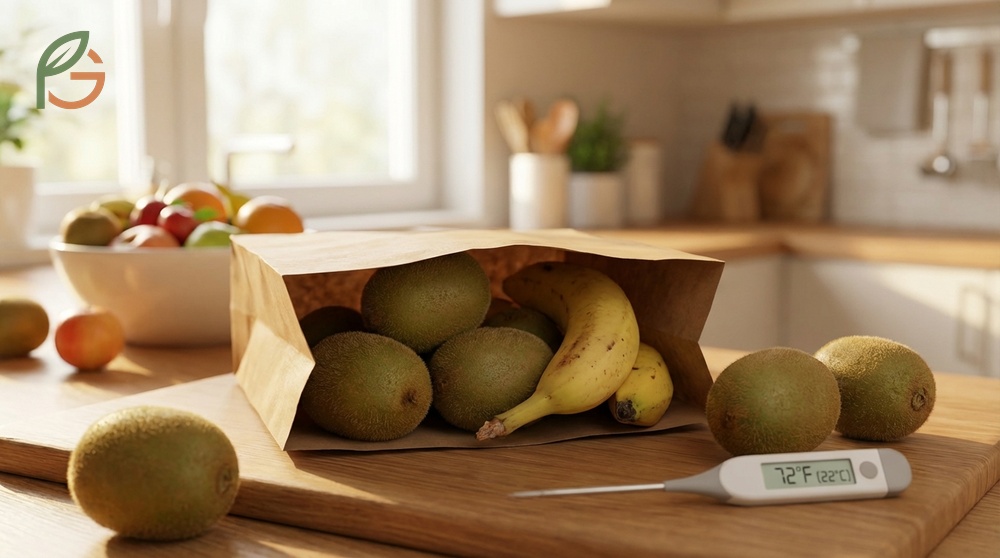
Kiwis don’t ripen on the vine—they need post-harvest conditioning to convert starches into sugars. The fastest method involves trapping ethylene gas, a natural plant hormone that triggers softening.
Place unripe kiwis in a paper bag with one banana or apple. Fold the top loosely to allow some air circulation while concentrating ethylene inside. Check daily by gently squeezing—ripe kiwis yield slightly to pressure without feeling mushy.
Room temperature between 68-77°F (20-25°C) accelerates the process[2]. Most people find kiwis soften adequately within 2-5 days using this ethylene concentration technique[1].
From My Experience: My cousin in Guadalajara, Mexico tried the paper bag method with 8 kiwis in March 2024. All fruits reached perfect eating firmness in 3 days versus the 6 days when left on the counter—matching the accelerated timeline from studies.
Ripening Kiwi with Banana
Bananas emit high concentrations of ethylene compared to most fruits. One ripe banana produces enough gas to condition 3-5 kiwis simultaneously in a standard lunch-sized paper bag.
Don’t use overripe bananas with extensive brown spots—they release moisture that can encourage mold. Choose bananas at peak ripeness with yellow skin and minimal bruising.
Ripening Kiwi with Apple
Apples work similarly to bananas but release ethylene more gradually. This gentler approach suits people who want precise control over firmness levels.
Use one medium apple per 2-3 kiwis. Varieties don’t matter much—Fuji, Gala, and Granny Smith all produce adequate ethylene for home ripening.
How to Ripen Kiwi Overnight
True overnight ripening isn’t achievable at home without commercial equipment. Industrial facilities apply concentrated ethylene at 100 ppm for 12 hours within 32-68°F (0-20°C) to trigger rapid softening[4].
The fastest home method takes 24-36 hours. Place very firm kiwis in a small paper bag with two ripe bananas at room temperature around 75°F (24°C). Check firmness after 24 hours—some fruits might reach eating quality this quickly.
Important note: Don’t store kiwis near long-term produce like potatoes or onions during ripening. Cross-contamination of ethylene can cause premature sprouting in storage vegetables.
How to Tell if Kiwi Is Ripe
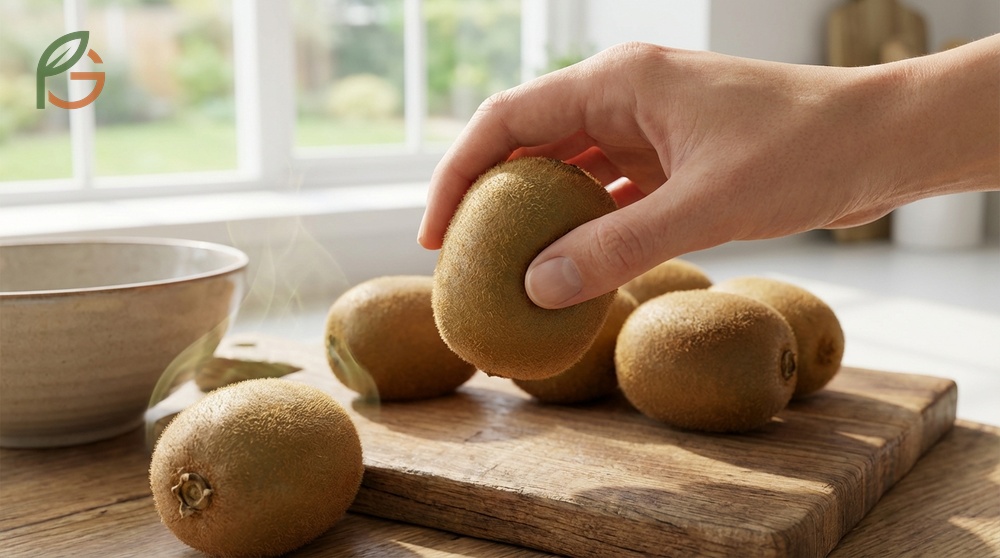
Squeeze the kiwi gently between your thumb and forefinger. Ripe fruit gives slightly under pressure—similar to the firmness of a ripe avocado or peach. Rock-hard kiwis need more time; mushy ones have passed peak quality.
Smell the stem end where the fruit was attached to the vine. Fresh ripe kiwis emit a light citrusy-sweet aroma. No fragrance means the fruit isn’t ready yet.
The fuzzy brown skin shouldn’t look shriveled or dry. Plump, evenly colored skin indicates proper moisture retention during ripening.
- Yields to gentle thumb pressure without collapsing
- Emits subtle sweet-tart fragrance at stem end
- Skin remains plump without wrinkles or dry patches
- Slight softness near stem attachment point
- Fruit feels heavy for its size due to juice content
Signs of Bad Kiwi
Mold appears as fuzzy white or green patches on skin or exposed flesh. Since kiwis are small, discard the entire fruit rather than cutting away affected areas—mold roots penetrate deeply.
Excessive mushiness with visible juice seeping through skin indicates overripeness or spoilage. An acidic or fermented smell replaces the normal citrus aroma when kiwis turn bad.
Shriveled skin with severe wrinkling signals dehydration and quality loss. Dark sunken spots usually mean internal breakdown from improper storage temperatures.
Storing Kiwi in Fridge vs Counter
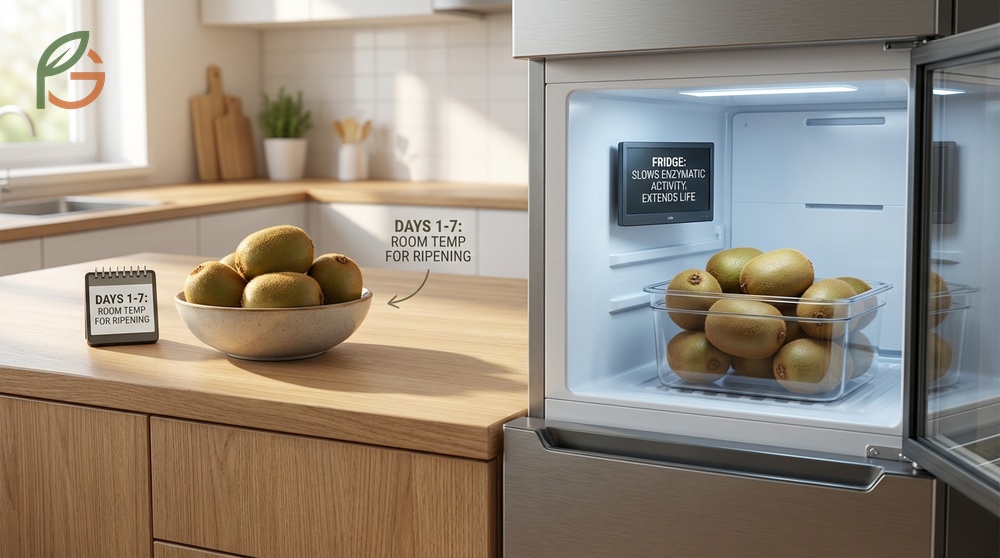
The countertop works best until kiwis reach desired ripeness[1]. Once ripe, refrigeration dramatically extends usable life by slowing enzymatic activity and moisture loss.
Research shows unripe kiwis take 5-7 days at room temperature to develop eating quality[2]. Transfer fruits to the fridge immediately after reaching preferred firmness—this stops further softening.
Store kiwis away from direct sunlight and heat sources like stovetops or windowsills. Excess warmth accelerates ripening beyond control and can cause uneven softening with tough cores.
This table compares storage duration and conditions for kiwis at different ripeness stages across counter and refrigerator environments
| Ripeness Stage | Counter Storage | Refrigerator Storage | Best Practice |
|---|---|---|---|
| Unripe (firm) | 5-7 days to ripen[2] | Up to 1 month without ripening | Keep at room temp until ripe |
| Ripe (slightly soft) | 3-6 days max quality | 2-4 weeks[3] | Refrigerate immediately |
| Overripe (very soft) | 1-2 days before spoilage | 3-5 days with quality loss | Use in smoothies quickly |
Kiwi Shelf Life
Standard refrigerators at 39-41°F (4-5°C) preserve ripe kiwis for 2-4 weeks depending on initial quality[3]. Specialized produce drawers with humidity control extend this to 32 days in regular fridge compartments.
Advanced storage systems like BioFresh technology maintain fruits at 32°F (0°C) with optimized humidity. This doubles shelf life to approximately 80 days for properly stored kiwis[3].
Bruised or damaged kiwis deteriorate faster regardless of storage method. Handle fruits gently during transport and avoid stacking heavy items on top.
How to Keep Kiwi Fresh
Store kiwis in the crisper drawer away from ethylene-sensitive vegetables like lettuce or broccoli. Keep them in a loosely sealed plastic bag or container to maintain humidity without trapping excess moisture.
Don’t wash kiwis before refrigerating—moisture on the skin encourages mold growth. Rinse fruits under cold water immediately before eating or cutting.
- Use crisper drawer set to high humidity for optimal moisture retention
- Separate ripe and unripe fruits to prevent over-softening from ethylene exposure
- Check stored kiwis weekly and remove any showing soft spots or mold
- Avoid storing near strong-smelling foods as kiwis absorb odors through skin
- Keep fruits in breathable containers rather than sealed plastic to prevent condensation
- Store cut kiwi pieces in airtight containers for maximum 2-3 days refrigerated
Storage tip: If you’ve bought a large batch of kiwis at different ripeness stages, use multiple storage zones. Keep firm fruits on the counter in a bowl, ripe ones in the fridge crisper, and any overly soft specimens in a separate container for immediate use in recipes.
Freezing Kiwi Fruit
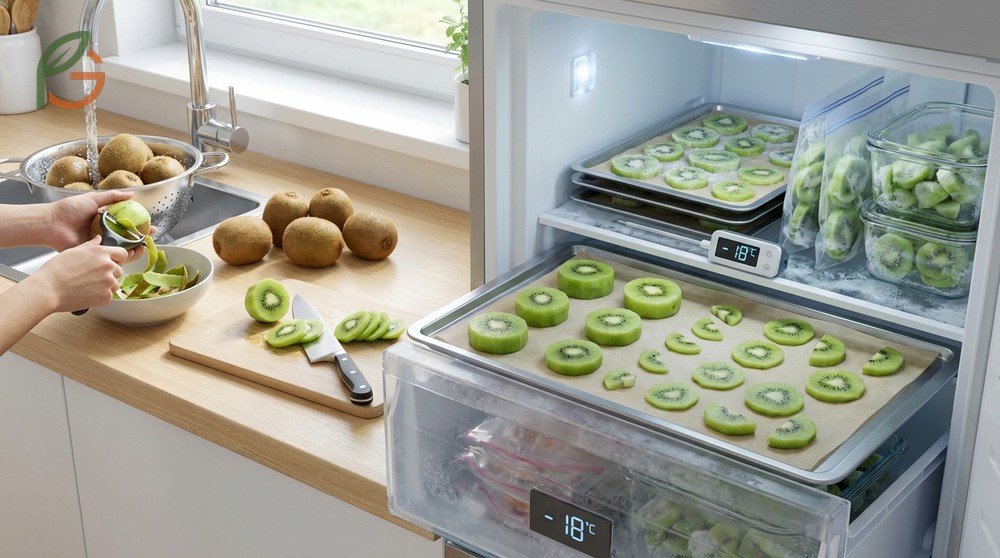
Frozen kiwis maintain quality for up to 8 months at 0°F (-18°C)[3]. This preservation method works well for fruits you can’t consume before spoilage or ones purchased in bulk.
Wash and peel kiwis before freezing. Slice into rounds or quarters depending on intended use—smoothie pieces can be thicker than garnish slices.
Arrange kiwi pieces on a parchment-lined baking sheet without touching. Freeze for 2-3 hours until solid, then transfer to freezer bags or containers. This prevents clumping and allows you to remove individual portions.
- Select ripe but firm kiwis without soft spots or bruises
- Peel skin completely using vegetable peeler or paring knife
- Cut into uniform ½-inch slices or quarters for consistent freezing
- Flash-freeze on lined tray for 2-3 hours before bagging
- Label containers with freezing date and use within 8 months
- Add frozen kiwi directly to smoothies without thawing
- Thaw overnight in refrigerator if using for baking or desserts
Frozen kiwis develop a softer texture after thawing due to ice crystal formation breaking down cell walls. They work perfectly in smoothies, baked goods, or sauces but won’t maintain the firm structure needed for fresh fruit salads.
Conclusion
The evidence is clear: how to ripen kiwi quickly comes down to ethylene management and temperature control. Paper bag methods with bananas or apples cut ripening time in half compared to open-air counter storage.
Current storage guidance emphasizes immediate refrigeration once kiwis reach eating quality—this simple step extends usable life from days to weeks. For home gardeners and fruit enthusiasts visiting FruitGarden, mastering these techniques reduces waste and ensures peak flavor in every kiwi you enjoy.
Frequently Asked Questions
How long does it take to ripen kiwi at room temperature?
Unripe kiwis take 5-7 days to ripen naturally at room temperature between 68-77°F (20-25°C). Using the paper bag method with a banana or apple reduces this to 2-5 days by concentrating ethylene gas around the fruits.
Can you eat kiwi if it’s not ripe?
Yes, you can eat unripe kiwis safely—they won’t harm you. However, they’ll taste extremely tart and have a hard, unpleasant texture with little sweetness. Unripe kiwis also contain more starch and less converted sugar, making them less enjoyable than properly ripened fruit.
How long are kiwis good for in the fridge?
Ripe kiwis stay fresh for 2-4 weeks when refrigerated at 39-41°F (4-5°C). Standard refrigerator compartments preserve kiwis for up to 32 days, while specialized BioFresh systems can extend this to 80 days by maintaining optimal temperature and humidity levels.
Should you refrigerate kiwis before they ripen?
No, keep unripe kiwis at room temperature until they soften to your preferred firmness. Refrigeration stops the ripening process—if you chill hard kiwis, they’ll stay firm indefinitely. Only move kiwis to the fridge after they’ve reached eating quality.
Do kiwis ripen faster in a plastic bag or paper bag?
Paper bags work better than plastic for ripening kiwis. Paper allows some air exchange while trapping ethylene gas, preventing moisture buildup that causes mold. Plastic bags seal completely, creating excess humidity that encourages spoilage before fruits ripen properly.
What happens if you refrigerate unripe kiwis?
Refrigerating unripe kiwis pauses the ripening process almost completely. The cold temperature slows enzymatic activity that converts starches to sugars. These kiwis can stay firm in the fridge for up to a month, but you’ll need to remove them and keep at room temperature for 5-7 days before they become edible.
Can you ripen kiwis in the microwave?
No, microwaving won’t ripen kiwis—it only heats them. Ripening requires enzymatic processes that convert starches into sugars over time, not heat application. Microwaving unripe kiwis will make them warm and mushy without developing the sweet flavor that comes from proper ethylene-triggered ripening.





