
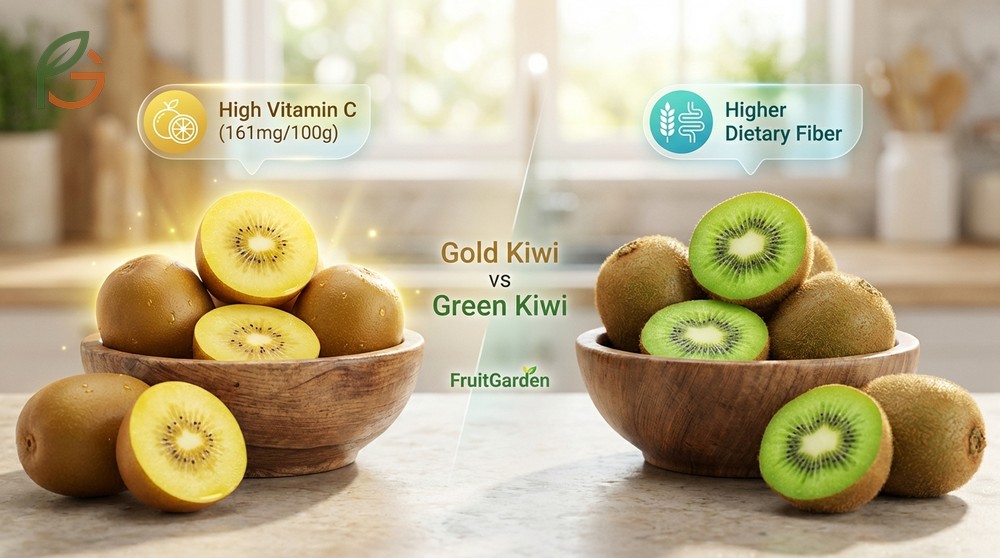
Gold kiwi vs green kiwi—both varieties deliver exceptional nutrition, but they differ significantly in sweetness, vitamin C content, and fiber levels. Research shows that gold kiwis contain nearly twice the vitamin C of green varieties at 161mg per 100g[1], while green kiwis provide about 1.5 times more dietary fiber for digestive health[2]. FruitGarden synthesizes current horticultural research and nutritional data to help you choose the right variety for your garden and health goals.
Quick Answer
- Gold kiwis deliver 161.3mg vitamin C per 100g[1]—nearly double green’s 92.7mg
- Green varieties contain 1.5x more fiber[2], supporting better digestion and gut health
- Gold kiwis taste sweeter with tropical mango-strawberry notes, while green offers tangy citrus flavors
- Green: 90 calories per 2 fruits; Gold: 110 calories[3]
- Both varieties need 400-700 hours below 45°F (7°C)[4] for winter chilling
Gold Kiwi vs Green Kiwi
The primary differences between gold and green kiwis extend beyond color to encompass distinct botanical species, nutritional profiles, and flavor characteristics. Studies demonstrate that these variations affect both culinary applications and health outcomes.
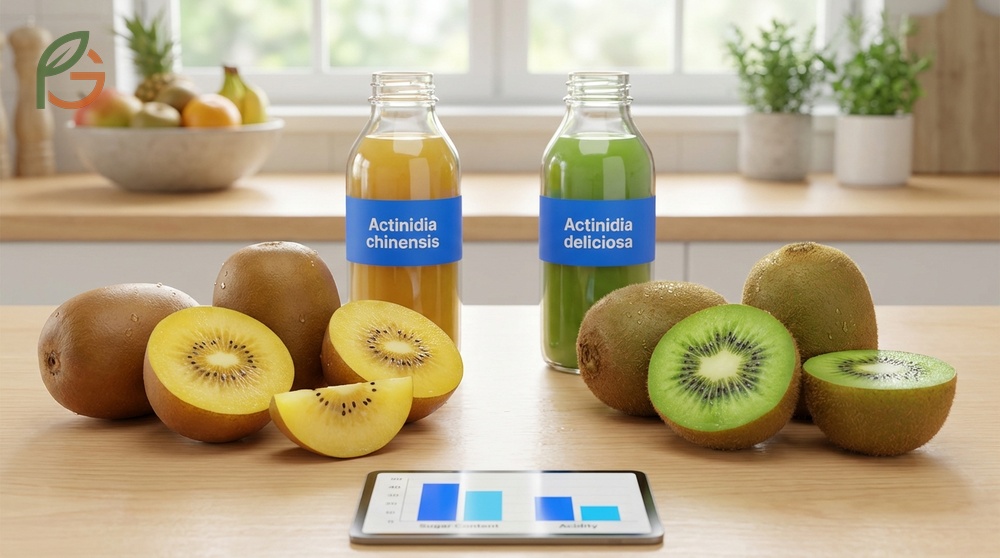
Gold kiwis belong to the species Actinidia chinensis, while green varieties are classified as Actinidia deliciosa[5]. This botanical distinction creates measurable differences in sugar content, acidity levels, and phytonutrient composition.
Botanical Classification
Actinidia chinensis, the gold kiwi species, originated in China’s Yangtze River valley where vines can reach up to 200 meters in length under optimal conditions. This species produces fruit with smooth or lightly fuzzy skin and golden-yellow flesh.
Actinidia deliciosa, responsible for green kiwis, grows as a rapidly expanding woody deciduous climbing vine. These plants thrive in thickets and oak forests on slopes or in ravines across East Asia[5].
Visual Differences
Green kiwis feature fuzzy brown skin covering bright green flesh with numerous small black seeds distributed throughout. The texture remains slightly coarse even when ripe, and the core appears larger in proportion to the fruit.
Gold varieties display smooth to lightly fuzzy skin with a more pointed end shape. The yellow flesh contains fewer visible seeds, and the texture becomes noticeably softer and creamier at peak ripeness.
Important Note: Not all yellow kiwis are created equal. Only specific cultivars like Zespri SunGold maintain consistent sweetness and smooth skin—other golden varieties may still have fuzz and more tangy flavors.
Taste and Nutrition Differences
Current nutritional analysis reveals that gold and green kiwis serve different dietary purposes despite both being nutrient powerhouses. The vitamin C and fiber content vary significantly enough to influence which variety best suits specific health goals.
Flavor Profile Comparison
Gold kiwis deliver a distinctly sweeter taste with tropical flavor notes reminiscent of mango and strawberry. This sweetness results from higher natural sugar content, making them ideal for smoothies and desserts where additional sweeteners aren’t needed.
Green kiwis offer a more intense tangy-sweet balance with pronounced citrus notes. Most people describe the flavor as a combination of pineapple and lime, creating a refreshing zesty kick that works well in fruit salads and savory applications.
Vitamin C Content
The vitamin C disparity between varieties is substantial. Gold kiwis contain 161.3mg per 100g of fresh weight—almost three times the amount found in oranges and strawberries on an edible flesh basis[1].
Green varieties provide 92.7mg per 100g[1], which still exceeds oranges and covers a full day’s requirement in just two fruits. Research indicates that plasma vitamin C levels in humans saturate at approximately 200mg daily intake—roughly equivalent to eating two gold kiwis[1].
Fiber and Digestive Benefits
Green kiwis excel in dietary fiber content, offering approximately 1.5 times more fiber than gold varieties[2]. Kiwifruit contains 2-3% of fresh weight as non-starch polysaccharides that provide both soluble and insoluble fiber[1].
This unique combination of fiber types, along with the enzyme actinidin found in both varieties, makes kiwifruit a digestive powerhouse. Evidence suggests that the equal parts soluble and insoluble fiber is rare among fruits[6].
This table compares calories, vitamin C, fiber, and potassium content between gold and green kiwi varieties per serving size
| Nutrient | Gold Kiwi (per 2 fruits) | Green Kiwi (per 2 fruits) | Key Difference |
|---|---|---|---|
| Calories | 110 cal[3] | 90 cal[3] | Green has 22% fewer calories |
| Vitamin C (per 100g) | 161.3 mg[1] | 92.7 mg[1] | Gold has 74% more vitamin C |
| Dietary Fiber | Moderate | 1.5x higher[2] | Green superior for digestion |
| Potassium | Equal to medium banana[3] | More than medium banana[3] | Green edges out gold slightly |
| Taste Profile | Sweet, tropical, mango-berry | Tangy-sweet, citrus, zesty | Preference-dependent |
Gold Kiwi Benefits
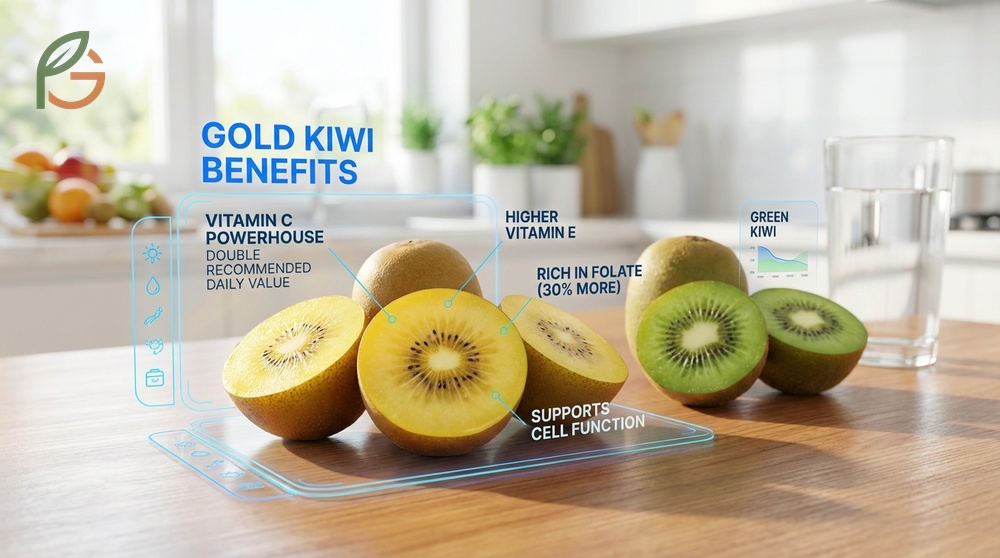
Gold kiwis deliver exceptional immune support through their extraordinarily high vitamin C content. Two fruits provide more than twice the recommended daily value of vitamin C intake[7], making them one of nature’s most concentrated sources of this essential nutrient.
Research shows that gold varieties contain higher levels of vitamin E and folate compared to green kiwis. The folate content reaches 63 mcg per serving—30% higher than green varieties—which supports cell function and nerve health.
The sweeter taste profile makes gold kiwis particularly useful for individuals who struggle to meet daily fruit intake recommendations. Children and picky eaters often prefer gold varieties, improving dietary compliance without requiring added sugars.
- Boosts collagen synthesis through exceptional vitamin C levels, supporting skin health and wound healing
- Enhances iron absorption when paired with iron-fortified foods like breakfast cereals
- Blends smoothly into fruit smoothies without requiring additional sweeteners or flavor masking
- Provides antioxidant protection through combined vitamin C and E content
- Supports cardiovascular health with potassium levels equivalent to a medium banana
- Works well in desserts and pastries where natural sweetness enhances other ingredients
Harvesting Tip: Gold kiwis should feel slightly soft when gently squeezed. If they’re too firm, let them ripen at room temperature for 2-3 days to develop full sweetness and creamy texture.
Green Kiwi Characteristics

Green kiwis stand out for their superior fiber content and lower calorie density. With 90 calories per two-fruit serving versus 110 for gold[3], green varieties better suit weight-conscious dietary approaches.
The higher fiber content supports multiple digestive functions. Current data indicates that kiwifruit contains 3-4 grams of soluble fiber per serving with equal parts soluble and insoluble fiber—a rare characteristic among fruits[6].
The tangy flavor profile provides culinary versatility that gold varieties can’t match. Green kiwis add brightness to fruit salads, balance savory dishes, and can even tenderize meat due to their actinidin enzyme content.
- Promotes regular bowel function and may help alleviate irritable bowel syndrome symptoms
- Contains more potassium than a medium banana, supporting healthy blood pressure levels[3]
- Provides lower sugar content while maintaining satisfying sweetness
- Supports cholesterol management through higher soluble fiber levels
- Offers better value per calorie for nutrient-dense eating patterns
- Works as a natural meat tenderizer in marinades due to actinidin enzyme activity
- Maintains nutritional stability longer in storage compared to softer gold varieties
Growing Kiwi Varieties

Both gold and green kiwis share similar cultivation requirements, though subtle differences affect fruit quality and yield. Understanding these distinctions helps home gardeners maximize success rates and fruit production.
Kiwifruit vines need 400-700 hours below 45°F (7°C) during winter to initiate proper flowering[4]. This chilling requirement restricts commercial and home cultivation to regions with true winter seasons, though plants adapt from cool climates to subtropical zones.
Soil pH requirements fall between 5-7, with slightly acidic to neutral conditions producing optimal results. Both species prefer deep, well-drained soil enriched with organic matter before planting.
- Position vines in full sun with shelter from cold winds and late frost exposure
- Plan for rapid spring and summer growth—canes can extend up to 16 feet in a single season[4]
- Install sturdy support structures before planting, as mature vines become extremely heavy
- Plant both male and female vines for fruit set, unless choosing self-fertile cultivars
- Allow 2-5 years from planting to reach ultimate spread of 8-13 feet[8]
- Propagate through softwood cuttings in spring or layering for true-to-type plants
- Graft named cultivars using whip-and-tongue technique to ensure variety characteristics
Climate Consideration: Hot summer temperatures above 95°F (35°C) may reduce fruit formation in both varieties. If you’re in a hot climate zone, choose planting locations with afternoon shade.
Conclusion
The choice between gold kiwi vs green kiwi depends on your specific nutritional priorities and taste preferences. Gold varieties excel for immune support with nearly double the vitamin C, while green kiwis provide superior fiber for digestive health at fewer calories per serving.
Current agricultural guidance emphasizes that both varieties contribute valuable nutrients to balanced diets, and growing either species at home offers rewarding yields with proper chilling requirements and soil management. FruitGarden recommends trying both varieties to determine which best suits your garden conditions and culinary applications.
Medical Disclaimer
Important Nutritional Disclaimer: This content is for informational and educational purposes only. It’s not intended as a substitute for professional medical advice, diagnosis, or treatment. Always consult a qualified healthcare professional or registered dietitian before making significant changes to your diet, especially if you have food allergies, digestive conditions, or other medical concerns.
Frequently Asked Questions
Which kiwi is sweeter, gold or green?
Gold kiwis are significantly sweeter than green varieties, with a tropical flavor profile featuring mango and strawberry notes. Green kiwis offer a tangy-sweet balance with pronounced citrus flavors, making them more tart overall.
Does gold kiwi have more vitamin C than green kiwi?
Yes, gold kiwis contain 161.3mg of vitamin C per 100g compared to 92.7mg in green kiwis—nearly 74% more. Both varieties still exceed the vitamin C content of oranges, with two fruits of either type meeting or exceeding daily requirements.
Which kiwi is better for weight loss?
Green kiwis work better for weight-conscious diets with 90 calories per two-fruit serving versus 110 for gold. Green varieties also provide 1.5 times more fiber, which promotes satiety and supports digestive health during calorie restriction.
Can you eat the skin of both gold and green kiwis?
You can eat both, though gold kiwi skin is smoother and less fuzzy, making it more palatable. Green kiwi skin contains additional fiber and nutrients but has a coarser texture that some people find unpleasant. Wash thoroughly before consuming either with skin.
Do gold and green kiwis need different growing conditions?
Both varieties require similar conditions: 400-700 hours of winter chilling below 45°F, slightly acidic to neutral soil with pH 5-7, and full sun with wind protection. Gold kiwis may be slightly more sensitive to extreme summer heat above 95°F.
Which kiwi has more fiber for digestive health?
Green kiwis contain approximately 1.5 times more dietary fiber than gold varieties. Both provide the rare combination of equal parts soluble and insoluble fiber, but green kiwis deliver higher total amounts for improved digestive function and regularity.
Are gold kiwis and yellow kiwis the same thing?
Not always—gold kiwis specifically refer to cultivars of Actinidia chinensis with smooth skin and consistent sweetness. Other yellow-fleshed kiwis may belong to different cultivars with fuzzy skin and more tangy flavors, so check variety names when purchasing.





