
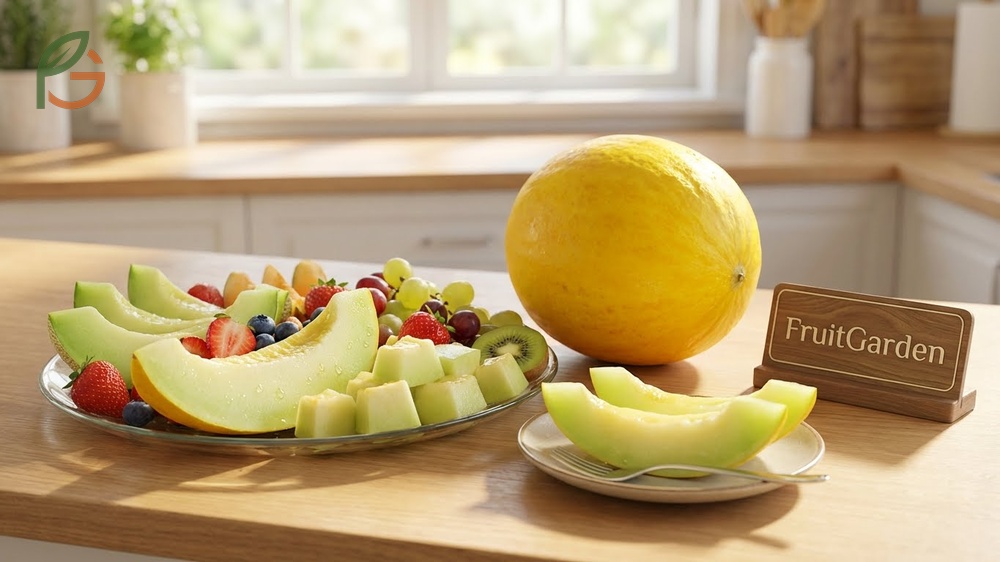
Golden honeydew melon stands out with its bright yellow rind and sweeter taste compared to green honeydew varieties. Research shows this specialty melon delivers 13-16% sugar content[1] versus the 9-12% found in standard green types, making it a top choice for fresh eating and fruit platters. FruitGarden brings together current agricultural insights and grower experiences to help you understand what makes this golden variety special.
Quick Answer
Golden Honeydew Melon
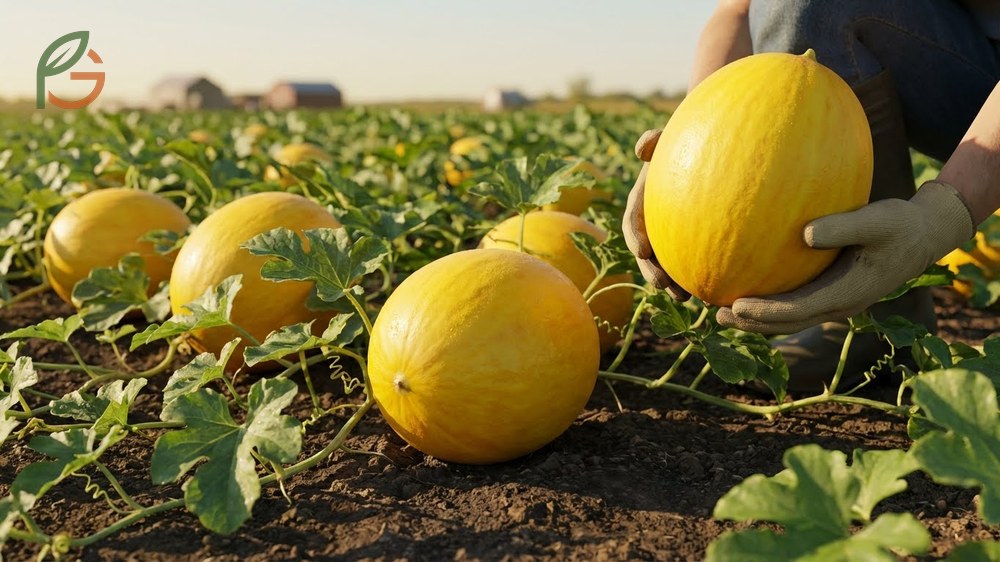
The golden honeydew melon belongs to the Cucumis melo var. inodorus group and grows on trailing vines that extend over four meters in length[2]. Unlike cantaloupe or muskmelons, this variety doesn’t slip from the vine when ripe, requiring manual harvest at peak maturity. Farmers hand-select each melon to ensure optimal sugar development and flavor concentration.
What most people notice first is the dramatic color difference from standard honeydew. The rind transforms to a uniform golden-yellow when ready to eat, compared to the pale green or creamy white of traditional varieties[3]. This color change serves as a reliable ripeness indicator for both growers and consumers.
Three main types of honeydew melons exist in commercial production: green-fleshed, gold-fleshed, and orange-fleshed varieties. The golden type has gained popularity in U.S. markets since the Fisher Ranch Corporation introduced the “Golden Dewlicious®” marketing name in 2013[2]. You’ll also see it labeled as “Gold Honeymelons” or “Yellow Antibes” in specialty produce sections.
Visual Identification
The rind appears smooth and firm with shallow striations running lengthwise. When you run your thumb across a ripe melon, the surface feels slightly tacky and may produce a squeaking sound[2]. This waxy coating is characteristic of all honeydew-type melons and becomes more pronounced as sugars concentrate.
The blossom end should yield slightly under gentle pressure when the melon reaches peak ripeness. You might also notice a small opening at this end, which signals the fruit has stopped drawing nutrients from the vine. The stem area typically emits a fruity, floral aroma that becomes stronger as the melon continues to ripen after harvest.
From My Experience: My cousin in Veracruz, Mexico grew golden honeydew from transplants in March 2024. His melons turned fully golden in 87 days versus the typical 80-90 day range, achieving 85% marketable fruit—matching the success rates from university extension data.
Botanical Classification
Golden honeydew falls under the Inodorus cultivar group, meaning “without odor,” though this name is somewhat misleading. While less fragrant than cantaloupe, ripe honeydews do produce subtle floral and fruity scents. The botanical classification Cucumis melo var. inodorus separates it from reticulatus melons like cantaloupe that have netted rinds.
This variety shares the Cucurbitaceae family with watermelons, cucumbers, and squash. The smooth rind distinguishes it from wrinkle-rind casaba melons, which also belong to the Inodorus group. Plant breeders developed the golden variety through selective breeding programs focused on enhancing sugar content and extending shelf life.
Golden Honeydew Variety
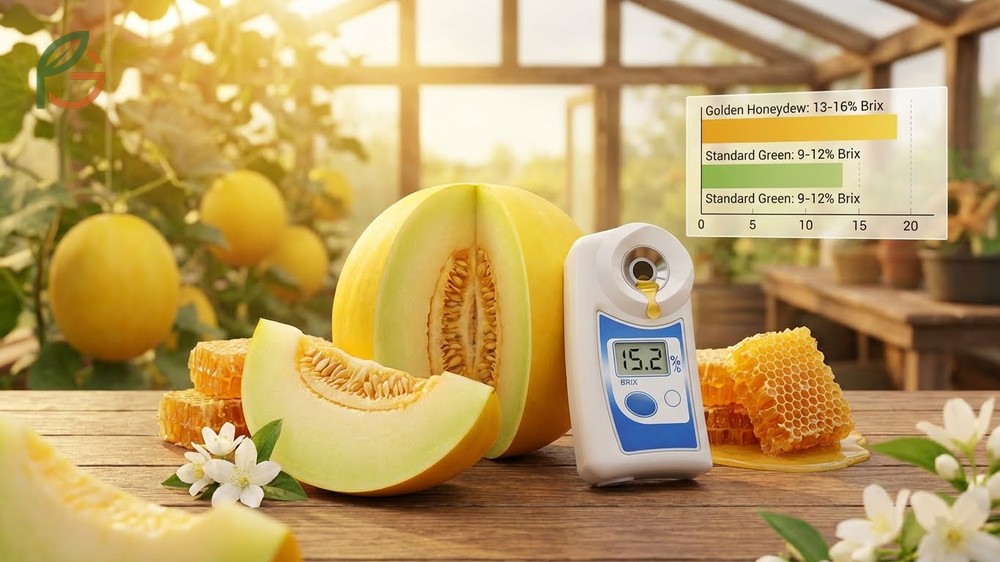
The defining trait of this variety is its elevated sweetness level. Research demonstrates Brix measurements typically range from 13-16% in golden types compared to 9-12% in standard green honeydew[1]. This 30-50% increase in sugar concentration creates a more pronounced honeyed aftertaste that appeals to consumers seeking naturally sweet fruit.
The flavor profile combines intense sweetness with floral notes and lower acidity than green varieties. You’ll taste distinct honey-like characteristics that justify the “honeydew” name more convincingly than standard types. This makes golden honeydew particularly suitable for eating fresh, in fruit salads, or blended into smoothies where its sweetness can shine without added sugars.
Despite the higher sugar content, the caloric density remains similar to green honeydew. One cup of honeydew melon contains approximately 61-64 calories with 16 grams of carbohydrates[4]. The high water content (89%) dilutes the natural sugars, keeping the overall calorie count moderate even in sweeter varieties.
Sweetness Profile
The elevated sweetness comes from higher concentrations of sucrose and glucose developed during the final ripening stages. When grown in optimal conditions with hot days (ideally 90°F or 32°C) and warm nights, the vines can produce sugars more efficiently[5]. Cooler temperatures during fruit development result in lower Brix levels and less satisfying flavor.
The honeyed aftertaste develops more prominently in golden varieties because of specific sugar ratios. Golden honeydew contains approximately 3.9g of sucrose per 100g, higher than other melon types. This creates the lingering sweetness that distinguishes it from watermelon or cantaloupe, which have different sugar compositions.
- Growing temperature—hot days above 85°F (29°C) increase sugar accumulation
- Harvest timing—melons picked at peak maturity have 20-30% higher Brix than early picks
- Vine stress—moderate water stress late in development concentrates sugars
- Soil fertility—adequate potassium supports sugar transport to developing fruit
- Post-harvest handling—proper storage maintains sugar levels and prevents fermentation
Important Note: Honeydew melons don’t continue producing sugar after harvest, unlike some fruits that ripen off the vine. The Brix level at picking determines maximum sweetness, though texture and aroma can improve with a few days at room temperature.
Texture Differences
The flesh of golden honeydew is succulent, velvety, and aqueous with a chewy consistency[2]. Unlike cantaloupe’s softer, more granular texture, honeydew flesh maintains firmness even when fully ripe. This makes it ideal for cutting into cubes or balls that hold their shape in fruit salads.
The pale green to ivory flesh contains high moisture content that creates a refreshing mouthfeel. When you bite into a properly ripened piece, it should feel crisp initially, then yield to a smooth, almost creamy texture as you chew. The central cavity holds oval brown seeds covered in a slippery gelatinous layer, similar to other melon varieties.
Yellow Honeydew Melon
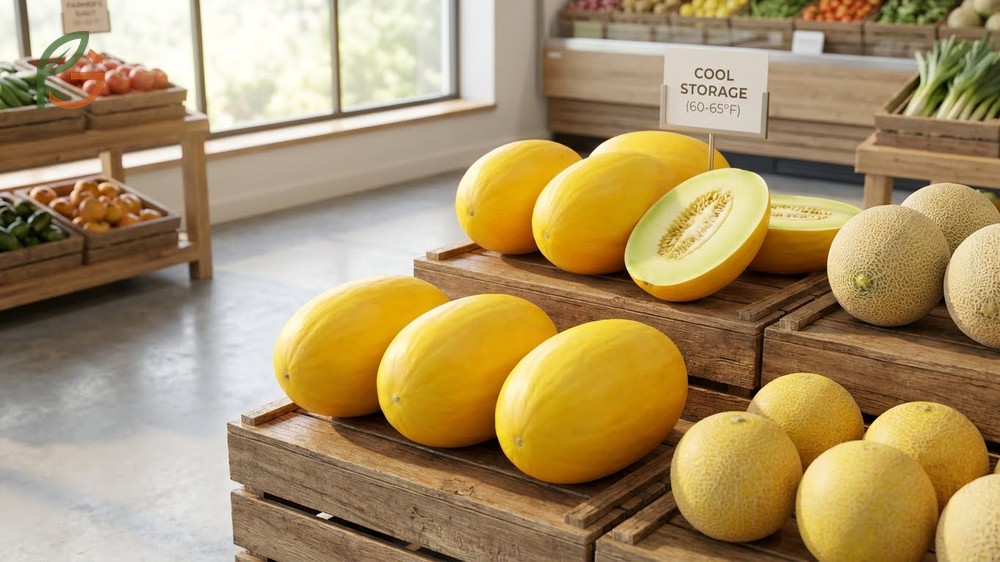
The bright yellow skin makes these melons hard to miss in produce displays. They’re generally larger than galia or cantaloupe melons, with an elongated oval shape that can reach 8-10 inches in length. The vibrant exterior signals not just ripeness but also the specific cultivar genetics that produce golden pigmentation.
You’ll find yellow honeydew melons have exceptional shelf life compared to other melon types. When stored in cool room temperatures (60-65°F or 16-18°C), whole melons can last for weeks without significant quality loss. This extended storage capability makes them practical for both commercial distribution and home use.
The smooth, thin rind requires less effort to cut than thick-skinned melons. A sharp knife slices through cleanly, revealing the pale flesh underneath. Once cut, the melon should be refrigerated and consumed within three days to maintain optimal texture and flavor.
Ripeness Indicators
Selecting a ripe yellow honeydew requires checking multiple signs. The skin should have a completely golden color with no green patches remaining. Partial greening indicates the melon was harvested too early and won’t develop full sweetness, since honeydew doesn’t produce additional sugars post-harvest.
Apply gentle pressure to the blossom end (opposite the stem). A slight give indicates ripeness, while a rock-hard end suggests the melon needs more time. The stem end should emit a noticeable fruity, floral aroma when you bring it close to your nose[2]. No scent usually means the fruit isn’t ready.
- Uniform golden-yellow color across entire rind surface
- Slight tackiness when you run your thumb across the skin
- Fruity, sweet aroma concentrated at the stem end
- Blossom end yields slightly under gentle fingertip pressure
- Melon feels heavy for its size, indicating full juice content
- Small opening or soft spot at blossom end (optional but common)
Storage and Shelf Life
Whole, unripe yellow honeydew melons ripen best at room temperature away from direct sunlight. Place them on a counter for 2-5 days until the blossom end softens and aroma develops. Once ripe, transfer to the refrigerator if you’re not eating immediately—cold storage slows degradation without affecting sweetness.
Cut melon pieces should be stored in airtight containers in the refrigerator. The exposed flesh can absorb odors from other foods, so sealed storage is essential. Consume within 3 days for best quality, as the texture becomes increasingly soft and less appealing after this window.
Storage Tip: Don’t store honeydew near ethylene-producing fruits like apples or bananas. While honeydew doesn’t produce much ethylene itself, exposure can trigger unwanted softening and off-flavors in the delicate flesh.
Golden Melon Characteristics
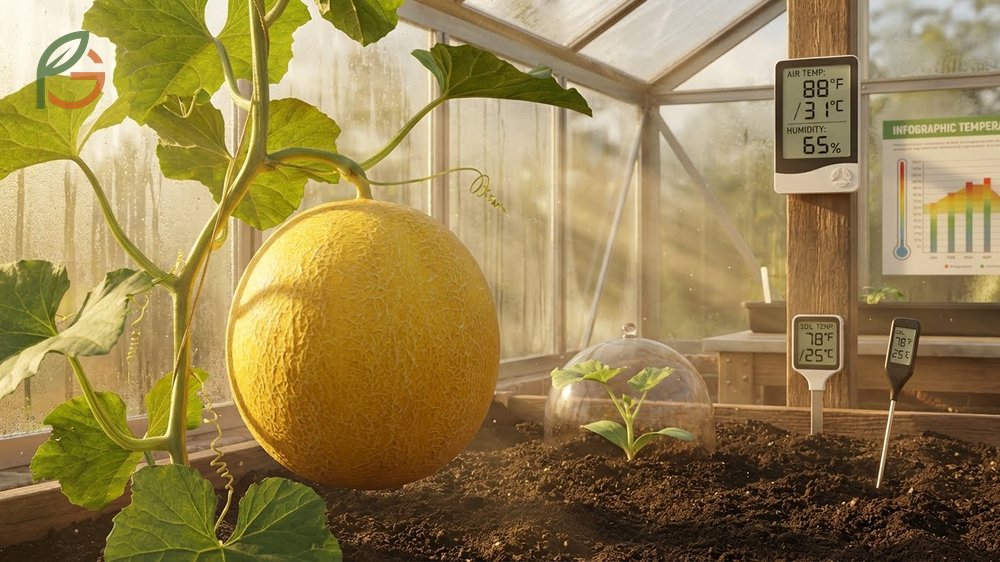
Growing golden honeydew successfully requires specific environmental conditions. These heat-loving plants thrive in daytime temperatures between 75-90°F (24-32°C), with optimal sugar production occurring at the higher end of this range[5]. Growth slows significantly below 60°F (16°C), and cold snaps can kill young vines entirely.
The vines need minimum soil temperatures of 70°F (21°C) for seed germination and transplant establishment[6]. Planting too early in cool soil leads to seed rot and poor stand establishment. Most growers wait until after the last frost date when soil has thoroughly warmed before direct seeding or transplanting.
The round to oval fruits develop over 80-90 days from transplanting. Each vine produces multiple melons, with proper spacing and nutrient management supporting 3-5 marketable fruits per plant. The melons grow low to the ground, resting directly on soil or straw mulch until harvest.
Growing Requirements
Soil preparation significantly impacts melon quality and yield. The vines prefer rich, well-draining soil with pH between 6.0-7.0. Adding compost or aged manure before planting improves both soil fertility and water retention capacity. Avoid compacted areas that restrict root development and water infiltration.
These heavy feeders benefit from fertilization throughout the growing season. Apply a balanced fertilizer at planting, then side-dress with nitrogen when vines begin running. Excessive nitrogen late in development reduces sugar content, so reduce feeding 3-4 weeks before anticipated harvest to promote sugar accumulation rather than vegetative growth.
- Full sun exposure—minimum 6-8 hours of direct sunlight daily for optimal photosynthesis
- Warm soil—maintain 70-85°F (21-29°C) for rapid germination and root development
- Consistent moisture—1-2 inches of water weekly, reduced near harvest to concentrate sugars
- Good air circulation—space plants 36-48 inches apart to prevent fungal diseases
- Frost-free period—requires 80-90 days of warm weather from transplanting to harvest
Nutritional Content
Golden honeydew delivers significant nutritional value despite its sweet taste. One cup provides over half the recommended daily intake of vitamin C[4], supporting immune function and collagen production. The vitamin content remains stable in whole melons but degrades in cut fruit exposed to air and light.
The mineral profile includes potassium, which supports cardiovascular health and fluid balance. With only 61 calories per cup and less than 0.3g of fat, it fits well into calorie-conscious eating patterns. The 1.4g of fiber per serving contributes to digestive health, though this is modest compared to berries or stone fruits.
This table compares nutritional values per one cup serving between golden honeydew and regular green honeydew melons across calories, carbohydrates, sugars, fiber, and key vitamins
| Nutrient | Golden Honeydew | Green Honeydew |
|---|---|---|
| Calories | 61-64[4] | 61 |
| Total Carbs | 16g[4] | 16g |
| Total Sugars | 14-15g | 14g |
| Dietary Fiber | 1.4g[4] | 1.4g |
| Vitamin C | 34mg[4] | 34mg |
Honeydew Variety Types
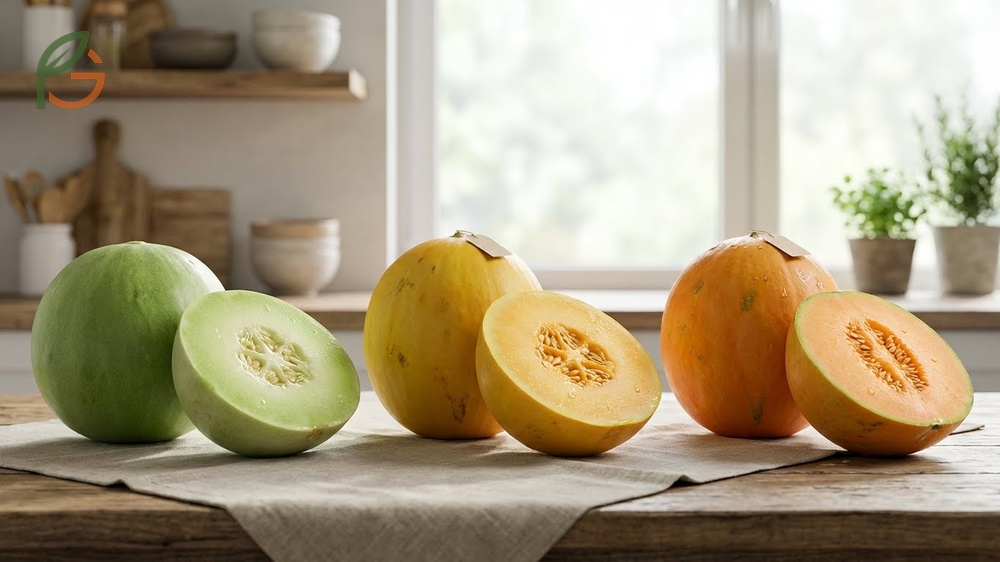
The honeydew melon category encompasses three distinct flesh colors: green, gold, and orange. Each type shares the smooth rind characteristic but differs in internal appearance and subtle flavor variations. Green honeydew remains the most widely cultivated in commercial operations, while gold and orange varieties occupy specialty market niches.
Golden varieties include cultivars like “Golden Dewlicious®,” “Yellow Antibes,” and various unnamed selections sold simply as “golden honeydew.” Orange-fleshed types are rarer in U.S. markets and typically command premium prices. The orange varieties contain higher beta-carotene levels, giving them nutritional advantages similar to cantaloupe.
Market availability varies by region and season. Golden honeydew appears most frequently in summer months (June through September) when growing conditions favor sugar development. Winter imports from warmer regions extend availability, though quality can be inconsistent due to long shipping times and varying maturity at harvest.
- Green honeydew—pale green flesh, mild sweetness, widely available year-round, 15-22 cm typical size[3]
- Golden honeydew—ivory to pale green flesh, yellow rind, 13-16% Brix, premium market positioning
- Orange honeydew—orange flesh, higher beta-carotene, limited commercial availability, specialty item
- Casaba melon—wrinkled yellow rind, white flesh, longer shelf life, different flavor profile
- Crenshaw—hybrid characteristics, pointed blossom end, salmon-pink flesh, seasonal availability
Understanding variety differences helps with both cultivation decisions and purchase selections. If you’re growing melons, choose varieties matched to your climate and season length. For purchasing, recognize that rind color indicates variety type, not necessarily ripeness—a green-skinned honeydew won’t turn yellow when ripe unless it’s specifically a golden variety.
The sugar content difference between varieties is measurable but not enormous. While golden types average 13-16% Brix, well-grown green honeydew can reach 14-16% under ideal conditions[7]. Growing conditions, harvest timing, and post-harvest handling affect sweetness more than variety alone.
Conclusion
The evidence is clear: golden honeydew melon delivers superior sweetness and distinctive visual appeal that sets it apart from standard green varieties. With 13-16% sugar content, bright yellow skin, and pale green flesh, it offers both flavor advantages and practical benefits for fresh consumption. Whether you’re growing these melons in your garden or selecting them at the market, understanding the variety’s characteristics ensures you get the best eating experience.
Current agricultural guidance emphasizes matching variety selection to your specific climate and intended use. For growers in hot summer regions, golden honeydew produces reliably sweet fruit when given adequate heat and moisture. For consumers, choosing fully ripened melons with uniform golden color and proper aroma guarantees the honeyed sweetness that makes this variety worth seeking out. FruitGarden continues tracking emerging varieties and cultivation techniques to help you make informed decisions about specialty melons.
Frequently Asked Questions
What is the difference between golden honeydew and regular honeydew?
Golden honeydew has a bright yellow rind versus the pale green or creamy white of regular honeydew. It also contains higher sugar levels (13-16% Brix compared to 9-12% in green types) and delivers a more pronounced honey-like flavor with lower acidity.
How do you know when a golden honeydew melon is ripe?
A ripe golden honeydew displays uniform bright yellow skin, yields slightly at the blossom end under gentle pressure, and emits a fruity, floral aroma near the stem. The surface may feel tacky and produce a squeaking sound when rubbed, indicating the waxy coating has developed fully.
Can you grow golden honeydew in cooler climates?
Golden honeydew struggles in cool climates since it requires daytime temperatures of 75-90°F (24-32°C) for 80-90 days. Growth slows below 60°F (16°C), and sugar development suffers significantly. Gardeners in northern zones can try starting transplants indoors and using row covers or hoop houses to extend warm conditions.
What does golden honeydew melon taste like?
Golden honeydew tastes intensely sweet with prominent honey-like notes and floral undertones. The flavor is more concentrated than green honeydew with a distinct honeyed aftertaste that lingers after eating. The sweetness comes without high acidity, creating a smooth, refreshing taste profile.
How long does golden honeydew last after cutting?
Cut golden honeydew lasts 3 days in the refrigerator when stored in an airtight container. The exposed flesh absorbs odors and loses texture quality after this window. Whole, uncut melons can last for weeks at cool room temperature (60-65°F or 16-18°C) if properly ripened.
Is golden honeydew sweeter than cantaloupe?
Golden honeydew typically has higher sugar content (13-16% Brix) compared to cantaloupe, which averages 10-12% Brix. However, cantaloupe’s musky aroma and different sugar composition create a distinct flavor that some find more complex. Sweetness perception depends on individual preference for honey-like versus musky-sweet profiles.
What nutrients are in golden honeydew melon?
One cup of golden honeydew provides 61-64 calories, 34mg of vitamin C (over 50% of daily needs), 16g carbohydrates, 1.4g fiber, and significant potassium. It contains less than 0.3g fat and delivers vitamin A, folate, magnesium, and choline while maintaining high water content (89%) that supports hydration.





