
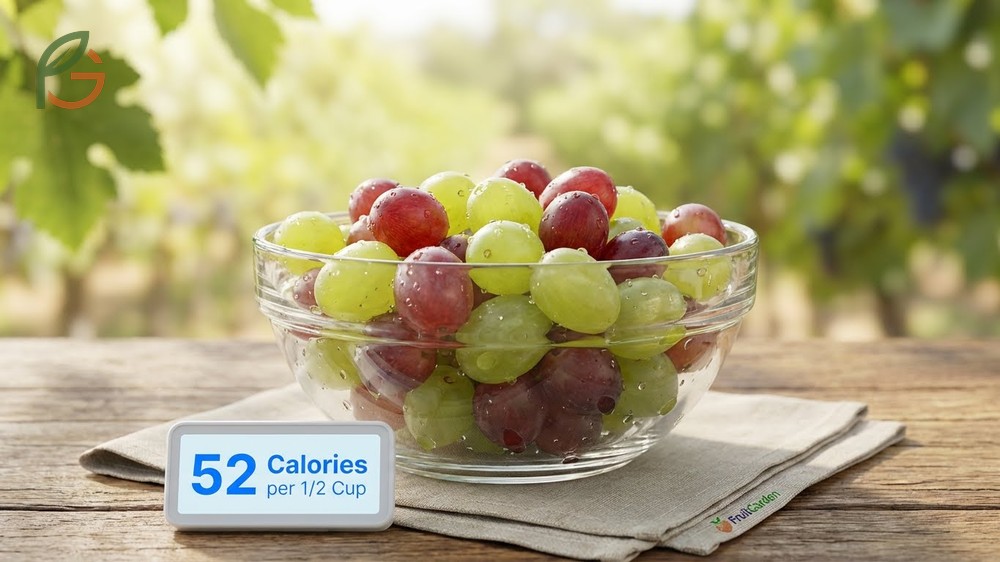
How many calories in grapes? A half-cup serving of grapes contains just 52 calories for both green and red seedless varieties, making them an excellent low-calorie snack choice.[1] With their natural sweetness and high water content, grapes satisfy cravings without derailing your diet. FruitGarden provides research-backed nutrition information to help you make informed choices about fruit consumption and garden cultivation.
Quick Answer
- One half-cup serving contains 52 calories for both green and red seedless grapes[1]
- A full cup provides approximately 104 calories with 1.4g fiber and 27g carbohydrates
- Individual grapes contain roughly 3-4 calories each, perfect for portion control
- Grapes have a glycemic index of 46-56, classified as low to moderate[2]
- Per 100g serving contains 69 calories, making them ideal for weight management[3]
How Many Calories in Grapes
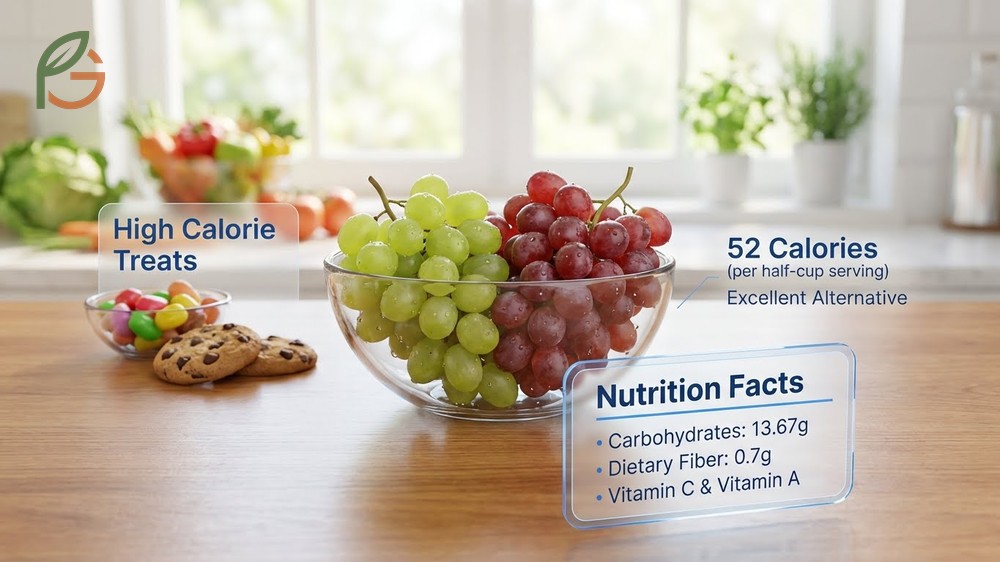
Research shows that grapes are remarkably low in calories compared to other sweet snacks. A standard half-cup serving of both green and red seedless grapes contains exactly 52 calories.[1] This makes them an excellent alternative to candy, cookies, or other high-calorie treats.
The low calorie count doesn’t mean you’re sacrificing nutrition. Each serving delivers 13.67g of carbohydrates, 0.7g of dietary fiber, and essential vitamins including vitamin C and vitamin A.[1] You’re getting natural energy without excessive calories.
What’s interesting is that color doesn’t significantly impact calorie content. Both green and red seedless varieties contain identical calorie amounts per serving. The main nutritional differences appear in antioxidant levels rather than basic macronutrients.
Calories by Serving Size
Understanding portion sizes helps you manage your daily calorie intake effectively. A half-cup represents the standard serving size used on nutrition labels.
Different measurements provide flexibility for tracking calories based on how you consume grapes. Whether you’re counting individual grapes as a quick snack or measuring cups for recipes, you’ll find the calorie count manageable.
This table shows calorie content across seven common serving sizes from single grapes to full pounds
| Serving Size | Green Grapes (calories) | Red Grapes (calories) |
|---|---|---|
| 1 grape | 3 | 3-4 |
| 10 grapes | 33 | 37 |
| 1/2 cup | 52[1] | 52[1] |
| 1 cup | 104 | 104 |
| 100g (about 18 grapes) | 69[3] | 69[3] |
Important Note: Frozen grapes contain the same calories as fresh grapes—freezing doesn’t change their nutritional content. They just take longer to eat, which can help with portion control and satisfaction.
Single Grape Calorie Count
Individual grapes are tiny powerhouses of flavor with minimal calorie impact. One medium-sized grape contains approximately 3 calories for green varieties and 3-4 calories for red varieties. This makes grapes perfect for mindful snacking.
The slight variation in calories between colors comes from minor differences in sugar content. Red grapes tend to be marginally sweeter, but the difference is so small it’s practically negligible for most dietary purposes.
If you’re counting calories precisely, you can eat about 30-35 individual grapes to reach 100 calories. That’s a substantial snack that takes time to consume, helping you feel more satisfied than a quick 100-calorie processed snack.
Calories in Green Grapes
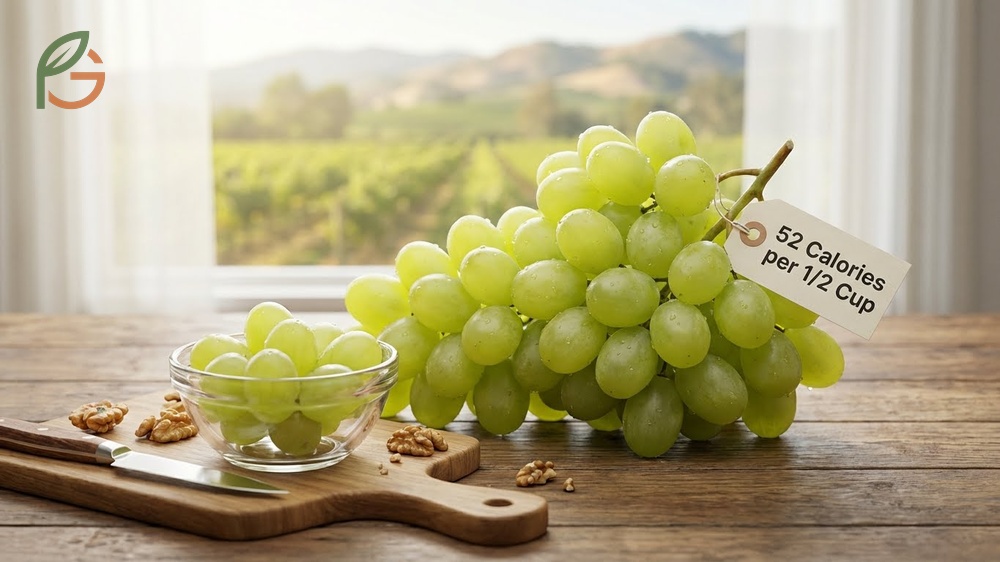
Green seedless grapes deliver 52 calories per half-cup serving, identical to their red counterparts.[1] They’re popular in American households for their crisp texture and refreshing taste. Most people find them slightly less sweet than red grapes, which some prefer for savory dishes.
California produces the majority of green grapes consumed in the United States, with peak season running from July through December. During this time, you’ll find the freshest, most flavorful grapes at the best prices.
Nutritional Profile of Green Grapes
Beyond calories, green grapes provide valuable nutrients that support overall health. Each half-cup serving contains minimal fat at just 0.12g and provides a small amount of protein at 0.54g.[1]
The carbohydrate content breaks down into 13.67g total carbs with 0.7g of dietary fiber, leaving approximately 13g of net carbs per serving.[1] This composition makes them a quick energy source that’s still relatively moderate on the glycemic scale.
- Vitamin C: 2.4mg supports immune function and skin health
- Calcium: 8mg contributes to bone strength
- Iron: 0.27mg aids oxygen transport in blood
- Sodium: Just 2mg makes them suitable for low-sodium diets
- Water content: Approximately 80% keeps you hydrated
Best Uses for Green Grapes
Green grapes shine in both sweet and savory applications. Their firm texture holds up well in chicken salad, fruit platters, and cheese boards. They’re also fantastic frozen as a summer treat.
For meal prep, wash and portion green grapes into snack-size containers with exactly 10-15 grapes each. This pre-portioning strategy helps you stay within calorie goals without constant measuring.
Calories in Red Grapes
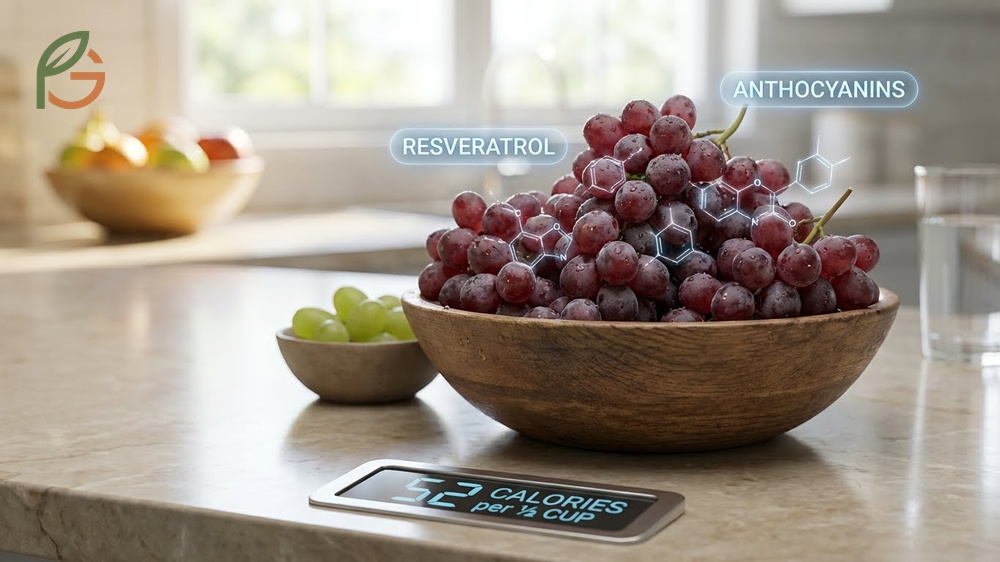
Red seedless grapes match green varieties at 52 calories per half-cup serving.[1] What sets them apart isn’t calorie content but their higher concentration of beneficial plant compounds. Research demonstrates that darker grapes contain elevated levels of resveratrol and anthocyanins.
The deeper color signals more antioxidants without adding calories. This makes red grapes nutritionally superior for those seeking maximum health benefits alongside calorie control.
Red Grape Nutrition
Red grapes provide the same macronutrient profile as green grapes: 13.67g carbohydrates, 0.54g protein, and 0.12g fat per half-cup.[1] The micronutrient content is nearly identical too. You’re getting the same 0.7g of fiber and similar vitamin levels.
Where red grapes excel is in phytonutrient density. Current research indicates these compounds may support cardiovascular health and cellular protection, though you shouldn’t rely on grapes alone for these benefits.
Antioxidant Benefits
Studies suggest resveratrol in red grapes may help convert white fat into calorie-burning brown fat.[4] This doesn’t mean eating grapes alone will melt fat, but they can be part of a comprehensive weight management strategy.
Anthocyanins, the pigments responsible for red and purple colors, demonstrate anti-inflammatory properties in research settings. These compounds are absent in green grapes, giving darker varieties a slight edge nutritionally.
- Resveratrol: Found mainly in grape skins, particularly in red varieties
- Anthocyanins: Powerful antioxidants that give grapes their red-purple color
- Quercetin: A flavonoid with potential anti-inflammatory effects
- Catechins: Also found in green tea, may support metabolic health
- Ellagic acid: May help with fat metabolism according to emerging research[4]
Grapes for Weight Loss Diet

Evidence supports grapes as an effective weight loss food when consumed mindfully. At just 69 calories per 100g serving, they satisfy sweet cravings without derailing calorie deficits.[3] Their high water content promotes fullness, while natural sugars provide quick energy.
The key is portion awareness. A cup of grapes at 104 calories can replace a 300-calorie cookie or pastry, saving you nearly 200 calories. Over a week, that simple swap saves 1,400 calories—equivalent to almost half a pound of fat loss.
Freezing grapes creates a low-calorie dessert alternative that takes longer to eat. This extended eating time allows satiety signals to reach your brain before you overconsume. Many people find 15-20 frozen grapes more satisfying than twice that many fresh ones.
Current guidance emphasizes pairing grapes with protein for balanced snacks. Try combining a half-cup of grapes (52 calories) with a tablespoon of almond butter (100 calories) or an ounce of cheese (80-100 calories). This combination provides sustained energy without blood sugar spikes.
Weight Loss Tip: Replace one high-calorie snack daily with a cup of grapes. If you normally eat a 250-calorie candy bar, switching to grapes saves 146 calories per day—that’s over 53,000 calories saved per year, enough to lose about 15 pounds.
- Pre-portion servings: Measure half-cup or one-cup portions into containers for grab-and-go snacks
- Freeze for dessert: Frozen grapes feel more indulgent and take longer to eat
- Add to salads: Grapes add sweetness to green salads without heavy dressings
- Pair with protein: Combine with nuts, cheese, or Greek yogurt for balanced nutrition
- Choose darker varieties: Red and black grapes provide extra antioxidants at the same calorie count[4]
- Time strategically: Eat grapes as afternoon snacks to prevent evening overeating
Glycemic Index of Grapes

The glycemic index (GI) of grapes ranges from 46 to 56 depending on variety and ripeness, placing them in the low to moderate category.[2][5] This means they cause a moderate rise in blood sugar compared to white bread (GI of 100). Green grapes typically fall on the lower end (43-53) while red grapes range slightly higher (43-59).
The glycemic load (GL) provides a more practical measure by accounting for portion size. Grapes have a GL of 9.6 per serving, classified as low.[5] This indicates that a typical serving won’t cause dramatic blood sugar spikes for most people.
Several factors influence how grapes affect your blood sugar. Riper grapes contain more sugar and have higher GI values. Eating grapes with protein or fat slows digestion and reduces the glycemic response. Your individual metabolism also plays a role.
For people monitoring blood sugar, grapes can fit into a balanced diet when consumed in appropriate portions. The fiber content, though modest at 0.7g per half-cup, provides some buffering effect against rapid sugar absorption.[1]
Blood Sugar Management: If you’re managing diabetes or insulin resistance, pair grapes with protein sources like nuts or cheese. This combination significantly reduces the glycemic impact compared to eating grapes alone.
Conclusion
The evidence is clear: grapes are a low-calorie, nutritious fruit that fits perfectly into healthy eating plans. With just 52 calories per half-cup serving for both green and red seedless varieties, they satisfy sweet cravings without excess calories. Their moderate glycemic index and beneficial nutrients make them suitable for most dietary approaches, from weight loss to general wellness.
Current nutritional guidance emphasizes whole fruits over processed snacks, and grapes exemplify this principle. Whether you prefer green or red, seedless grapes provide vitamins, antioxidants, and hydration at a minimal caloric cost. FruitGarden synthesizes agricultural research and nutrition science to help you make informed decisions about growing and consuming quality fruits.
Medical Disclaimer
Important Medical Disclaimer: This content is for informational and educational purposes only. It is not intended as a substitute for professional medical advice, diagnosis, or treatment. Always consult a qualified healthcare professional or registered dietitian before making significant changes to your diet, especially if you have diabetes, metabolic disorders, or other medical conditions. Individual nutritional needs vary based on age, activity level, health status, and medications.
Frequently Asked Questions
How Many Calories Are in One Cup of Grapes?
One cup of grapes contains approximately 104 calories for both green and red seedless varieties. This is double the standard half-cup serving size of 52 calories. A full cup provides about 27g of carbohydrates and 1.4g of dietary fiber, making it a satisfying snack that’s still relatively low in calories.
Are Grapes High in Calories Compared to Other Fruits?
No, grapes aren’t high in calories compared to most fruits. At 69 calories per 100g, they’re lower than bananas (89 calories), mangoes (60 calories), and cherries (63 calories). They’re slightly higher than strawberries (32 calories) or watermelon (30 calories), but still firmly in the low-calorie fruit category. Their natural sweetness makes them feel more indulgent than their calorie count suggests.
What Is the Standard Serving Size of Grapes?
The standard serving size for grapes is one-half cup or about 15-17 individual grapes (approximately 80g). This serving provides 52 calories and represents the portion used on nutrition labels. However, many people find a full cup (30-35 grapes) to be a more satisfying snack, which would contain about 104 calories.
How Many Calories in Ten Grapes?
Ten grapes contain approximately 30-37 calories depending on size and variety. Green grapes average about 3 calories each (30 total for ten), while red grapes are slightly higher at 3-4 calories each (37 total for ten). This makes 10 grapes a very light snack, suitable for between-meal hunger without significantly impacting your daily calorie budget.
Are Grapes Low in Calories Enough for Weight Loss?
Yes, grapes are low enough in calories to support weight loss when incorporated thoughtfully into a calorie-controlled diet. At 104 calories per cup, they can replace higher-calorie desserts and snacks, creating the calorie deficit needed for weight loss. Their high water content (about 80%) and natural sweetness help with satiety and cravings. However, portion control remains important—eating multiple cups daily could add up quickly.
Do Red Grapes Have More Calories Than Green Grapes?
No, red and green seedless grapes contain virtually identical calories—both have 52 calories per half-cup serving. The main differences between colors lie in antioxidant content rather than caloric value. Red grapes contain higher levels of resveratrol and anthocyanins, which may provide additional health benefits without adding calories. Choose based on taste preference or desired antioxidant benefits, not calorie concerns.
How Many Calories in a Pound of Grapes?
A pound of grapes (454g) contains approximately 313 calories. This assumes the typical 69 calories per 100g found in most grape varieties. One pound represents about 4.5 cups of grapes or roughly 150-170 individual grapes. While grapes are relatively low-calorie, consuming an entire pound would provide a significant caloric intake and would exceed recommended fruit portions for most people’s daily needs.





