
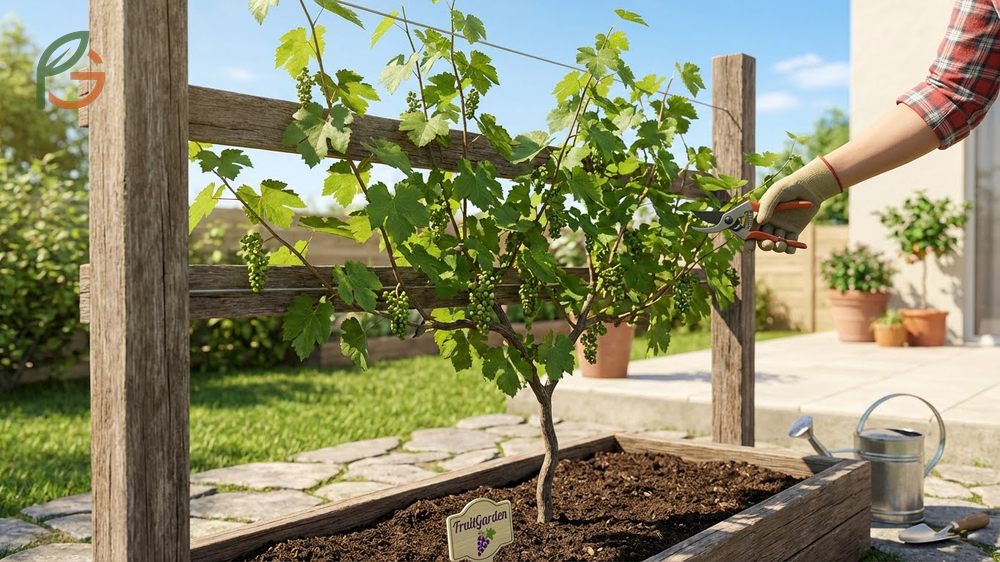
Growing grapes at home is achievable for beginners when you provide full sun, well-drained soil, and sturdy trellis support. Research shows grapevines need at least 6-8 hours of direct sunlight daily, with spacing of 6-12 feet between plants depending on variety and training method.[1][2] FruitGarden compiles current horticultural research and climate-specific guidance to help you cultivate thriving grape vines in your backyard.
Quick Answer
- Grapevines require a minimum of 7 hours of direct sun daily for optimal fruit production[3]
- Space plants 6-12 feet apart depending on variety and trellis system[2]
- Use containers at least 15-20 gallons with 16-18 inch depth for potted vines[4]
- Annual pruning in late winter maintains health and increases yields by improving airflow[5]
Growing Grapes at Home
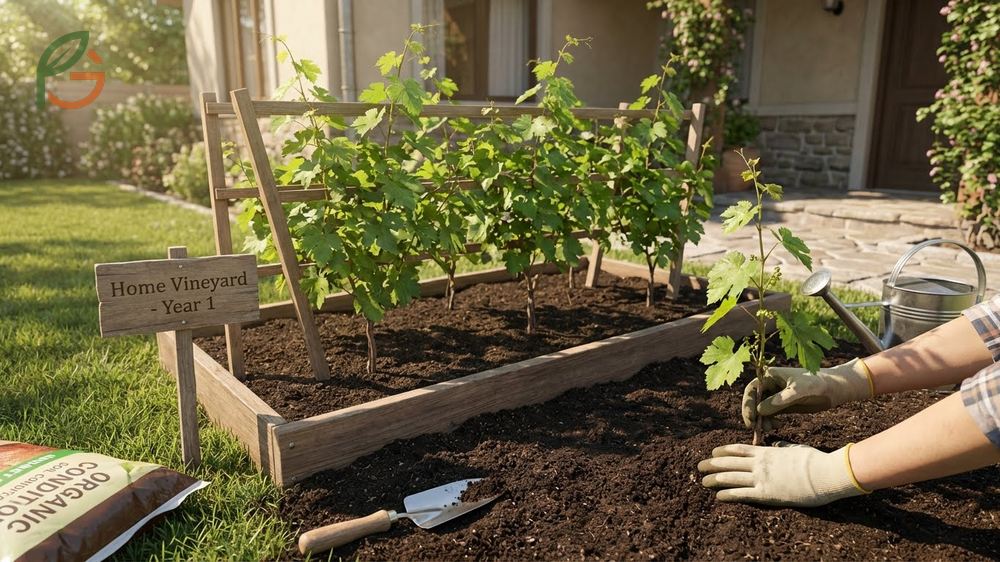
Starting a home vineyard begins with understanding what grapevines need to thrive. These woody perennial plants adapt well to various climates but require specific conditions for consistent fruit production. Research shows proper site selection and soil preparation determine whether your vines produce abundantly or struggle through their first seasons.[1]
The planting process itself takes less than an hour per vine, but you’ll see results within one year if you follow proven techniques.[2] Most beginners don’t realize that timing matters more than elaborate preparation. Spring planting after the last frost gives vines the entire growing season to establish roots before winter dormancy.
From My Experience: My cousin in Guadalajara, Mexico planted three Flame Seedless vines in March 2024. The vines sprouted new growth within 18 days versus the typical 2-3 week range, achieving vigorous establishment by early summer.
Sunlight Requirements for Grapes
Sunlight directly impacts sugar development in grape berries. Current data indicates vines need a minimum of 7 hours of direct sun daily, though 8-10 hours produces sweeter fruit with better disease resistance.[3] Partial shade reduces yields and increases vulnerability to powdery mildew and fruit rot.
South-facing locations in the Northern Hemisphere capture maximum sun exposure throughout the growing season. The heat absorbed during sunny days helps ripen clusters evenly, while good air circulation around vines prevents fungal problems that thrive in shaded, humid microclimates.
Best Soil for Grape Vines
Well-drained soil prevents root rot, which kills more home grapevines than any other factor. Evidence suggests loamy soil with moderate fertility works better than rich, heavily amended beds that promote excessive vegetative growth at the expense of fruit production. Test your drainage by digging a 12-inch hole, filling it with water, and checking if it drains within 6 hours.
If you’re dealing with clay soil, consider planting on raised mounds or berms. Mix compost into native soil at a 1:3 ratio rather than creating pockets of pure organic matter.[1] This approach prevents roots from circling within the amended zone instead of spreading outward.
Important Note: Don’t fertilize at planting time. Wait until you see 6-12 inches of new growth before applying any nutrients, as fertilizer can burn tender new roots.
Growing Grapes in Texas
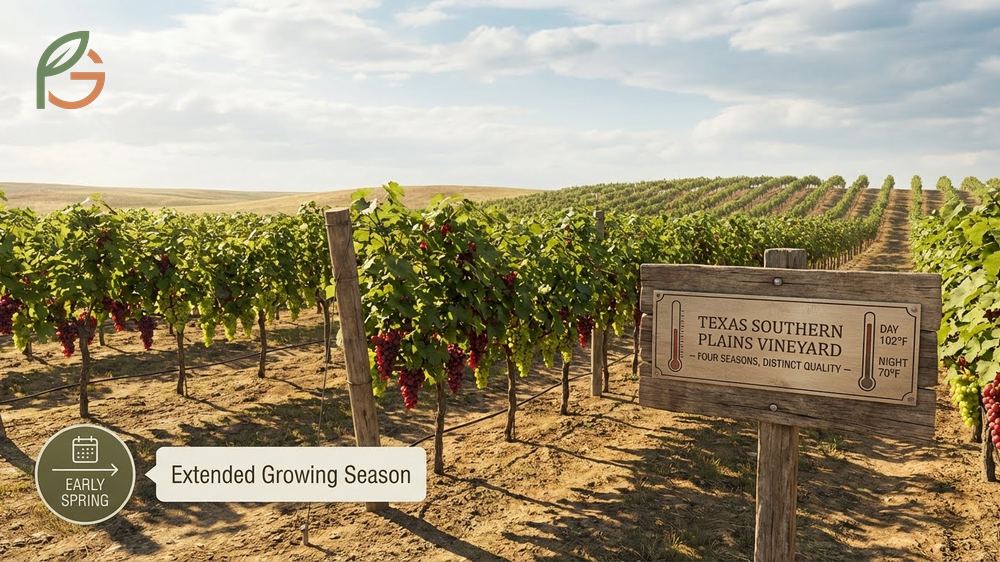
Texas offers distinct advantages for grape cultivation, particularly in the Southern Plains region. The area provides four well-defined seasons that wine grapes need for quality fruit development.[6] Early springs extend the growing season by 1-2 weeks on each end compared to northern regions.
Hot summer days reaching above 100°F (38°C) combined with cool nights dropping to 68-72°F (20-22°C) create ideal conditions for sugar accumulation without excessive acidity loss. Constant breezes in West Texas naturally deter insect pests while improving air circulation around fruit clusters.[6]
Climate Advantages
Winter dormancy in Texas wine regions provides natural disease control. Studies demonstrate that cold temperatures force sap downward, carrying disease organisms out through the root system where they can’t reinfect spring growth. Areas near Lamesa typically experience bud break in March with no hard freezes after April 1st in most years.[6]
Fall transitions require 6-7 heavy frosts before the first hard freeze around November 12th. This gradual cooling allows vines to properly harden off for winter, storing carbohydrates in root systems that fuel next season’s explosive spring growth.
Watering Schedule for Grapes
Texas grape growers use strategic irrigation cycles during June and July. Current guidance emphasizes deep watering followed by 10-day dry periods that stress vines slightly, concentrating sugars in developing berries. Commercial operations apply up to 72 gallons per plant over 72-hour intervals using drip emitters set at 1 gallon per hour.[6]
You can monitor moisture needs by checking leaf temperature with your palm. Cool-feeling leaves indicate adequate water, while warm or hot leaves signal stress. Vines that wilt in afternoon heat but recover by evening don’t need immediate watering—this mild stress improves fruit quality.
Growing Grapes in Florida
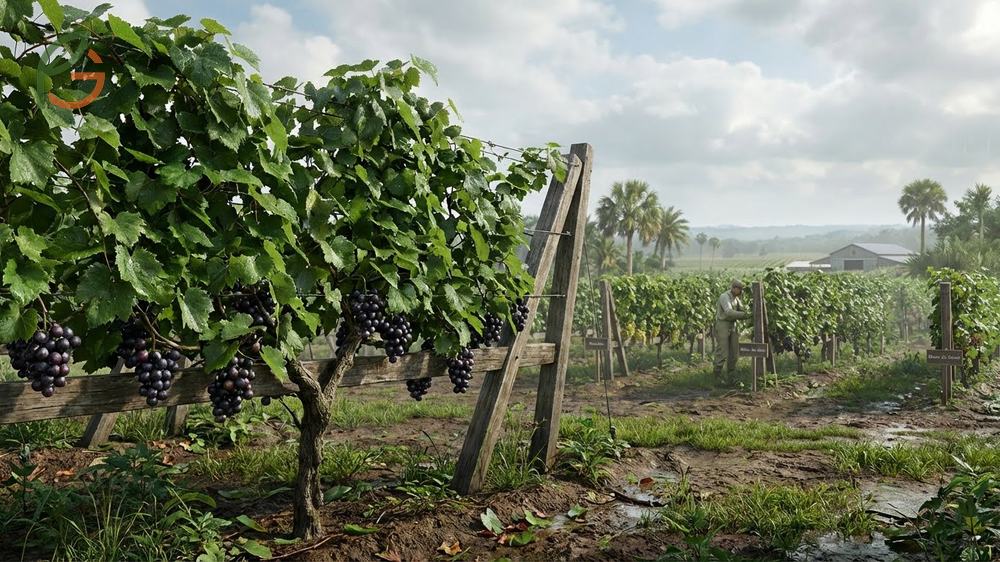
Florida’s humid subtropical climate presents unique challenges for grape cultivation. The Gulf Coast region from Houston to the Mexican border experiences high rainfall and fertility that causes extreme vine vigor.[7] This excessive growth creates dense canopies that trap humidity and promote fungal diseases.
Successful Florida growers focus on muscadine varieties and modern hybrids like Blanc du Bois, Black Spanish, and Blanc du Soleil. These selections tolerate Pierce’s disease and fungal pressure better than traditional Vitis vinifera varieties. You’ll need aggressive pruning to open canopies for airflow and preventive fungicide applications on 7-14 day schedules during the growing season.
Site selection becomes critical in Florida. Choose elevated locations with good drainage and maximum air movement. Avoid low-lying areas where cold air and humidity settle overnight. The lack of true winter dormancy means Florida vines don’t get the natural disease reset that northern grapes enjoy.
- Select disease-resistant muscadine or hybrid varieties bred for Southern climates
- Install trellis systems that maximize canopy exposure and air penetration
- Apply preventive fungicide sprays before symptoms appear, not after diseases establish
- Prune more aggressively than northern recommendations to control excessive vigor
- Monitor for Pierce’s disease vectors and remove infected vines immediately
- Provide supplemental irrigation during dry periods but avoid overhead watering
Grape Vine Trellis Ideas
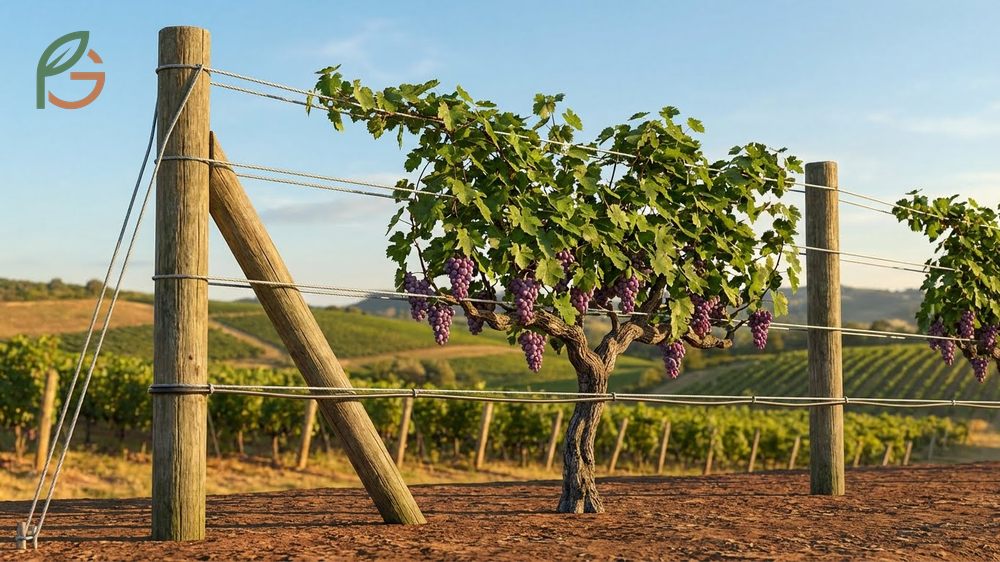
A sturdy trellis system shapes vine growth and supports heavy fruit loads for decades. Research-proven designs use treated wood or metal posts anchored 2-3 feet deep with 6 feet of height above ground.[8] Space inline posts 20-25 feet apart, connecting them with high-tensile galvanized wire (No. 9 or 10 gauge) that won’t sag under mature vine weight.
End posts need diagonal bracing to resist wire tension pulling them inward. The standard approach places the last two posts closer together with a cross bar and twisted wire running diagonally for reinforcement. If you’re building multiple rows, leave 10-12 feet between them for equipment access and comfortable harvest spacing.[8]
Most home growers don’t realize that wire height matters as much as post strength. Single-wire systems work fine for beginners, with the wire positioned 5-6 feet above ground. As vines mature, you can add a second wire 3 feet above the first to support lateral cane growth. The investment in proper materials pays off when your trellis lasts 20-30 years without sagging or collapsing.
This table compares three common trellis systems for home grape growing, showing spacing requirements, suitability for different vine types, and setup complexity
| Trellis Type | Post Spacing | Best For | Setup Difficulty |
|---|---|---|---|
| Single High Wire | 20-25 feet[8] | Beginners, table grapes | Easy |
| Two-Wire Vertical | 20-25 feet | Wine grapes, cordon training | Moderate |
| Four-Arm Kniffin | 15-20 feet | Vigorous varieties, high yields | Advanced |
- Treated 4×4 inch posts or 2-inch diameter metal pipes for main supports
- High-tensile galvanized wire rated for outdoor agricultural use
- Wire tensioners or turnbuckles to maintain proper tautness as wood seasons
- Concrete for anchoring end posts that bear the most tension load
- Post hole digger capable of reaching 30-36 inch depth in your soil type
How to Prune Grape Vines
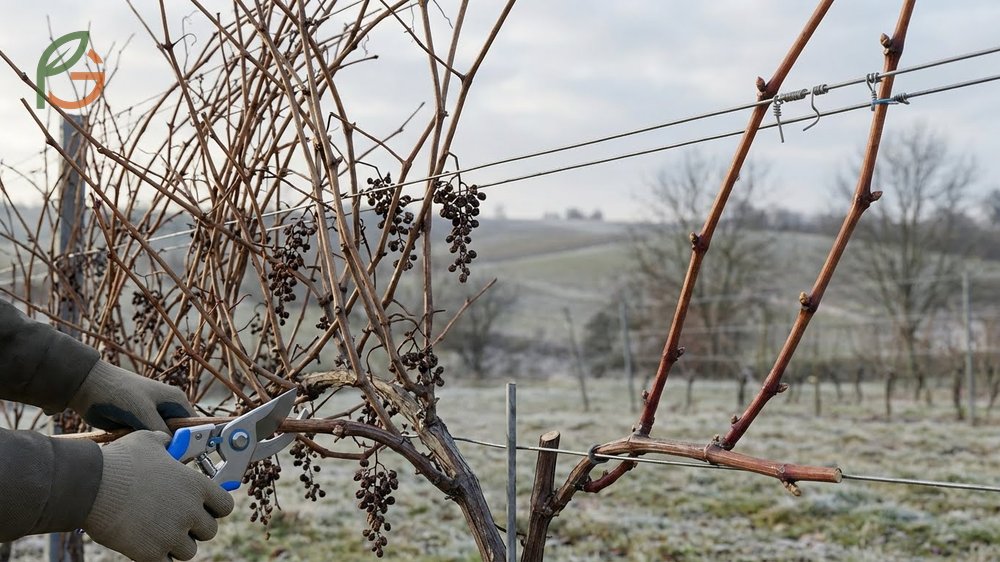
Annual pruning in late winter before buds swell controls vine size and concentrates energy into fruit production. Studies demonstrate that unpruned vines produce many small, poorly-ripened clusters while properly pruned plants yield fewer but larger, sweeter grape bunches.[5] You’ll remove 90% of last year’s growth during dormant pruning—it looks drastic but it’s essential.
Two main techniques suit home growers. Cane pruning selects 1-2 healthy canes from last season and cuts them back to 8-12 buds each, which produce this year’s fruiting shoots.[5] This method works well for table grape varieties like Thompson Seedless and Flame Seedless.
Spur pruning cuts each shoot back to short spurs with 2-3 buds, distributed evenly along permanent horizontal cordons. Wine grape varieties including Cabernet Sauvignon and Zinfandel respond well to spur pruning since it’s easier to maintain year after year and supports consistent production.[5]
Critical Timing: Don’t prune in fall or early winter when vines are still active. Wait until January or February in most regions, after leaves drop but before buds begin to swell with spring growth.
Clean, sharp tools prevent crushing tissue that invites disease. Use bypass pruning shears for canes up to 3/4 inch diameter and loppers for thicker wood. Disinfect blades with rubbing alcohol when moving between plants to avoid spreading pathogens. Summer pruning focuses on removing excessive foliage that shades fruit clusters, improving sunlight penetration and ripening.
Growing Grapes in Pots
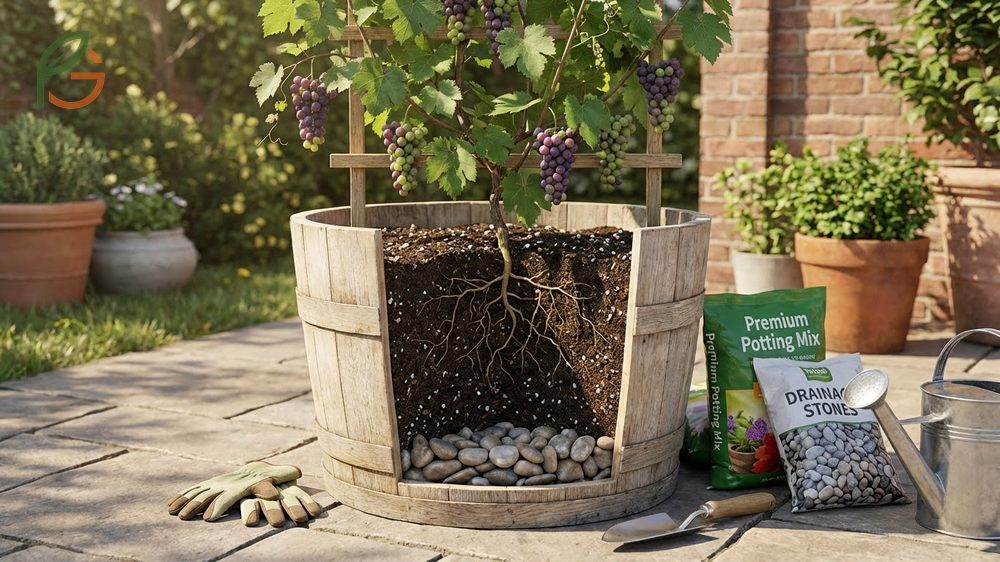
Container cultivation works surprisingly well for grapes when you match pot size to root needs. Research specifies containers holding at least 15-20 gallons with dimensions of 16-18 inches deep and 18-24 inches wide.[4] Light-colored pots or wood containers prevent excessive heat absorption that dries soil too quickly.
Fill containers with quality potting mix rather than garden soil, which compacts and drains poorly in confined spaces. Add a 2-inch layer of stones in the bottom for drainage, then mix compost into potting soil at planting. You’ll need to top-dress with fresh compost annually since container plants exhaust nutrients faster than in-ground vines.
Watering becomes the biggest challenge with potted grapes. Current data indicates containers dry out 3-5 times faster than ground plantings, especially during hot weather.[4] Check moisture daily during summer by feeling soil 2-3 inches deep. Water thoroughly when the top few inches feel dry, allowing excess to drain completely.
Support systems for container vines can be simpler than field trellises. A sturdy 4-foot stake driven through the pot into the ground beneath works for young plants. As vines mature, consider a tomato cage or bamboo tripod that provides climbing structure without permanent installation. Most potted grapes won’t reach the size of in-ground plants, making pruning and harvest more manageable in small spaces.
Grape Pests and Diseases
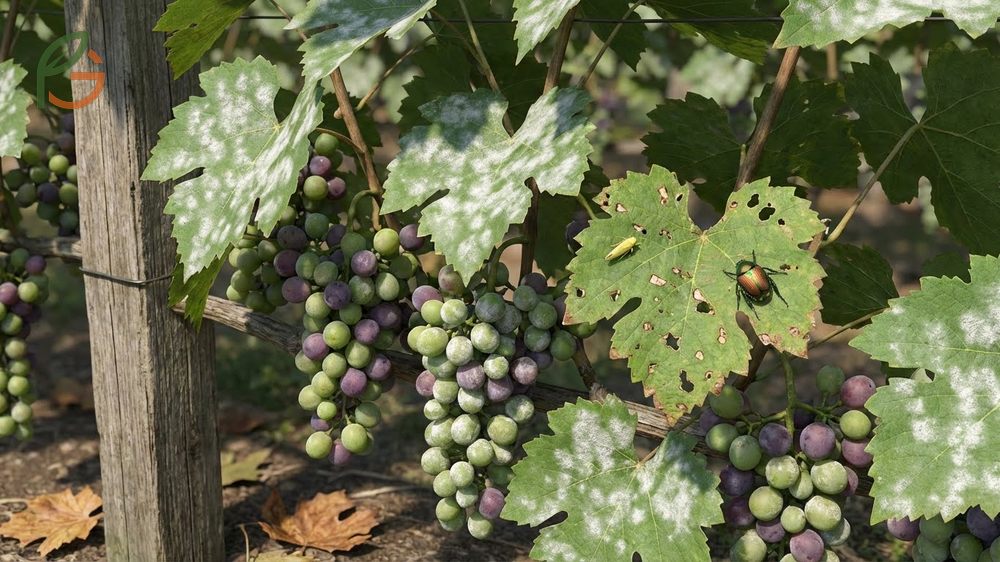
Powdery mildew poses the most common fungal threat to home vineyards. This disease appears as white powdery growth on leaves, shoots, and developing fruit clusters. It thrives in shaded canopies with poor air circulation—exactly what happens when you skip annual pruning or plant in low-sun locations. Preventive sprays applied before symptoms appear provide better control than attempting treatment after infection establishes.[9]
Japanese beetles and grape leafhoppers damage foliage and reduce photosynthesis during critical fruit development periods. Leafhoppers suck sap from leaves, causing stippling and bronzing that weakens vines over time. Current guidance emphasizes cultural controls like removing fallen leaves that harbor overwintering pests and encouraging beneficial insects that prey on grape pests naturally.[9]
Spider mites multiply rapidly during hot, dry weather, creating fine webbing on leaf undersides. These tiny pests cause yellowing and eventual leaf drop if populations explode unchecked. Horticultural oils or insecticidal soaps work as spot treatments, but the most effective strategy involves maintaining plant health through proper watering and avoiding excessive nitrogen fertilizer that promotes susceptible tender growth.
- Prune annually to open canopies for sunlight and airflow that discourage fungal growth
- Remove and destroy fallen leaves, fruit, and debris where pests and pathogens overwinter
- Apply organic mulch like straw to suppress weeds without creating humid microclimates
- Plant flowering species nearby that attract predatory insects including lacewings and ladybugs
- Monitor vines weekly during the growing season to catch problems early when they’re easiest to manage
- Space plants according to recommendations to prevent crowding that traps moisture and limits air movement
Conclusion
The evidence is clear: growing grapes at home succeeds when you provide full sun exposure, well-drained soil, and a sturdy trellis system that supports vines for decades. Whether you’re cultivating disease-resistant varieties in Florida’s humid climate or taking advantage of Texas’s ideal four-season pattern, proper site selection and annual pruning determine your harvest quality more than any other factors.
Current horticultural guidance emphasizes starting with proven varieties adapted to your specific region and USDA hardiness zone. Container growing expands possibilities for apartment dwellers and those with limited yard space, while field plantings reward patient gardeners with 30+ years of productive harvests. FruitGarden provides research-based cultivation strategies that transform beginners into confident home viticulturists.
Frequently Asked Questions
Can you grow grapes indoors?
Yes, grapes can grow indoors in greenhouses or near bright south-facing windows that provide 7+ hours of direct sunlight daily. Choose compact varieties and use containers at least 15-20 gallons in size. Indoor cultivation requires excellent air circulation to prevent fungal diseases and hand pollination since wind and insects won’t be available.
Where can I buy grape vine plants?
Grape vines are available from specialty nurseries like Gurney’s Seed & Nursery Co., local garden centers, and university extension plant sales. Online retailers ship bare-root vines in early spring or potted plants throughout the growing season. Look for certified disease-free stock propagated from virus-tested mother plants to ensure healthy establishment.
Can you grow grapes in Florida successfully?
Florida growers succeed with muscadine varieties and modern hybrids like Blanc du Bois and Black Spanish that tolerate Pierce’s disease and high humidity. Traditional wine grape varieties struggle with Florida’s lack of winter chill hours and intense fungal pressure. Aggressive canopy management and preventive fungicide applications become necessary in Gulf Coast regions.
How long does it take for grape vines to produce fruit?
Properly planted grape vines can produce a small crop one year after planting, though most growers wait until the second or third season for full production. Young vines need time to establish strong root systems before supporting heavy fruit loads. Remove flower clusters the first year to direct energy into growth rather than premature fruiting.
What’s the best time to plant grape vines?
Plant bare-root grape vines in early spring after the last frost date when soil temperatures reach 50°F (10°C). This timing gives roots the entire growing season to establish before winter. Container-grown plants can be installed anytime during the growing season, though spring and early summer plantings establish most reliably with less transplant shock.
Do grape vines need fertilizer?
Mature grape vines need moderate fertility, typically supplied by 2-3 inches of compost applied annually in early spring. Avoid high-nitrogen fertilizers that promote excessive vegetative growth at the expense of fruit production. Wait until new growth reaches 6-12 inches before applying any nutrients to newly planted vines, as fertilizer can burn tender developing roots.
How much water do grape vines need?
Established grape vines need deep watering every 7-10 days during active growth, with a 10-day dry period between irrigations to concentrate sugars in developing fruit. Newly planted vines require more frequent watering until roots establish—typically 2-3 times weekly for the first month. Container-grown grapes dry out faster and may need daily watering during hot summer weather.





