
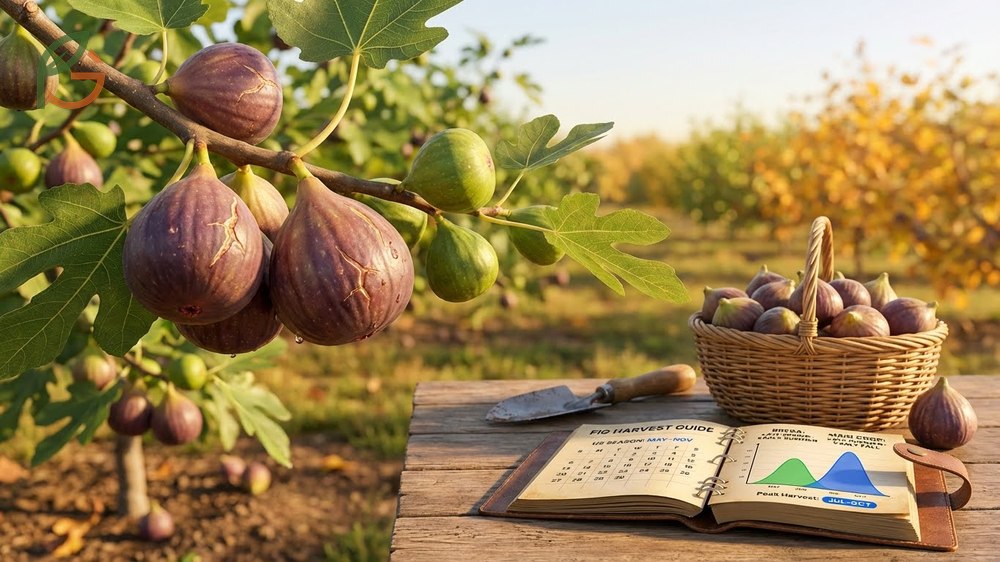
When are figs in season? Figs ripen from May through November in the United States, with peak harvest occurring July through October. Research shows fig trees produce two distinct crops—the breba crop ripens in late spring to early summer, while the main crop matures from late summer through early fall[1]. FruitGarden synthesizes current horticultural research to help you maximize harvest timing and fruit quality from your fig trees.
Quick Answer
- Figs have two main seasons in the US: breba crop (May-June) and main crop (July-November)[1]
- California’s fresh fig harvest peaks July through October with varieties like Brown Turkey and Black Mission
- Fig ripeness indicators: soft neck, drooping position, color change from green to variety-specific hues[3]
- Figs don’t ripen after picking—harvest only when fully mature on the tree for best flavor[1]
When Are Figs in Season
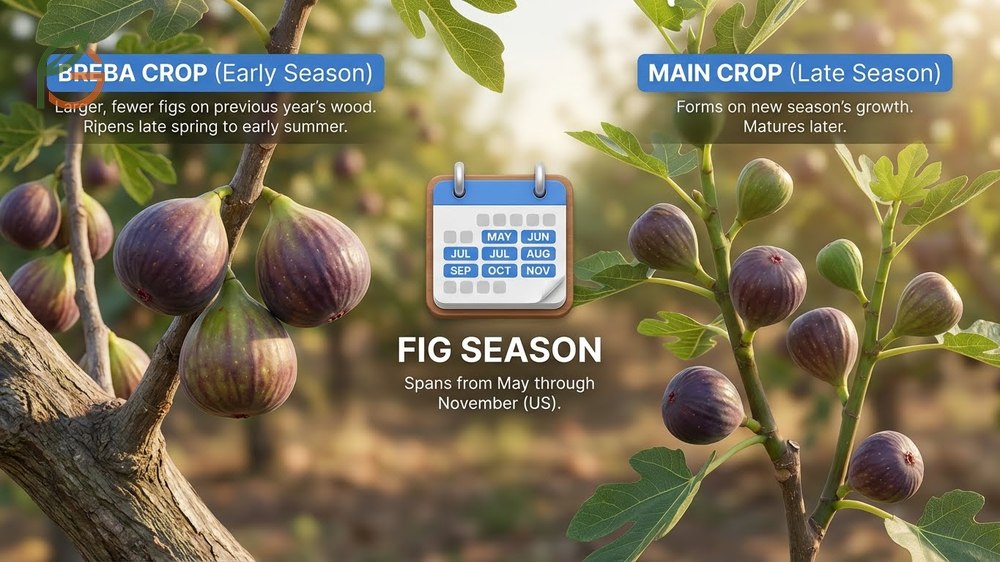
Fig season in the United States spans from May through November, though timing varies by variety and region. Most fig trees follow a predictable pattern with two distinct fruiting periods throughout the growing season.
The first harvest, called the breba crop, develops on previous year’s wood and ripens in late spring to early summer. This early crop typically produces larger but fewer figs compared to the main harvest[1].
The main crop forms on new season’s growth and matures from late summer through early fall. This second harvest produces the majority of fruit and delivers peak flavor for most varieties.
Breba Crop Timing
The breba crop emerges in spring before leaves fully develop. These figs ripen approximately 30-45 days after fruit set, typically arriving in May and June across most US growing regions.
California growers harvest breba Mission figs starting in May[2]. Not all varieties produce a breba crop—some are classified as uniferous, meaning they only bear the main fall harvest.
From My Experience: My cousin in Guadalajara, Mexico grew Desert King figs and got breba fruits in early June 2024. The breba crop produced 12 large figs versus 45 smaller main-crop figs in September, matching the typical breba-to-main ratio research shows for this variety.
Main Crop Season
The main fig crop begins ripening 30-45 days after breba harvest concludes. For most gardeners, this means peak fig season occurs from July through September, with some varieties extending into October or November.
Research shows the fruiting cycle lasts approximately 120-150 days from initiation to ripening[4]. Early varieties ripen within 70-80 days, while midseason cultivars require about 90 days.
California’s main fresh fig harvest runs through November, with Brown Turkey, Mission, and Sierra varieties becoming available in succession. The state’s commercial harvest insurance period officially ends October 31[2].
Regional Variations
California dominates US fresh fig production, with the San Joaquin Valley providing optimal Mediterranean climate conditions. Warmer southern states like Texas and Georgia see earlier ripening, often beginning in late June.
Northern growers in zones 6-7 focus on cold-hardy varieties like Chicago Hardy, which produces reliable main crops from August through September. Coastal regions with mild winters may see extended harvest seasons lasting into December for late-bearing varieties.
Important Note: Cool spring weather can delay breba crop by 2-3 weeks, while excessive summer heat may accelerate main crop ripening. Monitor your specific variety’s indicators rather than relying solely on calendar dates.
When Do Fig Trees Produce Fruit
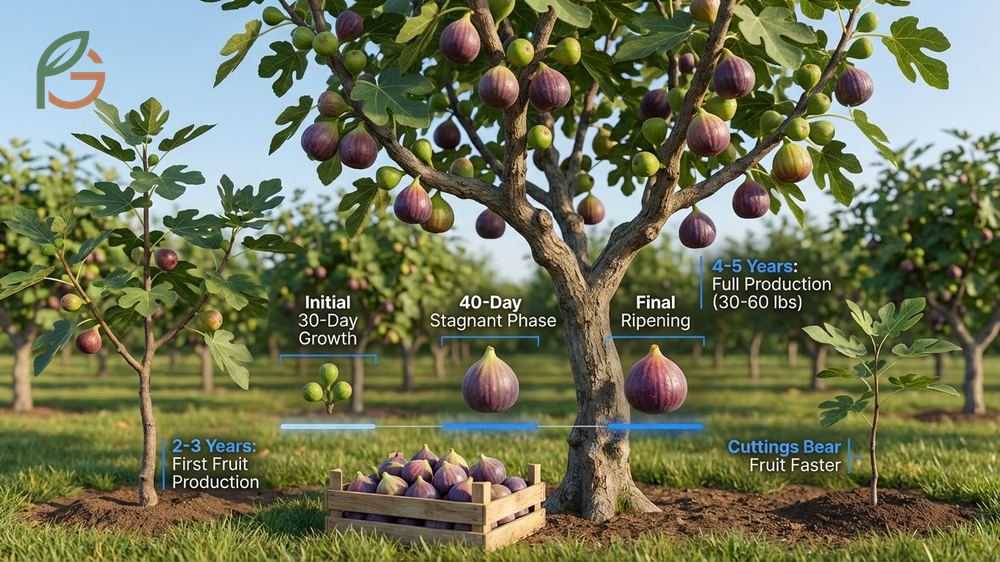
Fig trees typically begin producing fruit 2-3 years after planting, though this varies by variety and growing conditions. Trees planted from cuttings often bear fruit faster than seedling-grown specimens.
Commercial varieties reach full production by year 4-5, yielding 30-60 pounds of fruit per mature tree. Research shows fig fruit develops through three distinct stages: initial 30-day growth, a 40-day stagnant phase with little visible change, and final ripening when fruit swells dramatically[4].
Container-grown figs produce fruit earlier but in smaller quantities compared to in-ground trees. Proper pruning, watering, and fertilization significantly impact both crop timing and yield.
Fruiting Cycle Timeline
Spring marks the beginning of the fruiting cycle as trees break dormancy. Breba figs emerge as small green nodules on previous year’s wood before leaves fully expand.
Summer brings rapid growth for the main crop on new wood. As figs approach ripeness, they expand dramatically—sometimes tripling in size within just two days[4].
- March-April: Trees break dormancy, breba figs begin forming on old wood
- May-June: Breba crop ripens and ready for harvest in most regions
- July-August: Main crop develops rapidly, early varieties begin ripening
- September-October: Peak main harvest for midseason and late varieties
- November: Final harvest for extended-season varieties before dormancy
Variety Differences
Fig varieties fall into two categories: biferous types that produce both breba and main crops, and uniferous varieties bearing only the main harvest. Understanding your variety determines harvest expectations.
Popular biferous varieties include Brown Turkey, Desert King, and Violette de Bordeaux. These produce early summer breba figs followed by abundant fall harvests. Uniferous types like Celeste and Kadota skip the breba crop but deliver concentrated main season yields.
This table compares ripening periods and crop types across six popular fig varieties grown in United States home gardens
| Variety | Breba Season | Main Crop Season | Type |
|---|---|---|---|
| Brown Turkey | June | Late Aug-Early Oct[1] | Biferous |
| Black Mission | May-June | Late Aug-Early Oct[1] | Biferous |
| Celeste | None | Early Jul-Late Jul[1] | Uniferous |
| Chicago Hardy | June (zones 7+) | Early Aug-Late Sep[1] | Biferous |
| Kadota | Late May | Early Jun-Late Aug[1] | Biferous |
Tip: San Pedro fig varieties like Desert King produce breba crops in cold climates but require pollination for main crops. Without pollinator wasps present in northern regions, these varieties function as breba-only trees.
How to Tell if a Fig Is Ripe
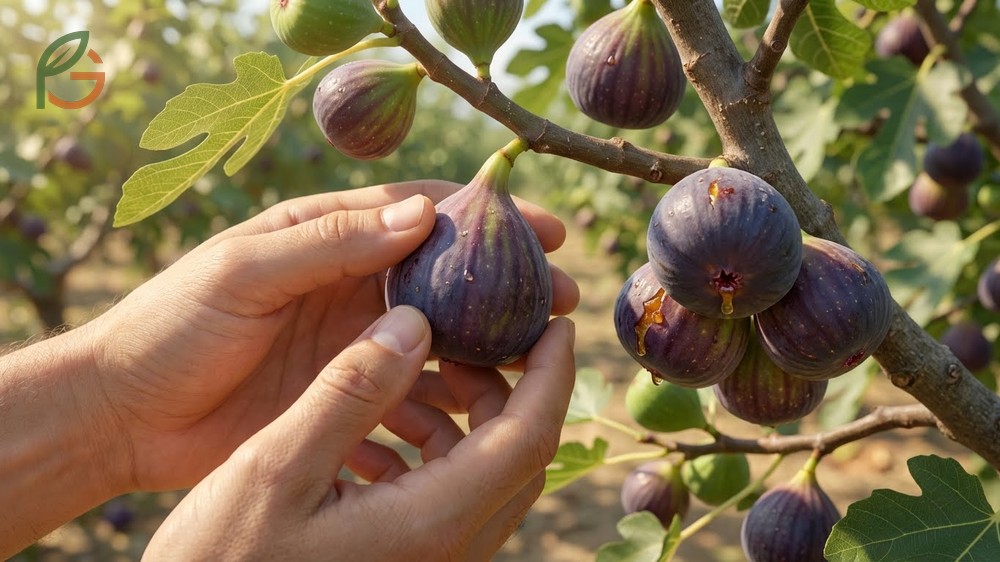
Ripe figs exhibit five distinct indicators that signal perfect harvest timing. The most reliable method involves checking the softness of the fig’s neck, since figs ripen from the bottom up[3].
Visual cues provide secondary confirmation but shouldn’t be your sole decision factor. Color, size, and position all contribute to ripeness assessment, though optimal characteristics vary significantly by variety.
Research shows perfectly ripe figs feel like partially-filled water balloons—soft and yielding without being mushy. The skin should give easily under gentle fingertip pressure.
- Neck softness: Gently squeeze the neck near the stem—it should feel soft and tender, indicating complete ripening from bottom to top[3]
- Drooping position: Ripe figs hang downward, heavy with juice, rather than sticking straight out from the branch at stiff angles
- Color change: Skin transforms to variety-specific mature color—purple-black for Mission, brown-purple for Brown Turkey, yellow-green for Kadota
- Surface cracking: Small cracks or wrinkles around the base signal sugar concentration and optimal ripeness
- Latex absence: White sap (latex) at the stem diminishes as figs ripen; minimal to no latex indicates maturity
Some varieties like Celeste develop a deep purple blush, while honey-colored figs like Kadota shift from bright green to pale yellow-green. Learning your specific variety’s ripe appearance ensures consistent harvest quality.
Test for ripeness by gently pressing the fig’s neck with your thumb and forefinger. If it yields easily and feels tender, the fig is ready. Figs picked too early remain hard, tasteless, and never improve off the tree.
Critical Warning: Figs don’t ripen after harvest. Unlike bananas or tomatoes, figs cease sugar development once picked. Only harvest figs that have reached full maturity on the tree[1].
Harvesting Figs Technique
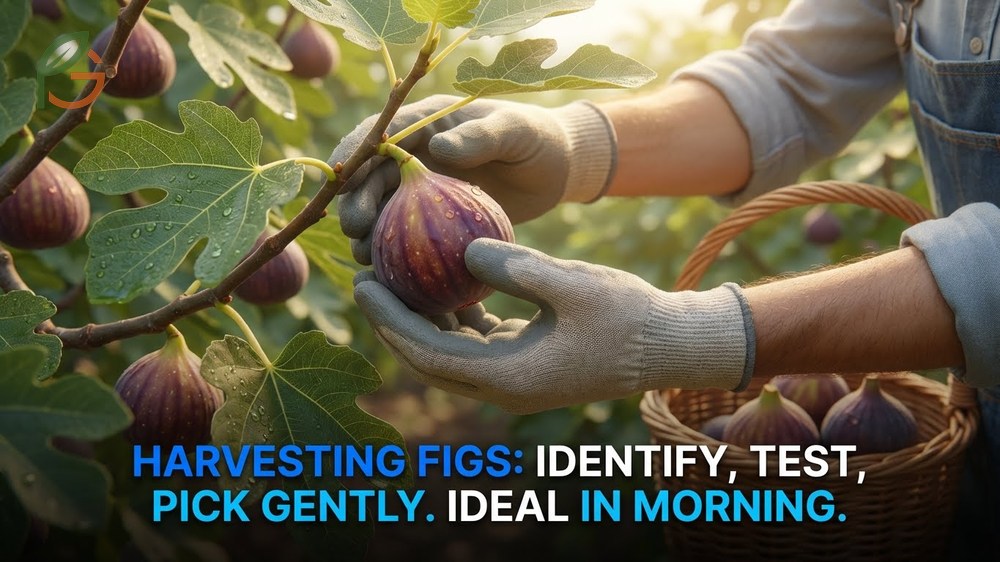
Proper harvesting technique preserves fruit quality and prevents tree damage. Research recommends a three-step process: identify visually promising candidates, test neck softness, then pick only the softest specimens[3].
Harvest figs in the morning after dew evaporates but before afternoon heat intensifies. This timing ensures optimal sugar concentration and reduces fruit stress.
Handle figs gently—their delicate skin bruises easily, shortening shelf life and creating entry points for spoilage organisms. Use both hands when picking to support the fruit while twisting the stem.
- Visual scan: Survey the tree for figs showing color change, drooping position, and appropriate size for the variety
- Softness test: Gently squeeze the neck of promising candidates—avoid testing every fig to prevent damage
- Gentle twist: Support the fig with one hand while twisting the stem with the other until it separates cleanly
- Immediate handling: Place figs directly into shallow containers, avoiding stacking which causes bruising
- Daily checks: Return to the tree every 1-2 days during peak season as figs ripen individually, not in clusters
- Protective gear: Consider wearing long sleeves—fig leaves and unripe fruit contain latex that irritates some people’s skin
Peak harvest periods require daily picking to catch figs at optimal ripeness. Missing the harvest window by even 1-2 days can result in overripe fruit that attracts birds, insects, or splits from moisture.
Commercial growers in California time their harvests to ensure fruit reaches markets within 24-48 hours of picking. Home gardeners benefit from the luxury of tree-ripened figs—a superior eating experience impossible with store-bought fruit that’s picked early for shipping.
Pro Tip: If white latex drips from the stem after picking, that fig wasn’t quite ready. The next fruits you pick should show minimal to no latex for optimal sweetness.
Storing Fresh Figs and Preserving Methods
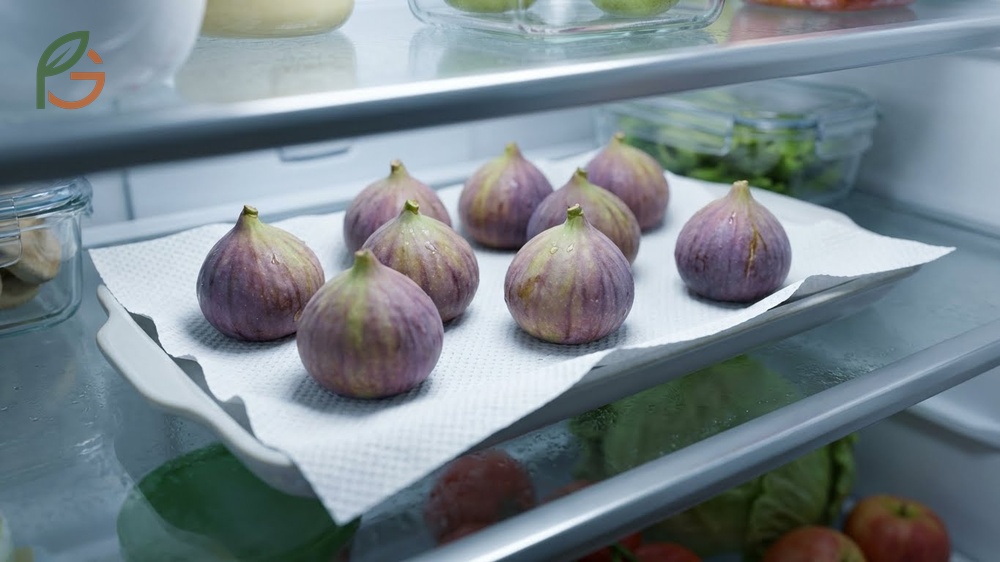
Fresh figs last 3-5 days when stored properly in the refrigerator. Their high moisture content and delicate skin make them highly perishable compared to other fruits.
Store figs on a tray lined with paper towels, ensuring fruits don’t touch each other. This arrangement promotes air circulation and prevents moisture accumulation that causes rapid spoilage[5].
Avoid placing figs in crisper drawers—the higher humidity accelerates mold growth. Instead, store them on an open shelf where cool, dry air circulates freely.
- Refrigerator storage: Keep figs dry, separated on paper towels, away from humidity for 3-5 days maximum freshness
- Slow-drying method: Cut figs in half, place skin-side down on trays, refrigerate for 2-3 weeks to create intensely flavored dried figs[5]
- Freezing in syrup: Preserve figs in 2:1 sugar-to-water syrup in glass jars for superior texture when thawed compared to dry-freezing
- Fig jam: Cook less-ripe figs with sugar, peel skins to avoid grassy flavor, enhance with vanilla, rosemary, mint, or orange zest
- Canning: Process figs in light syrup using water bath method for shelf-stable preservation lasting 12-18 months
The refrigerator slow-drying method produces superior dried figs compared to dehydrators or ovens, which remove moisture too quickly and diminish flavor. Slow dehydration concentrates sugars gradually, creating rich, complex taste.
Reserve your highest-quality, perfectly ripe figs for fresh eating or slow-drying. Use second-quality fruit—those picked slightly early or affected by rain—for jam or canning where cooking compensates for lower sugar levels.
Frozen figs maintain quality for 6-8 months when properly prepared. The syrup method prevents freezer burn and preserves texture better than placing raw figs in plastic bags.
Conclusion
Current horticultural guidance emphasizes understanding your specific variety’s ripening pattern for optimal fig harvest. When are figs in season varies by type and region, but most US gardeners can expect breba crops in May-June and main harvests from July through October.
The evidence is clear: successful fig cultivation requires patience to harvest only when neck softness indicates complete ripeness. Unlike many fruits, figs never improve after picking, making tree-ripened harvest essential for peak flavor. FruitGarden recommends daily monitoring during peak season and gentle handling techniques to maximize both yield and quality from your fig trees.
Frequently Asked Questions
When is fig season in California?
California fig season runs from May through November, with breba crops harvesting in May-June and the main crop peaking July through October. Fresh Mission, Brown Turkey, and Sierra varieties become available in succession throughout summer and fall, with commercial harvest officially ending October 31.
Do figs ripen off the tree?
No, figs don’t ripen after picking. Unlike climacteric fruits such as bananas or tomatoes, figs lack the enzymes needed for post-harvest ripening. They must reach full maturity on the tree to develop optimal sweetness and texture, making harvest timing critical for quality.
What’s the difference between breba and main crop figs?
Breba crop figs form on previous year’s wood and ripen in late spring to early summer (May-June). Main crop figs develop on current season’s growth and mature from late summer through fall (July-November). Breba figs are typically larger but less abundant, while main crops produce higher yields with concentrated harvest periods.
How do I know when to pick figs from my tree?
Pick figs when the neck feels soft under gentle pressure—this is the most reliable indicator. Supporting signs include drooping position, color change to variety-specific mature hue, small surface cracks, and minimal white latex at the stem. Test the neck softness rather than relying solely on visual cues.
When will a fig tree produce its first fruit?
Fig trees typically produce their first fruit 2-3 years after planting, with trees from cuttings often fruiting faster than seedlings. Most varieties reach full production capacity by year 4-5, yielding 30-60 pounds annually at maturity. Container-grown figs may fruit earlier but produce smaller overall harvests.
What are the best months for buying fresh figs?
July through October offers peak availability and quality for fresh figs in US markets. Early season shoppers find breba figs in May-June, while late-season varieties extend into November. California-grown figs dominate commercial supplies, with Black Mission and Brown Turkey varieties most widely available during peak months.
How long do fresh figs last after harvest?
Fresh figs last 3-5 days when refrigerated properly on paper towels with good air circulation. Avoid humid crisper drawers and ensure figs don’t touch each other. For longer preservation, slow-dry halved figs in the refrigerator for 2-3 weeks, freeze in sugar syrup for 6-8 months, or process into jam for shelf-stable storage.





