
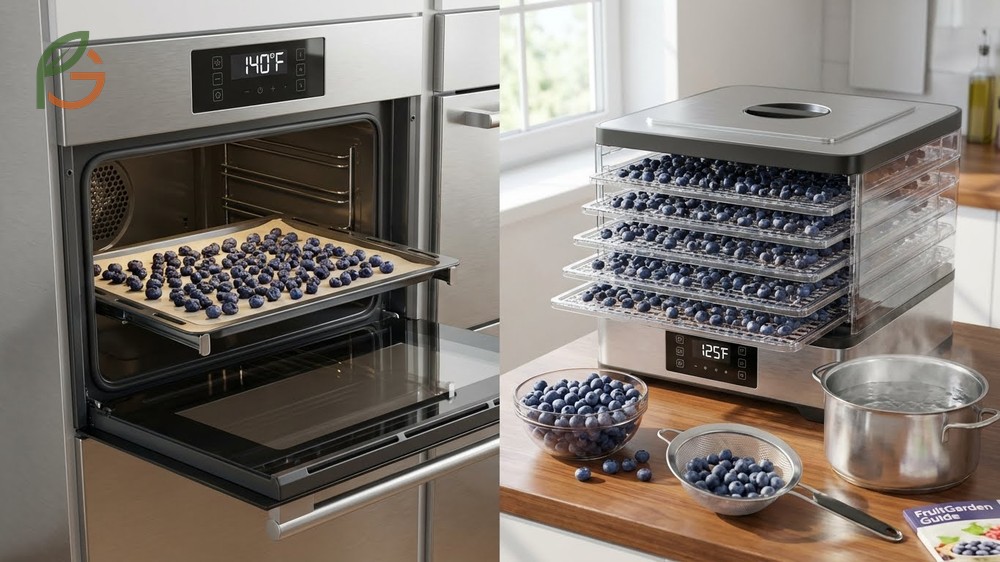
How to dehydrate blueberries involves either using a dehydrator at 125-135°F (52-57°C) for 12-24 hours or an oven at 140-175°F (60-79°C) for 10-18 hours[1]. Research shows that blanching blueberries for 30 seconds before dehydrating breaks their waxy skin, reducing drying time and creating more flavorful results[2]. FruitGarden provides expert guidance on preserving fresh blueberries for year-round enjoyment through proper dehydration techniques.
Quick Answer
How to Dehydrate Blueberries
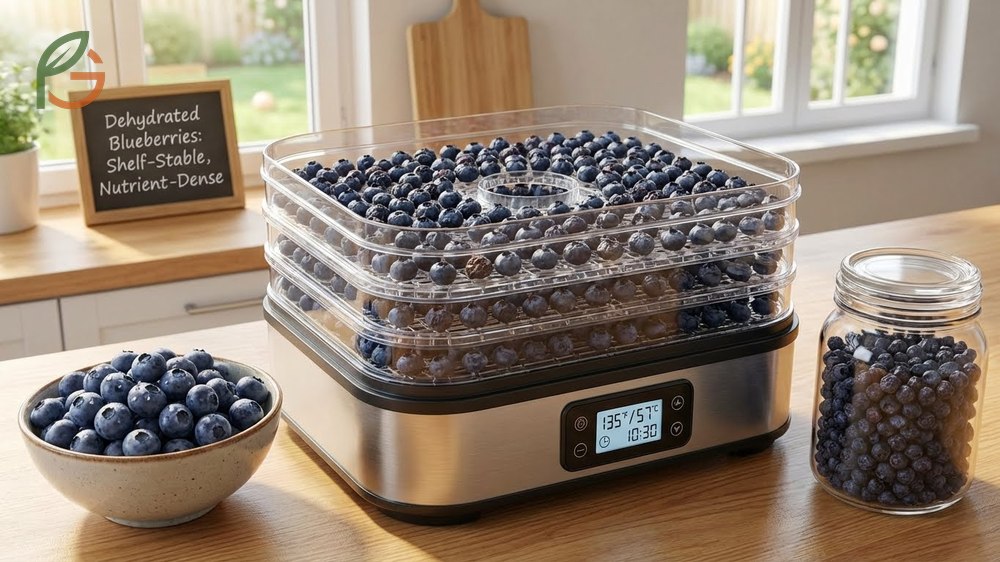
Dehydrating blueberries preserves their nutritional value while creating a shelf-stable snack that lasts up to 12 months[2]. Studies demonstrate that proper dehydration removes moisture content from approximately 85% down to 15-20%, which inhibits bacterial growth and mold formation. The process concentrates the natural sugars and antioxidants, making dried blueberries a nutrient-dense option.
Fresh blueberries work best when they’re firm and fully ripe. You’ll want to sort through your batch and remove any berries with soft spots, stems, or blemishes. Frozen blueberries are equally effective since freezing naturally cracks the waxy skin, eliminating the need for blanching.
Current data indicates that blanching fresh blueberries before dehydration produces superior results compared to skipping this step[5]. The brief heat exposure breaks down the protective coating without cooking the fruit. Most home dehydrators can process 5-12 pounds of blueberries per batch, depending on tray capacity.
Preparing Blueberries for Dehydration
Start by rinsing your blueberries under cool running water in a colander. Remove any stems, leaves, or damaged berries during this initial wash. Pat them dry with clean kitchen towels or paper towels to remove excess surface moisture.
The waxy coating on blueberry skins, called bloom, protects the fruit but creates a barrier during dehydration. Breaking this barrier is essential for even drying. Research shows that untreated blueberries take 50% longer to dehydrate and often develop an unpleasant papery texture[5].
- Wash berries thoroughly in cool water to remove debris and pesticides
- Sort and discard any soft, moldy, or damaged blueberries
- Dry berries completely on clean towels for 10-15 minutes
- Choose between blanching fresh berries or using frozen berries (which don’t need blanching)
- Spread prepared berries in single layers without touching on dehydrator trays
Blanching Technique
Bring a large pot of water to a rolling boil over high heat. While waiting, prepare an ice bath in a separate bowl with equal parts ice and cold water. This two-step temperature shock effectively cracks the skin without affecting the berry’s interior.
Drop blueberries into boiling water for exactly 30 seconds[6]. You’ll notice the skins beginning to split or wrinkle slightly. Immediately transfer them with a slotted spoon into the ice bath to stop the cooking process.
After 1-2 minutes in the ice bath, drain the berries thoroughly. Spread them on clean towels and gently pat dry before loading onto dehydrator trays. This blanching method reduces total drying time by 2-4 hours compared to unblanched berries.
Important Note: Don’t blanch for longer than 30 seconds. Overblanching causes berries to burst and release too much juice, creating sticky messes on dehydrator trays that are difficult to clean.
Dehydrator Temperature Settings
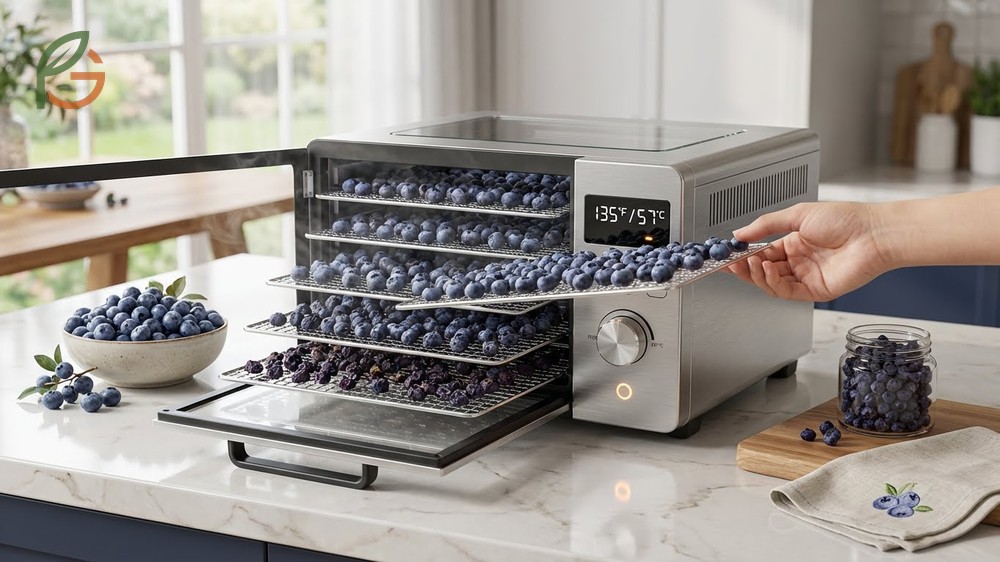
The optimal temperature range for dehydrating blueberries falls between 125-135°F (52-57°C)[1]. This gentle heat extracts moisture without degrading vitamins, antioxidants, or natural color pigments. Higher temperatures above 140°F (60°C) can cause case hardening, where the exterior dries too quickly and traps moisture inside.
Most electric dehydrators allow precise temperature control within this range. Set your machine to 135°F (57°C) for standard results that balance speed with quality[3]. Lower temperatures around 125°F (52°C) preserve maximum nutrients but extend drying time by 4-6 hours.
Evidence suggests that consistent temperature throughout the drying process produces more uniform results than varying temperatures. Don’t increase heat midway through the cycle, as this can create uneven texture. The entire batch should maintain steady, low heat from start to finish.
Optimal Temperature Range
Commercial food preservation guidelines recommend staying within the 125-135°F (52-57°C) window for all berries. This range deactivates enzymes that cause browning while maintaining structural integrity. At 135°F (57°C), expect drying times of 12-18 hours for blanched berries.
If you’re dehydrating multiple fruit types simultaneously, blueberries pair well with strawberries and raspberries since they share similar temperature requirements. Avoid combining them with vegetables like tomatoes or peppers that need higher heat settings.
This table compares dehydration outcomes across three temperature settings showing drying time, texture quality, and nutrient retention for each temperature range
| Temperature | Drying Time | Texture Quality | Nutrient Retention |
|---|---|---|---|
| 125°F (52°C) | 18-24 hours[1] | Chewy, tender | Highest (95%+) |
| 135°F (57°C) | 12-18 hours[3] | Leathery, firm | Excellent (90-95%) |
| 145°F (63°C) | 8-12 hours | Hard, brittle | Good (80-85%) |
Tray Rotation Timing
Rotate dehydrator trays every 6 hours to ensure even drying across all levels[1]. Bottom trays near the heating element dry faster than top trays in most vertical flow dehydrators. Move bottom trays to the top and shift all other trays down one position.
Horizontal flow dehydrators provide more consistent heat distribution but still benefit from front-to-back rotation. Check berries during each rotation and remove any that have reached the desired dryness. This prevents overdrying while allowing slower berries to continue processing.
- Set timers for 6-hour intervals to maintain rotation consistency
- Swap bottom and top trays completely during each rotation
- Shake trays gently to redistribute berries and prevent sticking
- Remove individual dried berries rather than waiting for entire batch
- Keep a log of rotation times for future reference and timing optimization
Oven Drying Method
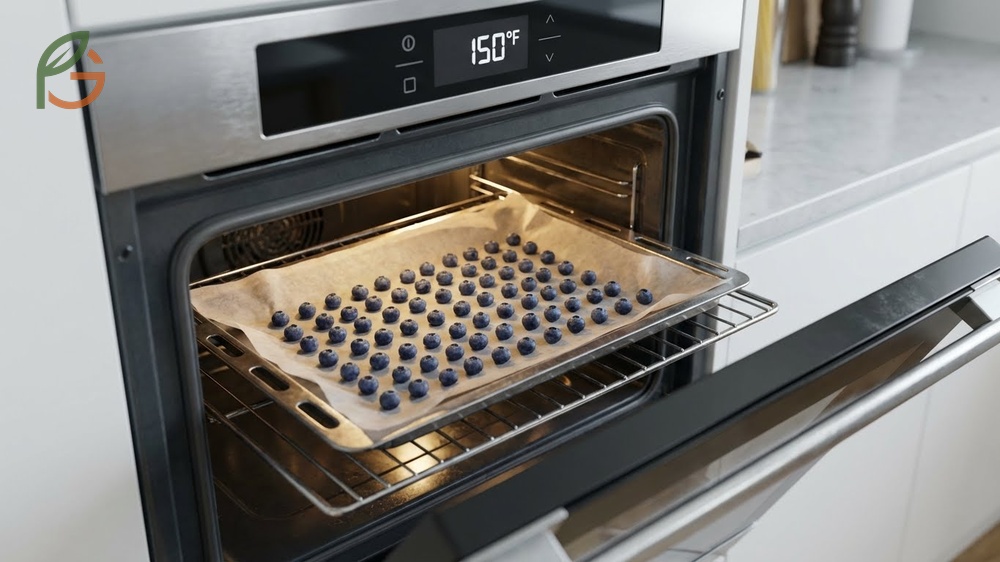
Oven drying works as an alternative when you don’t own a dedicated dehydrator. Set your oven to the lowest possible temperature, typically 140-175°F (60-79°C)[1]. Most home ovens can’t reach the ideal 125-135°F (52-57°C) range, so expect faster drying times of 10-18 hours but with slightly firmer texture.
Line baking sheets with parchment paper and spread blanched blueberries in single layers with space between each berry. Don’t overcrowd the sheets, as this restricts airflow and creates uneven drying. You’ll likely need 2-3 baking sheets for every pound of blueberries.
The main challenge with oven drying involves moisture removal. Unlike dehydrators with built-in fans and vents, ovens trap humid air inside. Prop the oven door open 2-3 inches using a wooden spoon or folded kitchen towel to allow steam to escape[4].
From My Experience: My cousin in Guadalajara, Mexico tried oven-drying blueberries in March 2024 without propping the door open. After 14 hours, the berries remained sticky and developed mold within 3 days of storage—matching research showing trapped moisture prevents complete dehydration.
Temperature Control
Check your oven’s actual temperature with an oven thermometer, as many ovens run 10-25°F (6-14°C) hotter or cooler than the dial indicates. Place the thermometer on the middle rack near your berries for accurate readings. Adjust the setting up or down to maintain 140-160°F (60-71°C).
Ovens cycle on and off to maintain temperature, creating fluctuations that affect drying consistency. These temperature swings are normal but require more frequent monitoring than dehydrators. Check your berries every 2 hours and rotate pans front-to-back and top-to-bottom.
Airflow Management
Position oven racks in the upper and lower thirds of the oven, leaving the middle empty for air circulation. This spacing allows hot air to flow between pans more effectively. If using three racks, space them at least 4 inches apart vertically.
Some bakers place a small fan outside the oven, aimed at the open door, to improve air circulation. This technique reduces drying time by 1-2 hours but isn’t necessary for successful results. Focus primarily on maintaining the door gap and rotating pans regularly.
- Use an oven thermometer to verify actual temperature versus dial setting
- Maintain 2-3 inch door opening throughout entire drying period
- Rotate baking sheets every 2-3 hours to prevent hot spots
- Shake pans gently during rotation to prevent berries from sticking
- Add 2-4 hours to standard dehydrator times when using oven method
Safety Warning: Never leave home with your oven running during dehydration. The propped door and extended heating time create potential fire hazards if left unattended. Plan to stay home throughout the 10-18 hour drying period.
Drying Time Blueberries

Drying time varies based on berry size, moisture content, temperature, and preparation method. Blanched blueberries in a dehydrator at 135°F (57°C) typically require 12-18 hours[3]. Unblanched berries can take 24-36 hours due to their intact waxy coating slowing moisture release.
Fresh blueberries contain approximately 85% water content that must evaporate during dehydration. Larger berries naturally take longer since moisture travels a greater distance from the center to the surface. Small wild blueberries may finish in 10-12 hours, while jumbo cultivated berries can require up to 20 hours.
Environmental factors also influence timing. Humid climates slow the process by 2-4 hours compared to dry climates since the surrounding air already contains moisture. Running your dehydrator in an air-conditioned room improves efficiency during summer months.
Frozen blueberries that have been thawed require similar times to blanched fresh berries since freezing breaks down cell walls. If dehydrating frozen berries without thawing first, add 3-5 hours to account for the defrosting phase at the start.
Testing for Doneness
Properly dried blueberries should feel leathery and pliable, not sticky or wet. Remove a few berries from the dehydrator and let them cool to room temperature for 5-10 minutes before testing[2]. Warm berries feel softer than they actually are, giving false readings if tested immediately.
Cut a cooled berry in half and check the interior. You shouldn’t see any visible moisture or dark wet spots in the center. Squeeze the berry between your fingers—it should compress without releasing liquid. Bend the berry in half; properly dried berries flex without snapping or cracking.
The seal test provides final confirmation. Place 5-6 cooled berries in a small plastic bag and seal it tightly. Wait 30 minutes and check for condensation on the bag’s interior[2]. Any moisture droplets indicate incomplete drying and require 2-4 additional hours in the dehydrator.
- Cool berries completely before testing to ensure accurate moisture assessment
- Check texture—should be leathery and flexible, not brittle or sticky
- Cut samples in half to verify no wet spots remain in center
- Perform bag test with several berries to detect hidden moisture
- Return any questionable berries to dehydrator for 1-2 more hours
Storage Dried Blueberries
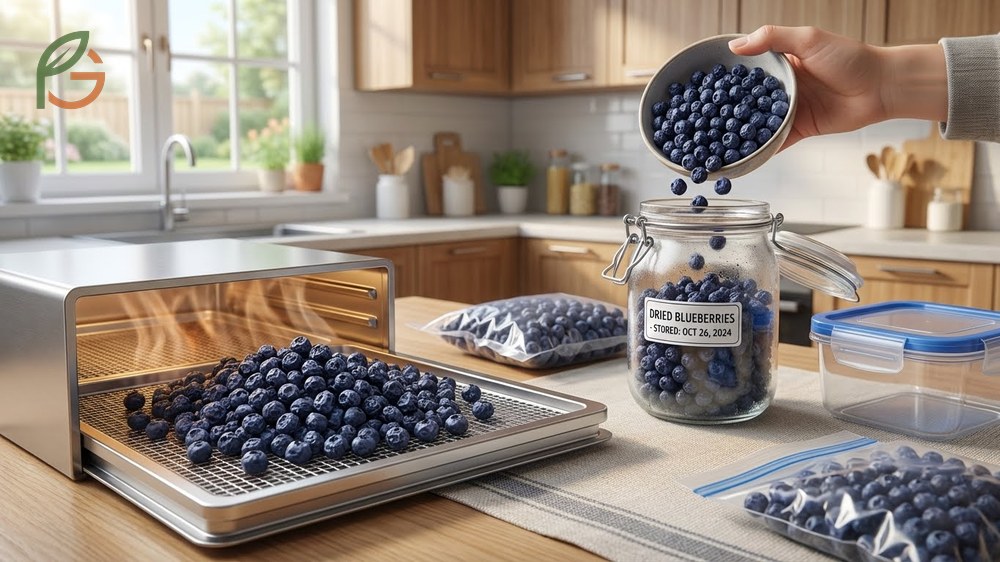
Proper storage extends shelf life up to 12 months and maintains flavor quality[4]. Allow dried blueberries to cool completely in the dehydrator for 30-45 minutes after turning off the heat. This cooling period prevents condensation from forming when hot berries contact cooler storage containers.
Transfer cooled berries to airtight containers such as glass mason jars, vacuum-sealed bags, or food-grade plastic containers with tight-fitting lids. Glass jars work best since they don’t absorb odors or leach chemicals. Fill containers to within 1 inch of the top to minimize air exposure.
Store containers in cool, dark locations away from direct sunlight and heat sources. Pantries, cupboards, or basement storage areas maintain the 60-70°F (16-21°C) temperature range that preserves quality. Refrigeration extends shelf life to 18 months, while freezing can preserve berries for 2+ years.
Conditioning Process
Conditioning equalizes residual moisture between berries and reveals any hidden dampness. Fill jars only two-thirds full and seal them loosely. Shake jars daily for 7-10 days while checking for condensation on jar walls[2].
Moisture droplets appearing during conditioning indicate incomplete drying. Return the entire batch to the dehydrator for 2-4 additional hours, then restart the conditioning process. Don’t skip this step—improperly dried fruit develops mold within days of storage.
After successful conditioning with no moisture present, you can pack jars fuller and seal them tightly. Label each container with contents and date using permanent marker or adhesive labels. This tracking system helps you rotate stock and use older batches first.
Long-Term Storage Tips
Vacuum sealing removes oxygen that causes nutrient degradation and flavor loss over time. Home vacuum sealers work with both bags and mason jar attachments. Vacuum-sealed dried blueberries maintain peak quality for 18-24 months at room temperature.
Oxygen absorber packets provide an alternative to vacuum sealing. Drop one 100cc packet into each quart jar before sealing. These iron-based sachets absorb residual oxygen, creating a modified atmosphere that prevents oxidation and insect infestation.
Check stored berries monthly during the first year. Open containers briefly to smell the contents—any musty, fermented, or off odors indicate spoilage. Discard affected batches immediately to prevent mold spores from spreading to other stored foods.
- Use glass containers whenever possible for longest shelf life and purity
- Store in locations maintaining 60-70°F (16-21°C) away from light
- Consider vacuum sealing or oxygen absorbers for extended storage beyond 12 months
- Label containers with contents and date to track freshness
- Refrigerate or freeze for maximum longevity up to 2 years
- Inspect monthly for any signs of moisture, mold, or unusual odors
Pro Tip: Divide large batches into multiple small containers rather than one large container. This minimizes air exposure each time you open a jar to remove berries for recipes or snacking.
Conclusion
The evidence is clear: how to dehydrate blueberries successfully requires maintaining temperatures of 125-135°F (52-57°C) for 12-24 hours in dehydrators or 140-175°F (60-79°C) for 10-18 hours in ovens[1]. Blanching fresh berries for 30 seconds before dehydrating cuts drying time significantly and produces superior texture and flavor.
Current guidance emphasizes proper storage in airtight containers within cool, dark locations to achieve the full 12-month shelf life these preserved berries offer. FruitGarden synthesizes agricultural research and practical dehydration methods to help you transform fresh harvests into nutritious, long-lasting ingredients for year-round enjoyment.
Frequently Asked Questions
Do you have to blanch blueberries before dehydrating?
Blanching isn’t required but strongly recommended for fresh blueberries. Research shows that blanching for 30 seconds breaks the waxy skin coating, reducing drying time by 2-4 hours and creating more flavorful results[5]. Frozen blueberries don’t need blanching since freezing naturally cracks the skin.
Can you dehydrate blueberries without a dehydrator?
Yes, ovens work effectively for dehydrating blueberries when set to 140-175°F (60-79°C) with the door propped open 2-3 inches[1]. Expect drying times of 10-18 hours with pan rotation every 2-3 hours. The open door allows moisture to escape and prevents berries from cooking instead of dehydrating.
How long do dehydrated blueberries last?
Properly dehydrated and stored blueberries last 6-12 months at room temperature in airtight containers[4]. Refrigeration extends shelf life to 18 months, while freezing preserves quality for 2+ years. Store in cool, dark locations and check monthly for signs of moisture or mold.
What temperature should I set my dehydrator for blueberries?
Set your dehydrator to 135°F (57°C) for optimal results that balance drying speed with nutrient retention[3]. This temperature removes moisture efficiently while preserving vitamins, antioxidants, and natural color. Lower temperatures around 125°F (52°C) maximize nutrients but add 4-6 hours to drying time.
How do you know when blueberries are fully dehydrated?
Fully dehydrated blueberries feel leathery and pliable without sticky or wet spots. Cool several berries to room temperature and perform a squeeze test—they shouldn’t release any liquid[2]. The bag test confirms readiness: seal berries in plastic for 30 minutes and check for condensation, which indicates incomplete drying.
Can you use frozen blueberries for dehydrating?
Frozen blueberries work excellently for dehydration and don’t require blanching since freezing breaks down the waxy skin naturally. Thaw frozen berries completely and pat dry before loading onto dehydrator trays, or dehydrate them frozen and add 3-5 hours to account for defrosting time. Both methods produce results comparable to blanched fresh berries.
Why are my dehydrated blueberries sticky?
Sticky dehydrated blueberries indicate incomplete drying with residual moisture remaining inside. Return them to the dehydrator for 2-4 additional hours at 135°F (57°C) until they achieve a leathery, non-sticky texture. Always cool berries to room temperature before testing, as warm berries feel softer and moister than they actually are.





