
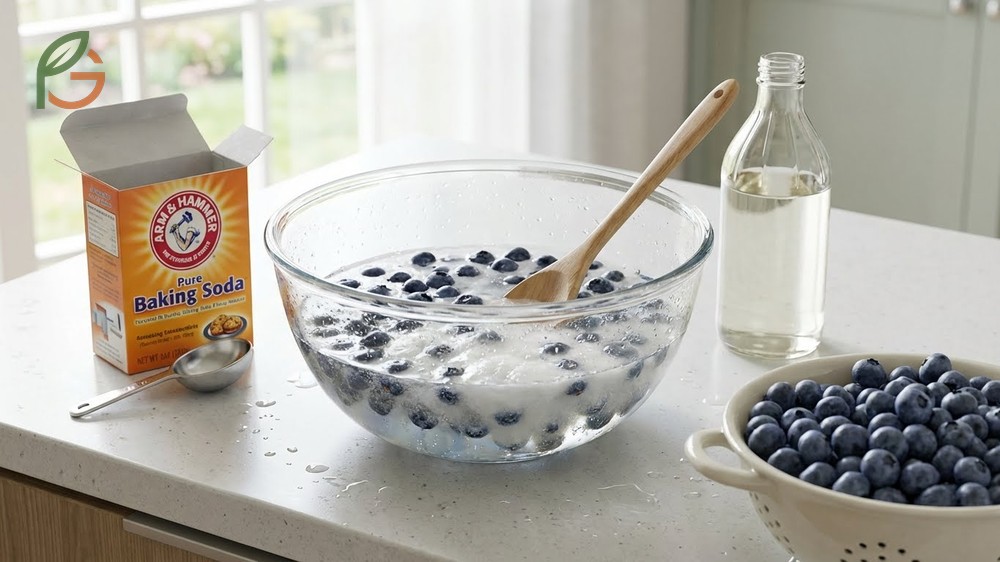
How to wash blueberries properly removes pesticides, bacteria, and dirt that plain water can’t tackle. Research shows that soaking blueberries in a baking soda solution eliminates up to 100% of surface pesticide residues in just 12-15 minutes[1]. FruitGarden synthesizes the latest food safety research to help you enjoy cleaner, safer berries with simple kitchen ingredients you already have.
Quick Answer
- Baking soda wash removes pesticides most effectively: dissolve 1 teaspoon in 2 cups water, soak for 10-15 minutes[2]
- Vinegar wash kills bacteria: mix 3 parts water to 1 part vinegar, soak for 5-10 minutes[2]
- Don’t soak longer than 15 minutes or the skin degrades and flavor leaches out[2]
- Dry completely before storing to extend shelf life to 10-14 days[3]
How to Wash Blueberries
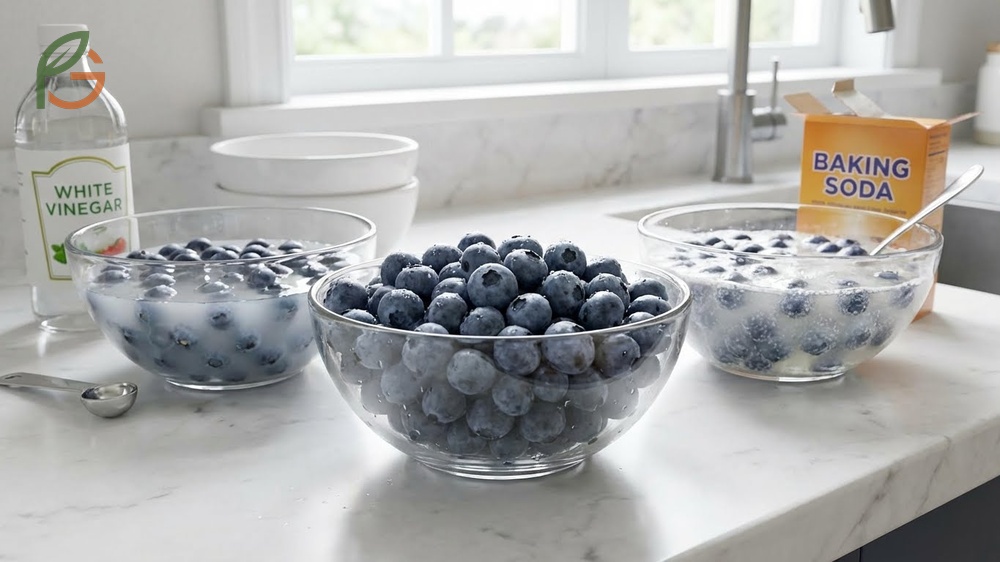
Washing blueberries goes beyond rinsing them under the tap. Studies show that plain water removes only 40-67% of pesticide residues from produce surfaces[4]. The remaining chemicals cling to the waxy coating that protects blueberry skin.
You’ll get better results using vinegar or baking soda solutions. Both methods change the pH on the berry surface, which breaks down pesticide molecules and kills bacteria. They’re safe, cheap, and more effective than commercial fruit washes.
The key difference between the two methods comes down to what you’re targeting. Vinegar excels at killing bacteria and mold spores, while baking soda specifically targets pesticide residues. Most home cooks find baking soda gives them peace of mind when dealing with conventionally grown berries.
Why Plain Water Isn’t Enough
Blueberries don’t just carry dirt on their surface. Recent testing found both banned and legal pesticides on fresh berries sold in stores, with some samples showing chemical levels high enough that eating less than one standard 125g punnet could exceed safe daily intake limits[5]. Water alone can’t tackle these chemical residues.
The waxy cuticle that keeps blueberries fresh also traps pesticides, bacteria, and even fruit fly larvae. Running water might remove loose dirt, but it slides right off this protective coating without penetrating deep enough to dislodge contaminants.
What You Need
You don’t need fancy equipment to wash blueberries properly. Here’s everything required for both vinegar and baking soda methods:
- Large bowl (big enough to hold berries without crowding)
- Colander or fine-mesh strainer
- Clean dish towels or paper towels for drying
- White distilled vinegar or baking soda (sodium bicarbonate)
- Cold tap water
Important note: Don’t wash blueberries until you’re ready to eat them. Washing before storage introduces moisture that promotes mold growth and speeds up spoilage[6]. Only wash what you’ll use within a day or two.
How to Wash Blueberries with Vinegar
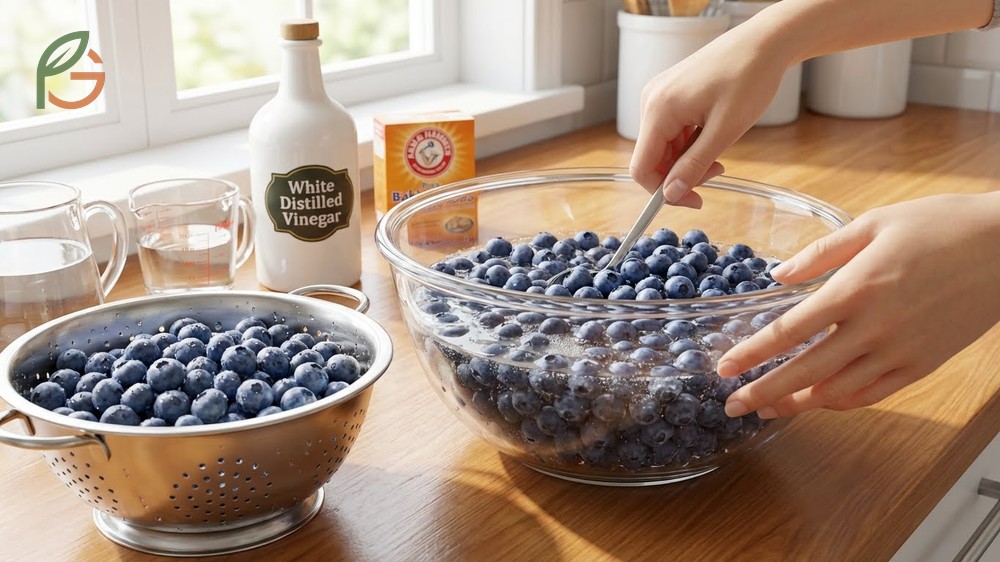
Vinegar washing works by creating an acidic environment that kills bacteria, mold spores, and other microorganisms on blueberry surfaces. The acetic acid in vinegar also helps break down some pesticide residues, though it’s not as effective as baking soda for this specific purpose.
You’ll want to use white distilled vinegar for this method. Don’t use apple cider vinegar or flavored varieties—they can leave residues or alter the taste of your berries. The mild acidity of white vinegar rinses away completely when you follow the proper rinsing steps.
Vinegar Wash Step-by-Step
Current guidance shows this simple ratio delivers the best results without affecting berry flavor:
- Mix 3 parts cold water to 1 part white vinegar in a large bowl
- Add blueberries and let soak for 5-10 minutes (no longer than 10)
- Gently swirl the berries with your hands to loosen debris
- Drain through a colander and rinse thoroughly under cold running water
- Spread berries on clean towels and pat dry completely before eating or storing
The rinsing step matters more than you might think. If you skip it or rush through it, you’ll end up with berries that taste like salad dressing. Rinse for at least 30 seconds under cold water to remove all vinegar traces.
When to Use Vinegar
Vinegar washing makes the most sense when you’re concerned about bacteria or mold rather than pesticides. It’s particularly useful for berries that already show early signs of mold—the acetic acid can kill surface spores and extend shelf life by several days.
Research demonstrates that vinegar changes the pH on blueberry skin, which causes the berries to last longer than untreated ones[7]. If you’re buying conventional berries and want them to stay fresh in the fridge for 10-14 days, a vinegar soak right before storage (after they’re completely dry) can help achieve that goal.
How to Wash Blueberries with Baking Soda
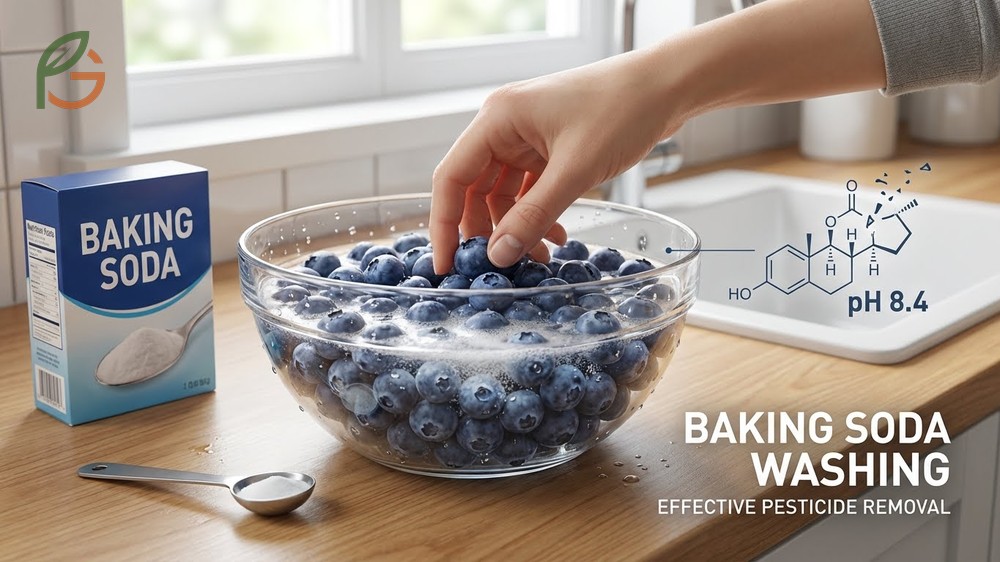
Baking soda washing removes pesticides more effectively than any other home method. The alkaline solution (pH around 8.4) breaks down pesticide molecules on fruit surfaces, lifting them away so they rinse off easily. This method works particularly well on blueberries because their firm skin tolerates the mild abrasiveness of baking soda.
Unlike commercial fruit washes that cost $5-10 per bottle, baking soda costs pennies per use and delivers better results. Studies comparing different washing methods found that sodium bicarbonate solution removed surface pesticides most effectively, requiring just 12-15 minutes to eliminate residues completely[1].
Baking Soda Wash Step-by-Step
Follow this precise ratio for maximum pesticide removal without affecting berry texture:
- Dissolve 1 teaspoon of baking soda in 2 cups of cold water (stir until fully dissolved)
- Add blueberries and soak for 10-15 minutes (12-15 minutes for heavily treated berries)
- Gently agitate the berries every few minutes to ensure even contact with the solution
- Drain through a colander and rinse thoroughly under cold running water for 30-60 seconds
- Spread on clean towels and pat dry until no moisture remains
The timing matters here. Soaking for less than 10 minutes won’t remove all pesticides, but going beyond 15 minutes starts breaking down the berry skin. You’ll notice the berries feel slightly softer and may leak juice if you oversoak them.
Pro tip: If you’re washing a large batch (more than 2 cups of berries), increase both water and baking soda proportionally. For 4 cups of berries, use 4 cups water with 2 teaspoons baking soda. The berries need room to float freely in the solution.
Why Baking Soda Works Best
The science behind baking soda’s effectiveness comes down to chemistry. Pesticides are often acidic or neutral compounds. When you introduce an alkaline solution, it changes the chemical structure of these molecules, making them water-soluble so they rinse away.
Agricultural research comparing tap water, bleach solutions, and baking soda found that a 10 mg/mL sodium bicarbonate solution removed pesticide residues most effectively[1]. The study tested common pesticides used on fruit crops and found complete removal of surface residues within 15 minutes. Tap water alone removed less than half of the same pesticides in the same timeframe.
What often gets overlooked is that baking soda also kills bacteria, though not as effectively as vinegar. If you’re dealing with organic berries that have minimal pesticide concerns but might carry bacteria from handling, baking soda still makes a solid choice as an all-purpose wash.
Should You Wash Organic Blueberries
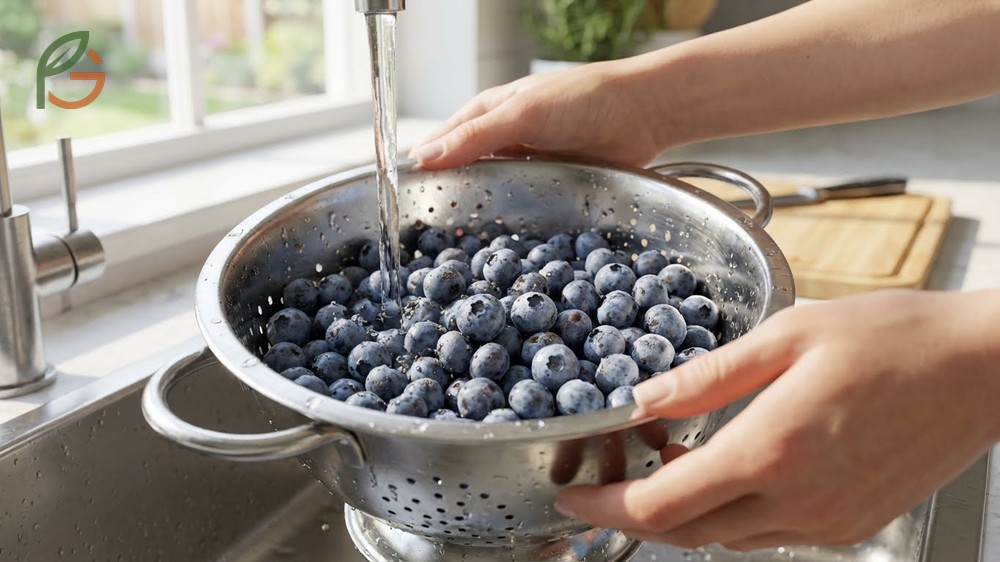
Yes, you should wash organic blueberries even though they contain fewer synthetic pesticides. Evidence suggests that organic produce still carries dirt, bacteria, natural pesticide residues, and potential contaminants from handling and transport[8]. The “organic” label doesn’t mean “pre-washed” or sterile.
Organic farmers can use certain approved pesticides—they’re just derived from natural sources rather than synthetic ones. These natural pesticides still leave residues that you’ll want to remove before eating. A quick rinse with plain water usually suffices for organic berries, though a baking soda soak provides extra assurance.
Bacteria poses a bigger concern with organic produce than pesticides. Blueberries pass through multiple hands during harvesting, sorting, and packing. Current food safety data shows that berry samples collected at packing facilities contain measurable levels of aerobic bacteria, yeast, mold, and coliform bacteria regardless of organic certification[9].
Here’s what makes sense for organic blueberries:
- Rinse under cold running water for 30 seconds if eating immediately
- Use a quick vinegar soak (5 minutes) if you’re concerned about bacteria or want to extend shelf life
- Skip the baking soda unless the berries came from an unknown source or outdoor market
- Always wash if children, elderly, or immunocompromised people will eat them
- Inspect berries first and discard any that show mold, soft spots, or damage
The practical reality is that you can’t know exactly what touched your berries between the field and your kitchen. A 30-second rinse takes minimal effort and removes most surface contaminants, whether the berries are organic or conventional.
Drying Blueberries After Washing
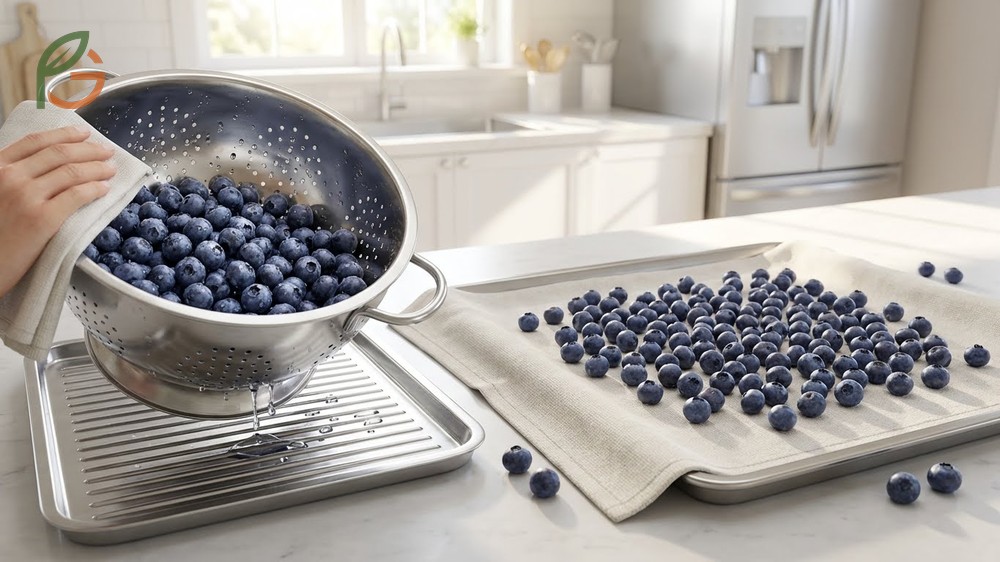
Drying washed blueberries properly makes the difference between berries that last two weeks and berries that mold within days. Any moisture left on the skin creates the perfect environment for mold and bacteria growth, especially in the cold, humid environment of your refrigerator.
The best approach uses a two-step drying method. First, drain the rinsed berries in a colander for 2-3 minutes, shaking gently to remove excess water. Then spread them in a single layer on clean dish towels or several layers of paper towels.
Pat the berries dry rather than rubbing them. Blueberry skin is delicate—aggressive rubbing can break the protective coating and create entry points for spoilage organisms. Gently press down with a towel to absorb surface moisture, then let the berries air dry for 10-15 minutes before storing.
Best Drying Methods
Different situations call for different drying approaches:
- Paper towel method: Spread berries on 3-4 layers of paper towels, pat dry, then let air dry for 10-15 minutes
- Dish towel method: Use clean lint-free kitchen towels (terry cloth works best), spread berries in single layer, pat dry and air dry
- Salad spinner: Works for small batches—spin gently for 10-15 seconds (not longer or you’ll bruise the berries)
- Cooling rack method: Place a cooling rack over a baking sheet, spread berries on rack, let air dry for 20-30 minutes with air circulation underneath
- Fan-assisted drying: Use the cooling rack method with a small fan nearby to speed drying to 10-15 minutes
Drying for Freezing
If you’re washing blueberries before freezing, they need to be absolutely bone-dry. Even the tiniest amount of surface moisture turns into ice crystals that damage cell structure and create mushy berries when thawed.
After washing and initial towel drying, spread berries on a parchment-lined baking sheet in a single layer with space between each berry. Let them air dry at room temperature for 30-45 minutes, turning them once halfway through. When berries feel completely dry to the touch with no tackiness, they’re ready for freezing.
Storage reminder: Washed and dried blueberries last 10-14 days when stored properly in the refrigerator[3]. Line an airtight container with dry paper towels, add berries in a single layer if possible, and store at 32-36°F (0-2°C) for best results.
Conclusion
The evidence is clear: how to wash blueberries properly transforms these nutrient-packed berries from potentially contaminated to safely clean using simple kitchen staples. Baking soda removes up to 100% of pesticide residues in 12-15 minutes, while vinegar kills bacteria and extends shelf life by changing surface pH. Both methods cost pennies and outperform commercial fruit washes.
Current food safety guidance emphasizes that washing blueberries right before eating—not before storage—prevents premature spoilage. Whether you choose vinegar for bacteria control or baking soda for pesticide removal, complete drying remains non-negotiable for maintaining quality. FruitGarden recommends the baking soda method for conventional berries and a quick water rinse for organic varieties, with vinegar reserved for extending shelf life or addressing visible mold concerns.
Frequently Asked Questions
Can you wash blueberries with both vinegar and baking soda at the same time?
No, don’t mix vinegar and baking soda together for washing blueberries. The acid and base neutralize each other in a fizzy reaction that produces carbon dioxide gas and salt water—eliminating the cleaning benefits of both ingredients. If you want the benefits of both methods, wash with baking soda first, rinse thoroughly, then do a separate vinegar wash.
How long can you soak blueberries in baking soda water?
Don’t soak blueberries longer than 15 minutes in baking soda solution. The alkaline solution starts breaking down the protective skin coating after 15 minutes, causing flavor loss and mushiness. Research shows 12-15 minutes provides complete pesticide removal without damaging berry quality.
Does washing blueberries remove all pesticides?
Washing removes surface pesticides but not pesticides absorbed into the fruit. Studies show baking soda solution removes up to 100% of surface residues within 15 minutes. However, systemic pesticides that the plant absorbed during growth remain in the fruit tissue. For maximum pesticide reduction, choose organic berries and wash them with baking soda.
Can you use salt water to wash blueberries instead of vinegar or baking soda?
Yes, salt water works as a basic cleaning method but doesn’t remove pesticides as effectively as baking soda. Mix 1 tablespoon of salt per 4 cups water and soak for 5-10 minutes. Salt water helps remove dirt and some bacteria, but research demonstrates that baking soda outperforms salt for pesticide removal by a significant margin.
Should you wash blueberries before or after freezing?
Always wash blueberries before freezing, never after. Washing frozen berries causes ice crystals to melt unevenly, creating mushy spots and texture damage. Wash berries with your preferred method, dry them completely (30-45 minutes air drying), then freeze in a single layer on a baking sheet before transferring to freezer bags.
Will washing blueberries remove the white coating?
Gentle washing shouldn’t remove the natural white bloom (waxy coating) on blueberries—that coating is part of the fruit’s protective layer. However, aggressive scrubbing or over-soaking can damage it. The bloom helps preserve freshness and doesn’t need to be removed. A light haze that washes off easily is usually residue from handling, not the natural bloom.
How do you remove fruit fly larvae from blueberries?
Soak potentially affected blueberries in salt water (1 tablespoon salt per 4 cups cold water) for 10-15 minutes. Any larvae present will float to the surface where you can skim them off. After the salt soak, rinse berries thoroughly under cold water and follow with a baking soda or vinegar wash for complete cleaning. Discard any berries with visible damage or holes.





