
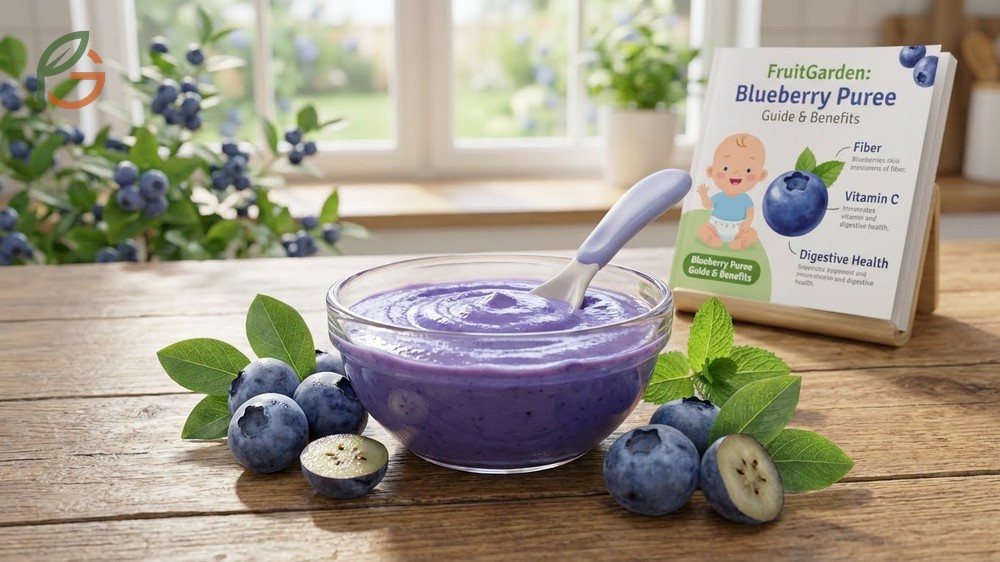
Blueberry puree for baby is a nutrient-packed first food you can introduce at 6 months of age[1][2]. Research shows that blueberries provide 3.6g of fiber and 14.4mg of vitamin C per cup, supporting your baby’s immune system and digestive health[3]. FruitGarden synthesizes current pediatric nutrition research and USDA data to help parents make informed choices about introducing fruits to their babies.
Quick Answer
- Start blueberry puree at 6 months when baby shows signs of solid food readiness[1]
- Steam or simmer fresh or frozen blueberries for 5-10 minutes until soft, then blend smooth[4]
- Store in refrigerator for 48 hours or freeze up to 1-2 months in ice cube trays[5]
- Watch for allergy signs like hives, rash, or vomiting during first 2 hours after feeding[6]
Blueberry Puree for Baby
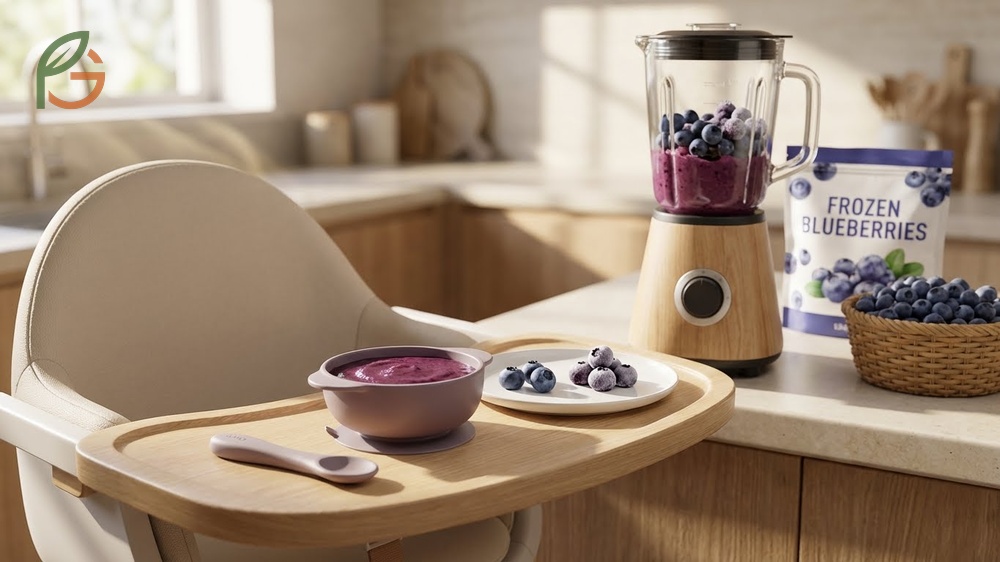
Studies demonstrate that blueberries rank among the best first fruits for babies due to their antioxidant content and low allergy risk[1]. Current pediatric guidance confirms blueberries aren’t classified as common allergens, making them safe to introduce alongside other solid foods. What often gets overlooked is that frozen blueberries work just as well as fresh ones—they’re picked at peak ripeness and retain their nutritional value.
Evidence suggests that introducing diverse fruits early helps develop varied taste preferences in children[2]. You’ll find that blueberries’ natural sweetness doesn’t require added sugar, unlike many store-bought baby foods. This makes them ideal for establishing healthy eating patterns from the start.
When Can Babies Eat Blueberries
Most pediatricians recommend starting blueberry puree at 6 months when your baby shows readiness signs[1]. These signs include sitting up with minimal support, showing interest in food, and losing the tongue-thrust reflex. You shouldn’t introduce blueberries before 6 months because younger babies lack the digestive enzymes needed to process them properly.
Research shows that babies typically can’t manage whole blueberries safely until after 12 months due to choking risk[7]. That’s why pureed form works best for 6-8 month olds. Between 9-12 months, you can progress to mashed or quartered blueberries as your baby develops better chewing skills.
- Can sit upright in a high chair without slumping or needing extra support
- Shows curiosity about food by reaching for your plate or watching you eat
- Opens mouth when food approaches and can move food to the back of the mouth
- Has lost the automatic tongue-thrust reflex that pushes food out
- Can hold head steady and turn away when full or uninterested
Nutritional Benefits
Blueberries pack impressive nutrition into tiny packages—one cup delivers 84 calories, 3.6g fiber, and 14.4mg vitamin C[3]. That’s 15% of your baby’s daily vitamin C needs, which supports iron absorption from other foods. The fiber content helps prevent constipation, a common concern during the transition to solid foods.
Current data indicates that blueberries contain anthocyanins, powerful antioxidants that give them their deep blue color and protect developing cells. They also provide 28.6mcg vitamin K for blood clotting and 0.8mg vitamin E for skin health. You’ll notice that blueberries contain minimal fat (0.5g) and virtually no sodium, making them heart-healthy even at this young age.
Important Note: While blueberries are nutrient-dense, they don’t contain significant iron. You’ll need to pair them with iron-rich foods like meat purees or fortified cereals to meet your baby’s iron requirements for proper brain development.
How to Cook Blueberries for Baby
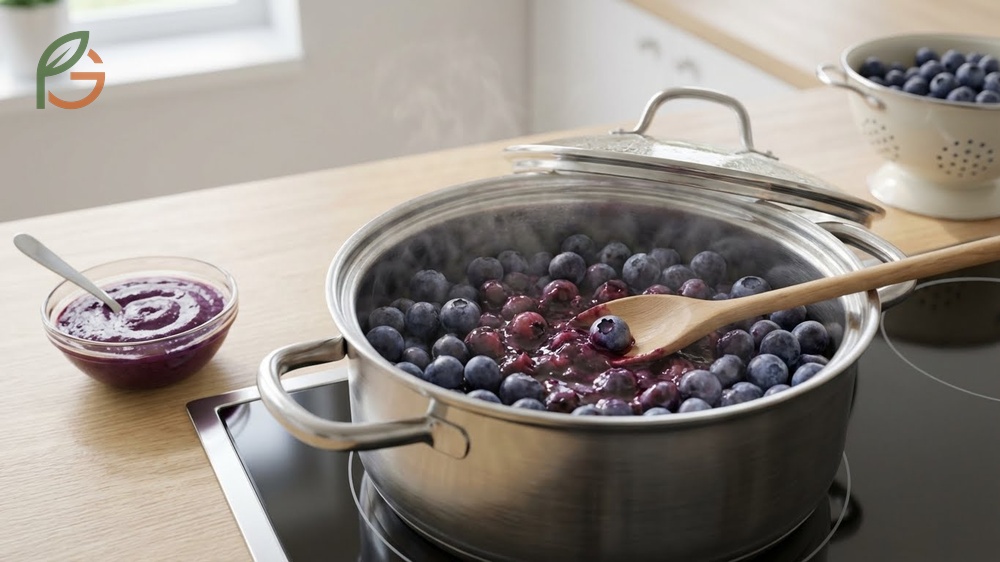
Cooking blueberries softens their skins and makes them easier for babies to digest and puree smoothly. You don’t need fancy equipment—a basic pot or steamer basket works perfectly. Fresh and frozen blueberries both cook the same way, though frozen ones may release more liquid.
The key is achieving the right softness where berries burst easily when pressed with a spoon. This typically takes 5-10 minutes depending on your cooking method[4]. Overcooking won’t hurt nutritionally—vitamin C is the most heat-sensitive nutrient, but blueberries retain enough even after cooking.
Steaming Method
Place 1-2 cups of washed blueberries in a steamer basket over 1-2 inches of boiling water. Cover the pot and steam for 5-7 minutes until the berries soften and their skins start splitting. This method preserves more nutrients than boiling because the berries don’t sit directly in water.
You’ll know they’re ready when most berries have burst and look darker in color. Let them cool for 5 minutes before transferring to your blender. Save any liquid that collects in the steamer—it’s concentrated nutrition you can add back for thinning.
Simmering Method
Add blueberries to a small pot with 1/4 cup water and bring to a gentle boil[4]. Reduce heat to low and simmer uncovered for 8-10 minutes, stirring occasionally. The berries will break down and create their own juice, which becomes part of the puree.
This method works especially well when you’re combining blueberries with apples or pears—just add peeled, chopped fruit to the pot at the same time. The cooking liquid contains water-soluble vitamins, so don’t pour it off. Instead, blend everything together for maximum nutrition.
- Rinse fresh blueberries under cold water and remove any stems or damaged berries
- Don’t add sugar or sweeteners—natural berry sugars provide enough sweetness
- Use organic blueberries when possible to minimize pesticide exposure for your baby
- Cook frozen berries straight from the freezer without thawing first
- Test temperature before serving—puree should feel lukewarm or cool, never hot
How to Make Blueberry Puree for Baby
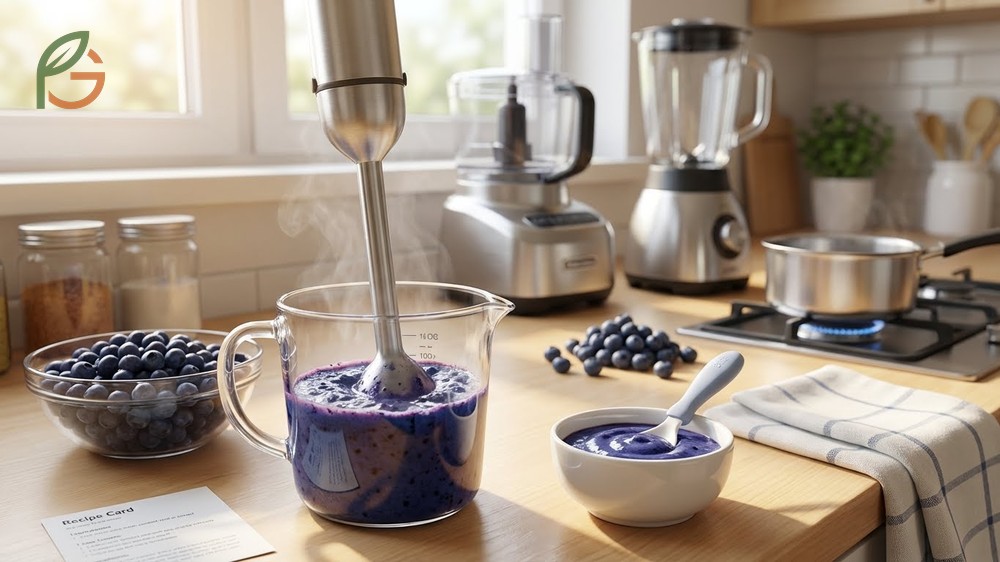
Making smooth blueberry puree requires the right blending technique and consistency adjustments. Standard blenders, food processors, or immersion blenders all work—just choose what you have available. The goal is a completely smooth texture with no lumps that could pose choking risks for young babies.
You’ll get better results if you let cooked blueberries cool slightly before blending—this prevents steam buildup that can splatter. Most parents find that making larger batches and freezing portions saves time throughout the week. One batch typically yields 10-15 servings depending on your baby’s appetite.
Blending Techniques
Transfer cooled, cooked blueberries and their liquid to your blender. Start on low speed for 10-15 seconds to break down the fruit, then increase to high speed for 30-60 seconds until completely smooth. You might need to stop and scrape down the sides once or twice.
For babies just starting solids at 6-7 months, blend for a full minute to achieve ultra-smooth consistency[4]. As your baby gets older and handles thicker textures, you can leave it slightly chunkier. The blueberry skins will break down into tiny flecks—that’s normal and provides extra fiber.
Consistency Adjustments
If your puree turns out too thick, thin it with breast milk, formula, or cooled boiled water one tablespoon at a time. Breast milk or formula adds familiar taste and extra calories, which helps babies who need more nutrition. Water works fine if you’re just adjusting texture without adding richness.
For thicker puree, blend in baby rice cereal or oatmeal—start with 1 teaspoon and add more as needed. This technique works well for older babies around 8-9 months who are ready for more substantial textures. You can also combine blueberries with naturally thick fruits like banana or avocado to add body without cereals.
This table compares appropriate blueberry puree textures, serving sizes, and preparation methods across four age stages from 6 months to 12 plus months
| Age | Texture | Serving Size | Preparation |
|---|---|---|---|
| 6-7 months | Ultra-smooth puree, yogurt-like | 1-2 tablespoons | Blend 60+ seconds until no lumps remain |
| 8-9 months | Slightly thicker, pudding consistency | 2-4 tablespoons | Blend 30-45 seconds, leave some texture |
| 10-12 months | Mashed with soft lumps | 1/4 cup | Mash with fork, quarter whole berries |
| 12+ months | Quartered or halved berries | 1/4-1/2 cup | Cut fresh berries, supervise closely |
Blueberry Baby Food Combinations
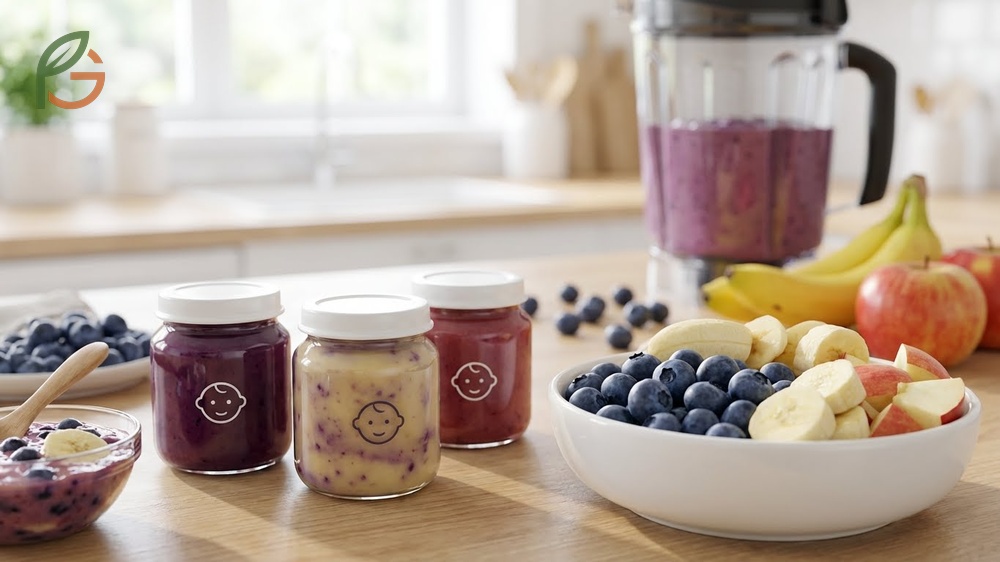
Mixing blueberries with other foods creates variety and balances their tartness with complementary flavors. Banana ranks as the most popular pairing because it adds natural sweetness and creamy texture that babies love[8]. Apples work similarly—their mild flavor doesn’t overpower the blueberries while adding extra fiber.
You can introduce combination purees once your baby has tried each ingredient separately for 3-5 days without reactions. This helps you identify any potential allergies before mixing foods together. Most babies tolerate fruit combinations well, but it’s smart to start with two ingredients before adding a third.
- Blueberry + banana: Blend half a ripe banana with 1/2 cup cooked blueberries for natural sweetness
- Blueberry + apple: Steam peeled apple chunks with blueberries for a classic fruit blend
- Blueberry + oatmeal: Mix blueberry puree into cooked baby oatmeal for iron-fortified breakfast
- Blueberry + yogurt: Stir puree into plain full-fat yogurt for babies 7+ months to add probiotics[8]
- Blueberry + sweet potato: Combine for nutrient-dense puree with vitamin A and antioxidants
- Blueberry + avocado: Mix for healthy fats that support brain development
- Blueberry + pear: Create a gentle combination perfect for babies with sensitive stomachs
Timing Tip: Introduce new food combinations in the morning or early afternoon rather than at dinner. This gives you time to watch for any unexpected reactions before bedtime.
Baby Led Weaning Blueberries
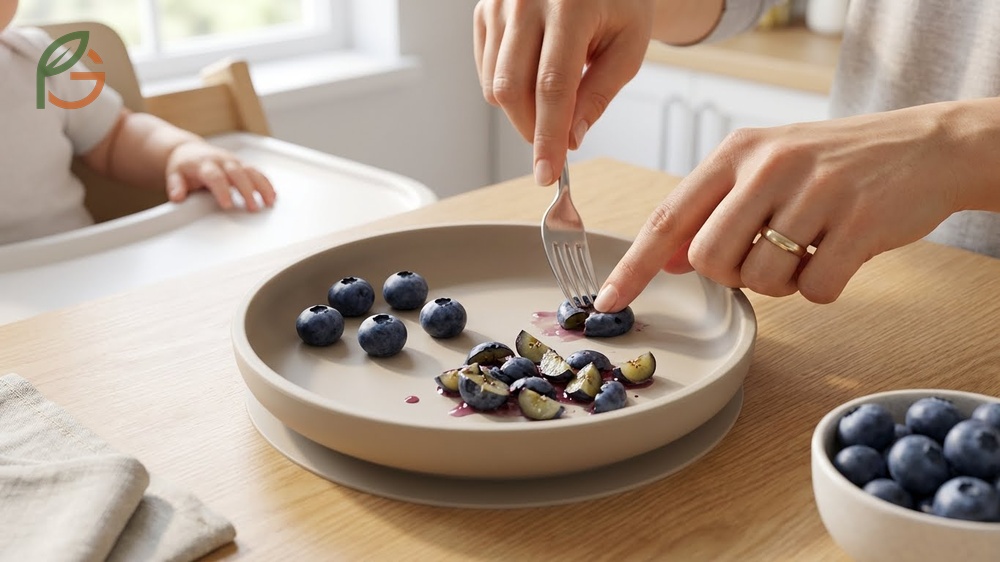
Baby-led weaning with blueberries requires extra preparation because whole berries present choking hazards until after 12 months[7]. Their round, firm shape can block a baby’s airway if swallowed whole. That’s why you’ll need to modify blueberries by flattening or quartering them until your child develops proper chewing skills.
For babies 6-9 months doing baby-led weaning, smash each blueberry between your fingers before offering it. This changes the shape from round to flat, making it safer to handle and eat. Once your baby reaches 9-12 months and demonstrates good chewing, you can serve quartered blueberries cut lengthwise.
The pincer grasp typically develops around 9 months, which is when babies can actually pick up individual blueberries[2]. Before this milestone, you can mix smashed blueberries into yogurt or spread them on toast strips for easier self-feeding. Many parents find that serving blueberries in a bowl with other finger foods encourages exploration.
- Always supervise your baby during meals—never leave them alone with food
- Flatten each berry between your thumb and forefinger before serving to 6-9 month olds
- Quarter blueberries lengthwise for babies 9-12 months who are chewing well
- Avoid giving whole blueberries until after first birthday and ideally until age 4
- Ensure your baby sits upright in a high chair, not reclined or in a car seat
- Learn infant CPR and choking response techniques before starting solids
Signs of Blueberry Allergy in Babies
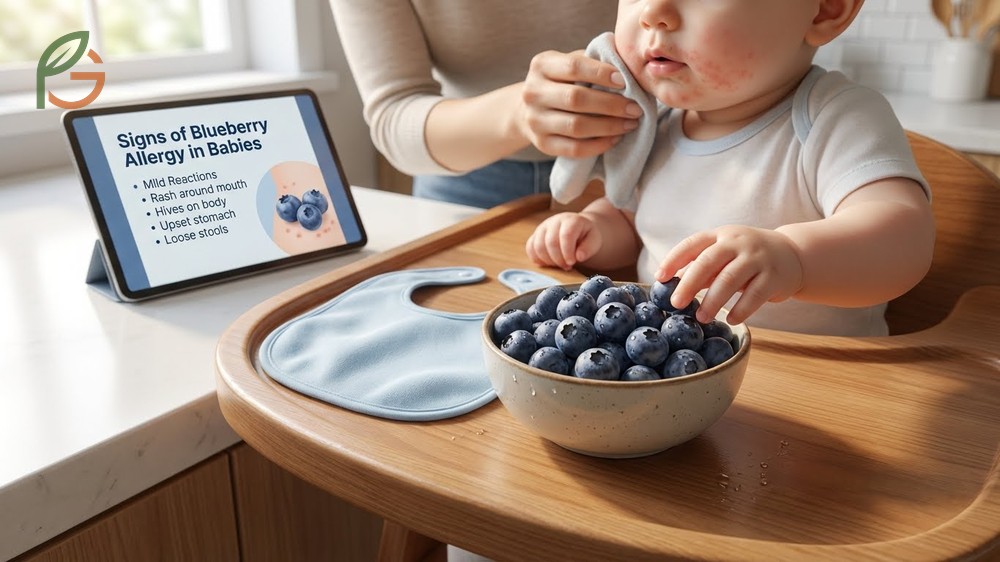
True blueberry allergies remain rare, but reactions can occur due to salicylates—natural compounds found in many fruits[6]. Most reactions appear within minutes to 2 hours after eating and affect the skin, digestive system, or respiratory system. You’ll want to watch your baby closely during their first few exposures to catch any signs early.
Mild reactions include rash around the mouth, hives on the body, upset stomach, or loose stools[6]. These symptoms don’t require emergency care but should prompt you to stop feeding blueberries and consult your pediatrician. More severe reactions—though uncommon—demand immediate medical attention.
Research shows that babies demonstrate allergy symptoms differently than older children[9]. They can’t tell you what’s wrong, so you’re looking for behavioral changes like unusual crying, sudden sleepiness, or wanting to be held constantly. Drooling more than normal or spitting up after feeding can also signal a problem.
- Hives or raised red bumps appearing on skin within 2 hours of eating
- Redness, swelling, or rash around mouth, lips, or face after contact with berries
- Vomiting or diarrhea starting shortly after feeding blueberries
- Persistent sneezing, runny nose, or watery eyes not related to cold symptoms
- Wheezing, coughing, or difficulty breathing requiring immediate emergency care
- Swelling of lips, tongue, or throat making it hard for baby to swallow or breathe
- Unusual fussiness, lethargy, or pale/bluish skin indicating serious reaction
Emergency Warning: If your baby shows breathing difficulties, widespread hives, or sudden weakness after eating blueberries, call 911 immediately. These signs may indicate anaphylaxis, a life-threatening allergic reaction that requires urgent medical treatment.
Storing Homemade Baby Food
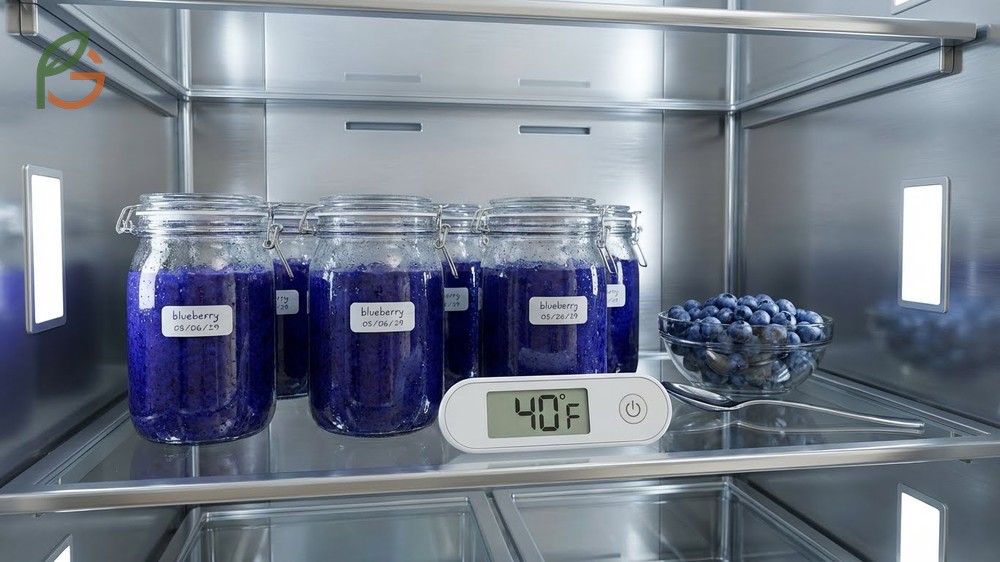
Proper storage keeps your homemade blueberry puree safe and nutritious for days or weeks. Current food safety guidance emphasizes refrigerating baby food within 2 hours of cooking to prevent bacterial growth[10]. Your refrigerator should stay at or below 40°F (4°C) to maintain safety.
Freshly made blueberry puree lasts 48 hours in the refrigerator when stored in airtight containers[5]. After that timeframe, bacteria can multiply even in cold temperatures, making the food unsafe. Label containers with the date so you don’t lose track of how long they’ve been stored.
Freezing extends shelf life dramatically—frozen blueberry puree stays good for 1-2 months[10]. Ice cube trays work perfectly for portioning individual servings. Once frozen solid, pop out the cubes and transfer them to freezer bags to save space.
- Cool puree to room temperature before refrigerating, but don’t leave it out longer than 2 hours
- Use clean, sanitized containers with tight-fitting lids to prevent contamination
- Portion puree into ice cube trays for freezing—each cube equals about 1 ounce
- Thaw frozen puree overnight in the refrigerator, never at room temperature on the counter
- Reheat only the amount you’ll use immediately—don’t refreeze previously thawed food
- Discard any puree your baby’s spoon touched—saliva introduces bacteria that cause spoilage
- Write dates on all containers and use frozen puree within 1-2 months for best quality
Safety Reminder: Never refreeze baby food that’s been thawed. Once you defrost frozen blueberry puree, use it within 48 hours and keep it refrigerated until serving time.
Conclusion
The evidence is clear: blueberry puree for baby offers exceptional nutrition, easy preparation, and low allergy risk starting at 6 months. You can’t go wrong introducing this antioxidant-rich fruit early in your baby’s solid food journey. Current pediatric nutrition data confirms that blueberries support immune function, digestive health, and brain development through their vitamin C, fiber, and antioxidant content.
FruitGarden emphasizes evidence-based feeding practices that help parents navigate the transition to solid foods with confidence. Remember to always supervise meals, watch for allergy signs during first exposures, and modify blueberry textures appropriately for your baby’s developmental stage.
Medical Disclaimer
Important Medical Disclaimer: This content is for informational and educational purposes only. It’s not intended as a substitute for professional medical advice, diagnosis, or treatment. Always consult a qualified pediatrician or healthcare professional before introducing new foods to your baby, especially if your child has existing health conditions, allergies, or developmental concerns. Individual babies may have unique nutritional needs that require personalized medical guidance.
Frequently Asked Questions
Can I give my 4-month-old blueberry puree?
No, you shouldn’t give blueberries to a 4-month-old baby. Current pediatric guidelines recommend waiting until 6 months of age before introducing any solid foods, including blueberry puree. Babies younger than 6 months lack the digestive enzymes needed to properly break down solid foods, and introducing them too early can increase allergy risk.
Do I need to peel blueberries before making baby food?
No, you don’t need to peel blueberries—the skins contain valuable fiber and nutrients. Cooking and blending breaks down the skins into tiny pieces that are safe and easy for babies to digest. The skins will create small flecks in the puree, which is completely normal and beneficial.
Are organic blueberries better for babies?
Organic blueberries are a good choice because they contain no synthetic pesticide residues and often have higher antioxidant levels than conventional berries. However, thoroughly washing conventional blueberries under cold water also removes most surface pesticides. If organic isn’t available or affordable, conventional blueberries still provide excellent nutrition for your baby.
Can I mix blueberry puree with formula or breast milk?
Yes, you can thin blueberry puree with breast milk or formula to achieve your desired consistency. This also adds familiar taste and extra calories, which helps some babies accept new foods more readily. Start with 1-2 tablespoons of liquid and add more as needed until the puree reaches the right texture for your baby’s age.
How much blueberry puree should I give my 6-month-old?
Start with 1-2 tablespoons of blueberry puree for a 6-month-old baby who’s new to solids. You can gradually increase to 2-4 tablespoons as your baby gets older and more comfortable eating. Let your baby’s appetite guide you—they’ll turn away or close their mouth when they’re full.
Can blueberries cause constipation in babies?
No, blueberries typically help prevent constipation rather than cause it because they contain 3.6g of fiber per cup. The fiber promotes healthy digestion and regular bowel movements. If your baby experiences constipation after eating blueberries, it’s likely related to other dietary factors or insufficient fluid intake.
Is it safe to give frozen blueberries to babies?
Frozen blueberries are safe for making baby puree—just cook them first before blending. Never give frozen blueberries directly to babies as finger food because they’re hard and present choking hazards. Frozen berries work just as well as fresh ones for purees and often cost less while maintaining the same nutritional value.





