
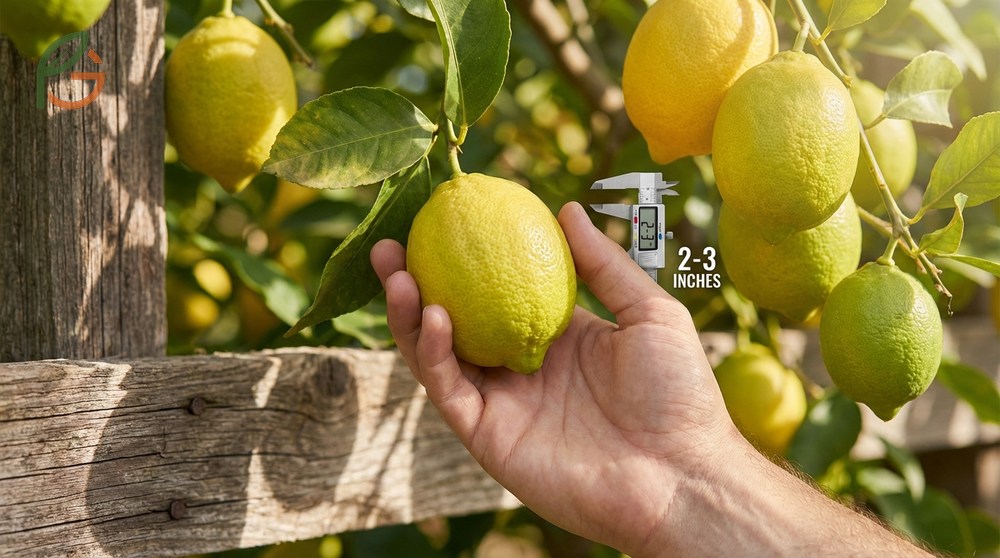
When to harvest lemons? Research shows you should pick them when they’re yellow or yellow-green, measure 2-3 inches in size, and feel firm with slight give[1]. It’s better to harvest early than late—lemons picked slightly greenish-yellow will ripen off the tree, but overripe fruits become squishy and lose flavor[2]. Most people don’t realize that size matters more than color when determining ripeness. FruitGarden synthesizes current horticultural research to help you master the art of lemon harvesting for maximum juice content and flavor.
Quick Answer
When to Harvest Lemons
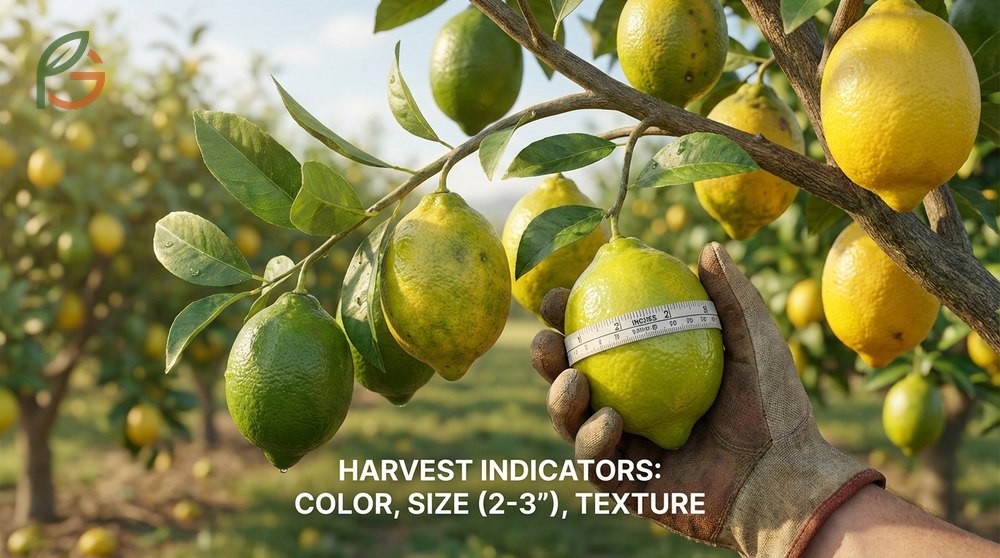
Lemons signal readiness through three primary indicators: color transition from green to yellow, size reaching 2-3 inches (5-7.5 cm), and firm texture with a glossy appearance[1]. You don’t need to wait for complete yellow coloration—greenish-yellow fruits will continue ripening after harvest. Studies demonstrate that size is actually a more reliable indicator than color alone[5].
The key difference between lemons and other citrus is their extended harvest window. Unlike oranges that must ripen on the tree, lemons can finish maturing indoors if picked at the right stage. This flexibility gives you more control over harvest timing without sacrificing juice quality or flavor.
From My Experience: My cousin in Guadalajara, Mexico grows Meyer lemons in containers and noticed that fruits picked at the yellow-green stage in February took 7-10 days to reach full yellow indoors, matching the typical ripening timeline from research.
Timing matters because lemons left on the tree too long develop thick, puffy rinds with less juice content. The optimal harvest window balances sugar development with juice yield. Professional growers check their trees every 7-10 days during peak season to catch fruits at their prime.
Optimal Harvest Season by Variety
Meyer lemons typically ripen between November and March, requiring approximately 6 months from bloom to harvest[3]. These sweeter lemons show a deep yellow to orange tint when ready. Eureka and Lisbon varieties can produce year-round in coastal climates like California, though they peak in winter months.
In California’s Central Valley (District 1), commercial harvest runs October through June. Coastal regions (District 2) allow year-round picking, while desert areas (District 3) harvest from August to January. This variation depends on temperature patterns and bloom cycles specific to each microclimate.
Maturation Timeline
From the time a small green lemon appears, expect several months of growth before harvest. Meyer lemons need 6 months minimum, while Eureka lemons can take 4-7 months depending on conditions. You’ll see fruits progress through distinct stages: tiny green buds, lime-sized green fruits, transitional yellow-green phase, and finally full yellow maturity.
A properly cared-for potted lemon tree produces up to 50 pounds annually, while ground-planted trees yield 50-120 pounds per year[2]. Trees begin fruiting in their second year and reach substantial production by year three. This productivity means you’ll be checking for ripeness frequently once your tree matures.
Ripe Lemon Indicators
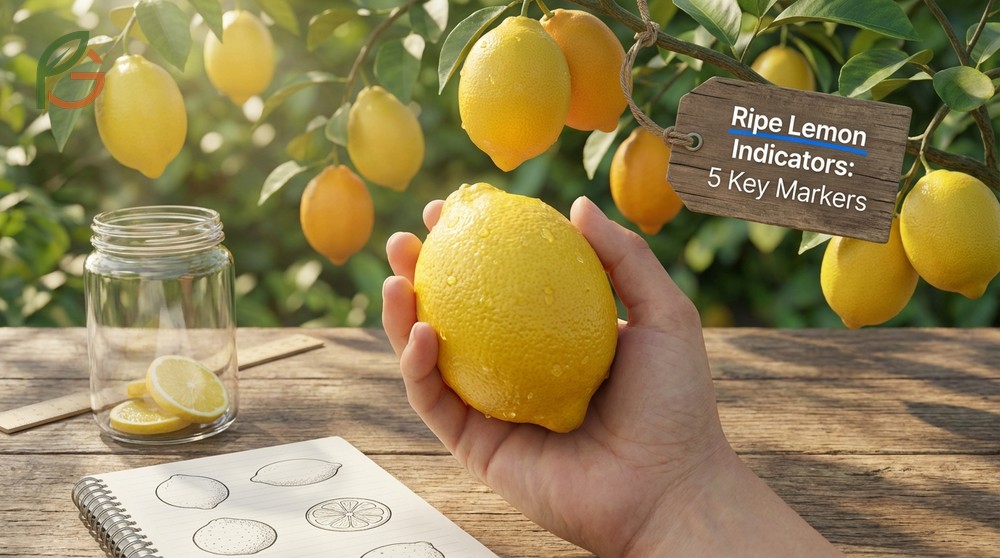
Current horticultural guidance identifies five key ripeness markers that work together to signal harvest readiness. You can’t rely on just one indicator—combine multiple signals for accurate assessment. Most backyard growers make the mistake of focusing only on color, missing critical texture and size cues.
Ripe lemons demonstrate consistent characteristics across varieties, though Meyer lemons show slightly different coloration than standard types. Understanding these differences prevents premature or delayed harvesting that impacts fruit quality.
Color Changes to Watch For
Watch for the transition from deep green to bright yellow, which indicates chlorophyll breakdown and sugar accumulation. A uniformly yellow lemon with minimal green patches signals readiness in most varieties[6]. Meyer lemons develop an orange-yellow hue, while Eureka and Lisbon show pure bright yellow.
Don’t confuse lemons with limes—both fruits can appear greenish during development. Lemons will always trend toward yellow as they mature, whereas limes remain green or turn yellow only when overripe. The glossy appearance of the rind is another visual cue that indicates adequate moisture content and readiness.
- Bright yellow color covering at least 80% of the fruit surface
- Glossy, smooth rind texture without excessive wrinkling or dullness
- Meyer lemons show deep yellow to orange coloration when fully ripe
- Slight green tinge at the stem end is acceptable for early picking
- Avoid fruits with brown spots, which indicate overripeness or disease
Size and Weight
Size trumps color as a ripeness indicator—a fully yellow lemon that’s still small isn’t ready[5]. Standard lemons reach 2-3 inches (5-7.5 cm) in diameter when mature. Meyer lemons are slightly smaller and rounder, typically measuring 2-2.5 inches across. The fruit should feel heavy for its size, indicating high juice content.
Weight density provides a reliable ripeness check. Pick up the lemon—it should feel substantial and dense, not light or hollow. Light weight suggests the fruit is drying out or hasn’t developed adequate juice. This heaviness comes from the juice-filled segments inside the rind.
Texture Assessment
Gently squeeze the lemon to assess firmness. You’re looking for a firm texture with slight give, similar to a ripe avocado[6]. Rock-hard fruits need more time, while squishy lemons have passed their peak. The rind should yield slightly under gentle pressure without feeling soft or creating indentations that remain.
Wrinkled, dull skin signals overripeness—the fruit is losing moisture and juice quality declines rapidly at this stage. If you notice soft spots or areas that dent easily, the lemon is deteriorating internally. It’s better to pick a lemon one week early than one day too late.
Important Tip: Never tug or pull lemons off the branch. This can damage the tree and create entry points for pests and diseases. Always use the twist method or pruning shears to harvest.
Picking Lemons Guide
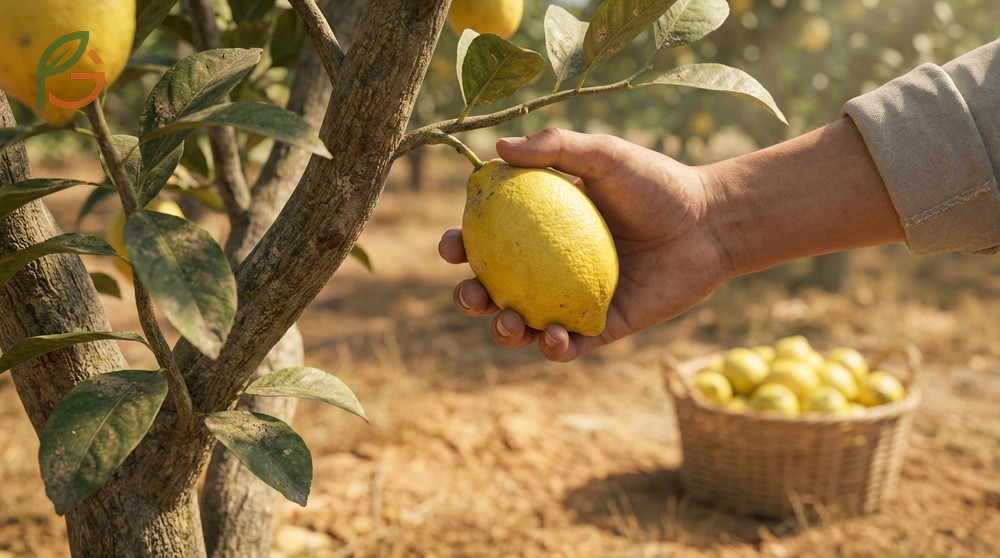
Proper harvesting technique protects both fruit quality and tree health. Research shows that hand-picking using the twist method causes less branch damage than pulling or cutting[4]. Commercial growers use specialized equipment for large-scale operations, but backyard gardeners get better results with careful hand-harvesting. My friend in Oaxaca, Mexico discovered this after comparing twist-picked lemons (which stored for 3 weeks) versus pulled fruits (which lasted only 10 days).
The way you remove fruit from the tree affects storage life and overall plant vigor. Torn branches become susceptible to cold damage and fungal infections. Taking an extra 10 seconds per lemon to harvest correctly saves hours of tree maintenance later.
Hand Harvesting Technique
Grasp the lemon with the stem pointing upward away from your thumb. Give a gentle twist while supporting the branch with your other hand—the fruit should release cleanly from the stem. This twisting motion separates the fruit at the natural abscission layer without tearing branch tissue.
If a lemon doesn’t release easily after one or two twists, it’s not quite ready to harvest. Don’t force it—come back in 3-5 days and check again. Forced picking damages the stem end, creating an entry point for bacteria and reducing storage life.
- Grasp the fruit firmly with stem end facing upward in your palm
- Support the branch behind the fruit with your other hand
- Twist gently 90-180 degrees until the fruit separates cleanly
- Place harvested lemons carefully in a basket—don’t toss them
- Work from outside branches toward the center to avoid thorns
- Harvest during morning hours after dew dries but before heat peaks
Tools and Safety
Wear thick gloves and long sleeves when harvesting—lemon trees have thorns up to 1 inch long that can cause painful puncture wounds[4]. A wide-brimmed hat protects your head from overhead thorns. Bring a large basket or bucket, as you’ll likely harvest more than you expect once you start picking.
Small pruning shears offer an alternative to hand-twisting, especially for fruits on thin branches. Cut the stem just above the fruit, leaving a small stub. This method works well for hard-to-reach lemons or when you’re dealing with particularly thorny varieties like Lisbon.
Safety Warning: Lemon tree thorns can harbor bacteria that cause infections. Clean any puncture wounds immediately with soap and water, and apply antibiotic ointment. Seek medical attention if redness or swelling develops.
Lemon Harvest Timing
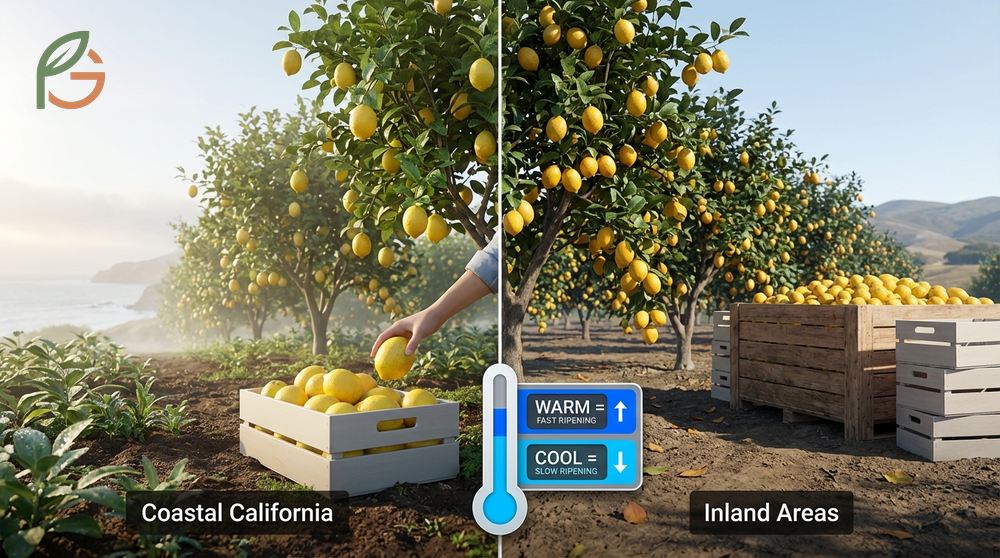
Harvest timing varies significantly by geographic region and climate zone. Coastal California growers can pick year-round due to mild winters, while inland areas concentrate harvest in fall and winter months. Understanding your local climate patterns helps you predict when your specific tree will produce ripe fruit.
Temperature influences ripening speed—warm weather accelerates maturation while cool periods slow it down. This means the same variety planted in different locations can have harvest windows that differ by 4-6 weeks. Track your tree’s bloom dates to estimate harvest timing for the following season.
Regional Harvest Differences
California’s coastal regions maintain temperatures that support continuous lemon production throughout the year. The Central Valley experiences defined harvest seasons from October to June due to winter cold that pauses growth. Desert regions harvest primarily August through January, taking advantage of winter fruit development before extreme summer heat arrives.
Florida and Texas lemon growers also see year-round production in southern coastal zones. Northern regions in these states follow more traditional seasonal patterns. Your USDA hardiness zone determines whether you’ll have continuous or seasonal harvest—zones 9-11 typically support year-round production.
| Variety | Peak Harvest Season | Fruit Size | Key Characteristics |
|---|---|---|---|
| Meyer | November – March[3] | 2-2.5 inches | Sweeter flavor, orange-yellow color, round shape |
| Eureka | Year-round (coastal areas) | 2-3 inches | Classic lemon flavor, fewer thorns, consistent producer |
| Lisbon | Winter (main crop) | 2-3 inches | Very thorny, cold-hardy, dense foliage, high juice content |
Storage After Picking
Freshly harvested lemons last about one week at room temperature on the countertop. Refrigeration doubles their lifespan to approximately two weeks before moisture loss begins[7]. Store them in the crisper drawer or in airtight plastic bags to maintain humidity. Cut lemons wrapped in plastic wrap will keep 3-4 days in the refrigerator.
Here’s something most people don’t know: lemons actually last longer on the tree than off it. If you’re not ready to use harvested lemons immediately, consider leaving some fruit on the tree and picking as needed. The tree acts as natural cold storage, maintaining fruit quality for several weeks beyond initial ripeness.
- Store whole lemons in refrigerator crisper drawer for maximum 2-week freshness
- Keep lemons in airtight bags to prevent moisture loss and maintain firmness
- Room temperature storage works for 1 week if you use lemons quickly
- Freeze whole lemons for long-term storage if you primarily need zest
- Wrap cut lemons tightly in plastic wrap and refrigerate for 3-4 days maximum
- Don’t wash lemons before storage—moisture promotes mold growth
Conclusion
The evidence is clear: successful lemon harvesting relies on checking size, color, and firmness together rather than trusting any single indicator. When to harvest lemons comes down to catching that sweet spot when fruits reach 2-3 inches, show yellow coloration, and feel firm with slight give. Agricultural research confirms that early picking beats late harvesting every time—slightly green lemons will ripen indoors, but overripe fruits can’t recover lost quality.
Current guidance from university extension programs emphasizes the twist method for hand-harvesting and proper storage techniques to maximize fruit lifespan. FruitGarden continues to synthesize the latest horticultural research to help home growers achieve professional-quality results with their citrus trees.
Frequently Asked Questions
How do you know when lemons are ready to pick?
Lemons are ready when they’re yellow or yellow-green, measure 2-3 inches in diameter, and feel firm with slight give when gently squeezed. The rind should have a glossy appearance without wrinkles. Size is more important than complete yellow coloration—greenish-yellow lemons will continue ripening after harvest.
Can you pick lemons when they’re still green?
You can pick lemons when they’re greenish-yellow and have reached full size, but completely green lemons won’t ripen properly off the tree. Wait until at least 50% of the rind shows yellow coloration. Fully green lemons lack adequate sugar development and will remain sour even with extended storage.
What month do you harvest lemons?
Meyer lemons harvest November through March, while Eureka and Lisbon varieties can produce year-round in coastal climates. California’s Central Valley harvests October to June, coastal areas pick year-round, and desert regions harvest August through January. Your specific harvest month depends on variety, climate zone, and bloom timing.
Will lemons ripen if picked too early?
Lemons picked at the yellow-green stage will continue ripening indoors and develop full color within 7-10 days. However, completely green lemons picked too early won’t ripen properly and will remain excessively sour. The fruit must reach minimum size and show some yellow coloration before harvest for successful ripening.
How long can lemons stay on the tree after ripening?
Lemons can remain on the tree for several weeks after reaching ripeness without significant quality loss. The tree acts as natural storage, maintaining fruit freshness longer than refrigeration. However, extended time on the tree eventually causes thick, puffy rinds with reduced juice content. Pick within 2-3 weeks of initial ripeness for optimal quality.
What’s the best way to pick lemons without damaging the tree?
Use the twist method: grasp the lemon with the stem pointing upward, support the branch with your other hand, and gently twist 90-180 degrees until the fruit releases. This technique prevents branch damage and disease entry points. Wear thick gloves to protect against thorns, and never pull or yank lemons off the tree.
How do you store lemons after picking?
Store whole lemons in the refrigerator crisper drawer for up to 2 weeks, or keep them at room temperature for about 1 week. Place them in airtight plastic bags to prevent moisture loss. Don’t wash lemons before storage, as excess moisture promotes mold growth. Cut lemons wrapped in plastic wrap last 3-4 days refrigerated.





