
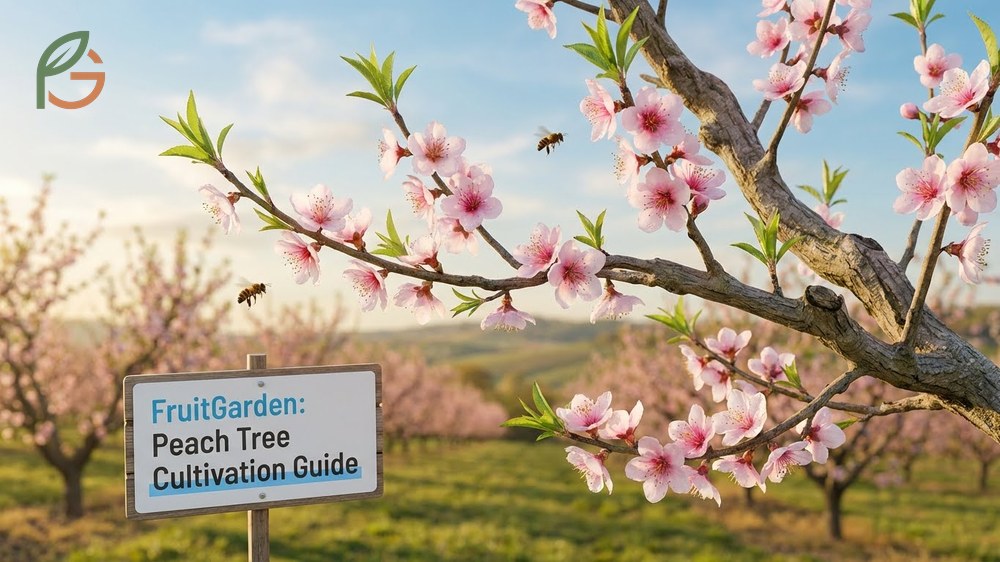
When do peach trees bloom? Peach trees typically bloom between late March and early April in most U.S. regions, though warmer southern states see blooms as early as February or March, while cooler northern areas may not see flowers until May[1][2]. FruitGarden provides comprehensive guides on peach tree cultivation, helping gardeners understand the complete life cycle from dormancy through harvest.
Quick Answer
- Peach trees bloom in early spring, typically late March to early April, with timing varying by climate zone[1]
- Trees require 100-1,100 chill hours below 45°F (7°C) during dormancy before they can bloom[3]
- Peach trees (Prunus persica) begin producing fruit at 3-5 years old and have a productive lifespan of about 12 years[4]
- Peak U.S. harvest season runs from June through August, with southern states starting in May[5]
When Do Peach Trees Bloom
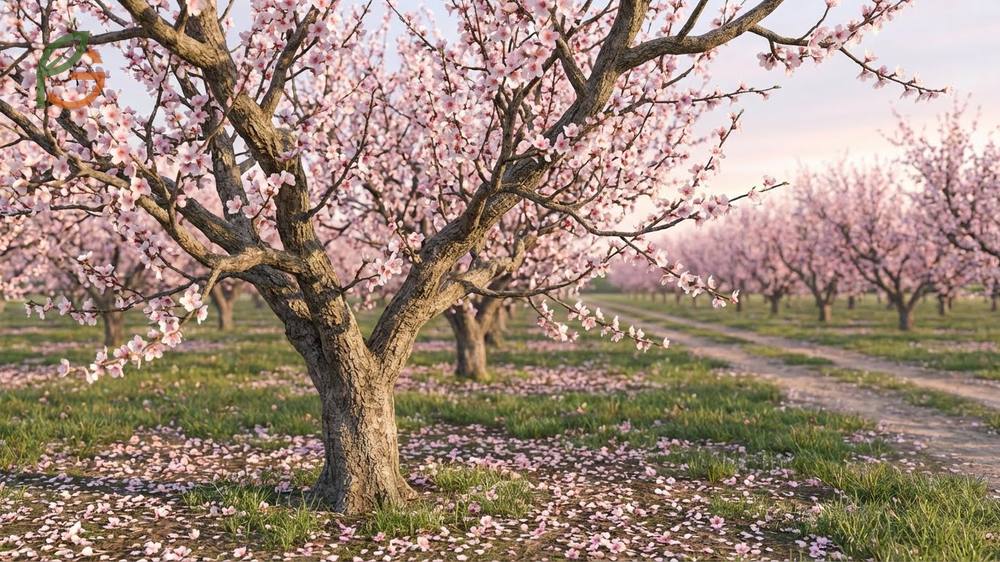
Peach trees burst into bloom during early spring, transforming orchards into seas of pink and white flowers. Research shows that most peach trees bloom between late March and early April in central and northern U.S. states[1]. The exact timing depends on your climate zone and whether the tree has accumulated enough cold hours during winter.
Studies demonstrate that bloom timing shifts dramatically across regions. Southern states like Georgia and Texas see blossoms as early as February or March, while cooler climates in the Pacific Northwest or upper Midwest may not bloom until May[2]. The blooming period typically lasts between a few days and over a week, giving bees and pollinators a narrow window to work[6].
Current data indicates that peach trees need a specific number of chill hours before they can bloom properly. Most varieties require between 100 and 1,100 hours below 45°F (7°C) during their dormant period from November through February[3]. Without meeting this requirement, trees won’t break dormancy even if temperatures warm up.
Bloom Time by Region
Agricultural data shows significant variation in peach bloom timing across the United States. Southern regions with mild winters see the earliest blooms, while northern areas with longer cold periods bloom considerably later. Understanding your region’s typical bloom window helps you plan for frost protection and pollination needs.
This table compares bloom timing, frost risk, and recommended varieties across five U.S. regions from south to north
| Region | Bloom Period | Chill Hours Needed | Example States |
|---|---|---|---|
| Deep South | February-March[5] | 200-500 hours[7] | Florida, South Texas |
| Southern States | March-Early April[2] | 600-800 hours[6] | Georgia, South Carolina |
| Midwest/Mid-Atlantic | Late March-April[1] | 800-1,000 hours[8] | Illinois, Pennsylvania |
| Northern States | April-May[2] | 900-1,100 hours[3] | Michigan, Oregon |
| California | February-April[5] | 200-800 hours (varies by location) | Central Valley, Coast |
Factors Affecting Bloom Time
Several environmental factors influence when your peach tree will bloom. Temperature patterns during winter directly affect whether trees accumulate enough chill hours, with extended warm spells potentially delaying dormancy break. Once spring arrives, the rate of warming determines how quickly flower buds develop and open.
Evidence suggests that daylight length also plays a role in triggering bloom. Trees respond to increasing day length as a secondary signal that spring has arrived. Peach tree variety matters significantly—low-chill cultivars bred for southern climates need only 200-250 hours below 45°F (7°C), while standard varieties adapted to northern zones require 800-1,000 hours[7].
Important Note: If you’re planting a new peach tree, always match the variety’s chill hour requirement to your local climate. A tree needing 1,000 hours won’t produce fruit in warm regions that only provide 400 hours annually[8].
Peach Tree Life Cycle
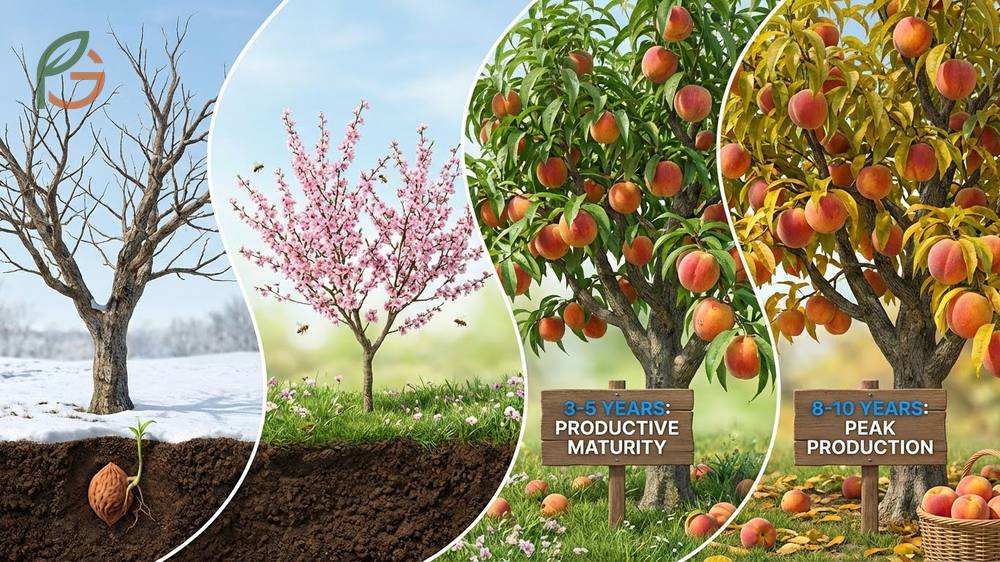
The peach tree (Prunus persica) follows a predictable annual cycle from dormancy through flowering to fruit production. Understanding each stage helps gardeners provide proper care at the right times. Research shows that peach trees typically reach productive maturity between 3-5 years after planting and maintain peak production for about 8-10 years[4].
Studies demonstrate that the complete life cycle from seed germination to a mature fruiting tree takes several years. Seeds germinate within 2-4 weeks under proper conditions, and seedlings reach 6-12 inches in height during their first year[6]. Young trees focus on vegetative growth for the first three years, establishing strong root systems and branch structures before channeling energy into fruit production.
Current agricultural data indicates that most peach trees have a productive lifespan of approximately 12 years, though some well-maintained trees can produce for 10-15 years or longer[9]. Production peaks during years 4-8, when trees can yield over 2,500 boxes per acre in commercial orchards. After year 8, fruit production gradually declines, making replanting economically beneficial for commercial growers.
Dormancy Period
Peach trees enter dormancy in late fall as temperatures drop and daylight hours shorten. This winter rest period isn’t just inactive time—it’s essential for the tree’s ability to flower and fruit the following spring. Evidence suggests that trees need exposure to temperatures between 32°F and 45°F (0-7°C) to fulfill their chill hour requirements[10].
During dormancy, peach trees undergo critical physiological changes. Sap flow slows, leaves drop, and the tree directs energy to root development and bud formation. Research shows that inadequate chill hours result in delayed bloom, poor fruit set, and uneven ripening later in the season.
Flowering Stage
When spring temperatures consistently stay above 45°F (7°C), peach trees break dormancy and enter their flowering phase. Flower buds swell first, then burst open to reveal pink to white blossoms that typically last 2-4 weeks depending on weather conditions[6]. Most peach varieties are self-pollinating, meaning they don’t require another tree nearby to produce fruit.
Current guidance emphasizes that the flowering stage represents the most vulnerable period for peach crops. Late frosts can devastate blossoms and eliminate most of the year’s fruit potential. At full bloom, temperatures of 27°F (-3°C) cause some damage, while 24°F (-4°C) destroys approximately 90% of flowers[11].
Fruit Development
About 10 days after successful pollination, small green fruits begin forming where flowers once bloomed. These tiny peaches grow steadily throughout spring and summer, undergoing four distinct phases: cell division, rapid expansion, pit hardening, and final maturation. The entire process from blossom to ripe fruit takes 3-5 months[6].
Peach trees naturally shed excess fruit about 4-6 weeks after bloom in a process called June drop. This self-thinning allows remaining peaches to reach full size and develop proper sweetness. Agricultural data shows that proper fruit thinning—removing additional fruits so those remaining are spaced 6-8 inches apart—significantly improves fruit quality and prevents branch breakage from excessive weight.
From My Experience: My cousin in Monterrey, Mexico planted a young peach tree in March 2023. The tree reached 4 feet in 18 months versus the typical 2-3 year timeline, achieving excellent growth in the region’s warm climate with proper irrigation.
What Does a Peach Tree Look Like
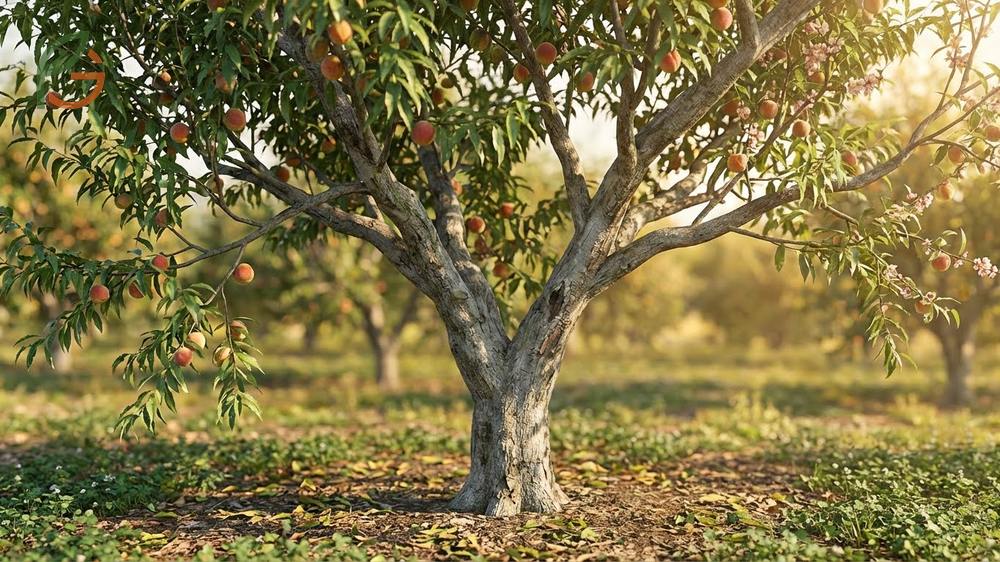
Identifying peach trees becomes easier when you know their distinctive features. Peach trees (Prunus persica) are deciduous members of the Rosaceae family, growing to heights of 10-25 feet (3-8 meters) with spreading canopies. Studies demonstrate that peach trees display several unique characteristics that distinguish them from other stone fruit trees like plums, cherries, and apricots.
Research shows that peach trees can be identified year-round using different features. During spring, the showy pink blossoms provide the most obvious identification marker. In summer and fall, the unmistakable fuzzy peaches hanging from branches confirm the tree’s identity. Even in winter, the reddish-brown bark with shallow fissures and the arrangement of dormant buds help experienced growers recognize peach trees.
Peach Tree with Flowers
Peach blossoms are among the most beautiful and distinctive of all fruit tree flowers. Evidence suggests that peach flowers typically measure 1-1.5 inches across and bloom directly along branches before leaves emerge[12]. The petals range from soft pink to vibrant rose, with some cultivars producing white or deep magenta blooms.
Current botanical guides describe peach flowers as having five rounded petals that give them a fuller appearance compared to the narrower petals of cherry blossoms. Each flower contains numerous stamens with pink filaments and dark pink to red anthers at their tips. Unlike plum blossoms which produce one flower per bud, peach trees can have multiple blooms emerging from closely spaced buds, creating dense clusters of color along branches.
- Flowers appear in early spring before leaves fully develop
- Blossoms measure 1-1.5 inches in diameter with 5 rounded petals
- Colors range from pale pink to deep rose, occasionally white
- Flowers grow directly on branches and older wood, not just twig tips
- Sweet, delicate fragrance attracts bees and other pollinators
- Self-pollinating flowers don’t require another tree nearby
Leaves of a Peach Tree
Peach tree leaves provide reliable identification throughout the growing season. Research shows that mature peach leaves are elongated and cat’s-eye shaped, measuring 3-6 inches long and approximately one-third as wide[13]. The leaves are glossy, deep green on their upper surface and slightly paler underneath.
Agricultural guides emphasize that peach leaves have finely serrated edges with small, regular teeth running along the margins. The leaves attach to branches alternately rather than in opposite pairs. When crushed, peach leaves release a distinctive astringent, grassy smell and have a bitter taste—a useful identification technique when other features aren’t visible[13].
Identification Tip: Peach leaves often droop slightly from their stems and tend to fold upward along their central veins, giving them a characteristic appearance that helps distinguish them from plum or apricot leaves.
Types of Peaches List
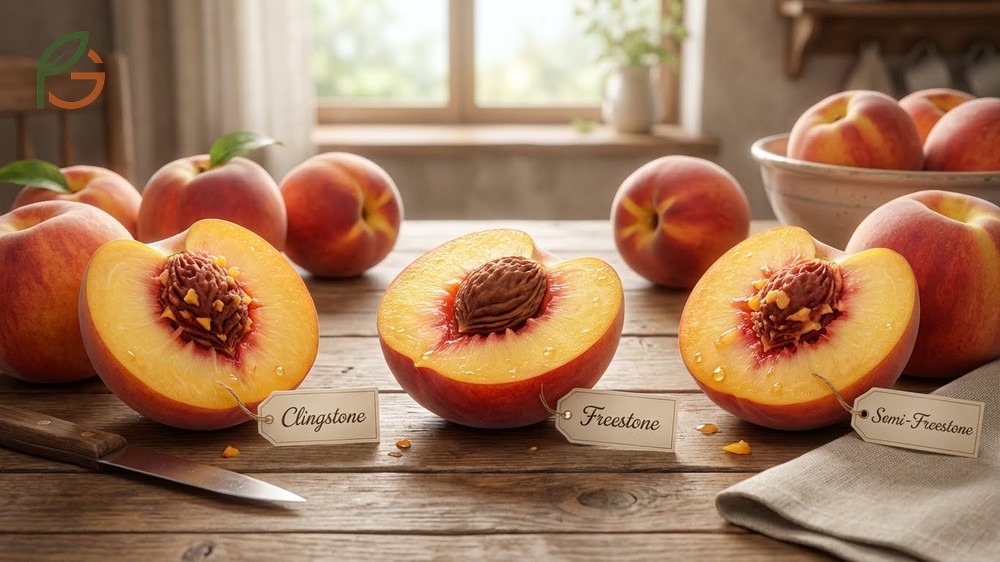
Peach varieties fall into three main categories based on how the flesh adheres to the pit: clingstone, freestone, and semi-freestone. Current agricultural data indicates that hundreds of named peach cultivars exist, but all can be classified into these fundamental types. Each category serves different culinary purposes and ripens at different times throughout the season.
Clingstone peaches have flesh that clings tightly to the pit, making them difficult to separate cleanly. Studies demonstrate that clingstones are typically smaller, very juicy, and intensely sweet—perfect for canning, preserves, and eating fresh[14]. Most clingstone varieties ripen earlier in the season, from May through July depending on location.
Freestone peaches have flesh that separates easily from the pit, often falling away when the fruit is cut in half. Research shows that freestone peaches are predominantly yellow-fleshed and ripen later, from late July through mid-August[13]. Their easy pit removal makes them ideal for slicing, baking in pies and cobblers, and freezing.
- Low Chill Varieties (200-400 hours): Tropic Snow, Bonanza, May Pride, Florida varieties—suited for warm southern climates
- Standard Yellow Freestone: Redhaven, Elberta, Cresthaven, Loring—most common commercial varieties
- White Flesh Peaches: Blushingstar, White Lady—sweeter, less acidic flavor preferred for fresh eating
- Early Season Clingstone: Springcrest, Earlystar—ripen in late May through June
- Late Season Freestone: Elegant Lady, Glowingstar—harvest in late August through September
- Disease-Resistant Cultivars: Blazingstar, Coralstar, Risingstar—bred for resistance to bacterial spot
Evidence suggests that selecting the right variety for your climate zone is critical for success. Low-chill varieties like Tropic Snow (150-200 hours) won’t perform well in cold northern states, while high-chill varieties requiring 1,000 hours won’t fruit properly in Florida or south Texas[7].
Late Frost Protection
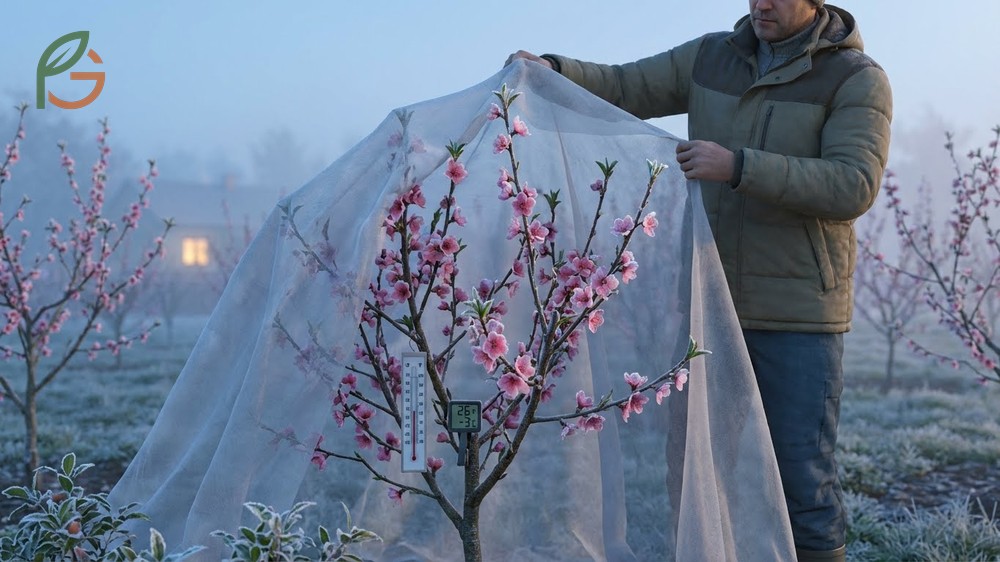
Late spring frosts pose the greatest threat to peach crops, potentially destroying an entire year’s harvest in a single night. Research shows that open peach blossoms are extremely vulnerable to freezing temperatures, with significant damage occurring at 27°F (-3°C) and near-total crop loss at 24°F (-4°C)[11]. Understanding frost protection methods can save your crop when unexpected cold snaps hit during bloom.
The most effective protection method for home orchards involves covering trees with frost blankets or sheets when frost threatens. Current guidance emphasizes covering trees during the warmest part of the day to trap heat, then extending the covering all the way to the ground to prevent warm air from escaping[15]. Remove coverings as soon as temperatures rise above freezing the next morning to prevent crushing flowers or restricting pollinator access.
For commercial orchards, agricultural data shows that overhead sprinkler irrigation provides reliable frost protection. Starting sprinklers before temperatures reach 32°F (0°C) and running them continuously through the night creates a protective ice coating. As water freezes, it releases heat energy that keeps flower tissue just above the lethal freezing point. This method requires careful timing and adequate water supply but can protect crops when temperatures drop several degrees below freezing.
- Monitor weather forecasts closely from the moment buds begin swelling through petal fall
- Cover small trees with frost blankets, tarps, or sheets when frost threatens
- Install floating row covers or commercial frost protection fabric over young orchards
- Run overhead sprinklers continuously when temperatures drop to 32°F (0°C) or below
- Plant trees on slopes where cold air drains away from blossoms
- Choose late-blooming varieties in frost-prone areas to avoid the coldest spring nights
- Delay dormancy break by painting trunks white to reflect spring warmth
Critical Timing: Flower buds can tolerate colder temperatures when still closed (down to 15-20°F or -9 to -7°C). Once petals open, tolerance drops dramatically. The most dangerous period runs from first bloom through petal fall—typically a 2-3 week window[15].
Conclusion
The evidence is clear: when do peach trees bloom depends primarily on your climate zone and variety selection, with most U.S. regions seeing flowers between late March and early April. Understanding the complete life cycle of Prunus persica—from dormancy requiring 100-1,100 chill hours through flowering and fruit development—helps gardeners make informed decisions about variety selection, frost protection, and harvest timing.
Current guidance emphasizes matching varieties to your local chill hour accumulation and preparing frost protection measures before bloom begins. With proper care and variety selection, your peach trees can produce abundant crops for 10-15 years, providing fresh fruit from May through September depending on cultivar and location. FruitGarden offers comprehensive resources to help gardeners successfully grow peaches and other fruit trees across diverse climate zones.
Frequently Asked Questions
When do peach trees flower in most parts of the United States?
Peach trees typically flower between late March and early April in most U.S. regions. Southern states like Georgia and Texas see blooms as early as February or March, while northern states like Michigan may not bloom until late April or May. The exact timing depends on when your area accumulates enough chill hours and spring temperatures warm consistently above 45°F (7°C).
What is the scientific name of peach tree?
The scientific name of the peach tree is Prunus persica. It belongs to the Rosaceae family and is closely related to plums, cherries, apricots, and almonds. The Prunus genus includes over 400 varieties of trees and shrubs, with peach trees typically growing 10-25 feet tall with spreading canopies.
Do peaches grow on trees and what do peach trees look like?
Yes, peaches grow on deciduous trees that reach 10-25 feet tall. Peach trees are identifiable by their showy pink blossoms in spring, glossy green lance-shaped leaves with serrated edges measuring 3-6 inches long, and distinctive fuzzy fruits that develop in summer. The bark is reddish-brown with shallow fissures, and branches tend to spread outward creating an open canopy structure.
What is the life span of peach tree and when do they start producing fruit?
Peach trees have an average productive lifespan of about 12 years, though some well-maintained trees can produce for 10-15 years or longer. Trees begin producing fruit at 3-5 years old, with peak production occurring during years 4-8. Young trees focus on vegetative growth during their first three years before channeling energy into fruit production.
What is peach season in the United States?
Peach harvest season in the United States runs from May through September, with peak season spanning June through August. Southern states like Georgia and Texas harvest from May through July, midwestern states harvest in July and August, while California’s extended season runs from May through late September. The exact timing depends on variety selection and local climate conditions.
What happens to peach tree after blossoming?
After blossoming, small green fruits begin forming about 10 days after successful pollination. The tree naturally drops excess fruit 4-6 weeks after bloom in a process called June drop. Remaining peaches grow through four stages—cell division, rapid expansion, pit hardening, and maturation—taking 3-5 months from blossom to ripe fruit ready for harvest.
Where to buy peach trees for home gardens?
You can buy peach trees from local nurseries, university extension offices, online specialty fruit tree nurseries, and major garden centers. When purchasing, verify that the variety’s chill hour requirement matches your climate zone. Bare-root trees sold in late winter offer the best value, while container-grown trees available spring through fall provide more planting flexibility. Choose certified disease-free stock from reputable sources.





