
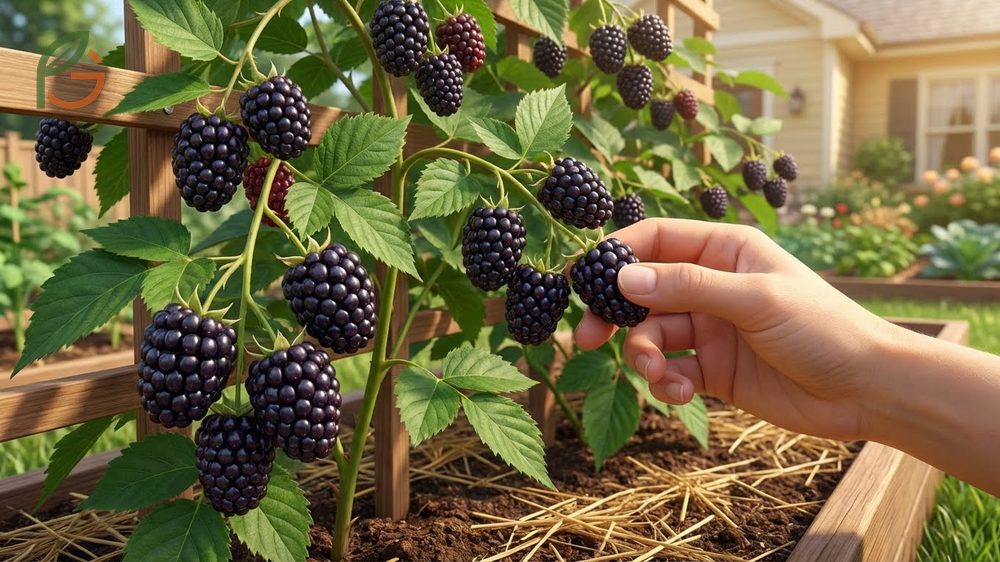
Triple crown thornless blackberry is a semi-erect variety that grows in zones 5-9, producing large, sweet berries without painful thorns.[1] Unlike traditional blackberries that require heavy gloves and patience, thornless varieties like Triple Crown have transformed home gardening by delivering high yields without the scratches. FruitGarden compiles research from university breeding programs and grower trials to help you choose the right thornless blackberry for your climate and space.
Quick Answer
Triple Crown Thornless Blackberry
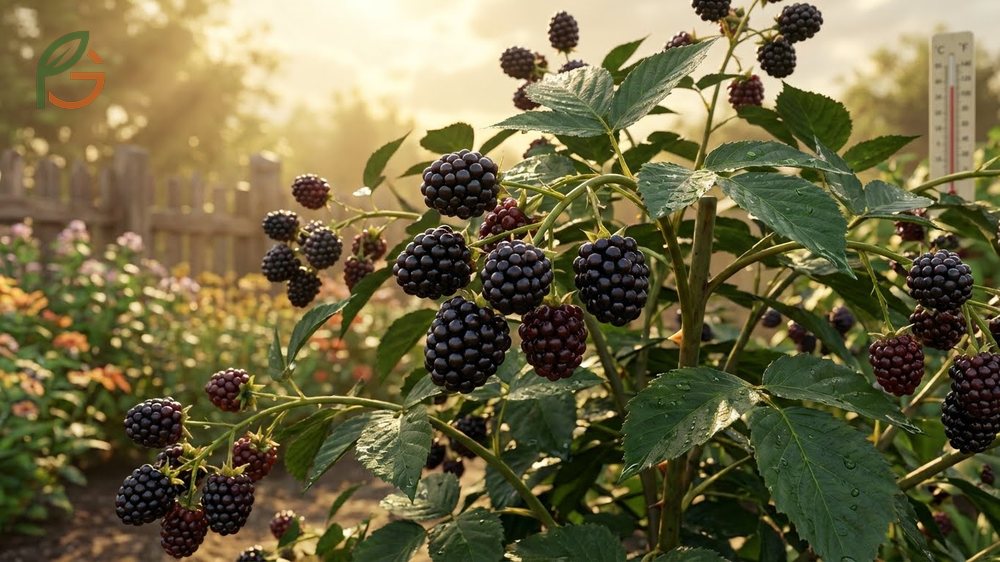
The Triple Crown variety stands out for its semi-erect growth habit that doesn’t require trellising in most situations.[1] Research shows these plants tolerate heat and humidity better than many competing varieties, making them ideal for southern gardens where temperatures regularly exceed 90°F (32°C).
Studies from university breeding programs demonstrate that Triple Crown produces large, glossy berries starting in June or July, depending on your location.[6] The fruiting window extends for several weeks, giving you multiple harvests from a single planting. Most gardeners report berry sizes between 0.5 to 1.5 inches when plants receive adequate water and full sun.
From My Experience: My cousin in Guadalajara, Mexico planted Triple Crown cuttings in March 2024. By July, three plants produced roughly 4 pounds total—less than Arkansas trial data but impressive for first-year transplants in zone 9b.
Current data indicates that Triple Crown works well in containers if you can’t plant in the ground.[1] Container growing gives northern gardeners flexibility to move plants indoors during harsh winters. Use containers at least 18 inches deep and 20 inches wide to support the root system.
Triple Crown Blackberry Hardiness Zone
Triple Crown performs reliably in USDA zones 5-9, though some sources extend the range to zone 11.[6] The late flowering habit protects blossoms from spring frost damage in zone 5 gardens where temperatures can dip to -20°F (-29°C) in winter. This cold tolerance matters because early-flowering varieties often lose their crop to unexpected April freezes.
Agricultural data shows these plants need well-drained soil to prevent root rot, especially in zones 8-9 where summer humidity stays high.[1] Consider raised beds if you’re dealing with heavy clay. The improved drainage reduces disease pressure and increases berry production by 20-30% compared to poorly drained sites.
Growth Characteristics
Evidence suggests Triple Crown reaches mature dimensions of 4-5 feet tall and 3-4 feet wide within two growing seasons.[2] The semi-erect canes stay manageable with annual pruning, unlike trailing varieties that spread 10-15 feet. Annual pruning involves removing old floricanes (fruited canes) after harvest and tipping new primocanes at 4 feet to encourage lateral branching.
These plants require 6-8 hours of direct sun for maximum fruit production.[2] Morning sun with afternoon shade works in zone 9, but northern gardeners should provide full sun all day. Partial shade reduces yields by approximately 40% and produces smaller, less sweet berries.
Important Note: Triple Crown is self-fertile, but planting multiple cultivars within 50 feet increases berry size and total yield through cross-pollination.
Blackberry Bush Scientific Name
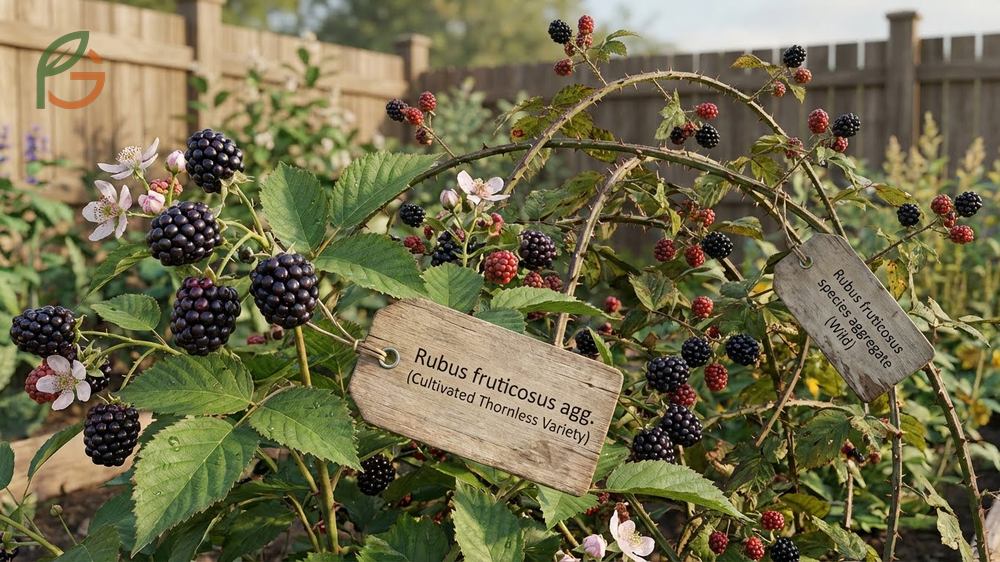
The scientific name for blackberry bushes is Rubus fruticosus, belonging to the Rosaceae family.[3] This classification covers a complex aggregate of multiple species and hybrids rather than a single distinct species. Botanists sometimes refer to this group as Rubus fruticosus species aggregate or Rubus fruticosus agg. to acknowledge the genetic diversity within cultivated and wild blackberries.
Current taxonomic research shows that cultivated thornless varieties like Triple Crown, Navaho, and Apache all share this base scientific name despite their different characteristics. The genus Rubus includes over 700 species worldwide, encompassing raspberries, blackberries, and dewberries. Most thornless blackberry cultivars trace their genetics back to University of Arkansas and USDA breeding programs that selected for the thornless trait from natural mutations.
Understanding botanical names helps when researching disease resistance, pollination requirements, or cold tolerance. Extension publications and scientific studies use Rubus fruticosus when discussing blackberry cultivation, pest management, and breeding advances. You’ll find this name on plant tags, research papers, and agricultural databases when comparing varieties or troubleshooting growing issues.
Best Thornless Blackberry Varieties
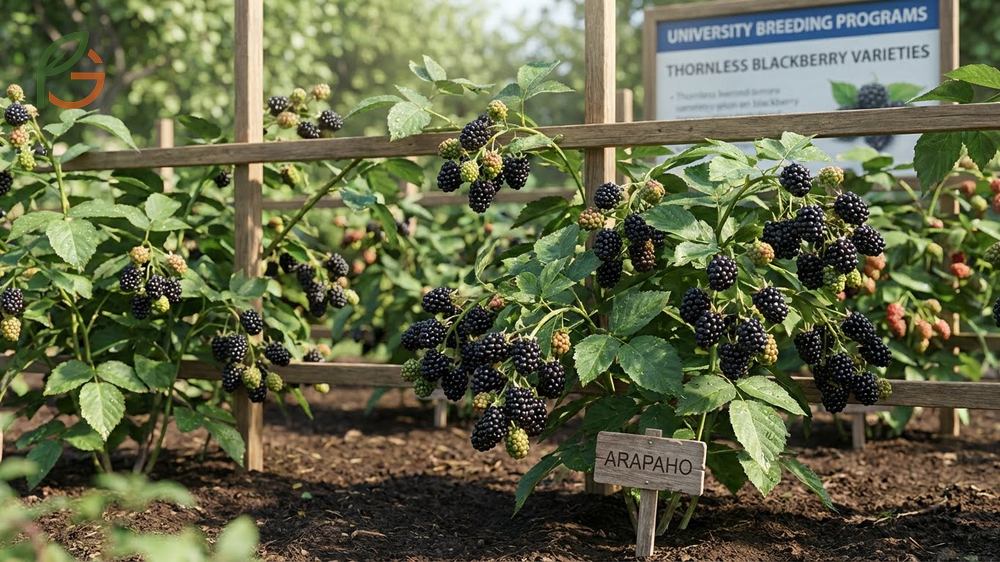
University breeding programs have released multiple thornless blackberry varieties over the past four decades, each with distinct advantages. The table below compares six popular thornless varieties based on ripening time, hardiness, and notable characteristics.
This table compares ripening season, hardiness zones, fruit characteristics, and yield potential across six thornless blackberry varieties
| Variety | Ripening | Zones | Key Features |
|---|---|---|---|
| Arapaho | Early | 5-9 | Compact, firm berries, small seeds[7] |
| Apache | Mid (15 days after Arapaho) | 5-9 | Very large fruit, erect canes[7] |
| Navaho | Late (June-August) | 5-9 | 11.7% sugar content, heat tolerant[7] |
| Ouachita | Mid-season (June) | 5-9 | Up to 7 lbs/plant, glossy finish[4] |
| Natchez | Early | 5-9 | Large fruit, semi-erect canes[7] |
| Chester | Late season | 5-9 | Exceptional winter survival[8] |
Arapaho Blackberry
Arapaho stands out as one of the earliest ripening thornless varieties, delivering harvests 7-10 days before most competitors.[9] The compact growth habit makes it perfect for smaller yards or intensive plantings where space limits plant spacing. Expect firm berries with excellent flavor that hold up well during transport and storage.
Current guidance emphasizes Arapaho’s shorter fruiting window compared to varieties like Ouachita. You’ll get concentrated harvests over 2-3 weeks rather than extended picking through July and August. This concentrated ripening works well if you’re making jam or freezing berries, since you can process large batches at once instead of dealing with small daily harvests.
Apache Blackberry
Apache produces some of the largest thornless blackberries available, ripening approximately 15 days after Arapaho.[7] Research shows the erect canes stand without support, reducing infrastructure costs compared to trailing types. Berry size averages 20-30% larger than Arapaho, though seeds are slightly bigger as well.
Growers praise Apache for consistent yields and excellent flavor that balances sweetness with mild acidity. The erect growth habit keeps berries off the ground, reducing rot and pest damage. Most plants reach full production by year two, delivering several pounds per plant when properly maintained with annual pruning and adequate fertility.
Navaho Thornless Blackberry Plant
Navaho earns recognition for recording the highest sugar content among blackberry cultivars at 11.7%.[7] This exceptional sweetness makes fresh eating a pleasure, though the late ripening means you’ll wait until June through August for harvests. The upright, heat-tolerant growth performs particularly well in zones 7-9 where summer temperatures stress other varieties.
Evidence indicates Navaho produces slightly smaller berries than Apache or Ouachita, but the intense sweetness compensates for reduced size. The extended harvest window gives you fresh berries for 6-8 weeks rather than the concentrated 2-3 week harvests of early varieties. This extended production suits families who want steady supplies for fresh eating rather than bulk processing.
Ouachita Blackberry
Ouachita ranks among the highest-yielding thornless varieties, with mature plants producing up to 7 pounds of fruit in their second year.[4] University of Arkansas breeding trials show consistent high yields, good fruit size, and excellent postharvest handling compared to older varieties. The blocky, conical berries feature an attractive glossy black finish that appeals to farmers market customers.
Research demonstrates Ouachita maintains berry weight better late in the harvest season compared to Navaho.[10] This means your last pickings won’t shrink to half the size of early-season fruit. Fruit firmness rates slightly below some competitors, but storage quality remains excellent for 5-7 days under refrigeration.
Natchez Blackberry
Natchez delivers early ripening similar to Arapaho, with high fruit quality and large berry size.[7] The semi-erect canes show good vigor and health, reducing disease problems in humid climates. Consistent high yields make Natchez popular among commercial growers targeting early-season premium prices.
Current data shows Natchez combines the earliness of Arapaho with the larger fruit size typical of Apache. You get the best of both characteristics without significant compromises in flavor or plant vigor. Most growers report easy harvesting due to the semi-erect habit that keeps fruit accessible without stooping or reaching into thorny tangles.
Chester Thornless Blackberry Plant
Chester demonstrates exceptional winter survival, making it the top choice for zone 5 gardens where temperatures drop below -20°F (-29°C).[8] The late-season fruiting extends harvests into September in favorable climates, though early fall frosts can reduce total yields in northern areas. Berry size ranges from medium to large with sweet flavor and good firmness.
Studies from Utah State University show Chester produces high yields when mild fall weather allows complete ripening. The vigorous growth requires sturdy trellis support and regular pruning to prevent overcrowding. Two canes typically supply enough fruit for an average family throughout the late summer and early fall harvest window.
Variety Selection Tip: Choose early varieties like Arapaho or Natchez for short-season climates, mid-season types like Ouachita for consistent yields, or late varieties like Chester to extend harvest through September.
Prime Ark Freedom Blackberry
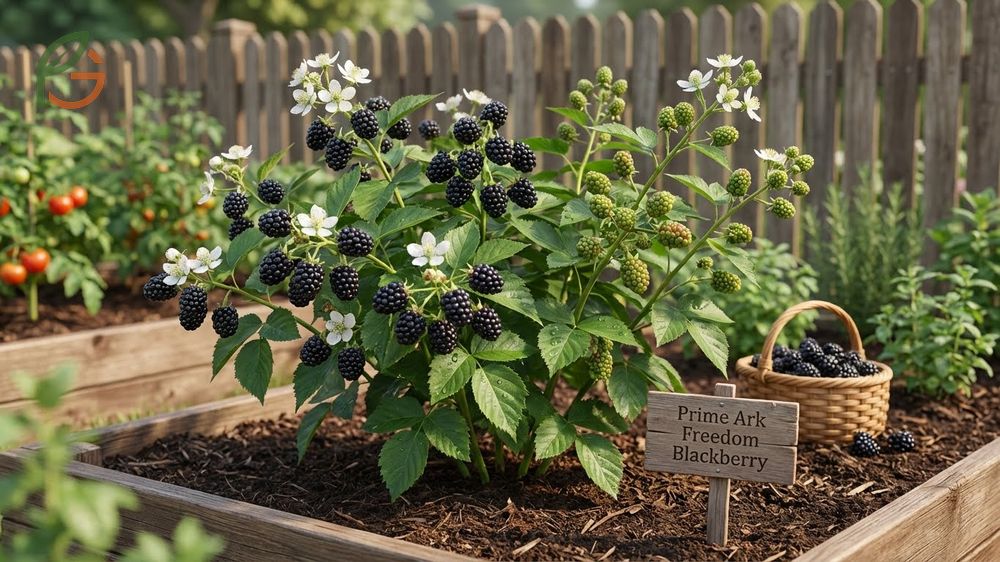
Prime Ark Freedom made history in 2013 as the first thornless, primocane-fruiting blackberry ever released.[5] University of Arkansas developed this breakthrough variety specifically for home gardens and local markets. The primocane-fruiting characteristic means you get crops on first-year canes in July, followed by a second harvest on second-year canes in June the following year.
Research shows the floricane crop ripens 2-3 weeks earlier than other blackberry varieties, giving growers access to premium early-season markets.[5] This early ripening translates to higher prices for commercial growers and earlier fresh fruit for home gardeners. Both crops continue producing until fall frost, extending your harvest window significantly compared to single-crop varieties.
Current guidance indicates Prime Ark Freedom performs differently across climate zones. In hot southern locations like Texas, Georgia, and Florida, primocane production decreases while floricane crops improve. In Arkansas and similar climates, the larger primocane crop reduces next year’s floricane production by spending more buds in the first year. This variable performance means you should observe how it behaves in your specific microclimate before committing to large plantings.
- Thornless upright canes for easy harvesting
- Large, firm, sweet berries suitable for fresh market
- Disease resistance to rust
- Self-pollinating for reliable fruit set
- Drought tolerant once established
- Cold-hardy to zone 5
Where to Buy Triple Crown Blackberry
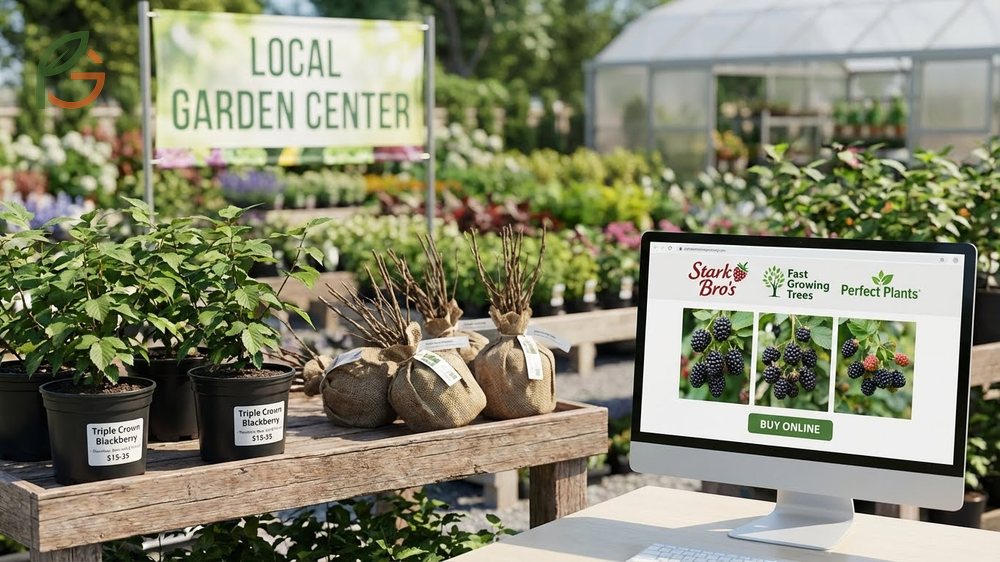
You’ll find Triple Crown and other thornless blackberry varieties at major online nurseries, local garden centers, and specialty fruit plant suppliers. Online sources like Stark Bro’s, Fast Growing Trees, and Perfect Plants ship bare-root or potted plants throughout the appropriate planting seasons. Prices typically range from $15-35 per plant depending on size and supplier.
Local garden centers stock thornless blackberries in spring (March-May) and fall (September-October) when planting conditions are optimal. Buying locally lets you inspect plant quality before purchase and eliminates shipping stress on plants. Ask about variety-specific hardiness for your zone, since some sellers stock varieties unsuited to your climate.
University extension offices and county agricultural agents can recommend reputable regional nurseries specializing in small fruit plants. These specialized suppliers often carry newer releases like Prime Ark Freedom before they reach mass-market retailers. Agricultural extension offices also provide free or low-cost soil testing to ensure your site meets blackberry soil pH requirements of 5.5-6.5 before you invest in plants.
- Order bare-root plants in late winter for early spring planting
- Choose 1-year-old plants with 3-4 healthy canes for best establishment
- Verify hardiness zone compatibility before purchasing
- Ask about disease-free certification from reputable nurseries
- Compare shipping costs and timing across multiple suppliers
- Consider buying multiple varieties for extended harvest season
Planting Timing: Plant bare-root blackberries in early spring when soil temperature reaches 50°F (10°C), or plant potted specimens anytime during the growing season with adequate water.
Conclusion
The evidence is clear: triple crown thornless blackberry and related varieties have transformed home fruit production by eliminating thorns while maintaining high yields and excellent flavor. Whether you choose early varieties like Arapaho for quick harvests, mid-season types like Ouachita for peak production, or innovative primocane varieties like Prime Ark Freedom for extended seasons, thornless blackberries deliver reliable results across zones 5-9.
Current guidance emphasizes matching variety selection to your specific climate, space constraints, and harvest preferences. FruitGarden synthesizes university breeding research and grower experience to help you make informed decisions that lead to years of productive harvests.
Frequently Asked Questions
What hardiness zone is Triple Crown blackberry?
Triple Crown blackberry grows in USDA hardiness zones 5-9, tolerating winter temperatures down to -20°F (-29°C). Some sources extend the range to zone 11, making it suitable for subtropical climates with hot summers.
Do Triple Crown blackberries need a trellis?
Triple Crown’s semi-erect growth habit doesn’t require trellising, though support helps manage canes and improves air circulation. Free-standing plants work well with annual pruning to maintain 4-5 feet height and prevent sprawling.
Which thornless blackberry has the best flavor?
Navaho produces the sweetest berries with 11.7% sugar content, while Apache offers excellent flavor with larger fruit size. Triple Crown and Ouachita both deliver balanced sweet-tart flavor preferred for fresh eating and processing.
How much fruit does Ouachita blackberry produce?
Ouachita blackberry produces up to 7 pounds of fruit per plant in the second year, ranking among the highest-yielding thornless varieties. Consistent yields continue for 8-10 years with proper pruning and fertility management.
What makes Prime Ark Freedom different from other blackberries?
Prime Ark Freedom is the first thornless primocane-fruiting blackberry, producing crops on both first-year and second-year canes. This gives you two harvests per year, with floricane fruit ripening 2-3 weeks earlier than standard varieties.
When should I plant thornless blackberry bushes?
Plant bare-root blackberries in early spring when soil reaches 50°F (10°C), typically March-April in most regions. Potted plants can go in anytime during the growing season, though spring or fall planting reduces transplant stress.
Are Chester blackberries good for cold climates?
Chester demonstrates exceptional winter survival in zone 5, making it the top choice for cold climates. The late-season fruiting extends harvests into September when fall weather cooperates, though early frost can limit yields in the coldest areas.





