
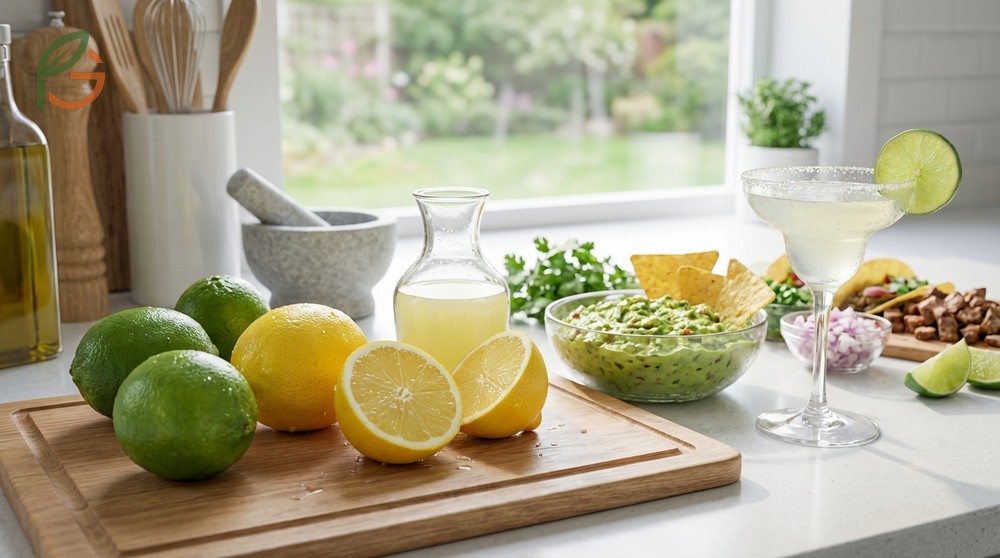
Looking for a substitute for lime juice? Lemon juice is your best bet, offering nearly identical acidity with a 1:1 replacement ratio.[1] Research shows lime juice has a pH of 2.0-2.4, making it highly acidic—similar to lemon juice’s 2.0-2.3 pH.[2] Whether you’re making guacamole, tacos, or cocktails, FruitGarden helps you find the right alternative based on your recipe’s needs.
Quick Answer
- Lemon juice works as a 1:1 substitute with similar acidity and tartness[1]
- White wine vinegar or apple cider vinegar provides acidity for savory dishes[3]
- Citric acid solution (½ teaspoon powder in 1 oz water) mimics lime’s tartness[4]
- Fresh citrus beats bottled lime juice every time—preservatives dull flavor and reduce acidity[5]
Substitute for Lime Juice
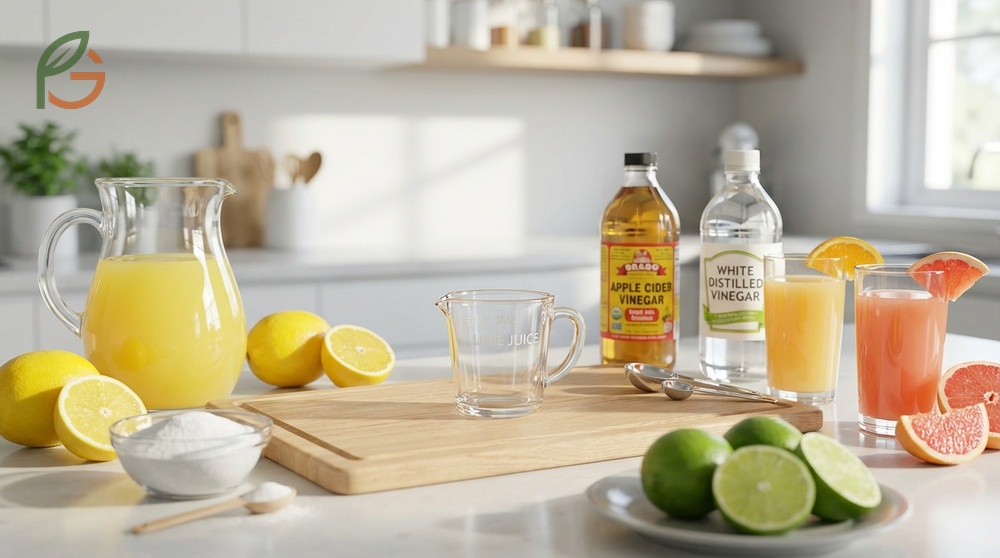
When you’re out of lime juice, several alternatives deliver the acidity and brightness your recipe needs. The best choice depends on what you’re making and which flavors complement your dish.
Lemon juice stands as the most reliable replacement across nearly all recipes. Orange and grapefruit juice work when you need citrus notes but can tolerate more sweetness.
For non-citrus options, vinegar and citric acid provide tartness without fruit flavor. These work especially well in savory applications where lime’s specific taste isn’t critical.
Lemon Juice
Lemon juice is the closest match for lime juice because both contain similar citric acid levels. Studies show lemons have a pH of 2.0-2.3, while limes measure 2.0-2.4—making them nearly interchangeable in terms of acidity.[2]
Use lemon juice in a 1:1 ratio for lime juice in any recipe. This substitution works perfectly for margaritas, salsa, salad dressings, and baked goods like cheesecakes.[6] The flavor difference is subtle—lemon tastes slightly sweeter and less bitter than lime.
Fresh lemon juice outperforms bottled lime juice every time. If you’re choosing between the two, grab fresh lemons rather than reaching for that dusty bottle of processed lime juice.
Citric Acid
Citric acid powder creates an effective lime juice substitute when dissolved in water. Mix ½ teaspoon citric acid with 1 ounce (2 tablespoons) of water to replace 1 ounce of lime juice.[4]
This solution works well in cocktails, marinades, and recipes where you need tartness without added fruit flavor. You can adjust the concentration to match your taste preferences—start with less and add more if needed.
Citric acid provides pure sourness without the aromatic compounds found in fresh citrus. This makes it ideal for clear syrups and dishes where you want acidity but not citrus oils.
Orange and Grapefruit Juice
Orange juice and grapefruit juice both substitute for lime juice when you need citrus flavor but can accept more sweetness. Use them in a 1:1 ratio, though you might need to reduce added sugar in your recipe.[7]
Grapefruit juice falls between lime and orange on the acidity scale. It works particularly well for seafood dishes, salad dressings, and cocktails where a less tart profile enhances the final result.[6]
Orange juice is sweeter and milder than lime, making it better suited for desserts and smoothies. Avoid using it in recipes where lime’s sharp acidity is essential, such as ceviche or key lime pie.
Important Note: When substituting sweeter citrus juices like orange or grapefruit, reduce any added sugar in your recipe by 1-2 teaspoons to maintain proper balance.
Can You Substitute Lemon Juice for Lime Juice
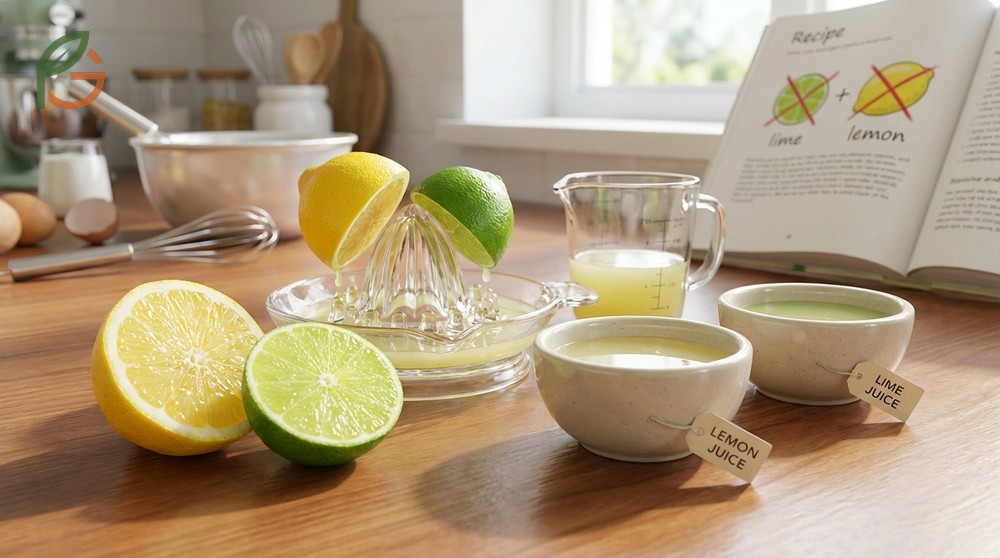
Yes, you can substitute lemon juice for lime juice in almost every recipe. Both citrus fruits deliver comparable acidity, making them functionally interchangeable in most cooking and baking applications.
The main consideration is flavor preference rather than chemistry. Lemon juice tastes slightly sweeter and less bitter, while lime juice has sharper, more floral notes.
Most people won’t notice the difference in mixed dishes like marinades, dressings, or sauces. In drinks where citrus is the star—like margaritas or mojitos—the flavor shift becomes more obvious.
Acidity Comparison
Lemons and limes contain nearly identical citric acid levels. Lemons measure 2.0-2.3 on the pH scale, while limes range from 2.0-2.4—both highly acidic.[2]
This similar acidity means they perform the same functions in recipes. Both tenderize meat in marinades, prevent browning in guacamole, and provide tartness in desserts.
Current data indicates one medium lemon yields 2-3 tablespoons of juice, roughly equivalent to 2 medium limes. Plan accordingly when shopping for substitutes.
Flavor Differences
Lime juice tastes more bitter and aromatic than lemon juice. This bitterness comes from higher concentrations of limonin, a compound that develops as citrus ages.[1]
Lemon juice has a cleaner, brighter taste with more perceived sweetness. It works better in delicate dishes like cheesecakes or cream-based sauces where lime’s intensity might overpower other flavors.
For Latin American, Thai, and Mexican dishes traditionally made with lime, lemon creates a noticeably different taste. The recipes still work—they just taste slightly less authentic.
Vinegar Substitute for Lime Juice
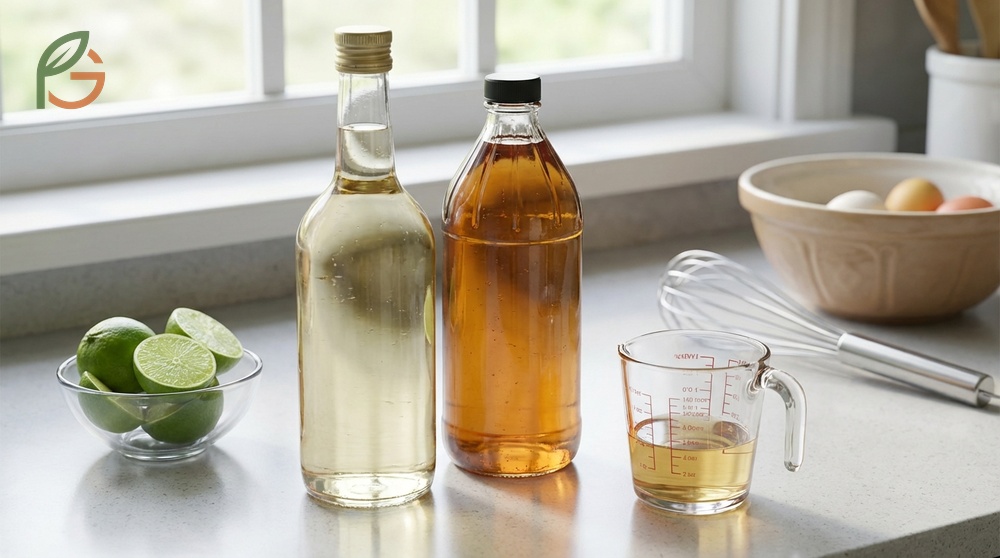
Vinegar provides acidity without citrus flavor, making it useful when you need tartness but don’t have fresh fruit. White wine vinegar and apple cider vinegar work best as lime juice replacements.
Use vinegar sparingly—start with half the amount of lime juice called for, then add more if needed. Vinegar contains acetic acid instead of citric acid, creating a sharper, more pungent taste.[7]
White wine vinegar has a milder tang than apple cider vinegar. It blends well in salad dressings, stir-fries, and pickling recipes where you need acid but not fruit essence.[3]
Apple cider vinegar adds perceived sweetness and fruity notes. This makes it better suited for marinades and savory sauces than white vinegar, which can taste harsh in large quantities.
Avoid using vinegar in desserts or cocktails—the flavor profile is wrong for sweet applications. Stick with citric acid or another citrus juice instead.
- Start with 1 teaspoon vinegar per 1 tablespoon lime juice, then adjust to taste
- White wine vinegar works best for Asian and Mediterranean dishes
- Apple cider vinegar suits Mexican and American recipes better
- Red wine vinegar is too strong—avoid it as a lime juice substitute
- Rice vinegar offers mild acidity for delicate dishes like sushi rice
- Never substitute vinegar for lime juice in canning or preserving—pH differences affect food safety
Safety Warning: Don’t replace lime or lemon juice with vinegar in canning recipes. Vinegar has lower acidity (0.50 g/oz citric acid equivalent) compared to lime juice (1.44 g/oz), which can allow dangerous bacterial growth above pH 4.6.
Lime Juice Substitute for Tacos
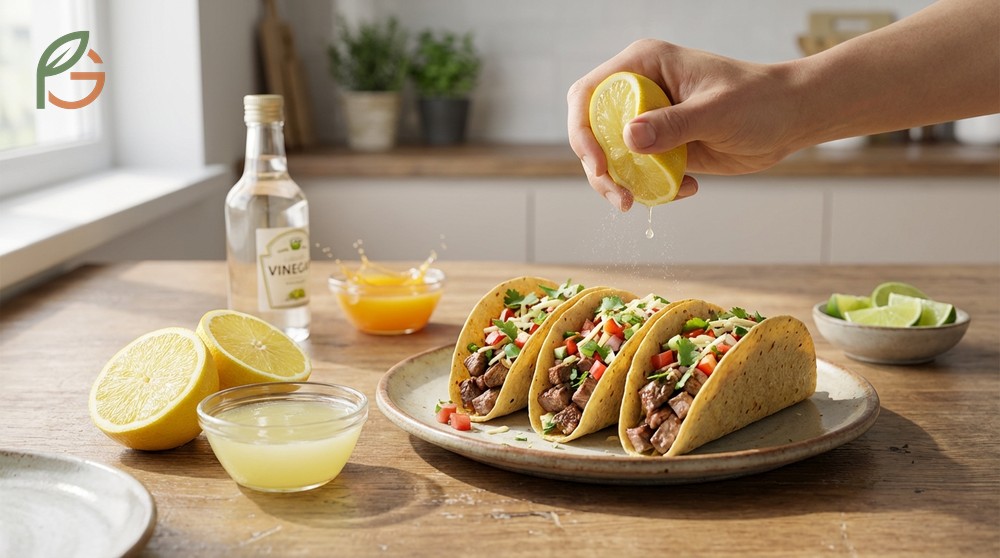
For tacos, fresh lemon juice provides the best lime substitute while maintaining authentic flavor. Use it in a 1:1 ratio for taco meat marinades, pico de gallo, or as a finishing squeeze over assembled tacos.
White vinegar works when you’re completely out of citrus. Add 1-2 teaspoons to your taco meat or salsa for brightness, but don’t expect the same fresh, zesty taste that citrus provides.
Orange juice mixed with a splash of vinegar creates a surprisingly good substitute for taco fillings. Combine 1 tablespoon orange juice with ½ teaspoon white vinegar to mimic lime’s sweet-tart balance.
For taco toppings like guacamole and crema, lemon juice remains your top choice. It prevents avocado browning just as effectively as lime while adding complementary flavor.[8]
Tamarind paste offers an interesting alternative for adventurous cooks. Mix 1 teaspoon tamarind paste with 2 teaspoons water to replace 1 tablespoon lime juice in taco marinades. The tangy, slightly sweet flavor complements Mexican spices beautifully.
- Lemon juice: Use 1:1 for all taco applications—marinades, salsas, and garnishes
- White vinegar: Add ½ teaspoon per serving directly to cooked taco meat
- Orange juice + vinegar: Mix 3:1 ratio for a sweeter, citrusy alternative
- Tamarind paste: Dilute 1:2 with water for authentic Mexican street taco flavor
- Apple cider vinegar: Use sparingly (½ teaspoon per taco) for tangy carnitas or pulled pork
Best Lime Juice Alternative for Cocktails
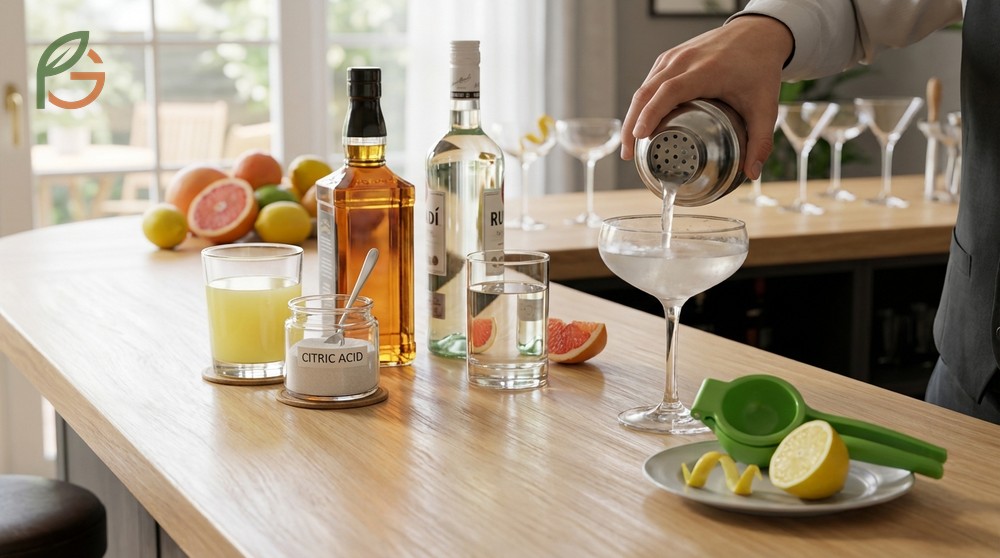
Fresh lemon juice is the gold standard for cocktails when you’re out of limes. It works perfectly in margaritas, mojitos, and daiquiris, maintaining proper acidity with only subtle flavor changes.[6]
Citric acid solution creates a clean, tart flavor ideal for clear cocktails and syrups. Mix ½ teaspoon citric acid powder with 1 ounce water to replace 1 ounce lime juice in drinks like gimlets or whiskey sours.[4]
Grapefruit juice works surprisingly well in tropical cocktails and tiki drinks. It’s less tart than lime but adds complexity to rum-based drinks like mai tais or palomas.
Never use bottled lime juice in cocktails if you can avoid it. Preservatives and added sugar make it taste flat and artificial compared to fresh citrus.[5]
This table compares five popular lime-based cocktails with recommended substitutes and flavor impact ratings
| Cocktail | Best Substitute | Ratio | Flavor Impact |
|---|---|---|---|
| Margarita | Lemon juice[6] | 1:1 | Minimal—slightly sweeter |
| Mojito | Lemon juice | 1:1 | Noticeable but pleasant |
| Gimlet | Citric acid solution[4] | 1:1 | Clean, pure tartness |
| Daiquiri | Lemon juice | 1:1 | Slight sweetness boost |
| Paloma | Grapefruit juice[7] | 1:1 | Enhanced grapefruit notes |
Bartender Tip: If using lemon juice in margaritas, reduce simple syrup by ¼ ounce to compensate for lemon’s slightly sweeter taste. This keeps your drink properly balanced.
Bottled Lime Juice vs Fresh
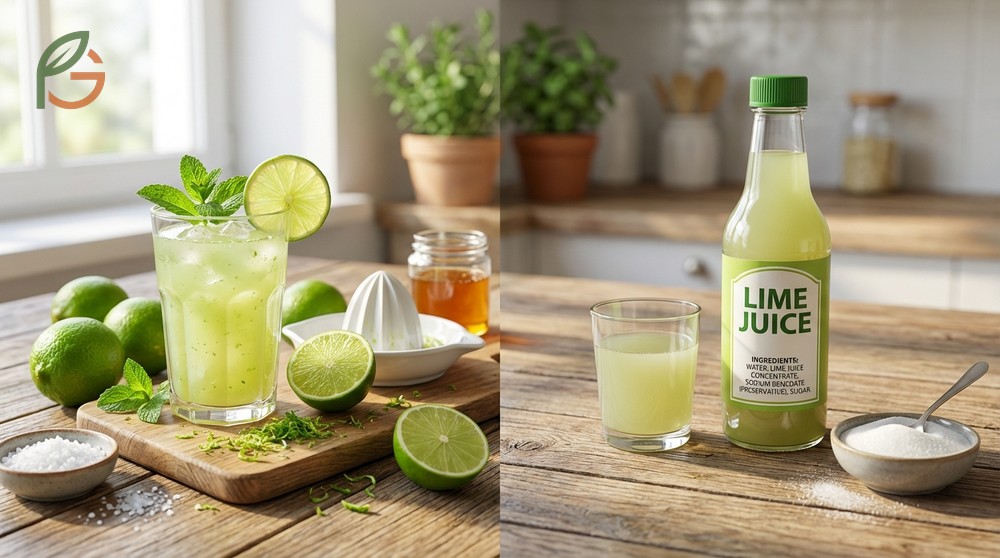
Fresh lime juice delivers superior flavor, aroma, and acidity compared to bottled versions. Studies from bartending professionals show fresh juice tastes brighter and more complex due to preserved aromatic oils that break down during bottling.[5]
Bottled lime juice contains preservatives that extend shelf life but reduce tartness and create an artificial aftertaste. These additives often include sodium benzoate and added sugar, which alter the pH and flavor profile dramatically.
The convenience of bottled juice comes at a steep quality cost. Most bottled products taste flat and lack the vibrant acidity that makes fresh lime juice irreplaceable in cocktails and cooking.
If choosing between fresh lemon juice and bottled lime juice, pick fresh lemon every time. The fresh citrus provides better flavor and more reliable acidity for your recipes.
When you must use bottled lime juice, buy 100% juice without added sugar or “lime drink” products. Look for brands stored in the refrigerated section—these typically have fewer preservatives than shelf-stable versions.
- Fresh lime juice has pH 2.0-2.4 versus bottled at pH 2.5-3.0 due to preservatives[2]
- One medium lime yields 2 tablespoons fresh juice—plan for 6-8 limes per cup
- Fresh juice stays flavorful for 2-3 days refrigerated; bottled lasts weeks but tastes worse
- Bartenders prefer fresh juice squeezed 2-4 hours before use for optimal flavor development
- Cost comparison: Fresh limes cost $0.50-1.00 each versus $3-5 per bottle of inferior juice
Conclusion
The evidence is clear: lemon juice works as the best substitute for lime juice across nearly all recipes, thanks to its nearly identical pH and citric acid content. Current culinary guidance emphasizes using fresh citrus whenever possible, as bottled products contain preservatives that diminish both flavor and acidity.
For savory dishes, white wine vinegar and apple cider vinegar provide acidity without citrus notes, while citric acid solution offers pure tartness ideal for cocktails and clear applications. FruitGarden synthesizes current culinary research to help you make informed substitution choices that maintain recipe quality and authentic flavors.
Frequently Asked Questions
Can I use lime zest instead of lime juice?
No, lime zest can’t replace lime juice because it lacks acidity. Zest provides aromatic oils and flavor but no tartness. If you need both lime flavor and acidity, combine lime zest with lemon juice—use 1 teaspoon zest plus 1 tablespoon lemon juice per tablespoon of lime juice called for in recipes.
How much citric acid equals 1 tablespoon of lime juice?
Mix ¼ teaspoon citric acid powder with 1 tablespoon water to equal 1 tablespoon lime juice. This ratio provides similar acidity while maintaining the liquid volume your recipe needs. Adjust the concentration up or down based on your tartness preference—start with less and add more if needed.
What’s the best lime juice substitute for guacamole?
Fresh lemon juice is the best lime substitute for guacamole, working in a 1:1 ratio. It prevents avocado browning just as effectively while adding complementary citrus flavor. If you’re out of both, use 1 teaspoon white vinegar per avocado—it won’t taste quite the same but will stop oxidation and add needed acidity.
Can you substitute lime juice for lemon juice in recipes?
Yes, you can substitute lime juice for lemon juice in a 1:1 ratio for most recipes. Both have similar pH levels (2.0-2.4), making them functionally identical in terms of acidity. Lime tastes more bitter and aromatic than lemon, which matters more in delicate desserts but barely registers in marinades, dressings, or savory dishes.
Is tamarind paste a good lime juice alternative?
Tamarind paste works well as a lime substitute in Asian and Mexican dishes, offering tangy, sweet-sour notes with pH 2.5-3.5. Mix 1 teaspoon tamarind paste with 2 teaspoons water to replace 1 tablespoon lime juice. It’s particularly good in marinades, stir-fries, and authentic taco recipes where you want complex, non-citrus acidity.
Does bottled lime juice work the same as fresh in cocktails?
No, bottled lime juice performs poorly in cocktails compared to fresh. Preservatives reduce acidity from pH 2.0-2.4 to 2.5-3.0 and create flat, artificial flavors. Bartenders consistently recommend fresh lemon juice over bottled lime juice—the fresh citrus provides better balance and vibrant taste that bottled products simply can’t match.
What’s the safest lime juice substitute for canning?
Only use fresh lemon juice or bottled lemon juice (not lime) for canning substitutions. Never replace lime or lemon juice with vinegar in canning recipes—vinegar has lower citric acid content (0.50 g/oz vs 1.44 g/oz), which raises pH above safe levels and can allow dangerous bacterial growth in preserved foods.





