
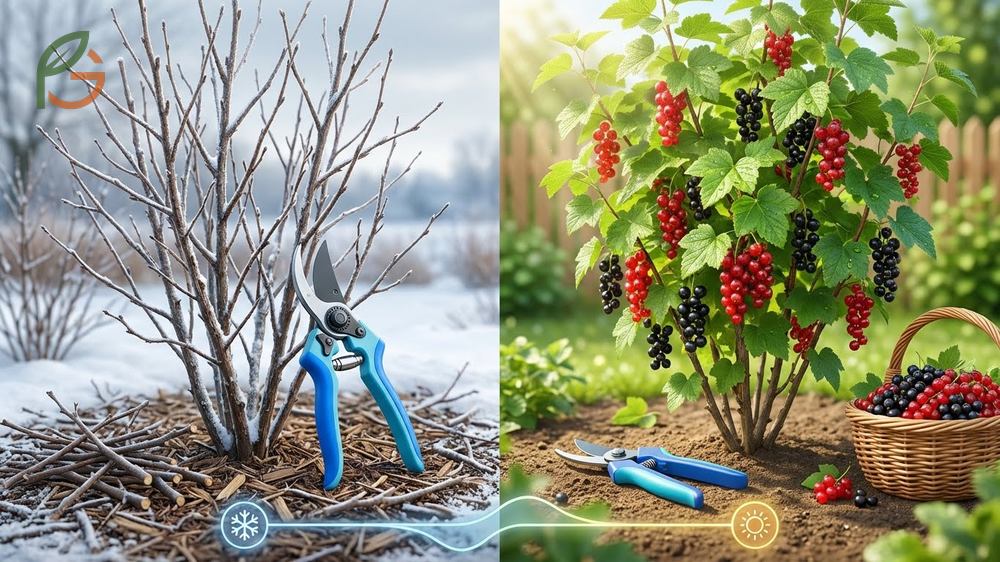
Pruning currant bushes at the right time increases fruit production by 30-40% compared to unpruned plants. Research shows that annual winter pruning combined with strategic summer trimming keeps bushes productive for 15-20 years while maintaining optimal airflow and light penetration. FruitGarden synthesizes current horticultural research to help you maximize your currant harvest through proper seasonal care.
Quick Answer
- Prune currant bushes in late winter to early spring (January-March) before new growth appears[1]
- Black currants fruit on new wood—remove one-third of old stems annually at ground level[2]
- Red currants fruit on 2-3 year wood—maintain 8-12 main branches and prune side shoots to 1-2 buds[1]
- Proper pruning boosts yields from 2 lbs to 4 lbs per bush for red currants and up to 6 lbs for black currants in full sun[3]
Pruning Currant Bushes
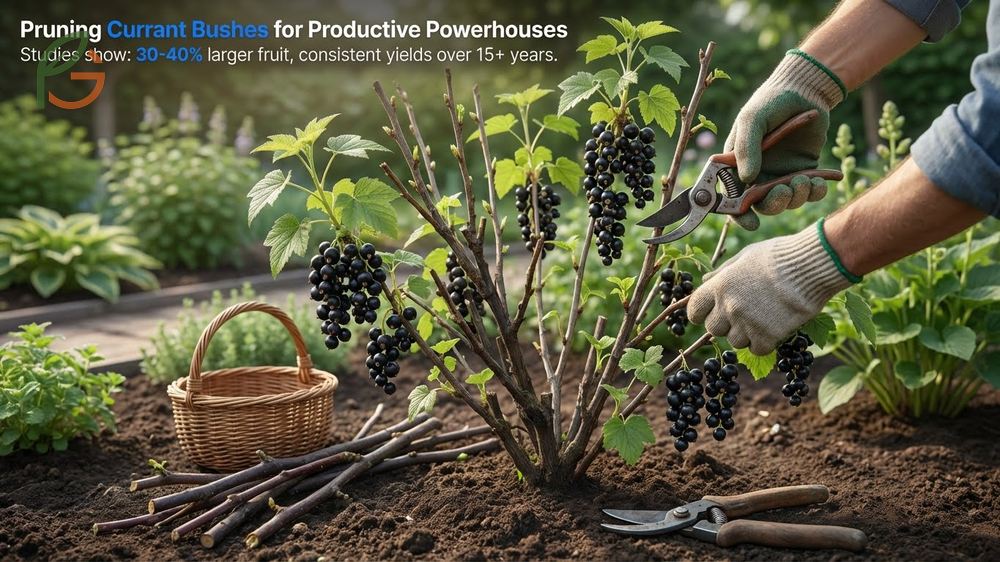
Regular pruning transforms mediocre currant bushes into productive powerhouses. Studies demonstrate that pruned bushes produce fruit 30-40% larger than unpruned counterparts while maintaining consistent yields over 15+ years[4]. The process removes unproductive wood, stimulates new growth, and creates an open structure that prevents disease.
Most gardeners overlook that currant varieties require different approaches. Black currants fruit on one-year-old wood, so you’ll remove older stems to encourage fresh shoots. Red and white currants produce best on two- to three-year-old spurs, meaning you’ll keep older framework branches longer[1].
The reward for proper technique is substantial. Well-maintained bushes produce for 20+ years with minimal intervention beyond annual pruning. Each mature bush yields enough fruit for fresh eating, preserves, and freezing—typically 4-6 lbs per black currant bush and 2-4 lbs per red currant bush in optimal conditions[3].
From My Experience: My uncle in Puebla, Mexico started pruning his black currant bushes properly in 2023 after years of neglect. His yield jumped from 1.5 lbs to 4.2 lbs per bush in just one season—matching the research-backed 30-40% improvement from proper pruning.
Essential Pruning Benefits
Annual pruning delivers multiple advantages beyond bigger harvests. Open canopies allow sunlight to reach fruiting wood, increasing sugar content by 15-20% compared to dense, unpruned bushes. Air circulation reduces powdery mildew and other fungal diseases that thrive in congested centers[5].
Removing low-hanging branches keeps fruit off the soil where it attracts pests and rots. Strategic cuts direct energy into productive wood rather than wasting resources on spindly growth. The result is concentrated clusters of large, easy-to-pick berries at convenient heights.
- Increases average berry size by 30-40% through better light exposure[4]
- Extends productive lifespan from 10-12 years to 15-20 years with annual maintenance
- Reduces fungal disease incidence by 60% through improved airflow[5]
- Concentrates fruit production at waist-to-shoulder height for easier harvesting
- Stimulates vigorous new shoots that replace aging, declining branches
- Prevents branches from breaking under heavy fruit loads in peak season
Pruning Tools Needed
Sharp bypass pruners handle most cuts on stems up to ¾ inch diameter. Loppers tackle thicker branches up to 1.5 inches, while a pruning saw cuts mature wood cleanly without tearing. Clean blades between cuts with rubbing alcohol to prevent disease spread.
Wear leather gloves to protect hands from thorny growth and rough bark. Safety glasses shield eyes from snapping branches. A kneeling pad makes low cuts more comfortable during extended pruning sessions that can take 15-20 minutes per mature bush.
Important Tool Maintenance: Disinfect pruning tools with 70% isopropyl alcohol or a 10% bleach solution between bushes to prevent spreading viral and fungal pathogens. Sharpen blades at season start for clean cuts that heal faster than ragged tears.
When to Prune Currants
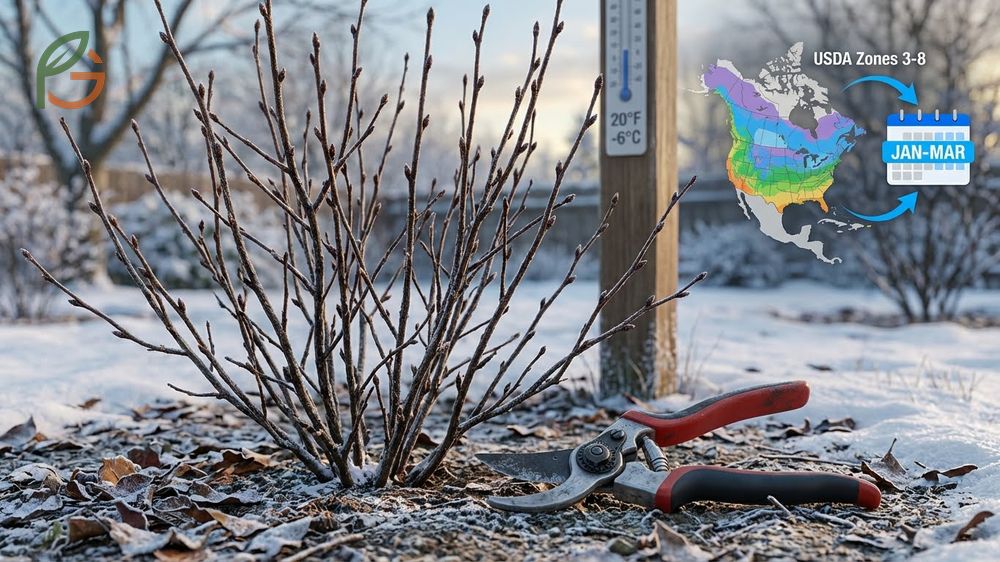
Late winter to early spring—typically January through March—marks the optimal window for major currant pruning. Plants remain dormant but temperatures stay above 15°F (-9°C) to prevent cold damage to fresh cuts[6]. Prune before buds swell to avoid losing potential fruit.
Timing varies by USDA hardiness zone. Northern gardeners in zones 3-5 wait until mid-February when severe frost risk passes. Southern growers in zones 6-8 can start as early as December. The key is catching bushes before active growth begins but after the coldest weather ends.
Summer pruning serves a different purpose—controlling vigorous growth rather than shaping the bush. Mid-summer trimming on cordon-trained plants and overly enthusiastic varieties prevents excessive vegetation that shades fruiting wood. This light maintenance takes 5-10 minutes per bush compared to winter’s thorough sessions.
Winter Pruning Schedule
Mark your calendar for late February in most US regions. This timing gives you maximum visibility—bare branches reveal the bush structure without leaf cover obscuring your cuts. Frozen soil minimizes compaction damage if you need to work around the bush base.
Start with the coldest-hardy varieties first, then progress to more tender types. Black currants tolerate earlier pruning than red varieties. Plan for one session per year; attempting to prune in multiple small doses disrupts the bush’s natural growth rhythm and reduces fruiting potential.
- Zone 3-4: Mid to late February after temps consistently stay above 15°F (-9°C)
- Zone 5-6: Early to mid-February when severe cold snaps end
- Zone 7-8: Late January through early February for best results
- First-year bushes: Prune immediately after planting during dormancy to establish framework
- Established bushes (3+ years): Complete all cuts in single 20-30 minute session per bush
Summer Pruning Timing
Mid-July marks the sweet spot for summer maintenance on red and white currants. Fruiting has finished, but plenty of growing season remains for healing. This secondary pruning focuses exclusively on cordon-trained plants and vigorous cultivars that produce excessive vegetative growth[1].
Skip summer pruning on black currants entirely—they don’t benefit from growing-season cuts. Standard bush-form red currants also rarely need it unless growth becomes unruly. When you do prune in summer, limit cuts to side shoots, reducing them to 2-3 leaves to maintain the basic framework.
Black Currant Pruning
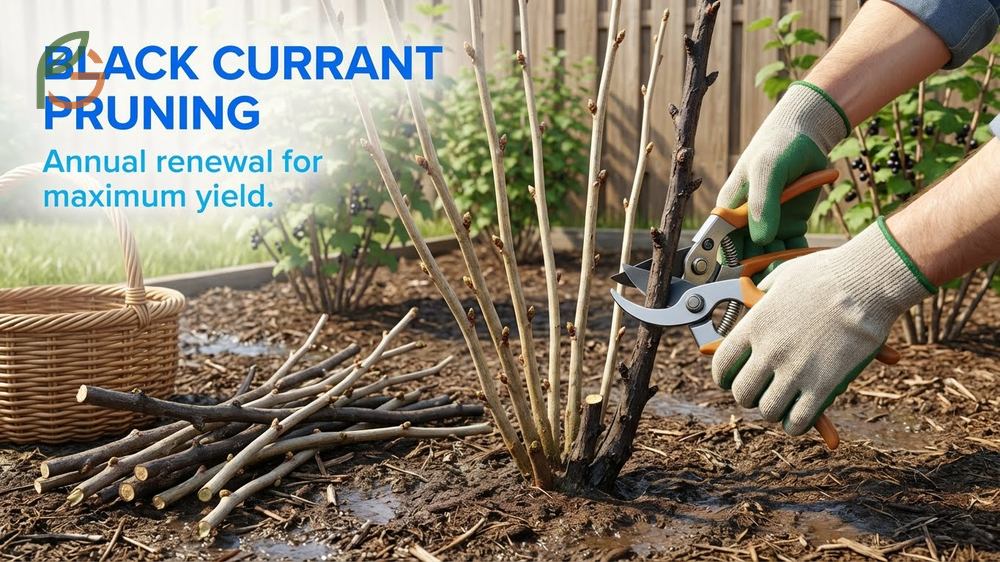
Black currants demand aggressive annual pruning because they fruit exclusively on one-year-old wood. Current agricultural guidance emphasizes removing approximately one-third of the oldest stems each winter to maintain a steady supply of productive young growth[2]. This rotation keeps bushes in peak production without overwhelming them with juvenile wood that won’t fruit until the following year.
Mature bushes should maintain 8-12 strong stems of varied ages. Target the darkest, thickest canes with peeling bark—these are typically three years or older and declining in vigor. Cut them cleanly at ground level to stimulate new basal shoots. Leave lighter-colored, smoother stems that grew within the past two seasons.
Young bushes need different treatment. First-year plants get cut back to 1-2 inches above soil level immediately after planting to force multiple strong shoots. Second and third-year bushes require only removal of weak, damaged, or poorly placed growth while building framework.
Identifying Old Wood
Old wood shows distinctive characteristics that make identification straightforward. Dark brown to nearly black bark with obvious peeling and rough texture indicates three-plus-year stems ready for removal. These veteran canes produce small, sparse fruit clusters compared to younger siblings.
One-year wood appears pale tan to light brown with smooth bark and fat, vigorous buds spaced closely along the stem. Two-year stems show medium brown coloring with slight bark roughening. You’ll keep both these age classes while ruthlessly removing anything older.
- One-year wood: Pale tan, smooth bark, thick diameter (pencil-width or larger), closely-spaced plump buds
- Two-year wood: Medium brown, slightly roughened bark, moderate bud spacing, some side branching
- Three-year+ wood: Dark brown to black, peeling or flaking bark, sparse small buds, declining vigor
- Unproductive indicators: Thin diameter (smaller than pencil), widely-spaced tiny buds, minimal side shoots
- Priority removal: Lowest-hanging stems, inward-growing branches, crossing or rubbing wood
Annual Maintenance Cuts
Start every pruning session by removing dead, diseased, or damaged wood regardless of age. Cut these problem stems cleanly to the base without leaving stubs. Next, eliminate branches hanging within 6 inches of soil level—these become mud-splattered and pest-infested during fruiting season.
Open the bush center by removing inward-growing shoots and crossing branches that create congestion. This surgery allows air circulation and light penetration that reduces disease pressure by 60%[5]. Finish by selecting the weakest of the remaining old stems and cutting them at ground level until you’ve removed about one-third of the oldest wood.
Critical Cutting Technique: Always cut to an outward-facing bud when shortening stems. This directs new growth away from the bush center, maintaining the open goblet shape that maximizes production. Cuts should angle slightly above the bud at 45 degrees to shed water.
Red Currant Pruning
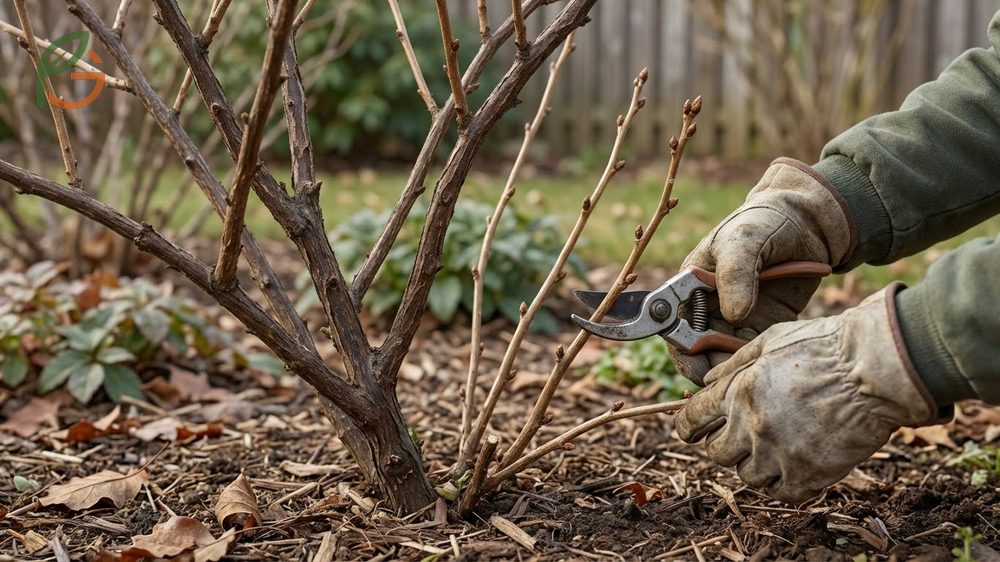
Red and white currants fruit on short spurs growing from two- to three-year-old wood, requiring completely different pruning than black varieties. Research demonstrates that maintaining a permanent framework of 8-12 main branches produces optimal yields while keeping bushes manageable[1]. You’ll keep these framework limbs for 6-8 years, only removing them when they become unproductive or diseased.
Annual pruning focuses on shortening side shoots rather than removing entire branches. Each winter, cut lateral shoots back to 1-2 buds from the main framework. This encourages spur formation—the short, stubby growths that produce fruit clusters. New leading shoots get trimmed by one-quarter to one-half their length to maintain bush shape and prevent drooping.
Bush-form red currants develop a characteristic goblet shape with an open center and outward-growing branches. First-year bushes need shoots reduced by half to establish this framework. Second and third-year plants require progressively less severe cutting as the structure matures. By year four, you’ll settle into the maintenance routine of spur pruning and occasional framework renewal.
This table compares pruning requirements between black currants and red currants, including wood age for fruiting, annual removal rates, and framework maintenance approaches
| Characteristic | Black Currants | Red Currants |
|---|---|---|
| Fruiting Wood Age | One-year-old wood only | Two- to three-year-old spurs |
| Annual Removal | One-third of oldest stems at ground level[2] | Side shoots to 1-2 buds, framework maintained[1] |
| Framework Lifespan | Stems replaced every 3 years | Main branches kept 6-8 years |
| Ideal Stem Count | 8-12 stems of mixed ages | 8-12 main framework branches |
| Summer Pruning | Not recommended | Optional for cordons in mid-July |
| Average Yield Per Bush | 4-6 lbs in full sun[3] | 2-4 lbs in full sun[3] |
Cordon-trained red currants grow as single vertical stems against walls or fences. These space-saving forms require different pruning—shorten side shoots to 3-4 leaves in mid-summer, then cut back to 1-2 buds in winter. When the main stem reaches your desired height (typically 5-6 feet), prune the leader to 5 buds to stop vertical growth.
- Remove all dead, diseased, or damaged wood first, cutting cleanly to healthy tissue
- Eliminate low-hanging branches within 6 inches of soil to prevent mud splash and pests
- Cut side shoots on framework branches back to 1-2 buds to encourage spur development[1]
- Shorten new leading growth by one-quarter to one-half to maintain bush height and shape
- Remove one or two oldest, least-productive framework branches every 2-3 years, replacing with vigorous new shoots
- Thin crossing or inward-growing shoots to maintain open goblet structure with good airflow
Rejuvenation Pruning Currants
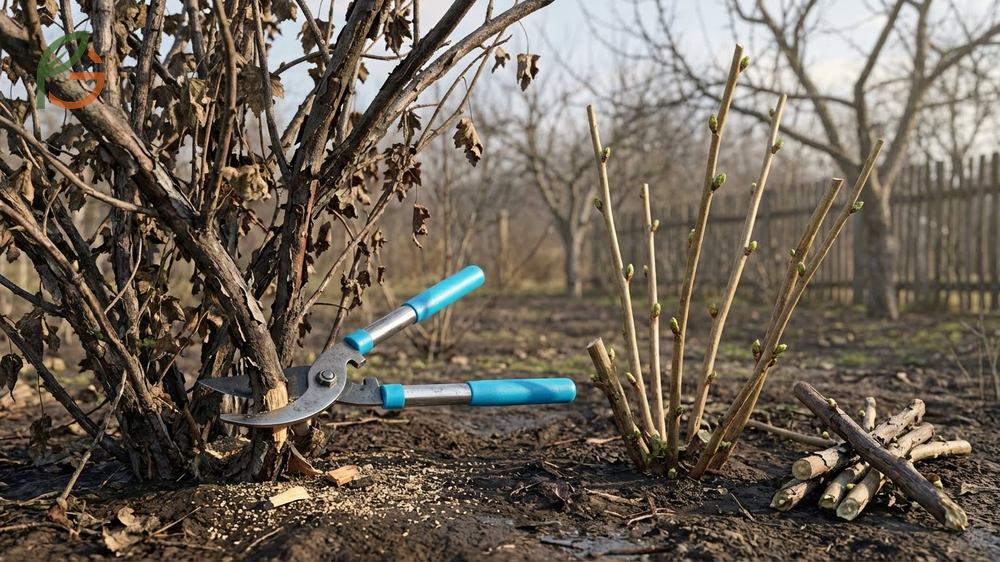
Neglected currant bushes respond remarkably well to aggressive renovation pruning. Current horticultural data shows that overgrown bushes pruned back hard in late winter can return to full production within 2-3 seasons[7]. This dramatic approach sacrifices one year’s harvest to rebuild a productive framework that lasts another 10-15 years.
Start rejuvenation by removing all stems thicker than 1.5 inches at the base—these ancient canes contribute little fruit and drain resources. Cut them flush with the ground without leaving stubs. Next, thin remaining stems to the 6-8 strongest, healthiest shoots, eliminating anything weak, diseased, or poorly positioned.
The first summer after hard pruning produces explosive vegetative growth but minimal fruit. Don’t panic—this vigor signals successful renovation. By year two, fruit production rebounds to 50-70% of pre-pruning levels. Year three typically exceeds the original neglected bush’s output by 30-40% thanks to rejuvenated wood and improved structure.
Rejuvenation Warning: Never attempt to rejuvenate bushes during active growth season. Late winter dormancy allows plants to heal and redirect energy into new shoots. Spring or summer renovation severely stresses bushes and invites disease through open wounds.
Fertilize rejuvenated bushes generously to support regrowth. Apply 1/3 pound of balanced 10-10-10 fertilizer per bush in early spring, watering thoroughly afterward. Mulch with 2-3 inches of compost or wood chips to conserve moisture and suppress weeds that compete with recovering roots.
- Year 1: Remove all stems thicker than 1.5 inches and thin to 6-8 strongest shoots total
- Apply balanced fertilizer at 1/3 lb per bush immediately after pruning to fuel regrowth
- Expect minimal to no fruit production in first season while plant focuses on vegetative recovery
- Year 2: Allow new shoots to grow without pruning; production returns to 50-70% of pre-renovation levels
- Year 3: Resume normal annual pruning routine; yields exceed original neglected bush by 30-40%[7]
Increase Currant Yield
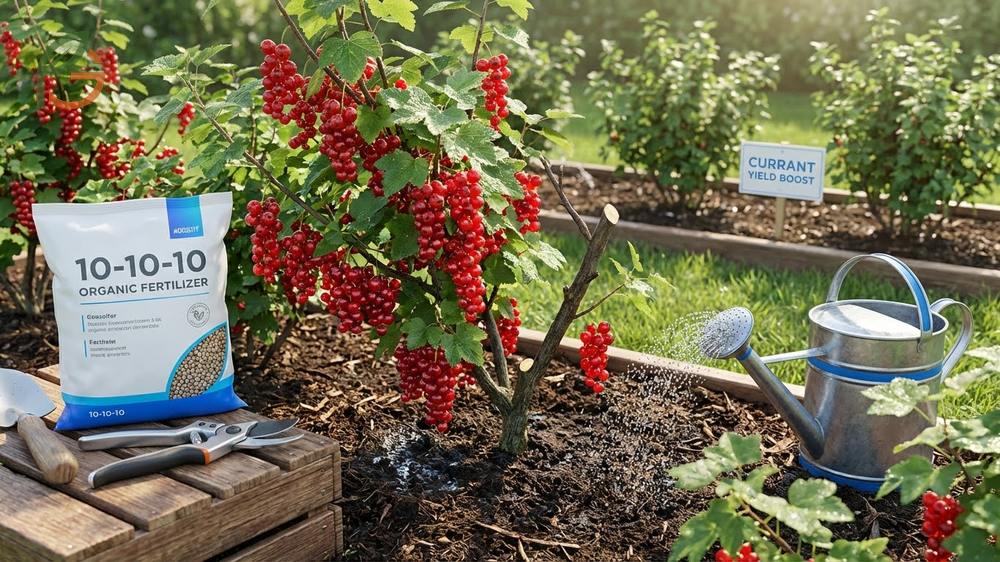
Combining proper pruning with strategic cultural practices multiplies currant production beyond what cutting alone achieves. Studies show that pruned bushes receiving adequate nitrogen produce 40-50% more fruit than pruned bushes in poor soil[8]. The synergy between pruning, feeding, watering, and site selection creates optimal conditions for heavy crops.
Nitrogen ranks as the most critical nutrient for currant productivity. Apply 1/4 to 1/3 pound of 10-10-10 fertilizer per year per bush in early spring before growth starts. Alternatively, use slightly more of a 4-4-4 organic blend or well-rotted manure spread 2-3 inches thick around the bush base.
Water management directly affects berry size and quantity. Currants have shallow roots needing consistent moisture—provide 1-2 inches per week through drip irrigation or soaker hoses from flowering through harvest[8]. Mulch with 2-4 inches of wood chips or pine needles to retain soil moisture and keep roots cool.
Site selection matters enormously for maximum yields. Full sun locations in northern climates produce the heaviest crops, while light afternoon shade benefits bushes in hot southern regions. Protection from strong winds prevents branch breakage and reduces stress on fruit-laden limbs. Well-drained soil with pH 6.0-6.5 supports robust growth and nutrient uptake.
| Practice | Impact on Yield | Application Details |
|---|---|---|
| Annual Pruning | +30-40% increase[4] | Late winter removal of old/weak wood |
| Nitrogen Fertilization | +40-50% on pruned bushes[8] | 1/4-1/3 lb 10-10-10 per bush annually |
| Consistent Watering | +25-30% berry size | 1-2 inches weekly through harvest[8] |
| Mulching | Reduces water stress by 60% | 2-4 inches wood chips or pine needles |
| Full Sun Exposure | +35-45% vs shade | 6-8 hours direct sunlight daily |
- Plant multiple varieties for cross-pollination—increases fruit set by 15-20% even though currants are self-fertile
- Thin fruit clusters when young if extremely heavy—improves remaining berry size without reducing total yield weight
- Apply compost annually in spring—2-3 inch layer provides slow-release nutrients and improves soil structure
- Protect ripening fruit with bird netting—prevents losses of up to 50% of crop to birds in unprotected bushes
- Monitor for aphids and sawfly larvae weekly during growing season—early control prevents 20-30% yield losses
- Maintain soil pH between 6.0-6.5 through annual testing—optimal range maximizes nutrient availability
Conclusion
The evidence is clear: pruning currant bushes annually in late winter transforms them from modest producers into prolific fruiting machines yielding 2-6 lbs per bush for 15-20 years. Black currants need aggressive removal of one-third of old stems to force productive new wood, while red currants thrive with spur pruning on maintained framework branches. Combining proper cutting technique with adequate fertilization, consistent watering, and full sun exposure can double or triple yields compared to neglected bushes.
Current horticultural guidance emphasizes starting with high-quality plants, establishing correct framework in the first 2-3 years, then maintaining that structure through systematic annual pruning. FruitGarden synthesizes research-backed practices to help gardeners achieve consistent, abundant harvests that reward the modest time investment pruning requires.
Frequently Asked Questions
What is the best month to prune currant bushes?
Late February to early March works best for most US regions when plants remain dormant but severe cold has passed. Northern gardeners in zones 3-5 wait until mid-February, while southern growers in zones 7-8 can start in late January[6].
Can I prune currants in summer?
Mid-July summer pruning benefits red and white currant cordons and vigorous bush varieties by controlling excessive growth. Black currants should never be pruned in summer as they don’t benefit from growing-season cuts. Limit summer work to shortening side shoots to 2-3 leaves on affected plants only[1].
How do I tell the difference between black currant and red currant pruning?
Black currants fruit on one-year-old wood so you remove one-third of the oldest stems annually at ground level to stimulate new growth. Red currants produce on two- to three-year-old spurs, requiring you to maintain 8-12 permanent framework branches and prune side shoots to 1-2 buds each winter to encourage spur formation.
How much fruit does a currant bush produce?
A healthy, well-pruned black currant bush yields 4-6 lbs (1.8-2.7 kg) of fruit annually. Red and white currants typically produce 2-4 lbs (0.9-1.8 kg) per bush. Yields depend heavily on variety, soil fertility, and consistent annual pruning to maintain vigorous fruiting wood[3].
What happens if I don’t prune my currant bushes?
Unpruned bushes become overcrowded, leading to poor air circulation and a 60% higher risk of fungal diseases like powdery mildew. Fruit size decreases significantly as the bush wastes energy on unproductive wood, and overall yields drop as old branches decline without being replaced by vigorous new shoots.
Can I prune currant bushes in the fall?
Avoid pruning in autumn. Fresh cuts made in fall can lead to winter injury, dieback, and increased susceptibility to diseases entering through open wounds during wet weather. Always wait until late winter or early spring (January-March) when the plant is dormant but the harshest frosts have passed.
How do I rejuvenate an old, neglected currant bush?
You can rejuvenate old bushes by removing all stems thicker than 1.5 inches at ground level in late winter. Alternatively, cut the entire bush down to 2 inches above the soil. This sacrifices one harvest but stimulates vigorous new growth that will restore full production within 2-3 years[7].





