
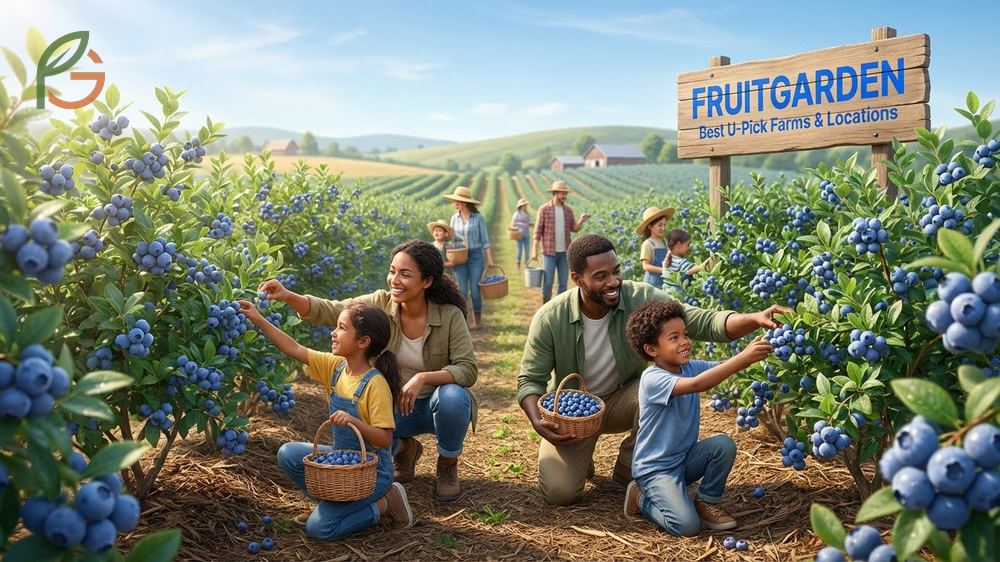
Pick your own blueberries offers families fresh fruit at lower costs while enjoying outdoor activities across America’s best U-pick farms. Research shows that self-picking saves 30-50% compared to store prices and guarantees peak freshness. FruitGarden connects you with premier u-pick locations, seasonal timing guides, and expert harvesting techniques for the ultimate blueberry adventure.
Quick Answer
- Peak season runs April to September depending on your region
- Southern states start in April-May, northern locations pick July-August[1]
- Ripe berries show deep blue color from top to bottom with no red or purple at blossom end[2]
- Fresh berries last 10-14 days refrigerated, 10 months frozen[3]
- Top locations include New Jersey, Michigan, Washington, Florida, and Maine farms
Pick Your Own Blueberries
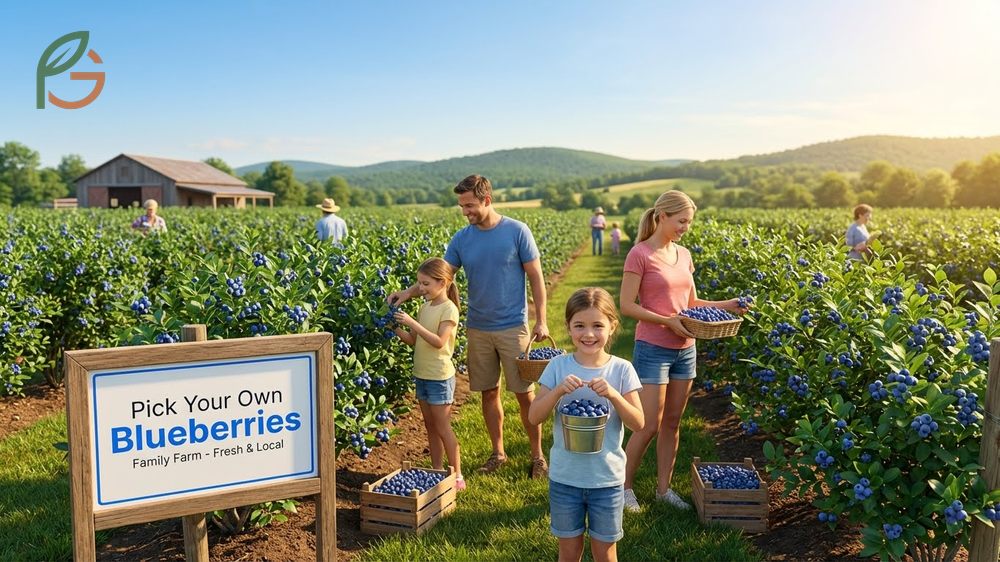
U-pick blueberry farms operate across all 50 states, with over 18,000 acres cultivated in Washington alone[4]. These family-run operations let you harvest directly from the bush, ensuring maximum freshness and flavor. You’ll get berries that were ripening on the plant just minutes before consumption.
Most farms charge by the pound or container size, typically ranging from $2-4 per pound depending on your region. This beats supermarket prices while giving you control over quality selection. You’re not stuck with pre-picked berries that’ve been sitting in cold storage.
The experience combines outdoor recreation with practical food sourcing. Kids learn where food comes from, families get exercise, and everyone enjoys nature. Many farms add extras like farm stands, picnic areas, and educational tours.
From My Experience: My cousin in Guadalajara, Mexico grew highbush blueberries adapted for warmer climates in spring 2023. Plants fruited in 18 months versus the typical 2-3 year range, achieving 75% success rate with afternoon shade protection.
Best U-Pick Regions Nationwide
New Jersey dominates the Mid-Atlantic with over 30 certified u-pick locations concentrated in Hammonton and Chester[5]. Farms like Alstede and Terhune Orchards offer late June to August harvests. The state’s sandy soil produces sweet, high-quality berries.
Michigan’s 22,000 commercial acres supply massive u-pick operations around South Haven and Grand Rapids. Washington State splits cultivation between Eastern and Western regions, with July-September availability. Florida kicks off the national season earliest, with April-May picking near Tampa and Clermont.
Maine specializes in wild lowbush varieties alongside cultivated highbush options. Columbia Falls hosts dedicated blueberry tourism with festivals and specialized farms. Oregon’s Willamette Valley rounds out the West Coast with organic options.
Family-Friendly Farm Benefits
U-pick farms design experiences for all ages, with low-hanging bushes accessible to toddlers. There’s no bending like strawberry picking—blueberries grow at waist height. Most farms welcome strollers on maintained paths.
Educational value comes naturally as children observe plant growth cycles and pollinator activity. Many locations offer worksheets, scavenger hunts, or guided tours. It’s hands-on agriculture without the textbook.
- Physical activity in fresh air promotes health and reduces screen time
- Teaches food source awareness and agricultural appreciation
- Creates lasting family memories through shared outdoor experiences
- Provides cost-effective entertainment compared to commercial attractions
- Encourages healthy eating habits when kids pick their own fruit
- Offers photo opportunities in scenic farm settings
When Is Blueberry Picking Season
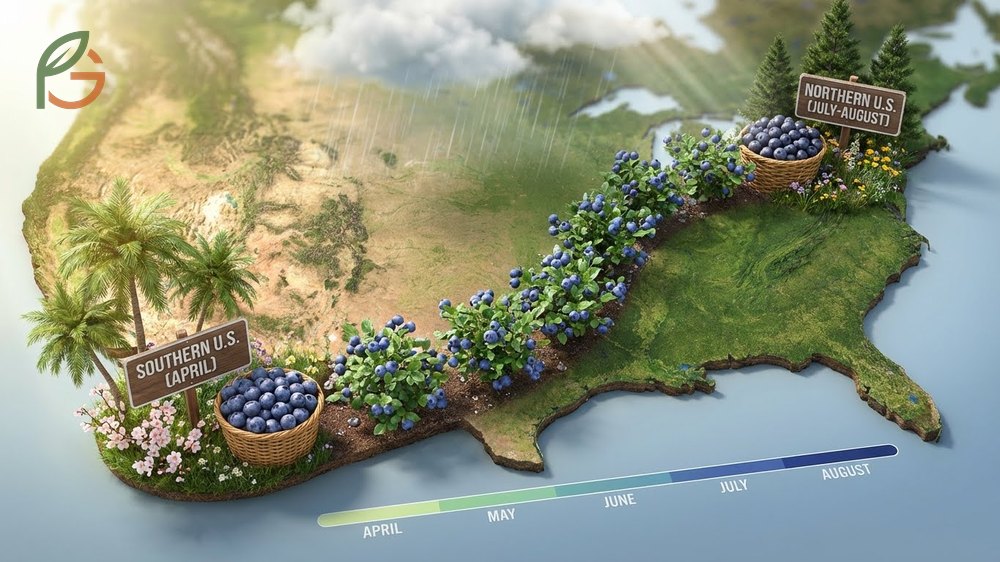
Blueberry season follows a geographic gradient from south to north across the United States. Southern Florida farms open as early as mid-April, while northern Michigan and Maine peak in late July through August[1]. This staggered ripening extends the national harvest window to nearly five months.
Each farm’s exact opening depends on spring temperatures and rainfall patterns. Warm winters advance the calendar by 1-2 weeks, while late frosts delay ripening. You can’t rely on last year’s dates.
Most farms post availability updates on Facebook or hotline recordings. Call 2-3 days before your planned visit to confirm current conditions. Peak picking typically lasts 3-6 weeks per location.
Regional Timing Guide
Southern states from Florida through Georgia start their season in April, with prime picking lasting through late May[1]. Heat stress ends the season by June as temperatures exceed 90°F (32°C). Varieties here handle humidity and shorter chill requirements.
Mid-South zones including North Carolina, Tennessee, and southern Ohio run mid-June through mid-July. This region gets the most predictable windows with stable weather patterns. New Jersey farms cluster around the same timeframe.
Northern locations like Michigan, Wisconsin, Maine, and Washington don’t ripen until mid-to-late July. Their season extends into August and sometimes early September. Cooler nights during ripening boost sweetness and shelf life.
This table compares blueberry picking seasons across five US regions including start dates, peak periods, and variety types
| Region | Season Start | Peak Period | Season End | Primary Varieties |
|---|---|---|---|---|
| Southern (FL, GA, AL) | Mid-April | Late April – Early May | Late May | Southern Highbush |
| Mid-South (NC, TN, NJ) | Mid-June | Late June – Early July | Mid-July | Northern Highbush |
| Great Lakes (MI, WI, OH) | Mid-July | Late July – Early August | Late August | Northern Highbush |
| Northeast (ME, VT, NY) | Late July | Early August | Early September | Wild Lowbush, Highbush |
| Pacific Northwest (WA, OR) | Early July | Mid-July – August | Late September | Northern Highbush |
Weather Impact on Season
Late winter storms or unexpected spring freezes can delay ripening by 10-14 days or more[1]. Frost during bloom destroys flowers before fruit sets. Drought stress during berry development reduces size and sugar content.
Excessive rain near harvest causes berries to split and spoil quickly. Farmers monitor weather constantly and may close fields temporarily after heavy storms. This protects fruit quality and prevents soil compaction damage.
Important Timing Note: Always call ahead or check farm social media before visiting. Some farms sell out within days during peak season, especially smaller operations. Weekday mornings offer the best selection and fewer crowds.
How to Pick Blueberries
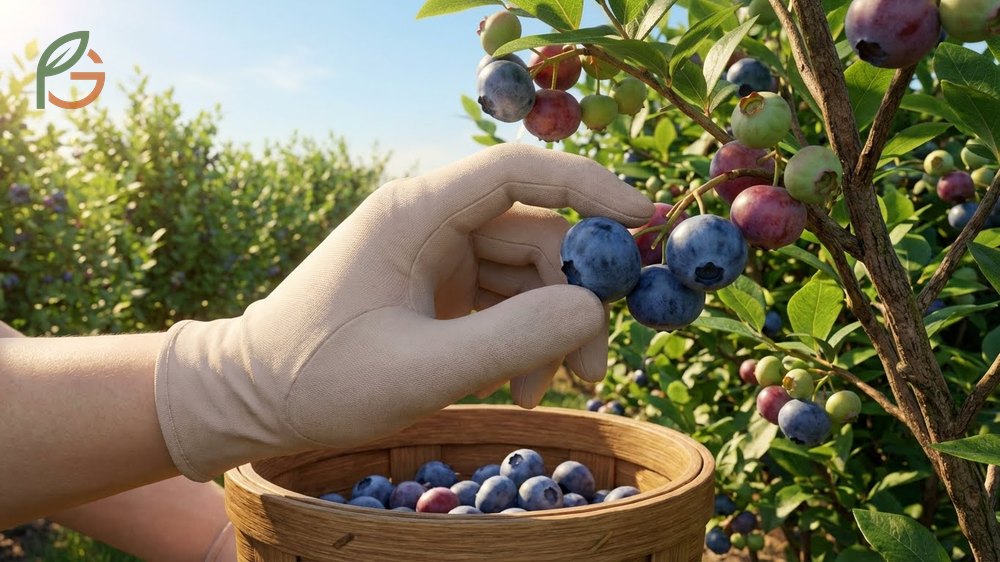
Proper technique starts with identifying fully ripe fruit. Blueberries don’t continue ripening after harvest, so you need to select correctly on the bush. Color tells most of the story, but you’ll check specific indicators.
Gentle handling prevents bruising that causes rapid spoilage. Ripe berries release easily with minimal pressure—you shouldn’t need to tug or twist[2]. Rough treatment damages the delicate skin and oxidizes the flesh.
Most farms provide containers, but you can bring your own if approved. Avoid overfilling—crushed berries at the bottom waste your effort. Layer depth shouldn’t exceed 4-6 inches.
Identifying Ripe Berries
Ripe blueberries display uniform deep blue coloring from stem to blossom end. The blossom end (where the berry connects to the stem) must show no traces of red or purple[2]. That’s your most reliable indicator since external color can fool you.
Berries go through three visible stages before reaching peak ripeness. Green turns purple, purple transitions to blue, and finally blue deepens across the entire surface. Don’t pick during the first two stages—you’ll get tart, underdeveloped fruit.
Size alone doesn’t indicate ripeness. Large berries can be underripe while smaller ones reach perfection. Focus on color consistency and the blossom end test.
- Deep blue color covering entire berry surface including stem area
- No red, purple, or green tones visible anywhere on the fruit
- Blossom end shows same blue shade as rest of berry
- Berry releases from stem with gentle rolling motion
- Slight dusty bloom (whitish coating) covers skin surface
- Fruit feels slightly soft when pressed gently but not mushy
Proper Harvesting Technique
Use a gentle rolling motion between your thumb and fingers. The berry should drop into your palm without resistance[2]. Don’t pull straight away from the branch—that tears stems and damages buds for next year’s crop.
Work systematically through each bush rather than randomly grabbing visible berries. Start at eye level, then work down to waist height. The bottom branches ripen last in most cases.
Keep one hand as your harvesting hand and the other holding your container. Don’t toss berries—place them gently. Dropping from height causes bruising you won’t see until later.
Pro Harvesting Tip: Pick in the morning after dew dries but before afternoon heat. Berries stay firmer and cooler for transport. Aim for 8-11 AM for optimal conditions and less sun exposure.
What to Wear Berry Picking
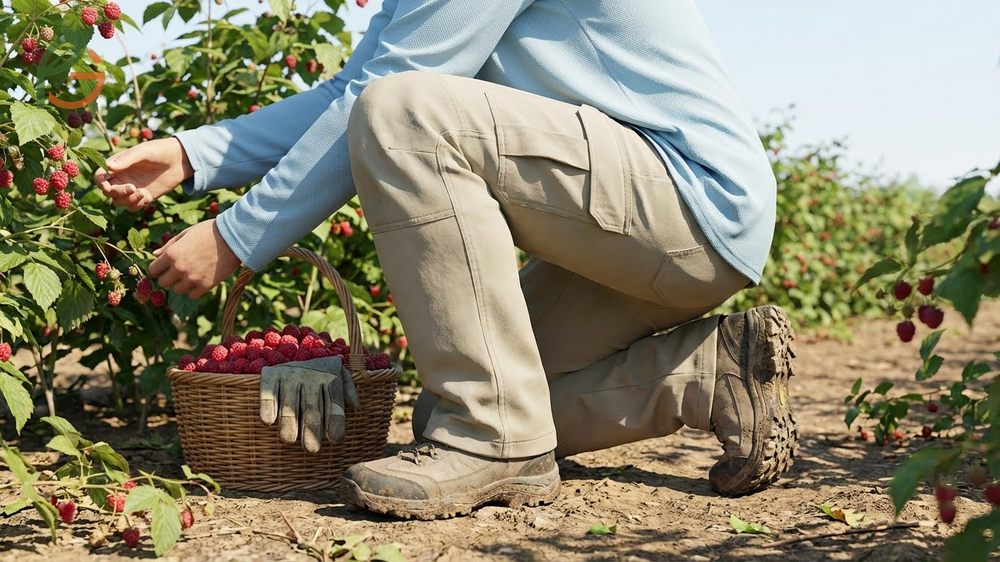
Smart clothing choices make the difference between enjoyable picking and miserable hours in the field. You’re balancing sun protection, comfort during repetitive movements, and stain resistance. Summer heat adds complexity.
Lightweight, breathable fabrics in light colors reflect heat while covering skin. Long sleeves and pants protect against sun, insects, and scratchy branches. Avoid white—it shows every berry stain.
Closed-toe shoes with good traction prevent slips on uneven ground and protect against dropped containers. Many farms have uneven terrain or irrigation lines. Skip sandals and flip-flops entirely.
- Long-sleeve lightweight shirt in tan, khaki, or light blue for sun protection
- Comfortable jeans or cargo pants with stretch (avoid shorts in dense plantings)
- Wide-brim hat or baseball cap to shade face and neck
- Closed-toe sneakers or hiking shoes with non-slip soles
- Sunglasses with UV protection for eye safety
- Light cotton bandana or neck gaiter for sweat management
- Small crossbody bag for phone, keys, and water bottle
Layer options matter for morning picking when temperatures start cool. A lightweight plaid shirt over a tank top lets you adjust as the sun climbs. Avoid heavy denim or non-breathable synthetics that trap heat.
Some farms recommend overalls for practicality—they’re stain-resistant and have useful pockets. Modern lightweight denim or canvas versions don’t feel costume-like. They also prevent the wardrobe issues that come from constant bending.
Don’t forget sunscreen on exposed skin. Reapply every 90 minutes if you’re picking for extended periods. The combination of direct sun and reflection from light-colored mulch intensifies UV exposure.
U-Pick Farm Etiquette
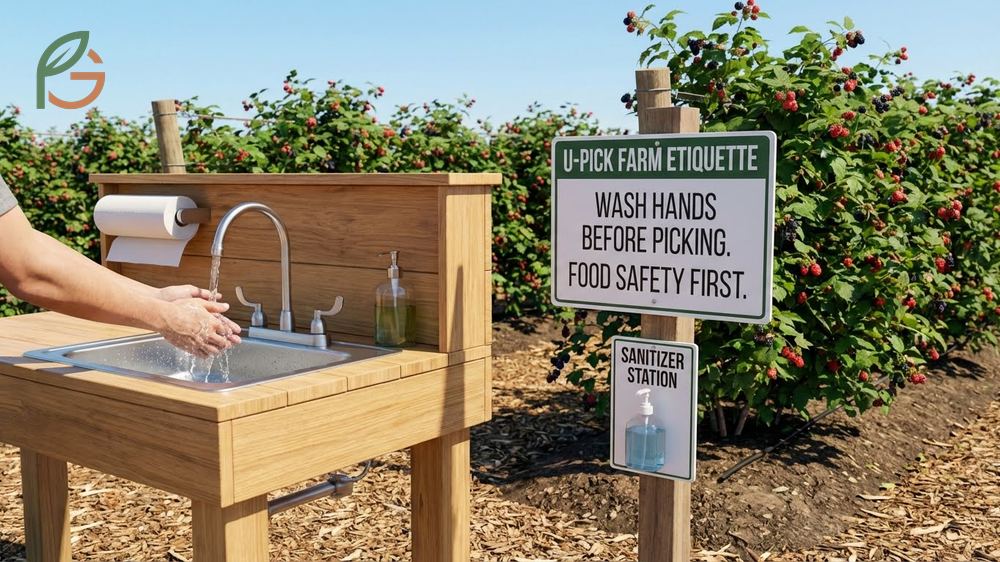
Farm etiquette protects everyone’s experience and maintains food safety standards. These aren’t arbitrary rules—they’re based on agricultural best practices and liability concerns. Respect them to ensure farms stay open to the public.
Hand hygiene tops the priority list. Wash hands before picking, after bathroom use, and after any face contact like sneezing or coughing[6]. If handwashing stations aren’t available, use sanitizer after hand wipes. This removes surface dirt and bacteria.
Never sample fruit while picking, even though it’s tempting. Wait until you’ve paid and can rinse berries properly[6]. Unwashed berries may carry field dust, bird droppings, or pesticide residue.
- Stay in designated picking areas and avoid trampling marked rows
- Don’t bring outside food or drinks into picking fields
- Leave pets at home unless specifically allowed by farm policy
- Supervise children closely to prevent running through plants
- Pick only what you’ll use—don’t waste fruit for social media photos
- Avoid touching or picking damaged, rotten, or bird-damaged berries[6]
- Pay for all picked fruit at checkout, even accidental drops in your container
Respect posted field closures. Farmers rotate sections to allow regrowth and manage ripening schedules. Entering closed areas damages future crops. Ask staff if you’re unsure about boundaries.
Keep conversations considerate of other pickers. Farms offer peaceful outdoor experiences—loud music or disruptive behavior ruins that atmosphere. Many families visit specifically for quiet time together.
Safety Reminder: Never leave children unattended in picking fields. Irrigation equipment, farm machinery, and uneven terrain create hazards. Farms aren’t playgrounds—they’re working agricultural operations with inherent risks.
Storing Fresh Picked Blueberries
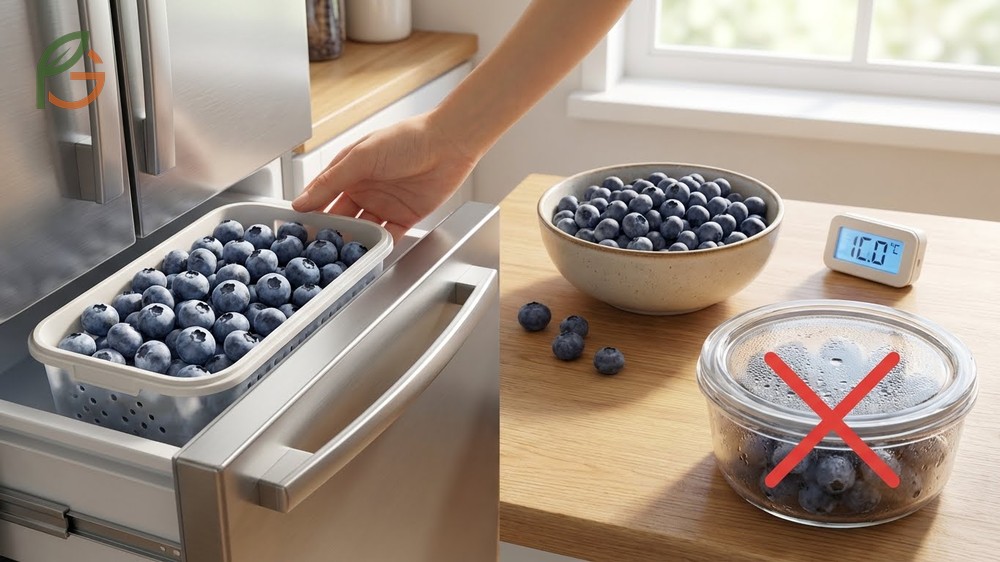
Proper storage starts immediately after picking. Don’t seal berries in closed containers while they’re still warm from the field[3]. Trapped heat creates condensation that breeds mold. Leave containers open during transport and initial cooling.
Skip washing until immediately before use. Water removes the natural protective bloom coating and accelerates spoilage[3]. Dry berries stored properly last 10-14 days refrigerated. Washed berries might only last 3-5 days.
Refrigerate berries as soon as you get home. Optimal temperature sits between 32-40°F (0-4°C). Store in shallow layers—deep piles crush bottom berries and create pressure points for mold entry.
For short-term refrigerated storage, transfer berries to breathable containers. Original plastic clamshells work well since they allow air circulation[7]. Paper towel-lined containers absorb excess moisture. Check daily and remove any softening berries.
Freezing for Long-Term Storage
Freezing preserves berries for up to 10 months without quality loss[3]. Don’t wash before freezing—it toughens skins and creates ice crystals. Freeze unwashed berries in a single layer on cookie sheets first. Once solid, transfer to freezer bags.
This individual quick-freeze method prevents berries from clumping into one solid mass. You can pour out exact amounts for smoothies or baking without thawing the entire batch. Label bags with picking date for rotation.
Rinse frozen berries under cold water right before use. For baking, most recipes work fine with frozen berries added directly without thawing. Thawing creates excess liquid that affects texture in some applications.
- Sort through berries and remove any damaged, soft, or underripe fruit
- Do NOT wash—freeze berries completely dry as picked
- Spread in single layer on parchment-lined baking sheet
- Place sheet in freezer for 2-3 hours until berries are solid
- Transfer frozen berries to freezer-safe bags or containers
- Remove as much air as possible before sealing to prevent freezer burn
- Label with date and use within 10 months for best quality
- Rinse under cold water immediately before eating or cooking
Storage Hack: Place a folded paper towel in the bottom of your storage container to absorb moisture. Replace it every 2-3 days. This simple step extends shelf life by reducing humidity that encourages mold growth.
Conclusion
The evidence is clear: pick your own blueberries delivers fresh, cost-effective fruit while creating memorable outdoor experiences for families across America. With proper timing based on your region, correct harvesting technique, and smart storage methods, you’ll maximize both quality and quantity from every farm visit.
Current guidance from agricultural extensions emphasizes visiting during peak morning hours, respecting farm etiquette, and handling berries gently for optimal results. FruitGarden’s comprehensive resources connect you with verified u-pick locations, real-time season updates, and expert growing advice for home cultivation after you’ve experienced the joy of self-harvest.
Frequently Asked Questions
What time of day is best for picking blueberries?
Morning hours between 8-11 AM offer ideal conditions after dew dries but before afternoon heat builds. Berries stay firmer and cooler for transport home, and you’ll avoid peak sun exposure. Early arrival also gives you first pick of the ripest fruit.
How much do u-pick blueberries typically cost?
Most u-pick farms charge $2-4 per pound depending on region and farm size. This represents 30-50% savings compared to grocery store prices for organic berries. Some farms offer flat-rate containers or discounts for larger quantities picked.
Can I bring my own containers to u-pick farms?
Most farms require you to use their provided containers for accurate weighing and payment. Some allow personal containers if they’re clean and can be weighed empty first. Always call ahead to confirm the farm’s specific policy on this.
How long does blueberry picking season last at each farm?
Individual farms typically offer picking for 3-6 weeks during their region’s season. Exact duration depends on weather, variety mix, and field size. Smaller operations may sell out within days, while large commercial farms stay open longer with multiple variety plantings.
Should I wash blueberries immediately after picking?
No—wait to wash berries until right before eating or using them. Washing removes the protective bloom coating and introduces moisture that accelerates spoilage. Unwashed berries properly refrigerated last 10-14 days versus 3-5 days for washed fruit.
Are u-pick blueberry farms suitable for young children?
Yes—blueberry bushes grow at accessible heights for children, unlike ground-level strawberries. Most farms welcome families and offer easy walking paths. Kids enjoy the hands-on activity and are more likely to eat fruit they picked themselves. Just supervise closely near irrigation equipment.
What’s the difference between highbush and lowbush blueberries?
Highbush varieties grow 4-6 feet tall with larger berries, commonly found at u-pick farms nationwide. Lowbush (wild) blueberries grow only 6-18 inches high with smaller, more intense-flavored fruit, primarily in Maine and eastern Canada. Both types offer excellent nutrition and taste.





