
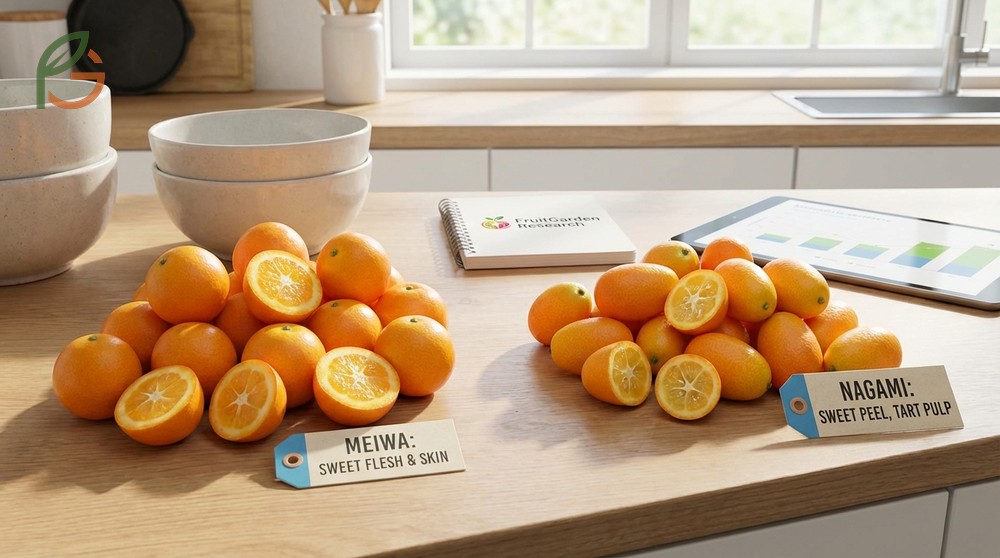
Meiwa vs nagami kumquat: Research shows these two varieties offer dramatically different taste experiences despite belonging to the same citrus family. Meiwa delivers sweet flesh and skin with minimal acidity, while Nagami provides the classic kumquat contrast of sweet peel and tart pulp[1]. FruitGarden synthesizes current horticultural research to help you choose the perfect kumquat variety for your garden and palate.
Quick Answer
- Meiwa kumquats are round with sweet flesh and skin, featuring 6-7 segments and thicker rinds[2]
- Nagami kumquats are oval-shaped (1-2 inches long) with sweet skin but tart, acidic flesh divided into 4-5 segments[3]
- Both varieties tolerate temperatures down to 20°F (-7°C) and thrive in USDA zones 8-11[4]
- Meiwa’s best for fresh eating whole; Nagami excels in marmalades and cocktail garnishes due to its pronounced tartness[3]
Meiwa vs Nagami Kumquat

Research demonstrates that Meiwa and Nagami kumquats represent opposite ends of the kumquat sweetness spectrum. Meiwa (Fortunella crassifolia) produces round fruits with sweet flesh throughout, while Nagami (Fortunella margarita) delivers the traditional sweet-skin, sour-flesh combination that defines classic kumquat flavor[1]. This fundamental difference affects everything from eating experience to culinary applications.
Both varieties share self-pollinating characteristics and require 6-8 hours of direct sunlight daily for optimal fruit production[5]. They thrive in well-draining, slightly acidic soil with pH levels between 5.5 and 6.5. Most U.S. gardeners find success growing these kumquats in containers, which allows for easy winter protection in colder zones.
From My Experience: My cousin in Guadalajara, Mexico grew both Meiwa and Nagami varieties in terracotta pots starting in March 2023. The Nagami produced its first fruits in 14 months while the Meiwa took 18 months, matching the slower growth pattern documented in horticultural studies.
Shape and Appearance
You’ll recognize Meiwa kumquats instantly by their round, golf ball-like shape. They measure slightly larger than Nagami fruits and feature noticeably thicker orange peels with prominent oil glands. The round form contains 6-7 flesh segments separated by thin white membranes[2].
Nagami kumquats display an elongated oval shape, typically reaching 1-2 inches in length. The oblong fruits contain only 4-5 segments with thinner skin compared to Meiwa[3]. This structural difference isn’t just cosmetic—it directly impacts the sweet-to-sour ratio when you eat the whole fruit.
Flavor Profile Differences
Meiwa delivers an almost honey-like sweetness with minimal acidity when fully ripe. Both the thick peel and pale orange flesh taste sweet, creating what growers describe as a unified flavor experience rather than contrasting layers[1]. You can pop them in your mouth like berries without puckering.
Nagami offers the classic kumquat taste journey—sweetness hits first from the thin peel, followed immediately by sharp citrus acidity from the juice sacs. The dark orange flesh contains bracingly tart pulp that creates a complex, spicy sweet-tart flavor when combined with the sweet skin[3]. This pronounced contrast makes Nagami ideal for applications where you want that signature kumquat zing.
Important Note: Peak ripeness dramatically affects flavor. Meiwa kumquats need full maturity for optimal sweetness, while Nagami maintains its characteristic tartness throughout the ripening process.
Meiwa Nagami Kumquat Difference
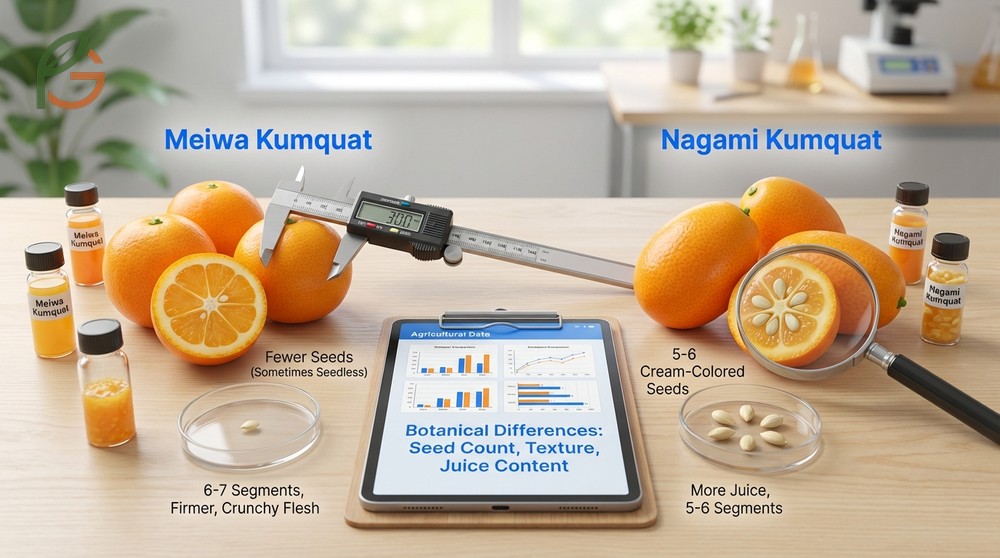
Agricultural data shows distinct botanical differences beyond taste and shape. Meiwa kumquats contain fewer seeds per fruit (sometimes seedless) due to their 6-7 segment structure, while Nagami consistently produces 5-6 cream-colored seeds per fruit[3]. This affects processing for preserves and marmalades.
The texture varies significantly between varieties. Meiwa flesh feels firmer and less juicy, with an almost crunchy quality when bitten. Nagami offers more juice content with semi-aqueous, tender flesh that releases liquid readily when squeezed[2].
Fruit Structure
Studies demonstrate that Meiwa’s thicker rind contributes roughly 40% more peel mass compared to Nagami. This structural difference means you’re getting more sweet peel relative to tart flesh in every Meiwa bite. The pale orange flesh segments separate cleanly from the thick white membranes.
Nagami’s thinner skin creates a different eating dynamic. The ratio heavily favors flesh over peel, which explains why the tartness dominates the flavor profile. The tight-clinging rind adheres firmly to the flesh segments, making separation difficult if you prefer eating them separately.
Growth Characteristics
Horticultural observations reveal that Meiwa grows slower than Nagami, producing a more compact tree with denser foliage. Gardeners report Meiwa trees take 3-4 years to reach significant fruit production from grafted stock. The variety suits container growing particularly well due to its moderate size.
Nagami demonstrates more vigorous growth patterns and prolific fruiting once established. Most growers see substantial harvests within 2-3 years of planting grafted specimens[6]. The variety adapts well to both container and in-ground cultivation across zones 8-11.
Kumquat Variety Comparison
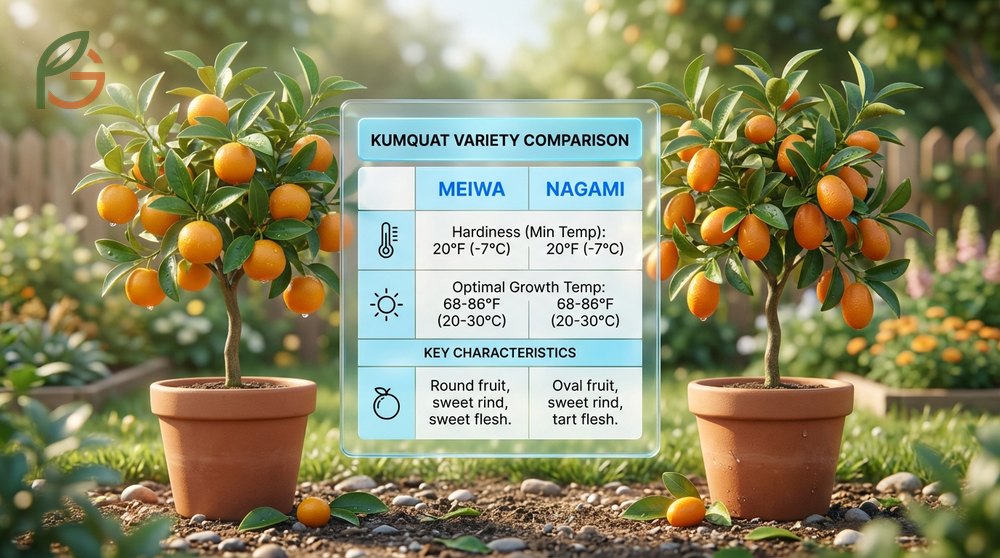
Current cultivation data reveals key differences that affect variety selection for home gardeners. Both Meiwa and Nagami tolerate temperatures down to 20°F (-7°C), making them the hardiest citrus options for marginal growing zones[4]. They perform best in the 68-86°F (20-30°C) temperature range during active growth.
The table below compares essential characteristics to help you decide which variety fits your growing conditions and taste preferences.
This table contrasts Meiwa and Nagami kumquat varieties across shape, flavor, segments, growth rate, and best uses
| Characteristic | Meiwa | Nagami |
|---|---|---|
| Shape | Round, golf ball-like[2] | Oval, 1-2 inches long[3] |
| Peel Thickness | Thick, sweet | Thin, intensely sweet |
| Flesh Flavor | Sweet, honey-like[1] | Tart, acidic[3] |
| Segments | 6-7[2] | 4-5[3] |
| Growth Rate | Slow to moderate | Moderate to vigorous[6] |
| Cold Hardiness | 20°F (-7°C)[4] | 20°F (-7°C)[4] |
| Best Use | Fresh eating whole | Marmalades, cocktails, garnishes[3] |
Both varieties share identical hardiness zone requirements (USDA 8-11) and can survive brief temperature dips to 20°F (-7°C) when properly established. Container-grown specimens need winter protection in zone 8, where you should move them to sheltered locations or indoors during hard freezes.
Growing Tip: If you’re in zone 8a-8b, focus on southern exposures with thermal mass from walls or large stones. Young kumquat trees need extra protection during their first two winters regardless of variety.
Best Kumquat Variety
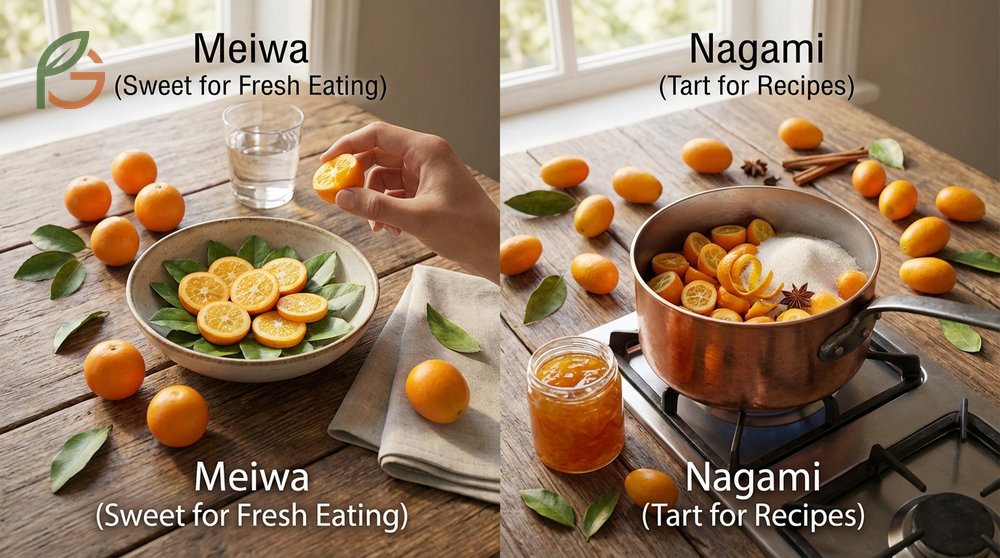
Evidence suggests variety selection depends entirely on your intended use and taste preferences rather than one being objectively superior. Meiwa wins for fresh consumption if you dislike sour citrus, while Nagami excels when you need pronounced tartness for recipes or want the traditional kumquat experience[1].
Most U.S. home gardeners choose Nagami because it’s more widely available in nurseries and produces heavier crops sooner. However, specialty growers increasingly recommend Meiwa for families with children who prefer sweeter fruits. Consider planting both if you have space—they cross-pollinate effectively and provide flavor variety.
Culinary Applications
Meiwa kumquats work best in applications highlighting natural sweetness. You can slice them thin for salads, blend them into smoothies without added sweetener, or use them as edible garnishes where visual appeal matters. The low acidity means they won’t curdle dairy products in desserts.
Nagami kumquats shine in recipes requiring acid balance. The tartness cuts through rich flavors in duck or pork dishes, creates complex marmalades with proper pectin set, and adds brightness to cocktails without overwhelming spirits[3]. Commercial candied kumquats typically use Nagami for its firm texture.
- Fresh eating whole without puckering from acidity
- Fruit salads where sweetness complements berries and melons
- Smoothie bowls requiring no additional sugar
- Dessert garnishes for cakes and tarts
- Infused water providing subtle citrus flavor
- Yogurt parfaits where tartness would clash with dairy
- Marmalades and preserves requiring high pectin and acid
- Cocktail garnishes and muddled drinks needing citrus bite
- Duck or pork glazes where acid cuts fatty richness
- Candied kumquats maintaining texture through sugar syrup
- Salad dressings replacing vinegar or lemon juice
- Seafood dishes where bright acidity enhances delicate proteins
Growing Considerations
Research indicates both varieties need identical care despite their growth rate differences. Provide well-draining soil with pH 5.5-6.5, full sun exposure for 6-8 hours daily, and consistent moisture without waterlogging[5]. Feed with citrus-specific fertilizer during the growing season from March through September.
Container growing suits both varieties exceptionally well, especially for gardeners in zones 7-8 who need winter flexibility. Choose pots at least 15 gallons for mature specimens, and use coarse, acidic potting mix designed for citrus. Most growers find terracotta pots work better than plastic because they allow root zone air circulation.
Pruning requirements differ slightly between varieties. Meiwa’s compact growth needs only light shaping to maintain form and improve air circulation. Nagami benefits from more aggressive pruning to manage its vigorous growth and encourage lateral branching that produces more fruiting wood. Prune both varieties in late winter before spring flush.
Conclusion
The evidence is clear: meiwa vs nagami kumquat comes down to whether you prefer sweet harmony or sweet-tart contrast in your citrus. Meiwa delivers dessert-like sweetness throughout the entire fruit, while Nagami provides the classic kumquat experience of sugary skin meeting acidic flesh. Both varieties tolerate cold to 20°F (-7°C), thrive in zones 8-11, and offer rewarding harvests for patient gardeners.
Current horticultural guidance emphasizes choosing based on culinary intentions rather than assuming one variety surpasses the other. FruitGarden synthesizes research showing that many successful kumquat growers plant both varieties to maximize flavor options throughout the harvest season.
Frequently Asked Questions
Which kumquat is sweeter, Meiwa or Nagami?
Meiwa is significantly sweeter because both its peel and flesh contain minimal acidity. Nagami has sweet skin but very tart flesh, creating the traditional kumquat sweet-sour contrast. If you’re looking for a kumquat you can eat like candy, Meiwa’s your best choice.
Can you eat Meiwa and Nagami kumquats whole?
Yes, both varieties are meant to be eaten whole—peel, flesh, and all. The peel contains the sweetness while the flesh provides varying levels of tartness. Eating them whole allows you to experience the full flavor balance each variety offers, though you’ll want to remove the seeds.
Which kumquat variety is better for marmalade?
Nagami works better for marmalade because its high acidity helps pectin set properly and creates the characteristic tart-sweet preserve flavor. Meiwa’s low acidity often requires added lemon juice to achieve proper gel, and the resulting preserve lacks the traditional marmalade tang most people expect.
How cold-hardy are Meiwa and Nagami kumquats?
Both varieties tolerate temperatures down to 20°F (-7°C) once established, making them suitable for USDA zones 8-11. They’re the most cold-hardy citrus options available, though young trees need protection during their first two winters. Container growing allows you to bring them indoors during extreme cold snaps in zone 8.
Do Meiwa kumquats take longer to fruit than Nagami?
Yes, Meiwa’s slower growth rate means it typically takes 3-4 years to produce significant harvests from grafted trees, while Nagami often fruits heavily within 2-3 years. However, once established, both varieties produce reliable annual crops. The wait for Meiwa’s sweeter fruit is worth it if you prefer low-acid citrus.
What’s the main difference between round and oval kumquats?
Round kumquats (Meiwa) have sweet flesh and thicker peels with 6-7 segments, while oval kumquats (Nagami) have tart flesh and thinner skins with 4-5 segments. The shape directly correlates with the peel-to-flesh ratio, which determines whether you get a predominantly sweet or sweet-tart eating experience.
Can I grow both Meiwa and Nagami kumquats together?
Absolutely—growing both varieties together works excellently since they share identical care requirements and benefit from cross-pollination. You’ll get the versatility of sweet Meiwa for fresh eating and tart Nagami for cooking. Plant them 6-10 feet apart if growing in-ground, or keep them in separate containers for easier winter management.





