

Lime vs. lemon health benefits differ primarily in vitamin C and micronutrient content. Research shows lemons contain nearly twice the vitamin C of limes—53mg versus 29mg per 100g—while limes deliver double the vitamin A and higher calcium levels[1]. Both citrus fruits support immune function and heart health through powerful flavonoids and antioxidants[2]. FruitGarden synthesizes current nutritional research to help gardeners and fruit enthusiasts understand which citrus varieties deliver specific health advantages.
Quick Answer
- Lemons provide 53mg vitamin C per 100g (88% daily value per fruit), nearly double lime’s 29mg[1]
- Limes contain twice the vitamin A and higher levels of calcium, copper, and zinc[3]
- Both deliver ~30 calories per 100g and share similar cardiovascular and immune-boosting benefits
- Choose lemons for maximum vitamin C, limes for bone-supporting calcium and vision-protecting vitamin A
Lime vs. Lemon Health Benefits
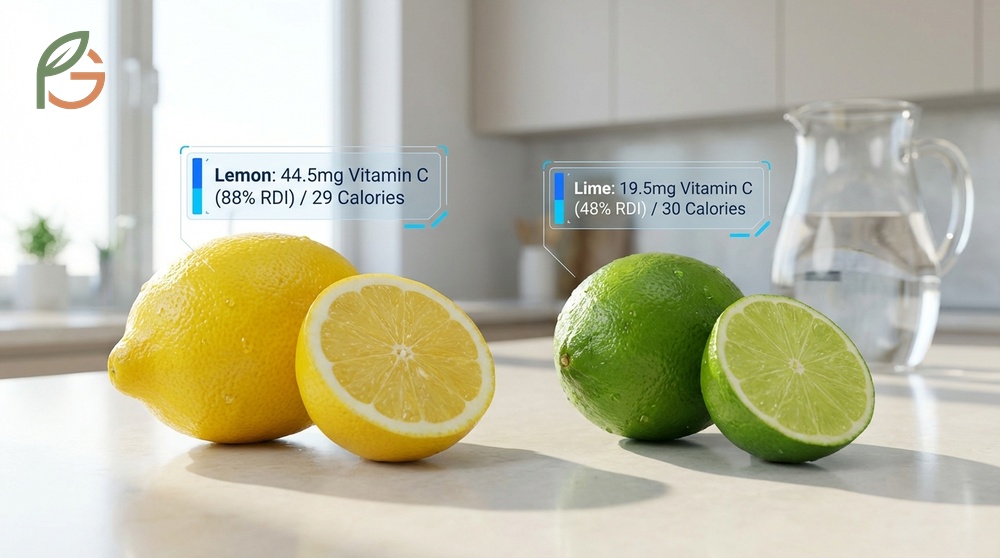
Studies demonstrate that lemons and limes offer distinct nutritional advantages despite their botanical similarities. Lemons deliver 44.5mg vitamin C per 84g fruit (88% of the Recommended Dietary Intake), while limes provide 19.5mg per 67g fruit (48% RDI)[1]. This difference matters for people who rely on citrus to meet daily vitamin C requirements.
Current data indicates both fruits share similar caloric values—lemons contain 29 calories per 100g while limes have 30 calories. The approximately 89% water content in both makes them excellent hydrating foods. Despite these similarities, their micronutrient profiles differ significantly.
Research across citrus cultivars shows limes excel in specific minerals that lemons can’t match. Limes contain substantially higher calcium (41.3mg vs. 27.9mg per 100g pulp)[3] and deliver twice the vitamin A content of lemons. These differences make each fruit valuable for different dietary needs.
Vitamin C Content Differences
Lemons provide approximately 53mg vitamin C per 100g, while limes offer 29mg per 100g according to USDA nutritional databases[1]. This 83% difference impacts how much citrus you’d need to consume daily.
Vitamin C serves as a critical cofactor for immune function, supporting neutrophil migration and enhancing phagocytosis[4]. For maximum vitamin C intake, choose lemons. One medium lemon meets nearly 90% of adult daily requirements versus lime’s 48%.
Mineral Composition Comparison
Mineral analysis reveals limes contain higher concentrations of calcium, copper, zinc, and phosphorus compared to lemons[3]. Lime pulp delivers 41.3mg calcium per 100g—48% more than lemon’s 27.9mg. This calcium difference supports bone density maintenance.
Conversely, lemons provide superior potassium (116mg vs. 68.3mg per fruit) and magnesium content[1]. Potassium regulates blood pressure and supports cardiovascular health through its role in water and electrolyte balance.
Important Note: Mineral content can vary by 20-30% depending on soil composition, growing conditions, and fruit variety. Choose organic citrus when possible for consistent nutrient profiles.
Nutritional Differences Citrus

Beyond vitamins and minerals, lemons and limes differ in their phytochemical composition. Both contain high levels of citric acid—lemon juice provides approximately 48g/L while lime juice contains 45.8g/L[1]. This acidity contributes to their antimicrobial properties and flavor profiles.
Evidence suggests citrus flavonoids—including hesperidin and naringenin—provide the most significant health benefits beyond basic nutrition. These compounds exhibit antioxidant, anti-inflammatory, and cardiovascular-protective effects[2]. Both lemons and limes contain these beneficial compounds in similar concentrations.
Macronutrient Breakdown
Macronutrient analysis shows minimal differences between the two fruits. Lemons contain approximately 9g carbohydrates per 100g versus lime’s 11g[1]. Both provide about 3g dietary fiber per 100g, supporting digestive health and blood sugar regulation.
Protein and fat content remain negligible in both—roughly 1g protein and less than 0.3g fat per 100g. This makes both fruits excellent low-calorie additions to weight management diets without sacrificing nutritional density.
- Both contain approximately 89% water, promoting hydration
- Provide 29-30 calories per 100g serving
- Deliver 3g dietary fiber for digestive support
- Contain minimal protein (1g) and virtually no fat
- Offer low glycemic impact suitable for diabetic diets
Vitamin Profile Variations
Vitamin A content distinguishes limes from lemons significantly. Limes contain 100% more vitamin A than lemons[3], supporting vision health and immune cell differentiation. This fat-soluble vitamin also maintains skin integrity and mucous membrane function.
Lemons provide higher levels of B vitamins, including vitamin B1 (thiamine), B6 (pyridoxine), and B9 (folate)[1]. These support energy metabolism and nervous system function. Neither fruit contains vitamins D or B12, so don’t rely on citrus alone for complete vitamin intake.
This table compares vitamin content between lemons and limes per 100g serving, showing vitamin C, A, B-complex, and E concentrations
| Vitamin | Lemon | Lime | Winner |
|---|---|---|---|
| Vitamin C | 53mg[1] | 29mg[1] | Lemon (+83%) |
| Vitamin A | 22 IU | 50 IU[3] | Lime (+127%) |
| Vitamin B6 | 0.08mg | 0.05mg | Lemon (+60%) |
| Folate (B9) | 11mcg[1] | 8mcg[1] | Lemon (+37%) |
| Vitamin E | 0.15mg | 0.22mg | Lime (+47%) |
Which Citrus Healthier
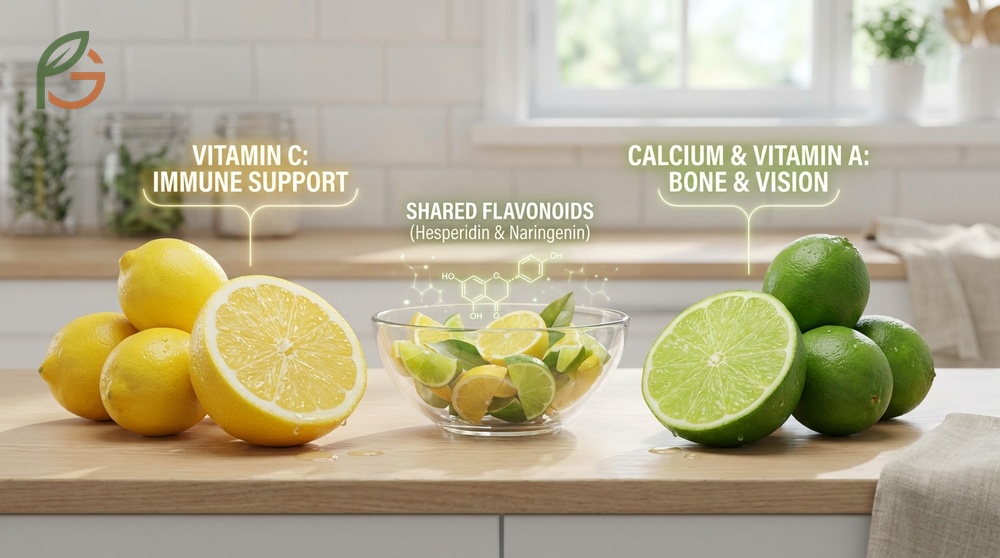
Current guidance emphasizes that neither lemon nor lime is objectively “healthier”—the choice depends on your specific nutritional needs. If you’re targeting maximum vitamin C intake for immune support, lemons win decisively. For calcium and vitamin A to support bone density and vision, limes take priority.
Agricultural data shows both fruits deliver similar health benefits through their shared flavonoid content. Hesperidin and naringenin—found in both citrus varieties—reduce cardiovascular disease risk by 52% in some cohort studies[2]. These compounds improve endothelial function and arterial flexibility regardless of which citrus you choose.
What often gets overlooked is that using citrus peel dramatically increases mineral intake. Lime peel contains 63.9mg calcium per 100g—55% more than the pulp alone[3]. Lemon peel similarly concentrates nutrients. Zesting citrus into dishes captures these additional benefits.
Immune System Benefits
Vitamin C contributes to immune defense by supporting neutrophil chemotaxis, enhancing phagocytosis, and protecting cells from oxidative stress during immune responses[4]. Lemons’ higher vitamin C content makes them more effective for this purpose. Studies show vitamin C supplementation increases serum IgA, IgG, and IgM antibody levels.
Both fruits contain flavonoids that modulate immune cell cytokine production. These compounds decrease pro-inflammatory TNF-α and IL-6 while increasing anti-inflammatory IL-10[4]. This anti-inflammatory action complements vitamin C’s direct immune effects.
- Stimulate neutrophil migration to infection sites
- Enhance phagocytic capacity of immune cells by 20%[4]
- Protect host tissue from excessive oxidative damage
- Support antibody production through vitamin C’s cofactor role
- Modulate inflammatory cytokine balance
- Provide antioxidants that regenerate other immune-protective compounds
Cardiovascular Health Effects
Citrus flavonoids benefit heart health through multiple mechanisms. They lower blood pressure by improving nitric oxide bioavailability and reducing arterial stiffness[2]. The potassium in both fruits—though higher in lemons—also contributes to blood pressure regulation.
Research demonstrates citrus consumption associates with reduced cardiovascular disease risk and ischemic stroke incidence. Higher intakes of citrus flavonoids correlate with 41% reduction in all-cause mortality in some populations[2]. Both lemons and limes provide these protective compounds in clinically relevant amounts.
Heart Health Tip: Potassium content matters more than vitamin C for blood pressure control. Lemons provide 116mg potassium per fruit versus lime’s 68mg. If you’re managing hypertension, prioritize lemons or combine both for variety.
Health Benefits Comparison

Beyond their nutritional differences, lemons and limes share remarkable therapeutic properties. Both exhibit alkalizing effects inside the body despite their acidic pH. Lemons show a PRAL (Potential Renal Acid Load) of -2.3 versus lime’s -1.7, meaning both become alkaline after metabolism. This counterintuitive property helps balance body pH.
Agricultural research across citrus varieties confirms both fruits possess antimicrobial properties. Their high citric acid content—combined with flavonoid compounds—inhibits bacterial and viral growth on mucous membranes. This explains traditional use of citrus for respiratory health support.
What’s often missed is the synergistic effect of consuming whole citrus. The fiber content slows sugar absorption, while flavonoids in the peel enhance antioxidant capacity beyond what pulp alone provides. Using both juice and zest maximizes health benefits.
Antioxidant Properties
Both citrus fruits deliver powerful antioxidant compounds that neutralize free radicals. Vitamin C acts as a primary antioxidant, directly scavenging reactive oxygen species and regenerating vitamin E[4]. Lemons provide stronger vitamin C antioxidant activity due to their higher concentration.
Citrus flavonoids contribute additional antioxidant effects through multiple pathways. They quench singlet oxygen, chelate metal ions that catalyze oxidation, and boost endogenous antioxidant enzyme systems. Studies show citrus extracts reduce oxidative DNA damage and lipid peroxidation by 60-70% in cell models.
- Neutralize free radicals that damage cellular DNA
- Protect membrane lipids from peroxidation
- Regenerate vitamin E and glutathione antioxidant systems
- Chelate pro-oxidant metal ions like iron and copper
- Support skin health through collagen protection
- May reduce risk of age-related eye diseases
Citrus Flavonoids Impact
Flavonoids represent the most bioactive compounds in both lemons and limes. These polyphenolic compounds modulate cellular signaling pathways involved in inflammation, metabolism, and cell survival[2]. Hesperidin and naringenin—the predominant citrus flavonoids—improve glucose tolerance and insulin sensitivity.
Research demonstrates citrus flavonoids exert anti-diabetic effects by enhancing glucose uptake in tissues and modulating lipid metabolism. They also suppress inflammatory adipokine production from fat tissue. These mechanisms explain why regular citrus consumption associates with reduced metabolic syndrome risk.
The bioavailability of flavonoids varies between lemon and lime, though both provide therapeutic doses. Consuming citrus with small amounts of fat enhances absorption of fat-soluble flavonoid components. Adding citrus to meals optimizes nutrient uptake.
| Mineral | Lemon | Lime | Primary Benefit |
|---|---|---|---|
| Calcium | 27.9mg | 41.3mg[3] | Bone density, muscle function |
| Potassium | 113mg[1] | 68.3mg | Blood pressure regulation |
| Magnesium | 8.4mg | 11.6mg | Energy production, nerve function |
| Iron | 0.28mg | 0.21mg | Oxygen transport, hemoglobin |
| Zinc | 0.17mg | 0.24mg[3] | Immune function, wound healing |
Conclusion
The evidence is clear: lime vs. lemon health benefits depend on your specific nutritional priorities. Lemons deliver superior vitamin C for immune support—53mg versus 29mg per 100g—making them ideal when fighting infections or supporting collagen production[1]. Limes excel in calcium and vitamin A, better supporting bone health and vision[3].
Current nutritional guidance emphasizes incorporating both citrus varieties into your diet for comprehensive benefits. The shared flavonoid content provides cardiovascular protection and metabolic support regardless of which you choose[2]. Growing both lemon and lime trees in your garden ensures year-round access to these complementary health benefits. FruitGarden continues tracking emerging citrus research to guide home gardeners toward the most nutritious fruit-growing decisions.
Medical Disclaimer
Important Medical Disclaimer: This content is for informational and educational purposes only. It’s not intended as a substitute for professional medical advice, diagnosis, or treatment. Always consult a qualified healthcare professional or registered dietitian before making any changes to your diet, especially if you have existing medical conditions, take medications, or have nutrient deficiencies. Citrus fruits can interact with certain medications, including statins and blood pressure drugs.
Frequently Asked Questions
Can I substitute lime for lemon in recipes while maintaining health benefits?
You can substitute lime for lemon, but you’ll get about 45% less vitamin C per serving. If you’re using citrus primarily for vitamin C content, you’d need roughly twice as much lime juice to match lemon’s vitamin C levels. However, limes provide compensating benefits through higher calcium and vitamin A content, so the substitution still delivers valuable nutrients for different health outcomes.
Which is better for weight loss—lime or lemon water?
Neither lemon nor lime water directly causes weight loss, as both contain only 29-30 calories per 100g with similar macronutrient profiles. The benefit comes from replacing high-calorie beverages with flavored water, increasing hydration, and potentially reducing overall calorie intake. Both provide similar metabolic support through their flavonoid content, so choose based on taste preference rather than weight loss efficacy.
Do lemons or limes have more antioxidants?
Lemons typically show higher total antioxidant activity due to their elevated vitamin C content—53mg versus 29mg per 100g. However, both fruits contain similar flavonoid concentrations that contribute significant antioxidant effects beyond vitamin C alone. The peel of both fruits contains 2-3 times more antioxidant compounds than pulp alone, so using zest maximizes antioxidant intake from either citrus variety.
Are limes or lemons safer for tooth enamel?
Both citrus fruits pose similar risks to tooth enamel due to comparable citric acid levels—lemons contain 48g/L while limes have 45.8g/L. Neither is “safer” for teeth. To protect enamel when consuming either fruit, drink citrus water through a straw, rinse your mouth with plain water afterward, and wait 30-60 minutes before brushing teeth to avoid abrading acid-softened enamel.
Which citrus is better for immune system support?
Lemons provide superior immune support through their 83% higher vitamin C content, which directly enhances neutrophil function and antibody production. One medium lemon delivers 88% of daily vitamin C requirements versus lime’s 48%. However, limes contribute to immune health through higher vitamin A content, which supports mucous membrane integrity and immune cell differentiation—complementary but distinct immune mechanisms.
Can people with acid reflux safely consume lemons or limes?
People with acid reflux, GERD, or heartburn should approach both citrus fruits cautiously, as their high acidity can trigger symptoms in sensitive individuals. Neither is inherently “safer”—both have pH around 2-2.5 and similar citric acid content. Some people tolerate diluted lemon water better than straight juice, while others find both problematic. Consult a gastroenterologist before adding citrus to your diet if you have diagnosed reflux conditions.
Do organic lemons and limes contain more nutrients than conventional?
Research shows minimal differences in vitamin and mineral content between organic and conventional lemons and limes—typically less than 10% variation. The primary advantage of organic citrus is reduced pesticide residue, which matters more when using the peel. Since citrus peel concentrates nutrients 50-100% higher than pulp, choosing organic becomes more important if you regularly consume zest in recipes or teas.





